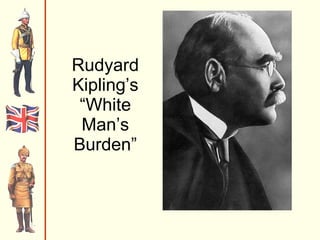
Rudyard Kipling’s “White Man’s Burden”
With a partner, read Rudyard Kipling’s  “White Man’s Burden” and answer the following questions, using complete sentences: What was "the white man's burden"?  What did Kipling mean by "exile"?  Who were the "captives"?  What is meant by the phrase "To seek another's profit, And work another's gain"?  What does Kipling predict will happen "when your goal is nearest"?  According to this poem, what rewards will the white man reap for his efforts?
PreClass – Recall our study of Imperialism to answer the following questions. Define Imperialism. List 2 reasons why the Europeans were interested in Africa. What were some of the effects of Imperialism in Africa?
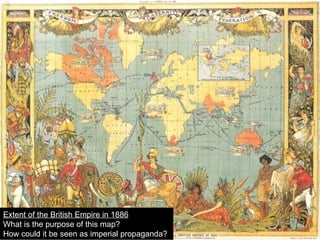
Extent of the British Empire in 1886 What is the purpose of this map? How could it be seen as imperial propaganda?
The British in India
Imperialism Control by one country of the political, social and economic life of another  country or region. Motives Political Cultural economic
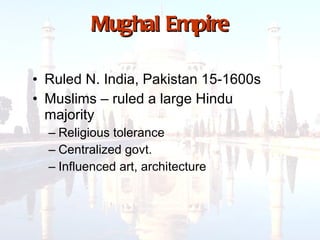
Mughal Empire Ruled N. India, Pakistan 15-1600s Muslims – ruled a large Hindu majority Religious tolerance Centralized govt.  Influenced art, architecture
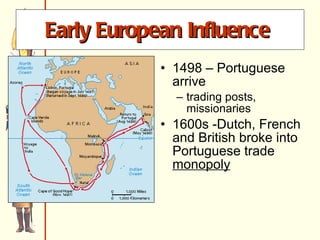
Early European Influence   1498 – Portuguese arrive trading posts, missionaries 1600s -Dutch, French and British broke into Portuguese trade  monopoly
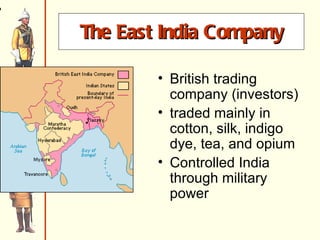
The East India Company Est. in 1600 Trading posts, forts at Chennai, Mumbai and Kolkata gold and silver (Br.) for spices, silk, tea, textiles (cotton)*** (Indian) 1700s – Br. v. French – Brits win control of trade British trading company (investors) traded mainly in cotton, silk, indigo dye, tea, and opium Controlled India through military power
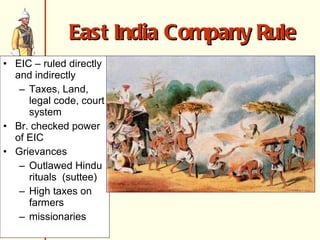
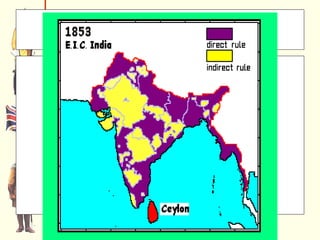
EIC – ruled directly and indirectly  Taxes, Land, legal code, court system Br. checked power of EIC Grievances Outlawed Hindu rituals  (suttee) High taxes on farmers missionaries East India Company Rule
 
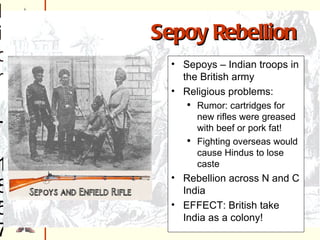
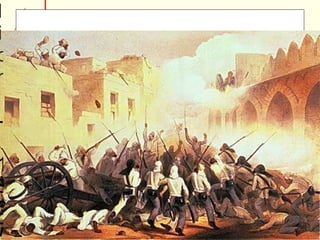
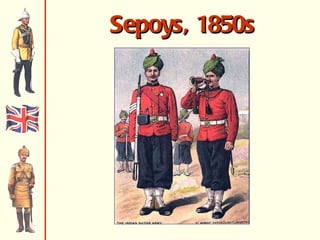
Sepoy Rebellion  - 1857 Sepoys – Indian troops in Br. Army Violations of religious principles Rifles greased with beef/pork fat Fight in foreign lands (lose caste) New Delhi – spread across northern/central India Br. Put down uprising EFFECT: DISTRUST BETWEEN BRITISH AND INDIANS Sepoys – Indian troops in the British army Religious problems: Rumor: cartridges for new rifles were greased with beef or pork fat! Fighting overseas would cause Hindus to lose caste Rebellion across N and C India EFFECT: British take India as a colony! Sepoy Rebellion
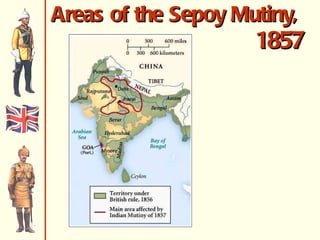
Areas of the Sepoy Mutiny,  1857
Sepoy Rebellion  - 1857
Sepoys, 1850s
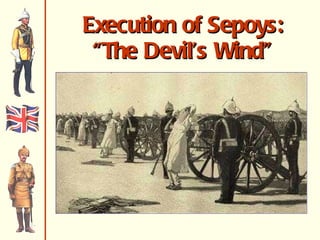
Execution of Sepoys: “The Devil’s Wind”
India becomes the "Jewel in the Crown" of the  British Empire
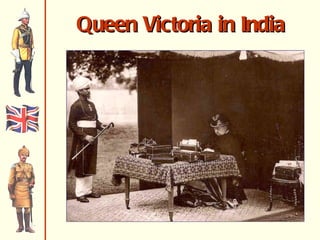
Queen Victoria in India
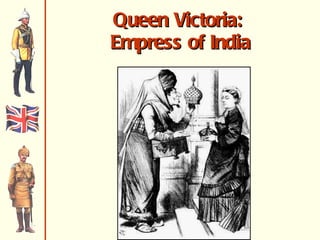
Queen Victoria:  Empress of India
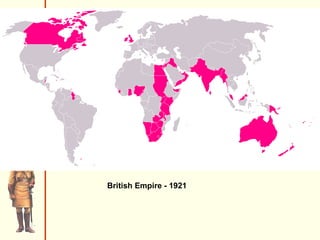
British Empire - 1921
Get creative! Read the section that your group has been assigned. Write down  7 important facts . Creatively present your 7 facts to the class by creating one of the following: Rap Skit Song poem Get Creative!
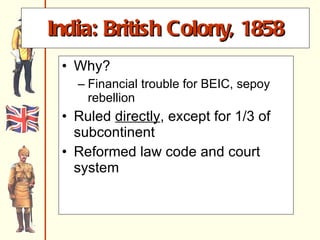
India: British Colony, 1858 Why? Financial trouble for BEIC, sepoy rebellion Ruled  directly , except for 1/3 of subcontinent Reformed law code and court system
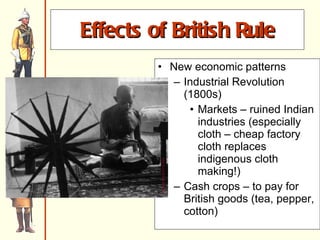
Effects of British Rule New economic patterns Industrial Revolution (1800s)  Markets – ruined Indian industries (especially cloth – cheap factory cloth replaces indigenous cloth making!) Cash crops – to pay for British goods (tea, pepper, cotton)
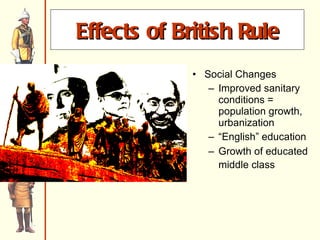
Social Changes Improved sanitary conditions = population growth, urbanization “ English” education Growth of educated middle class   Effects of British Rule
Pre Class How did the British East India Company change during its 250-year history?     Britain instituted some reforms during its hold on India. In what ways did those reforms benefit India? In what ways did they benefit the British?
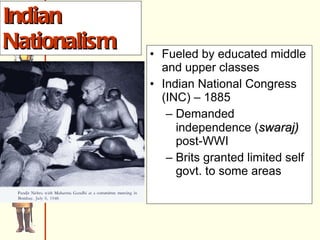
Indian Nationalism Fueled by educated middle and upper classes Indian National Congress (INC) – 1885 Demanded independence ( swaraj)  post-WWI Brits granted limited self govt. to some areas
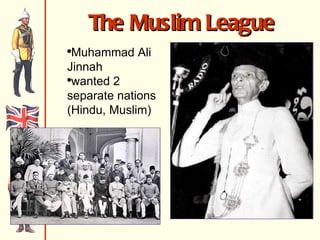
The Muslim League Muhammad Ali Jinnah wanted 2 separate nations (Hindu, Muslim)

India Under British Rule

  • 1.
  • 2.
    With a partner,read Rudyard Kipling’s “White Man’s Burden” and answer the following questions, using complete sentences: What was "the white man's burden"? What did Kipling mean by "exile"? Who were the "captives"? What is meant by the phrase "To seek another's profit, And work another's gain"? What does Kipling predict will happen "when your goal is nearest"? According to this poem, what rewards will the white man reap for his efforts?
  • 3.
    PreClass – Recallour study of Imperialism to answer the following questions. Define Imperialism. List 2 reasons why the Europeans were interested in Africa. What were some of the effects of Imperialism in Africa?
  • 4.
    Extent of theBritish Empire in 1886 What is the purpose of this map? How could it be seen as imperial propaganda?
  • 5.
  • 6.
    Imperialism Control byone country of the political, social and economic life of another country or region. Motives Political Cultural economic
  • 7.
    Mughal Empire RuledN. India, Pakistan 15-1600s Muslims – ruled a large Hindu majority Religious tolerance Centralized govt. Influenced art, architecture
  • 8.
    Early European Influence 1498 – Portuguese arrive trading posts, missionaries 1600s -Dutch, French and British broke into Portuguese trade monopoly
  • 9.
    The East IndiaCompany Est. in 1600 Trading posts, forts at Chennai, Mumbai and Kolkata gold and silver (Br.) for spices, silk, tea, textiles (cotton)*** (Indian) 1700s – Br. v. French – Brits win control of trade British trading company (investors) traded mainly in cotton, silk, indigo dye, tea, and opium Controlled India through military power
  • 10.
    EIC – ruleddirectly and indirectly Taxes, Land, legal code, court system Br. checked power of EIC Grievances Outlawed Hindu rituals (suttee) High taxes on farmers missionaries East India Company Rule
  • 11.
  • 12.
    Sepoy Rebellion - 1857 Sepoys – Indian troops in Br. Army Violations of religious principles Rifles greased with beef/pork fat Fight in foreign lands (lose caste) New Delhi – spread across northern/central India Br. Put down uprising EFFECT: DISTRUST BETWEEN BRITISH AND INDIANS Sepoys – Indian troops in the British army Religious problems: Rumor: cartridges for new rifles were greased with beef or pork fat! Fighting overseas would cause Hindus to lose caste Rebellion across N and C India EFFECT: British take India as a colony! Sepoy Rebellion
  • 13.
    Areas of theSepoy Mutiny, 1857
  • 14.
  • 15.
  • 16.
    Execution of Sepoys:“The Devil’s Wind”
  • 17.
    India becomes the"Jewel in the Crown" of the British Empire
  • 18.
  • 19.
    Queen Victoria: Empress of India
  • 20.
  • 21.
    Get creative! Readthe section that your group has been assigned. Write down 7 important facts . Creatively present your 7 facts to the class by creating one of the following: Rap Skit Song poem Get Creative!
  • 22.
    India: British Colony,1858 Why? Financial trouble for BEIC, sepoy rebellion Ruled directly , except for 1/3 of subcontinent Reformed law code and court system
  • 23.
    Effects of BritishRule New economic patterns Industrial Revolution (1800s) Markets – ruined Indian industries (especially cloth – cheap factory cloth replaces indigenous cloth making!) Cash crops – to pay for British goods (tea, pepper, cotton)
  • 24.
    Social Changes Improvedsanitary conditions = population growth, urbanization “ English” education Growth of educated middle class Effects of British Rule
  • 25.
    Pre Class Howdid the British East India Company change during its 250-year history?   Britain instituted some reforms during its hold on India. In what ways did those reforms benefit India? In what ways did they benefit the British?
  • 26.
    Indian Nationalism Fueledby educated middle and upper classes Indian National Congress (INC) – 1885 Demanded independence ( swaraj) post-WWI Brits granted limited self govt. to some areas
  • 27.
    The Muslim LeagueMuhammad Ali Jinnah wanted 2 separate nations (Hindu, Muslim)