HISTORY OF INDIA
o The Indian culture has provided a lot to world’s culture today.
o Indians studied three different kinds of religion, some studied
Hinduism, some studied Buddhism and others studied Sikhism.
o Indian history began with the birth of the Indus Valley Civilization
in such sites as Mohenjo-Daro, Harappa, and Lothal, followed by
the coming of the Aryans.
o The European presence in India dates to the sixteenth century,
and it is in the very early part of the eighteenth century that the
Mughal empire began to disintegrate, paving the way for regional
states.
o By the early part of the twentieth century, a nationalist movement had
emerged; and by 1919-20, Mohandas Karamchand ('Mahatma')
Gandhi had emerged as, if not the virtually undisputed leader of this
movement, certainly its most well-known and formidable architect.
CULTURE OF INDIA:
RELIGION
o India is the birthplace of Hinduism, Buddhism, I Jainism and
Sikhism, collectively known as Indian religions.
o India is one of the most religiously diverse nations in the
world, with some of the most deeply religious societies and
cultures.
RELIGION
Close-up of a statue depicting
Maitreya at the Thikse
Monastery in Ladakh, India.
Dharmic religions, such as
Hinduism and Buddhism
Jama Masjid, Delhi, one of the
largest mosques in India
CITIZENS OF INDIA
The Indian nationality consists of many regional ethno-
linguistic groups, reflecting the rich and complex history
of India. India, in its current boundaries, was formed out
of a number of predecessors.
India has more than two thousand ethnic groups and
every major religion is represented
-the fifth Mughal emperor and most
prolific builder in Indian history.
FAMOUS INDIAN
PERSONALITIES
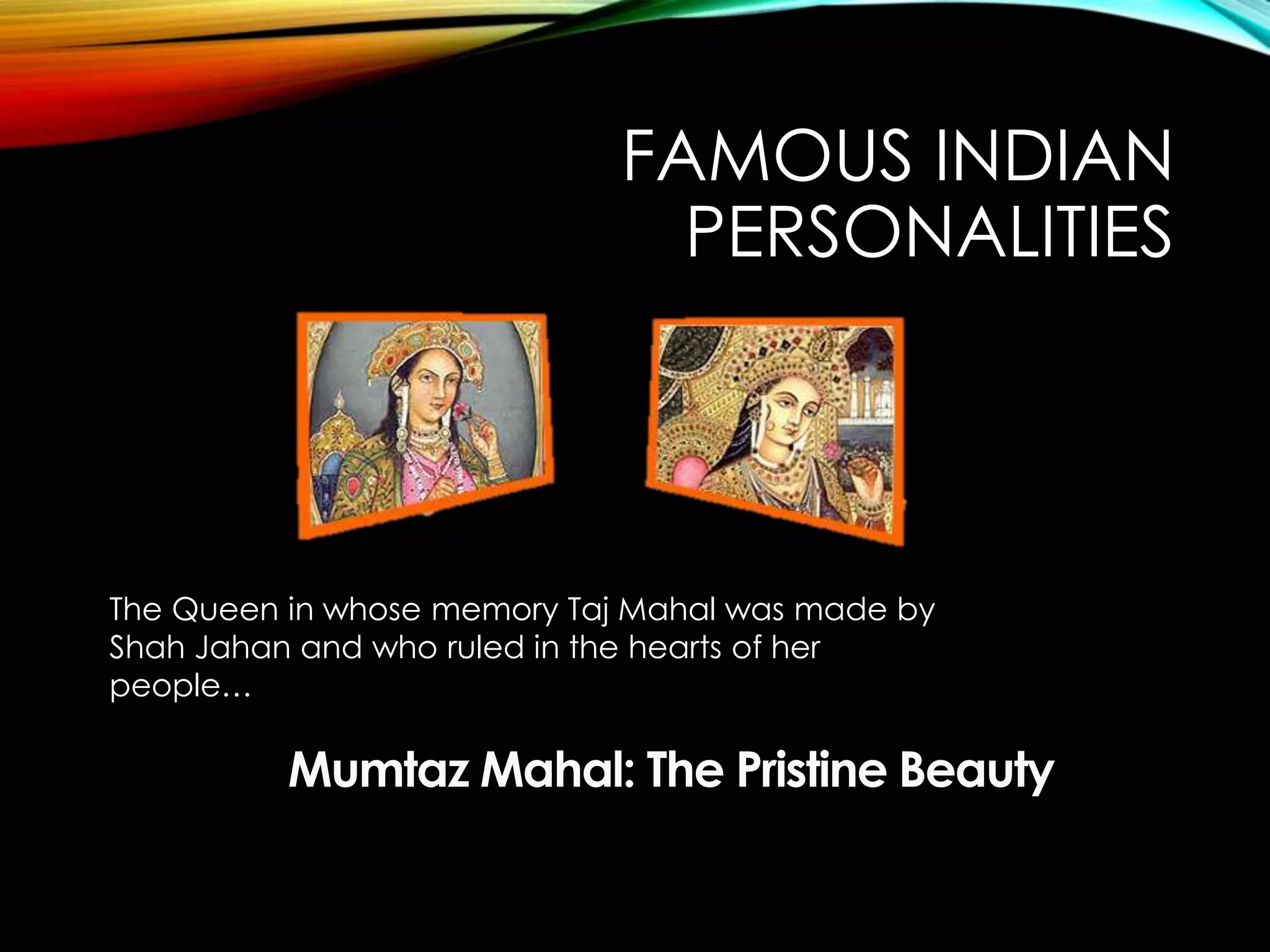
The Queen in whose memory Taj Mahal was made by
Shah Jahan and who ruled in the hearts of her
people…
FAMOUS INDIAN
PERSONALITIES
FAMOUS INDIAN
PERSONALITIES
The kind mother of all who
was awarded Noble Peace
Prize for her works of
Humanity......
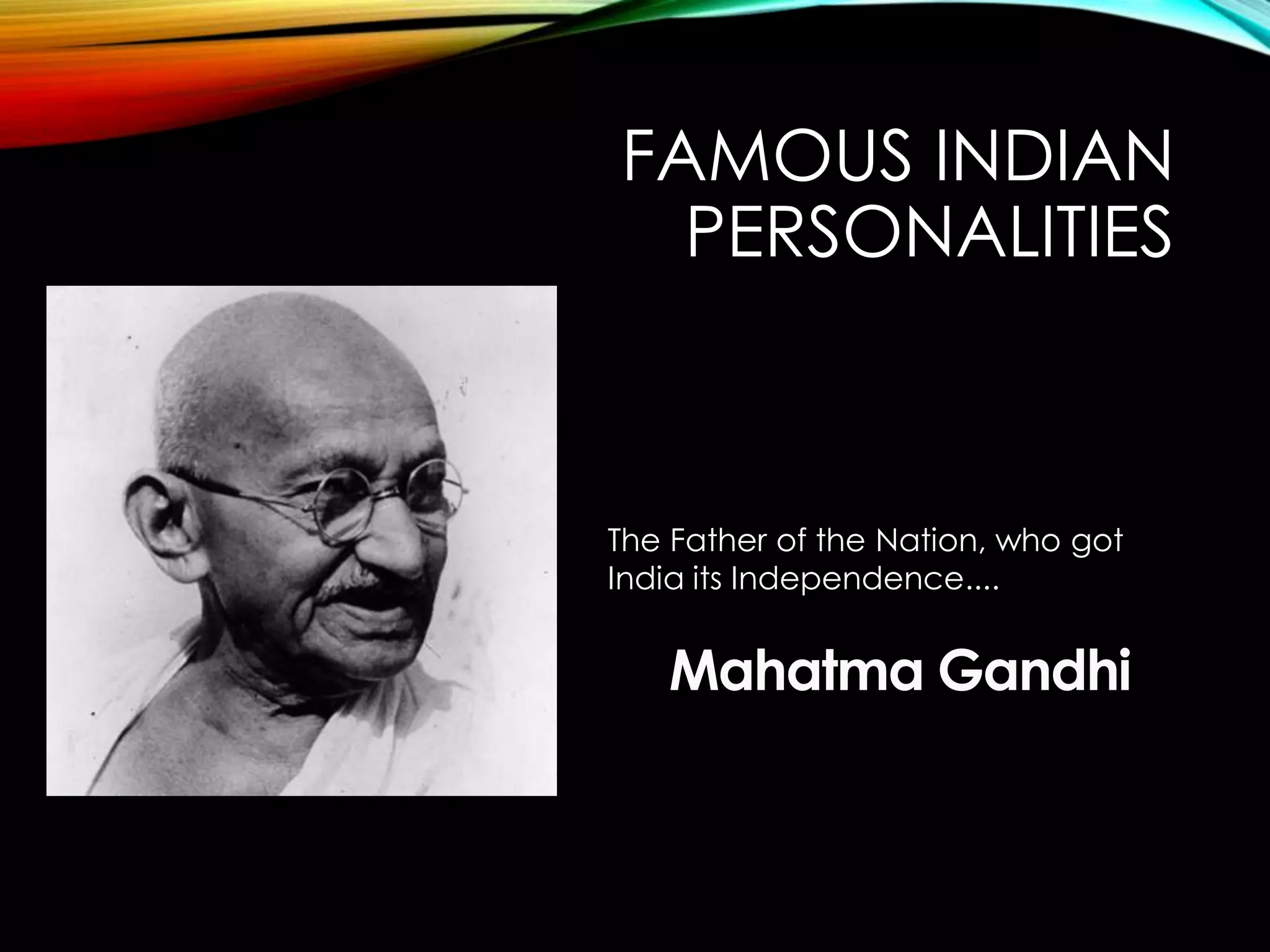
The Father of the Nation, who got
India its Independence....
FAMOUS INDIAN
PERSONALITIES
The first Prime Minister of India and
the architect of Five Year Plans, he
is also known as Chacha Nehru...
FAMOUS INDIAN
PERSONALITIES
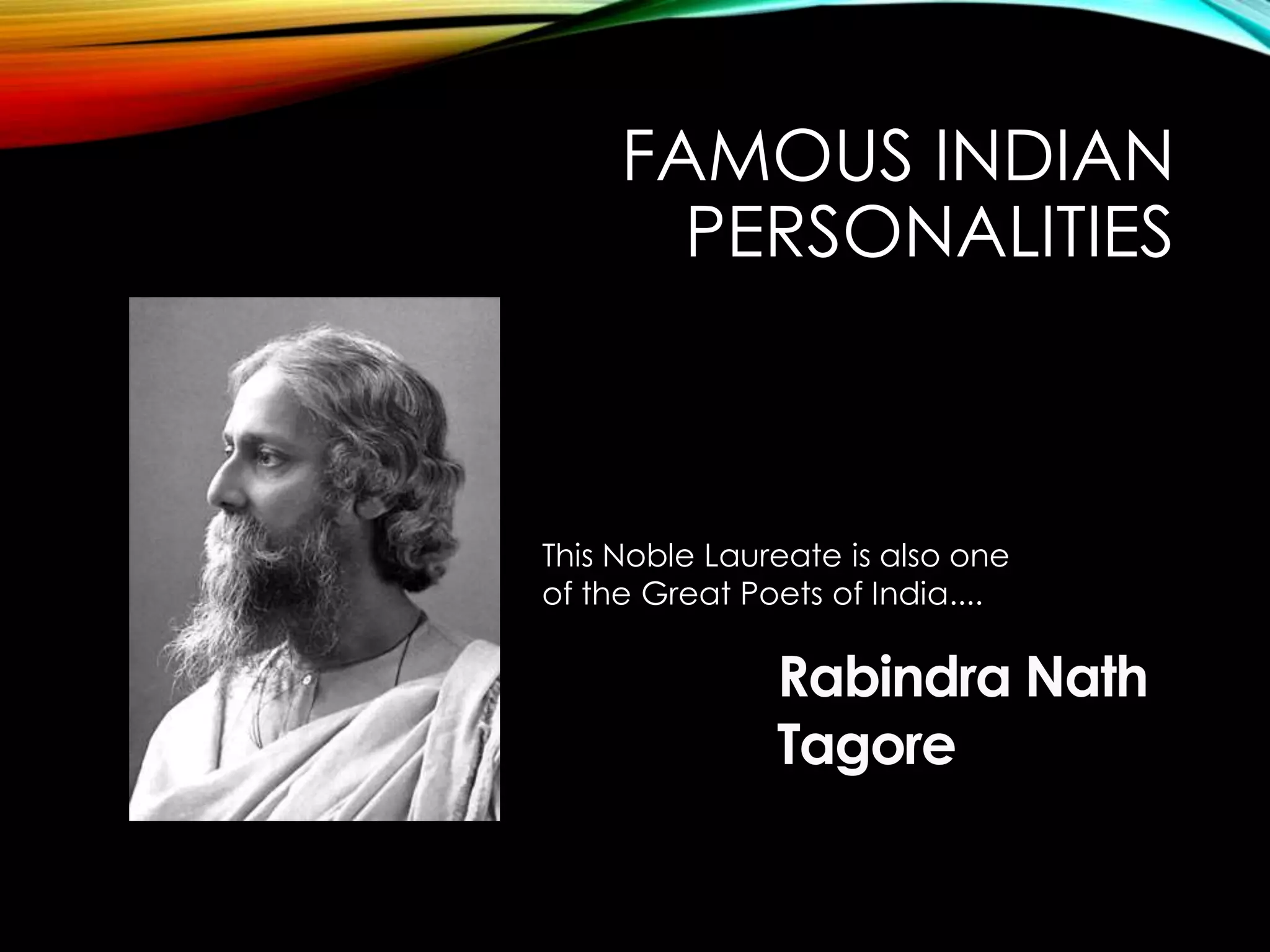
This Noble Laureate is also one
of the Great Poets of India....
FAMOUS INDIAN
PERSONALITIES
The Man who changed America or the
Saint of India was the strongest man
India had…
Champion of humanitarianism
FAMOUS INDIAN
PERSONALITIES
CASTE SYSTEM
The Indian caste system describes the system of
social stratification and severe social restrictions in
India in which social classes are defined by thousands
of endogamous hereditary groups, often termed jātis or
castes.
Within a jāti, there exist exogamous groups known as
gotras, the lineage or clan of an individual. In a handful
of sub-castes such as Shakadvipi, endogamy within a
gotra is permitted and alternative mechanisms of
restricting endogamy are used (e.g. banning
endogamy within a surname).
INDIAN LITERATURE
o Indian literature includes everything which is included in
the word ‘literature’ in its broadest, sense: religious and
mundane, epic and lyric, dramatic and didactic poetry,
narrative and scientific prose, as well as oral poetry and
song.
o Indian literature is generally believed to be the oldest
in the world.
Literature of India
Sanskrit Pali Hindi Urdu Prakrit
Kalidas
Veda
Vyasa
Chanakya Panchatantra
The author of the Panchatantra is un-known but most
people believe it is Bidpai or Vishnusharman. Bidpai is first
mentioned in the Arabic version of these stories, and the
stories are sometimes called the stories of Bidpai. Some
stories say Vishnusharman created some of the stories, but
we think he is one man that is responsible for teaching
these stories.
The Panchatantra is a
book of about eighty-seven
stories. It is believed to be
written between 200 B.C. and
500 A.D. There are many
different languages in the
Panchatantra. The stories in
the Panchatantra were
influenced by many different
cultures. The animal fables
and magic tales were used to
teach young royalty moral
lessons.
The Panchatantra is one of India’s most influential contributions
to world literature. The Panchatantra is made up of five books
that contain about 87 magic tales and animal fables. The
supposed author, Bidpai, compiled the stories of the
Panchatantra around 500 AD. The animal fable and magic
tales were created to educate sons of royalty.

A Brief History of India

  • 1.
  • 2.
    o The Indianculture has provided a lot to world’s culture today. o Indians studied three different kinds of religion, some studied Hinduism, some studied Buddhism and others studied Sikhism. o Indian history began with the birth of the Indus Valley Civilization in such sites as Mohenjo-Daro, Harappa, and Lothal, followed by the coming of the Aryans.
  • 3.
    o The Europeanpresence in India dates to the sixteenth century, and it is in the very early part of the eighteenth century that the Mughal empire began to disintegrate, paving the way for regional states. o By the early part of the twentieth century, a nationalist movement had emerged; and by 1919-20, Mohandas Karamchand ('Mahatma') Gandhi had emerged as, if not the virtually undisputed leader of this movement, certainly its most well-known and formidable architect.
  • 4.
    CULTURE OF INDIA: RELIGION oIndia is the birthplace of Hinduism, Buddhism, I Jainism and Sikhism, collectively known as Indian religions. o India is one of the most religiously diverse nations in the world, with some of the most deeply religious societies and cultures.
  • 5.
    RELIGION Close-up of astatue depicting Maitreya at the Thikse Monastery in Ladakh, India. Dharmic religions, such as Hinduism and Buddhism Jama Masjid, Delhi, one of the largest mosques in India
  • 6.
    CITIZENS OF INDIA TheIndian nationality consists of many regional ethno- linguistic groups, reflecting the rich and complex history of India. India, in its current boundaries, was formed out of a number of predecessors. India has more than two thousand ethnic groups and every major religion is represented
  • 7.
    -the fifth Mughalemperor and most prolific builder in Indian history. FAMOUS INDIAN PERSONALITIES
  • 8.
    The Queen inwhose memory Taj Mahal was made by Shah Jahan and who ruled in the hearts of her people… FAMOUS INDIAN PERSONALITIES
  • 9.
    FAMOUS INDIAN PERSONALITIES The kindmother of all who was awarded Noble Peace Prize for her works of Humanity......
  • 10.
    The Father ofthe Nation, who got India its Independence.... FAMOUS INDIAN PERSONALITIES
  • 11.
    The first PrimeMinister of India and the architect of Five Year Plans, he is also known as Chacha Nehru... FAMOUS INDIAN PERSONALITIES
  • 12.
    This Noble Laureateis also one of the Great Poets of India.... FAMOUS INDIAN PERSONALITIES
  • 13.
    The Man whochanged America or the Saint of India was the strongest man India had… Champion of humanitarianism FAMOUS INDIAN PERSONALITIES
  • 14.
    CASTE SYSTEM The Indiancaste system describes the system of social stratification and severe social restrictions in India in which social classes are defined by thousands of endogamous hereditary groups, often termed jātis or castes. Within a jāti, there exist exogamous groups known as gotras, the lineage or clan of an individual. In a handful of sub-castes such as Shakadvipi, endogamy within a gotra is permitted and alternative mechanisms of restricting endogamy are used (e.g. banning endogamy within a surname).
  • 15.
    INDIAN LITERATURE o Indianliterature includes everything which is included in the word ‘literature’ in its broadest, sense: religious and mundane, epic and lyric, dramatic and didactic poetry, narrative and scientific prose, as well as oral poetry and song. o Indian literature is generally believed to be the oldest in the world.
  • 16.
    Literature of India SanskritPali Hindi Urdu Prakrit Kalidas Veda Vyasa Chanakya Panchatantra
  • 17.
    The author ofthe Panchatantra is un-known but most people believe it is Bidpai or Vishnusharman. Bidpai is first mentioned in the Arabic version of these stories, and the stories are sometimes called the stories of Bidpai. Some stories say Vishnusharman created some of the stories, but we think he is one man that is responsible for teaching these stories.
  • 18.
    The Panchatantra isa book of about eighty-seven stories. It is believed to be written between 200 B.C. and 500 A.D. There are many different languages in the Panchatantra. The stories in the Panchatantra were influenced by many different cultures. The animal fables and magic tales were used to teach young royalty moral lessons.
  • 19.
    The Panchatantra isone of India’s most influential contributions to world literature. The Panchatantra is made up of five books that contain about 87 magic tales and animal fables. The supposed author, Bidpai, compiled the stories of the Panchatantra around 500 AD. The animal fable and magic tales were created to educate sons of royalty.