Board of Higher Education — March 21, 2017
2
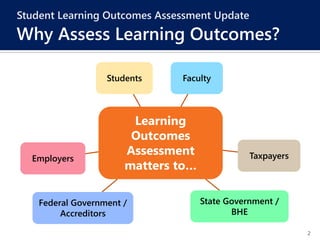
Learning
Outcomes
Assessment
matters to…
Students Faculty
State Government /
BHE
Taxpayers
Federal Government /
Accreditors
Employers
Student Learning Outcomes Assessment Update
Why Assess Learning Outcomes?
3
Student Learning Outcomes Assessment Update
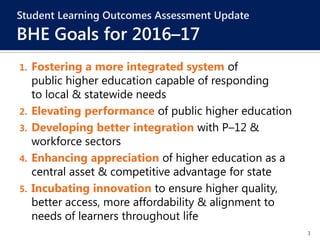
BHE Goals for 2016–17
1. Fostering a more integrated system of
public higher education capable of responding
to local & statewide needs
2. Elevating performance of public higher education
3. Developing better integration with P–12 &
workforce sectors
4. Enhancing appreciation of higher education as a
central asset & competitive advantage for state
5. Incubating innovation to ensure higher quality,
better access, more affordability & alignment to
needs of learners throughout life
4
Student Learning Outcomes Assessment Update
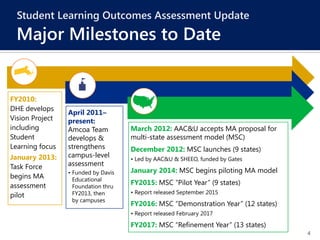
Major Milestones to Date
FY2010:
DHE develops
Vision Project
including
Student
Learning focus
January 2013:
Task Force
begins MA
assessment
pilot
April 2011–
present:
Amcoa Team
develops &
strengthens
campus-level
assessment
• Funded by Davis
Educational
Foundation thru
FY2013, then
by campuses
March 2012: AAC&U accepts MA proposal for
multi-state assessment model (MSC)
December 2012: MSC launches (9 states)
• Led by AAC&U & SHEEO, funded by Gates
January 2014: MSC begins piloting MA model
FY2015: MSC “Pilot Year” (9 states)
• Report released September 2015
FY2016: MSC “Demonstration Year” (12 states)
• Report released February 2017
FY2017: MSC “Refinement Year” (13 states)
5
Student Learning Outcomes Assessment Update
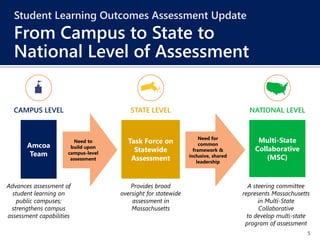
From Campus to State to
National Level of Assessment
Amcoa
Team
Task Force on
Statewide
Assessment
Multi-State
Collaborative
(MSC)
CAMPUS LEVEL STATE LEVEL NATIONAL LEVEL
Advances assessment of
student learning on
public campuses;
strengthens campus
assessment capabilities
Provides broad
oversight for statewide
assessment in
Massachusetts
A steering committee
represents Massachusetts
in Multi-State
Collaborative
to develop multi-state
program of assessment
Need to
build upon
campus-level
assessment
Need for
common
framework &
inclusive, shared
leadership
6
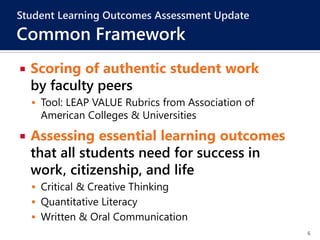
 Scoring of authentic student work
by faculty peers
 Tool: LEAP VALUE Rubrics from Association of
American Colleges & Universities
 Assessing essential learning outcomes
that all students need for success in
work, citizenship, and life
 Critical & Creative Thinking
 Quantitative Literacy
 Written & Oral Communication
Student Learning Outcomes Assessment Update
Common Framework
7
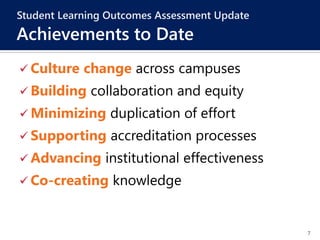
 Culture change across campuses
 Building collaboration and equity
 Minimizing duplication of effort
 Supporting accreditation processes
 Advancing institutional effectiveness
 Co-creating knowledge
Student Learning Outcomes Assessment Update
Achievements to Date
8
Student Learning Outcomes Assessment Update
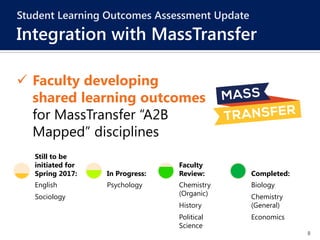
Integration with MassTransfer
English
Sociology
Still to be
initiated for
Spring 2017:
Psychology
In Progress:
Chemistry
(Organic)
History
Political
Science
Faculty
Review:
Biology
Chemistry
(General)
Economics
Completed:
 Faculty developing
shared learning outcomes
for MassTransfer “A2B
Mapped” disciplines
9
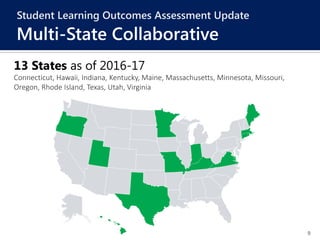
13 States as of 2016-17
Connecticut, Hawaii, Indiana, Kentucky, Maine, Massachusetts, Minnesota, Missouri,
Oregon, Rhode Island, Texas, Utah, Virginia
Student Learning Outcomes Assessment Update
Multi-State Collaborative
10
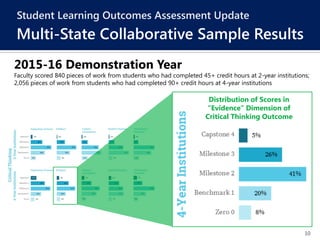
2015-16 Demonstration Year
Faculty scored 840 pieces of work from students who had completed 45+ credit hours at 2-year institutions;
2,056 pieces of work from students who had completed 90+ credit hours at 4-year institutions
Student Learning Outcomes Assessment Update
Multi-State Collaborative Sample Results
Distribution of Scores in
“Evidence” Dimension of
Critical Thinking Outcome
11
Student Learning Outcomes Assessment Update
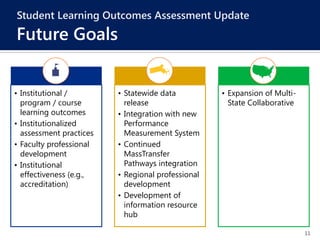
Future Goals
• Institutional /
program / course
learning outcomes
• Institutionalized
assessment practices
• Faculty professional
development
• Institutional
effectiveness (e.g.,
accreditation)
• Statewide data
release
• Integration with new
Performance
Measurement System
• Continued
MassTransfer
Pathways integration
• Regional professional
development
• Development of
information resource
hub
• Expansion of Multi-
State Collaborative
Discussion

Student Learning Outcomes Assessment: An Update

  • 1.
    Board of HigherEducation — March 21, 2017
  • 2.
    2 Learning Outcomes Assessment matters to… Students Faculty StateGovernment / BHE Taxpayers Federal Government / Accreditors Employers Student Learning Outcomes Assessment Update Why Assess Learning Outcomes?
  • 3.
    3 Student Learning OutcomesAssessment Update BHE Goals for 2016–17 1. Fostering a more integrated system of public higher education capable of responding to local & statewide needs 2. Elevating performance of public higher education 3. Developing better integration with P–12 & workforce sectors 4. Enhancing appreciation of higher education as a central asset & competitive advantage for state 5. Incubating innovation to ensure higher quality, better access, more affordability & alignment to needs of learners throughout life
  • 4.
    4 Student Learning OutcomesAssessment Update Major Milestones to Date FY2010: DHE develops Vision Project including Student Learning focus January 2013: Task Force begins MA assessment pilot April 2011– present: Amcoa Team develops & strengthens campus-level assessment • Funded by Davis Educational Foundation thru FY2013, then by campuses March 2012: AAC&U accepts MA proposal for multi-state assessment model (MSC) December 2012: MSC launches (9 states) • Led by AAC&U & SHEEO, funded by Gates January 2014: MSC begins piloting MA model FY2015: MSC “Pilot Year” (9 states) • Report released September 2015 FY2016: MSC “Demonstration Year” (12 states) • Report released February 2017 FY2017: MSC “Refinement Year” (13 states)
  • 5.
    5 Student Learning OutcomesAssessment Update From Campus to State to National Level of Assessment Amcoa Team Task Force on Statewide Assessment Multi-State Collaborative (MSC) CAMPUS LEVEL STATE LEVEL NATIONAL LEVEL Advances assessment of student learning on public campuses; strengthens campus assessment capabilities Provides broad oversight for statewide assessment in Massachusetts A steering committee represents Massachusetts in Multi-State Collaborative to develop multi-state program of assessment Need to build upon campus-level assessment Need for common framework & inclusive, shared leadership
  • 6.
    6  Scoring ofauthentic student work by faculty peers  Tool: LEAP VALUE Rubrics from Association of American Colleges & Universities  Assessing essential learning outcomes that all students need for success in work, citizenship, and life  Critical & Creative Thinking  Quantitative Literacy  Written & Oral Communication Student Learning Outcomes Assessment Update Common Framework
  • 7.
    7  Culture changeacross campuses  Building collaboration and equity  Minimizing duplication of effort  Supporting accreditation processes  Advancing institutional effectiveness  Co-creating knowledge Student Learning Outcomes Assessment Update Achievements to Date
  • 8.
    8 Student Learning OutcomesAssessment Update Integration with MassTransfer English Sociology Still to be initiated for Spring 2017: Psychology In Progress: Chemistry (Organic) History Political Science Faculty Review: Biology Chemistry (General) Economics Completed:  Faculty developing shared learning outcomes for MassTransfer “A2B Mapped” disciplines
  • 9.
    9 13 States asof 2016-17 Connecticut, Hawaii, Indiana, Kentucky, Maine, Massachusetts, Minnesota, Missouri, Oregon, Rhode Island, Texas, Utah, Virginia Student Learning Outcomes Assessment Update Multi-State Collaborative
  • 10.
    10 2015-16 Demonstration Year Facultyscored 840 pieces of work from students who had completed 45+ credit hours at 2-year institutions; 2,056 pieces of work from students who had completed 90+ credit hours at 4-year institutions Student Learning Outcomes Assessment Update Multi-State Collaborative Sample Results Distribution of Scores in “Evidence” Dimension of Critical Thinking Outcome
  • 11.
    11 Student Learning OutcomesAssessment Update Future Goals • Institutional / program / course learning outcomes • Institutionalized assessment practices • Faculty professional development • Institutional effectiveness (e.g., accreditation) • Statewide data release • Integration with new Performance Measurement System • Continued MassTransfer Pathways integration • Regional professional development • Development of information resource hub • Expansion of Multi- State Collaborative
  • 12.