Dr. Sonia Ben Jaafar
EduEval
 Mobilizing professional knowledge is critical
 Knowledge management is embedded in
social processes
 Collaboration as an organizational goal
 Strategies to promote these social processes
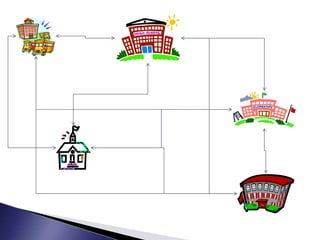
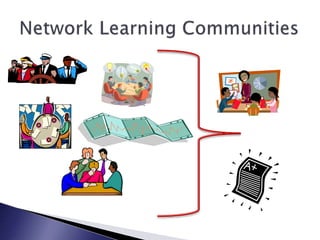
 Network learning communities
1. Network Learning Communities
2. Strategic focus
3. Collaborative inquiry
4. Role of Leadership
5. Accountability & joint decision making
 Organizational arrangement of education
professionals
 Continuous and purposeful learning
 Goal: To improve professional effectiveness
◦ Better professional practice
◦ Increased student learning
◦ Increased student achievement
 Many names
◦ Communities of continuous inquiry and improvement
◦ Professional Learning Community
◦ Network learning community
 Promise
 Change in teaching practice
 Sustainable
 Change in school culture
 Change in professional communication
 Better results from schools
 Few cases of sustained success
 Many cases of failed attempts
 Reasons
◦ Hard to cultivate necessary social processes within
an organization
◦ Efforts not focused
◦ Lack of understanding of social processes
and organization
◦ Lack of leadership support
 Research in UK & Canada
 Dimensions of Successful NLCs
1. Strategic focus
2. Relationships for collaborative inquiry
3. Informal & formal leadership
4. Sustaining collective understanding
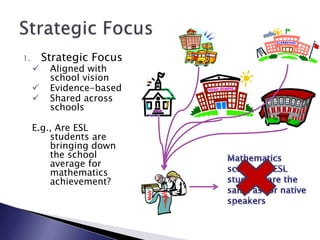
1. Strategic Focus
 Aligned with
school vision
 Evidence-based
 Shared across
schools
E.g., Are ESL
students are
bringing down
the school
average for
mathematics
achievement?
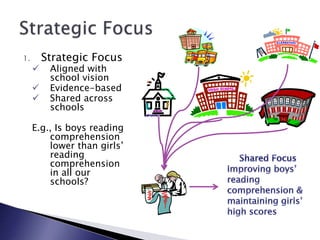
1. Strategic Focus
 Aligned with
school vision
 Evidence-based
 Shared across
schools
E.g., Is boys reading
comprehension
lower than girls’
reading
comprehension
in all our
schools?
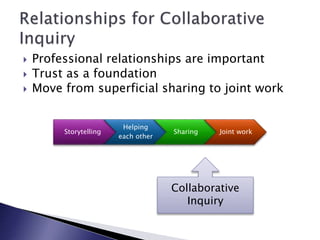
 Professional relationships are important
 Trust as a foundation
 Move from superficial sharing to joint work
Storytelling
Helping
each other
Sharing Joint work
Collaborative
Inquiry
 Simple intense collaboration is not enough
 Deep collaboration
◦ Make own knowledge explicit & accessible
◦ Invite critique & challenge
◦ Ready for evidence on beliefs & practices
◦ Learn from others
 Hard work
 Not normal part of school culture
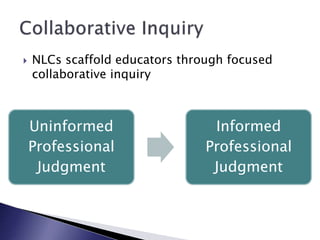
 NLCs scaffold educators through focused
collaborative inquiry
Uninformed
Professional
Judgment
Informed
Professional
Judgment
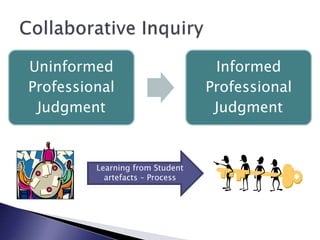
Uninformed
Professional
Judgment
Informed
Professional
Judgment
Learning from Student
artefacts – Process
 Organizational arrangement
 Navigates usual boundaries to create connections
 Creates the situation for collaborative inquiry
 Addresses logistics for network
 Fosters school culture for educator professional
growth
 Network patterns highlight distributed
leadership
 Cultivates ownership
 Allows for localized sustained improvement
 Fosters professional growth
 Formal leaders
◦ People with positions of authority
 Informal leaders
◦ People without positions of authority
 Critical to NLC at school & network levels
 Encouraging and motivating others
◦ Open dialogue about teacher learning
◦ Creating conditions for job-embedded learning
 Setting & monitoring agenda
◦ Keeping the staff efforts aligned to the focus
 Sharing leadership
◦ Empowering others
 Providing support for building capacity
◦ Individual capacity
knowledge and skills for content work
◦ Relational capacity
learning how to share and interact
◦ Organizational capacity
learning how to create shared learning space
 Focused on curriculum, teaching, and
learning
 Highlights instructional leadership
 Requires capacity
 Create high expectations based on vision
 Model appropriate behaviour & motivate
individuals
 Involved in building collaborative processes
 Share information with formal leaders
 Monitoring & Evaluation
◦ Using systematic data collection and analysis
 Evidence-informed decisions at the school
and network levels
 Good decision
◦ Made based on data
◦ Made together
 Responsibility of formal and Informal
leadership
 Inclusive process
 Shared Focus: Improving boys’ reading
comprehension & maintaining girls’ high
scores
 Informal leaders: Literacy Leads
 Strategy: Student
artefact structured
sharing process
 Monitor
 Teacher participation
 Teacher
implementation
 Boys’ reading
comprehension
 Girls’ reading
comprehension
1. How to Start a Learning Network in Your
School
2. How to Learn and Share Using Student
Artefacts

Networked Learning Communities: School Improvement for Educational Leaders

  • 1.
    Dr. Sonia BenJaafar EduEval
  • 2.
     Mobilizing professionalknowledge is critical  Knowledge management is embedded in social processes  Collaboration as an organizational goal  Strategies to promote these social processes  Network learning communities
  • 3.
    1. Network LearningCommunities 2. Strategic focus 3. Collaborative inquiry 4. Role of Leadership 5. Accountability & joint decision making
  • 4.
     Organizational arrangementof education professionals  Continuous and purposeful learning  Goal: To improve professional effectiveness ◦ Better professional practice ◦ Increased student learning ◦ Increased student achievement  Many names ◦ Communities of continuous inquiry and improvement ◦ Professional Learning Community ◦ Network learning community
  • 6.
     Promise  Changein teaching practice  Sustainable  Change in school culture  Change in professional communication  Better results from schools
  • 7.
     Few casesof sustained success  Many cases of failed attempts  Reasons ◦ Hard to cultivate necessary social processes within an organization ◦ Efforts not focused ◦ Lack of understanding of social processes and organization ◦ Lack of leadership support
  • 8.
     Research inUK & Canada  Dimensions of Successful NLCs 1. Strategic focus 2. Relationships for collaborative inquiry 3. Informal & formal leadership 4. Sustaining collective understanding
  • 9.
    1. Strategic Focus Aligned with school vision  Evidence-based  Shared across schools E.g., Are ESL students are bringing down the school average for mathematics achievement?
  • 10.
    1. Strategic Focus Aligned with school vision  Evidence-based  Shared across schools E.g., Is boys reading comprehension lower than girls’ reading comprehension in all our schools?
  • 11.
     Professional relationshipsare important  Trust as a foundation  Move from superficial sharing to joint work Storytelling Helping each other Sharing Joint work Collaborative Inquiry
  • 12.
     Simple intensecollaboration is not enough  Deep collaboration ◦ Make own knowledge explicit & accessible ◦ Invite critique & challenge ◦ Ready for evidence on beliefs & practices ◦ Learn from others  Hard work  Not normal part of school culture
  • 13.
     NLCs scaffoldeducators through focused collaborative inquiry Uninformed Professional Judgment Informed Professional Judgment
  • 14.
  • 15.
     Organizational arrangement Navigates usual boundaries to create connections  Creates the situation for collaborative inquiry  Addresses logistics for network  Fosters school culture for educator professional growth
  • 16.
     Network patternshighlight distributed leadership  Cultivates ownership  Allows for localized sustained improvement  Fosters professional growth  Formal leaders ◦ People with positions of authority  Informal leaders ◦ People without positions of authority
  • 17.
     Critical toNLC at school & network levels  Encouraging and motivating others ◦ Open dialogue about teacher learning ◦ Creating conditions for job-embedded learning  Setting & monitoring agenda ◦ Keeping the staff efforts aligned to the focus  Sharing leadership ◦ Empowering others
  • 18.
     Providing supportfor building capacity ◦ Individual capacity knowledge and skills for content work ◦ Relational capacity learning how to share and interact ◦ Organizational capacity learning how to create shared learning space
  • 19.
     Focused oncurriculum, teaching, and learning  Highlights instructional leadership  Requires capacity  Create high expectations based on vision  Model appropriate behaviour & motivate individuals  Involved in building collaborative processes  Share information with formal leaders
  • 20.
     Monitoring &Evaluation ◦ Using systematic data collection and analysis  Evidence-informed decisions at the school and network levels  Good decision ◦ Made based on data ◦ Made together  Responsibility of formal and Informal leadership  Inclusive process
  • 21.
     Shared Focus:Improving boys’ reading comprehension & maintaining girls’ high scores  Informal leaders: Literacy Leads
  • 22.
     Strategy: Student artefactstructured sharing process  Monitor  Teacher participation  Teacher implementation  Boys’ reading comprehension  Girls’ reading comprehension
  • 24.
    1. How toStart a Learning Network in Your School 2. How to Learn and Share Using Student Artefacts