Insurance And Procedure 
Chapter Two: 
Insurance Contract 
By: Marya Sholevar
Insurance 
 Life insurance: 
Can provide a financial payment to your family and 
loved ones upon your death. 
 Health insurance help you: 
-pay for services that your regular health care plan 
does not cover 
-supplement your income if you suffer a major illness 
or severe injury 
-pay for your medical expenses if you become ill 
while on vacation.
Insrance 
 Property and Casualty Insurance: 
Property insurance can provide coverage for loss or 
damage to: 
• your home or personal possessions 
• your car 
• your business. 
Casualty insurance can provide coverage against legal 
liability for losses caused by: 
• injury to other people 
• damage to the property of others.
The Basics Parts of an Insurance Contract 
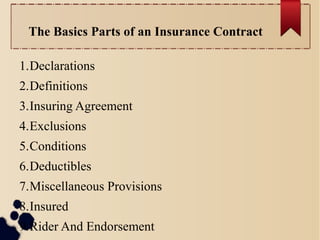
1.Declarations 
2.Definitions 
3.Insuring Agreement 
4.Exclusions 
5.Conditions 
6.Deductibles 
7.Miscellaneous Provisions 
8.Insured 
9.Rider And Endorsement
The Basics Parts of an Insurance Contract 
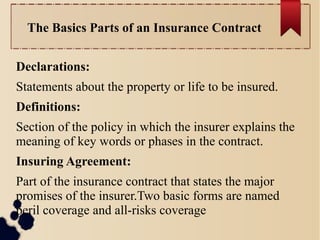
Declarations: 
Statements about the property or life to be insured. 
Definitions: 
Section of the policy in which the insurer explains the 
meaning of key words or phases in the contract. 
Insuring Agreement: 
Part of the insurance contract that states the major 
promises of the insurer.Two basic forms are named 
peril coverage and all-risks coverage
The Basics Parts of an Insurance Contract 
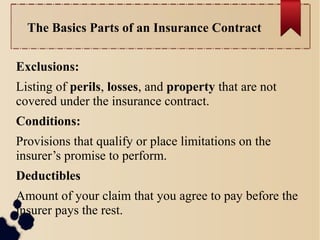
Exclusions: 
Listing of perils, losses, and property that are not 
covered under the insurance contract. 
Conditions: 
Provisions that qualify or place limitations on the 
insurer’s promise to perform. 
Deductibles 
Amount of your claim that you agree to pay before the 
insurer pays the rest.
The Basics Parts of an Insurance Contract 
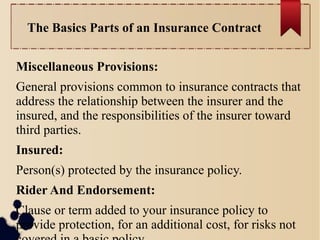
Miscellaneous Provisions: 
General provisions common to insurance contracts that 
address the relationship between the insurer and the 
insured, and the responsibilities of the insurer toward 
third parties. 
Insured: 
Person(s) protected by the insurance policy. 
Rider And Endorsement: 
Clause or term added to your insurance policy to 
provide protection, for an additional cost, for risks not 
covered in a basic policy.
Why Exclusions? 
 Some perils considered unisurable 
 Presence of extraordinary hazards 
 Coverage provided by other contract 
 Moral hazard problems 
 Coverage not needed by typical insureds
Purposes of Deductibles 
 Reduce the number of small claims 
 Reduce premiums 
 reduce moral and attitudinal (morale) hazard
Deductibles In Health Insurance 
And Property Insurance 
Deductibles In Health Insurance : 
Calendar-year Deductible 
Corridor Deductible 
Elimination Period 
Deductibles In Property Insurance : 
Straight Deductible 
Aggregate Deductible
DEFINITION OF “INSURED” 
An insurance contract must identify the person or 
parties who are insured under the policy 
Named insured 
First named insured 
Other insureds 
Additional insureds
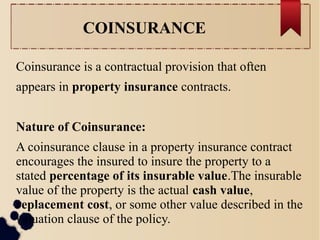
COINSURANCE 
Coinsurance is a contractual provision that often 
appears in property insurance contracts. 
Nature of Coinsurance: 
A coinsurance clause in a property insurance contract 
encourages the insured to insure the property to a 
stated percentage of its insurable value.The insurable 
value of the property is the actual cash value, 
replacement cost, or some other value described in the 
valuation clause of the policy.
COINSURANCE 
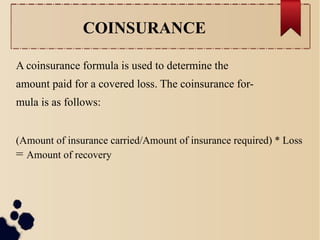
A coinsurance formula is used to determine the 
amount paid for a covered loss. The coinsurance for-mula 
is as follows: 
(Amount of insurance carried/Amount of insurance required) * Loss 
= Amount of recovery
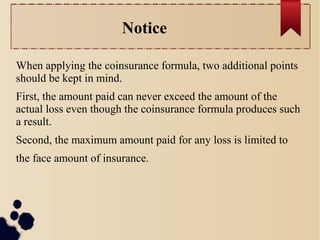
Notice 
When applying the coinsurance formula, two additional points 
should be kept in mind. 
First, the amount paid can never exceed the amount of the 
actual loss even though the coinsurance formula produces such 
a result. 
Second, the maximum amount paid for any loss is limited to 
the face amount of insurance.
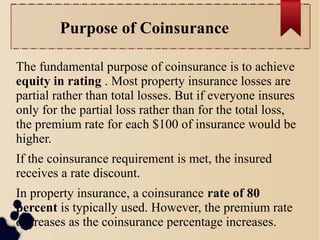
Purpose of Coinsurance 
The fundamental purpose of coinsurance is to achieve 
equity in rating . Most property insurance losses are 
partial rather than total losses. But if everyone insures 
only for the partial loss rather than for the total loss, 
the premium rate for each $100 of insurance would be 
higher. 
If the coinsurance requirement is met, the insured 
receives a rate discount. 
In property insurance, a coinsurance rate of 80 
percent is typically used. However, the premium rate 
decreases as the coinsurance percentage increases.
Coinsurance Problems 
 Inflation can result in a serious coinsurance penalty 
if the amount of insurance is not periodically 
increased for inflation. 
 The insured may incur a coinsurance penalty if 
property values fluctuate widely during the policy 
period. 
Solution: 
 Agreed value coverage: insurer agrees in advance 
that the amount of insurance carried meets the 
coinsurance requirement. 
 Reporting form: property values are periodically 
reported to the insurer.
COINSURANCE IN HEALTH 
INSURANCE 
Coinsurance clause in health insurance contracts, 
requires the insured to pay a specified percentage of 
covered medical expenses in excess of the 
deductible .A typical plan requires the insured to pay 
20, 25, or 30 percent of covered expenses in excess of 
the deductible up to a maximum annual limit. 
The purposes of coinsurance in health insurance are 
(1) to reduce premiums and (2) to prevent 
overutilization of policy benefits .
OTHER-INSURANCE 
PROVISIONS 
Other-insurance provisions typically are present in 
property and casualty insurance and health 
insurance contracts. These provisions apply when more 
than one contract covers the same loss. The purpose of 
these provisions is to prevent profiting from insurance 
and violation of the principle of indemnity .
Some Important other-insurance 
provisions 
 The pro rata liability clause 
 Contribution by equal shares 
 Primary and excess insurance
Some Important other-insurance 
provisions 
 Pro rata liability applies when two or more policies 
of the same type cover the same insurable interest in 
the property. 
 Contribution by equal shares often appears in 
liability insurance contracts. Each insurer shares 
equally in the loss until the share paid by each 
insurer equals the lowest limit of liability under any 
policy, or until the full amount of the loss is paid.
Some Important other-insurance 
provisions 
 Primary and excess insurance 
The primary insurer pays first, and the excess insurer 
pays only after the policy limits under the primary 
policy are exhausted. 
 Auto insurance and the coordination-of-benefits 
provision in group health insurance are example of 
primary and excess coverage. 
Some rules of coordination-of-benefits provision: 
 Coverage as an employee is usually primary to 
coverage as a dependent . 
 the birthday rule applies to dependentsv in families

Chapter 2:Insurance Contract

  • 1.
    Insurance And Procedure Chapter Two: Insurance Contract By: Marya Sholevar
  • 2.
    Insurance  Lifeinsurance: Can provide a financial payment to your family and loved ones upon your death.  Health insurance help you: -pay for services that your regular health care plan does not cover -supplement your income if you suffer a major illness or severe injury -pay for your medical expenses if you become ill while on vacation.
  • 3.
    Insrance  Propertyand Casualty Insurance: Property insurance can provide coverage for loss or damage to: • your home or personal possessions • your car • your business. Casualty insurance can provide coverage against legal liability for losses caused by: • injury to other people • damage to the property of others.
  • 4.
    The Basics Partsof an Insurance Contract 1.Declarations 2.Definitions 3.Insuring Agreement 4.Exclusions 5.Conditions 6.Deductibles 7.Miscellaneous Provisions 8.Insured 9.Rider And Endorsement
  • 5.
    The Basics Partsof an Insurance Contract Declarations: Statements about the property or life to be insured. Definitions: Section of the policy in which the insurer explains the meaning of key words or phases in the contract. Insuring Agreement: Part of the insurance contract that states the major promises of the insurer.Two basic forms are named peril coverage and all-risks coverage
  • 6.
    The Basics Partsof an Insurance Contract Exclusions: Listing of perils, losses, and property that are not covered under the insurance contract. Conditions: Provisions that qualify or place limitations on the insurer’s promise to perform. Deductibles Amount of your claim that you agree to pay before the insurer pays the rest.
  • 7.
    The Basics Partsof an Insurance Contract Miscellaneous Provisions: General provisions common to insurance contracts that address the relationship between the insurer and the insured, and the responsibilities of the insurer toward third parties. Insured: Person(s) protected by the insurance policy. Rider And Endorsement: Clause or term added to your insurance policy to provide protection, for an additional cost, for risks not covered in a basic policy.
  • 8.
    Why Exclusions? Some perils considered unisurable  Presence of extraordinary hazards  Coverage provided by other contract  Moral hazard problems  Coverage not needed by typical insureds
  • 9.
    Purposes of Deductibles  Reduce the number of small claims  Reduce premiums  reduce moral and attitudinal (morale) hazard
  • 10.
    Deductibles In HealthInsurance And Property Insurance Deductibles In Health Insurance : Calendar-year Deductible Corridor Deductible Elimination Period Deductibles In Property Insurance : Straight Deductible Aggregate Deductible
  • 11.
    DEFINITION OF “INSURED” An insurance contract must identify the person or parties who are insured under the policy Named insured First named insured Other insureds Additional insureds
  • 12.
    COINSURANCE Coinsurance isa contractual provision that often appears in property insurance contracts. Nature of Coinsurance: A coinsurance clause in a property insurance contract encourages the insured to insure the property to a stated percentage of its insurable value.The insurable value of the property is the actual cash value, replacement cost, or some other value described in the valuation clause of the policy.
  • 13.
    COINSURANCE A coinsuranceformula is used to determine the amount paid for a covered loss. The coinsurance for-mula is as follows: (Amount of insurance carried/Amount of insurance required) * Loss = Amount of recovery
  • 14.
    Notice When applyingthe coinsurance formula, two additional points should be kept in mind. First, the amount paid can never exceed the amount of the actual loss even though the coinsurance formula produces such a result. Second, the maximum amount paid for any loss is limited to the face amount of insurance.
  • 15.
    Purpose of Coinsurance The fundamental purpose of coinsurance is to achieve equity in rating . Most property insurance losses are partial rather than total losses. But if everyone insures only for the partial loss rather than for the total loss, the premium rate for each $100 of insurance would be higher. If the coinsurance requirement is met, the insured receives a rate discount. In property insurance, a coinsurance rate of 80 percent is typically used. However, the premium rate decreases as the coinsurance percentage increases.
  • 16.
    Coinsurance Problems Inflation can result in a serious coinsurance penalty if the amount of insurance is not periodically increased for inflation.  The insured may incur a coinsurance penalty if property values fluctuate widely during the policy period. Solution:  Agreed value coverage: insurer agrees in advance that the amount of insurance carried meets the coinsurance requirement.  Reporting form: property values are periodically reported to the insurer.
  • 17.
    COINSURANCE IN HEALTH INSURANCE Coinsurance clause in health insurance contracts, requires the insured to pay a specified percentage of covered medical expenses in excess of the deductible .A typical plan requires the insured to pay 20, 25, or 30 percent of covered expenses in excess of the deductible up to a maximum annual limit. The purposes of coinsurance in health insurance are (1) to reduce premiums and (2) to prevent overutilization of policy benefits .
  • 18.
    OTHER-INSURANCE PROVISIONS Other-insuranceprovisions typically are present in property and casualty insurance and health insurance contracts. These provisions apply when more than one contract covers the same loss. The purpose of these provisions is to prevent profiting from insurance and violation of the principle of indemnity .
  • 19.
    Some Important other-insurance provisions  The pro rata liability clause  Contribution by equal shares  Primary and excess insurance
  • 20.
    Some Important other-insurance provisions  Pro rata liability applies when two or more policies of the same type cover the same insurable interest in the property.  Contribution by equal shares often appears in liability insurance contracts. Each insurer shares equally in the loss until the share paid by each insurer equals the lowest limit of liability under any policy, or until the full amount of the loss is paid.
  • 21.
    Some Important other-insurance provisions  Primary and excess insurance The primary insurer pays first, and the excess insurer pays only after the policy limits under the primary policy are exhausted.  Auto insurance and the coordination-of-benefits provision in group health insurance are example of primary and excess coverage. Some rules of coordination-of-benefits provision:  Coverage as an employee is usually primary to coverage as a dependent .  the birthday rule applies to dependentsv in families