Basic refrigeration cycle

Nina sri maulani
(121624023)
TPTU 2012
The main components

•
•
•
•

There are four main components in a
refrigeration system:
The Compressor
The Condensing Coil
The Metering Device
The Evaporator
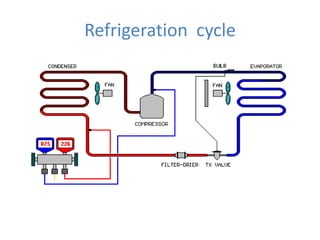
Refrigeration cycle
Two different pressures exist in the
refrigeration cycle. The evaporator or low
pressure, in the "low side" and the
condenser, or high pressure, in the "high
side".
These pressure areas are divided by the
other two components. On one end, is the
metering device which controls the
refrigerant flow, and on the other end, is the
compressor.
The Compressor
The compressor is the
heart of the system. The
compressor does just what
it’s name is. It compresses
the low pressure
refrigerant vapor from the
evaporator and compresses
it into a high pressure
vapor.
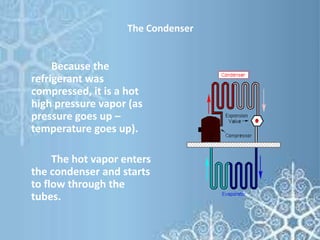
The Condenser

Because the
refrigerant was
compressed, it is a hot
high pressure vapor (as
pressure goes up –
temperature goes up).
The hot vapor enters
the condenser and starts
to flow through the
tubes.
Cool air is blown across the out side of the
finned tubes of the condenser (usually by a fan
or water with a pump).
Since the air is cooler than the
refrigerant, heat jumps from the tubing to the
cooler air (energy goes from hot to cold –
“latent heat”).
As the heat is removed from the
refrigerant, it reaches it’s “saturated
temperature” and starts to “flash” (change
states), into a high pressure liquid.
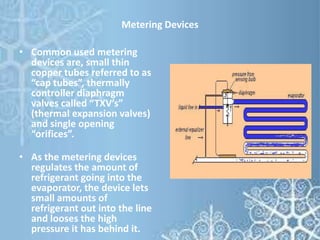
Metering Devices
• Common used metering
devices are, small thin
copper tubes referred to as
“cap tubes”, thermally
controller diaphragm
valves called “TXV’s”
(thermal expansion valves)
and single opening
“orifices”.
• As the metering devices
regulates the amount of
refrigerant going into the
evaporator, the device lets
small amounts of
refrigerant out into the line
and looses the high
pressure it has behind it.
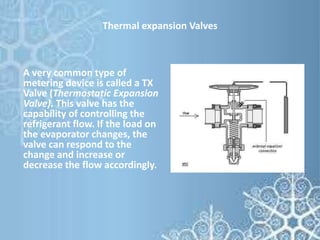
Thermal expansion Valves

A very common type of
metering device is called a TX
Valve (Thermostatic Expansion
Valve). This valve has the
capability of controlling the
refrigerant flow. If the load on
the evaporator changes, the
valve can respond to the
change and increase or
decrease the flow accordingly.
The Evaporator
The evaporator is where
the heat is removed from
your house , business or
refrigeration box.
The cooler refrigerant in
the evaporator tubes,
absorb the warm room air.
The change of temperature
causes the refrigerant to
“flash” or “boil”, and
changes from a low
pressure liquid to a low
pressure cold vapor.

The low pressure vapor is
pulled into the compressor
and the cycle starts over.
Basic refrigeration  cycle

Basic refrigeration cycle

  • 1.
    Basic refrigeration cycle Ninasri maulani (121624023) TPTU 2012
  • 2.
    The main components • • • • Thereare four main components in a refrigeration system: The Compressor The Condensing Coil The Metering Device The Evaporator
  • 3.
  • 4.
    Two different pressuresexist in the refrigeration cycle. The evaporator or low pressure, in the "low side" and the condenser, or high pressure, in the "high side". These pressure areas are divided by the other two components. On one end, is the metering device which controls the refrigerant flow, and on the other end, is the compressor.
  • 5.
    The Compressor The compressoris the heart of the system. The compressor does just what it’s name is. It compresses the low pressure refrigerant vapor from the evaporator and compresses it into a high pressure vapor.
  • 6.
    The Condenser Because the refrigerantwas compressed, it is a hot high pressure vapor (as pressure goes up – temperature goes up). The hot vapor enters the condenser and starts to flow through the tubes.
  • 7.
    Cool air isblown across the out side of the finned tubes of the condenser (usually by a fan or water with a pump). Since the air is cooler than the refrigerant, heat jumps from the tubing to the cooler air (energy goes from hot to cold – “latent heat”). As the heat is removed from the refrigerant, it reaches it’s “saturated temperature” and starts to “flash” (change states), into a high pressure liquid.
  • 8.
    Metering Devices • Commonused metering devices are, small thin copper tubes referred to as “cap tubes”, thermally controller diaphragm valves called “TXV’s” (thermal expansion valves) and single opening “orifices”. • As the metering devices regulates the amount of refrigerant going into the evaporator, the device lets small amounts of refrigerant out into the line and looses the high pressure it has behind it.
  • 9.
    Thermal expansion Valves Avery common type of metering device is called a TX Valve (Thermostatic Expansion Valve). This valve has the capability of controlling the refrigerant flow. If the load on the evaporator changes, the valve can respond to the change and increase or decrease the flow accordingly.
  • 10.
    The Evaporator The evaporatoris where the heat is removed from your house , business or refrigeration box. The cooler refrigerant in the evaporator tubes, absorb the warm room air. The change of temperature causes the refrigerant to “flash” or “boil”, and changes from a low pressure liquid to a low pressure cold vapor. The low pressure vapor is pulled into the compressor and the cycle starts over.