Refrigeration And Cooling System Seminar
Components of refrigeration system
Introduction
Components of refrigeration system are the main body or part of
the system, they plays their role in maintaining refrigerated
space.
There are four basic components of a refrigeration system, these
are:
- Evaporator
- Compressor
- Condenser
- Expansion Valve
In order for the refrigeration cycle to operate successfully each
component must be present within the refrigeration system.
1. EVAPORATORS
The evaporator is one of the main components of a refrigeration system,
in which refrigerant evaporates for the purpose of extracting heat from
the surrounding air, chilled water, or other substances.
Evaporators can be classified into three categories, depending on the
medium or substance to be cooled:
 Air cooler
 Liquid cooler
 Solid cooler
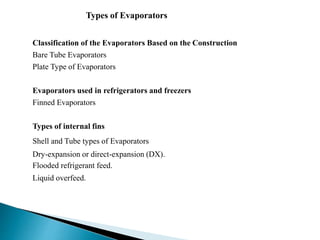
Classification of the Evaporators Based on the Construction
Bare Tube Evaporators
Plate Type of Evaporators
Evaporators used in refrigerators and freezers
Finned Evaporators
Types of internal fins
Shell and Tube types of Evaporators
Dry-expansion or direct-expansion (DX).
Flooded refrigerant feed.
Liquid overfeed.
Types of Evaporators
Factor affecting the heat transferring capacity of an evaporator
 Temperature difference
 Velocity of refrigerant
 Thickness of the evaporator coil wall.
 Contact surface area
Working principle of Evaporator
The purpose of the evaporator is to remove unwanted heat from the
product, via the liquid refrigerant. The liquid refrigerant contained within
the evaporator is boiling at a low-pressure. The level of this pressure is
determined by two factors:
- The rate at which the heat is absorbed from the product to the liquid
refrigerant in the evaporator
- The rate at which the low-pressure vapour is removed from the
evaporator by the compressor
To enable the transfer of heat, the temperature of the liquid refrigerant
must be lower than the temperature of the product being cooled. Once
transferred, the liquid refrigerant is drawn from the evaporator by the
compressor via the suction line. When leaving the evaporator coil the
liquid refrigerant is in vapor form
A refrigerant compressor is a machine used to compress the vapor refrigerant
from the evaporator and to raise it pressure so that the corresponding
saturation temperature is higher than that of the cooling medium.
Classification of compressor
the compressor classified into many ways some of them are
According to method of compression
 Reciprocating compressor
 Rotary compressor
 Centrifugal compressor
According to number of working strokes
 Single acting compressor
 Double acting compressor
2. COMPRESSOR
According to the number of stages
 Single-stage (single cylinder) compressor
 Multi-stage (multi cylinder) compressor
According to the method of drive employed
 Direct drive compressor
 Belt drive compressor
According to location of pre-mover
 Semi-hermetic compressor
 Hermetic compressor
 Effect of clearance factor
 Effect of valve pressure drops
 Effect of heat gain from the cylinder walls and re-expansion
index
 Effect of valve and piston leakage.
Factor affecting volumetric efficiency of compressor
Working principle of compressor
Compression is the first step in the refrigeration cycle, Refrigerant enters the
compressor as low-pressure, low-temperature gas, and leaves the compressor as
a high-pressure, high-temperature gas.
The purpose of the compressor is to draw the low-temperature, low-pressure
vapor from the evaporator via the suction line. Once drawn, the vapor is
compressed. When vapor is compressed it rises in temperature. Therefore, the
compressor transforms the vapor from a low-temperature vapor to a high-
temperature vapor, in turn increasing the pressure. The vapor is then released
from the compressor in to the discharge line.
The compressor draws in the superheated refrigerant vapor (B) and
compresses it to a pressure and temperature (C) high enough that it
can reject heat to another fluid. This hot, high-pressure refrigerant
vapor then travels to the condenser
Introduction
The condenser is basically a heat exchanger where the heat absorbed by the
refrigerant during the evaporating process is given off to the condensing
medium.
Type of condenser
There are three common types of condensers
 Air-cooled
 Water-cooled
 Evaporative
3. CONDENSER
Factor affecting the condenser capacity.
 Material
 Amount of contact
 Temperature difference
Working principle of Condenser
The purpose of the condenser is to extract heat from the refrigerant to the outside
air. The condenser is usually installed on the reinforced roof of the building, which
enables the transfer of heat. Fans mounted above the condenser unit are used to
draw air through the condenser coils. The temperature of the high-pressure vapor
determines the temperature at which the condensation begins. As heat has to flow
from the condenser to the air, the condensation temperature must be higher than
that of the air; usually between -12°C and -1°C.
The high-pressure vapor within the condenser is then cooled to the point where it
becomes a liquid refrigerant once more, whilst retaining some heat. The liquid
refrigerant then flows from the condenser in to the liquid line.
Within the condenser, heat is transferred from the hot refrigerant vapor to
relatively cool ambient air or cooling water. This reduction in the heat content of
the refrigerant vapor causes it to desupperheat, condense into liquid, and further
sub cool before leaving the condenser (D) for the expansion device.
Introduction
In modern refrigeration practice, a wide variety of refrigerant control
devices are used to obtain efficient economic operation. Small systems
with manual control or simple “on-off” automatic control may require
only one or two controls, but large systems with more elaborate
automatic control may have a multitude of controls, the proper
operation of each being essential to the satisfactory performance of the
system.
4. EXPANSION DEVICE
Types Of Refrigerant Flow Control Devices
 Thermostatic Expansion Valves
 Capillary Tubes
 Float Valves
 Solenoid Valves
 Low Pressure And High Pressure Controls
 Manual Shut-off Valves
Working principle of Expansion Valve
Within the refrigeration system, the expansion valve is located at the end of the
liquid line, before the evaporator. The high-pressure liquid reaches the
expansion valve, having come from the condenser. The valve then reduces the
pressure of the refrigerant as it passes through the orifice, which is located
inside the valve. On reducing the pressure, the temperature of the refrigerant
also decreases to a level below the surrounding air. This low-pressure, low-
temperature liquid is then pumped in to the evaporator.
Finally, the high-pressure liquid refrigerant (D) flows through the expansion
device, causing a large pressure drop that reduces the pressure of the refrigerant
to that of the evaporator. This pressure reduction causes a small portion of the
liquid to boil off, or flash, cooling the remaining refrigerant to the desired
evaporator temperature.
The cooled mixture of liquid and vapor refrigerant then enters the evaporator
(A) to repeat the cycle.
Intern ppt ..kk [Autosaved].pptx

Intern ppt ..kk [Autosaved].pptx

  • 1.
  • 3.
    Components of refrigerationsystem Introduction Components of refrigeration system are the main body or part of the system, they plays their role in maintaining refrigerated space. There are four basic components of a refrigeration system, these are: - Evaporator - Compressor - Condenser - Expansion Valve In order for the refrigeration cycle to operate successfully each component must be present within the refrigeration system.
  • 4.
    1. EVAPORATORS The evaporatoris one of the main components of a refrigeration system, in which refrigerant evaporates for the purpose of extracting heat from the surrounding air, chilled water, or other substances. Evaporators can be classified into three categories, depending on the medium or substance to be cooled:  Air cooler  Liquid cooler  Solid cooler
  • 5.
    Classification of theEvaporators Based on the Construction Bare Tube Evaporators Plate Type of Evaporators Evaporators used in refrigerators and freezers Finned Evaporators Types of internal fins Shell and Tube types of Evaporators Dry-expansion or direct-expansion (DX). Flooded refrigerant feed. Liquid overfeed. Types of Evaporators
  • 6.
    Factor affecting theheat transferring capacity of an evaporator  Temperature difference  Velocity of refrigerant  Thickness of the evaporator coil wall.  Contact surface area
  • 7.
    Working principle ofEvaporator The purpose of the evaporator is to remove unwanted heat from the product, via the liquid refrigerant. The liquid refrigerant contained within the evaporator is boiling at a low-pressure. The level of this pressure is determined by two factors: - The rate at which the heat is absorbed from the product to the liquid refrigerant in the evaporator - The rate at which the low-pressure vapour is removed from the evaporator by the compressor To enable the transfer of heat, the temperature of the liquid refrigerant must be lower than the temperature of the product being cooled. Once transferred, the liquid refrigerant is drawn from the evaporator by the compressor via the suction line. When leaving the evaporator coil the liquid refrigerant is in vapor form
  • 8.
    A refrigerant compressoris a machine used to compress the vapor refrigerant from the evaporator and to raise it pressure so that the corresponding saturation temperature is higher than that of the cooling medium. Classification of compressor the compressor classified into many ways some of them are According to method of compression  Reciprocating compressor  Rotary compressor  Centrifugal compressor According to number of working strokes  Single acting compressor  Double acting compressor 2. COMPRESSOR
  • 9.
    According to thenumber of stages  Single-stage (single cylinder) compressor  Multi-stage (multi cylinder) compressor According to the method of drive employed  Direct drive compressor  Belt drive compressor According to location of pre-mover  Semi-hermetic compressor  Hermetic compressor
  • 10.
     Effect ofclearance factor  Effect of valve pressure drops  Effect of heat gain from the cylinder walls and re-expansion index  Effect of valve and piston leakage. Factor affecting volumetric efficiency of compressor
  • 11.
    Working principle ofcompressor Compression is the first step in the refrigeration cycle, Refrigerant enters the compressor as low-pressure, low-temperature gas, and leaves the compressor as a high-pressure, high-temperature gas. The purpose of the compressor is to draw the low-temperature, low-pressure vapor from the evaporator via the suction line. Once drawn, the vapor is compressed. When vapor is compressed it rises in temperature. Therefore, the compressor transforms the vapor from a low-temperature vapor to a high- temperature vapor, in turn increasing the pressure. The vapor is then released from the compressor in to the discharge line.
  • 12.
    The compressor drawsin the superheated refrigerant vapor (B) and compresses it to a pressure and temperature (C) high enough that it can reject heat to another fluid. This hot, high-pressure refrigerant vapor then travels to the condenser
  • 13.
    Introduction The condenser isbasically a heat exchanger where the heat absorbed by the refrigerant during the evaporating process is given off to the condensing medium. Type of condenser There are three common types of condensers  Air-cooled  Water-cooled  Evaporative 3. CONDENSER
  • 14.
    Factor affecting thecondenser capacity.  Material  Amount of contact  Temperature difference Working principle of Condenser The purpose of the condenser is to extract heat from the refrigerant to the outside air. The condenser is usually installed on the reinforced roof of the building, which enables the transfer of heat. Fans mounted above the condenser unit are used to draw air through the condenser coils. The temperature of the high-pressure vapor determines the temperature at which the condensation begins. As heat has to flow from the condenser to the air, the condensation temperature must be higher than that of the air; usually between -12°C and -1°C.
  • 15.
    The high-pressure vaporwithin the condenser is then cooled to the point where it becomes a liquid refrigerant once more, whilst retaining some heat. The liquid refrigerant then flows from the condenser in to the liquid line. Within the condenser, heat is transferred from the hot refrigerant vapor to relatively cool ambient air or cooling water. This reduction in the heat content of the refrigerant vapor causes it to desupperheat, condense into liquid, and further sub cool before leaving the condenser (D) for the expansion device.
  • 16.
    Introduction In modern refrigerationpractice, a wide variety of refrigerant control devices are used to obtain efficient economic operation. Small systems with manual control or simple “on-off” automatic control may require only one or two controls, but large systems with more elaborate automatic control may have a multitude of controls, the proper operation of each being essential to the satisfactory performance of the system. 4. EXPANSION DEVICE
  • 17.
    Types Of RefrigerantFlow Control Devices  Thermostatic Expansion Valves  Capillary Tubes  Float Valves  Solenoid Valves  Low Pressure And High Pressure Controls  Manual Shut-off Valves
  • 18.
    Working principle ofExpansion Valve Within the refrigeration system, the expansion valve is located at the end of the liquid line, before the evaporator. The high-pressure liquid reaches the expansion valve, having come from the condenser. The valve then reduces the pressure of the refrigerant as it passes through the orifice, which is located inside the valve. On reducing the pressure, the temperature of the refrigerant also decreases to a level below the surrounding air. This low-pressure, low- temperature liquid is then pumped in to the evaporator. Finally, the high-pressure liquid refrigerant (D) flows through the expansion device, causing a large pressure drop that reduces the pressure of the refrigerant to that of the evaporator. This pressure reduction causes a small portion of the liquid to boil off, or flash, cooling the remaining refrigerant to the desired evaporator temperature. The cooled mixture of liquid and vapor refrigerant then enters the evaporator (A) to repeat the cycle.