 The study of cells and micro organisms has changed

over time with the change in technology.
 These were studied in the beginning with hand lenses,
single lens microscope, light microscope
 Today we have electron microscopes.
 Two types of electron microscopes are used today:
SEM – Scanning electron microscope and TEM –
Transmission electron microscope.
 He discovered the microscope with one lens


Discovered
- bacteria
- blood cells
- spermatozoa
- protozoa




Uses the concept
cell for the first
time.
He used it when
he looked at the
microscopic
structure of cork
cells.


Describes the nucleus of a cell
Developed the cell theory:
- Plants and animals are made of groups
of cells.
- The cell is the basic unit of living
organisms


Expanded the cell theory:



He said that new cells formed by the
division of existing cells




Expanded the cell
theory more:
He said that all cells
can be traced to their
origin







All living organisms are made out of cells
New cells are formed by the division of
existing cells
The cell houses genes, which are the
blueprint for growth, functioning and
development of cells
The cell is the functional unit of life because
all chemical reactions of life take place
inside the cell




A cell is the basic unit of structure and function in
organisms.
Cells differ in size, shape and in function.
Two types of cells

 Prokaryotic or Eukaryotic cells.
 Only organisms of the domains Bacteria

and Archaea consist of prokaryotic cells –
cells without a membrane bound nucleus.
 Protists, fungi, animals and plants all
consist of eukaryotic cells – cell with a
membrane bound nucleus.
CELL WALL
(ONLY IN PLANT CELLS)

 Varies in thickness
 Consist of pectin (elasticity), cellulose fibrils held

together with non-cellulose substances (hardens the
cell when mature) and lignin (adds strength to cell
especially in woody plants)
 Cell wall is permeable and protects the inside of the
cell.
 Middle lamella (layer of adhesive substances) – holds
the cells together
 Plasmodesmata (pores) that connects the cytoplasm of
the connecting cells – selectively permeable
CELL MEMBRANE/PLASMA- (ANIMAL- AND
PLANT CELLS)
 Consist of 2
phospholipid layers
and proteins in
between.

 The phospholipid
layers are part
hydrophillic and part
hydrophobic
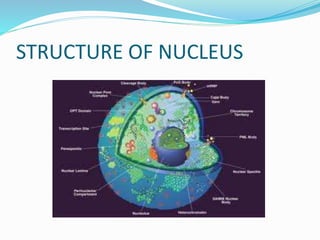
NUCLEUS
 +/- 5µm, largest organelle in cell.
 Enclosed by a nucleomembrane with

nuclear pores. Function: Protection
and add to selective permeability.
 Filled with nucleoplasma, a
nucleolus and chromatin. Function
of chromatin: carries genetic
material in the form of
chromosomes.
 Function of nucleolus: Produce rRNA
STRUCTURE OF NUCLEUS
Grade 10  the cell

Grade 10 the cell

  • 3.
     The studyof cells and micro organisms has changed over time with the change in technology.  These were studied in the beginning with hand lenses, single lens microscope, light microscope  Today we have electron microscopes.  Two types of electron microscopes are used today: SEM – Scanning electron microscope and TEM – Transmission electron microscope.
  • 4.
     He discoveredthe microscope with one lens  Discovered - bacteria - blood cells - spermatozoa - protozoa
  • 5.
      Uses the concept cellfor the first time. He used it when he looked at the microscopic structure of cork cells.
  • 6.
  • 7.
    Developed the celltheory: - Plants and animals are made of groups of cells. - The cell is the basic unit of living organisms
  • 8.
     Expanded the celltheory:  He said that new cells formed by the division of existing cells
  • 9.
      Expanded the cell theorymore: He said that all cells can be traced to their origin
  • 10.
        All living organismsare made out of cells New cells are formed by the division of existing cells The cell houses genes, which are the blueprint for growth, functioning and development of cells The cell is the functional unit of life because all chemical reactions of life take place inside the cell
  • 12.
      A cell isthe basic unit of structure and function in organisms. Cells differ in size, shape and in function.
  • 13.
    Two types ofcells  Prokaryotic or Eukaryotic cells.  Only organisms of the domains Bacteria and Archaea consist of prokaryotic cells – cells without a membrane bound nucleus.  Protists, fungi, animals and plants all consist of eukaryotic cells – cell with a membrane bound nucleus.
  • 19.
    CELL WALL (ONLY INPLANT CELLS)  Varies in thickness  Consist of pectin (elasticity), cellulose fibrils held together with non-cellulose substances (hardens the cell when mature) and lignin (adds strength to cell especially in woody plants)  Cell wall is permeable and protects the inside of the cell.  Middle lamella (layer of adhesive substances) – holds the cells together  Plasmodesmata (pores) that connects the cytoplasm of the connecting cells – selectively permeable
  • 20.
    CELL MEMBRANE/PLASMA- (ANIMAL-AND PLANT CELLS)  Consist of 2 phospholipid layers and proteins in between.  The phospholipid layers are part hydrophillic and part hydrophobic
  • 21.
    NUCLEUS  +/- 5µm,largest organelle in cell.  Enclosed by a nucleomembrane with nuclear pores. Function: Protection and add to selective permeability.  Filled with nucleoplasma, a nucleolus and chromatin. Function of chromatin: carries genetic material in the form of chromosomes.  Function of nucleolus: Produce rRNA
  • 22.