Introduction to energy
AP Physics 1, Mr. Trampleasure
Chapter 5, Serway/Faughn, College Physics
Jan 6th-10th, 2020
What is money?
€ Take a few minutes to develop a
definition.
€ Does an operational definition work
best?
€Could we define money something that
allows you to make a change in your life?
What is energy?
Take a few minutes to develop a definition.
Does an operational definition work best?
Could we define energy as something that
can create a change?
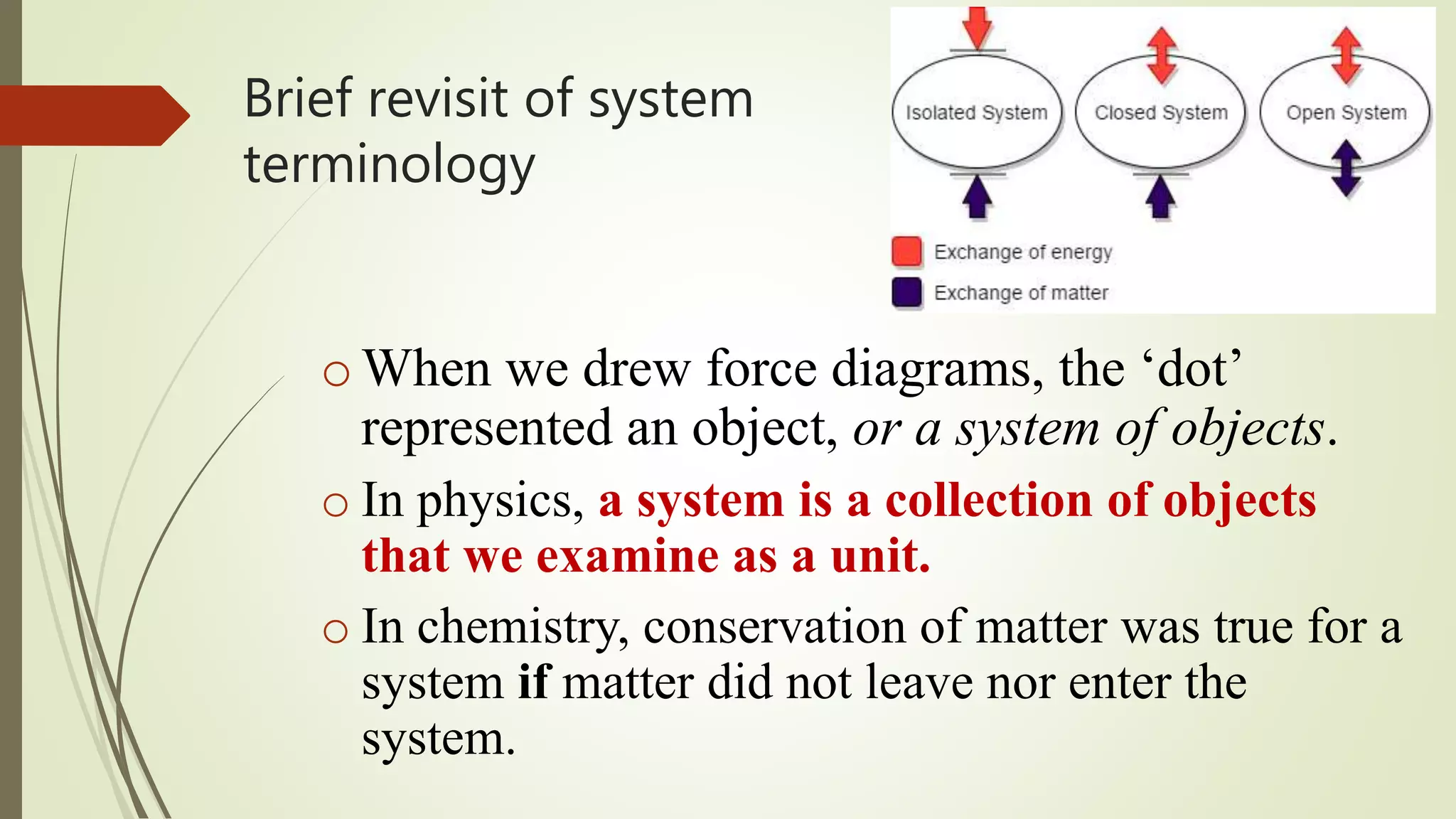
Brief revisit of system
terminology
oWhen we drew force diagrams, the ‘dot’
represented an object, or a system of objects.
o In physics, a system is a collection of objects
that we examine as a unit.
o In chemistry, conservation of matter was true for a
system if matter did not leave nor enter the
system.
An operational definition of energy:
A system can store energy in two primary
ways:
 In motion of the system
 In fields between two systems
Energy is stored in a system if
that system can affect a
change in another system.
Energystored
inmotion
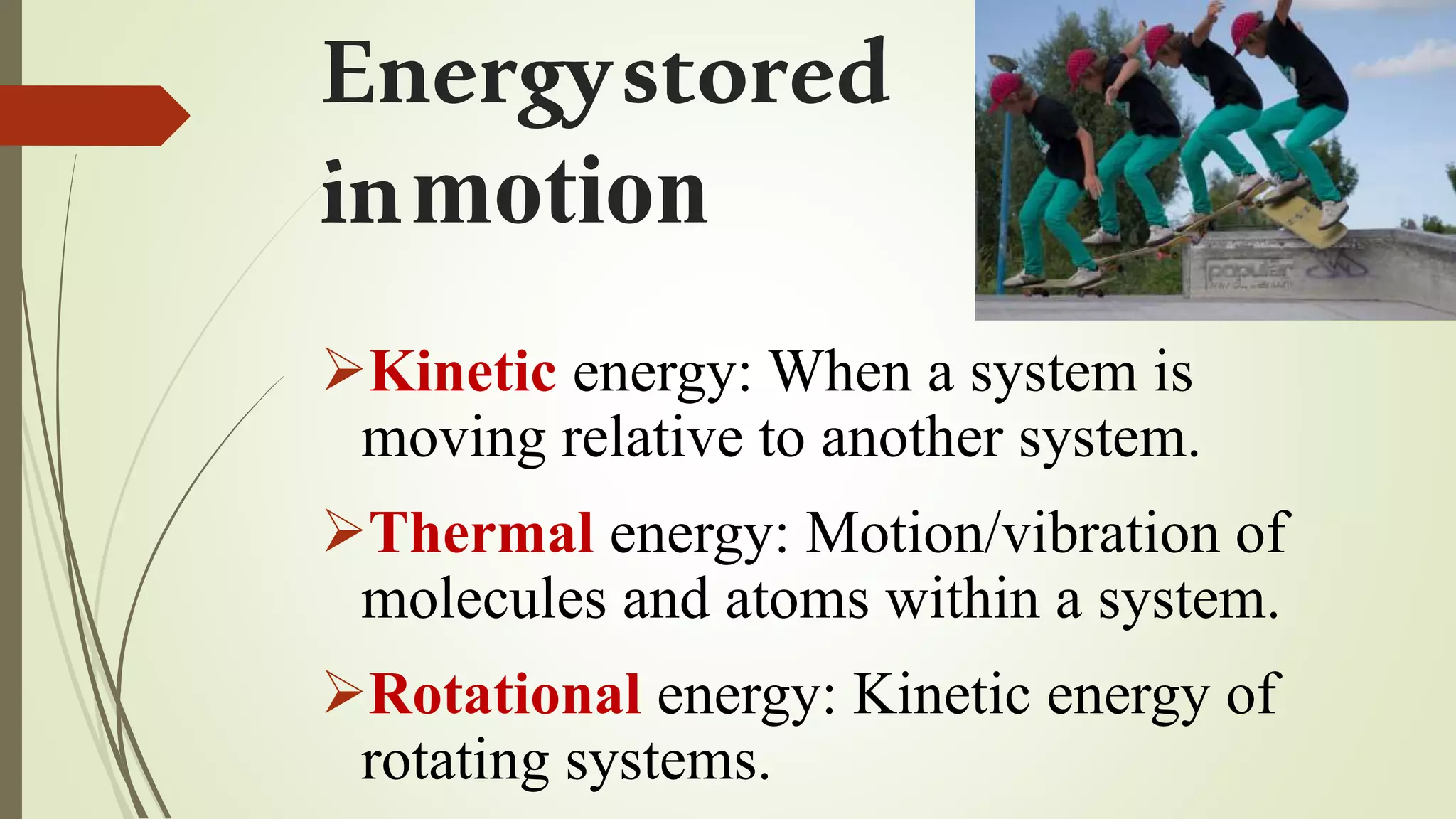
Kinetic energy: When a system is
moving relative to another system.
Thermal energy: Motion/vibration of
molecules and atoms within a system.
Rotational energy: Kinetic energy of
rotating systems.
Energystored
infields
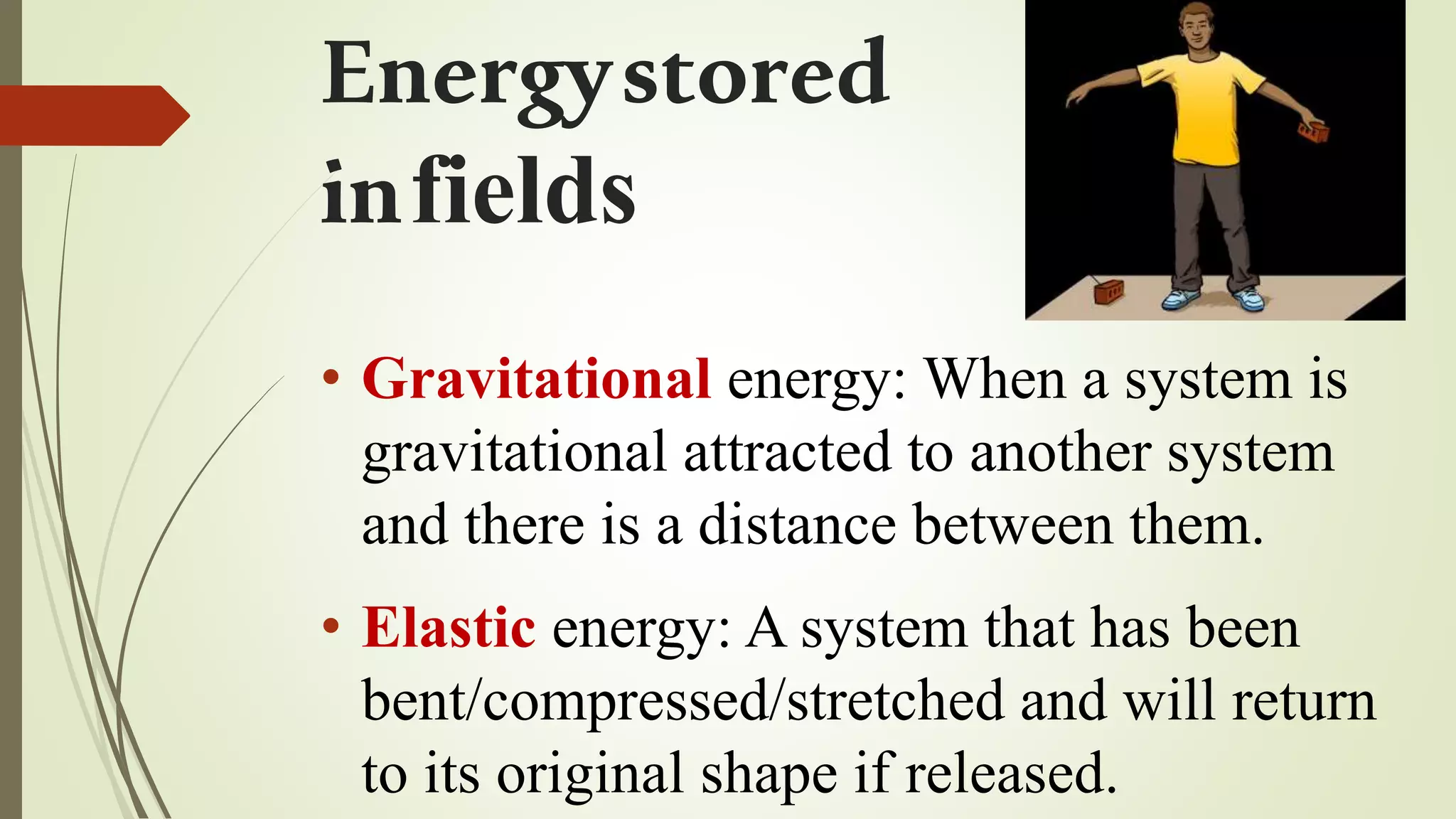
• Gravitational energy: When a system is
gravitational attracted to another system
and there is a distance between them.
• Elastic energy: A system that has been
bent/compressed/stretched and will return
to its original shape if released.
Energystored
infields
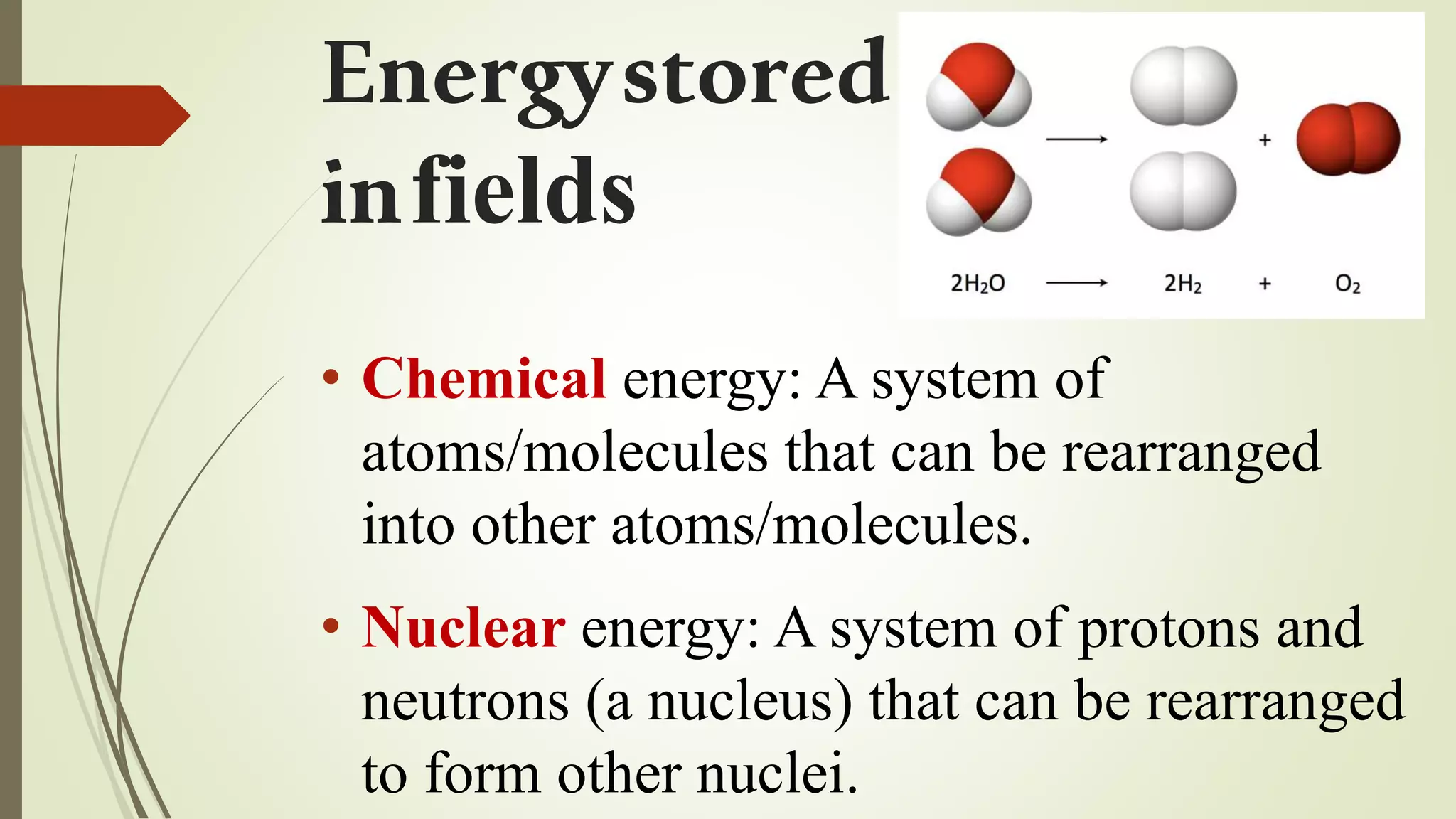
• Chemical energy: A system of
atoms/molecules that can be rearranged
into other atoms/molecules.
• Nuclear energy: A system of protons and
neutrons (a nucleus) that can be rearranged
to form other nuclei.
Energystorage
names&
abbreviations• K = Kinetic energy
• Krot = Rotational energy
• Ediss or Ktherm = Dissipated (usually thermal) energy
• UG = Gravitational energy
• Us = Elastic/spring energy
• Uchem = Chemical energy (we won't use this much)
• Unuclear = Nuclear energy (we won't use this much)
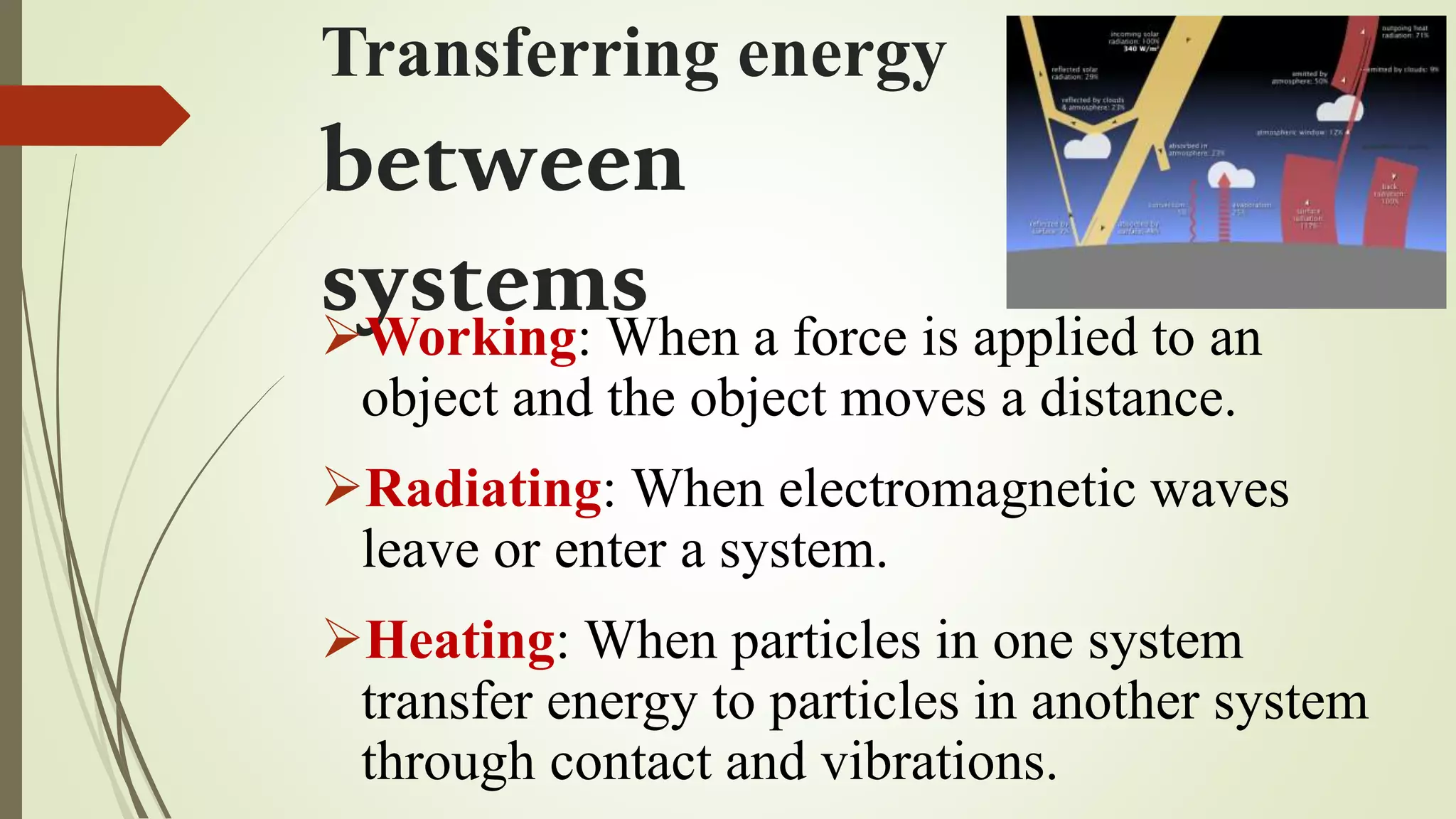
Transferring energy
between
systemsWorking: When a force is applied to an
object and the object moves a distance.
Radiating: When electromagnetic waves
leave or enter a system.
Heating: When particles in one system
transfer energy to particles in another system
through contact and vibrations.
Working
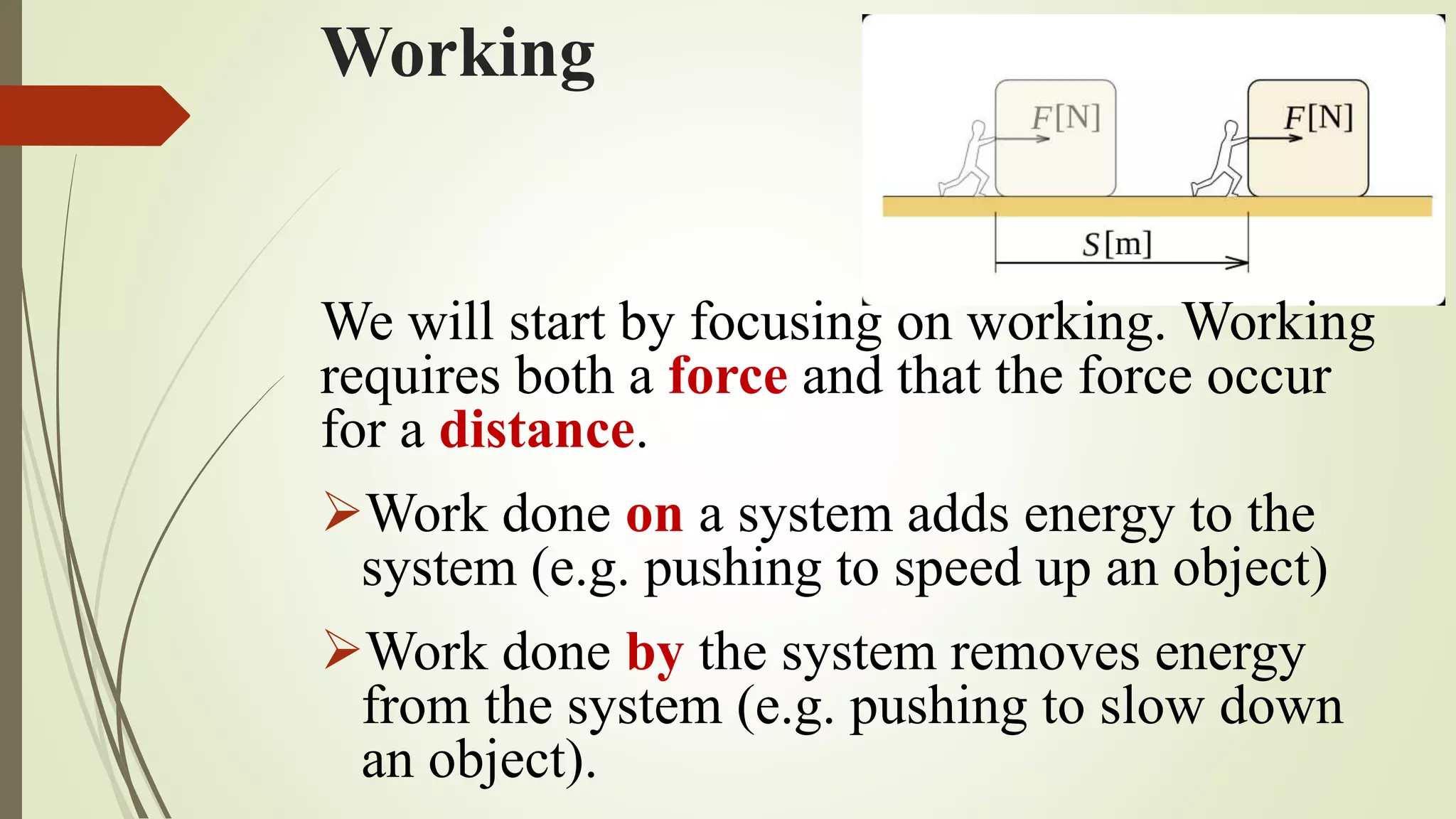
We will start by focusing on working. Working
requires both a force and that the force occur
for a distance.
Work done on a system adds energy to the
system (e.g. pushing to speed up an object)
Work done by the system removes energy
from the system (e.g. pushing to slow down
an object).
Working
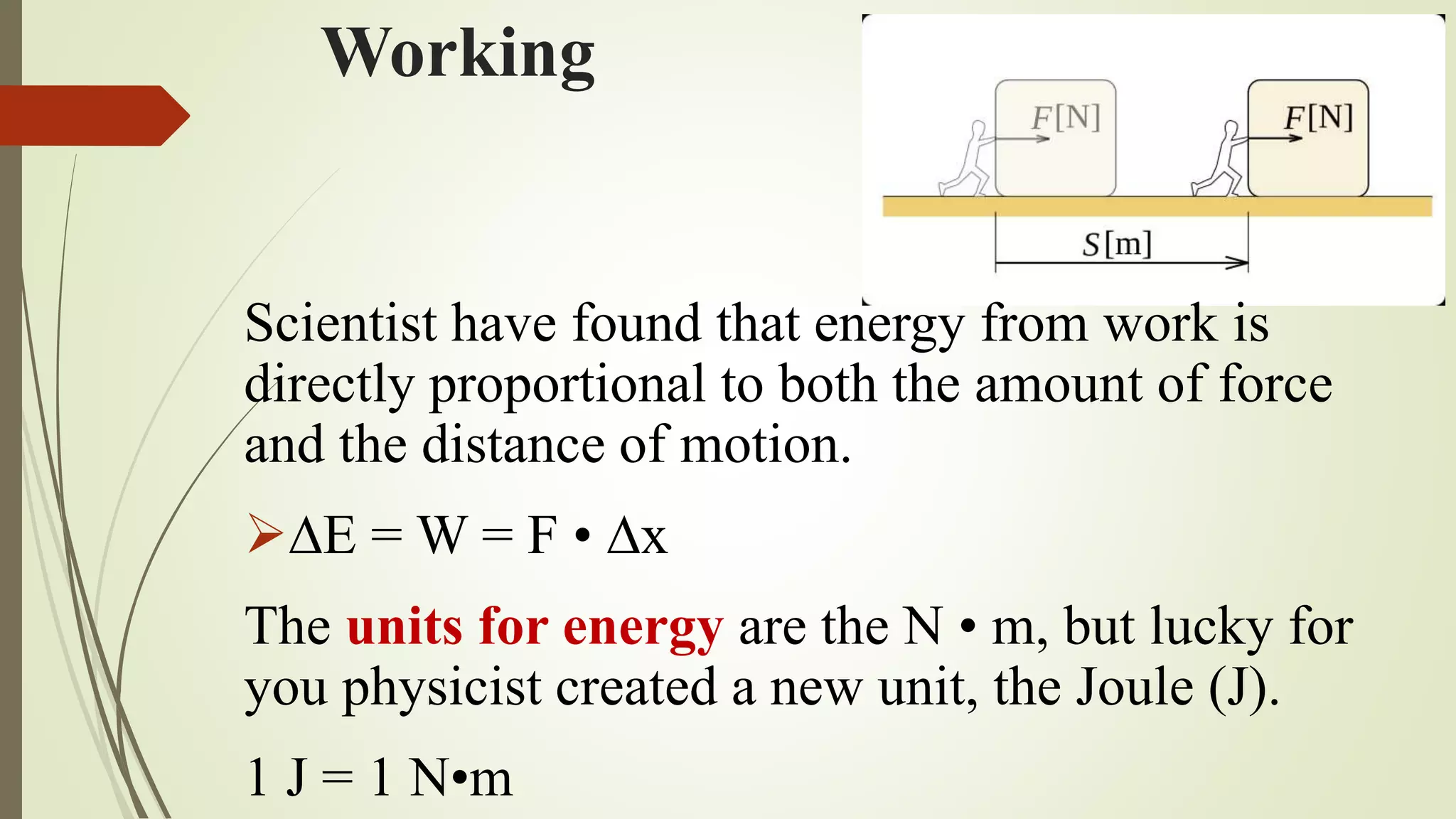
Scientist have found that energy from work is
directly proportional to both the amount of force
and the distance of motion.
E = W = F • x
The units for energy are the N • m, but lucky for
you physicist created a new unit, the Joule (J).
1 J = 1 N•m
Working
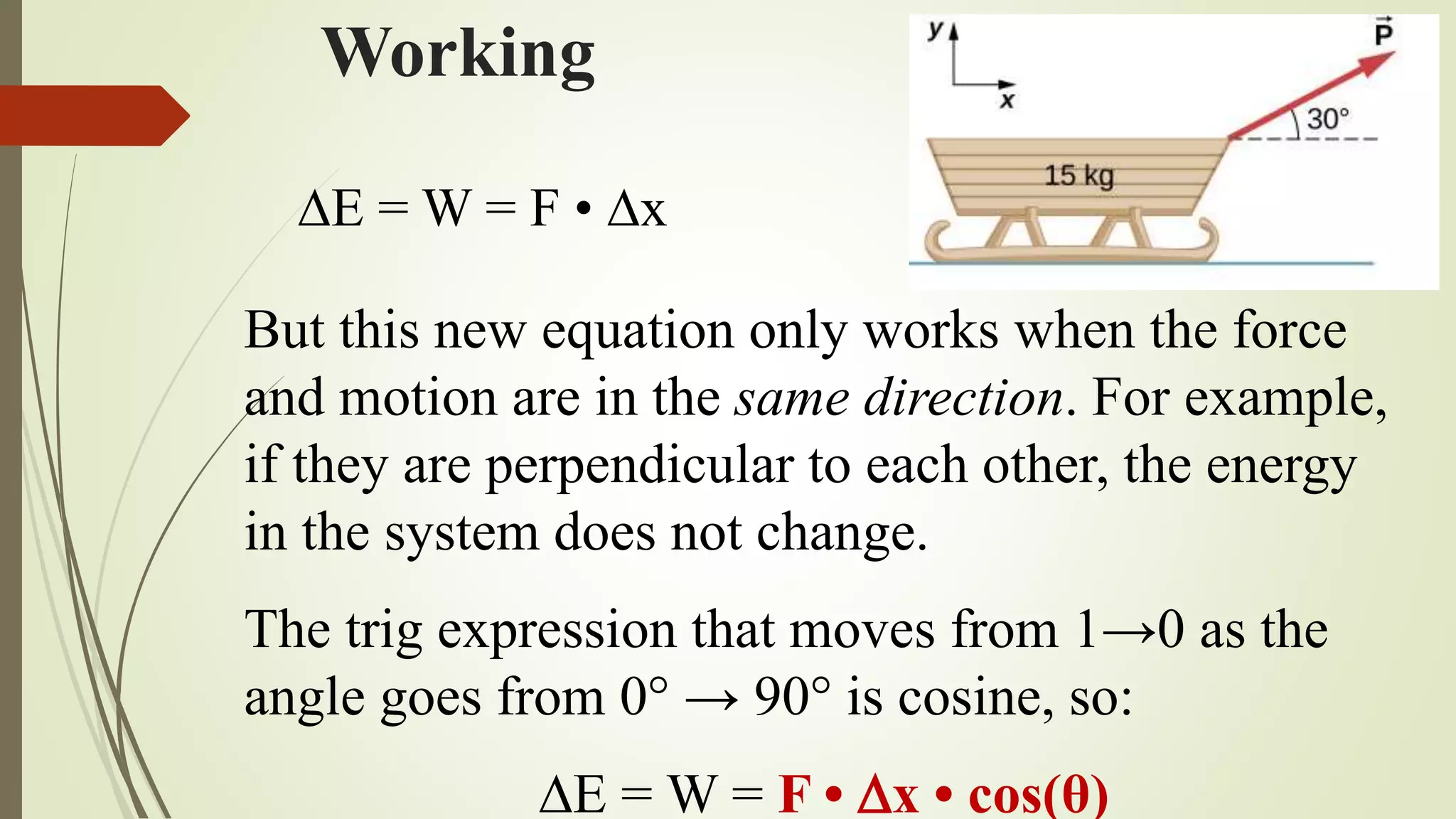
But this new equation only works when the force
and motion are in the same direction. For example,
if they are perpendicular to each other, the energy
in the system does not change.
The trig expression that moves from 1→0 as the
angle goes from 0° → 90° is cosine, so:
E = W = F • x • cos(θ)
E = W = F • x

AP Physics 1: Introduction to Energy

  • 1.
    Introduction to energy APPhysics 1, Mr. Trampleasure Chapter 5, Serway/Faughn, College Physics Jan 6th-10th, 2020
  • 2.
    What is money? €Take a few minutes to develop a definition. € Does an operational definition work best? €Could we define money something that allows you to make a change in your life?
  • 3.
    What is energy? Takea few minutes to develop a definition. Does an operational definition work best? Could we define energy as something that can create a change?
  • 4.
    Brief revisit ofsystem terminology oWhen we drew force diagrams, the ‘dot’ represented an object, or a system of objects. o In physics, a system is a collection of objects that we examine as a unit. o In chemistry, conservation of matter was true for a system if matter did not leave nor enter the system.
  • 5.
    An operational definitionof energy: A system can store energy in two primary ways:  In motion of the system  In fields between two systems Energy is stored in a system if that system can affect a change in another system.
  • 6.
    Energystored inmotion Kinetic energy: Whena system is moving relative to another system. Thermal energy: Motion/vibration of molecules and atoms within a system. Rotational energy: Kinetic energy of rotating systems.
  • 7.
    Energystored infields • Gravitational energy:When a system is gravitational attracted to another system and there is a distance between them. • Elastic energy: A system that has been bent/compressed/stretched and will return to its original shape if released.
  • 8.
    Energystored infields • Chemical energy:A system of atoms/molecules that can be rearranged into other atoms/molecules. • Nuclear energy: A system of protons and neutrons (a nucleus) that can be rearranged to form other nuclei.
  • 9.
    Energystorage names& abbreviations• K =Kinetic energy • Krot = Rotational energy • Ediss or Ktherm = Dissipated (usually thermal) energy • UG = Gravitational energy • Us = Elastic/spring energy • Uchem = Chemical energy (we won't use this much) • Unuclear = Nuclear energy (we won't use this much)
  • 10.
    Transferring energy between systemsWorking: Whena force is applied to an object and the object moves a distance. Radiating: When electromagnetic waves leave or enter a system. Heating: When particles in one system transfer energy to particles in another system through contact and vibrations.
  • 11.
    Working We will startby focusing on working. Working requires both a force and that the force occur for a distance. Work done on a system adds energy to the system (e.g. pushing to speed up an object) Work done by the system removes energy from the system (e.g. pushing to slow down an object).
  • 12.
    Working Scientist have foundthat energy from work is directly proportional to both the amount of force and the distance of motion. E = W = F • x The units for energy are the N • m, but lucky for you physicist created a new unit, the Joule (J). 1 J = 1 N•m
  • 13.
    Working But this newequation only works when the force and motion are in the same direction. For example, if they are perpendicular to each other, the energy in the system does not change. The trig expression that moves from 1→0 as the angle goes from 0° → 90° is cosine, so: E = W = F • x • cos(θ) E = W = F • x