Writing Reports
Writing Reports
•   The reports dealt with in this slide
    presentation are common in subjects like
    business and education.

•   You will normally be expected to identify a
    problem and carry out some enquiry to
    solve it.
Writing Reports
•   Based on your knowledge and reading you
    will offer different possible solutions.

•   You will need to carry out some kind of
    investigation to see which solution is best in
    a particular context.
Writing Reports
•   You need to describe your method of
    investigation and describe your results.

•   You need to evaluate the different solutions
    and make a choice.

•   You will have to justify your solution and
    make recommendations based on your
    study.
Writing Reports
•       The report is organized in the following way
        and will have headings and subheadings to
        show the structure. It may have bullet
        points and numbered lists and will probably
        include diagrams and charts.

    •     Title page: start by giving the title, the
          date and any other information you have
          been asked to provide.
Writing Reports
•   Table of contents: follow with a list of
    contents which shows the structure and
    content of the report.

•   Terms of reference: these provide the
    background to the report by defining the
    problem. They summarize the
    researcher’s understanding of the original
    brief.
Writing Reports
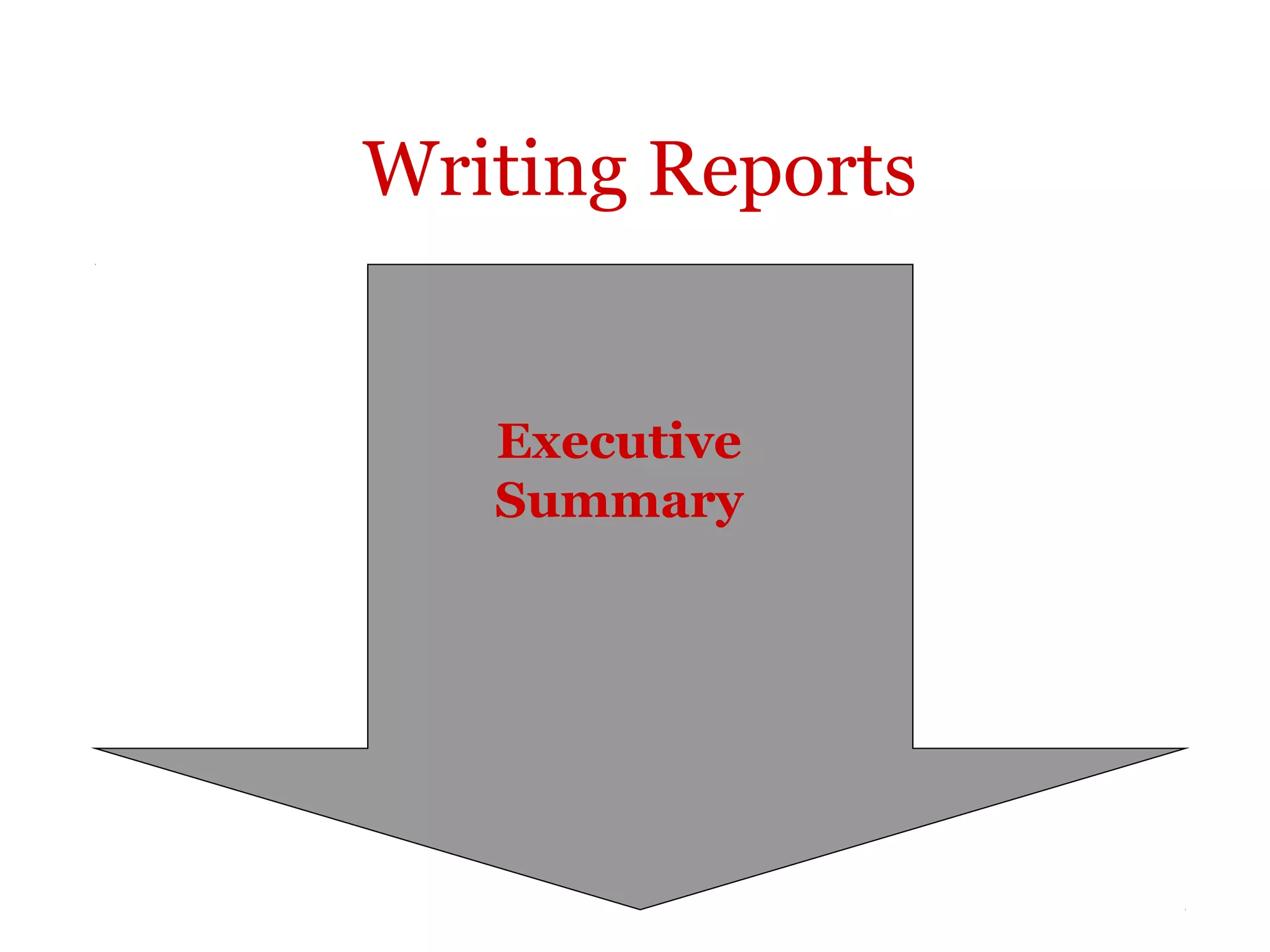
•   Executive summary: this summary or
    abstract summarizes the main points of
    the report, including conclusions and
    recommendations.

•   Background: this section introduces the
    problem and explains why the research
    was necessary.
Writing Reports
•   Research methods: this section explains
    how the research was carried out. One of
    its purposes is to persuade the reader that
    it was done well and the results should be
    believed.

•   Findings/Results: in this section, present
    the data that you have collected.
Writing Reports
•   Conclusions: interpret the data and draw
    out the key points.

•   Recommendations: in this section,
    identify any action arising from the
    conclusions and discuss what this
    involves in practice.
Writing Reports
•   Appendices: include here the fine detail
    (e.g. a copy of a questionnaire or raw
    data) that is not necessary for the main
    body of the report or that would clutter
    the report.

•   References: list all the materials that you
    referred to in writing the report.
Writing Reports
•   Note: Departments differ in what they
    think should be in a report. Check what is
    required.
Writing Reports
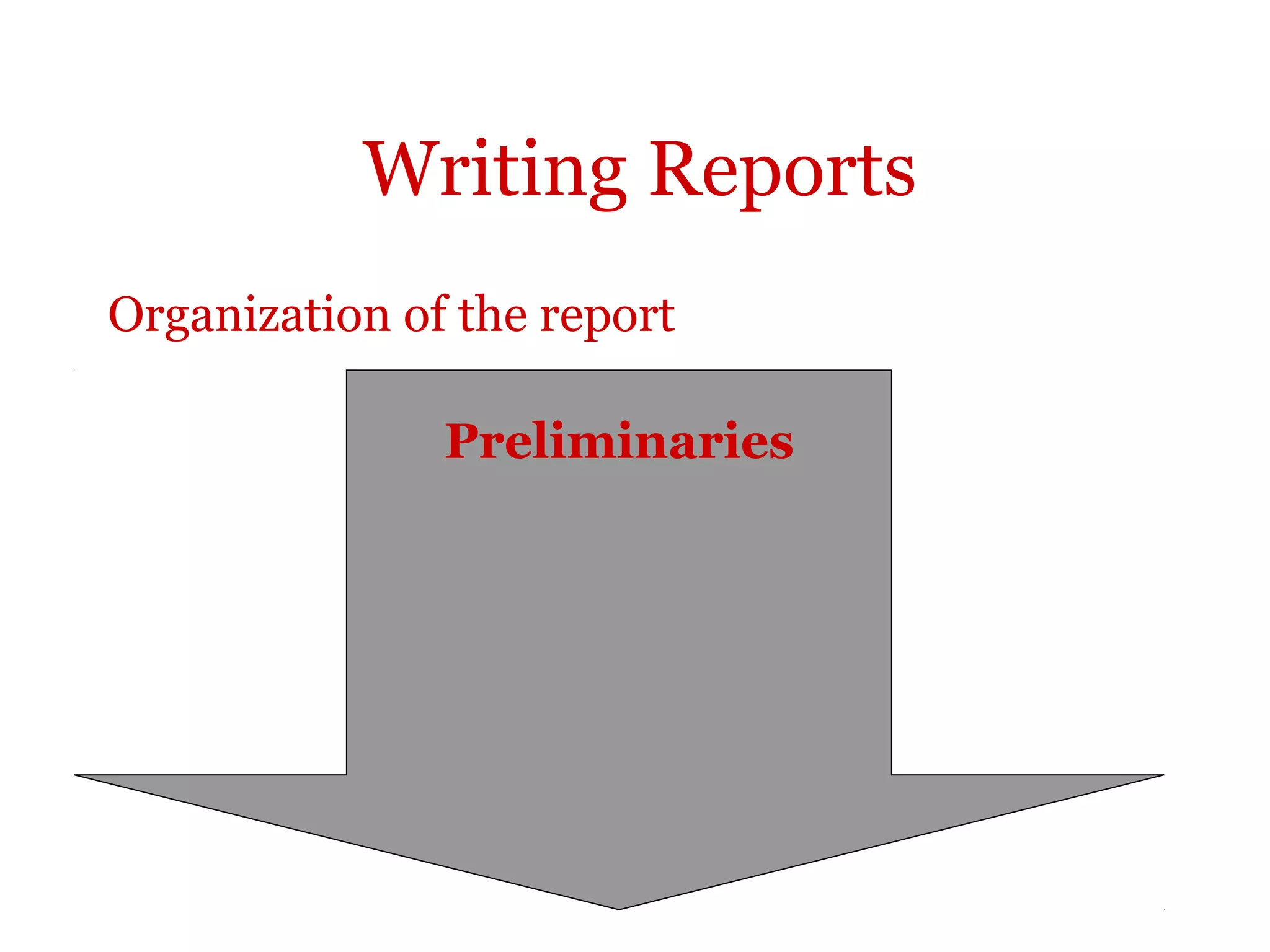
Organization of the report

               Preliminaries
Writing Reports


   Executive
   Summary
Writing Reports

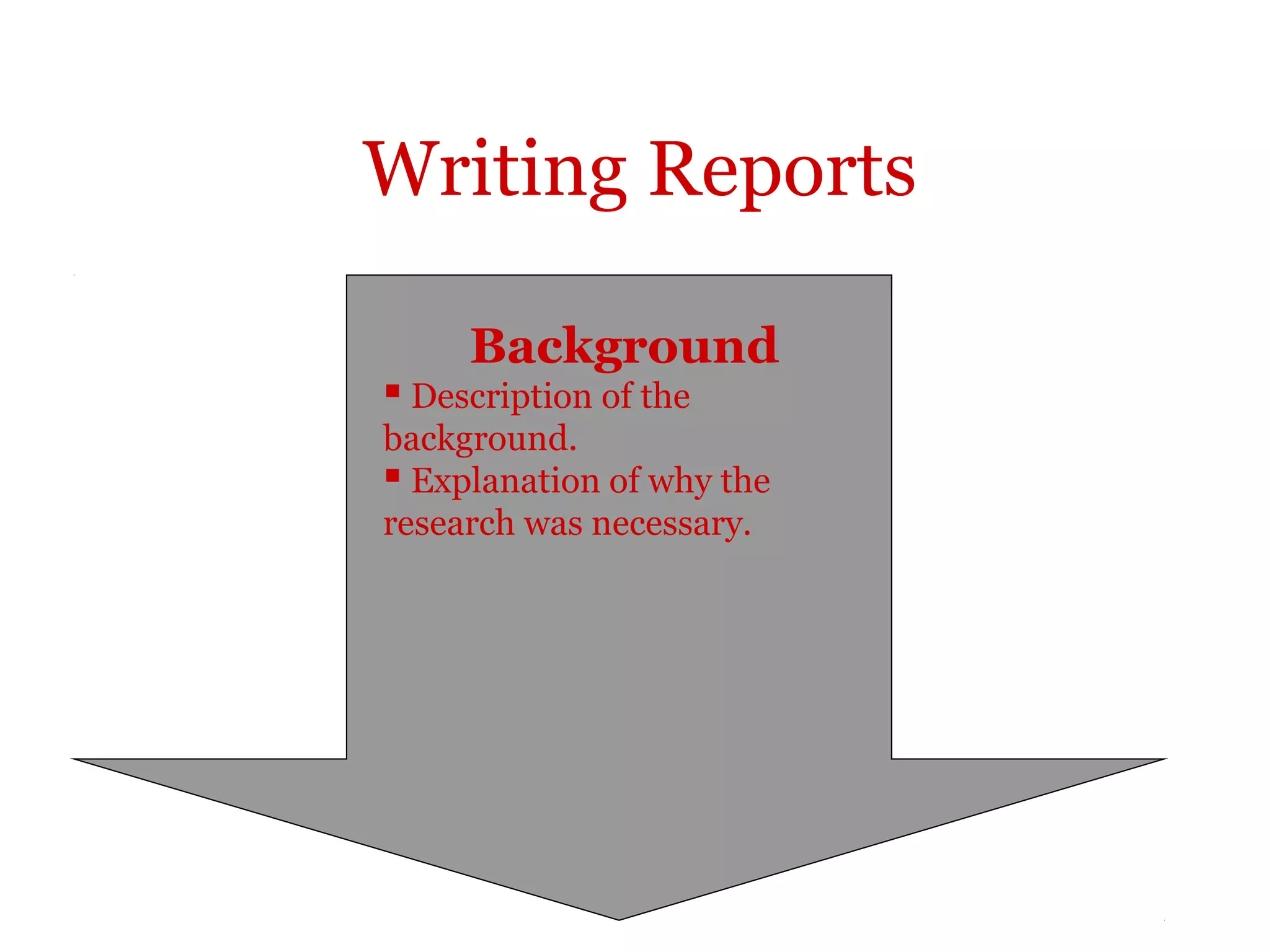
     Background
 Description of the
background.
 Explanation of why the
research was necessary.
Writing Reports

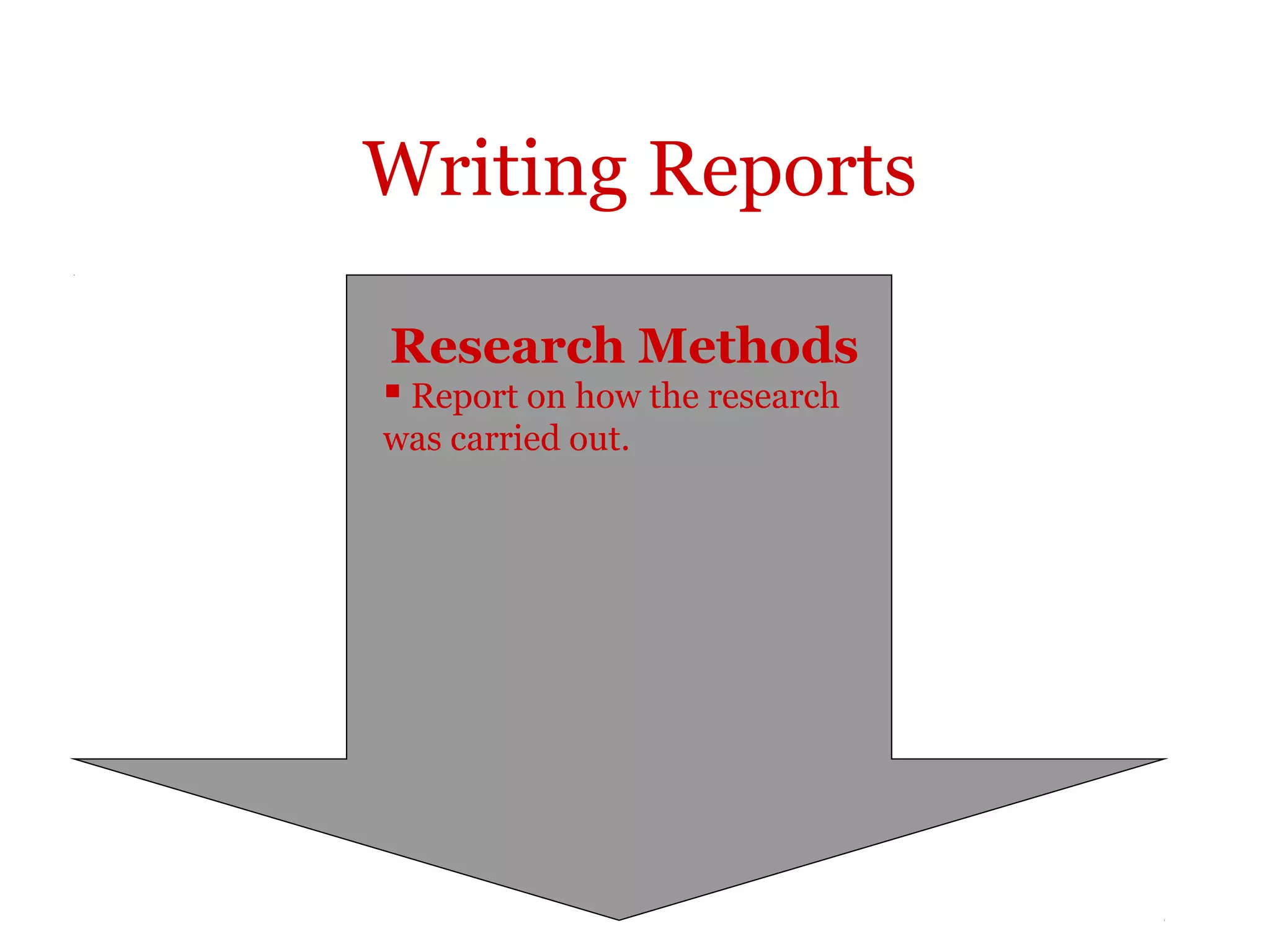
Research Methods
 Report on how the research
was carried out.
Writing Reports

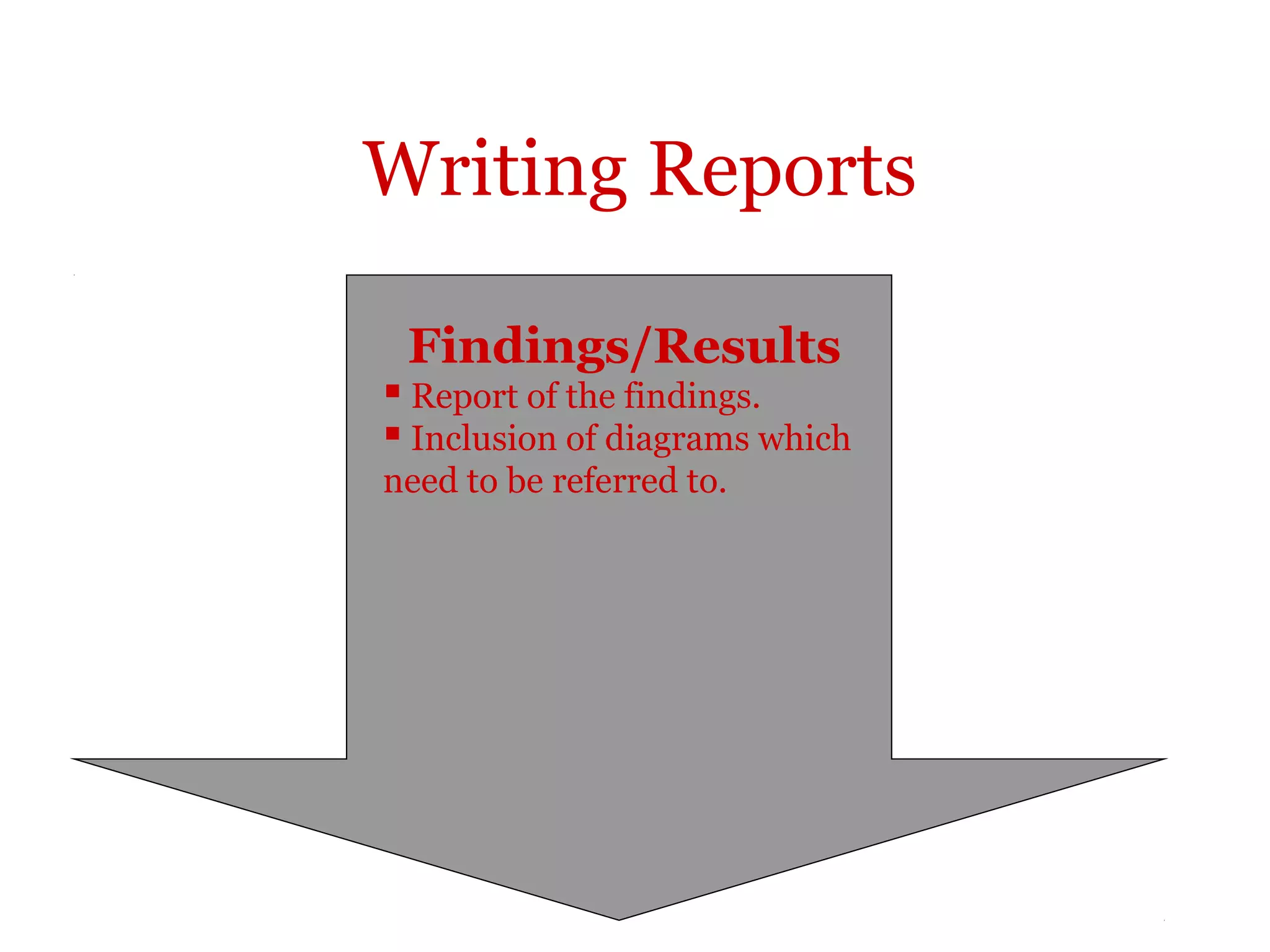
 Findings/Results
 Report of the findings.
 Inclusion of diagrams which
need to be referred to.
Writing Reports

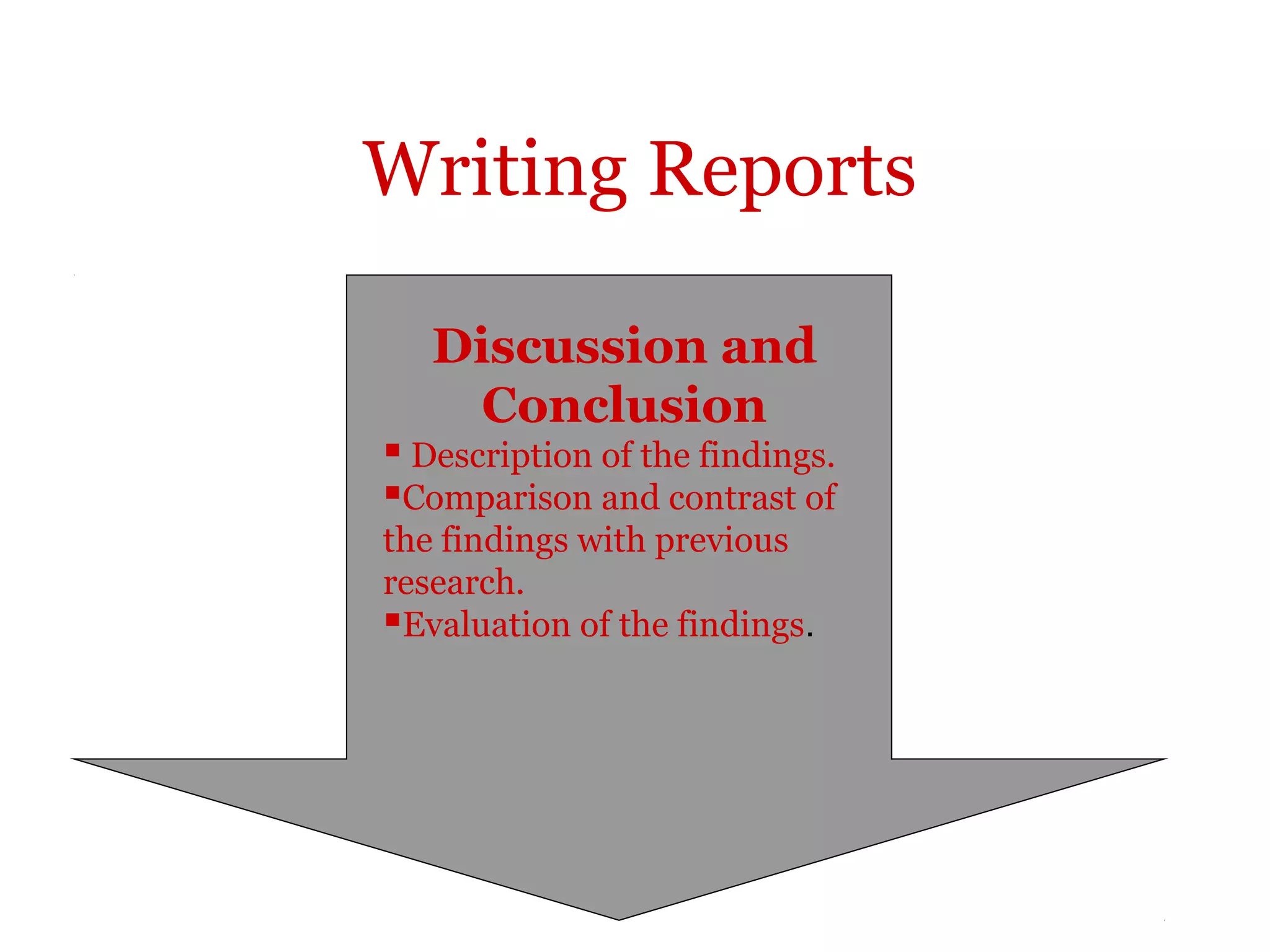
   Discussion and
     Conclusion
 Description of the findings.
Comparison and contrast of
the findings with previous
research.
Evaluation of the findings.
Writing Reports

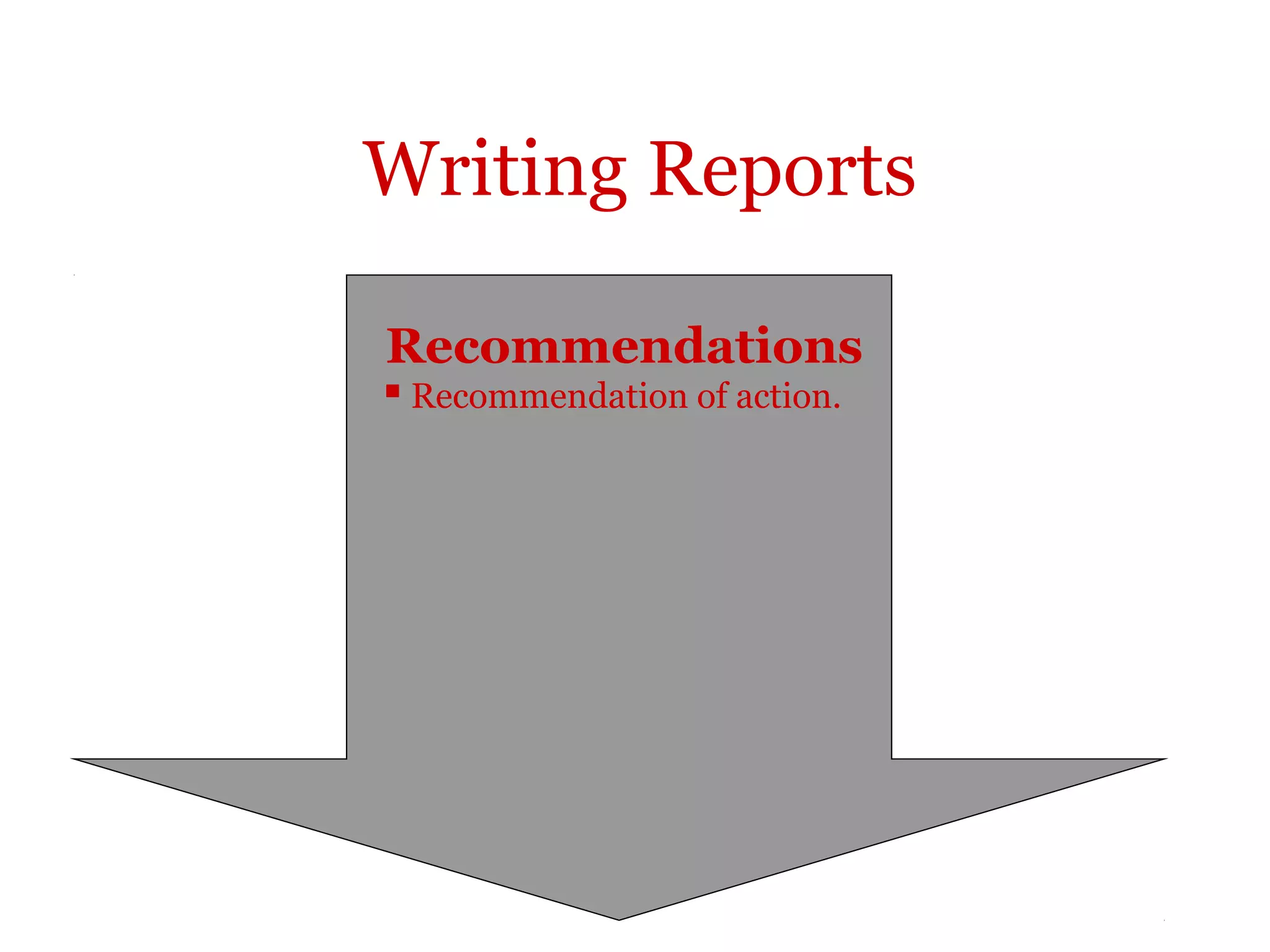
Recommendations
 Recommendation of action.
Writing Reports

   End matter
Writing Reports
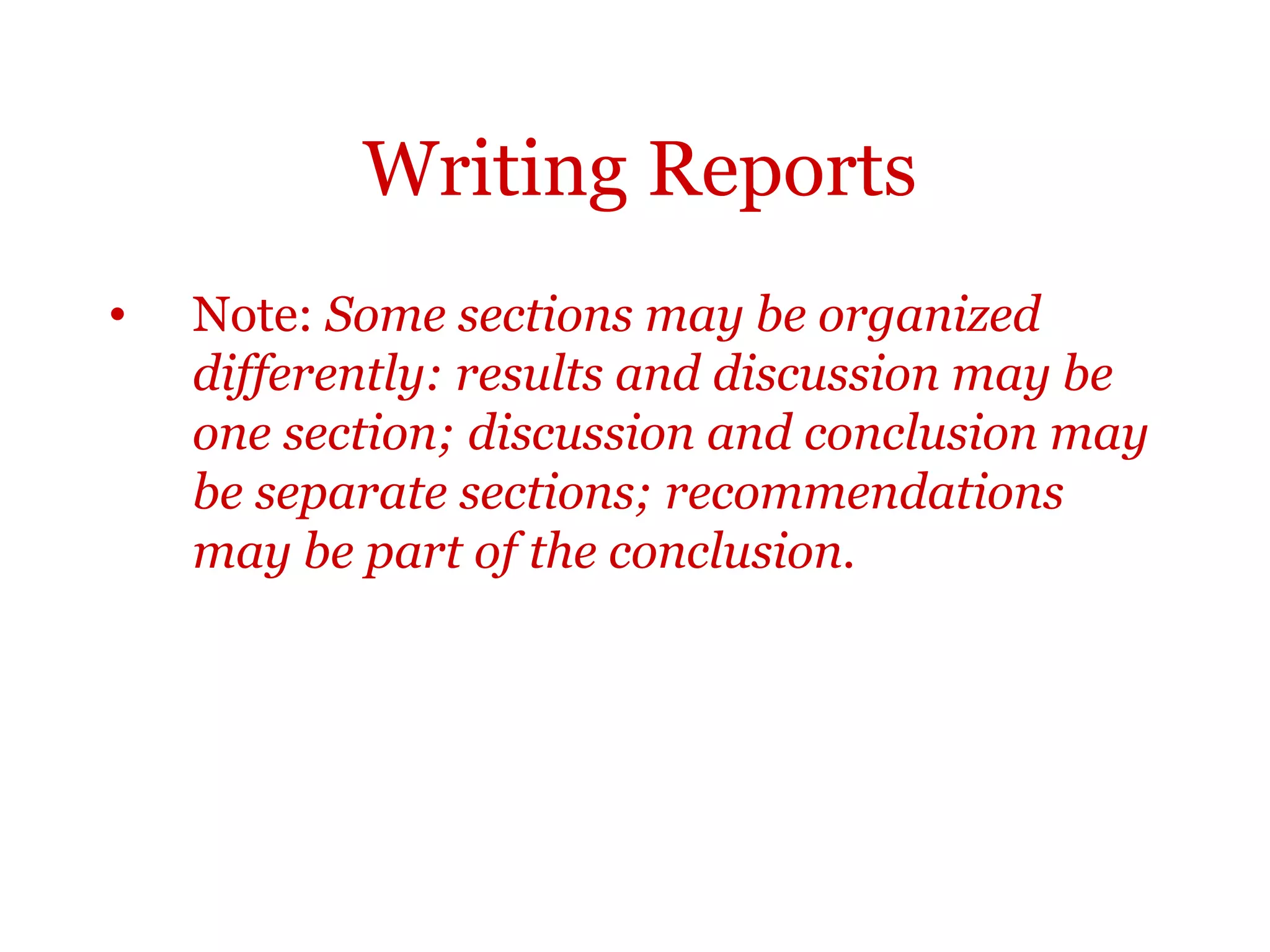
•   Note: Some sections may be organized
    differently: results and discussion may be
    one section; discussion and conclusion may
    be separate sections; recommendations
    may be part of the conclusion.

Report writing

  • 1.
  • 2.
    Writing Reports • The reports dealt with in this slide presentation are common in subjects like business and education. • You will normally be expected to identify a problem and carry out some enquiry to solve it.
  • 3.
    Writing Reports • Based on your knowledge and reading you will offer different possible solutions. • You will need to carry out some kind of investigation to see which solution is best in a particular context.
  • 4.
    Writing Reports • You need to describe your method of investigation and describe your results. • You need to evaluate the different solutions and make a choice. • You will have to justify your solution and make recommendations based on your study.
  • 5.
    Writing Reports • The report is organized in the following way and will have headings and subheadings to show the structure. It may have bullet points and numbered lists and will probably include diagrams and charts. • Title page: start by giving the title, the date and any other information you have been asked to provide.
  • 6.
    Writing Reports • Table of contents: follow with a list of contents which shows the structure and content of the report. • Terms of reference: these provide the background to the report by defining the problem. They summarize the researcher’s understanding of the original brief.
  • 7.
    Writing Reports • Executive summary: this summary or abstract summarizes the main points of the report, including conclusions and recommendations. • Background: this section introduces the problem and explains why the research was necessary.
  • 8.
    Writing Reports • Research methods: this section explains how the research was carried out. One of its purposes is to persuade the reader that it was done well and the results should be believed. • Findings/Results: in this section, present the data that you have collected.
  • 9.
    Writing Reports • Conclusions: interpret the data and draw out the key points. • Recommendations: in this section, identify any action arising from the conclusions and discuss what this involves in practice.
  • 10.
    Writing Reports • Appendices: include here the fine detail (e.g. a copy of a questionnaire or raw data) that is not necessary for the main body of the report or that would clutter the report. • References: list all the materials that you referred to in writing the report.
  • 11.
    Writing Reports • Note: Departments differ in what they think should be in a report. Check what is required.
  • 12.
    Writing Reports Organization ofthe report Preliminaries
  • 13.
    Writing Reports Executive Summary
  • 14.
    Writing Reports Background  Description of the background.  Explanation of why the research was necessary.
  • 15.
    Writing Reports Research Methods Report on how the research was carried out.
  • 16.
    Writing Reports Findings/Results Report of the findings.  Inclusion of diagrams which need to be referred to.
  • 17.
    Writing Reports Discussion and Conclusion  Description of the findings. Comparison and contrast of the findings with previous research. Evaluation of the findings.
  • 18.
  • 19.
    Writing Reports End matter
  • 20.
    Writing Reports • Note: Some sections may be organized differently: results and discussion may be one section; discussion and conclusion may be separate sections; recommendations may be part of the conclusion.