Report Writing
BY: POOJA RAJ SRIVASTAVA
Concept
A factual and systematic account of a
specific business or professional
activity.
Objectives
• Presenting data
• Recording events & happenings
• Describing problems & suggesting solutions
• Analyzing situation or condition
• Giving feedback, suggestions or recommendations
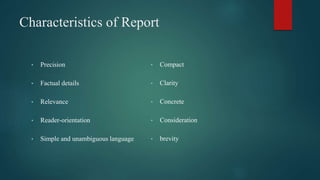
Characteristics of Report
• Precision
• Factual details
• Relevance
• Reader-orientation
• Simple and unambiguous language
• Compact
• Clarity
• Concrete
• Consideration
• brevity
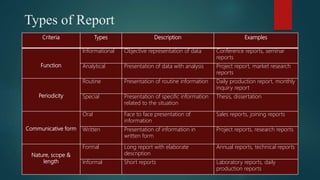
Types of Report
Criteria Types Description Examples
Function
Informational Objective representation of data Conference reports, seminar
reports
Analytical Presentation of data with analysis Project report, market research
reports
Periodicity
Routine Presentation of routine information Daily production report, monthly
inquiry report
Special Presentation of specific information
related to the situation
Thesis, dissertation
Communicative form
Oral Face to face presentation of
information
Sales reports, joining reports
Written Presentation of information in
written form
Project reports, research reports
Nature, scope &
length
Formal Long report with elaborate
description
Annual reports, technical reports
Informal Short reports Laboratory reports, daily
production reports
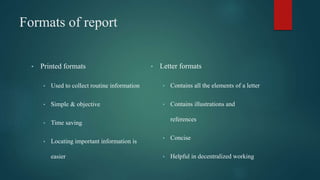
Formats of report
• Printed formats
• Used to collect routine information
• Simple & objective
• Time saving
• Locating important information is
easier
• Letter formats
• Contains all the elements of a letter
• Contains illustrations and
references
• Concise
• Helpful in decentralized working
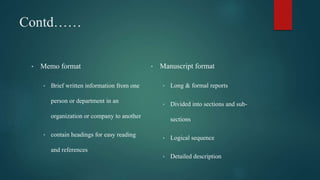
Contd……
• Memo format
• Brief written information from one
person or department in an
organization or company to another
• contain headings for easy reading
and references
• Manuscript format
• Long & formal reports
• Divided into sections and sub-
sections
• Logical sequence
• Detailed description
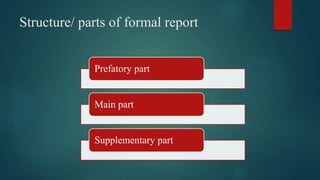
Structure/ parts of formal report
Prefatory part
Main part
Supplementary part
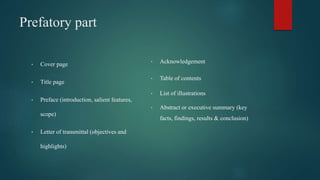
Prefatory part
• Cover page
• Title page
• Preface (introduction, salient features,
scope)
• Letter of transmittal (objectives and
highlights)
• Acknowledgement
• Table of contents
• List of illustrations
• Abstract or executive summary (key
facts, findings, results & conclusion)
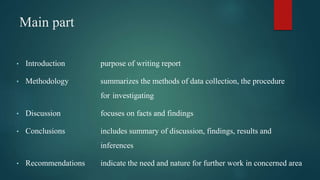
Main part
• Introduction purpose of writing report
• Methodology summarizes the methods of data collection, the procedure
for investigating
• Discussion focuses on facts and findings
• Conclusions includes summary of discussion, findings, results and
inferences
• Recommendations indicate the need and nature for further work in concerned area
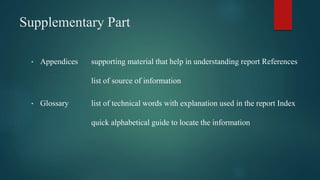
Supplementary Part
• Appendices supporting material that help in understanding report References
list of source of information
• Glossary list of technical words with explanation used in the report Index
quick alphabetical guide to locate the information
Writing strategies
• Analyze the problem & the purpose
• Determine the scope of the report
• Determine the needs of audience
• Gather all the information and record the source
Thank You!!

5. report writing

  • 1.
  • 2.
    Concept A factual andsystematic account of a specific business or professional activity.
  • 3.
    Objectives • Presenting data •Recording events & happenings • Describing problems & suggesting solutions • Analyzing situation or condition • Giving feedback, suggestions or recommendations
  • 4.
    Characteristics of Report •Precision • Factual details • Relevance • Reader-orientation • Simple and unambiguous language • Compact • Clarity • Concrete • Consideration • brevity
  • 5.
    Types of Report CriteriaTypes Description Examples Function Informational Objective representation of data Conference reports, seminar reports Analytical Presentation of data with analysis Project report, market research reports Periodicity Routine Presentation of routine information Daily production report, monthly inquiry report Special Presentation of specific information related to the situation Thesis, dissertation Communicative form Oral Face to face presentation of information Sales reports, joining reports Written Presentation of information in written form Project reports, research reports Nature, scope & length Formal Long report with elaborate description Annual reports, technical reports Informal Short reports Laboratory reports, daily production reports
  • 6.
    Formats of report •Printed formats • Used to collect routine information • Simple & objective • Time saving • Locating important information is easier • Letter formats • Contains all the elements of a letter • Contains illustrations and references • Concise • Helpful in decentralized working
  • 7.
    Contd…… • Memo format •Brief written information from one person or department in an organization or company to another • contain headings for easy reading and references • Manuscript format • Long & formal reports • Divided into sections and sub- sections • Logical sequence • Detailed description
  • 8.
    Structure/ parts offormal report Prefatory part Main part Supplementary part
  • 9.
    Prefatory part • Coverpage • Title page • Preface (introduction, salient features, scope) • Letter of transmittal (objectives and highlights) • Acknowledgement • Table of contents • List of illustrations • Abstract or executive summary (key facts, findings, results & conclusion)
  • 10.
    Main part • Introductionpurpose of writing report • Methodology summarizes the methods of data collection, the procedure for investigating • Discussion focuses on facts and findings • Conclusions includes summary of discussion, findings, results and inferences • Recommendations indicate the need and nature for further work in concerned area
  • 11.
    Supplementary Part • Appendicessupporting material that help in understanding report References list of source of information • Glossary list of technical words with explanation used in the report Index quick alphabetical guide to locate the information
  • 12.
    Writing strategies • Analyzethe problem & the purpose • Determine the scope of the report • Determine the needs of audience • Gather all the information and record the source
  • 13.