THE CONCEPTUAL FRAMEWORK
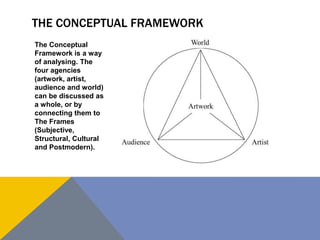
The Conceptual
Framework is a way
of analysing. The
four agencies
(artwork, artist,
audience and world)
can be discussed as
a whole, or by
connecting them to
The Frames
(Subjective,
Structural, Cultural
and Postmodern).
THE ARTWORK
• Is a bridge between the artist and the
audience.
• Is an artifact that reflects the ideas and
beliefs of a time and place.
• Complements or contests the traditions
of artmaking.
• Is an object that can be read to interpret
meaning or substance.
• Is shaped by the technology of the time.
• Demonstrates the technical resolution of
the artist’s ideas and approaches to
artmaking.
• Is a unique object that conveys the ideas
and views of the artist.
THE ARTIST
• Develops distinctive subjective viewpoints
through their artworks.
• Visually communicates their personal
experience.
• Visually documents events and ideas that are
reflected in their artwork.
• Explores new media and develop new aesthetic
conventions.
• Is a critical curator who constantly reflects upon
their own artmaking and refines the quality of
their work.
• Is a visionary who believes in what they do and
how they will represent their ideas and beliefs.
• Has their own idiosyncratic approach to
artmaking.
• Is guided by their individual philosophies in
artmaking.
THE AUDIENCE
• Includes the general public
responding to artworks, which is
different from the way critics and
curators respond.
• Includes specialised audiences,
such as critics and curators, and
their responses to artworks.
• Also involves historians who place
value on particular artworks
throughout history, suggesting their
importance.
• Includes patrons, who are people
who sponsor the artists by
commissioning them and
requesting particular forms of
representation within the artwork.
• Includes specific critics who
influence and govern the
reception of an artwork in terms
of it’s meaning and value.
• Can be shocked by an artist’s
new forms of representation.
THE WORLD
• Involves historic events that would have
influenced the artist’s approach to
artmaking.
• Refers to important people who shaped
the thinking of the world at the time the
artwork was made.
• Encompasses the spirit of the times, such
as what was in fashion, how society
managed itself, and the dominant political
force of the time.
• Includes other links between what was
going on in the world and the artworks
and artists of the time.
• Involves technical advances, which
influence the materials used in the
artwork.
• Includes beliefs and conventions of
society, for example, the difference
between Eastern and Western art, or
modern and postmodern artworks.
THE MOST IMPORTANT ASPECT TO
UNDERSTAND…
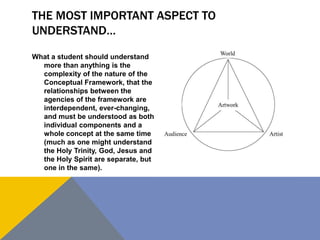
What a student should understand
more than anything is the
complexity of the nature of the
Conceptual Framework, that the
relationships between the
agencies of the framework are
interdependent, ever-changing,
and must be understood as both
individual components and a
whole concept at the same time
(much as one might understand
the Holy Trinity, God, Jesus and
the Holy Spirit are separate, but
one in the same).

The Conceptual Framework

  • 2.
    THE CONCEPTUAL FRAMEWORK TheConceptual Framework is a way of analysing. The four agencies (artwork, artist, audience and world) can be discussed as a whole, or by connecting them to The Frames (Subjective, Structural, Cultural and Postmodern).
  • 3.
    THE ARTWORK • Isa bridge between the artist and the audience. • Is an artifact that reflects the ideas and beliefs of a time and place. • Complements or contests the traditions of artmaking. • Is an object that can be read to interpret meaning or substance. • Is shaped by the technology of the time. • Demonstrates the technical resolution of the artist’s ideas and approaches to artmaking. • Is a unique object that conveys the ideas and views of the artist.
  • 4.
    THE ARTIST • Developsdistinctive subjective viewpoints through their artworks. • Visually communicates their personal experience. • Visually documents events and ideas that are reflected in their artwork. • Explores new media and develop new aesthetic conventions. • Is a critical curator who constantly reflects upon their own artmaking and refines the quality of their work. • Is a visionary who believes in what they do and how they will represent their ideas and beliefs. • Has their own idiosyncratic approach to artmaking. • Is guided by their individual philosophies in artmaking.
  • 5.
    THE AUDIENCE • Includesthe general public responding to artworks, which is different from the way critics and curators respond. • Includes specialised audiences, such as critics and curators, and their responses to artworks. • Also involves historians who place value on particular artworks throughout history, suggesting their importance. • Includes patrons, who are people who sponsor the artists by commissioning them and requesting particular forms of representation within the artwork. • Includes specific critics who influence and govern the reception of an artwork in terms of it’s meaning and value. • Can be shocked by an artist’s new forms of representation.
  • 6.
    THE WORLD • Involveshistoric events that would have influenced the artist’s approach to artmaking. • Refers to important people who shaped the thinking of the world at the time the artwork was made. • Encompasses the spirit of the times, such as what was in fashion, how society managed itself, and the dominant political force of the time. • Includes other links between what was going on in the world and the artworks and artists of the time. • Involves technical advances, which influence the materials used in the artwork. • Includes beliefs and conventions of society, for example, the difference between Eastern and Western art, or modern and postmodern artworks.
  • 7.
    THE MOST IMPORTANTASPECT TO UNDERSTAND… What a student should understand more than anything is the complexity of the nature of the Conceptual Framework, that the relationships between the agencies of the framework are interdependent, ever-changing, and must be understood as both individual components and a whole concept at the same time (much as one might understand the Holy Trinity, God, Jesus and the Holy Spirit are separate, but one in the same).