1
AMITY UNIVERSITY RAJASTHAN
ACTIVE AND ASEPTIC PACKAGING
Submitted By :
Kratika Mehta
A20412619015
B. Tech (Food Technology)
7th Semester
WHY FOODS ARE PROCESSED?
2
Increase shelf
life of products.
Availability of
commodity
throughout year.
Wide range of
products can be
produce.
Convenience for
consumer.
ASEPTIC PACKAGING.
The term aseptic is derived from the Greek word
“septicos” which means the absence of
putrefactive micro organisms.
It is defined as the filling of a commercially sterile
product into a sterile container under aseptic
conditions and hermetically sealing the
containers so that reinfection is prevented.
This results in a product which is shelf stable at
ambient conditions
4
DIFFERENCE BETWEEN CANNING AND
ASEPTIC PACKAGING?
Conventional process flow Aseptic process flow
Product Package
Filling
Sealing
Retort process
Cooling
Storage
Distribution
Product Package
HTST Processing Sterilization
Cooling Filling
Sealing
Storage
Distribution
ASEPTIC PROCESSING-METHODOLOGY
5
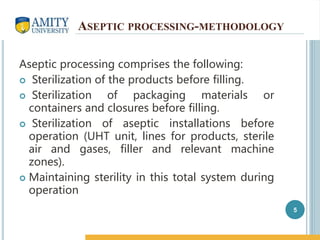
Aseptic processing comprises the following:
 Sterilization of the products before filling.
 Sterilization of packaging materials or
containers and closures before filling.
 Sterilization of aseptic installations before
operation (UHT unit, lines for products, sterile
air and gases, filler and relevant machine
zones).
 Maintaining sterility in this total system during
operation
STERILIZATION OF PRODUCTS
 In aseptic processing, the design to achieve commercial
stability is based on the well-founded principles of
thermal bacteriology and integrated effect of
time/temperature treatment on spores of micro-
organisms.
 Pre-sterilization of a product usually consists of heating
the product to the desired UHT temperature, maintaining
this temperature for a given period in order to achieve
the desired degree of sterility.
6
STERILIZATION OF ASEPTIC PACKAGING
MATERIALS AND EQUIPMENT
 Primary packaging material
 Tetrapack – LD / Al foil / Paperboard
 Aseptic Bulk pack – EVOH / Al foil / LD
 Glass bottle
 FFS cartons
 Secondary packaging Material
 Tetrapack – pack in corrugated tray with shrink wrapping
 Aseptic Bulk pack – CFB boxes (25 kg) – Bag in box
 Aseptic Bulk pack – Plastic Drums (50 kg)
 Aseptic Bulk pack – MS Drum (225 kg)
7
INTEGRITY CHECK FOR ASEPTIC
PACKAGING MATERIAL
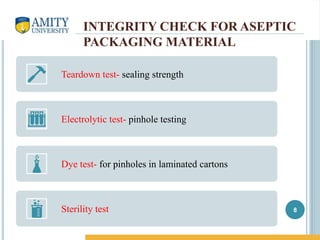
Teardown test- sealing strength
Electrolytic test- pinhole testing
Dye test- for pinholes in laminated cartons
Sterility test 8
COMPOSITION OF TETRA PAK
ASEPTIC CARTONS
 Tetra Pak aseptic cartons are made of three basic
materials that together result in a very efficient, safe and
light-weight package.
 Each material provides a specific function.
Benefits:
 Higher degree of safety, hygiene and nutrient retention in
food; Preserving taste and freshness; Can be kept for
months with no need for refrigeration; Efficient.
9
10
TYPE OF PACKAGE FORMS AVAILABLE IN INDIA
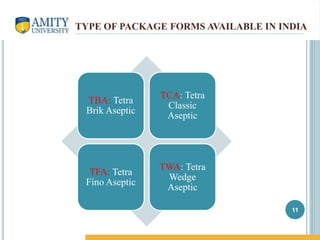
TBA: Tetra
Brik Aseptic
TCA: Tetra
Classic
Aseptic
TFA: Tetra
Fino Aseptic
TWA: Tetra
Wedge
Aseptic
11
ADVANTAGES OF ASEPTIC PACKAGING
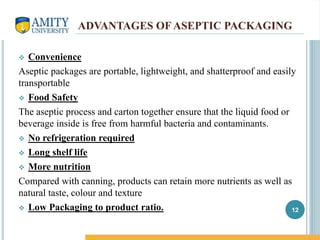
 Convenience
Aseptic packages are portable, lightweight, and shatterproof and easily
transportable
 Food Safety
The aseptic process and carton together ensure that the liquid food or
beverage inside is free from harmful bacteria and contaminants.
 No refrigeration required
 Long shelf life
 More nutrition
Compared with canning, products can retain more nutrients as well as
natural taste, colour and texture
 Low Packaging to product ratio. 12
LIMITATIONS
Plant Installation cost is high as compare to canning.
Gas transmission rate of Aseptic bag/ package.
Overcooked flavour in some products .
Lack of equipment for particulate sterilization, due
especially to settling of solids and thus over processing 13
ACTIVE PACKAGING
14
Active packaging refers to the incorporation of
certain additives into packaging film or within
packaging containers with the aim of maintaining
and extending product shelf life.
USES
To preserve the quality of food during the shelf life.
To increase the food safety .
To extend the shelf life of the product.
To decrease the food loss.
To reduce use of food additives.
As a marketing tool.
To develop new products 15
TYPES OF ACTIVE PACKAGING
16
 Sachets and pads which are placed inside of
packages, and active ingredients that are
incorporated.
 Directly into packaging materials.
SACHETS AND PADS
17
Sachets Labels
Films Coatings
APPLICATIONS
 1. Oxygen Scavengers
 2. Carbon Dioxide Generating System
 3. Ethylene Scavengers
 4. Flavour and Odour Absorber/Releaser
 5. Antioxidants
 6. Humidity Control
 7. Antimicrobial Packaging
18
OPPORTUNITIES
 Reduced risk of foodborne illnesses
 Better nutritional and sensorial qualities of foods
 More natural foods with lower amounts of
preservatives and (artificial) additives
 Reduced product & packaging waste
 Increased flexibility in logistic systems
 Increased overall efficiency of the value chain
19
20
LIMITATIONS
21
Cannot be used in liquid foods.
Cannot be used in package made of flexible
film, as the film will cling to the sachet and
prevent it from performing its function.
Risk of accidental ingestion by consumers
22
THANK YOU

Active and Aseptic packaging.pptx

  • 1.
    1 AMITY UNIVERSITY RAJASTHAN ACTIVEAND ASEPTIC PACKAGING Submitted By : Kratika Mehta A20412619015 B. Tech (Food Technology) 7th Semester
  • 2.
    WHY FOODS AREPROCESSED? 2 Increase shelf life of products. Availability of commodity throughout year. Wide range of products can be produce. Convenience for consumer.
  • 3.
    ASEPTIC PACKAGING. The termaseptic is derived from the Greek word “septicos” which means the absence of putrefactive micro organisms. It is defined as the filling of a commercially sterile product into a sterile container under aseptic conditions and hermetically sealing the containers so that reinfection is prevented. This results in a product which is shelf stable at ambient conditions
  • 4.
    4 DIFFERENCE BETWEEN CANNINGAND ASEPTIC PACKAGING? Conventional process flow Aseptic process flow Product Package Filling Sealing Retort process Cooling Storage Distribution Product Package HTST Processing Sterilization Cooling Filling Sealing Storage Distribution
  • 5.
    ASEPTIC PROCESSING-METHODOLOGY 5 Aseptic processingcomprises the following:  Sterilization of the products before filling.  Sterilization of packaging materials or containers and closures before filling.  Sterilization of aseptic installations before operation (UHT unit, lines for products, sterile air and gases, filler and relevant machine zones).  Maintaining sterility in this total system during operation
  • 6.
    STERILIZATION OF PRODUCTS In aseptic processing, the design to achieve commercial stability is based on the well-founded principles of thermal bacteriology and integrated effect of time/temperature treatment on spores of micro- organisms.  Pre-sterilization of a product usually consists of heating the product to the desired UHT temperature, maintaining this temperature for a given period in order to achieve the desired degree of sterility. 6
  • 7.
    STERILIZATION OF ASEPTICPACKAGING MATERIALS AND EQUIPMENT  Primary packaging material  Tetrapack – LD / Al foil / Paperboard  Aseptic Bulk pack – EVOH / Al foil / LD  Glass bottle  FFS cartons  Secondary packaging Material  Tetrapack – pack in corrugated tray with shrink wrapping  Aseptic Bulk pack – CFB boxes (25 kg) – Bag in box  Aseptic Bulk pack – Plastic Drums (50 kg)  Aseptic Bulk pack – MS Drum (225 kg) 7
  • 8.
    INTEGRITY CHECK FORASEPTIC PACKAGING MATERIAL Teardown test- sealing strength Electrolytic test- pinhole testing Dye test- for pinholes in laminated cartons Sterility test 8
  • 9.
    COMPOSITION OF TETRAPAK ASEPTIC CARTONS  Tetra Pak aseptic cartons are made of three basic materials that together result in a very efficient, safe and light-weight package.  Each material provides a specific function. Benefits:  Higher degree of safety, hygiene and nutrient retention in food; Preserving taste and freshness; Can be kept for months with no need for refrigeration; Efficient. 9
  • 10.
  • 11.
    TYPE OF PACKAGEFORMS AVAILABLE IN INDIA TBA: Tetra Brik Aseptic TCA: Tetra Classic Aseptic TFA: Tetra Fino Aseptic TWA: Tetra Wedge Aseptic 11
  • 12.
    ADVANTAGES OF ASEPTICPACKAGING  Convenience Aseptic packages are portable, lightweight, and shatterproof and easily transportable  Food Safety The aseptic process and carton together ensure that the liquid food or beverage inside is free from harmful bacteria and contaminants.  No refrigeration required  Long shelf life  More nutrition Compared with canning, products can retain more nutrients as well as natural taste, colour and texture  Low Packaging to product ratio. 12
  • 13.
    LIMITATIONS Plant Installation costis high as compare to canning. Gas transmission rate of Aseptic bag/ package. Overcooked flavour in some products . Lack of equipment for particulate sterilization, due especially to settling of solids and thus over processing 13
  • 14.
    ACTIVE PACKAGING 14 Active packagingrefers to the incorporation of certain additives into packaging film or within packaging containers with the aim of maintaining and extending product shelf life.
  • 15.
    USES To preserve thequality of food during the shelf life. To increase the food safety . To extend the shelf life of the product. To decrease the food loss. To reduce use of food additives. As a marketing tool. To develop new products 15
  • 16.
    TYPES OF ACTIVEPACKAGING 16  Sachets and pads which are placed inside of packages, and active ingredients that are incorporated.  Directly into packaging materials.
  • 17.
    SACHETS AND PADS 17 SachetsLabels Films Coatings
  • 18.
    APPLICATIONS  1. OxygenScavengers  2. Carbon Dioxide Generating System  3. Ethylene Scavengers  4. Flavour and Odour Absorber/Releaser  5. Antioxidants  6. Humidity Control  7. Antimicrobial Packaging 18
  • 19.
    OPPORTUNITIES  Reduced riskof foodborne illnesses  Better nutritional and sensorial qualities of foods  More natural foods with lower amounts of preservatives and (artificial) additives  Reduced product & packaging waste  Increased flexibility in logistic systems  Increased overall efficiency of the value chain 19
  • 20.
  • 21.
    LIMITATIONS 21 Cannot be usedin liquid foods. Cannot be used in package made of flexible film, as the film will cling to the sachet and prevent it from performing its function. Risk of accidental ingestion by consumers
  • 22.