Downloaded 512 times
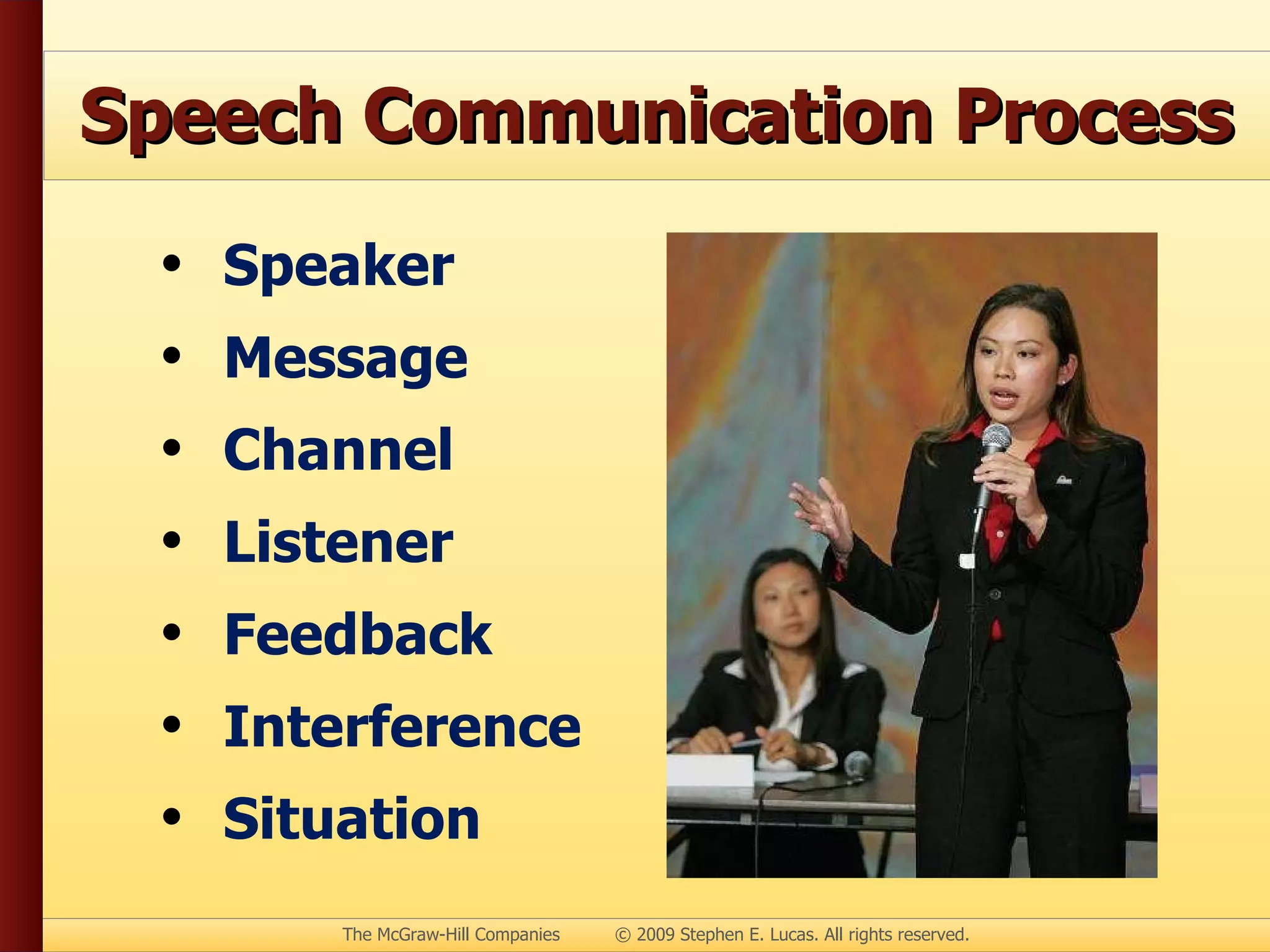
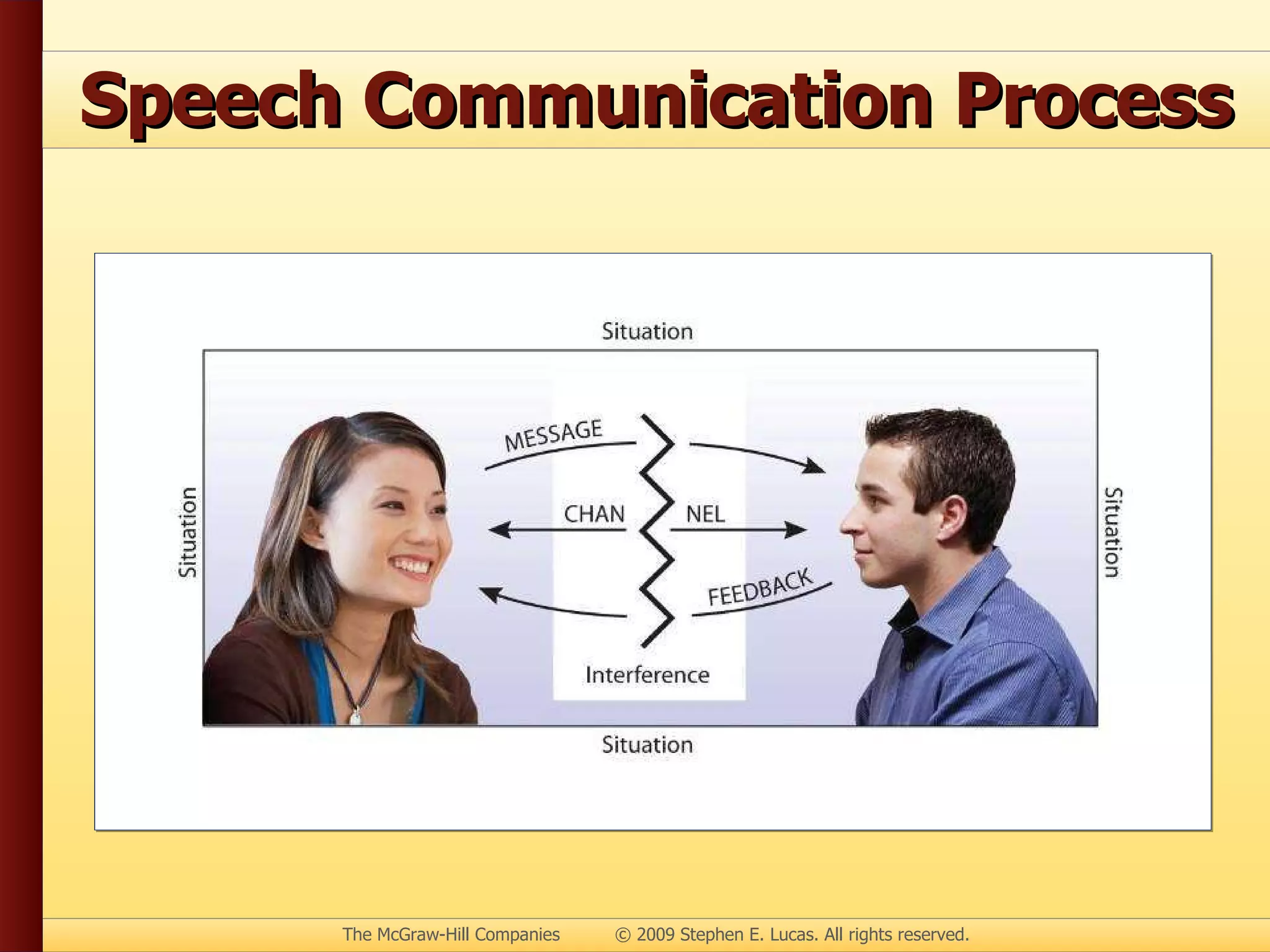
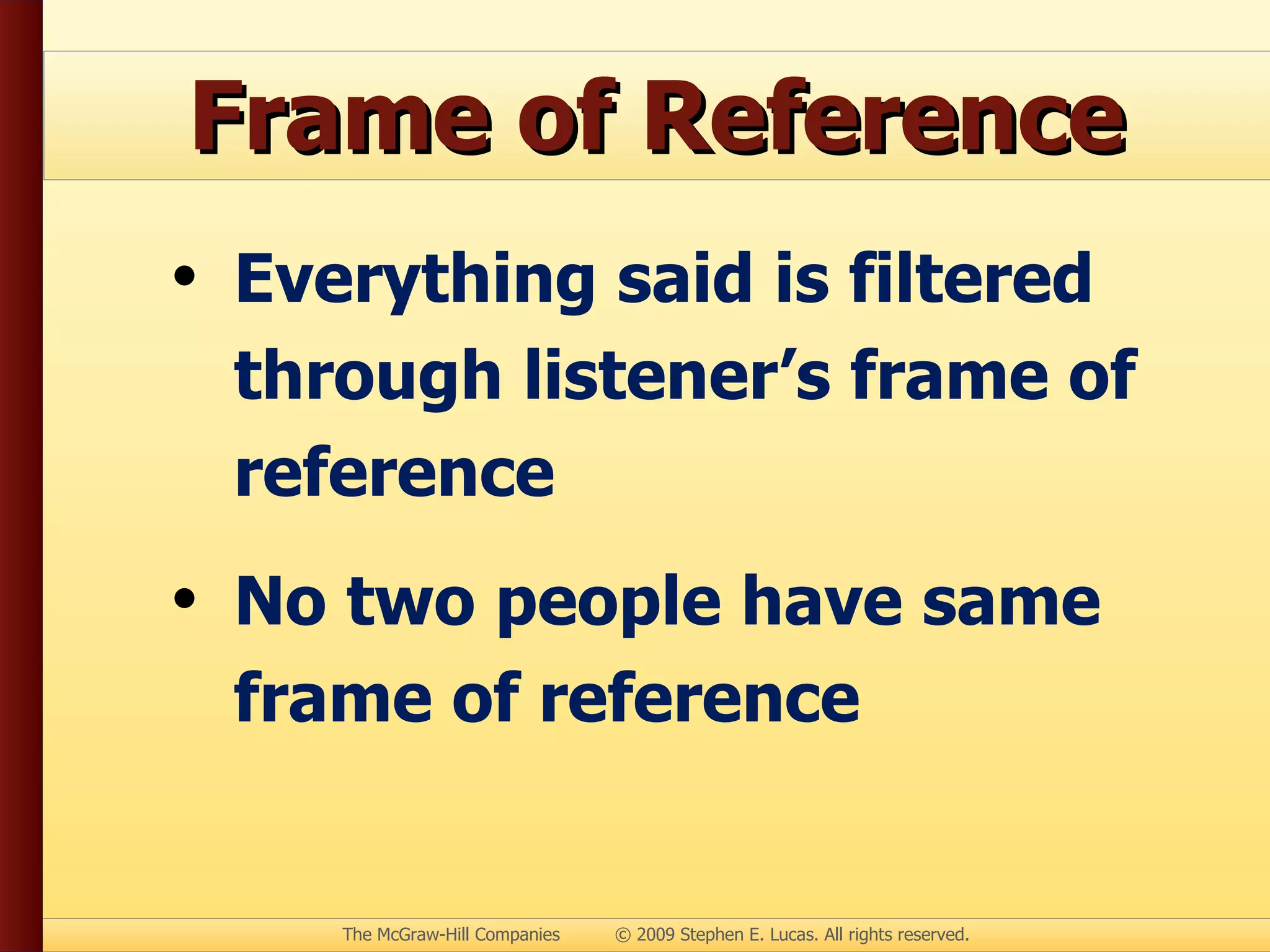
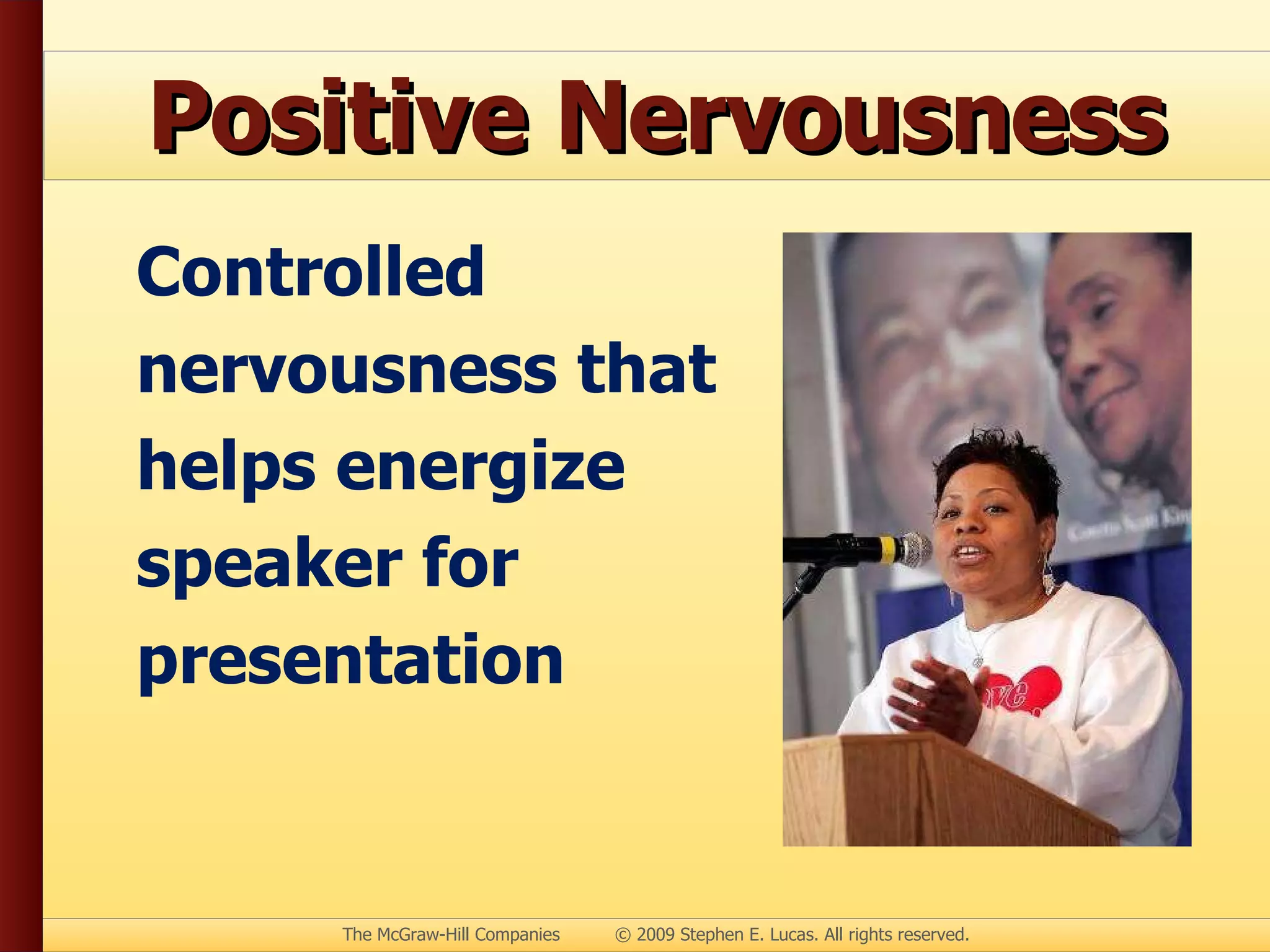

This chapter discusses public speaking and how it compares and contrasts with conversation. While both involve organizing thoughts and adapting to an audience, public speaking requires a more formal structure and language as well as a different method of delivery. It also outlines the speech communication process involving a speaker, message, channel, listener, and feedback. It notes that a listener's frame of reference can impact how a message is received and that stage fright is a common anxiety for public speakers that can be reduced through preparation, positive thinking, and visualization. The chapter emphasizes avoiding ethnocentrism when speaking to different cultures through respecting others' values and perspectives.


