Mr. Antonio T. Delgado
July 21, 2013
SJN Parish Formation Complex
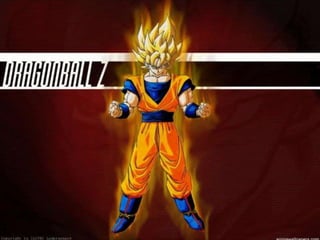
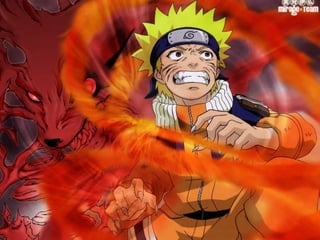
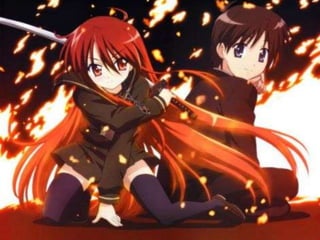
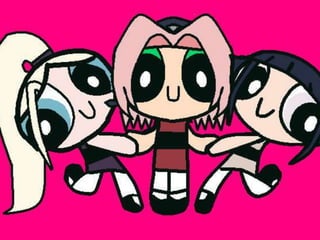
Do you watch cartoons?
How about animé?
CARTOON
 The word cartoon comes from two words:
caricature and lampoon.
CARTOON
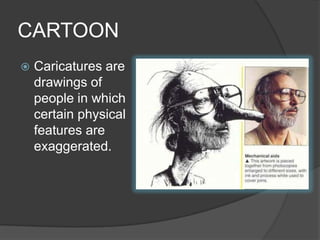
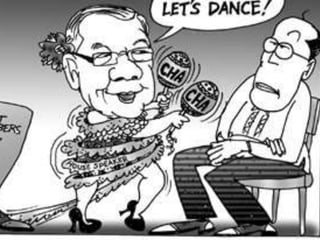
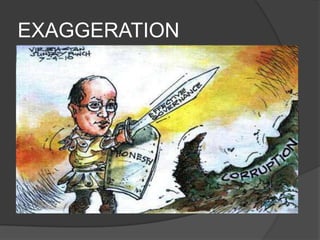
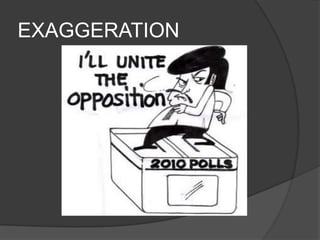
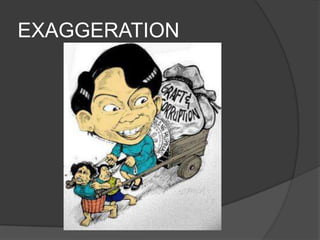
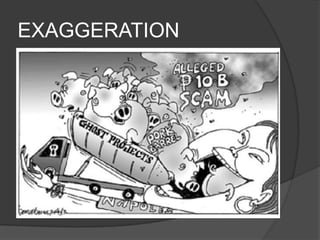
 Caricatures are
drawings of
people in which
certain physical
features are
exaggerated.
CARTOON
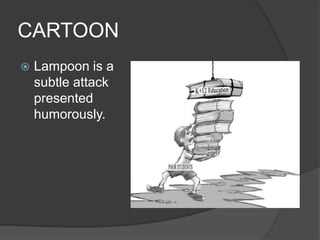
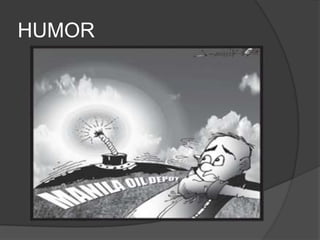
 Lampoon is a
subtle attack
presented
humorously.
EDITORIAL CARTOON
EDITORIAL CARTOON
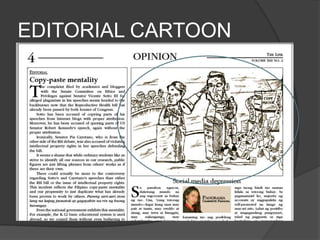
 It is an illustration expressing opinion
and interpretation.
 It is also called a “wordless editorial”.
 It may or may not be a complement of
the editorial.
 It serves the function of the editorial and
the other contents of the op-ed pages: to
present an opinion on an issue.
THINGS TO LOOK FOR:
 Symbolism
 Stereotyping
 Exaggeration
 Humor
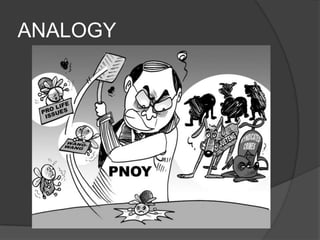
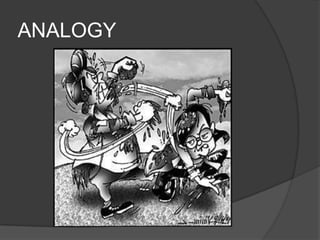
 Analogy
 Technical Skills
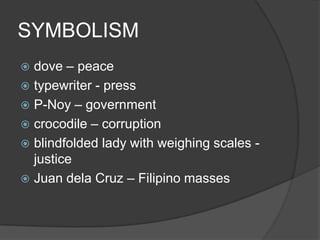
SYMBOLISM
 dove – peace
 typewriter - press
 P-Noy – government
 crocodile – corruption
 blindfolded lady with weighing scales -
justice
 Juan dela Cruz – Filipino masses
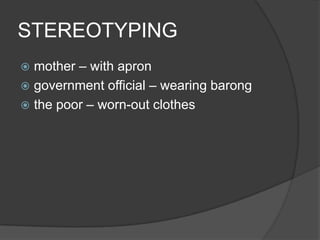
STEREOTYPING
 mother – with apron
 government official – wearing barong
 the poor – worn-out clothes
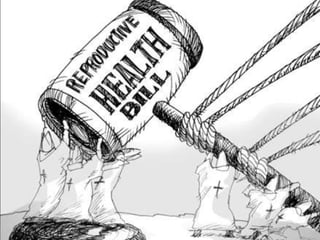
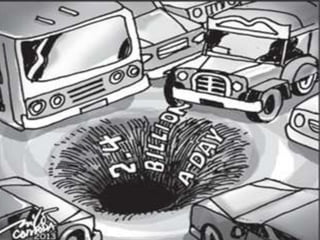
EXAGGERATION
EXAGGERATION
EXAGGERATION
EXAGGERATION
HUMOR
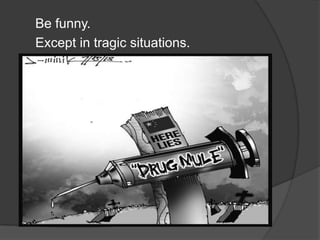
Be funny.
Except in tragic situations.
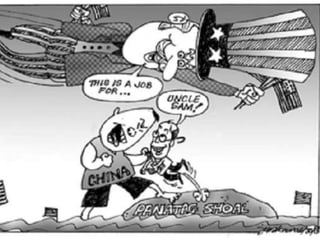
ANALOGY
ANALOGY
TECHNICAL SKILLS
 Use of technical tools (pencil, pen and
ink).
 Shading
 Shadowing
TIPS FOR CARTOONING
 Take a side. Are you for or against a
certain issue?
 Use facial expressions and emotions.
 Use universal symbols, those which can
be understood at once by your intended
reader.
 Do not clutter your cartoon with
unnecessary details or complicate your
drawing with artistic touches.
TIPS FOR CARTOONING
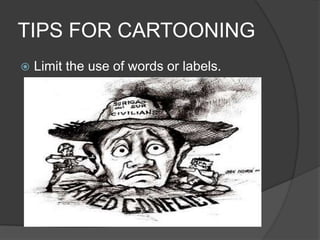
 Limit the use of words or labels.
TIPS FOR CARTOONING
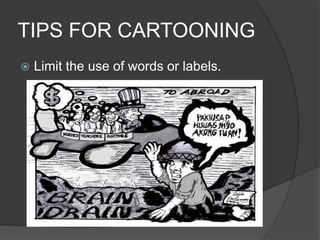
 Limit the use of words or labels.
TIPS FOR CARTOONING
 Use shading to make your article more
convincing. Have only one light source.
 Draw your cartoons in landscape.
 Use margins/border: it shows
professionalism.
 Have your own style. Do not copy or
plagiarize.
TIPS FOR CARTOONING
 Read, read and read. Remember: the
editorial cartoonist is not just an artist.
You are also a JOURNALIST.
THANK YOU!

Editorial cartooning