2010 Division Seminar Workshop in
Campus Journalism
Editorial
Cartooning
Lilybeth A. Guernaldo
Nasugbu West Central School
Nasugbu West District
EDITORIAL CARTOONING
(TUNE: Planting Rice)
Learning CARTOONING is really fun
New ideas everytime
There is joy for everyone
Editorializing satisfy
I am glad, you are glad
For the concepts are all right
We all feel that we could draw
In CARTOONING don’t say no!
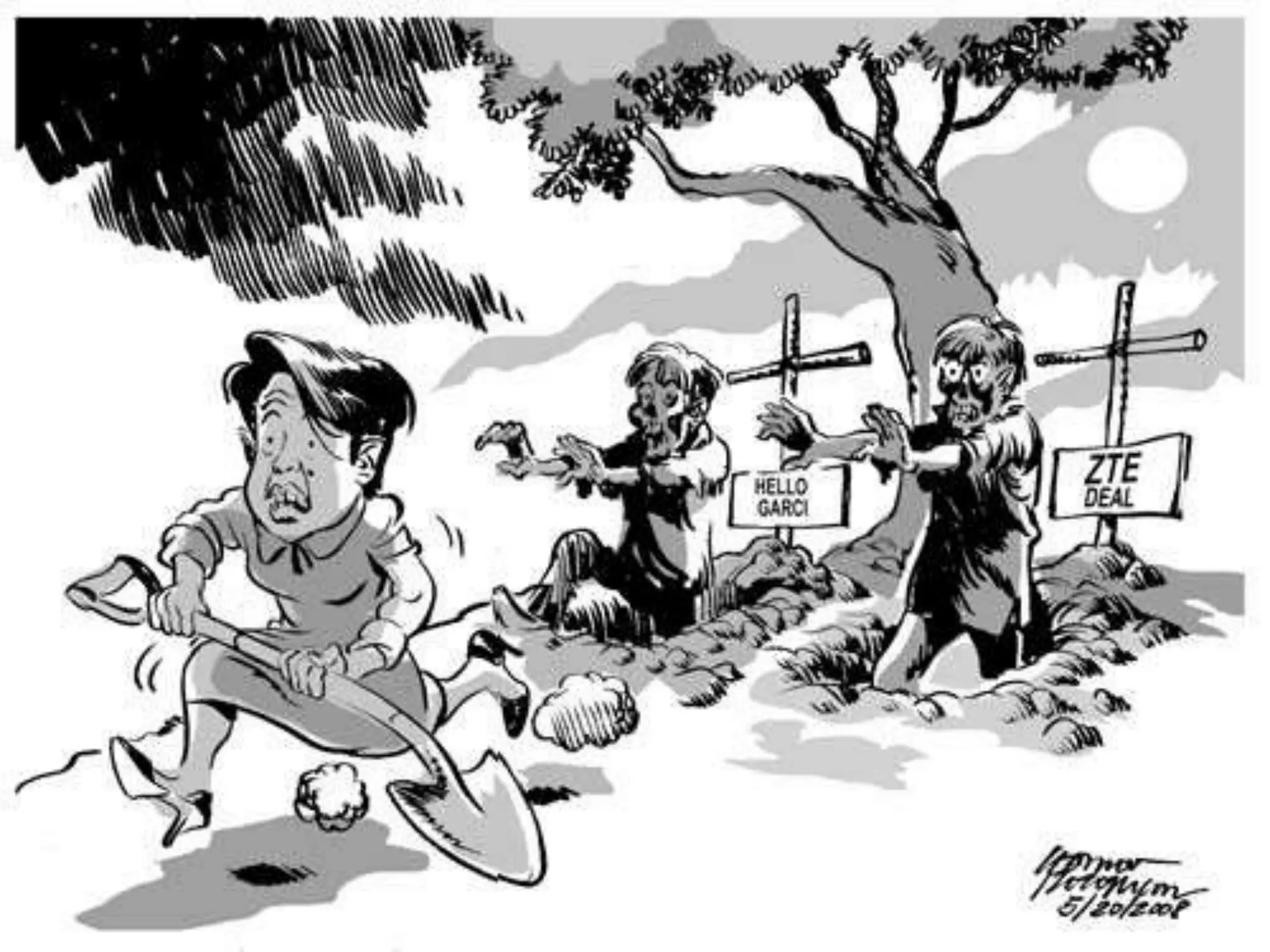
An editorial cartoon, also known as a
political cartoon, is an illustration or comic strip
containing a political or social message, that usually
relates to current events or personalities
EDITORIAL CARTOONING
An editorial cartooning is actually an editorial in pictorial form.
It aims to illustrate through an informal drawing the stand of
the newspaper on a timely issue.
It also contains an argument often suggested on the basis of an
emotional appeal, which maybe readily understood by the
readers than the printed texts of an editorial. It is primarily
designed to crystallize ideas regarding current issues of a
changing society. It supplements the editorial comments and
interpretation through the use of effective and universal
symbols to reach and to influence the public.
Purpose of Editorial
Cartoon:
inform
entertain
interpret
1. It deals with single idea.
2. It is humorous.
3. It exerts influence on the reader.
4. It is realistic.
5. It entertains the readers.
Tips for Editorial Cartooning
1. Use black ink pen or pencil on white paper.
2. Employ single stroke or line.
3. Focus on one topic only.
4. Limit the use of words and labels.
5. Use universal or common symbols.
6. Have your own style. Do not copy or plagiarize.
7. Details in the drawing are not necessary
8. Simplicity of the drawing is encouraged; simple but the message
is clear and intact.
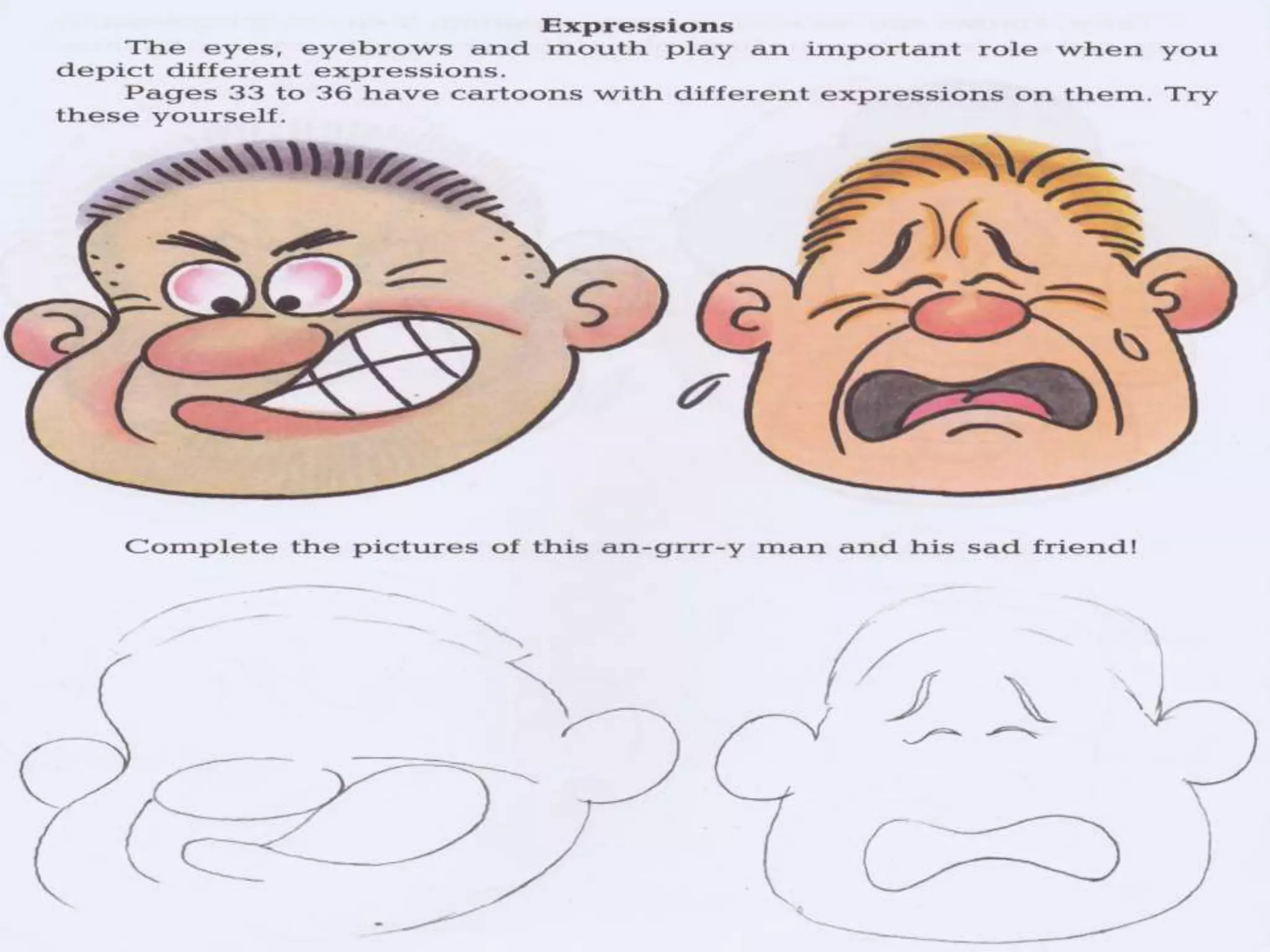
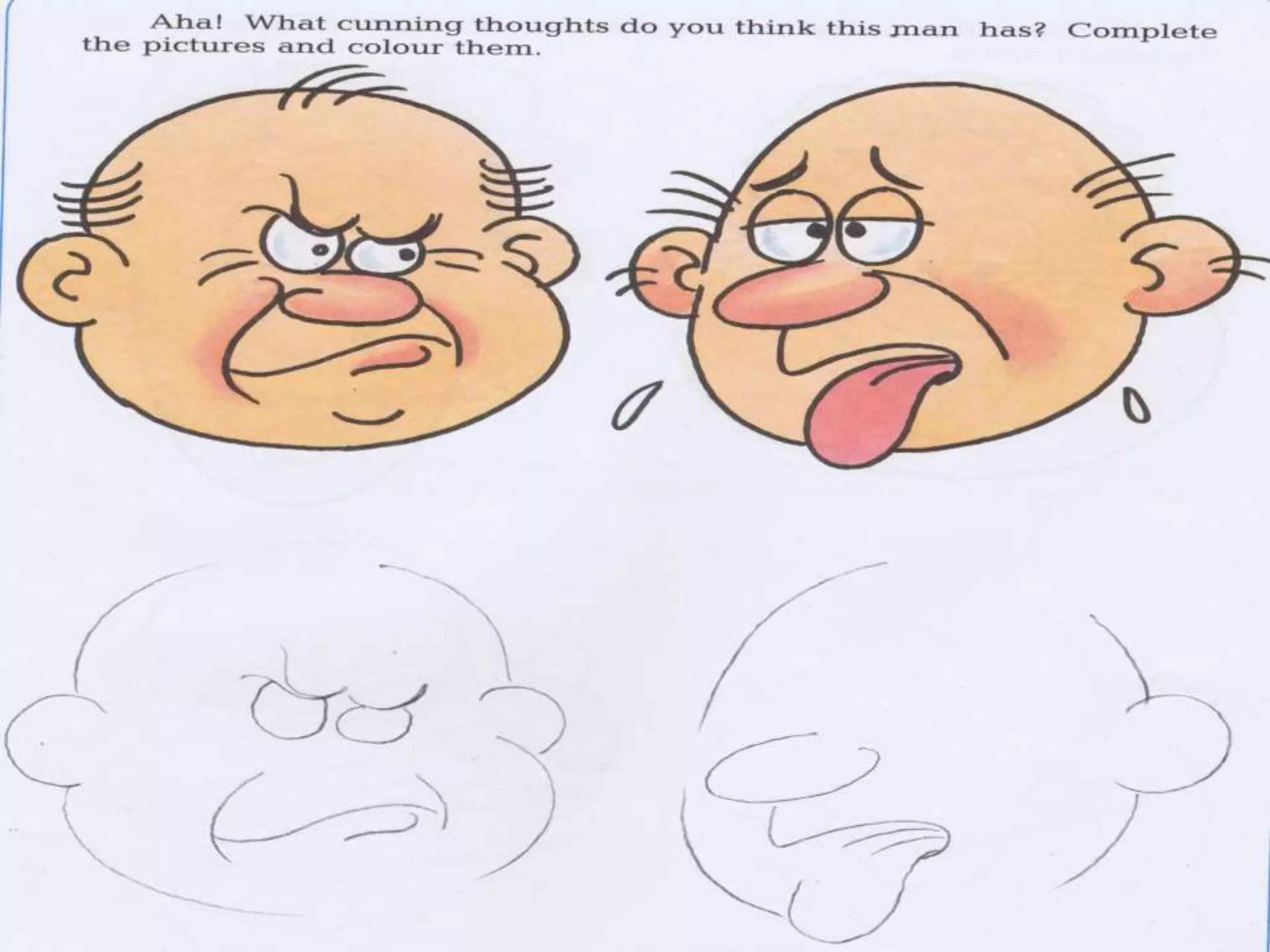
9. Draw clearly facial expression and prominent identity, especially
when drawing persons.
10. Present accurately the issue.
11. Emphasize face, dynamism or motion in your subject.
Universal Symbols in Editorial Cartooning
1. Pencil, pen and newspaper – journalism, freedom of the press.
2. Dove – freedom, peace, democracy.
3. Salakot – Juan de la Cruz representing the ordinary Filipino
citizen.
4. Chain – suppression of freedom, maltreatment and slavery.
5. Scythe – danger, bad omen
6. Syringe – cure, death sentence, drug addiction.
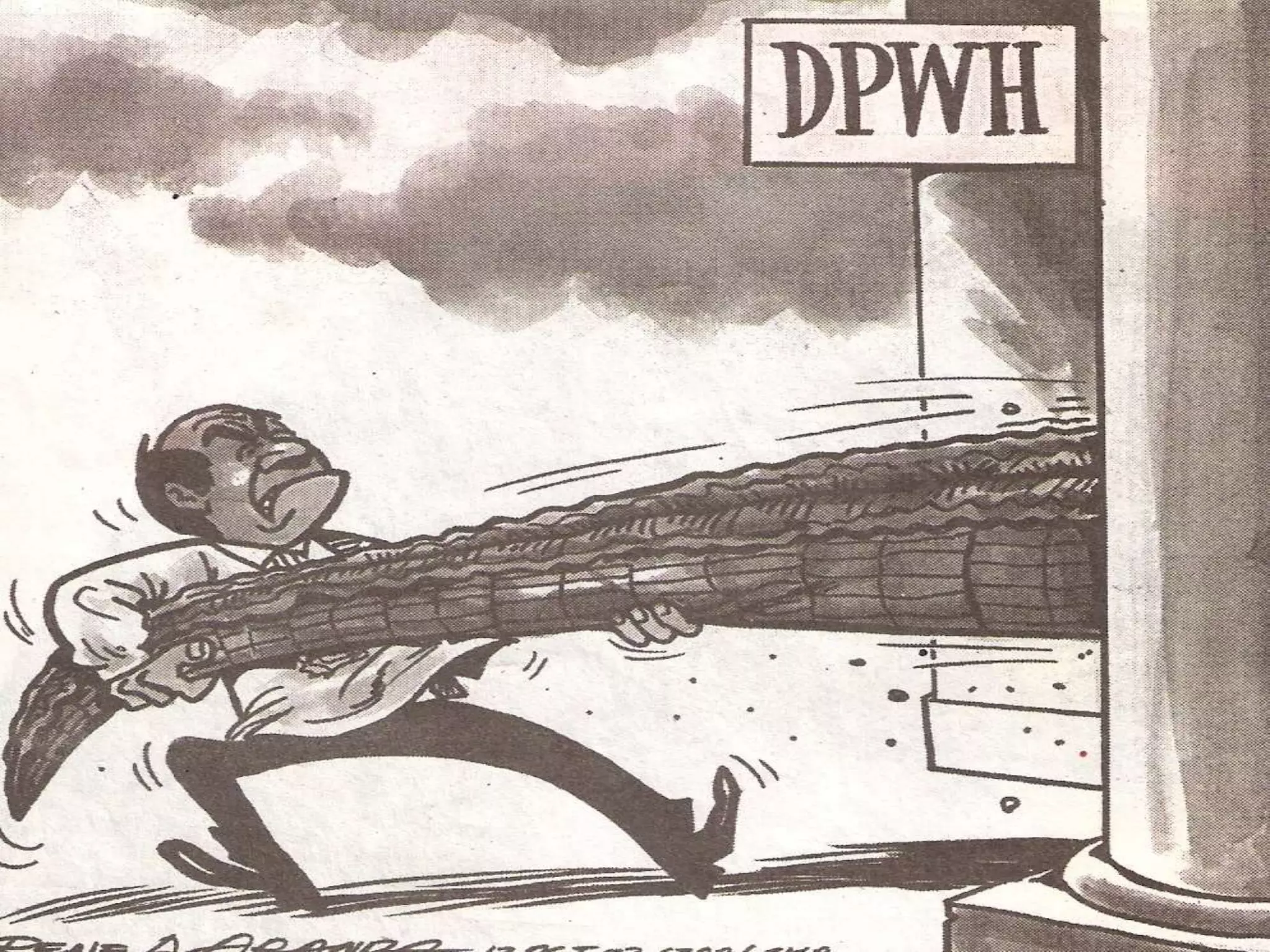
7. Crocodile – abusive person of authority
8. Beggar – poverty
9. Mallet – justice
10. Blindfolded woman carrying a weighing scale – justice
Universal Symbols in Editorial Cartooning
11. Big waves – hindrances, adversities
12. Mask – deceiver
13. Eagle – bravery, strength
14. Bar of gold – wealth
15. High rising building – development, progress
16. Key – towards success and development
17. Huge rock – tough situation, hindrance, obstacle
18. Rising sun – hope
19. Multi-tattooed man – criminal, ex-convict, bad man
20. A skull with crossed bones- death, danger
Steps in Editorial Cartooning
1. Know the main issue that you wish to draw a cartoon.
2. List down the subject.
3. Know the stand of the editorial staff on the issue.
4. Illustrate through the aid of effective symbols that fit
the general opinion of the editorial staff on the issue.
5. Draw the cartoon.
Evaluation
1. Does it arouse interest?
2. Is it artistic?
3. Does it enliven a rather dull and gray corner of the page?
4. Is it in good taste and free from libelous, indecent and obscene
ideas as well as respectful of the person’s right to privacy?
5. Is it original?
6. Is the message clear?
7. Does it convey good, clean, humor or constructive criticism?
8. Does it adhere to truth, fairness and honesty in its treatment of
controversial issues or problems?
9. Does it speak for the school paper as an organization and not as an
outlet for personal agenda?
The Right Way to Draw Cartoons
There are two ways in which a cartoon character’s face can be
drawn. In one case, the outer shape is to be drawn first,
followed by the eyes, nose and mouth. Or the eyes, nose and
mouth can be drawn first, leaving the outer shape for a later
stage. You can choose either method. The hair and ears,
however, should always be drawn last.
Initial lines are to be drawn lightly. Make the necessary
changes in the picture and darken the lines only when you are
satisfied with the ‘look 'of your character. The lines that are not
required can be rubbed off after the final drawing.
Try these
and become a
CARTOONIST yourself!
editorial-cartooning.pptx

editorial-cartooning.pptx

  • 1.
    2010 Division SeminarWorkshop in Campus Journalism Editorial Cartooning Lilybeth A. Guernaldo Nasugbu West Central School Nasugbu West District
  • 2.
    EDITORIAL CARTOONING (TUNE: PlantingRice) Learning CARTOONING is really fun New ideas everytime There is joy for everyone Editorializing satisfy I am glad, you are glad For the concepts are all right We all feel that we could draw In CARTOONING don’t say no!
  • 3.
    An editorial cartoon,also known as a political cartoon, is an illustration or comic strip containing a political or social message, that usually relates to current events or personalities
  • 5.
    EDITORIAL CARTOONING An editorialcartooning is actually an editorial in pictorial form. It aims to illustrate through an informal drawing the stand of the newspaper on a timely issue. It also contains an argument often suggested on the basis of an emotional appeal, which maybe readily understood by the readers than the printed texts of an editorial. It is primarily designed to crystallize ideas regarding current issues of a changing society. It supplements the editorial comments and interpretation through the use of effective and universal symbols to reach and to influence the public.
  • 6.
  • 9.
    1. It dealswith single idea. 2. It is humorous. 3. It exerts influence on the reader. 4. It is realistic. 5. It entertains the readers.
  • 10.
    Tips for EditorialCartooning 1. Use black ink pen or pencil on white paper. 2. Employ single stroke or line. 3. Focus on one topic only. 4. Limit the use of words and labels. 5. Use universal or common symbols. 6. Have your own style. Do not copy or plagiarize. 7. Details in the drawing are not necessary 8. Simplicity of the drawing is encouraged; simple but the message is clear and intact. 9. Draw clearly facial expression and prominent identity, especially when drawing persons. 10. Present accurately the issue. 11. Emphasize face, dynamism or motion in your subject.
  • 13.
    Universal Symbols inEditorial Cartooning 1. Pencil, pen and newspaper – journalism, freedom of the press. 2. Dove – freedom, peace, democracy. 3. Salakot – Juan de la Cruz representing the ordinary Filipino citizen. 4. Chain – suppression of freedom, maltreatment and slavery. 5. Scythe – danger, bad omen 6. Syringe – cure, death sentence, drug addiction. 7. Crocodile – abusive person of authority 8. Beggar – poverty 9. Mallet – justice 10. Blindfolded woman carrying a weighing scale – justice
  • 14.
    Universal Symbols inEditorial Cartooning 11. Big waves – hindrances, adversities 12. Mask – deceiver 13. Eagle – bravery, strength 14. Bar of gold – wealth 15. High rising building – development, progress 16. Key – towards success and development 17. Huge rock – tough situation, hindrance, obstacle 18. Rising sun – hope 19. Multi-tattooed man – criminal, ex-convict, bad man 20. A skull with crossed bones- death, danger
  • 15.
    Steps in EditorialCartooning 1. Know the main issue that you wish to draw a cartoon. 2. List down the subject. 3. Know the stand of the editorial staff on the issue. 4. Illustrate through the aid of effective symbols that fit the general opinion of the editorial staff on the issue. 5. Draw the cartoon.
  • 16.
    Evaluation 1. Does itarouse interest? 2. Is it artistic? 3. Does it enliven a rather dull and gray corner of the page? 4. Is it in good taste and free from libelous, indecent and obscene ideas as well as respectful of the person’s right to privacy? 5. Is it original? 6. Is the message clear? 7. Does it convey good, clean, humor or constructive criticism? 8. Does it adhere to truth, fairness and honesty in its treatment of controversial issues or problems? 9. Does it speak for the school paper as an organization and not as an outlet for personal agenda?
  • 17.
    The Right Wayto Draw Cartoons There are two ways in which a cartoon character’s face can be drawn. In one case, the outer shape is to be drawn first, followed by the eyes, nose and mouth. Or the eyes, nose and mouth can be drawn first, leaving the outer shape for a later stage. You can choose either method. The hair and ears, however, should always be drawn last. Initial lines are to be drawn lightly. Make the necessary changes in the picture and darken the lines only when you are satisfied with the ‘look 'of your character. The lines that are not required can be rubbed off after the final drawing.
  • 18.
    Try these and becomea CARTOONIST yourself!