Prepared by:
Mica E. Sevillano
IV-BEEd
 The word cartoon is derived from two words:
caricature and lampoon.
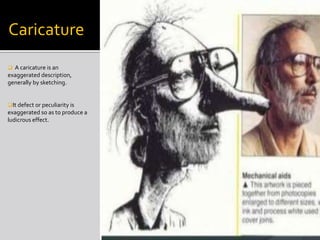
Caricature
 A caricature is an
exaggerated description,
generally by sketching.
It defect or peculiarity is
exaggerated so as to produce a
ludicrous effect.
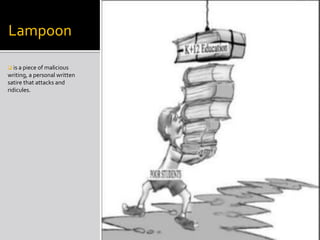
Lampoon
 is a piece of malicious
writing, a personal written
satire that attacks and
ridicules.
 One of the oldest and most notable items in
the editorial page.
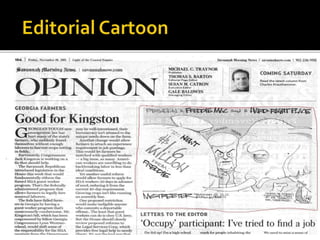
 Editorial cartoon is an editorial page
illustration expressing opinion and
interpretation.
 It is also called the “wordless editorial”
 It perform any of the three functions of the
news press--to inform, to influence, or to
entertain.
 A good cartoon appeals to the reader’s sense of
humor in order to persuade him to accept an
opinion.
 The cartoon on the top editorial, should deal
with only a single idea. While the subject matter
covers a wide range of topics and purposes, the
typical cartoon is about political and social
conditions and problems.
 Some cartoons are good-natured and
humorous; others are serious and sophisticated.
 Need not be as professional-looking as those
found in national dailies.
 Ideas of the editorial cartoons may be
suggested by the editor, or may come from
the cartoonist himself.
 The name of the cartoonist is placed on the
cartoon, even if the idea is not his.
 Inspirational
 Satirical
 Correctional
 Will the cartoon hurt someone?
 Is it over-exaggerated?
 Is the cartoon decent?
 Is the cartoon “corny”?
 Know the main issue that you wish to draw a
cartoon.
 Illustrate through the aid of effective symbols
that fit the general opinion of the editorial
staff on the issue.
1. Use black ink pen or pencil on white paper.
2. Employ single stroke or line.
3. Shading can be employed for emphasis.
4. Focus on one topic only.
5. Limit the use of words and labels.
6. Use Universal or common symbols.
7. Details in the drawing are not necessary.
8. Simplicity of the drawing is encouraged; simple
but the message is clear and intact.
9. Draw clearly facial expression and prominent
identity, especially when drawing persons.
10. You may apply allusion as background scene
such as superhero, gladiator, event in Calvary
and other common settings.
11. Present accurately the issue.
12. Limit the things to be drawn from three five
only to illustrate the idea.
a. Pencil, Pen and news paper- Journalism, freedom of
the press.
b. Dove- Freedom, peace, democracy
c. Salakot - Juan Dela Cruz representing the ordinary
Filipino.
d. Chain- Suppression of freedom, maltreatment and
slavery.
e. Kamatayan - Death or Bad omen
f. Syringe- Cure, death sentence, drug addiction
g. Crocodile-Abusive person of authority
h. Mallet- Justice
i. Beggar
j. blindfolded
k. Big waves
l. Mask
m. Eagle
n. Bar of gold
o. High rising building
p. key
q. Huge rock
r. Rising sun
s. Skull with crossed bones
t. Multi-tattooed man
 Cruz, C-J. (1997). Campus journalism and
school paper advising.(4th Ed).Manila,
Philippines: REX Book Store, Inc.
 Bansal, J.N. (2013 August 03). Editorial
Cartooning. Retrieved from
http://www.slideshare.net

Cartooning

  • 1.
    Prepared by: Mica E.Sevillano IV-BEEd
  • 2.
     The wordcartoon is derived from two words: caricature and lampoon.
  • 3.
    Caricature  A caricatureis an exaggerated description, generally by sketching. It defect or peculiarity is exaggerated so as to produce a ludicrous effect.
  • 4.
    Lampoon  is apiece of malicious writing, a personal written satire that attacks and ridicules.
  • 6.
     One ofthe oldest and most notable items in the editorial page.  Editorial cartoon is an editorial page illustration expressing opinion and interpretation.  It is also called the “wordless editorial”  It perform any of the three functions of the news press--to inform, to influence, or to entertain.
  • 7.
     A goodcartoon appeals to the reader’s sense of humor in order to persuade him to accept an opinion.  The cartoon on the top editorial, should deal with only a single idea. While the subject matter covers a wide range of topics and purposes, the typical cartoon is about political and social conditions and problems.  Some cartoons are good-natured and humorous; others are serious and sophisticated.
  • 8.
     Need notbe as professional-looking as those found in national dailies.  Ideas of the editorial cartoons may be suggested by the editor, or may come from the cartoonist himself.  The name of the cartoonist is placed on the cartoon, even if the idea is not his.
  • 9.
  • 10.
     Will thecartoon hurt someone?  Is it over-exaggerated?  Is the cartoon decent?  Is the cartoon “corny”?
  • 11.
     Know themain issue that you wish to draw a cartoon.  Illustrate through the aid of effective symbols that fit the general opinion of the editorial staff on the issue.
  • 12.
    1. Use blackink pen or pencil on white paper. 2. Employ single stroke or line. 3. Shading can be employed for emphasis. 4. Focus on one topic only. 5. Limit the use of words and labels. 6. Use Universal or common symbols.
  • 13.
    7. Details inthe drawing are not necessary. 8. Simplicity of the drawing is encouraged; simple but the message is clear and intact. 9. Draw clearly facial expression and prominent identity, especially when drawing persons. 10. You may apply allusion as background scene such as superhero, gladiator, event in Calvary and other common settings. 11. Present accurately the issue. 12. Limit the things to be drawn from three five only to illustrate the idea.
  • 14.
    a. Pencil, Penand news paper- Journalism, freedom of the press. b. Dove- Freedom, peace, democracy c. Salakot - Juan Dela Cruz representing the ordinary Filipino. d. Chain- Suppression of freedom, maltreatment and slavery. e. Kamatayan - Death or Bad omen f. Syringe- Cure, death sentence, drug addiction g. Crocodile-Abusive person of authority h. Mallet- Justice i. Beggar j. blindfolded
  • 15.
    k. Big waves l.Mask m. Eagle n. Bar of gold o. High rising building p. key q. Huge rock r. Rising sun s. Skull with crossed bones t. Multi-tattooed man
  • 16.
     Cruz, C-J.(1997). Campus journalism and school paper advising.(4th Ed).Manila, Philippines: REX Book Store, Inc.  Bansal, J.N. (2013 August 03). Editorial Cartooning. Retrieved from http://www.slideshare.net