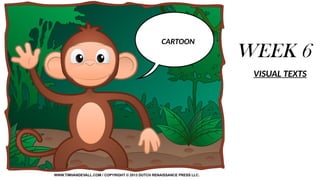
WEEK 6
CARTOON
VISUAL TEXTS
Objectives of the Lesson
• At the end of this lesson learners must be able to analyse a cartoon.
• To understand and be able to convey the message of the cartoon.
• Be able to list the elements, symbols, and how they are used in a
cartoon
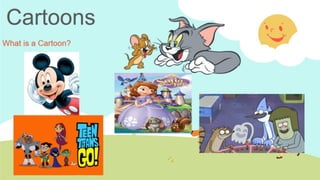
WHAT IS A CARTOON?
-A cartoon is a type of visual art that is typically
drawn, frequently animated, in an unrealistic or semi-
realistic style.
*Educationally: Cartoons can be used to simplify
complex concepts to make them easier to understand.
Other Uses: Advertising (products and services) and social
commentary (offering critique or insight into societal issues,
politics, or current events) in a memorable way.
Elements Of A Cartoon
* Facial Expression
* Body Language
* Irony
* Speech and Font
How To Use These Elements To Analyze A Cartoon
* Facial Expressions: Observe the expression on the characters’ faces to understand their feelings attitude
and responses to situations.. E.g. A smile might indicate happiness or sarcasm whereas a frown might
suggest disapproval or concern.
* Body Language: Look at the characters’ posture, gestures, and physical stance. E.g. Crossed arms might
indicate
defensiveness, while an open stance could suggest confidence.
* Irony: Identify parts or situations which are ironic, where the intended meaning is opposite to what is
actually depicted. E.g. Sign for peace in a war zone or a character saying something opposite to what they
mean.
* Speech: Examine the dialogue within speech bubbles and note differences in fonts. A bold font could be
representing shouting whereas a smaller font could be representing whispering and hesitation.
• Context and Background: Background details such as symbols signs or other elements can offer clues to
symbols, signs or other elements, can offer clues to the deeper meaning of the cartoon. Analyze how the
setting and the context influence the characters’ and their actions.
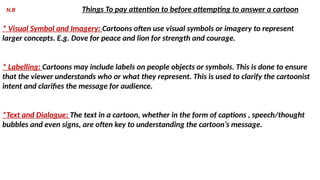
N.B Things To pay attention to before attempting to answer a cartoon
* Visual Symbol and Imagery: Cartoons often use visual symbols or imagery to represent
larger concepts. E.g. Dove for peace and lion for strength and courage.
* Labelling: Cartoons may include labels on people objects or symbols. This is done to ensure
that the viewer understands who or what they represent. This is used to clarify the cartoonist
intent and clarifies the message for audience.
*Text and Dialogue: The text in a cartoon, whether in the form of captions , speech/thought
bubbles and even signs, are often key to understanding the cartoon’s message.
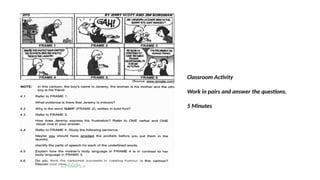
Classroom Activity
Work in pairs and answer the questions.
5 Minutes
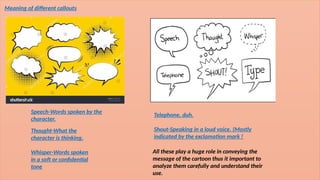
Meaning of different callouts
Speech-Words spoken by the
character.
Thought-What the
character is thinking.
Whisper-Words spoken
in a soft or confidential
tone
Telephone, duh.
Shout-Speaking in a loud voice. (Mostly
indicated by the exclamation mark !
All these play a huge role in conveying the
message of the cartoon thus it important to
analyze them carefully and understand their
use.
FSM English Presentation. Micro Lesson presentation

FSM English Presentation. Micro Lesson presentation

  • 1.
  • 2.
    Objectives of theLesson • At the end of this lesson learners must be able to analyse a cartoon. • To understand and be able to convey the message of the cartoon. • Be able to list the elements, symbols, and how they are used in a cartoon
  • 6.
    WHAT IS ACARTOON? -A cartoon is a type of visual art that is typically drawn, frequently animated, in an unrealistic or semi- realistic style. *Educationally: Cartoons can be used to simplify complex concepts to make them easier to understand. Other Uses: Advertising (products and services) and social commentary (offering critique or insight into societal issues, politics, or current events) in a memorable way.
  • 7.
    Elements Of ACartoon * Facial Expression * Body Language * Irony * Speech and Font
  • 9.
    How To UseThese Elements To Analyze A Cartoon * Facial Expressions: Observe the expression on the characters’ faces to understand their feelings attitude and responses to situations.. E.g. A smile might indicate happiness or sarcasm whereas a frown might suggest disapproval or concern. * Body Language: Look at the characters’ posture, gestures, and physical stance. E.g. Crossed arms might indicate defensiveness, while an open stance could suggest confidence. * Irony: Identify parts or situations which are ironic, where the intended meaning is opposite to what is actually depicted. E.g. Sign for peace in a war zone or a character saying something opposite to what they mean. * Speech: Examine the dialogue within speech bubbles and note differences in fonts. A bold font could be representing shouting whereas a smaller font could be representing whispering and hesitation. • Context and Background: Background details such as symbols signs or other elements can offer clues to symbols, signs or other elements, can offer clues to the deeper meaning of the cartoon. Analyze how the setting and the context influence the characters’ and their actions.
  • 10.
    N.B Things Topay attention to before attempting to answer a cartoon * Visual Symbol and Imagery: Cartoons often use visual symbols or imagery to represent larger concepts. E.g. Dove for peace and lion for strength and courage. * Labelling: Cartoons may include labels on people objects or symbols. This is done to ensure that the viewer understands who or what they represent. This is used to clarify the cartoonist intent and clarifies the message for audience. *Text and Dialogue: The text in a cartoon, whether in the form of captions , speech/thought bubbles and even signs, are often key to understanding the cartoon’s message.
  • 11.
    Classroom Activity Work inpairs and answer the questions. 5 Minutes
  • 12.
    Meaning of differentcallouts Speech-Words spoken by the character. Thought-What the character is thinking. Whisper-Words spoken in a soft or confidential tone Telephone, duh. Shout-Speaking in a loud voice. (Mostly indicated by the exclamation mark ! All these play a huge role in conveying the message of the cartoon thus it important to analyze them carefully and understand their use.