Present Simple
have got
Presente
Avere
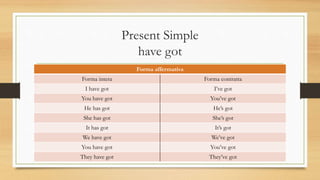
Present Simple
have got
Forma affermativa
Forma intera Forma contratta
I have got I’ve got
You have got You’ve got
He has got He’s got
She has got She’s got
It has got It’s got
We have got We’ve got
You have got You’ve got
They have got They’ve got
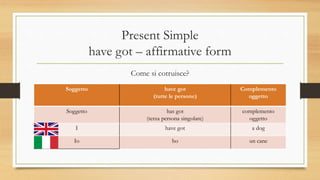
Present Simple
have got – affirmative form
Come si cotruisce?
Soggetto have got
(tutte le persone)
Complemento
oggetto
Soggetto has got
(terza persona singolare)
complemento
oggetto
I have got a dog
Io ho un cane
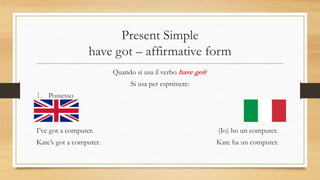
Present Simple
have got – affirmative form
Quando si usa il verbo have got?
Si usa per esprimere:
1. Possesso
I’ve got a computer. (Io) ho un computer.
Kate’s got a computer. Kate ha un computer.
Present Simple
have got – affirmative form
Quando si usa il verbo have got?
Si usa per esprimere:
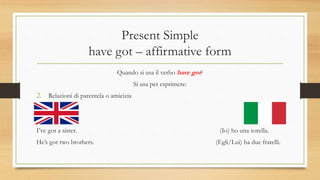
2. Relazioni di parentela o amicizia
I’ve got a sister. (Io) ho una sorella.
He’s got two brothers. (Egli/Lui) ha due fratelli.
Present Simple
have got – affirmative form
Quando si usa il verbo have got?
Si usa per esprimere:
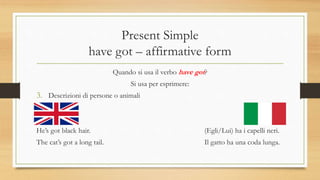
3. Descrizioni di persone o animali
He’s got black hair. (Egli/Lui) ha i capelli neri.
The cat’s got a long tail. Il gatto ha una coda lunga.
Present Simple
have got – affirmative form
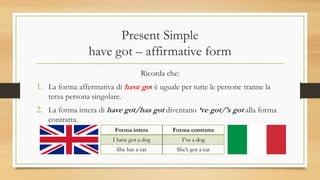
Ricorda che:
1. La forma affermativa di have got è uguale per tutte le persone tranne la
terza persona singolare.
2. La forma intera di have got/has got diventano ‘ve got/’s got alla forma
contratta.
Forma intera Forma contratta
I have got a dog I’ve a dog
She has a cat She’s got a cat
Present Simple
have got – affirmative form
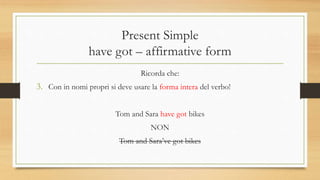
Ricorda che:
3. Con in nomi propri si deve usare la forma intera del verbo!
Tom and Sara have got bikes
NON
Tom and Sara’ve got bikes
Present Simple
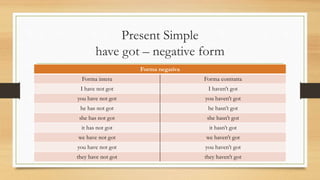
have got – negative form
Forma negativa
Forma intera Forma contratta
I have not got I haven’t got
you have not got you haven’t got
he has not got he hasn’t got
she has not got she hasn’t got
it has not got it hasn’t got
we have not got we haven’t got
you have not got you haven’t got
they have not got they haven’t got
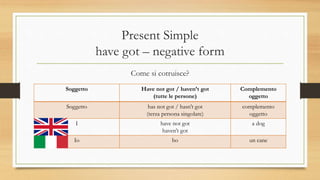
Present Simple
have got – negative form
Come si cotruisce?
Soggetto Have not got / haven’t got
(tutte le persone)
Complemento
oggetto
Soggetto has not got / hasn’t got
(terza persona singolare)
complemento
oggetto
I have not got
haven’t got
a dog
Io ho un cane
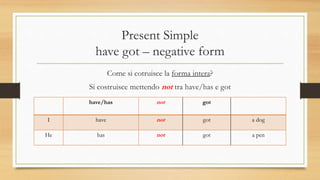
Present Simple
have got – negative form
Come si cotruisce la forma intera?
Si costruisce mettendo not tra have/has e got
have/has not got
I have not got a dog
He has not got a pen
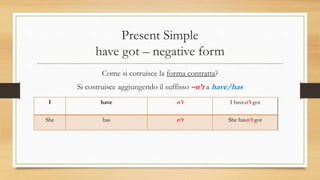
Present Simple
have got – negative form
Come si cotruisce la forma contratta?
Si costruisce aggiungendo il suffisso –n’t a have/has
I have n’t I haven’t got
She has n’t She hasn’t got
Present Simple
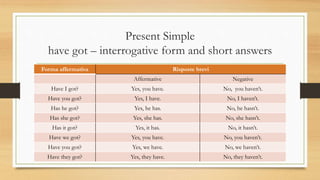
have got – interrogative form and short answers
Forma affermativa Risposte brevi
Affermative Negative
Have I got? Yes, you have. No, you haven’t.
Have you got? Yes, I have. No, I haven’t.
Has he got? Yes, he has. No, he hasn’t.
Has she got? Yes, she has. No, she hasn’t.
Has it got? Yes, it has. No, it hasn’t.
Have we got? Yes, you have. No, you haven’t.
Have you got? Yes, we have. No, we haven’t.
Have they got? Yes, they have. No, they haven’t.
Present Simple
have got – interrogative form and short answers
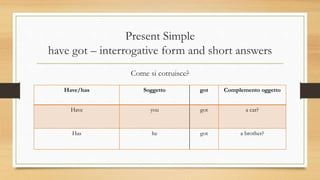
Come si cotruisce?
Have/has Soggetto got Complemento oggetto
Have you got a car?
Has he got a brother?
Present Simple
have got – interrogative form and short answers
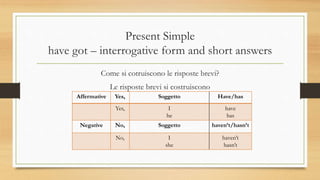
Come si cotruiscono le risposte brevi?
Le risposte brevi si costruiscono
Affermative Yes, Soggetto Have/has
Yes, I
he
have
has
Negative No, Soggetto haven’t/hasn’t
No, I
she
haven’t
hasn’t
Present Simple
have got – interrogative form and short answers
Ricorda che:
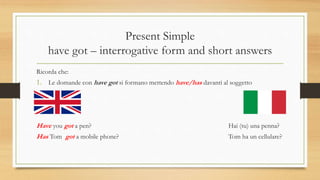
1. Le domande con have got si formano mettendo have/has davanti al soggetto
Have you got a pen? Hai (tu) una penna?
Has Tom got a mobile phone? Tom ha un cellulare?
Present Simple
have got – interrogative form and short answers
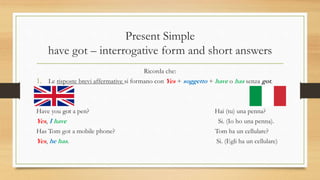
Ricorda che:
1. Le risposte brevi affermative si formano con Yes + soggetto + have o has senza got.
Have you got a pen? Hai (tu) una penna?
Yes, I have Si. (Io ho una penna).
Has Tom got a mobile phone? Tom ha un cellulare?
Yes, he has. Si. (Egli ha un cellulare)
Present Simple
have got – interrogative form and short answers
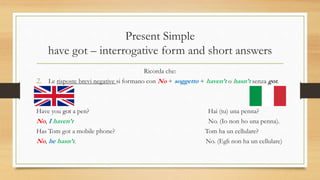
Ricorda che:
2. Le risposte brevi negative si formano con No + soggetto + haven’t o hasn’t senza got.
Have you got a pen? Hai (tu) una penna?
No, I haven’t No. (Io non ho una penna).
Has Tom got a mobile phone? Tom ha un cellulare?
No, he hasn’t. No. (Egli non ha un cellulare)
Present Simple
have got – interrogative form and short answers
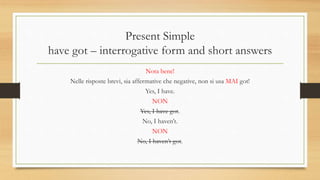
Nota bene!
Nelle risposte brevi, sia affermative che negative, non si usa MAI got!
Yes, I have.
NON
Yes, I have got.
No, I haven’t.
NON
No, I haven’t got.

Present simple (have got)

  • 1.
  • 2.
    Present Simple have got Formaaffermativa Forma intera Forma contratta I have got I’ve got You have got You’ve got He has got He’s got She has got She’s got It has got It’s got We have got We’ve got You have got You’ve got They have got They’ve got
  • 3.
    Present Simple have got– affirmative form Come si cotruisce? Soggetto have got (tutte le persone) Complemento oggetto Soggetto has got (terza persona singolare) complemento oggetto I have got a dog Io ho un cane
  • 4.
    Present Simple have got– affirmative form Quando si usa il verbo have got? Si usa per esprimere: 1. Possesso I’ve got a computer. (Io) ho un computer. Kate’s got a computer. Kate ha un computer.
  • 5.
    Present Simple have got– affirmative form Quando si usa il verbo have got? Si usa per esprimere: 2. Relazioni di parentela o amicizia I’ve got a sister. (Io) ho una sorella. He’s got two brothers. (Egli/Lui) ha due fratelli.
  • 6.
    Present Simple have got– affirmative form Quando si usa il verbo have got? Si usa per esprimere: 3. Descrizioni di persone o animali He’s got black hair. (Egli/Lui) ha i capelli neri. The cat’s got a long tail. Il gatto ha una coda lunga.
  • 7.
    Present Simple have got– affirmative form Ricorda che: 1. La forma affermativa di have got è uguale per tutte le persone tranne la terza persona singolare. 2. La forma intera di have got/has got diventano ‘ve got/’s got alla forma contratta. Forma intera Forma contratta I have got a dog I’ve a dog She has a cat She’s got a cat
  • 8.
    Present Simple have got– affirmative form Ricorda che: 3. Con in nomi propri si deve usare la forma intera del verbo! Tom and Sara have got bikes NON Tom and Sara’ve got bikes
  • 9.
    Present Simple have got– negative form Forma negativa Forma intera Forma contratta I have not got I haven’t got you have not got you haven’t got he has not got he hasn’t got she has not got she hasn’t got it has not got it hasn’t got we have not got we haven’t got you have not got you haven’t got they have not got they haven’t got
  • 10.
    Present Simple have got– negative form Come si cotruisce? Soggetto Have not got / haven’t got (tutte le persone) Complemento oggetto Soggetto has not got / hasn’t got (terza persona singolare) complemento oggetto I have not got haven’t got a dog Io ho un cane
  • 11.
    Present Simple have got– negative form Come si cotruisce la forma intera? Si costruisce mettendo not tra have/has e got have/has not got I have not got a dog He has not got a pen
  • 12.
    Present Simple have got– negative form Come si cotruisce la forma contratta? Si costruisce aggiungendo il suffisso –n’t a have/has I have n’t I haven’t got She has n’t She hasn’t got
  • 13.
    Present Simple have got– interrogative form and short answers Forma affermativa Risposte brevi Affermative Negative Have I got? Yes, you have. No, you haven’t. Have you got? Yes, I have. No, I haven’t. Has he got? Yes, he has. No, he hasn’t. Has she got? Yes, she has. No, she hasn’t. Has it got? Yes, it has. No, it hasn’t. Have we got? Yes, you have. No, you haven’t. Have you got? Yes, we have. No, we haven’t. Have they got? Yes, they have. No, they haven’t.
  • 14.
    Present Simple have got– interrogative form and short answers Come si cotruisce? Have/has Soggetto got Complemento oggetto Have you got a car? Has he got a brother?
  • 15.
    Present Simple have got– interrogative form and short answers Come si cotruiscono le risposte brevi? Le risposte brevi si costruiscono Affermative Yes, Soggetto Have/has Yes, I he have has Negative No, Soggetto haven’t/hasn’t No, I she haven’t hasn’t
  • 16.
    Present Simple have got– interrogative form and short answers Ricorda che: 1. Le domande con have got si formano mettendo have/has davanti al soggetto Have you got a pen? Hai (tu) una penna? Has Tom got a mobile phone? Tom ha un cellulare?
  • 17.
    Present Simple have got– interrogative form and short answers Ricorda che: 1. Le risposte brevi affermative si formano con Yes + soggetto + have o has senza got. Have you got a pen? Hai (tu) una penna? Yes, I have Si. (Io ho una penna). Has Tom got a mobile phone? Tom ha un cellulare? Yes, he has. Si. (Egli ha un cellulare)
  • 18.
    Present Simple have got– interrogative form and short answers Ricorda che: 2. Le risposte brevi negative si formano con No + soggetto + haven’t o hasn’t senza got. Have you got a pen? Hai (tu) una penna? No, I haven’t No. (Io non ho una penna). Has Tom got a mobile phone? Tom ha un cellulare? No, he hasn’t. No. (Egli non ha un cellulare)
  • 19.
    Present Simple have got– interrogative form and short answers Nota bene! Nelle risposte brevi, sia affermative che negative, non si usa MAI got! Yes, I have. NON Yes, I have got. No, I haven’t. NON No, I haven’t got.