Articles
Q: What is an article?
A: There are only two articles in
the English language: “the” and
  “a”/ “an”. Articles are kinds of
 adjectives that give information
          about a noun.
Q: When do I use which
      article?
A: It depends on what kind of
   noun is being modified.
Kinds of Nouns

• Nouns are singular or plural
• Nouns are count or noncount
• Nouns are generic, indefinite, or definite
Q: What is the difference
between a count and a noncount
            noun?
A: A count noun is a noun that
 can be counted. A noncount
      noun is a noun that,
   grammatically, cannot be
           counted.
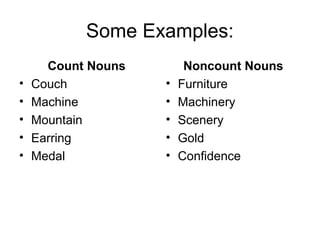
Some Examples:
      Count Nouns        Noncount Nouns
•   Couch           •   Furniture
•   Machine         •   Machinery
•   Mountain        •   Scenery
•   Earring         •   Gold
•   Medal           •   Confidence
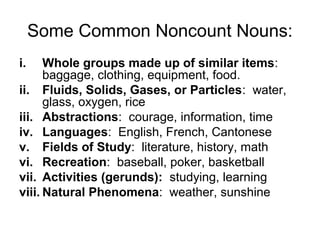
Some Common Noncount Nouns:
i.    Whole groups made up of similar items:
      baggage, clothing, equipment, food.
ii. Fluids, Solids, Gases, or Particles: water,
      glass, oxygen, rice
iii. Abstractions: courage, information, time
iv. Languages: English, French, Cantonese
v. Fields of Study: literature, history, math
vi. Recreation: baseball, poker, basketball
vii. Activities (gerunds): studying, learning
viii. Natural Phenomena: weather, sunshine
Note: Noncount nouns have
      no plural form.
Q: What are generic nouns?
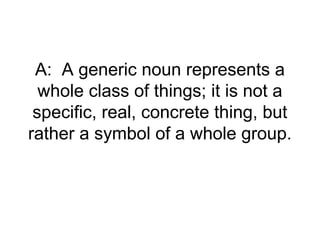
A: A generic noun represents a
  whole class of things; it is not a
 specific, real, concrete thing, but
rather a symbol of a whole group.
Examples of Generic Nouns:


i. A horse has four legs.
ii. An apple is red.
iii. A bird lays eggs.
Article Rules for Generic Nouns:
1. Use “a” / “an” before a generic singular
   count noun: An apple is red.
2. Do not use an article before a generic
   plural count noun: Apples are red.
3. Do not use an article before a generic
   noncount noun: Fruit comes in many
   different colours.
Q: What is an indefinite
       noun?
A: An indefinite noun is an actual
thing (not a symbol), but it is not
      specifically identified.
Examples of Indefinite Nouns:

i. I ate an apple.
ii. The man on the subway took out a book.
iii. The student was wearing a hat.
Article Rules with Indefinite Nouns:
1. Use “a” / “an” with indefinite singular
   count nouns: I ate an apple.
2. Use nothing or “some”, “two”, “a few”,
   “several”, etc… with indefinite plural
   count nouns. I ate some apples.
3. Use nothing or “some”, “a little”, “a lot of”,
   etc… with indefinite noncount nouns. I
   ate some fruit.
Q: What is a definite noun?
A: A noun is definite when both
the speaker and the listener are
thinking about the same specific
             thing.
Examples of Definite Nouns:

i. Thank you for the apple you gave me.
ii. I want to pass the car that is going so
     slow ahead of us.
iii. The monkey we saw at the zoo last
     Tuesday was really funny.
Article Rules with Definite Nouns:
1. Use “the” with definite singular count
   nouns: Thank you for the apple you
   gave me.
2. Use “the” with definite plural count
   nouns: Thank you for the apples you
   gave me.
3. Use “the” with definite noncount nouns:
   Thank you for the fruit you gave me.
General Guidelines for Article
          Usage:
1. Use “the” when you know or
assume that your listener is familiar
 with and thinking about the same
  specific thing or person you are
            talking about.
Examples:

i. Open the door!
ii. The sun is awfully bright.
iii. Tell the doctor what is wrong with you
     today.
2. Use “the” for the second
mention of an indefinite noun.
Examples:
i.   Yesterday I saw some dogs. The dogs
     were chasing a cat.
ii. The cat was chasing a mouse. The
     mouse ran into a hole.
iii. The hole was very small.
3. Do not use “the” with a plural
count noun or a noncount noun
    when you are making a
        generalization.
Examples:
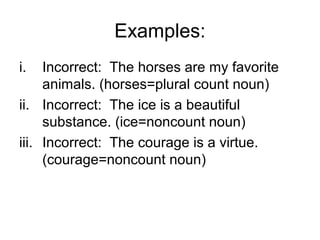
i.   Incorrect: The horses are my favorite
     animals. (horses=plural count noun)
ii. Incorrect: The ice is a beautiful
     substance. (ice=noncount noun)
iii. Incorrect: The courage is a virtue.
     (courage=noncount noun)
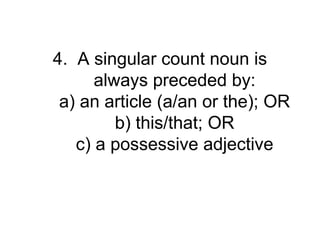
4. A singular count noun is
      always preceded by:
 a) an article (a/an or the); OR
         b) this/that; OR
   c) a possessive adjective
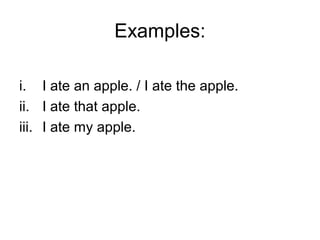
Examples:

i. I ate an apple. / I ate the apple.
ii. I ate that apple.
iii. I ate my apple.
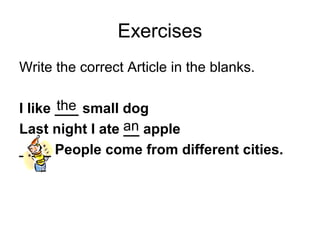
Exercises
Write the correct Article in the blanks.

       the
I like ___ small dog
Last night I ate an apple
                 __
____ People come from different cities.
Thanks
Articles

Articles

  • 1.
  • 2.
    Q: What isan article?
  • 3.
    A: There areonly two articles in the English language: “the” and “a”/ “an”. Articles are kinds of adjectives that give information about a noun.
  • 4.
    Q: When doI use which article?
  • 5.
    A: It dependson what kind of noun is being modified.
  • 6.
    Kinds of Nouns •Nouns are singular or plural • Nouns are count or noncount • Nouns are generic, indefinite, or definite
  • 7.
    Q: What isthe difference between a count and a noncount noun?
  • 8.
    A: A countnoun is a noun that can be counted. A noncount noun is a noun that, grammatically, cannot be counted.
  • 9.
    Some Examples: Count Nouns Noncount Nouns • Couch • Furniture • Machine • Machinery • Mountain • Scenery • Earring • Gold • Medal • Confidence
  • 10.
    Some Common NoncountNouns: i. Whole groups made up of similar items: baggage, clothing, equipment, food. ii. Fluids, Solids, Gases, or Particles: water, glass, oxygen, rice iii. Abstractions: courage, information, time iv. Languages: English, French, Cantonese v. Fields of Study: literature, history, math vi. Recreation: baseball, poker, basketball vii. Activities (gerunds): studying, learning viii. Natural Phenomena: weather, sunshine
  • 11.
    Note: Noncount nounshave no plural form.
  • 12.
    Q: What aregeneric nouns?
  • 13.
    A: A genericnoun represents a whole class of things; it is not a specific, real, concrete thing, but rather a symbol of a whole group.
  • 14.
    Examples of GenericNouns: i. A horse has four legs. ii. An apple is red. iii. A bird lays eggs.
  • 15.
    Article Rules forGeneric Nouns: 1. Use “a” / “an” before a generic singular count noun: An apple is red. 2. Do not use an article before a generic plural count noun: Apples are red. 3. Do not use an article before a generic noncount noun: Fruit comes in many different colours.
  • 16.
    Q: What isan indefinite noun?
  • 17.
    A: An indefinitenoun is an actual thing (not a symbol), but it is not specifically identified.
  • 18.
    Examples of IndefiniteNouns: i. I ate an apple. ii. The man on the subway took out a book. iii. The student was wearing a hat.
  • 19.
    Article Rules withIndefinite Nouns: 1. Use “a” / “an” with indefinite singular count nouns: I ate an apple. 2. Use nothing or “some”, “two”, “a few”, “several”, etc… with indefinite plural count nouns. I ate some apples. 3. Use nothing or “some”, “a little”, “a lot of”, etc… with indefinite noncount nouns. I ate some fruit.
  • 20.
    Q: What isa definite noun?
  • 21.
    A: A nounis definite when both the speaker and the listener are thinking about the same specific thing.
  • 22.
    Examples of DefiniteNouns: i. Thank you for the apple you gave me. ii. I want to pass the car that is going so slow ahead of us. iii. The monkey we saw at the zoo last Tuesday was really funny.
  • 23.
    Article Rules withDefinite Nouns: 1. Use “the” with definite singular count nouns: Thank you for the apple you gave me. 2. Use “the” with definite plural count nouns: Thank you for the apples you gave me. 3. Use “the” with definite noncount nouns: Thank you for the fruit you gave me.
  • 24.
    General Guidelines forArticle Usage:
  • 25.
    1. Use “the”when you know or assume that your listener is familiar with and thinking about the same specific thing or person you are talking about.
  • 26.
    Examples: i. Open thedoor! ii. The sun is awfully bright. iii. Tell the doctor what is wrong with you today.
  • 27.
    2. Use “the”for the second mention of an indefinite noun.
  • 28.
    Examples: i. Yesterday I saw some dogs. The dogs were chasing a cat. ii. The cat was chasing a mouse. The mouse ran into a hole. iii. The hole was very small.
  • 29.
    3. Do notuse “the” with a plural count noun or a noncount noun when you are making a generalization.
  • 30.
    Examples: i. Incorrect: The horses are my favorite animals. (horses=plural count noun) ii. Incorrect: The ice is a beautiful substance. (ice=noncount noun) iii. Incorrect: The courage is a virtue. (courage=noncount noun)
  • 31.
    4. A singularcount noun is always preceded by: a) an article (a/an or the); OR b) this/that; OR c) a possessive adjective
  • 32.
    Examples: i. I atean apple. / I ate the apple. ii. I ate that apple. iii. I ate my apple.
  • 33.
    Exercises Write the correctArticle in the blanks. the I like ___ small dog Last night I ate an apple __ ____ People come from different cities.
  • 34.