There is/there are
C’è/ci sono
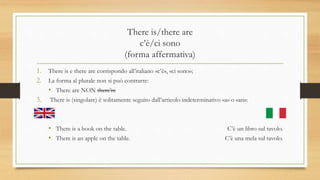
There is/there are
c’è/ci sono
(forma affermativa)
1. There is e there are corrispondo all’italiano «c’è», «ci sono»;
2. La forma al plurale non si può contrarre:
• There are NON there’re
3. There is (singolare) è solitamente seguito dall’articolo indeterminativo «a» o «an»:
• There is a book on the table. C’è un libro sul tavolo.
• There is an apple on the table. C’è una mela sul tavolo.
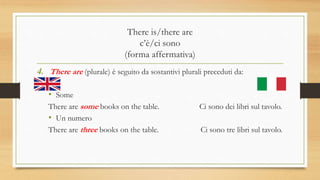
There is/there are
c’è/ci sono
(forma affermativa)
4. There are (plurale) è seguito da sostantivi plurali preceduti da:
• Some
There are some books on the table. Ci sono dei libri sul tavolo.
• Un numero
There are three books on the table. Ci sono tre libri sul tavolo.
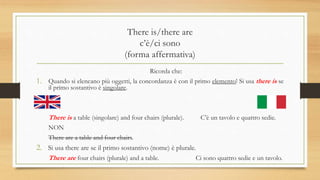
There is/there are
c’è/ci sono
(forma affermativa)
Ricorda che:
1. Quando si elencano più oggetti, la concordanza è con il primo elemento! Si usa there is se
il primo sostantivo è singolare.
There is a table (singolare) and four chairs (plurale). C’è un tavolo e quattro sedie.
NON
There are a table and four chairs.
2. Si usa there are se il primo sostantivo (nome) è plurale.
There are four chairs (plurale) and a table. Ci sono quattro sedie e un tavolo.
There is/there are
c’è/ci sono
(forma negativa)
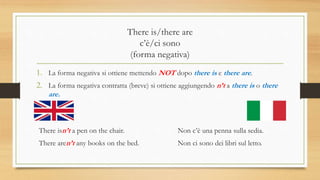
1. La forma negativa si ottiene mettendo NOT dopo there is e there are.
2. La forma negativa contratta (breve) si ottiene aggiungendo n’t a there is o there
are.
There isn’t a pen on the chair. Non c’è una penna sulla sedia.
There aren’t any books on the bed. Non ci sono dei libri sul letto.
There is/there are
c’è/ci sono
(forma interrogativa)
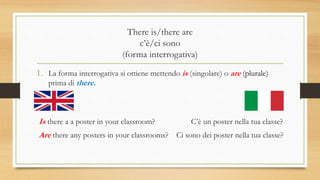
1. La forma interrogativa si ottiene mettendo is (singolare) o are (plurale)
prima di there.
Is there a a poster in your classroom? C’è un poster nella tua classe?
Are there any posters in your classrooms? Ci sono dei poster nella tua classe?

There is/there are

  • 1.
  • 2.
    There is/there are c’è/cisono (forma affermativa) 1. There is e there are corrispondo all’italiano «c’è», «ci sono»; 2. La forma al plurale non si può contrarre: • There are NON there’re 3. There is (singolare) è solitamente seguito dall’articolo indeterminativo «a» o «an»: • There is a book on the table. C’è un libro sul tavolo. • There is an apple on the table. C’è una mela sul tavolo.
  • 3.
    There is/there are c’è/cisono (forma affermativa) 4. There are (plurale) è seguito da sostantivi plurali preceduti da: • Some There are some books on the table. Ci sono dei libri sul tavolo. • Un numero There are three books on the table. Ci sono tre libri sul tavolo.
  • 4.
    There is/there are c’è/cisono (forma affermativa) Ricorda che: 1. Quando si elencano più oggetti, la concordanza è con il primo elemento! Si usa there is se il primo sostantivo è singolare. There is a table (singolare) and four chairs (plurale). C’è un tavolo e quattro sedie. NON There are a table and four chairs. 2. Si usa there are se il primo sostantivo (nome) è plurale. There are four chairs (plurale) and a table. Ci sono quattro sedie e un tavolo.
  • 5.
    There is/there are c’è/cisono (forma negativa) 1. La forma negativa si ottiene mettendo NOT dopo there is e there are. 2. La forma negativa contratta (breve) si ottiene aggiungendo n’t a there is o there are. There isn’t a pen on the chair. Non c’è una penna sulla sedia. There aren’t any books on the bed. Non ci sono dei libri sul letto.
  • 6.
    There is/there are c’è/cisono (forma interrogativa) 1. La forma interrogativa si ottiene mettendo is (singolare) o are (plurale) prima di there. Is there a a poster in your classroom? C’è un poster nella tua classe? Are there any posters in your classrooms? Ci sono dei poster nella tua classe?