Foundations for effective technology integration
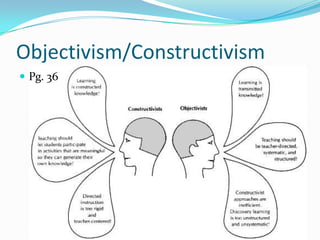
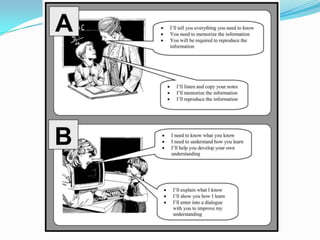
Objectivism/Constructivism
 Pg. 36
Theories Underlying Directed
Technology
 Behaviorist
 Information-processing
 Cognitive-behavioral
 Systems theory & systematic instructional design


 Objectivist learning theories shape directed learning
 strategies
Behaviorist: Skinner
Learning as:
 stimulus-response chains
 an activity that occurs inside the mind, can be inferred
  only by observed behaviors
 http://youtu.be/yBPaQ9ctAwA


 Behaviors are shaped by “contingencies of
 reinforcement” to shape desired responses
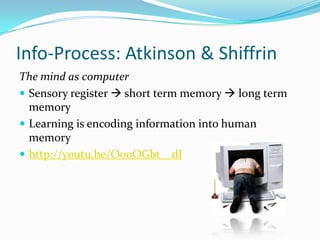
Info-Process: Atkinson & Shiffrin
The mind as computer
 Sensory register  short term memory  long term
  memory
 Learning is encoding information into human
  memory
 http://youtu.be/O0oOGbt__dI
Cognitive-behavioral: Robert
  Gagne
Providing conditions
for learning
 Learning is
shaped by providing
optimal instructional
conditions
 Different kinds of
skills require different
learning conditions
Systems theory & systematic
instructional design
Managing the complexity of teaching
 Learning: using a system of instruction based on
  behaviorist information processing & cognitive
  behaviorist theories
 Stating goals and objectives; task analysis/learning
  sequence, matching assessment/instruction to
  objectives, creating materials, field testing and
  revising materials
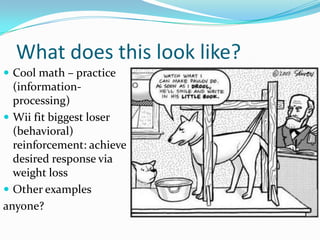
What does this look like?
 Cool math – practice
  (information-
  processing)
 Wii fit biggest loser
  (behavioral)
  reinforcement: achieve
  desired response via
  weight loss
 Other examples
anyone?
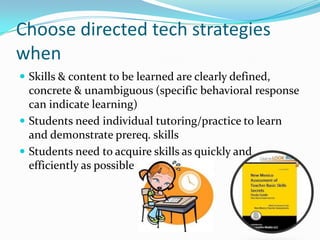
Choose directed tech strategies
when
 Skills & content to be learned are clearly defined,
  concrete & unambiguous (specific behavioral response
  can indicate learning)
 Students need individual tutoring/practice to learn
  and demonstrate prereq. skills
 Students need to acquire skills as quickly and
  efficiently as possible
Theories Foundations of
Constructivist Integration Models
 Social activism theory
 Social cognitive theory
 Scaffolding theory
 Child development theory
 Discovery learning
 Multiple intelligences theories


 Constructivist learning theories shape inquiry based
 integration strategies
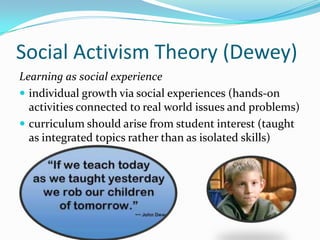
Social Activism Theory (Dewey)
Learning as social experience
 individual growth via social experiences (hands-on
  activities connected to real world issues and problems)
 curriculum should arise from student interest (taught
  as integrated topics rather than as isolated skills)
Social Cognitive: Albert Bandura
Social influences on learning
 Learning is an information processing activity
  resulting from interactions among
  behaviors, environment and student factors
 Learn through actions they take or observing others


step and repeat
Scaffolding: Lev Vygotsky
Learning as a cognitive building process
 Learning is shaped by individual differences and the
  influence of culture
 Adults supporting learning through
  scaffolding, helping children build on what they
  already know

The anti-example
Child Development: Jean Piaget
Stages of development
 Learning is cognitive growth through neurological and
  social maturation
 Progress by interacting with their environment
 When confront unknown they respond with
  assimilation (fitting into their views) or
  accommodation (changing their views)
1 min skip
Discovery: Jerome Bruner
Instructional support for child development
 cognitive growth through interaction with the
  environment
 more likely to understand & remember concepts that
  they discover during interaction with environment
 Teachers provide opportunities for exploring &
  manipulating objects/doing experiments

shadow play
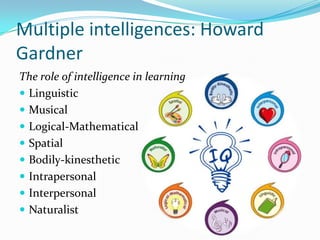
Multiple intelligences: Howard
Gardner
The role of intelligence in learning
 Linguistic
 Musical
 Logical-Mathematical
 Spatial
 Bodily-kinesthetic
 Intrapersonal
 Interpersonal
 Naturalist
What does this look like?
 Visual presentations such as prezi or student made
  videos/propaganda (social activism)
 Student centered websites (discovery)
 Electronic manipulatives (child development)
 Studying subjects from individualized
  perspectives/interests (scaffolding)
http://www.loc.gov/topics/americanhistory.php
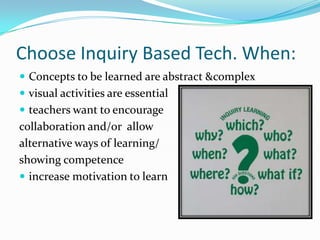
Choose Inquiry Based Tech. When:
 Concepts to be learned are abstract &complex
 visual activities are essential
 teachers want to encourage
collaboration and/or allow
alternative ways of learning/
showing competence
 increase motivation to learn
Cherry picking
Tables on
 Pg.47
 Pg.49
 Pg.50
 Pg.51


Provide great comparisons to help us better understand
  the benefits and strengths of both strategies & theories
  in various situations
TIP model
Technology Integration Planning model
 Figure 2.8 pg.53
 Take all these factors and decide how we want to
  integrate pieces into our lesson plans – to be
  effective, follow the model!
 There’s no one ‘right’ way to integrate technology into
  our classrooms, because as we’ve learned, we all have
  different perspectives/ideas
When Technology Works Best
 Figure 2.10 pg. 65
 Funding sources figure 2.11
pg. 67
Activity
 Centers
 Your job is to figure out what environment and
  learning style/activity best suits each student (online
  resource) & fill out the mini-reflections at each station
 You must sample/try/participate at each station so you
  can best understand the potential and limits of each
  ‘environment’
?
 Can objectivist and constructivist personalities be
    better suited for certain subjects? Grade levels? Why?
    How?
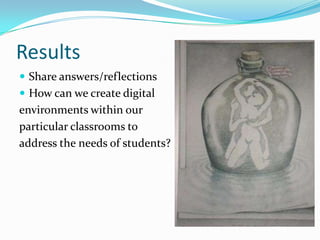
Results
 Share answers/reflections
 How can we create digital
environments within our
particular classrooms to
address the needs of students?
Tricky!
 minute 150


 the variable is YOU! Each one of us learns/thinks
  differently and thrive in different
  environments, therefore, the way in which we
  approach these students is always going to be different
  – one size clearly does not fit most

 It’s all about perception and perspective
Theory into practice

Theory into practice

  • 1.
    Foundations for effectivetechnology integration
  • 2.
  • 4.
    Theories Underlying Directed Technology Behaviorist  Information-processing  Cognitive-behavioral  Systems theory & systematic instructional design  Objectivist learning theories shape directed learning strategies
  • 5.
    Behaviorist: Skinner Learning as: stimulus-response chains  an activity that occurs inside the mind, can be inferred only by observed behaviors  http://youtu.be/yBPaQ9ctAwA  Behaviors are shaped by “contingencies of reinforcement” to shape desired responses
  • 6.
    Info-Process: Atkinson &Shiffrin The mind as computer  Sensory register  short term memory  long term memory  Learning is encoding information into human memory  http://youtu.be/O0oOGbt__dI
  • 7.
    Cognitive-behavioral: Robert Gagne Providing conditions for learning  Learning is shaped by providing optimal instructional conditions  Different kinds of skills require different learning conditions
  • 8.
    Systems theory &systematic instructional design Managing the complexity of teaching  Learning: using a system of instruction based on behaviorist information processing & cognitive behaviorist theories  Stating goals and objectives; task analysis/learning sequence, matching assessment/instruction to objectives, creating materials, field testing and revising materials
  • 9.
    What does thislook like?  Cool math – practice (information- processing)  Wii fit biggest loser (behavioral) reinforcement: achieve desired response via weight loss  Other examples anyone?
  • 10.
    Choose directed techstrategies when  Skills & content to be learned are clearly defined, concrete & unambiguous (specific behavioral response can indicate learning)  Students need individual tutoring/practice to learn and demonstrate prereq. skills  Students need to acquire skills as quickly and efficiently as possible
  • 11.
    Theories Foundations of ConstructivistIntegration Models  Social activism theory  Social cognitive theory  Scaffolding theory  Child development theory  Discovery learning  Multiple intelligences theories  Constructivist learning theories shape inquiry based integration strategies
  • 12.
    Social Activism Theory(Dewey) Learning as social experience  individual growth via social experiences (hands-on activities connected to real world issues and problems)  curriculum should arise from student interest (taught as integrated topics rather than as isolated skills)
  • 13.
    Social Cognitive: AlbertBandura Social influences on learning  Learning is an information processing activity resulting from interactions among behaviors, environment and student factors  Learn through actions they take or observing others step and repeat
  • 14.
    Scaffolding: Lev Vygotsky Learningas a cognitive building process  Learning is shaped by individual differences and the influence of culture  Adults supporting learning through scaffolding, helping children build on what they already know The anti-example
  • 15.
    Child Development: JeanPiaget Stages of development  Learning is cognitive growth through neurological and social maturation  Progress by interacting with their environment  When confront unknown they respond with assimilation (fitting into their views) or accommodation (changing their views) 1 min skip
  • 16.
    Discovery: Jerome Bruner Instructionalsupport for child development  cognitive growth through interaction with the environment  more likely to understand & remember concepts that they discover during interaction with environment  Teachers provide opportunities for exploring & manipulating objects/doing experiments shadow play
  • 17.
    Multiple intelligences: Howard Gardner Therole of intelligence in learning  Linguistic  Musical  Logical-Mathematical  Spatial  Bodily-kinesthetic  Intrapersonal  Interpersonal  Naturalist
  • 18.
    What does thislook like?  Visual presentations such as prezi or student made videos/propaganda (social activism)  Student centered websites (discovery)  Electronic manipulatives (child development)  Studying subjects from individualized perspectives/interests (scaffolding) http://www.loc.gov/topics/americanhistory.php
  • 19.
    Choose Inquiry BasedTech. When:  Concepts to be learned are abstract &complex  visual activities are essential  teachers want to encourage collaboration and/or allow alternative ways of learning/ showing competence  increase motivation to learn
  • 20.
    Cherry picking Tables on Pg.47  Pg.49  Pg.50  Pg.51 Provide great comparisons to help us better understand the benefits and strengths of both strategies & theories in various situations
  • 21.
    TIP model Technology IntegrationPlanning model  Figure 2.8 pg.53  Take all these factors and decide how we want to integrate pieces into our lesson plans – to be effective, follow the model!  There’s no one ‘right’ way to integrate technology into our classrooms, because as we’ve learned, we all have different perspectives/ideas
  • 22.
    When Technology WorksBest  Figure 2.10 pg. 65  Funding sources figure 2.11 pg. 67
  • 23.
    Activity  Centers  Yourjob is to figure out what environment and learning style/activity best suits each student (online resource) & fill out the mini-reflections at each station  You must sample/try/participate at each station so you can best understand the potential and limits of each ‘environment’
  • 24.
    ?  Can objectivistand constructivist personalities be better suited for certain subjects? Grade levels? Why? How?
  • 25.
    Results  Share answers/reflections How can we create digital environments within our particular classrooms to address the needs of students?
  • 26.
    Tricky!  minute 150 the variable is YOU! Each one of us learns/thinks differently and thrive in different environments, therefore, the way in which we approach these students is always going to be different – one size clearly does not fit most  It’s all about perception and perspective