BIOSYNTHETIC CLASSIFICATION OF 
ALKALOIDS 
Presented by : M. Jamal 
Email: jamalkhan616@gmail.com
Alkaloids 
• “Basic nitrogenous compound, contains one or more 
nitrogen in heterocyclic ring system having marked 
physiological action on human and animals when use in small 
quantities””. 
Classification of alkaloids 
• 1. Chemical classification of alkaloids 
• 2. Taxonomical classification of alkaloids 
• 3. Pharmacological classification of alkaloids 
• 4. Biosynthetic classification of alkaloids
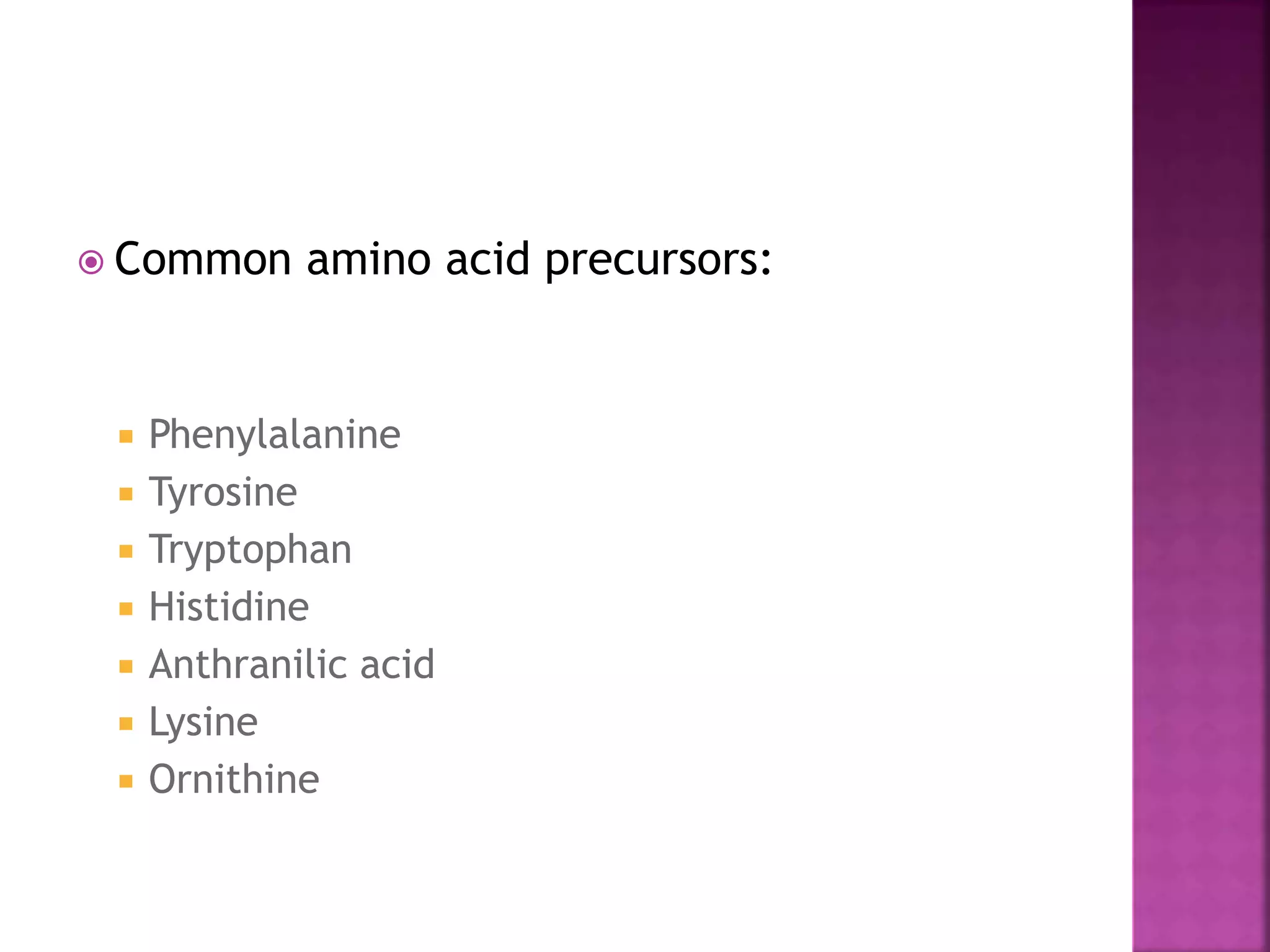
 Common amino acid precursors: 
 Phenylalanine 
 Tyrosine 
 Tryptophan 
 Histidine 
 Anthranilic acid 
 Lysine 
 Ornithine
BIOSYNTHETIC CLASSIFICATION OF 
ALKALOIDS 
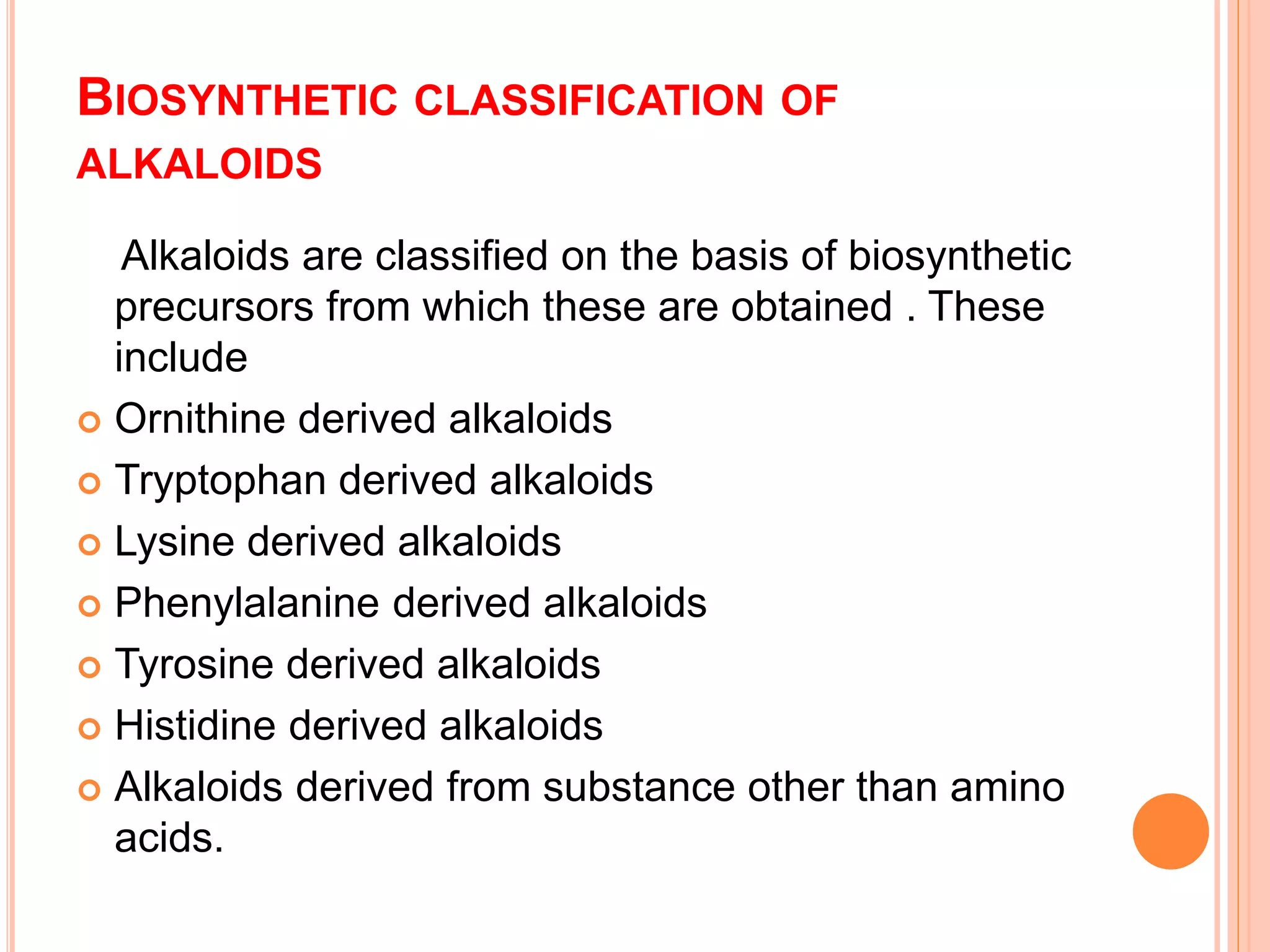
Alkaloids are classified on the basis of biosynthetic 
precursors from which these are obtained . These 
include 
 Ornithine derived alkaloids 
 Tryptophan derived alkaloids 
 Lysine derived alkaloids 
 Phenylalanine derived alkaloids 
 Tyrosine derived alkaloids 
 Histidine derived alkaloids 
 Alkaloids derived from substance other than amino 
acids.
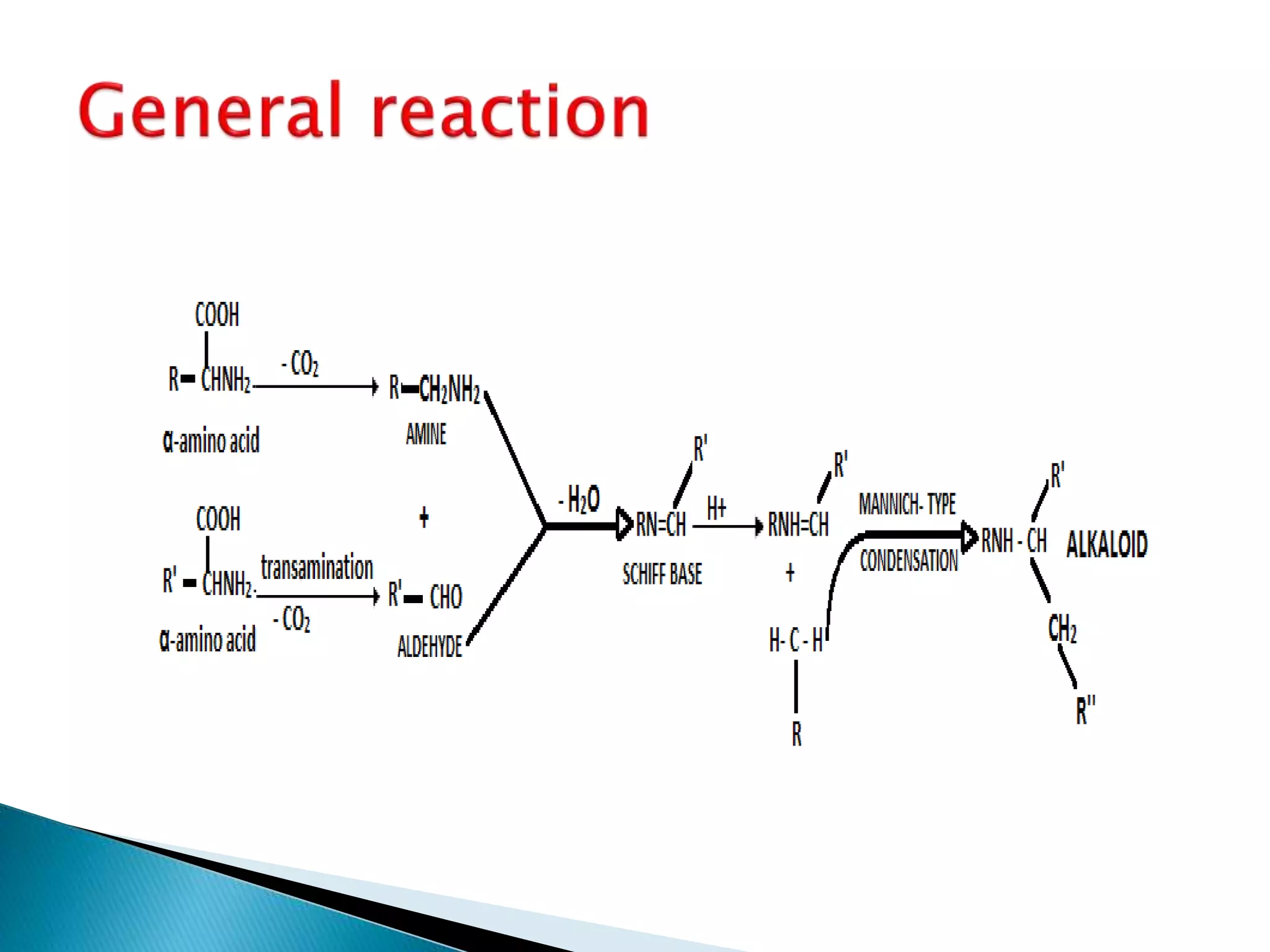
General reactions for biosynthesis of alkaloids 
• Some of the general reactions that are of particular 
importance include: decarboxylation (removal of 
carboxyl group or carbon dioxide) and transamination 
(transfer of an amino group from one molecule to another 
without the formation of ammonia) of the amino acids to 
yield a corresponding amine or aldehyde. 
• These can react to form a Schiff base which, in turn can 
react with carbanion in a Mannich-type condensation.
Alkaloid formation may require the involvement of only one 
molecule of amino acid, or 2 molecules of the same AA, or 
less commonly, 2 molecules of different AA or else several 
molecules of the same AA.
ORNITHINE DERIVED ALKALOIDS 
It includes: 
 Tropane alkaloids 
 Pyrrolidine alkaloids`
TROPANE ALKALOIDS 
(ATROPINE, HYOCYAMINE, HYOSINE, SCOPOLAMINE) 
 B.S: Atropa belladona (deadly nightshade), Datura stramonium( thornapple), Hyosyamus 
niger(henbane). 
 Family: solanaceae 
 Part used: dried leaves and flowering tops 
 Uses: 1.Atropine is classified as anti cholinergic drugs. 
 Atropine can also be used in SLUDGE syndrome( salivation, lacrimation, urination, 
diaphoresis, GIT motility and emesis) caused by organophosphate poisoning. 
 Hyoscine is used as antispasmodic. 
COCAINE 
o B.S: Erythroxylum coca, Erythroxylum novogranatense 
o Common name. Coca leaves 
o Family: Erythroxylaceae 
o Part used: Leaves 
o Uses: cocaine is a CNS stimulant. 
it is also used as local anesthetic.
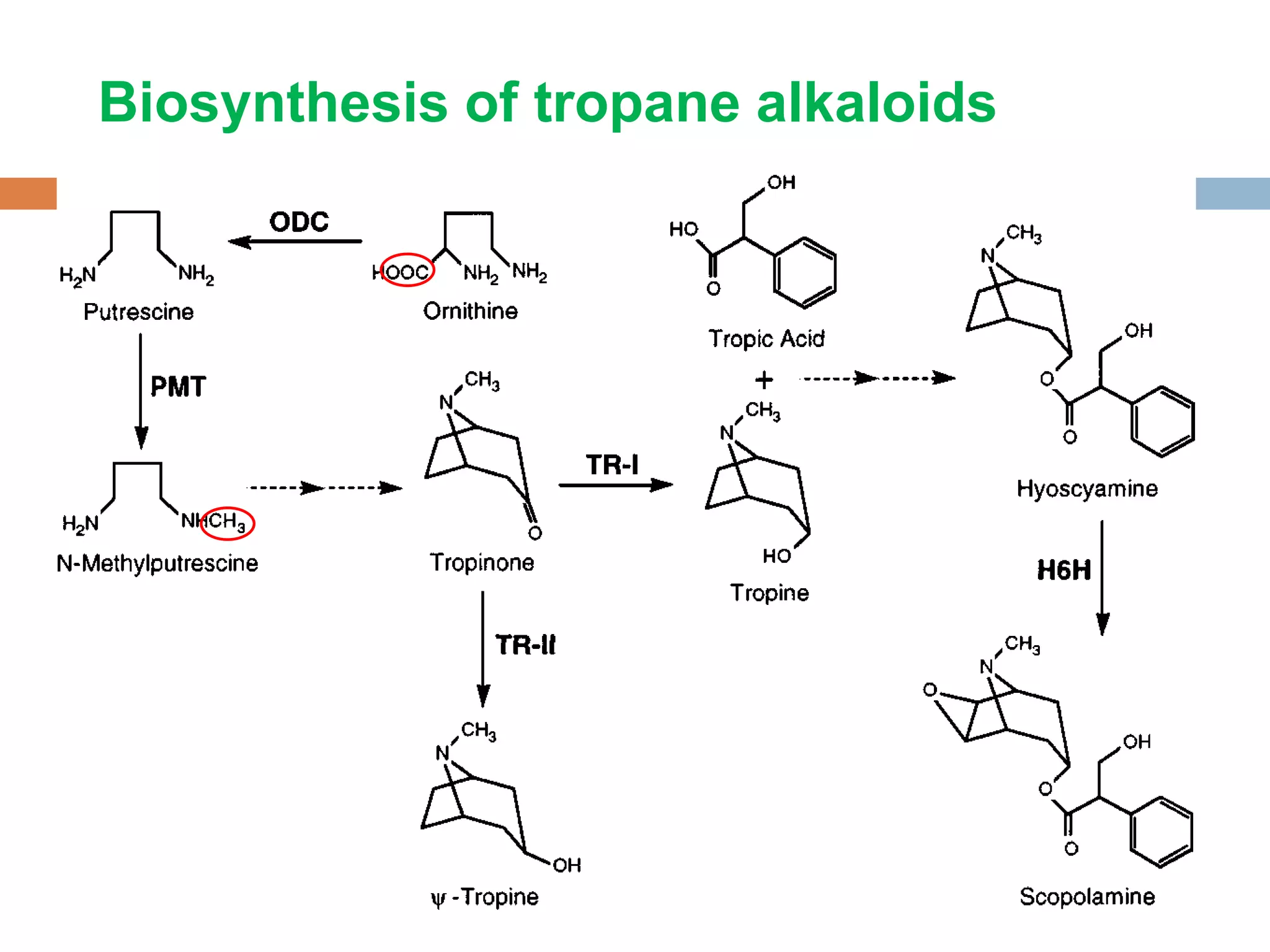
Biosynthesis of tropane alkaloids
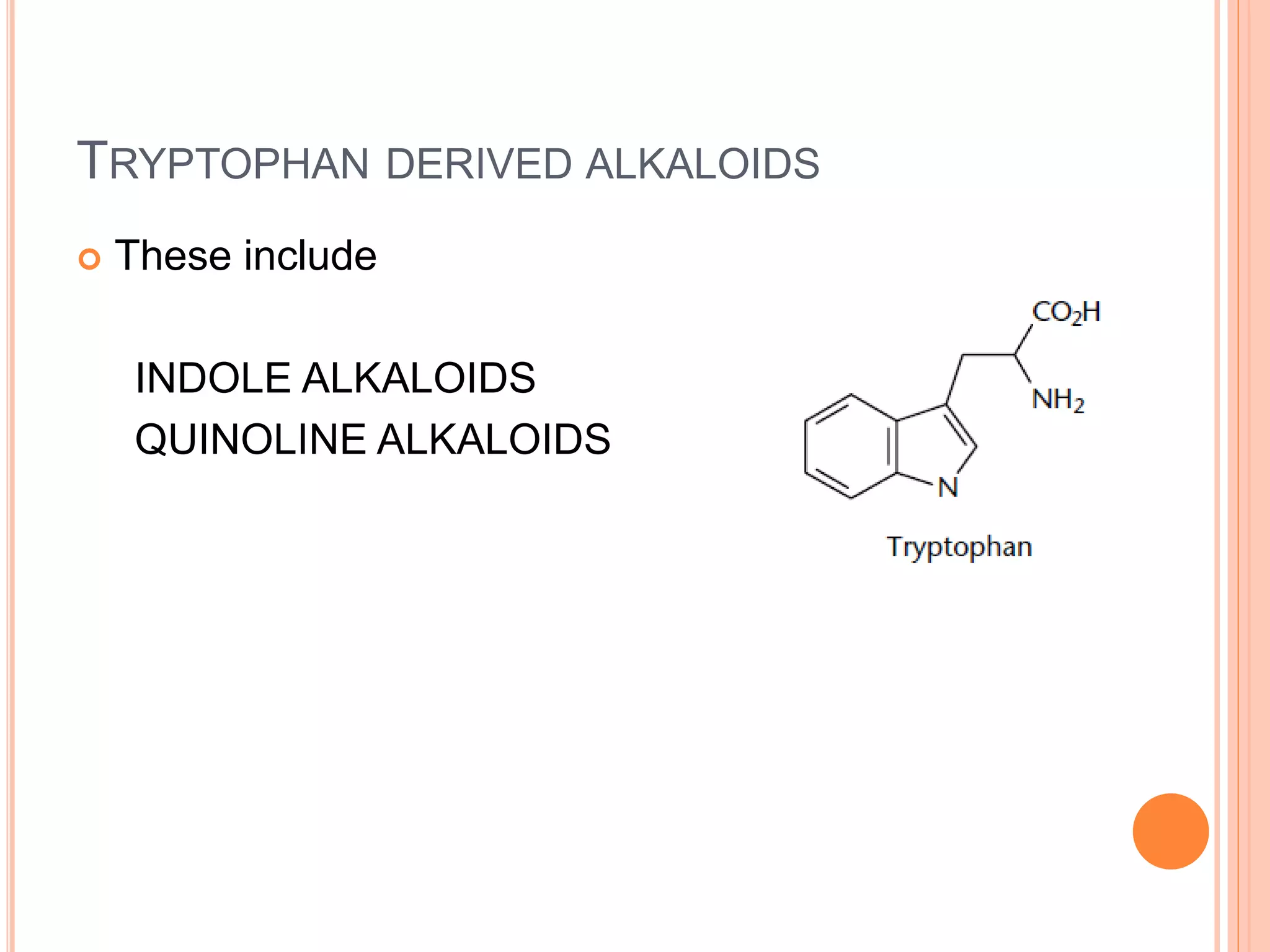
TRYPTOPHAN DERIVED ALKALOIDS 
 These include 
INDOLE ALKALOIDS 
QUINOLINE ALKALOIDS
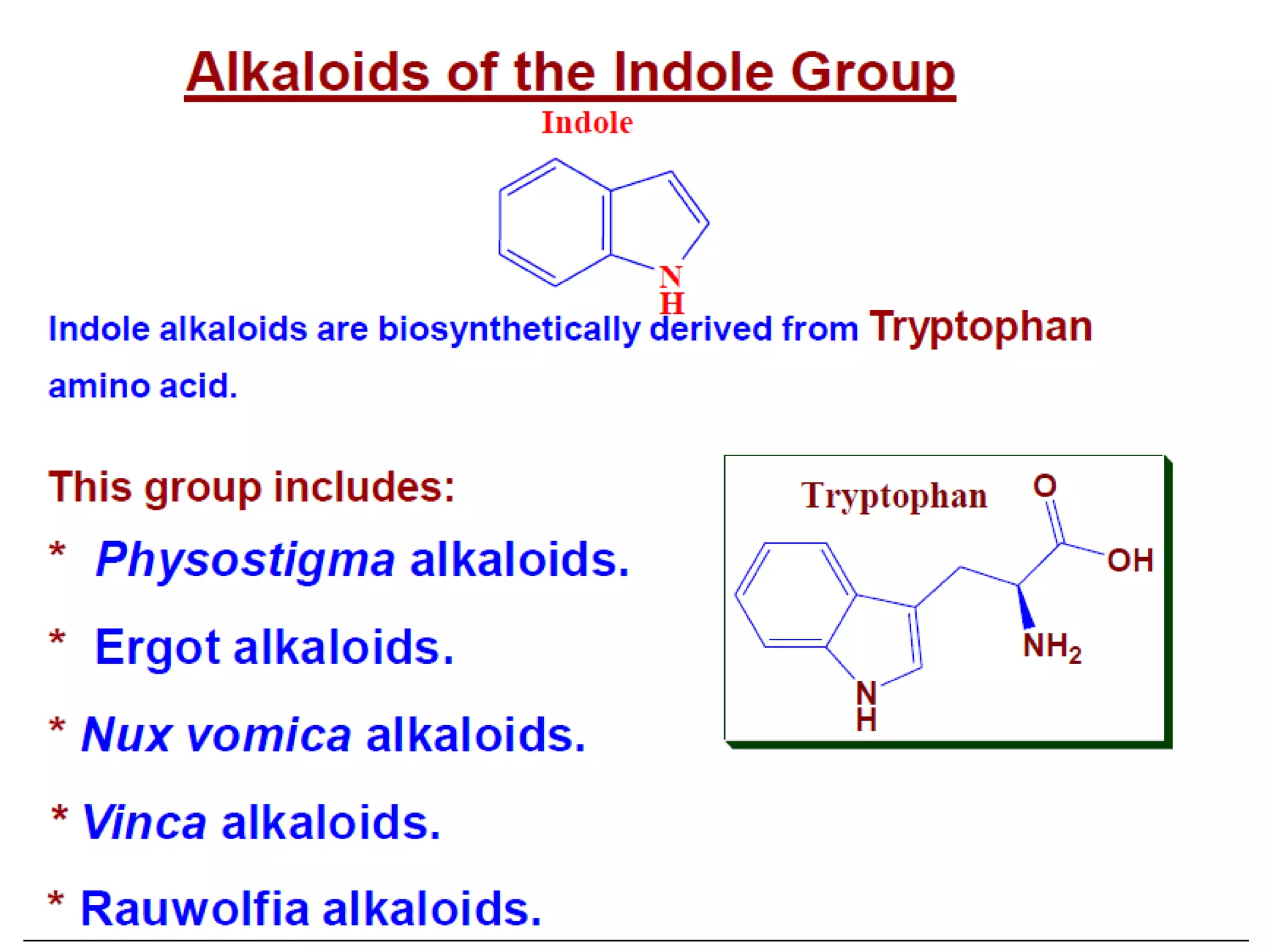
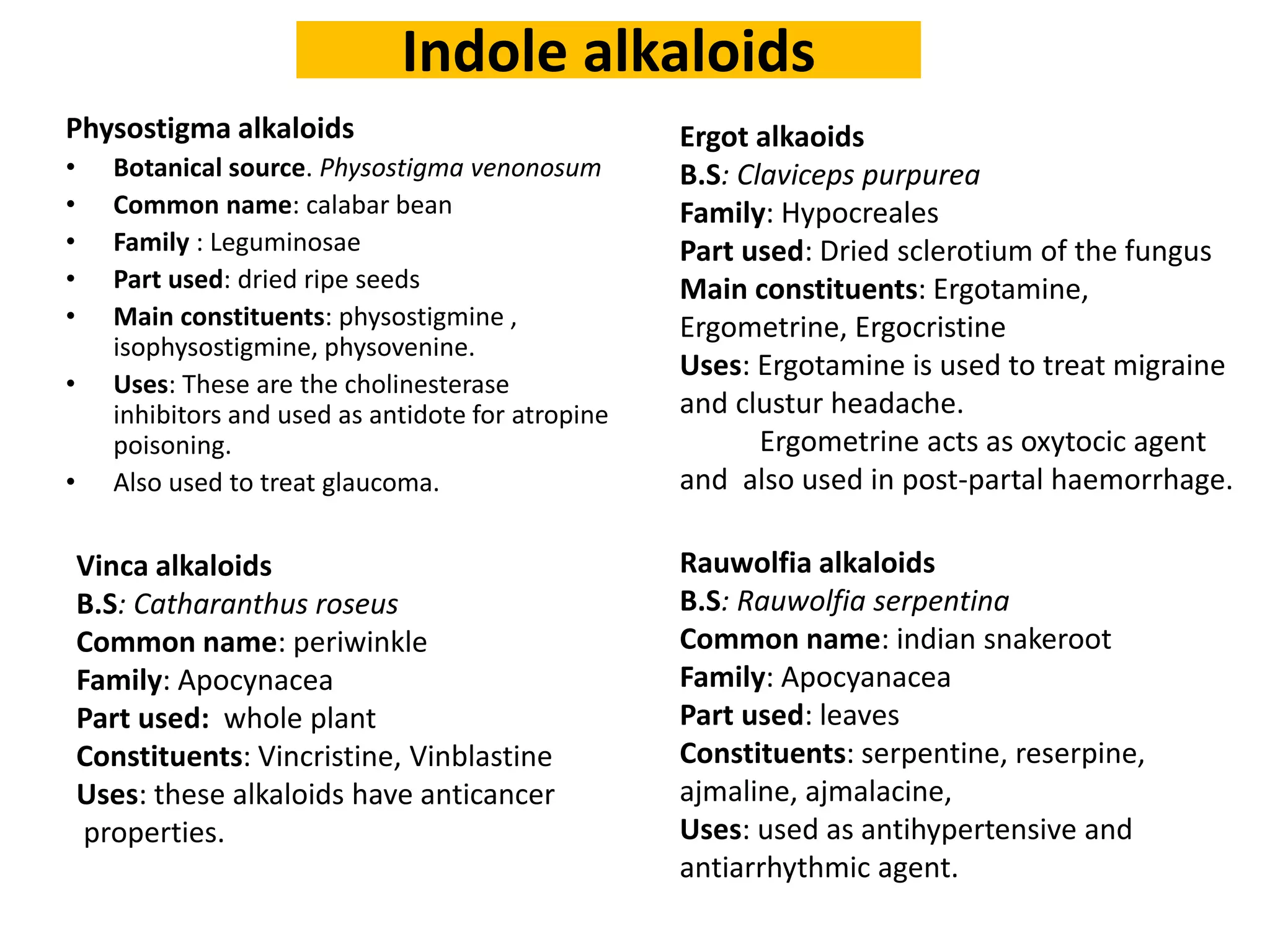
Indole alkaloids 
Physostigma alkaloids 
• Botanical source. Physostigma venonosum 
• Common name: calabar bean 
• Family : Leguminosae 
• Part used: dried ripe seeds 
• Main constituents: physostigmine , 
isophysostigmine, physovenine. 
• Uses: These are the cholinesterase 
inhibitors and used as antidote for atropine 
poisoning. 
• Also used to treat glaucoma. 
Ergot alkaoids 
B.S: Claviceps purpurea 
Family: Hypocreales 
Part used: Dried sclerotium of the fungus 
Main constituents: Ergotamine, 
Ergometrine, Ergocristine 
Uses: Ergotamine is used to treat migraine 
and clustur headache. 
Ergometrine acts as oxytocic agent 
and also used in post-partal haemorrhage. 
Vinca alkaloids 
B.S: Catharanthus roseus 
Common name: periwinkle 
Family: Apocynacea 
Part used: whole plant 
Constituents: Vincristine, Vinblastine 
Uses: these alkaloids have anticancer 
properties. 
Rauwolfia alkaloids 
B.S: Rauwolfia serpentina 
Common name: indian snakeroot 
Family: Apocyanacea 
Part used: leaves 
Constituents: serpentine, reserpine, 
ajmaline, ajmalacine, 
Uses: used as antihypertensive and 
antiarrhythmic agent.
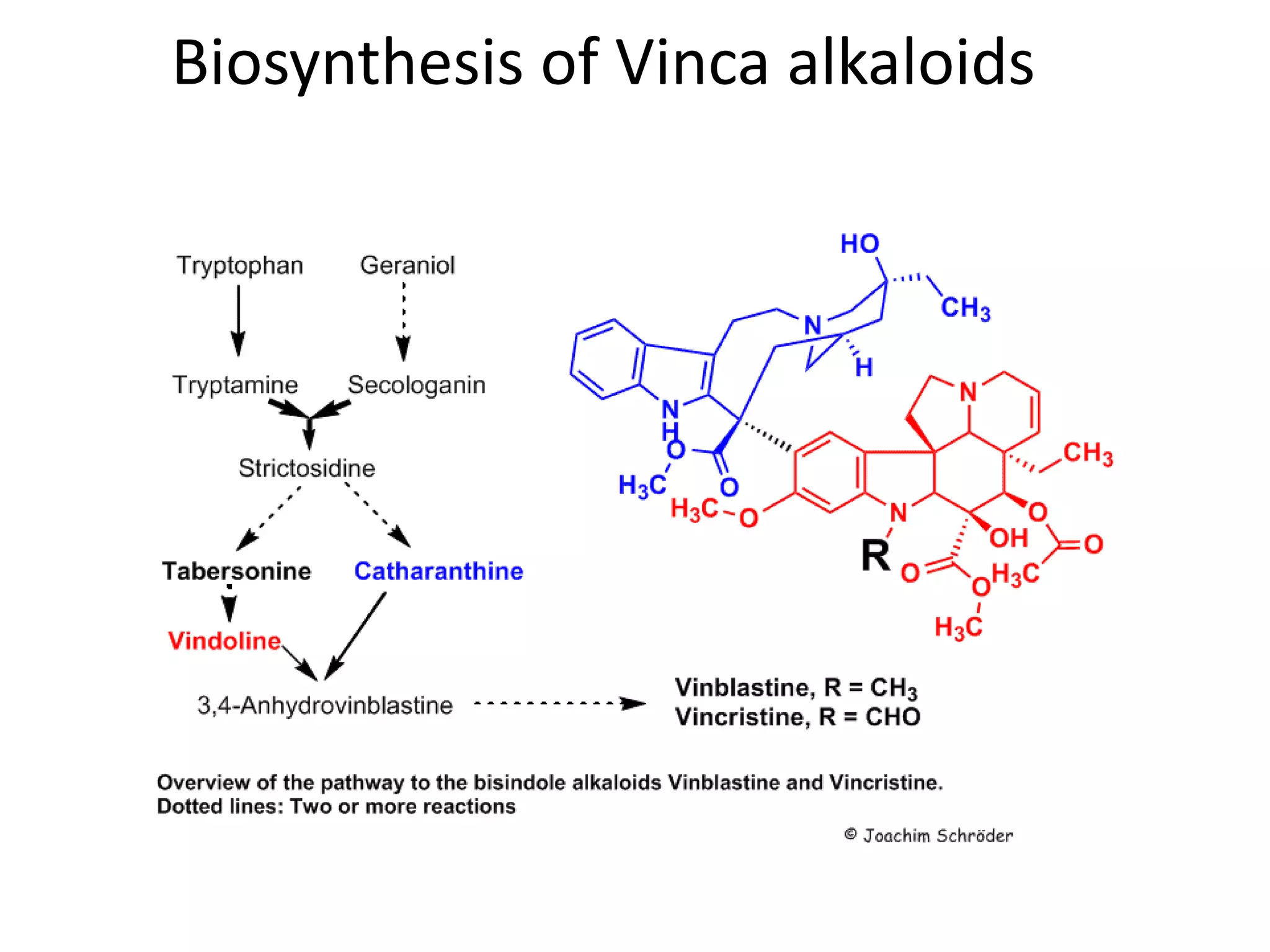
Biosynthesis of Vinca alkaloids
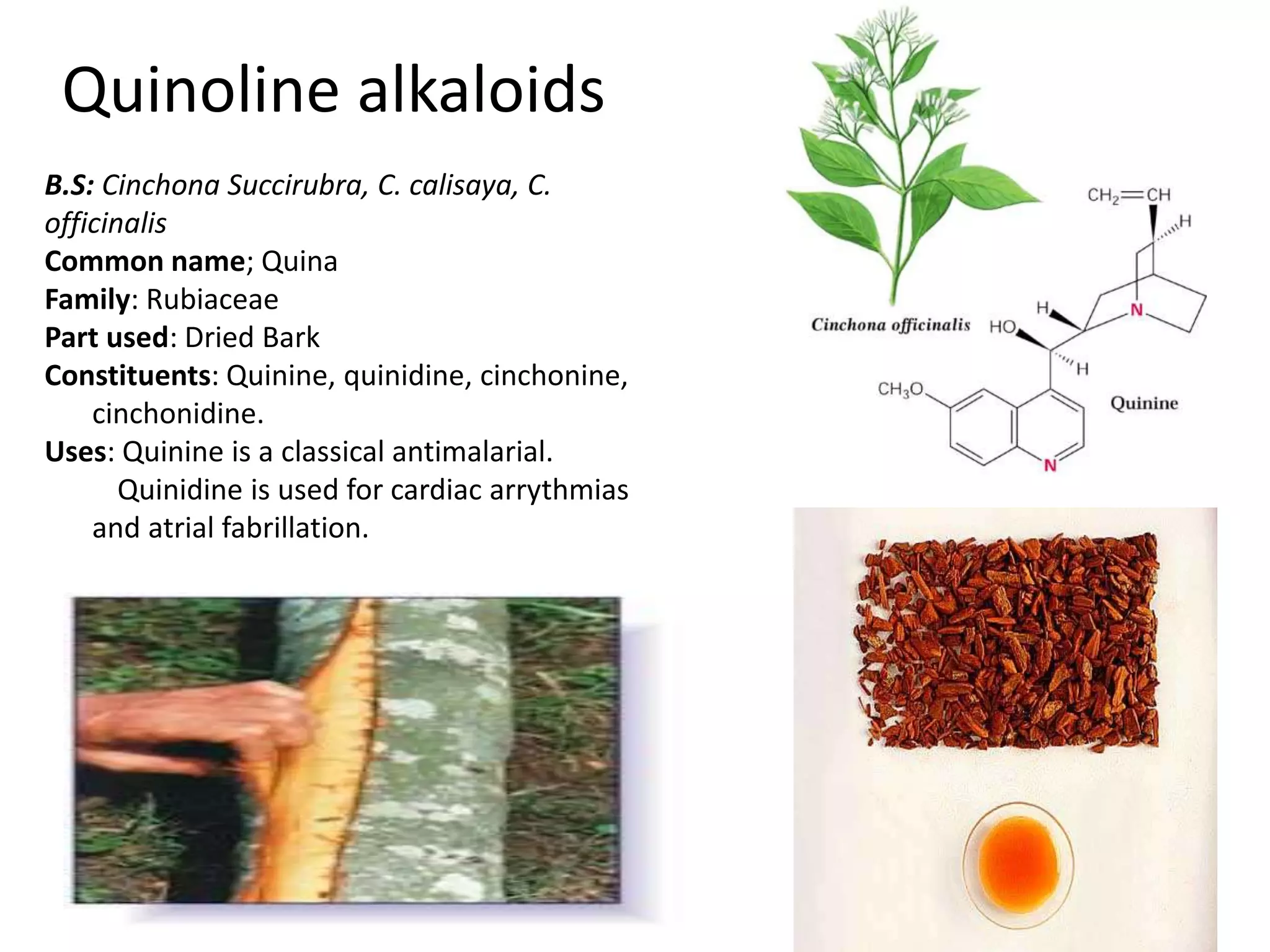
Quinoline alkaloids 
B.S: Cinchona Succirubra, C. calisaya, C. 
officinalis 
Common name; Quina 
Family: Rubiaceae 
Part used: Dried Bark 
Constituents: Quinine, quinidine, cinchonine, 
cinchonidine. 
Uses: Quinine is a classical antimalarial. 
Quinidine is used for cardiac arrythmias 
and atrial fabrillation.
LYSINE DERIVED ALKALOIDS 
These include 
 Lobelia spp 
 pepper spp
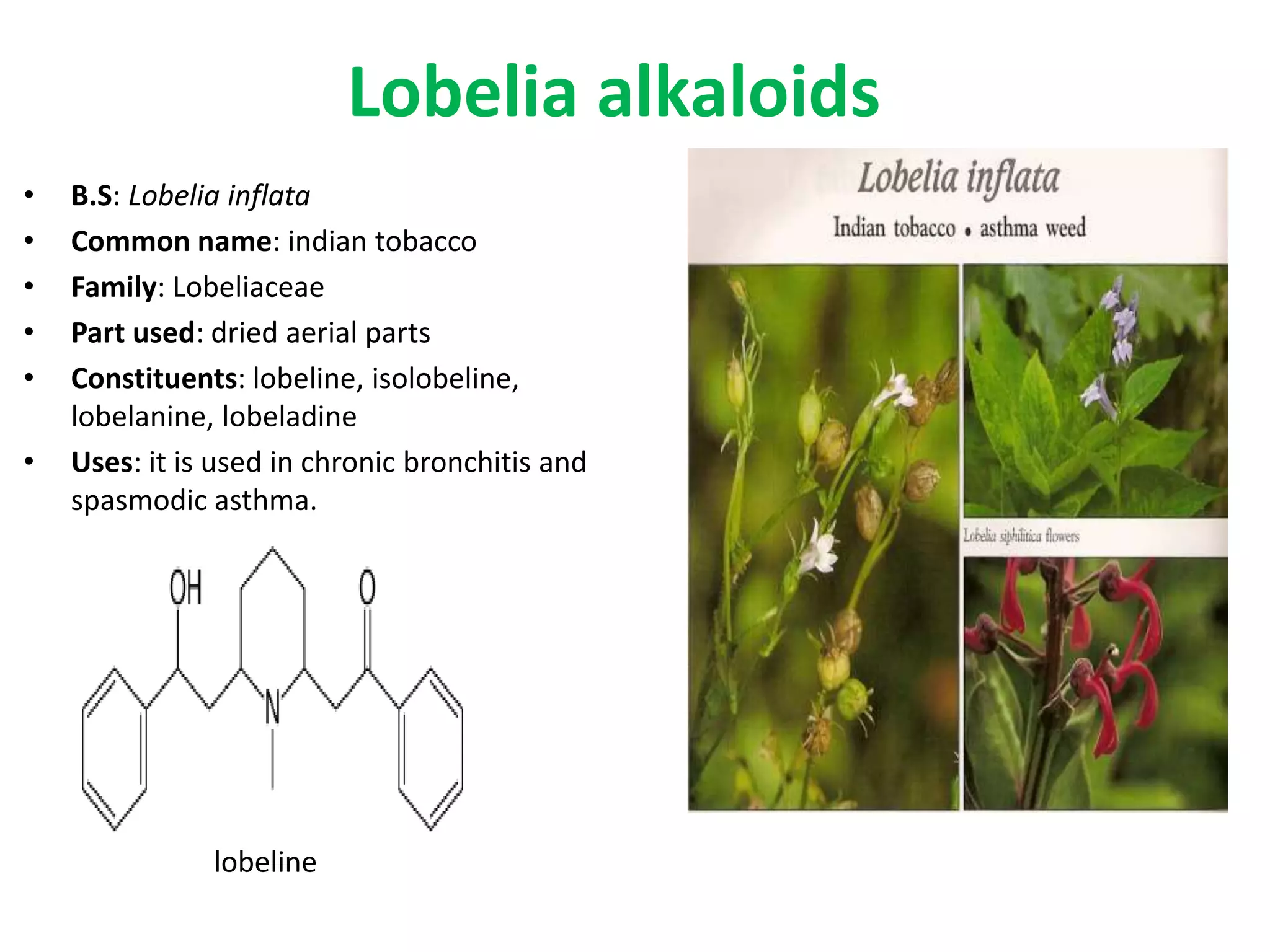
Lobelia alkaloids 
• B.S: Lobelia inflata 
• Common name: indian tobacco 
• Family: Lobeliaceae 
• Part used: dried aerial parts 
• Constituents: lobeline, isolobeline, 
lobelanine, lobeladine 
• Uses: it is used in chronic bronchitis and 
spasmodic asthma. 
lobeline
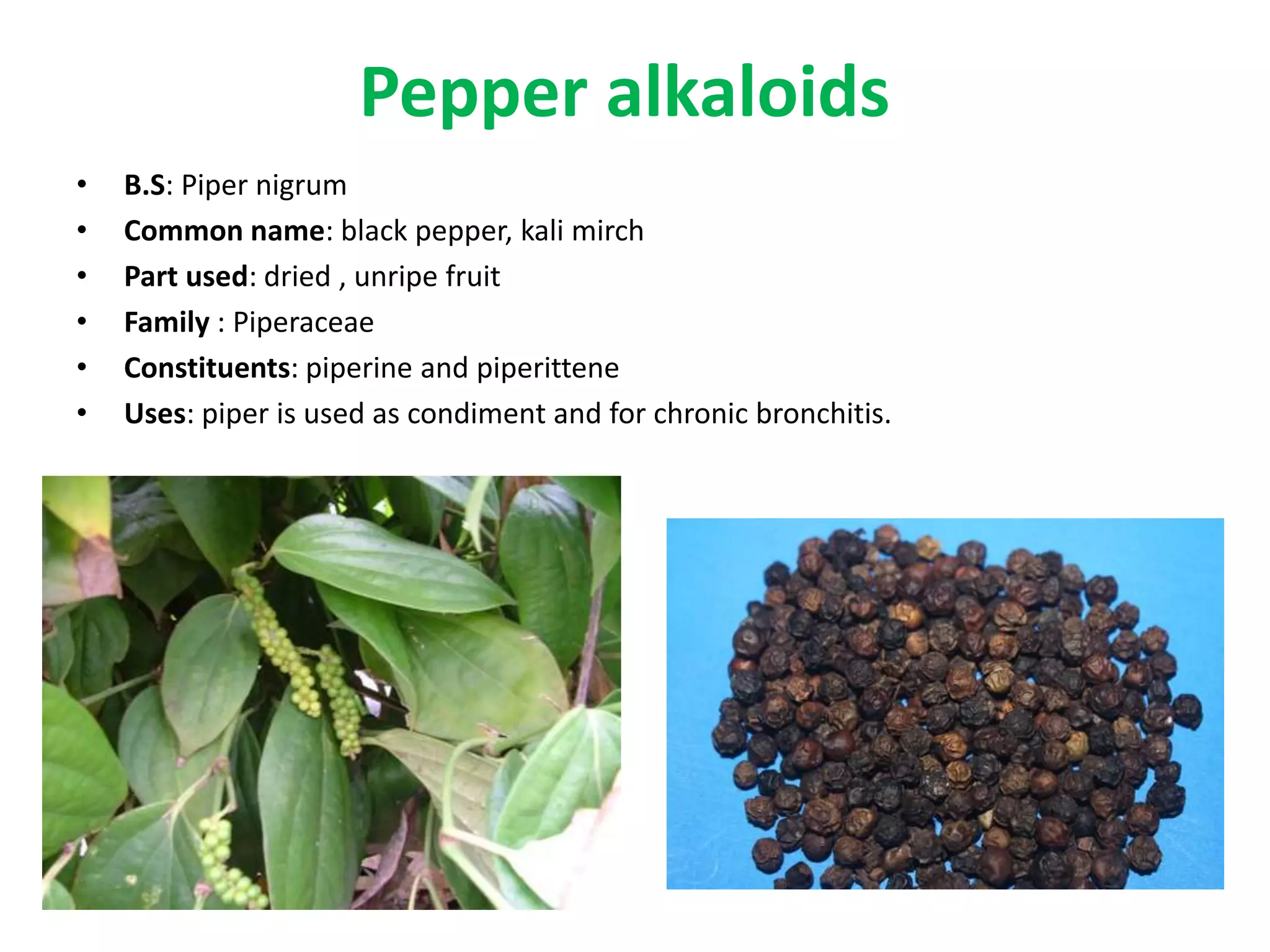
Pepper alkaloids 
• B.S: Piper nigrum 
• Common name: black pepper, kali mirch 
• Part used: dried , unripe fruit 
• Family : Piperaceae 
• Constituents: piperine and piperittene 
• Uses: piper is used as condiment and for chronic bronchitis.
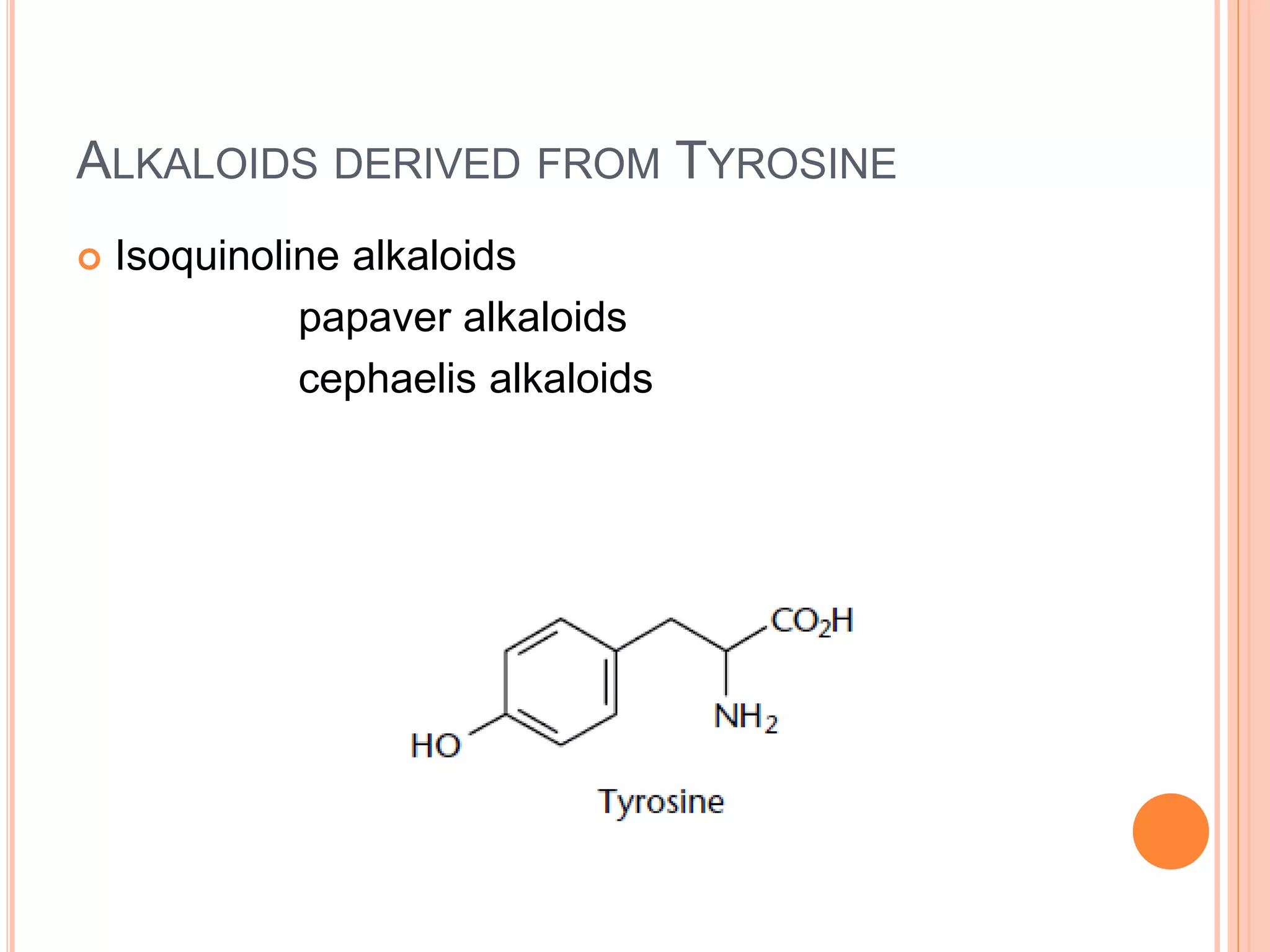
ALKALOIDS DERIVED FROM TYROSINE 
 Isoquinoline alkaloids 
papaver alkaloids 
cephaelis alkaloids
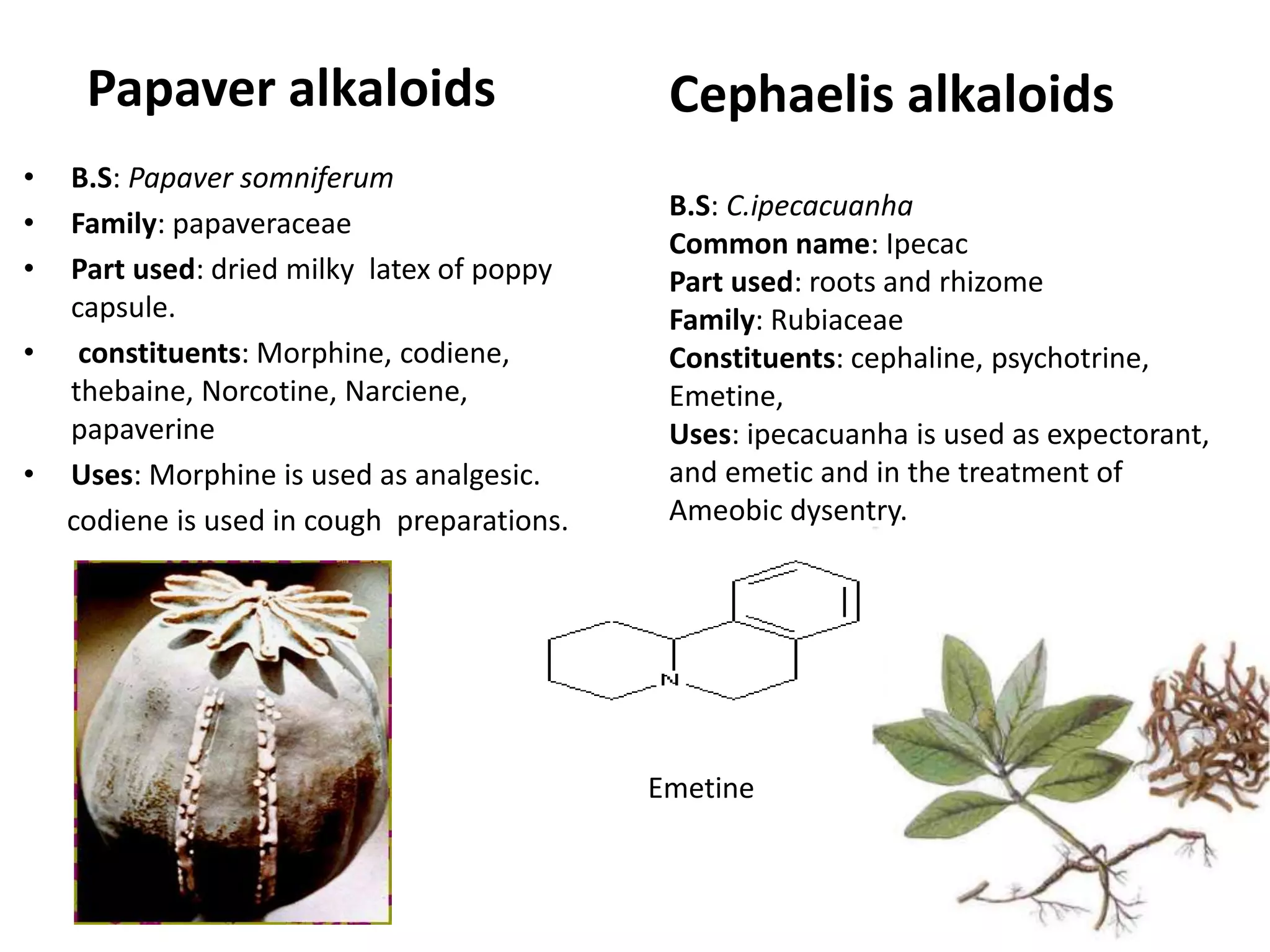
Papaver alkaloids 
• B.S: Papaver somniferum 
• Family: papaveraceae 
• Part used: dried milky latex of poppy 
capsule. 
• constituents: Morphine, codiene, 
thebaine, Norcotine, Narciene, 
papaverine 
• Uses: Morphine is used as analgesic. 
codiene is used in cough preparations. 
Cephaelis alkaloids 
B.S: C.ipecacuanha 
Common name: Ipecac 
Part used: roots and rhizome 
Family: Rubiaceae 
Constituents: cephaline, psychotrine, 
Emetine, 
Uses: ipecacuanha is used as expectorant, 
and emetic and in the treatment of 
Ameobic dysentry. 
Emetine
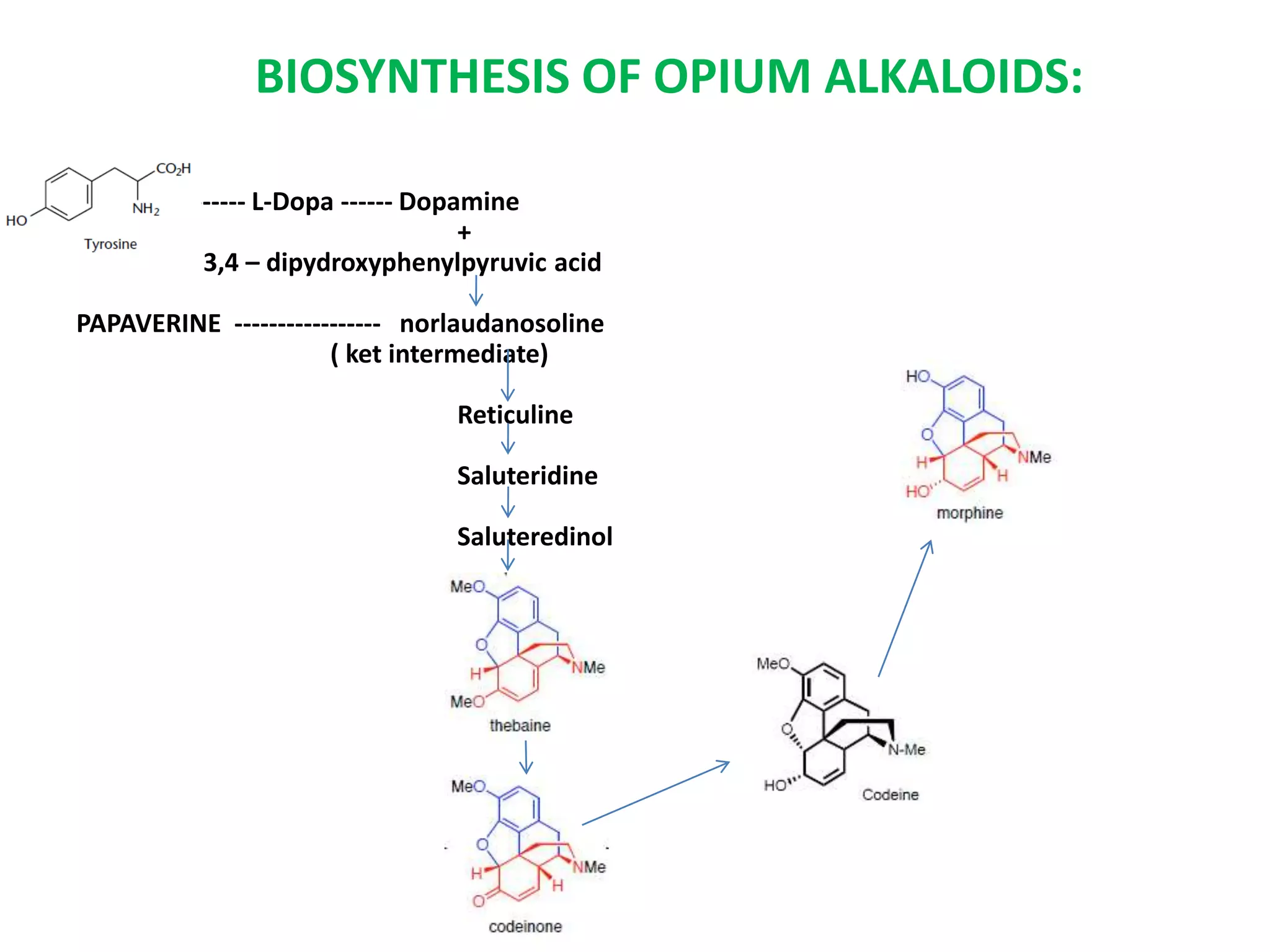
BIOSYNTHESIS OF OPIUM ALKALOIDS: 
------- L-Dopa ------ Dopamine 
+ 
3,4 – dipydroxyphenylpyruvic acid 
PAPAVERINE ----------------- norlaudanosoline 
( ket intermediate) 
Reticuline 
Saluteridine 
Saluteredinol
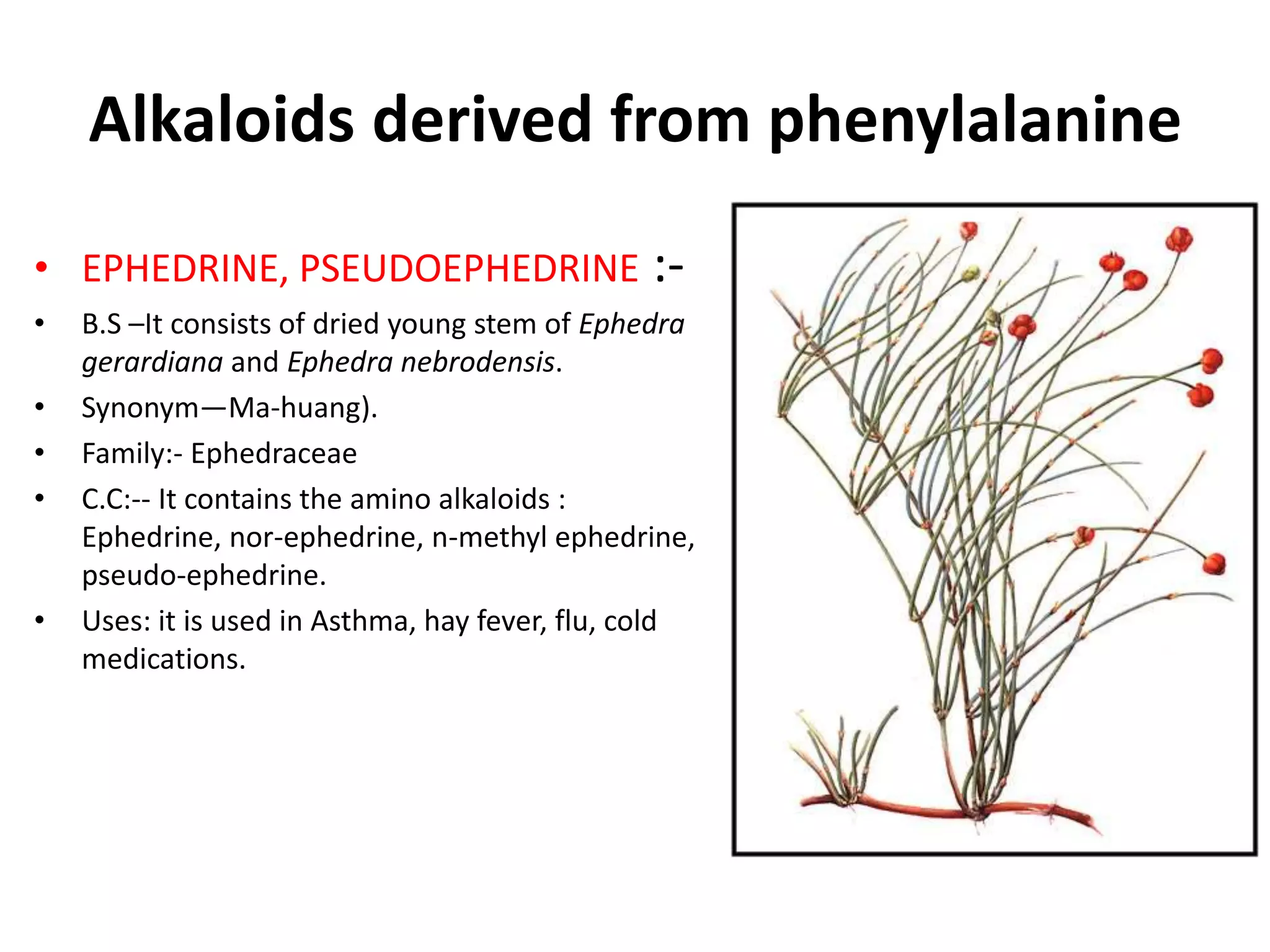
Alkaloids derived from phenylalanine 
• EPHEDRINE, PSEUDOEPHEDRINE :- 
• B.S –It consists of dried young stem of Ephedra 
gerardiana and Ephedra nebrodensis. 
• Synonym—Ma-huang). 
• Family:- Ephedraceae 
• C.C:-- It contains the amino alkaloids : 
Ephedrine, nor-ephedrine, n-methyl ephedrine, 
pseudo-ephedrine. 
• Uses: it is used in Asthma, hay fever, flu, cold 
medications.
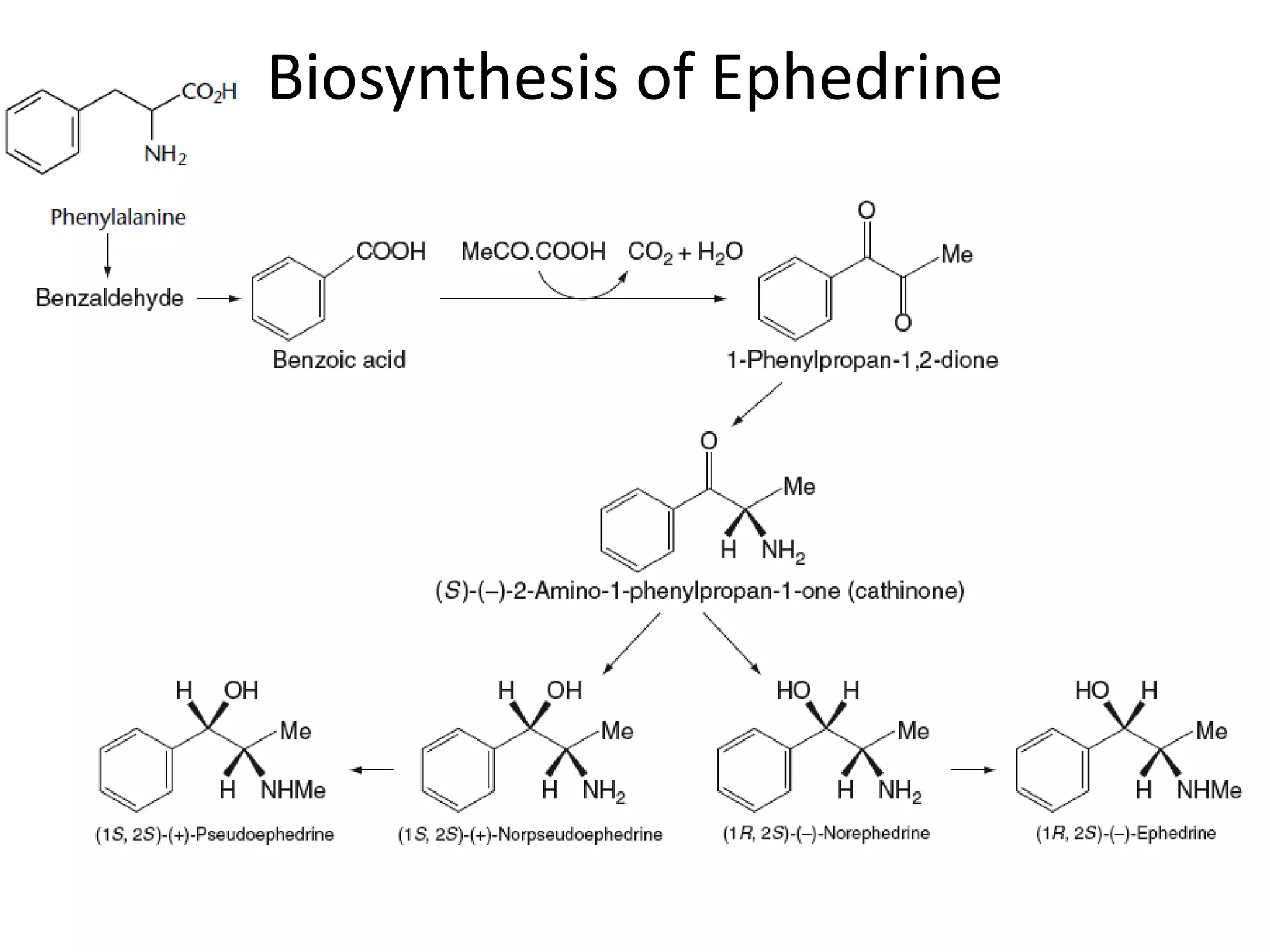
Biosynthesis of Ephedrine
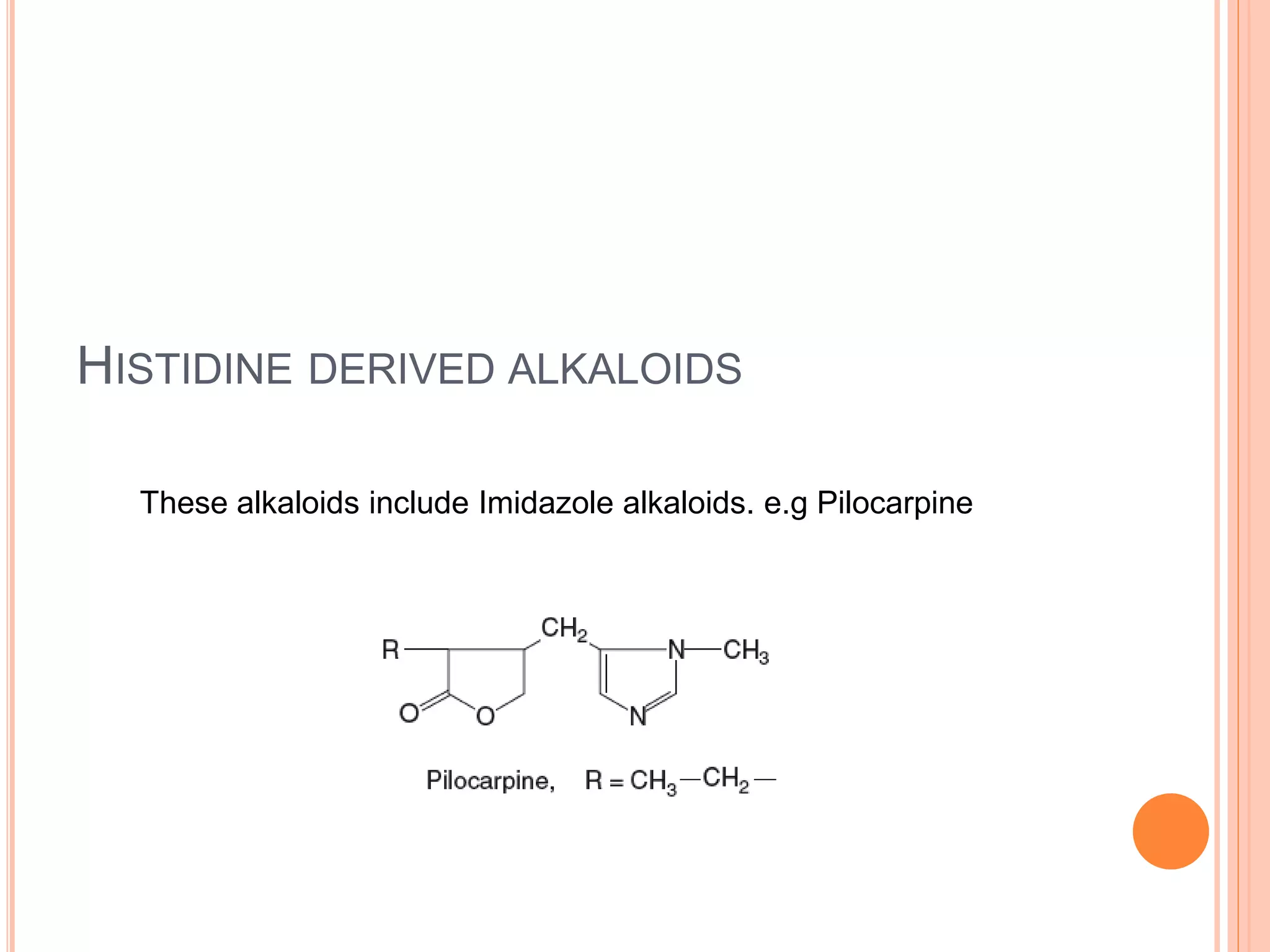
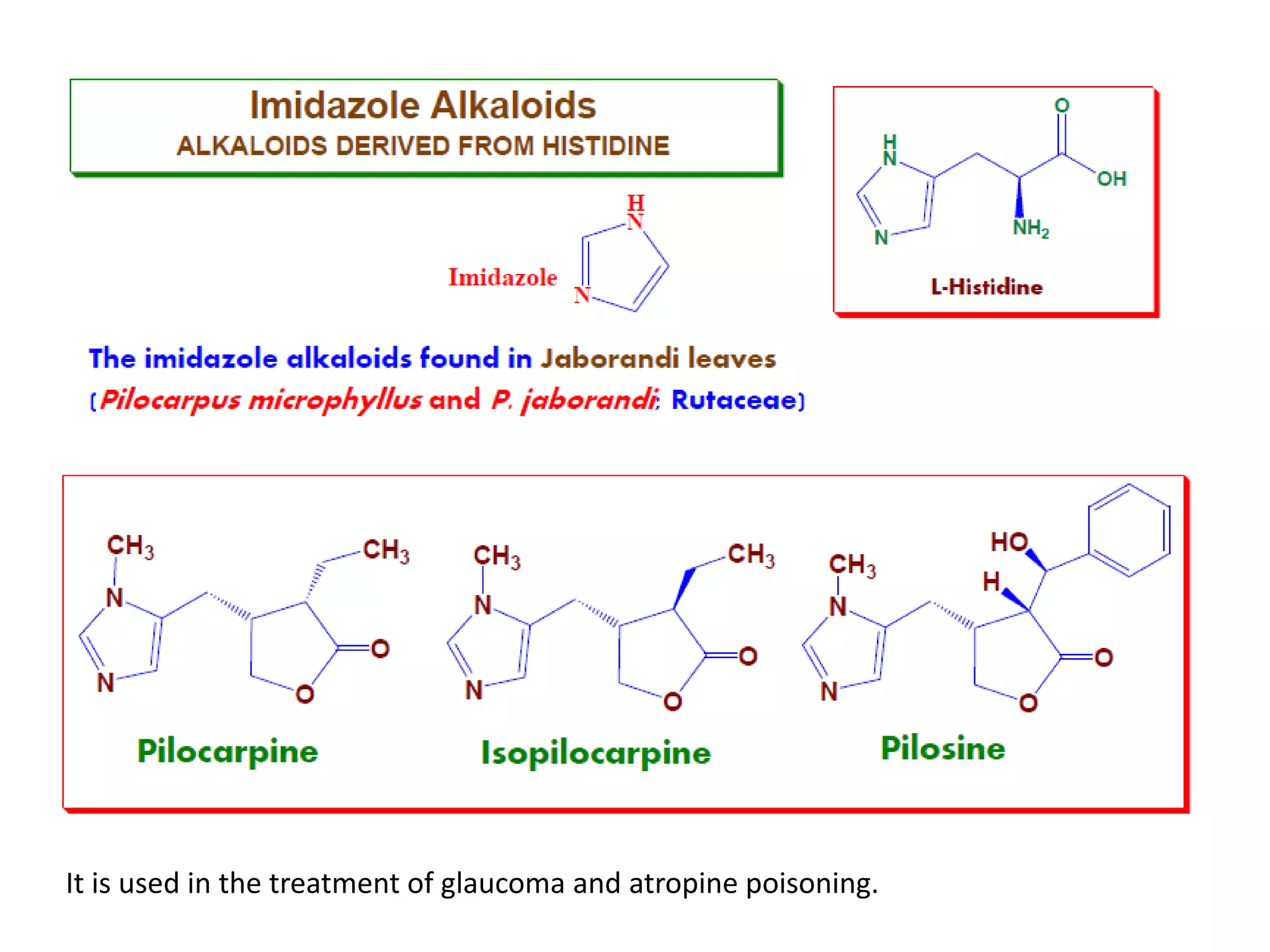
HISTIDINE DERIVED ALKALOIDS 
These alkaloids include Imidazole alkaloids. e.g Pilocarpine
It is used in the treatment of glaucoma and atropine poisoning.
Alkaloids obtained from precursors other than Amino Acids 
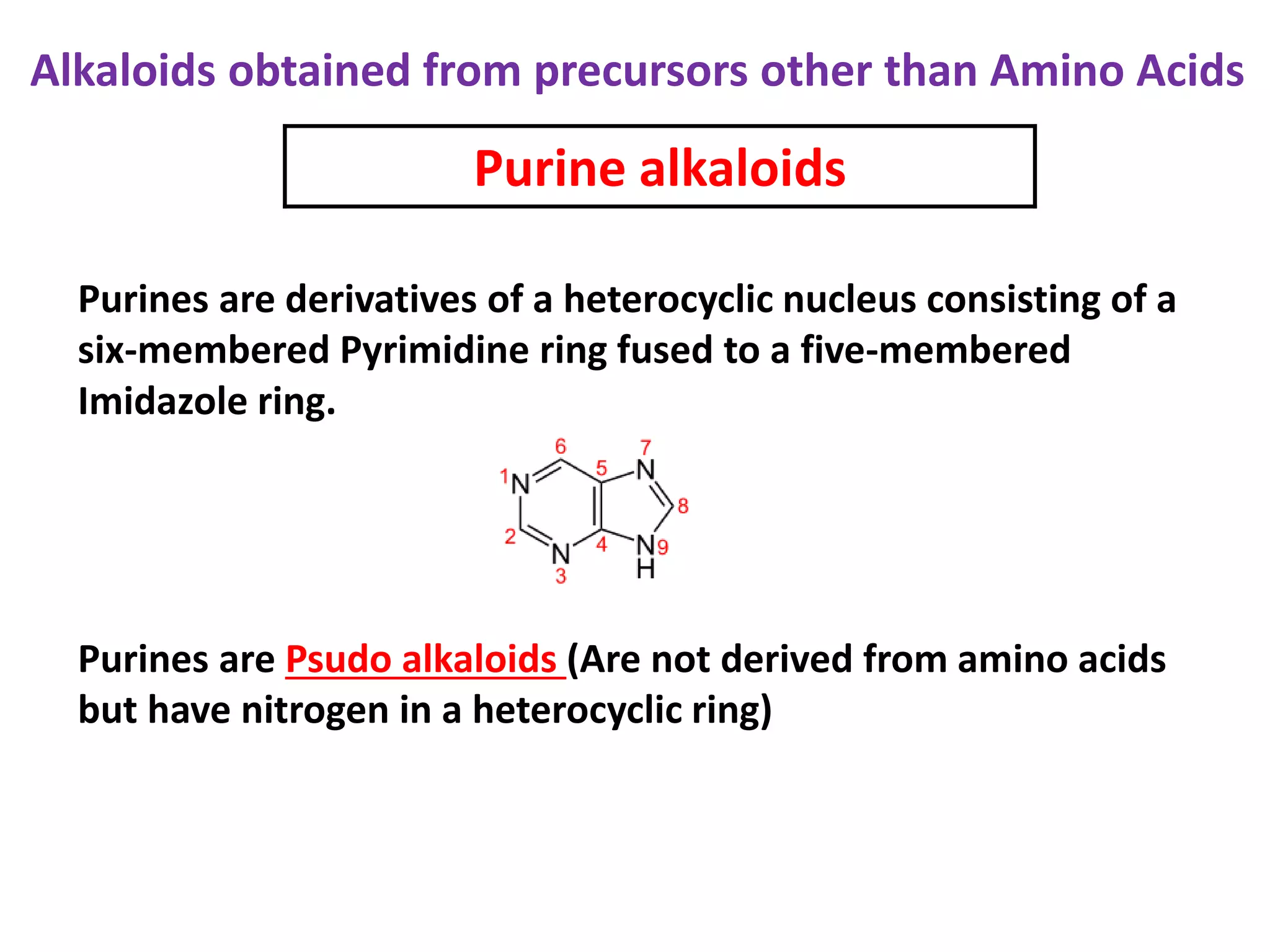
Purine alkaloids 
Purines are derivatives of a heterocyclic nucleus consisting of a 
six-membered Pyrimidine ring fused to a five-membered 
Imidazole ring. 
Purines are Psudo alkaloids (Are not derived from amino acids 
but have nitrogen in a heterocyclic ring)
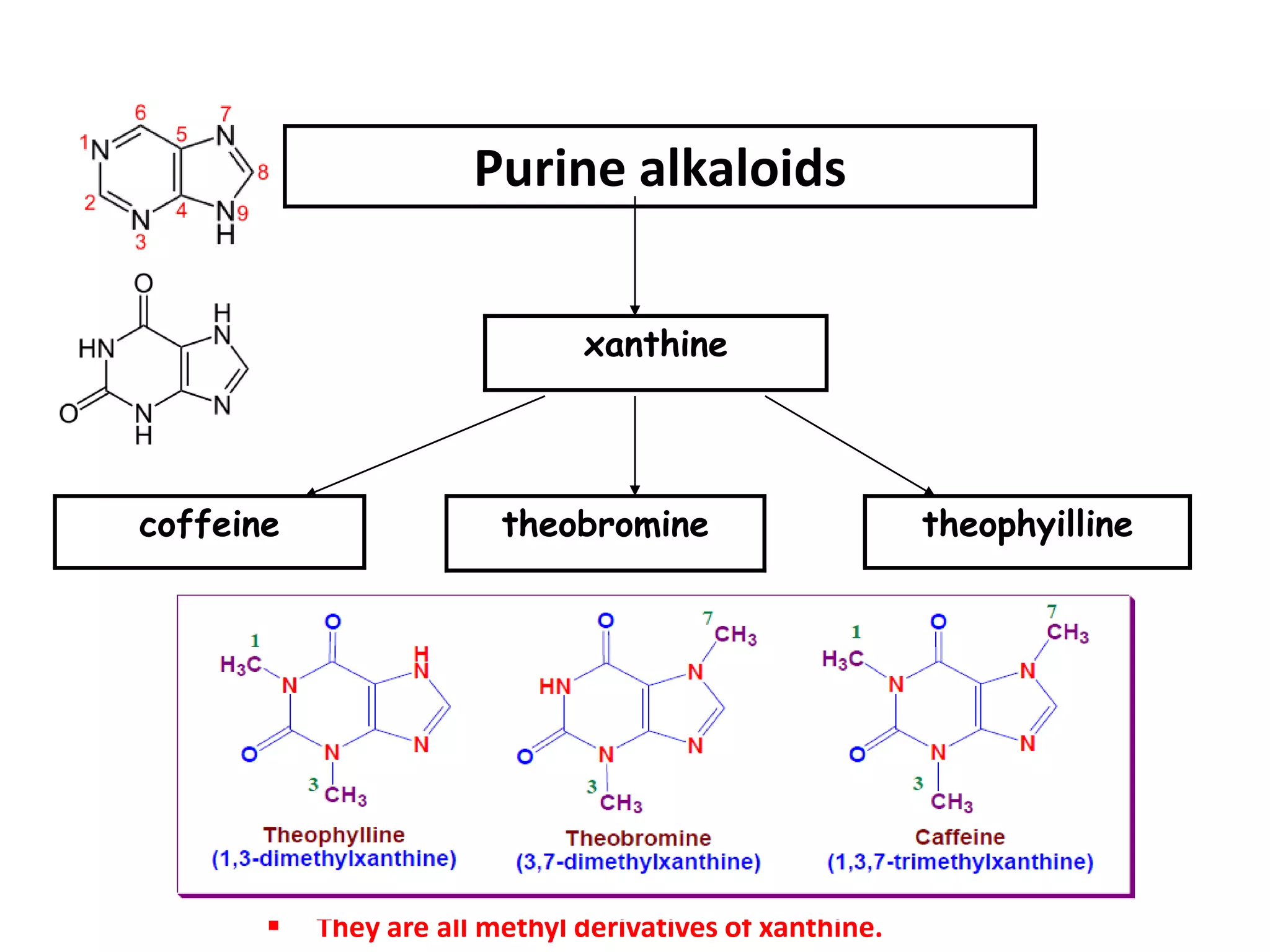
Purine alkaloids 
xanthine 
coffeine theobromine theophyilline 
 They are all methyl derivatives of xanthine.
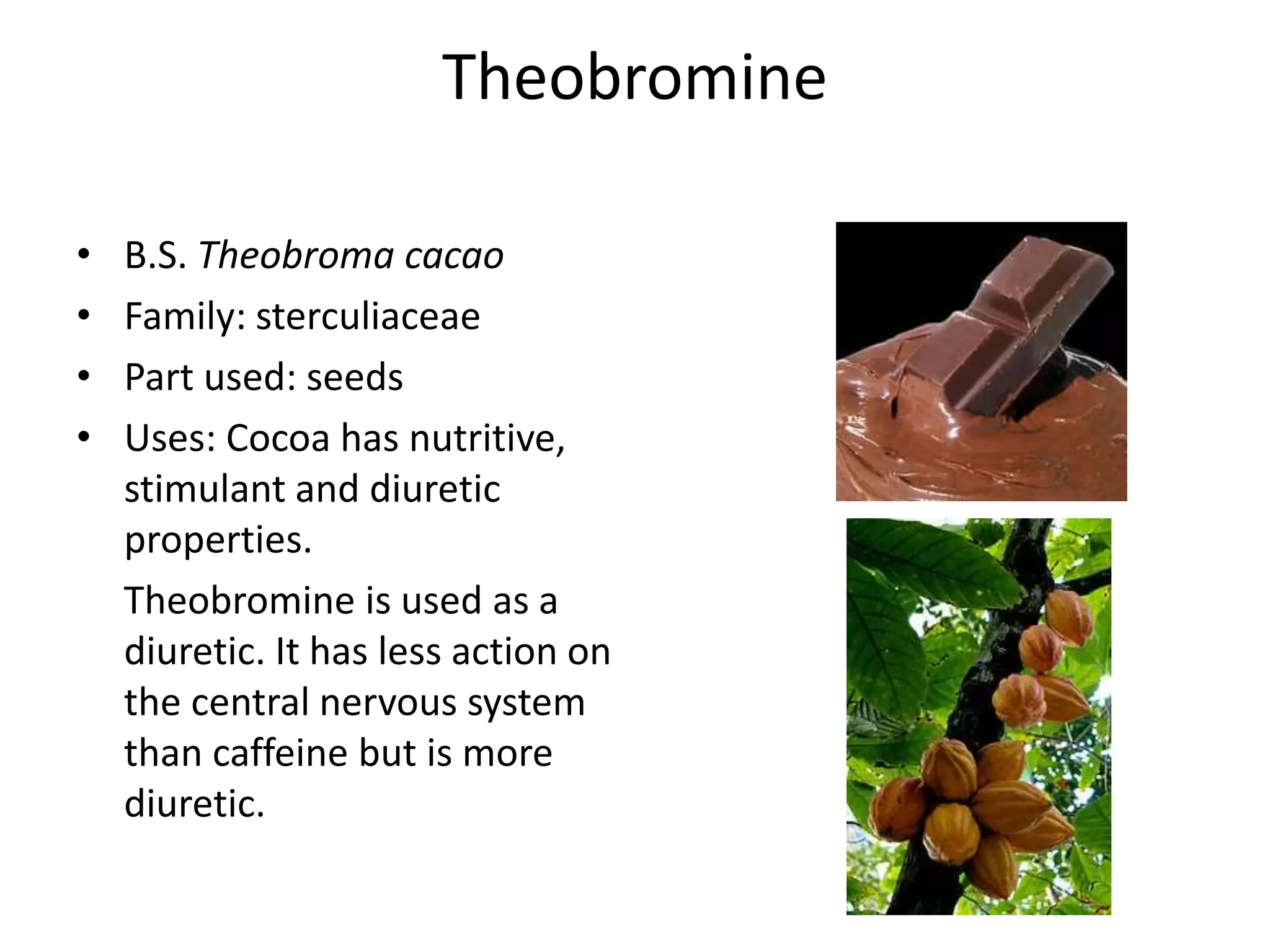
Theobromine 
• B.S. Theobroma cacao 
• Family: sterculiaceae 
• Part used: seeds 
• Uses: Cocoa has nutritive, 
stimulant and diuretic 
properties. 
Theobromine is used as a 
diuretic. It has less action on 
the central nervous system 
than caffeine but is more 
diuretic.
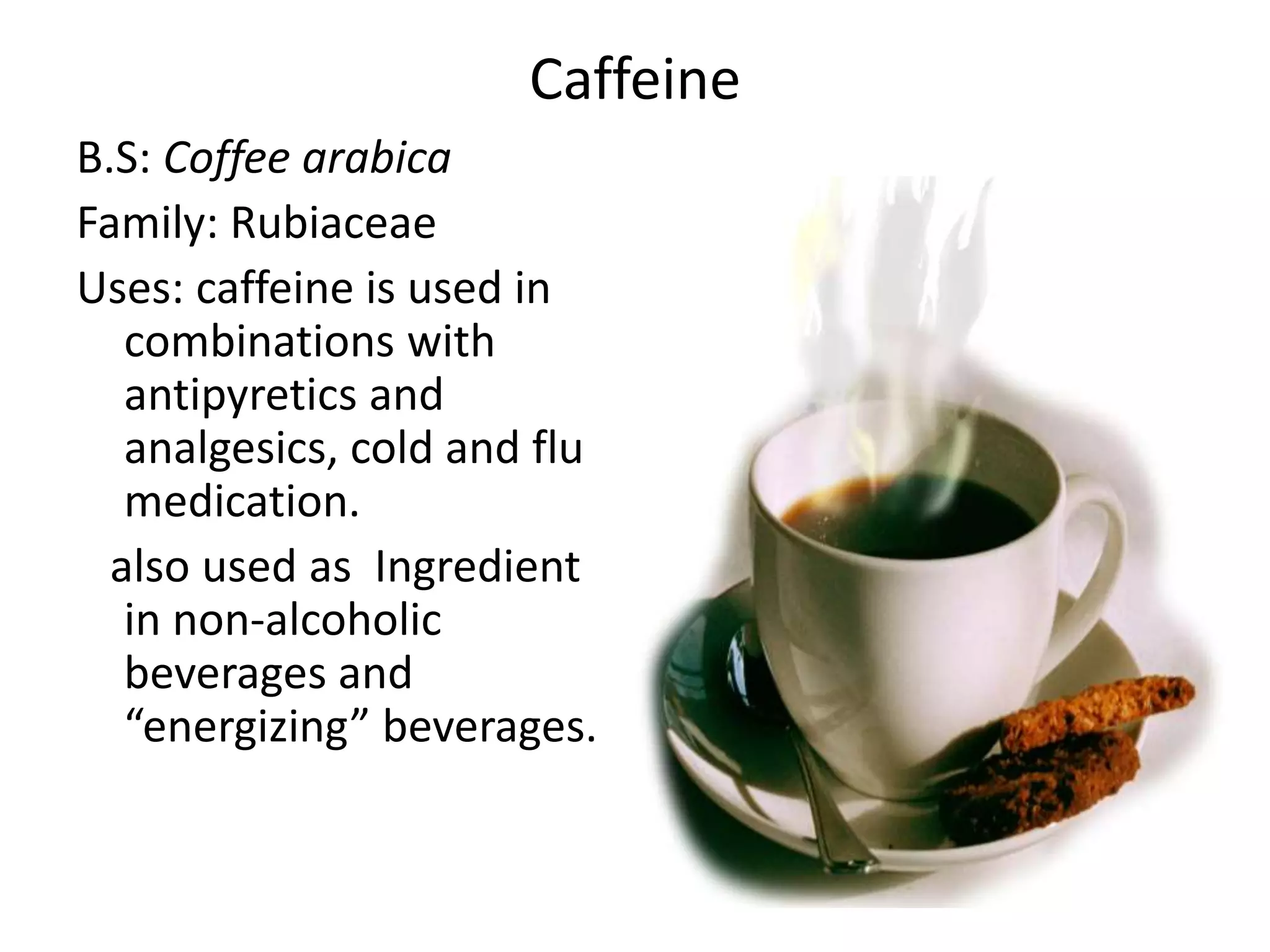
Caffeine 
B.S: Coffee arabica 
Family: Rubiaceae 
Uses: caffeine is used in 
combinations with 
antipyretics and 
analgesics, cold and flu 
medication. 
also used as Ingredient 
in non-alcoholic 
beverages and 
“energizing” beverages.
END

Biosynthetic classification of alkaloids

  • 1.
    BIOSYNTHETIC CLASSIFICATION OF ALKALOIDS Presented by : M. Jamal Email: jamalkhan616@gmail.com
  • 2.
    Alkaloids • “Basicnitrogenous compound, contains one or more nitrogen in heterocyclic ring system having marked physiological action on human and animals when use in small quantities””. Classification of alkaloids • 1. Chemical classification of alkaloids • 2. Taxonomical classification of alkaloids • 3. Pharmacological classification of alkaloids • 4. Biosynthetic classification of alkaloids
  • 3.
     Common aminoacid precursors:  Phenylalanine  Tyrosine  Tryptophan  Histidine  Anthranilic acid  Lysine  Ornithine
  • 4.
    BIOSYNTHETIC CLASSIFICATION OF ALKALOIDS Alkaloids are classified on the basis of biosynthetic precursors from which these are obtained . These include  Ornithine derived alkaloids  Tryptophan derived alkaloids  Lysine derived alkaloids  Phenylalanine derived alkaloids  Tyrosine derived alkaloids  Histidine derived alkaloids  Alkaloids derived from substance other than amino acids.
  • 5.
    General reactions forbiosynthesis of alkaloids • Some of the general reactions that are of particular importance include: decarboxylation (removal of carboxyl group or carbon dioxide) and transamination (transfer of an amino group from one molecule to another without the formation of ammonia) of the amino acids to yield a corresponding amine or aldehyde. • These can react to form a Schiff base which, in turn can react with carbanion in a Mannich-type condensation.
  • 6.
    Alkaloid formation mayrequire the involvement of only one molecule of amino acid, or 2 molecules of the same AA, or less commonly, 2 molecules of different AA or else several molecules of the same AA.
  • 8.
    ORNITHINE DERIVED ALKALOIDS It includes:  Tropane alkaloids  Pyrrolidine alkaloids`
  • 9.
    TROPANE ALKALOIDS (ATROPINE,HYOCYAMINE, HYOSINE, SCOPOLAMINE)  B.S: Atropa belladona (deadly nightshade), Datura stramonium( thornapple), Hyosyamus niger(henbane).  Family: solanaceae  Part used: dried leaves and flowering tops  Uses: 1.Atropine is classified as anti cholinergic drugs.  Atropine can also be used in SLUDGE syndrome( salivation, lacrimation, urination, diaphoresis, GIT motility and emesis) caused by organophosphate poisoning.  Hyoscine is used as antispasmodic. COCAINE o B.S: Erythroxylum coca, Erythroxylum novogranatense o Common name. Coca leaves o Family: Erythroxylaceae o Part used: Leaves o Uses: cocaine is a CNS stimulant. it is also used as local anesthetic.
  • 10.
  • 11.
    TRYPTOPHAN DERIVED ALKALOIDS  These include INDOLE ALKALOIDS QUINOLINE ALKALOIDS
  • 13.
    Indole alkaloids Physostigmaalkaloids • Botanical source. Physostigma venonosum • Common name: calabar bean • Family : Leguminosae • Part used: dried ripe seeds • Main constituents: physostigmine , isophysostigmine, physovenine. • Uses: These are the cholinesterase inhibitors and used as antidote for atropine poisoning. • Also used to treat glaucoma. Ergot alkaoids B.S: Claviceps purpurea Family: Hypocreales Part used: Dried sclerotium of the fungus Main constituents: Ergotamine, Ergometrine, Ergocristine Uses: Ergotamine is used to treat migraine and clustur headache. Ergometrine acts as oxytocic agent and also used in post-partal haemorrhage. Vinca alkaloids B.S: Catharanthus roseus Common name: periwinkle Family: Apocynacea Part used: whole plant Constituents: Vincristine, Vinblastine Uses: these alkaloids have anticancer properties. Rauwolfia alkaloids B.S: Rauwolfia serpentina Common name: indian snakeroot Family: Apocyanacea Part used: leaves Constituents: serpentine, reserpine, ajmaline, ajmalacine, Uses: used as antihypertensive and antiarrhythmic agent.
  • 14.
  • 15.
    Quinoline alkaloids B.S:Cinchona Succirubra, C. calisaya, C. officinalis Common name; Quina Family: Rubiaceae Part used: Dried Bark Constituents: Quinine, quinidine, cinchonine, cinchonidine. Uses: Quinine is a classical antimalarial. Quinidine is used for cardiac arrythmias and atrial fabrillation.
  • 16.
    LYSINE DERIVED ALKALOIDS These include  Lobelia spp  pepper spp
  • 17.
    Lobelia alkaloids •B.S: Lobelia inflata • Common name: indian tobacco • Family: Lobeliaceae • Part used: dried aerial parts • Constituents: lobeline, isolobeline, lobelanine, lobeladine • Uses: it is used in chronic bronchitis and spasmodic asthma. lobeline
  • 18.
    Pepper alkaloids •B.S: Piper nigrum • Common name: black pepper, kali mirch • Part used: dried , unripe fruit • Family : Piperaceae • Constituents: piperine and piperittene • Uses: piper is used as condiment and for chronic bronchitis.
  • 19.
    ALKALOIDS DERIVED FROMTYROSINE  Isoquinoline alkaloids papaver alkaloids cephaelis alkaloids
  • 20.
    Papaver alkaloids •B.S: Papaver somniferum • Family: papaveraceae • Part used: dried milky latex of poppy capsule. • constituents: Morphine, codiene, thebaine, Norcotine, Narciene, papaverine • Uses: Morphine is used as analgesic. codiene is used in cough preparations. Cephaelis alkaloids B.S: C.ipecacuanha Common name: Ipecac Part used: roots and rhizome Family: Rubiaceae Constituents: cephaline, psychotrine, Emetine, Uses: ipecacuanha is used as expectorant, and emetic and in the treatment of Ameobic dysentry. Emetine
  • 21.
    BIOSYNTHESIS OF OPIUMALKALOIDS: ------- L-Dopa ------ Dopamine + 3,4 – dipydroxyphenylpyruvic acid PAPAVERINE ----------------- norlaudanosoline ( ket intermediate) Reticuline Saluteridine Saluteredinol
  • 22.
    Alkaloids derived fromphenylalanine • EPHEDRINE, PSEUDOEPHEDRINE :- • B.S –It consists of dried young stem of Ephedra gerardiana and Ephedra nebrodensis. • Synonym—Ma-huang). • Family:- Ephedraceae • C.C:-- It contains the amino alkaloids : Ephedrine, nor-ephedrine, n-methyl ephedrine, pseudo-ephedrine. • Uses: it is used in Asthma, hay fever, flu, cold medications.
  • 23.
  • 24.
    HISTIDINE DERIVED ALKALOIDS These alkaloids include Imidazole alkaloids. e.g Pilocarpine
  • 25.
    It is usedin the treatment of glaucoma and atropine poisoning.
  • 26.
    Alkaloids obtained fromprecursors other than Amino Acids Purine alkaloids Purines are derivatives of a heterocyclic nucleus consisting of a six-membered Pyrimidine ring fused to a five-membered Imidazole ring. Purines are Psudo alkaloids (Are not derived from amino acids but have nitrogen in a heterocyclic ring)
  • 27.
    Purine alkaloids xanthine coffeine theobromine theophyilline  They are all methyl derivatives of xanthine.
  • 28.
    Theobromine • B.S.Theobroma cacao • Family: sterculiaceae • Part used: seeds • Uses: Cocoa has nutritive, stimulant and diuretic properties. Theobromine is used as a diuretic. It has less action on the central nervous system than caffeine but is more diuretic.
  • 29.
    Caffeine B.S: Coffeearabica Family: Rubiaceae Uses: caffeine is used in combinations with antipyretics and analgesics, cold and flu medication. also used as Ingredient in non-alcoholic beverages and “energizing” beverages.
  • 30.