CAD/CAM
TOPIC: COMPUTER CONFIGURATION&
HARDWARE OF CAD CAM
By
J KUMAR CHANDRA,
ASST. PROF.,
DEPARTMENT OF ME,
NNRG-HYDERABAD
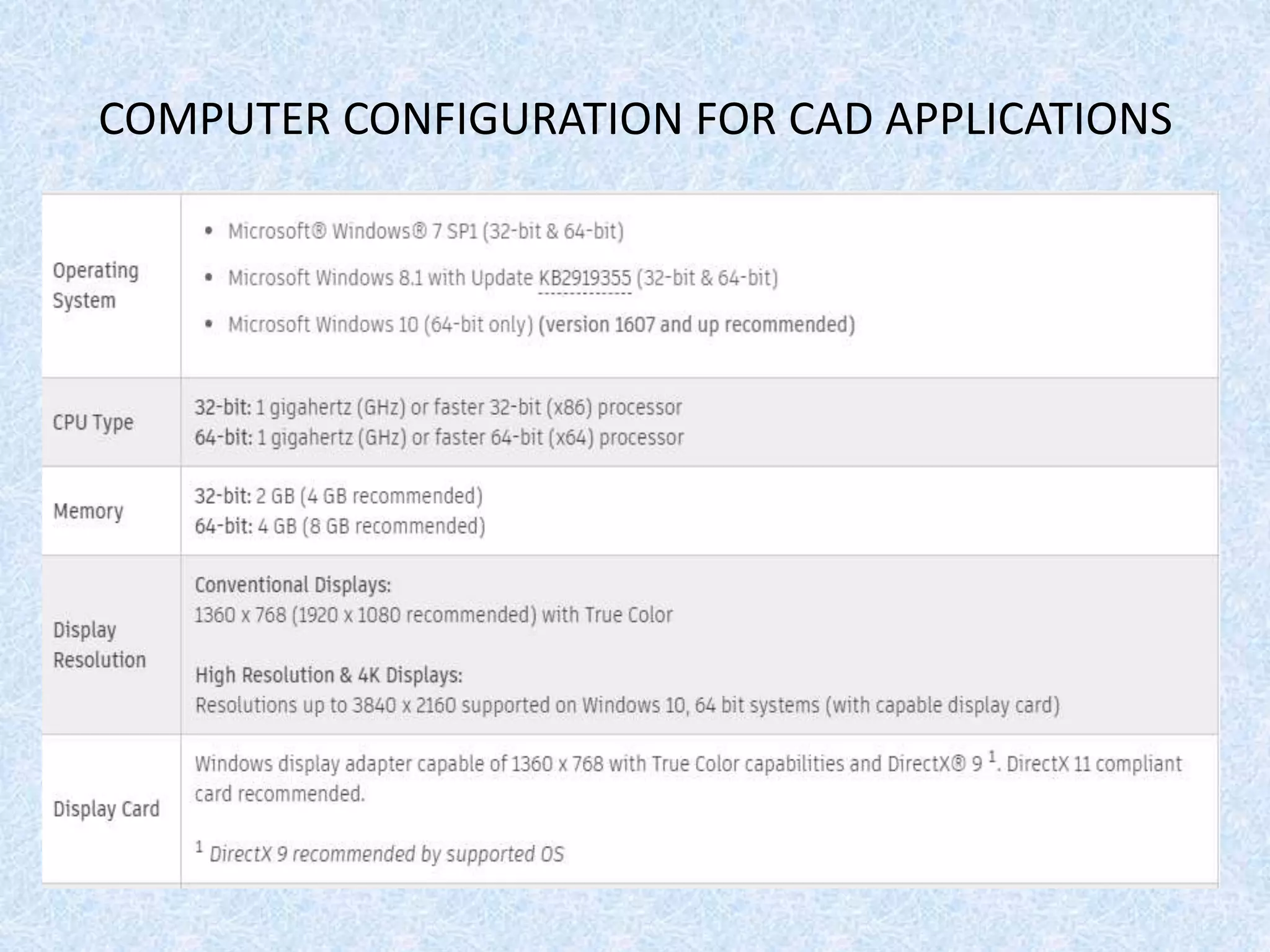
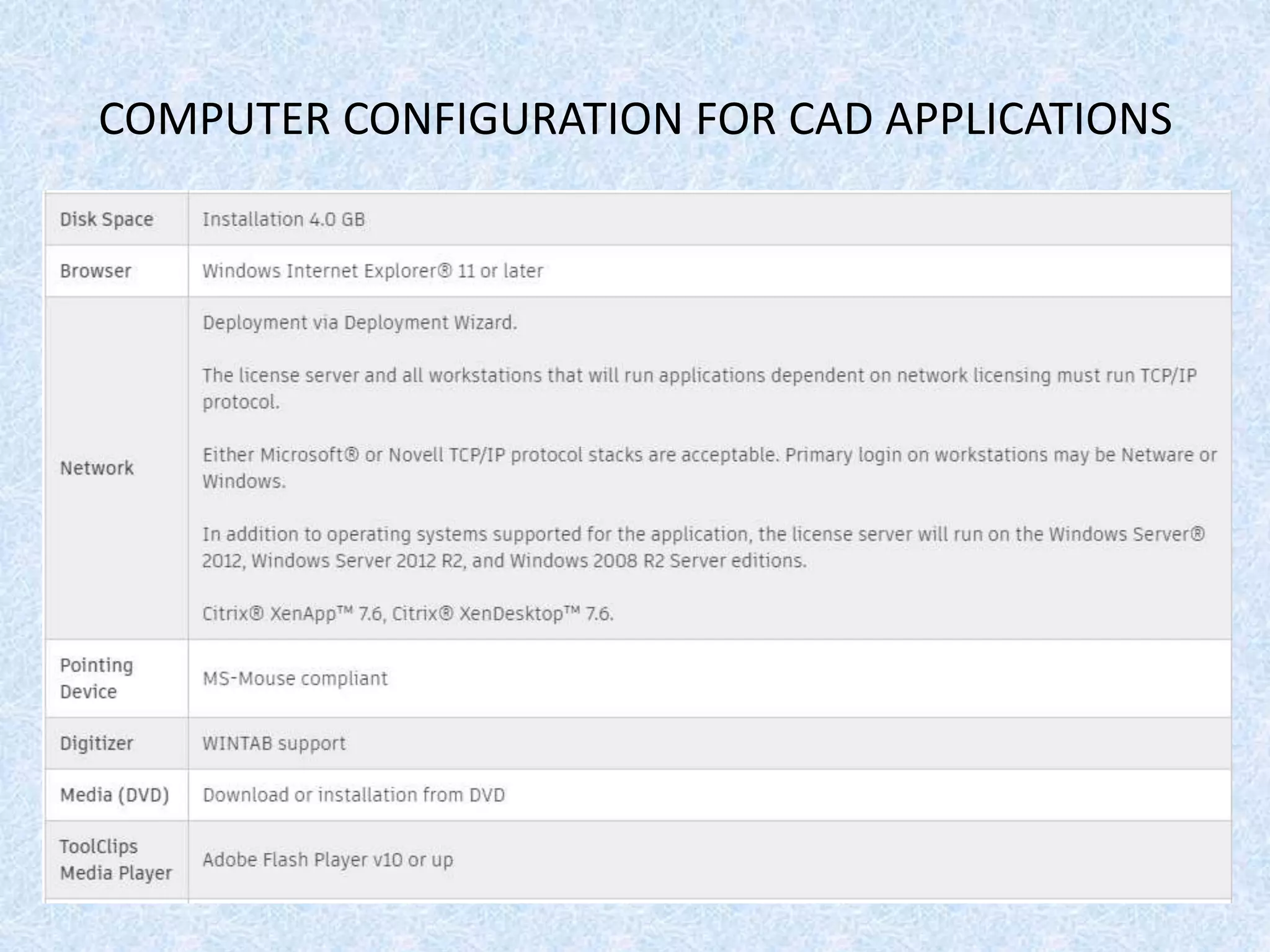
COMPUTER CONFIGURATION FOR CAD APPLICATIONS
How to get autocad?
• Autodesk (the company behind AutoCAD)
tries to engage students to learn about 3D. In
fact, the student version of AutoCAD has no
differences compared to the professional
version, in terms of features and functionality.
• https://www.autodesk.com/education/free-
software/autocad
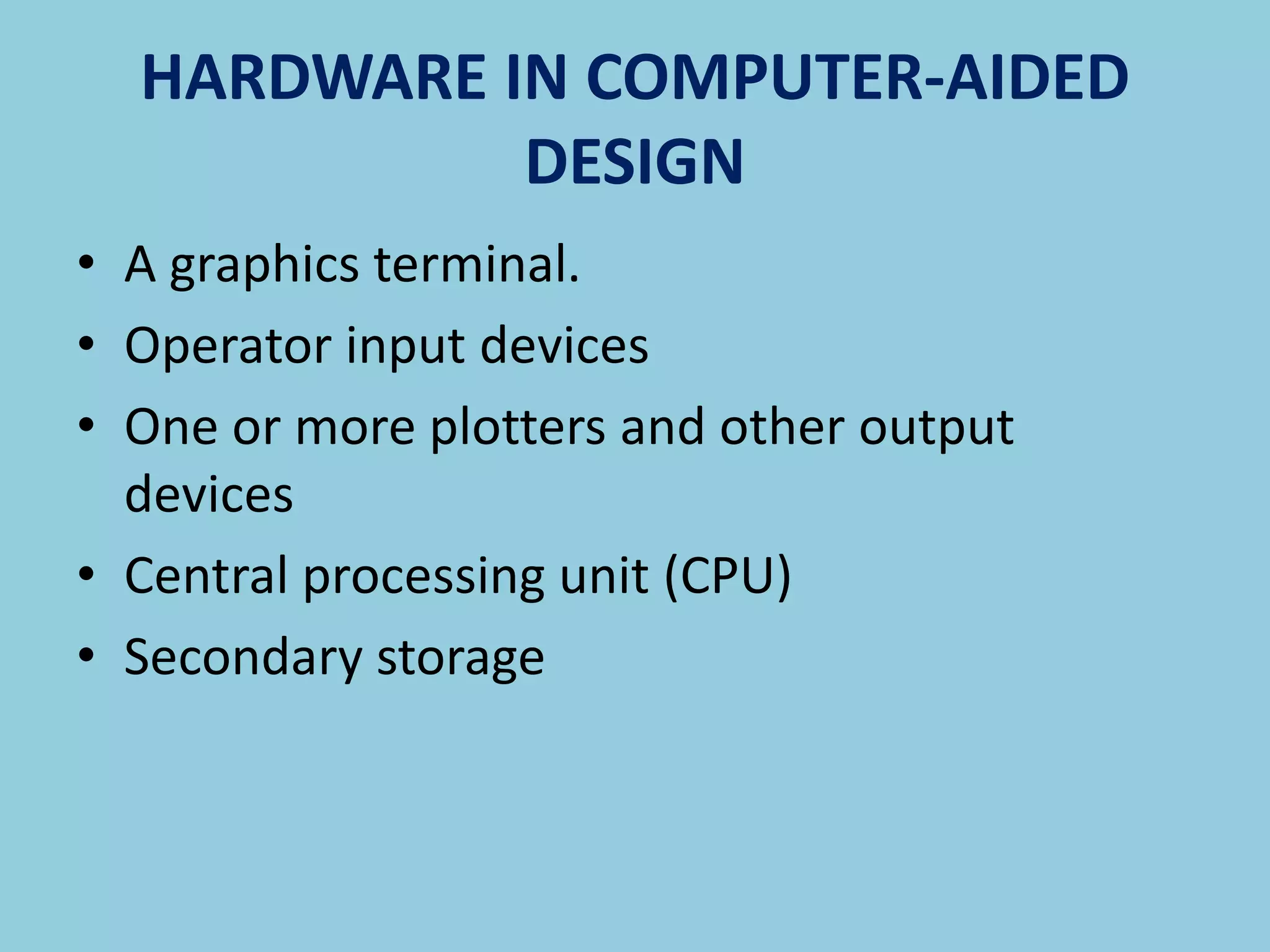
HARDWARE IN COMPUTER-AIDED
DESIGN
• A graphics terminal.
• Operator input devices
• One or more plotters and other output
devices
• Central processing unit (CPU)
• Secondary storage
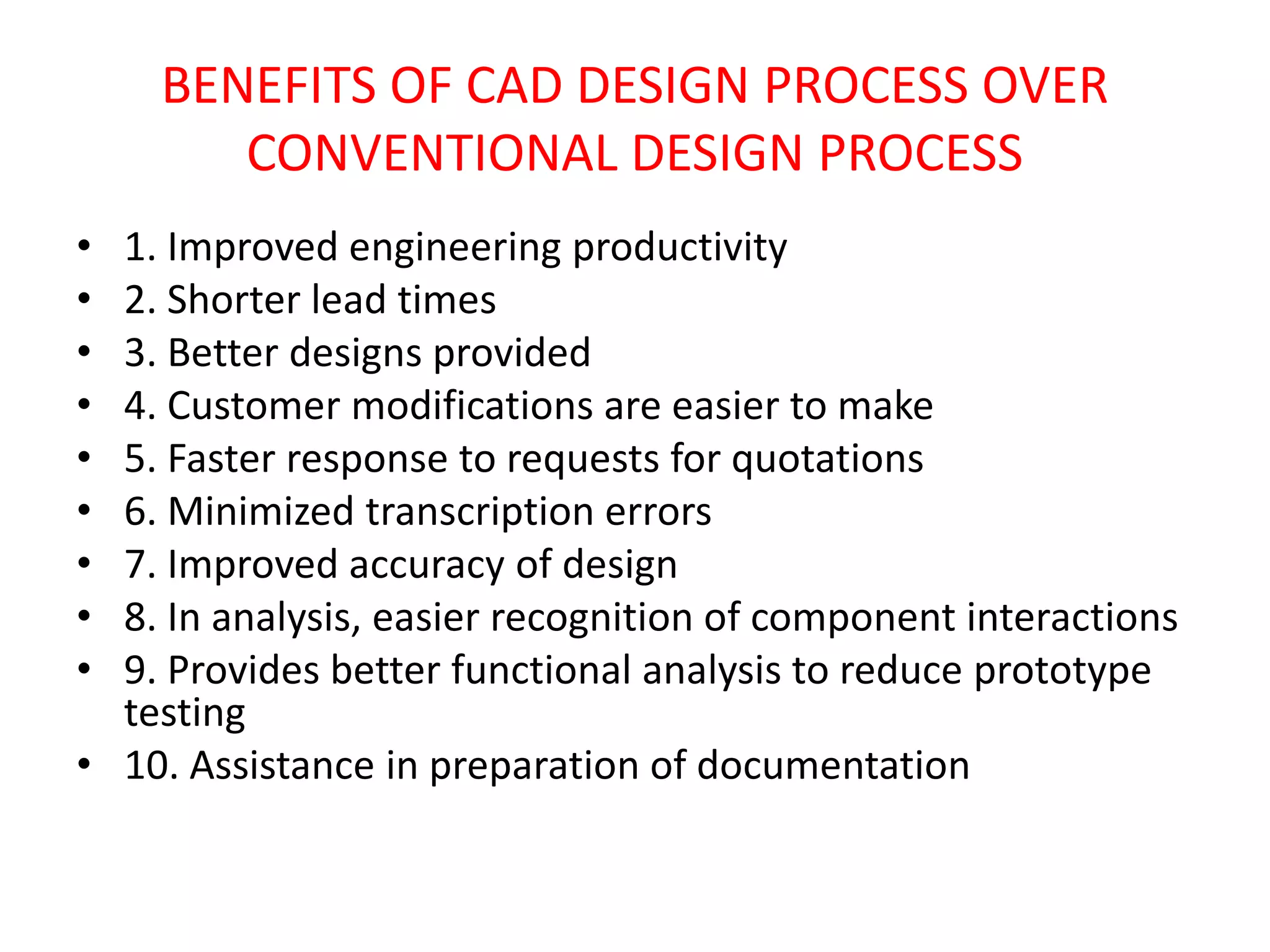
BENEFITS OF CAD DESIGN PROCESS OVER
CONVENTIONAL DESIGN PROCESS
• 1. Improved engineering productivity
• 2. Shorter lead times
• 3. Better designs provided
• 4. Customer modifications are easier to make
• 5. Faster response to requests for quotations
• 6. Minimized transcription errors
• 7. Improved accuracy of design
• 8. In analysis, easier recognition of component interactions
• 9. Provides better functional analysis to reduce prototype
testing
• 10. Assistance in preparation of documentation
Next class…
COMPUTER PERIPHERALS
“INPUT AND OUTPET DEVICES”

computer configuration& hardware for cad applications

  • 1.
    CAD/CAM TOPIC: COMPUTER CONFIGURATION& HARDWAREOF CAD CAM By J KUMAR CHANDRA, ASST. PROF., DEPARTMENT OF ME, NNRG-HYDERABAD
  • 2.
  • 3.
  • 4.
    How to getautocad? • Autodesk (the company behind AutoCAD) tries to engage students to learn about 3D. In fact, the student version of AutoCAD has no differences compared to the professional version, in terms of features and functionality. • https://www.autodesk.com/education/free- software/autocad
  • 5.
    HARDWARE IN COMPUTER-AIDED DESIGN •A graphics terminal. • Operator input devices • One or more plotters and other output devices • Central processing unit (CPU) • Secondary storage
  • 6.
    BENEFITS OF CADDESIGN PROCESS OVER CONVENTIONAL DESIGN PROCESS • 1. Improved engineering productivity • 2. Shorter lead times • 3. Better designs provided • 4. Customer modifications are easier to make • 5. Faster response to requests for quotations • 6. Minimized transcription errors • 7. Improved accuracy of design • 8. In analysis, easier recognition of component interactions • 9. Provides better functional analysis to reduce prototype testing • 10. Assistance in preparation of documentation
  • 7.