(some) Medical Terms
referring to color
from Ancient Latin and Ancient
Greek
Leuko = white
Melan = black
Cyno / Cyna = blue
xantho =yellow
Leuko
From Ancient Greek word
meaning WHITE
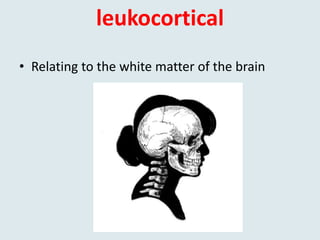
leukocortical
• Relating to the white matter of the brain
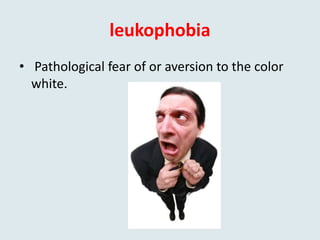
leukophobia
• Pathological fear of or aversion to the color
white.
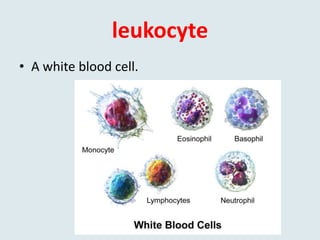
leukocyte
• A white blood cell.
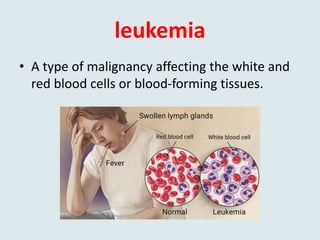
leukemia
• A type of malignancy affecting the white and
red blood cells or blood-forming tissues.
Melan / Melano =
Black
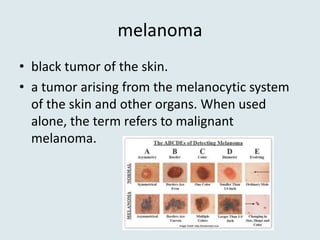
melanoma
• black tumor of the skin.
• a tumor arising from the melanocytic system
of the skin and other organs. When used
alone, the term refers to malignant
melanoma.
melanoderm
An obsolete term for a person with dark skin.
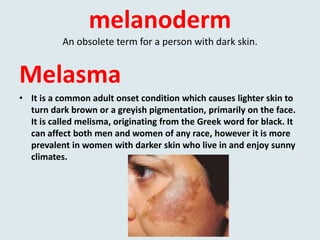
Melasma
• It is a common adult onset condition which causes lighter skin to
turn dark brown or a greyish pigmentation, primarily on the face.
It is called melisma, originating from the Greek word for black. It
can affect both men and women of any race, however it is more
prevalent in women with darker skin who live in and enjoy sunny
climates.
melanoleukoderma
• mottled appearance of
the skin of the neck and
adjacent regions, a rare
manifestation of
syphilis.
• [melano- + leukos,
white, + derma, skin]
• Mottled skin
melanophore
• A dermal pigment cell that does not secrete its pigment granules but
participates in rapid color changes by intracellular aggregation and
dispersal of melanosomes; it is well developed in fish, amphibians, and
reptiles, but absent in humans.
• [melano- + . phoros, bearing]
Cynano
From Ancient Greek
meaning BLUE
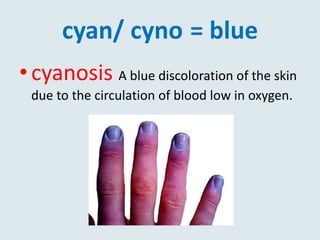
cyan/ cyno = blue
•cyanosis A blue discoloration of the skin
due to the circulation of blood low in oxygen.
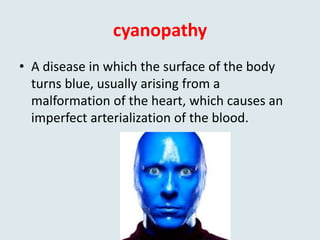
cyanopathy
• A disease in which the surface of the body
turns blue, usually arising from a
malformation of the heart, which causes an
imperfect arterialization of the blood.
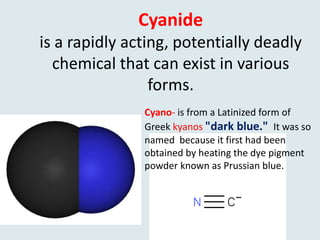
Cyanide
is a rapidly acting, potentially deadly
chemical that can exist in various
forms.
Cyano- is from a Latinized form of
Greek kyanos "dark blue." It was so
named because it first had been
obtained by heating the dye pigment
powder known as Prussian blue.
xanth/ xantho =
yellow
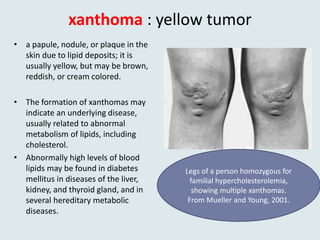
xanthoma : yellow tumor
• a papule, nodule, or plaque in the
skin due to lipid deposits; it is
usually yellow, but may be brown,
reddish, or cream colored.
• The formation of xanthomas may
indicate an underlying disease,
usually related to abnormal
metabolism of lipids, including
cholesterol.
• Abnormally high levels of blood
lipids may be found in diabetes
mellitus in diseases of the liver,
kidney, and thyroid gland, and in
several hereditary metabolic
diseases.
Legs of a person homozygous for
familial hypercholesterolemia,
showing multiple xanthomas.
From Mueller and Young, 2001.
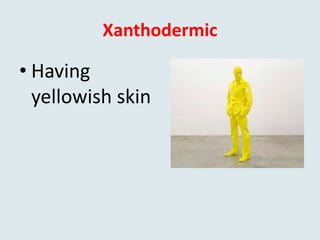
Xanthodermic
• Having
yellowish skin
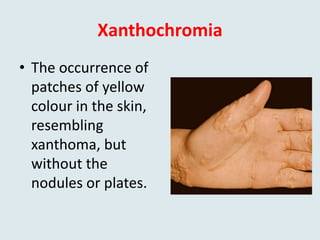
Xanthochromia
• The occurrence of
patches of yellow
colour in the skin,
resembling
xanthoma, but
without the
nodules or plates.

Medical terms: colors

  • 1.
    (some) Medical Terms referringto color from Ancient Latin and Ancient Greek Leuko = white Melan = black Cyno / Cyna = blue xantho =yellow
  • 2.
    Leuko From Ancient Greekword meaning WHITE
  • 3.
    leukocortical • Relating tothe white matter of the brain
  • 4.
    leukophobia • Pathological fearof or aversion to the color white.
  • 5.
  • 6.
    leukemia • A typeof malignancy affecting the white and red blood cells or blood-forming tissues.
  • 7.
  • 8.
    melanoma • black tumorof the skin. • a tumor arising from the melanocytic system of the skin and other organs. When used alone, the term refers to malignant melanoma.
  • 9.
    melanoderm An obsolete termfor a person with dark skin. Melasma • It is a common adult onset condition which causes lighter skin to turn dark brown or a greyish pigmentation, primarily on the face. It is called melisma, originating from the Greek word for black. It can affect both men and women of any race, however it is more prevalent in women with darker skin who live in and enjoy sunny climates.
  • 10.
    melanoleukoderma • mottled appearanceof the skin of the neck and adjacent regions, a rare manifestation of syphilis. • [melano- + leukos, white, + derma, skin] • Mottled skin
  • 11.
    melanophore • A dermalpigment cell that does not secrete its pigment granules but participates in rapid color changes by intracellular aggregation and dispersal of melanosomes; it is well developed in fish, amphibians, and reptiles, but absent in humans. • [melano- + . phoros, bearing]
  • 12.
  • 13.
    cyan/ cyno =blue •cyanosis A blue discoloration of the skin due to the circulation of blood low in oxygen.
  • 14.
    cyanopathy • A diseasein which the surface of the body turns blue, usually arising from a malformation of the heart, which causes an imperfect arterialization of the blood.
  • 15.
    Cyanide is a rapidlyacting, potentially deadly chemical that can exist in various forms. Cyano- is from a Latinized form of Greek kyanos "dark blue." It was so named because it first had been obtained by heating the dye pigment powder known as Prussian blue.
  • 16.
  • 17.
    xanthoma : yellowtumor • a papule, nodule, or plaque in the skin due to lipid deposits; it is usually yellow, but may be brown, reddish, or cream colored. • The formation of xanthomas may indicate an underlying disease, usually related to abnormal metabolism of lipids, including cholesterol. • Abnormally high levels of blood lipids may be found in diabetes mellitus in diseases of the liver, kidney, and thyroid gland, and in several hereditary metabolic diseases. Legs of a person homozygous for familial hypercholesterolemia, showing multiple xanthomas. From Mueller and Young, 2001.
  • 18.
  • 19.
    Xanthochromia • The occurrenceof patches of yellow colour in the skin, resembling xanthoma, but without the nodules or plates.