FUNCTION OF PERITONEUM
 Peritoneum is the largest serous membrane of the body.
 Consist two part:
 1.Parietal layer:Part attaches to cavity wall.
 2.Visceral layer:Part that covers and attaches to the organ
  inside this cavity.
 Each layer consist of areolar connective tissue covered by
  mesothelium(simple squamous epithelium)
 Mesothelium secretes serous fluid(watery lubricating fluid
  that allowed organ to glide easily over one and other or to
  slide again the wall of cavities).
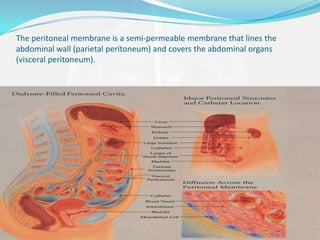
The peritoneal membrane is a semi-permeable membrane that lines the
abdominal wall (parietal peritoneum) and covers the abdominal organs
(visceral peritoneum).
DEFINITION
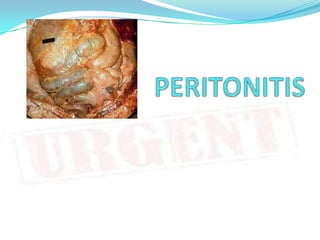
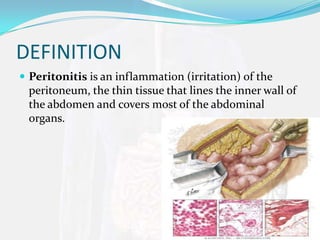
 Peritonitis is an inflammation (irritation) of the
 peritoneum, the thin tissue that lines the inner wall of
 the abdomen and covers most of the abdominal
 organs.
CAUSES AND RISK FACTOR

 Medical procedures, such as peritoneal dialysis.
  Peritoneal dialysis uses tubes (catheters) to remove
  waste products from your blood when your kidneys
  can no longer adequately do so. An infection may
  occur during peritoneal dialysis due to unclean
  surroundings, poor hygiene or contaminated
  equipment.
 A ruptured appendix, stomach ulcer or perforated
  colon. Any of these conditions can allow bacteria to
  get into the peritoneum through a hole in your
  gastrointestinal tract.
CONT…
 Pancreatitis. Inflammation of your pancreas
  (pancreatitis) complicated by infection may lead to
  peritonitis if the bacteria spread outside the pancreas.
 Diverticulitis. Infection of small, bulging pouches in
  your digestive tract (diverticulitis) may cause
  peritonitis if one of the pouches ruptures, spilling
  intestinal waste into your abdomen.
 Trauma. Injury or trauma may cause peritonitis by
  allowing bacteria or chemicals from other parts of your
  body to enter the peritoneum.Eg:accident.
SIGN AND SYMPTOM
 Abdomen painful
 Abdominal distention.
 Fever and chills
 Passing few or no stools or gas
 Excessive fatigue
 Passing less urine
 Nausea and vomiting
PATHOPHYSIOLOGY
            Due to etiological factor


      Inflammation of the peritoneal cavity


     Abcess of infection-due to inflammation


     Spread of infection throughout the body


              Death in severe cases
VIDEO TIME
VIDEO
DIAGNOSTIC TEST
 Physical exam.
 Peritoneal fluid analysis.(Using a thin needle, doctor
  may take a sample of the fluid in peritoneum
  (paracentesis)
 Blood tests.(TWBC)
 Imaging tests (Abdominal X-ray)
TREATMENT
 Antibiotics are usually administered intravenously,
 but they may also be infused directly into the
 peritoneum.Example:Ampicillin.

 Surgery(laparotomy) is to correct any gross
 anatomical damage that may have caused peritonitis
VIDEO TIME
COMPLICATION
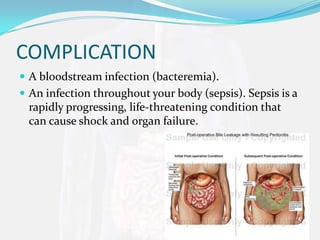
 A bloodstream infection (bacteremia).
 An infection throughout your body (sepsis). Sepsis is a
 rapidly progressing, life-threatening condition that
 can cause shock and organ failure.
PREVENTION
 Wash hands, including underneath fingernails and
 between fingers, before touching the catheter.

 Clean the skin around the catheter with an antiseptic
 every day.

 Talk with dialysis care team about proper care for
 peritoneal dialysis catheter.
NURSING CARE PLAN
 Nursing diagnosis:
 Deficient Fluid Volume related to Fluid shifts from
 extracellular, intravascular, and interstitial
 compartments into intestines or peritoneal space.

 Expected Outcome:
 Client will get enough fluid balance.
Nursing intervention with rationale:
 1. Monitor vital signs, noting presence of hypotension
  (including postural changes), tachycardia, tachypnea,
  and fever. Measure central venous pressure (CVP) if
  available.
 Rationale: Aids in evaluating degree of fluid deficit,
  effectiveness of fluid replacement therapy, and
  response to medications.
CON’T…
 2.Observe skin and mucous membrane dryness and
 turgor. Note peripheral and sacral edema.

 Rationale: Hypovolemia, fluid shifts, and nutritional
 deficits contribute to poor skin turgor and taut
 edematous tissues.
CON’T…
 3.Change position frequently, provide frequent skin
  care, and maintain dry, wrinkle-free bedding.
 Rationale: Edematous tissue with compromised
  circulation is prone to breakdown.

 4.Maintain NPO status with NG or intestinal
  aspiration.
 Rationale: Reduces vomiting caused by hyperactivity
  of bowel; manages stomach and intestinal fluids.
CON’T…
 5.Measure urine specific gravity.
 Rationale: Reflects hydration status and changes in
  renal function, which may warn of developing acute
  renal failure in response to hypovolemia and effect of
  toxins. Note: Many antibiotics also have nephrotoxic
  effects that may further affect kidney function and
  urine output.
Peritonitis
Peritonitis

Peritonitis

  • 2.
    FUNCTION OF PERITONEUM Peritoneum is the largest serous membrane of the body.  Consist two part:  1.Parietal layer:Part attaches to cavity wall.  2.Visceral layer:Part that covers and attaches to the organ inside this cavity.  Each layer consist of areolar connective tissue covered by mesothelium(simple squamous epithelium)  Mesothelium secretes serous fluid(watery lubricating fluid that allowed organ to glide easily over one and other or to slide again the wall of cavities).
  • 3.
    The peritoneal membraneis a semi-permeable membrane that lines the abdominal wall (parietal peritoneum) and covers the abdominal organs (visceral peritoneum).
  • 4.
    DEFINITION  Peritonitis isan inflammation (irritation) of the peritoneum, the thin tissue that lines the inner wall of the abdomen and covers most of the abdominal organs.
  • 5.
    CAUSES AND RISKFACTOR  Medical procedures, such as peritoneal dialysis. Peritoneal dialysis uses tubes (catheters) to remove waste products from your blood when your kidneys can no longer adequately do so. An infection may occur during peritoneal dialysis due to unclean surroundings, poor hygiene or contaminated equipment.  A ruptured appendix, stomach ulcer or perforated colon. Any of these conditions can allow bacteria to get into the peritoneum through a hole in your gastrointestinal tract.
  • 6.
    CONT…  Pancreatitis. Inflammationof your pancreas (pancreatitis) complicated by infection may lead to peritonitis if the bacteria spread outside the pancreas.  Diverticulitis. Infection of small, bulging pouches in your digestive tract (diverticulitis) may cause peritonitis if one of the pouches ruptures, spilling intestinal waste into your abdomen.  Trauma. Injury or trauma may cause peritonitis by allowing bacteria or chemicals from other parts of your body to enter the peritoneum.Eg:accident.
  • 7.
    SIGN AND SYMPTOM Abdomen painful  Abdominal distention.  Fever and chills  Passing few or no stools or gas  Excessive fatigue  Passing less urine  Nausea and vomiting
  • 8.
    PATHOPHYSIOLOGY Due to etiological factor Inflammation of the peritoneal cavity Abcess of infection-due to inflammation Spread of infection throughout the body Death in severe cases
  • 9.
  • 10.
  • 11.
    DIAGNOSTIC TEST  Physicalexam.  Peritoneal fluid analysis.(Using a thin needle, doctor may take a sample of the fluid in peritoneum (paracentesis)  Blood tests.(TWBC)  Imaging tests (Abdominal X-ray)
  • 12.
    TREATMENT  Antibiotics areusually administered intravenously, but they may also be infused directly into the peritoneum.Example:Ampicillin.  Surgery(laparotomy) is to correct any gross anatomical damage that may have caused peritonitis
  • 13.
  • 15.
    COMPLICATION  A bloodstreaminfection (bacteremia).  An infection throughout your body (sepsis). Sepsis is a rapidly progressing, life-threatening condition that can cause shock and organ failure.
  • 16.
    PREVENTION  Wash hands,including underneath fingernails and between fingers, before touching the catheter.  Clean the skin around the catheter with an antiseptic every day.  Talk with dialysis care team about proper care for peritoneal dialysis catheter.
  • 17.
    NURSING CARE PLAN Nursing diagnosis:  Deficient Fluid Volume related to Fluid shifts from extracellular, intravascular, and interstitial compartments into intestines or peritoneal space.  Expected Outcome:  Client will get enough fluid balance.
  • 18.
    Nursing intervention withrationale:  1. Monitor vital signs, noting presence of hypotension (including postural changes), tachycardia, tachypnea, and fever. Measure central venous pressure (CVP) if available.  Rationale: Aids in evaluating degree of fluid deficit, effectiveness of fluid replacement therapy, and response to medications.
  • 19.
    CON’T…  2.Observe skinand mucous membrane dryness and turgor. Note peripheral and sacral edema.  Rationale: Hypovolemia, fluid shifts, and nutritional deficits contribute to poor skin turgor and taut edematous tissues.
  • 20.
    CON’T…  3.Change positionfrequently, provide frequent skin care, and maintain dry, wrinkle-free bedding.  Rationale: Edematous tissue with compromised circulation is prone to breakdown.  4.Maintain NPO status with NG or intestinal aspiration.  Rationale: Reduces vomiting caused by hyperactivity of bowel; manages stomach and intestinal fluids.
  • 21.
    CON’T…  5.Measure urinespecific gravity.  Rationale: Reflects hydration status and changes in renal function, which may warn of developing acute renal failure in response to hypovolemia and effect of toxins. Note: Many antibiotics also have nephrotoxic effects that may further affect kidney function and urine output.