HIV Treatment Update Todd Correll, PharmD, BCPS Clinical Pharmacy Specialist, Infectious Diseases/HIV University of North Carolina Hospitals November 2006
Objectives Provide an update on DHHS HIV treatment naïve guidelines Discuss the currently approved antiretrovirals Describe treatment options for opportunistic infections
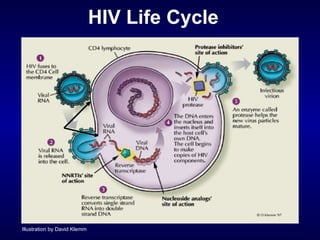
HIV Life Cycle Illustration by David Klemm
Goals of Therapy & Strategies to Achieve Goals Improvement of quality of life Reduction of HIV-related morbidity and mortality  Restoration and/or preservation of immunologic function Maximal and durable suppression of viral load Selection of ARV regimen Preservation of future treatment options Rational sequencing of therapy Maximizing adherence Use of resistance testing in selected clinical settings Strategies Goals
Indications for  Antiretroviral Initiation TREAT >100K c/mL >350 cells/mm 3 Asymptomatic Defer therapy <100K c/mL >350 cells/mm 3 Asymptomatic Offer treatment;  pros vs cons Any value 200 to 350 cells/mm 3 Asymptomatic TREAT Any value <200 cells/mm 3 Asymptomatic AIDS TREAT Any value Any value Symptomatic (AIDS) Recommendation HIV RNA CD4 cell count Clinical Category
Benefits and Risks of  Deferred Therapy BENEFITS Avoid negative effects on quality of life Avoid drug-related toxicity Preserve future drug options Delay development of drug resistance Decrease total time on medications RISKS Possibility of irreversible immune system depletion Increased possibility of progression to AIDS Possible increased risk of HIV transmission
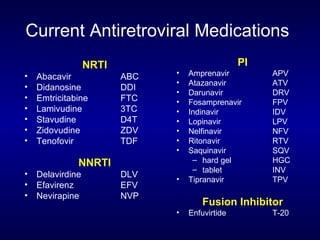
Current Antiretroviral Medications NRTI Abacavir ABC Didanosine  DDI Emtricitabine FTC Lamivudine 3TC Stavudine D4T Zidovudine ZDV Tenofovir TDF NNRTI Delavirdine DLV Efavirenz EFV Nevirapine NVP PI Amprenavir APV Atazanavir ATV Darunavir DRV  Fosamprenavir FPV Indinavir IDV Lopinavir LPV Nelfinavir NFV Ritonavir RTV Saquinavir  SQV hard gel HGC tablet INV Tipranavir TPV Fusion Inhibitor Enfuvirtide T-20
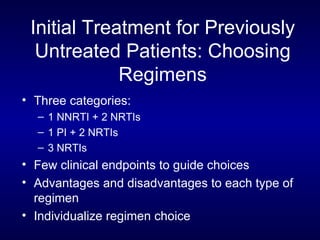
Initial Treatment for Previously Untreated Patients: Choosing Regimens Three categories: 1 NNRTI + 2 NRTIs 1 PI + 2 NRTIs 3 NRTIs  Few clinical endpoints to guide choices Advantages and disadvantages to each type of regimen Individualize regimen choice
Preferred Combination Regimens:  DHHS Oct, 2006 Nevirapine  Atazanavir Fosamprenavir Fosampreanvir/r (QD) Lopinavir/r (QD) Abacavir/lamivudine Didanosine + lamivudine Alternative Efavirenz  Atazanavir/r  Fosamprenavir/r (BID) Lopinavir/r (BID) Tenofovir/emtricitabine Zidovudine/lamivudine Preferred NNRTI  OR  PI 2 NRTI
Antiretroviral Combinations Not Recommended as Initial Therapy APV (w/ or w/out RTV) Unboosted IDV NFV + SQV ↑  pill burden/dosing frequency TPV DNV T-20 Lack of treatment-naïve data d4T + ddI RTV 600 mg Q12h ↑  incidence of toxicities Delavirdine Unboosted SQV Inferior antiviral activity ddI + TDF + NNRTI ↑   rate of virologic failure Medication/Regimen Reason for Avoidance
GS 934: Study Design  TDF  QD FTC  QD Efavirenz  QD (N = 255) Non inferiority Trial, Primary Endpoint < 400 c/mL at Week 96 Time to Loss of Virologic Response (TLOVR)  CBV  BID Efavirenz  QD (N = 254) Week 144 Stratification by HIV RNA >10,000 c/mL Any CD4 count Adequate Renal and Hepatic Function at baseline FTC/TDF Fixed dose combination tablet was not used Gallant JE, et al.  XVI IAC Toronto, Canada, Aug. 13-18, 2006;  Abst. TUPE0064. ARV-naïve patients randomized 1:1 Week 144 * FDA-required endpoint, similar to ITT Missing = Failure, Switch = Failure.  Requires confirmation for success, used by FDA for presentation in U.S. Prescribing Information of newly approved antiretrovirals 241 Median CD4 (cells/mm³) 233 5.0 Median Viral Load  (log 10  copies/mL ) 5.0 37 Age (Median) 36 87% Male 86% Baseline Characteristics
Proportion < 400 c/mL (TLOVR) r 0 1 0 2 0 3 0 4 0 5 0 6 0 7 0 8 0 9 0 10 0 Weeks TDF+FTC+EFV  75%* CBV+EFV  62% p = 0.004 *95% CI: (+4.3%, +21.1%) % Responder Gallant J, et al. XVI IAC Toronto, Canada, Aug. 13-18, 2006;  Abst.  TUPE0064 . B L 8 1 6 2 4 3 2 4 0 4 8 6 0 7 2 8 4 9 6
Proportion < 50 c/mL (TLOVR) % Res pon d e r 0 1 0 2 0 3 0 4 0 5 0 6 0 7 0 8 0 9 0 TDF+FTC+EFV  67%* CBV+EFV  61%* p = 0.16 *95% CI: (-2.3%, +15.0%) Weeks % Responder Gallant J, et al. XVI IAC Toronto, Canada, Aug. 13-18, 2006;  Abst.  TUPE0064. B L 8 1 6 2 4 3 2 4 0 4 8 6 0 7 2 8 4 9 6
Mean Absolute Change  in CD4 count from Baseline Mean Change (cells/ m m 3 ) 0 5 0 10 0 15 0 20 0 25 0 30 0 B L 8 1 6 2 4 3 2 4 0 4 8 6 0 7 2 8 4 9 6 Weeks 270  TDF+FTC+EFV 237  CBV+EFV p = 0.036 n  =  255  238   234  223  218  209  199  177  184  172 166 n  =  254  222  216  199  188  175  164  145  149  149  142 Mean Change (cells/mm 3 ) Gallant J, et al. XVI IAC Toronto, Canada, Aug. 13-18, 2006; Abst. TUPE0064 .
Resistance Development through Week 96 Gallant J, et al. XVI IAC Toronto, Canada, Aug. 13-18, 2006; Abst. TUPE0064. p = 0.017 p = 0.036 Excludes patients with baseline NNRTI-R mutations (n = 487) 0 0 K65R 1 0 TAMs 9 2 M184V/I 18 10 EFV-R 20 10 Any Resistance 7 4 Wild Type 29 14 Genotypes CBV+EFV (n = 243) TDF+FTC+EFV (n = 244)
Study Design ACTG 5142 LPV/r + NRTI EFV + NRTI LPV/r + EFV Primary Study Objectives Time to virologic failure* Time to regimen completion** Major inclusion criteria: ART naïve, Any CD4 orHIV  RNA >2000 copies/mL Riddler S, et al., XVI IAC Toronto, Canada, Aug. 13-18, 2006; Abst THLB0204 . 753 pts randomized in  open label design *Virologic failure defined as early (rebound or lack of suppression by 1 log10) or late (failure to suppress to <200 copies/mL or rebound) **Regimen Completion defined as  virologic failure or d/c secondary to any treatment related discontinuation of any component
Baseline Characteristics Riddler S, et al. XVI IAC Toronto, Canada, Aug. 13-18, 2006; Abst. THLB0204. 51 52 51 51 HIV  RNA >10 5  (%) 42 34  25 178 65 77 LPV N=253 N/A 181 65 82 LPV/EFV N=250 42 34  24 42 34  24 NRTI (%) ZDV TDF  d4T XR 190 182 CD4 (median) 60 64 Non-white (%) 81 80 Male (%) EFV N=250 Total N=753
EFV vs. LPV/r vs. LPV/r + EFV 96 Week Outcomes (ITT) Patient Percent Riddler S, et al. XVI IAC Toronto, Canada, Aug. 13-18, 2006; Abst. THLB0204. EFV vs. LPV: p=0.006 EFV vs. LPV/EFV: p=0.5 LPV vs. LPV/EFV: p=0.13 CD4+ Cell Count Change from BL: +239   vs.   +285   vs.   +268   (p=0.01) EFV vs. LPV: p=0.003 EFV vs. LPV/EFV: p=0.123 LPV vs. LPV/EFV: p=0.183
Time to Virologic Failure Adjusted p values (threshold for significance <0.016) LPV/EFV vs LPV:  0.13 LPV/EFV vs EFV:  0.5 LPV vs EFV:  0.006 Log Rank P-Values:  A vs B  p=0.099;  A vs C  p=0.371;  B vs C  p=0.004 Regimen Censored Failed Total MEDIAN A – LPV+EFV 177 73 250 - B – LPV+3TC+NRTI 159 94 253 - C – EFV+3TC+NRTI 190 60 250 - Proportion Not Failed Time in Weeks From Randomization Riddler S, et al. XVI IAC Toronto, Canada, Aug. 13-18, 2006; Abst. THLB0204. 0 8 16 24 32 40 48 56 64 72 80 88 96 104 112 120 128 136 144 152 1.0 0.8 0.6 0.4 0.2 0.0 LPV EFV LPV/ EFV
Time to Regimen Completion Proportion Not Failed Time in Weeks From Randomization Adjusted p values (threshold for significance <0.016) LPV/EFV vs LPV:  0.13 LPV/EFV vs EFV:  0.5 LPV vs EFV:  0.02 Log Rank P-Values:  A vs B  p=0.101;  A vs C  p=0.708;  B vs C  p=0.028 Regimen Censored Failed Total MEDIAN A – LPV+EFV 145 105 250 133 B – LPV+3TC+NRTI 126 127 253 106 C – EFV+3TC+NRTI 156 94 250 - Riddler S, et al. XVI IAC Toronto, Canada, Aug. 13-18, 2006; Abst. THLB0204. 0 8 16 24 32 40 48 56 64 72 80 88 96 104 112 120 128 136 144 152 1.0 0.8 0.6 0.4 0.2 0.0 LPV EFV LPV/ EFV
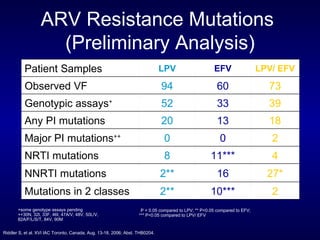
ARV Resistance Mutations  (Preliminary Analysis) +some genotype assays pending ++30N, 32I, 33F, 46I, 47A/V, 48V, 50L/V, 82A/F/L/S/T, 84V, 90M Riddler S, et al. XVI IAC Toronto, Canada, Aug. 13-18, 2006; Abst. THB0204. * P < 0.05 compared to LPV; ** P<0.05 compared to EFV; *** P<0.05 compared to LPV/ EFV 2 0 0 Major PI mutations ++ 2** 2** 8 20 52 94 LPV 2 10*** Mutations in 2 classes 27* 16 NNRTI mutations 4 11*** NRTI mutations 18 13 Any PI mutations 39 33 Genotypic assays + 73 60 Observed VF LPV/ EFV EFV Patient Samples
Antiretroviral Combinations Not Recommended Anytime Monotherapy Except for the perinatal HIV transmission prevention Dual NRTI 3 drug regimens not recommended ddI + TDF + NNRTI ABC + TDF + 3TC ddI + TDF + 3TC NNRTI-based regimens Efavirenz in pregnancy  ->  category D Nevirapine initiation  ->  ↑ risk of hepatotoxicity women with a CD4 count > 250 cells/mm3 men with a CD4 count > 400 cells/mm3 High rates of virologic failure
Antiretroviral Combinations Not Recommended Anytime NRTI backbone ddI + d4T  ->  toxicities d4T + AZT ->  drug antagonism FTC + 3TC ->  drug antagonism PI combinations APV + FPV ->  FPV is the prodrug of APV APV oral solution in children, pregnancy, renal/hepatic failure APV oral solution + RTC oral solution ->  propylene glycol toxicity ATV + IDV ->  ↑ risk of elevated total bilirubin
Case JB is a 35 y/o female HIV-infected patient who was diagnosed.  Her baseline CD4 count was 137 cells/mm 3  and HIV RNA viral load was 68,980 copies/mL.  PCP prophylaxis was initiated.  All other labs with normal limits.
Case What would you do next?   Defer therapy because she is not a candidate. Initiate therapy because her CD4 count is <200 cells/mm3. Initiate therapy because she has an AIDS defining illness.
Case What regimen would you initiate? Didanosine + Stavudine + Efavirenz Zidovudine + Stavudine + Efavirenz Zidovudine + Lamivudine + Lopinavir/r Abacavir + Tenofovir + Lamivudine
Antiretroviral Components in Initial Therapy: NNRTIs ADVANTAGES Less fat maldistribution and dyslipidemia than in PI-based regimens PI options preserved for future use DISADVANTAGES Resistance - single mutation Cross-resistance among  NNRTIs Rash; hepatotoxicity Potential drug interactions (CYP450)
Antiretroviral Components in Initial Therapy: PIs ADVANTAGES Longest prospective data NNRTI options preserved for future use DISADVANTAGES Metabolic complications (fat maldistribution, dyslipidemia, insulin resistance) Greater potential for drug interactions (CYP450), especially with ritonavir
ART Options NRTIs   (Nucleoside  OR  Nucleotide Reverse Transcriptase Inhibitors, aka “Nukes”) NNRTIs   (Non-Nucleoside Reverse Transcriptase Inhibitors, aka “Non-Nukes”) PIs   (Protease Inhibitors) Fusion (or Entry Inhibitors) ART agents in additional classes  currently in development -Integrase Inhibitors -CCR5 Antagonists -CXCR4 Antagonists
NNRTI ’ 87 ’ 91 ’ 92 ’ 94 ’ 95 ’ 96 ’ 97 ’ 98 ’ 99 ‘ 00 ’ 88 ’ 89 ’ 90 NRTI PI Approved Antiretrovirals Norvir Invirase Crixivan Fortovase Kaletra Viracept Ziagen Combivir Videx Hivid Zerit Epivir Trizivir Rescriptor Sustiva Viramune ’ 01 Viread Emtriva Reyataz ‘ 02 ‘ 03 ’ 93 Agenerase Lexiva Truvada Epzicom FI AZT Aptivus Prezista Atripla Fuzeon
Mechanism of Action Nucleoside analogs (like AZT below) are activated after being phosphorylated so that they can  be incorporated into the viral DNA strand by reverse transcriptase. Since TDF is a nucleotide, it does  NOT  have to be phosphorylated prior to being incorporated into the growing viral DNA strand. After incorporation of  the NRTI, viral DNA  synthesis will be  terminated.
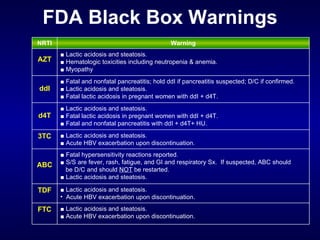
FDA Black Box Warnings Warning NRTI ■  Lactic acidosis and steatosis. ■  Hematologic toxicities including neutropenia & anemia. ■  Myopathy AZT ■  Lactic acidosis and steatosis. ■  Acute HBV exacerbation upon discontinuation. FTC ■  Lactic acidosis and steatosis. Acute HBV exacerbation upon discontinuation. TDF ■  Fatal hypersensitivity reactions reported. ■  S/S are fever, rash, fatigue, and GI and respiratory Sx.  If suspected, ABC should  be D/C and should  NOT  be restarted. ■  Lactic acidosis and steatosis. ABC ■  Lactic acidosis and steatosis. ■  Acute HBV exacerbation upon discontinuation. 3TC ■  Lactic acidosis and steatosis. ■  Fatal lactic acidosis in pregnant women with ddI + d4T. ■  Fatal and nonfatal pancreatitis with ddI + d4T+ HU. d4T ■  Fatal and nonfatal pancreatitis; hold ddI if pancreatitis suspected; D/C if confirmed. ■  Lactic acidosis and steatosis. ■  Fatal lactic acidosis in pregnant women with ddI + d4T. ddI
NRTIs *dose reduce for renal dysfunction †  dose reduce for weight <60 kg 125,200,250,400mg cap, pwdr for soln 200mg cap 150, 300mg tab, oral soln 300mg tab, 100mg cap, iv oral soln Dosage forms Pancreatitis,  peripheral neuropathy,  LA/HS Well tolerated Well tolerated Fatigue, malaise, HA, myalgia, anemia, GI  Common  Side Effects 400mg EC qd * † Didanosine   (ddI) Videx Truvada, Atripla 200mg qd* Emtricitabine (FTC) Emtriva Combivir, Epzicom, Trizivir 150mg bid *  or 300mg qd Lamivudine   (3TC) Epivir Combivir, Trizivir 300mg bid * Zidovudine   (ZDV/AZT)  Retrovir Combos Standard Dose* Drug
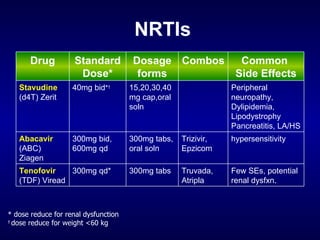
NRTIs * dose reduce for renal dysfunction †  dose reduce for weight <60 kg hypersensitivity Trizivir, Epzicom 300mg tabs, oral soln 300mg bid, 600mg qd Abacavir  (ABC) Ziagen Few SEs, potential renal dysfxn. Truvada, Atripla 300mg tabs 300mg qd* Tenofovir (TDF) Viread Peripheral neuropathy, Dylipidemia, Lipodystrophy Pancreatitis, LA/HS 15,20,30,40 mg cap,oral soln 40mg bid * † Stavudine  (d4T) Zerit Common  Side Effects Combos Dosage forms Standard Dose* Drug
NRTI Combination Products * Use of individual components instead of combination products may necessary in patients with renal dysfunction. 600/300 mg tablet 1 tablet QD* Epzicom (ABC + 3TC) 300/200 mg tablet 1 tablet QD* Truvada (TDF + FTC) 300/150/300 mg tablet 1 tablet BID* Trizivir  (AZT + 3TC + ABC) 300/150 mg tablet 1 tablet BID* Combivir (AZT + 3TC) Dosage Form Standard Dose Drug
Case JB and her physician decided to initiate therapy because of her low CD4 count and high viral load.  Zidovudine + lamivudine + efavirenz was initiated.  Her CD4 cell count increased from 88 cells/mm3 to 167 cells/mm3 in 3 months.  Her viral load was undetectable.  Although she reports she takes her medications every day, she stated she recently began to feel fatigued and experiencing headaches.
Case Laboratory findings were suggestive that JB was anemic with a Hemoglobin of 7.4.  She was also found to be iron deficient. What could be the cause of JB’s anemia HIV Bactrim HIV medications
Non-Nucleoside Reverse Transcriptase Inhibitors (NNRTIs) Inhibit reverse transcriptase   by a mechanism that is different from that of NRTIs nevirapine (NVP) delavirdine (DLV)  efavirenz (EFV)  Use caution when coadministering PIs (modify dose and  closely monitor in  order to minimize  P450 interactions  and complications) X I can stop that HIV reverse transcriptase! RT
Mechanism of Action These agents  directly bind to reverse transcriptase   to inhibit its making DNA from the HIV’s RNA. NEVER  use   NNRTIs  as  monotherapy  in order to ↓  development  of rapid  resistance!  RT X
FDA Black Box Warnings http://aidsinfo.nih.gov/guidelines/adult/AA_032304.pdf Warning NNRTI ■  None EFV ■  None DLV ■  Severe, life-threatening hepatotoxicity  including fulminant and cholestatic  hepatitis, hepatic necrosis & hepatic failure. ■  Severe, life-threatening, and even fatal skin  reactions. Monitor intensely during  the first  12 wk to detect hepatotoxicity and skin  reactions. NVP
NNRTIs Vivid dreams,  drowsiness,  CNS SEs, rash (including Stevens Johnson) CYP3A inducer, potency similar to PIs 50, 100, 200mg cap, 600mg tab 600 mg qhs Efavirenz   (EFV) Sustiva rash, hepatotoxicity CYP3A inducer, auto inducer 200mg tabs, Oral susp 200 mg qd  x 14 d then 200 mg bid Nevirapine   (NVP) Viramune rash Suboptimal data  on efficacy;  potent CYP3A inhibitor  100mg tab, 200mg cap 400 mg tid Delavirdine   (DLV)  Rescriptor Common  AEs Combos Dosage forms Standard Dose Drug
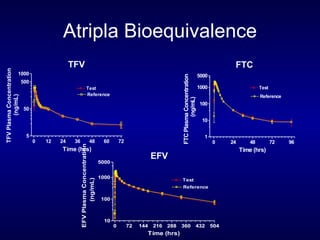
Atripla Triple combination tablet containing: Emtricitabine 200 mg  Tenofovir 300 mg Efavirenz 600 mg Bilayer tablet Do not crush Do not cut in half First “complete regimen” tablet Dose: 1 tablet at bedtime
Atripla Bioequivalence TFV FTC EFV
Protease Inhibitors: Mechanism of Action Protease cleaves HIV precursor proteins (gag/pol polyproteins) into active proteins that are needed to  assemble a new, mature HIV virus. This enables new viral particles to “break off”  from infected host cells.  PIs prevent this cleavage and inhibit the assembly of new HIV viruses   within  infected host cells. PI HIV-1 Protease X HIV
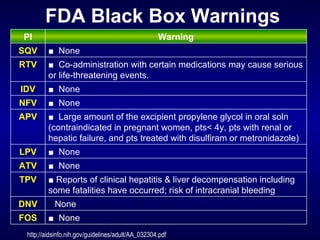
FDA Black Box Warnings http://aidsinfo.nih.gov/guidelines/adult/AA_032304.pdf None DNV ■  Reports of clinical hepatitis & liver decompensation including some fatalities have occurred; risk of intracranial bleeding TPV ■  None ATV Warning PI ■  None FOS ■  None LPV ■  Large amount of the excipient propylene glycol in oral soln (contraindicated in pregnant women, pts< 4y, pts with renal or hepatic failure, and pts treated with disulfiram or metronidazole) APV ■  None NFV ■  None IDV ■  Co-administration with certain medications may cause serious or life-threatening events. RTV ■  None SQV
Protease Inhibitors Take with food 2 (700mg) tabs BID 2 (700mg) tabs + 2 (100 mg) caps QD 1 (700mg) tabs + 1 (100 mg) caps BID 1400 mg BID 1400 mg + RTV 200 QD 700 mg + RTV 100 mg BID Fosamprenavir (Lexiva) Liquid contains propylene glycol Avoid concomitant with ritonavir liquid Available as 50 mg capsules and liquid 600 mg + RTV 100 mg BID 1200 mg + RTV 200 mg QD Amprenavir  (Agenerase) Drink 7-8 glasses of water per day 2 (400mg) caps + 1(100mg cap) BID 2 (400 mg) caps TID 800mg + RTV 100 BID 800 mg TID Indinavir (Crixivan) Take with food 2(625mg) tabs BID 3(250mg) tabs TID 1250 mg BID 750 mg TID Nelfinavir  (Viracept) Take with food 2(500mg) caps/ 1(100mg cap) BID 1000 mg + RTV 100 mg BID Saquinavir  (Invirase) Dosing info Pill burden Dose Drug
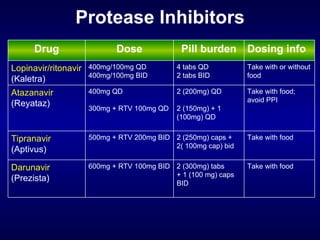
Protease Inhibitors Take with food 2 (300mg) tabs + 1 (100 mg) caps BID 600mg + RTV 100mg BID Darunavir (Prezista) Take with food 2 (250mg) caps + 2( 100mg cap) bid 500mg + RTV 200mg BID Tipranavir (Aptivus) Take with food; avoid PPI 2 (200mg) QD 2 (150mg) + 1 (100mg) QD 400mg QD 300mg + RTV 100mg QD Atazanavir (Reyataz) Take with or without food 4 tabs QD 2 tabs BID 400mg/100mg QD 400mg/100mg BID Lopinavir/ritonavir   (Kaletra) Dosing info Pill burden Dose Drug
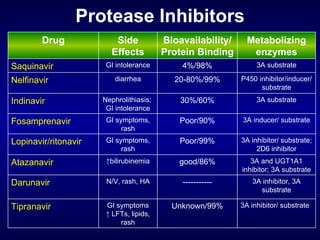
Protease Inhibitors 3A inhibitor, 3A substrate ----------- N/V, rash, HA Darunavir 3A and UGT1A1 inhibitor; 3A substrate good/86% ↑ bilirubinemia Atazanavir 3A inhibitor/ substrate; 2D6 inhibitor Poor/99% GI symptoms, rash Lopinavir/ritonavir  3A inhibitor/ substrate Unknown/99% GI symptoms ↑  LFTs, lipids, rash Tipranavir 3A inducer/ substrate Poor/90% GI symptoms, rash Fosamprenavir 3A substrate 30%/60% Nephrolithiasis;  GI intolerance Indinavir P450 inhibitor/inducer/ substrate 20-80%/99% diarrhea Nelfinavir 3A substrate 4%/98% GI intolerance Saquinavir Metabolizing enzymes Bioavailability/ Protein Binding Side Effects Drug
Entry Inhibitors Fusion inhibitors [Fuzeon (enfuvirtide, T20)] Attachment Inhibitors Chemokine co-receptor antagonists See Kilby and Eron, NEJM 2003;348:2228-38
Enfuvirtide (T-20) (Fuzeon) FDA-approved fusion inhibitor; 36 AA peptide Dose:  90 mg sc bid side effects:  injection site rxn (common);  hypersensitivity reactions (uncommon);  eosinophilia (10% >700; 2% >1400);  ↑ increased risk of pneumonia on phase III studies
Enfuvirtide:  Injection Site Reactions Painful Erythematous Nodular Pruritic Last for ~7 days DO NOT REINJECT SITE UNTIL NODULE DISAPPEARS!!!!
Case 25 y/o WM diagnosed with HIV 7/06.  CD4 count is 88 cells/mm3 and HIV RNA viral load is 140,000 copies/mL.  Prophylaxis for opportunistic infections was initiated.  Other pertinent labs include negative hepatitis serologies, Toxoplasmosis IgG negative, G6PD normal.  Other other laboratory values are within normal limits.
Case What do you do next? Genotype Initiate Atripla 1 tablet once daily Initiate Kaletra 2 tablets twice daily + Combivir 1 tablet twice daily Patient does not warrant treatment at this time
Case Genotype Results Reverse Transcriptase Mutations NRTI: 35I, 69 wt/A/D/N, 70 wt/E, 118I, 211K NNRTI: 135T PI: 10I, 15V, 35D, 37D, 62V, 63P, 90M, 93L Plan to enroll patient in ACTG 5202 halted and initiated DNV/r + Truvada + AZT
Common Opportunistic Infections Cryptococcus meningitis  MAC CMV < 50 cells/mm 3 Toxoplasmosis gondii < 100 cells/mm 3 PCP < 200 cells/mm 3 Thrush < 250 cells/mm 3 Tuberculosis VZV HSV Recurrent bacterial infections < 500 cells/mm 3 Opportunistic Infection CD4 cell count
Pneumocystis jiroveci (PCP) Ubiquitous fungus Historic mortality of 20-40% in  HIV pt Incidence has declined since  HAART Clinical Presentation DOE/SOB    fulminate  pneumonia Fever Nonproductive cough Poor oxygenation status/respiratory acidosis
Pneumocystis jiroveci (PCP) If PaO2 < 70 initiate prednisone 40 mg BID x 5 days; 40 mg QD x 5 days; 20 mg QD x 11 days Bactrim 15 mg/kg in divided doses Bactrim DS QD Bactrim DS QD Treatment of Choice Treat for 21 days followed by secondary prophylaxis Moderate-severe Pentamidine 4 mg/kg IV QD Mild-moderate Dapsone 50 mg + TMP 15 mg/kg in divided doses Primaquine 30 mg base + clindamycin 600 mg Q6h Treatment CD4 > 200 x 3 months Dapsone 100 mg QD Atovaquone 750 mg BID Secondary Prophylaxis CD4 > 200 x 3 months Dapsone 100 mg QD Atovaquone 750 mg BID Primary Prophylaxis Discontinue Alternative
Mycobacterium Avium Complex Non-TB Mycobacterium spp Occurs in highly immunocompromised patients Clinical symptoms depend on organ system involved General    fever, malaise, lymphadenoapthy Pulmonary    SOB, cough, DOE GI    colitis, abdominal pain Bone    anemia, bone marrow suppression
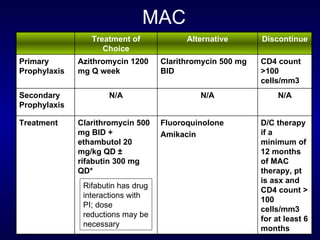
MAC Rifabutin has drug interactions with PI; dose reductions may be necessary Clarithromycin 500 mg BID + ethambutol 20 mg/kg QD ± rifabutin 300 mg QD* N/A Azithromycin 1200 mg Q week Treatment of Choice D/C therapy if a minimum of 12 months of MAC therapy, pt is asx and CD4 count > 100 cells/mm3 for at least 6 months Fluoroquinolone Amikacin Treatment N/A N/A Secondary Prophylaxis CD4 count >100 cells/mm3 Clarithromycin 500 mg BID Primary Prophylaxis Discontinue Alternative
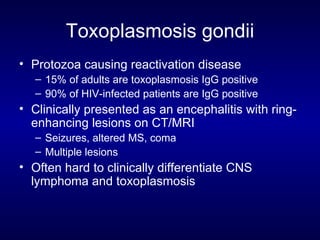
Toxoplasmosis gondii Protozoa causing reactivation disease 15% of adults are toxoplasmosis IgG positive 90% of HIV-infected patients are IgG positive Clinically presented as an encephalitis with ring-enhancing lesions on CT/MRI Seizures, altered MS, coma Multiple lesions Often hard to clinically differentiate CNS lymphoma and toxoplasmosis
Toxoplasmosis gondii Bactrim 10 mg/kg IV in divided doses in patients who cannot take PO formulations Pyrimethamine 75 mg QD + sulfadiazine  1-2 g Q6h + leucovorin 25 mg QD (clindamycin 600 mg IV q6h may be used in sulfa allergic patients) Bactrim DS QD Bactrim DS QD Treatment of Choice Treatment for at least 6 weeks; rescan to determine CT/MRI improvement Atovaquone 750 mg BID Atovaquone +  Pyrimethamine 75 mg QD + leucovorin 25 mg QD Atovaquone + sulfadiazine 1-2 g Q6h + leucovorin 25 mg QD Treatment CD4 > 200 x 6 months Dapsone 100 mg QD Atovaquone 750 mg BID Secondary Prophylaxis CD4 >200 x 3 months Dapsone 50 mg QD + pyrimethamine 50 mg Q week + leucovorin 25 mg Q week Atovaquone 1500 mg QD Primary Prophylaxis Discontinue Alternative
Cryptococcus Fungus- yeast Commonly presents as meningitis or menigoencephalitis Seizures Altered MS HA, fever CSF results High opening pressure Lymphocyte predominance Normal/slightly low glucose Mild elevation of protein Organism growth Cryptococcus titers
Cryptococcus Amphotericin B 0.7 mg/kg + flucytosine 100 mg/kg/d x 14 days Fluconazole 400 mg QD x 6 weeks Fluconazole 200 mg None Treatment of Choice Fluconazole 800 mg QD Treatment CD4 > 100-200 x 6 months Secondary Prophylaxis N/A None Primary Prophylaxis Discontinue Alternative
6 Rules to Live By Per Gretchen- your job is not to screw these patients up (she will hunt you down!) 2 ART is a bad idea; 1 ART is a REALLY bad idea; Combination therapy is a GREAT IDEA The ID clinic note can help you Nexium (aka Purple crack) is WHACK - SIGNIFICANT  interaction with atazanavir If Dr. Van der Horst is your attending, do not pass go, do not collect 200 dollars and just follow instructions When in doubt, call 216-0626

11

  • 1.
    HIV Treatment UpdateTodd Correll, PharmD, BCPS Clinical Pharmacy Specialist, Infectious Diseases/HIV University of North Carolina Hospitals November 2006
  • 2.
    Objectives Provide anupdate on DHHS HIV treatment naïve guidelines Discuss the currently approved antiretrovirals Describe treatment options for opportunistic infections
  • 3.
    HIV Life CycleIllustration by David Klemm
  • 4.
    Goals of Therapy& Strategies to Achieve Goals Improvement of quality of life Reduction of HIV-related morbidity and mortality Restoration and/or preservation of immunologic function Maximal and durable suppression of viral load Selection of ARV regimen Preservation of future treatment options Rational sequencing of therapy Maximizing adherence Use of resistance testing in selected clinical settings Strategies Goals
  • 5.
    Indications for Antiretroviral Initiation TREAT >100K c/mL >350 cells/mm 3 Asymptomatic Defer therapy <100K c/mL >350 cells/mm 3 Asymptomatic Offer treatment; pros vs cons Any value 200 to 350 cells/mm 3 Asymptomatic TREAT Any value <200 cells/mm 3 Asymptomatic AIDS TREAT Any value Any value Symptomatic (AIDS) Recommendation HIV RNA CD4 cell count Clinical Category
  • 6.
    Benefits and Risksof Deferred Therapy BENEFITS Avoid negative effects on quality of life Avoid drug-related toxicity Preserve future drug options Delay development of drug resistance Decrease total time on medications RISKS Possibility of irreversible immune system depletion Increased possibility of progression to AIDS Possible increased risk of HIV transmission
  • 7.
    Current Antiretroviral MedicationsNRTI Abacavir ABC Didanosine DDI Emtricitabine FTC Lamivudine 3TC Stavudine D4T Zidovudine ZDV Tenofovir TDF NNRTI Delavirdine DLV Efavirenz EFV Nevirapine NVP PI Amprenavir APV Atazanavir ATV Darunavir DRV Fosamprenavir FPV Indinavir IDV Lopinavir LPV Nelfinavir NFV Ritonavir RTV Saquinavir SQV hard gel HGC tablet INV Tipranavir TPV Fusion Inhibitor Enfuvirtide T-20
  • 8.
    Initial Treatment forPreviously Untreated Patients: Choosing Regimens Three categories: 1 NNRTI + 2 NRTIs 1 PI + 2 NRTIs 3 NRTIs Few clinical endpoints to guide choices Advantages and disadvantages to each type of regimen Individualize regimen choice
  • 9.
    Preferred Combination Regimens: DHHS Oct, 2006 Nevirapine Atazanavir Fosamprenavir Fosampreanvir/r (QD) Lopinavir/r (QD) Abacavir/lamivudine Didanosine + lamivudine Alternative Efavirenz Atazanavir/r Fosamprenavir/r (BID) Lopinavir/r (BID) Tenofovir/emtricitabine Zidovudine/lamivudine Preferred NNRTI OR PI 2 NRTI
  • 10.
    Antiretroviral Combinations NotRecommended as Initial Therapy APV (w/ or w/out RTV) Unboosted IDV NFV + SQV ↑ pill burden/dosing frequency TPV DNV T-20 Lack of treatment-naïve data d4T + ddI RTV 600 mg Q12h ↑ incidence of toxicities Delavirdine Unboosted SQV Inferior antiviral activity ddI + TDF + NNRTI ↑ rate of virologic failure Medication/Regimen Reason for Avoidance
  • 11.
    GS 934: StudyDesign TDF QD FTC QD Efavirenz QD (N = 255) Non inferiority Trial, Primary Endpoint < 400 c/mL at Week 96 Time to Loss of Virologic Response (TLOVR) CBV BID Efavirenz QD (N = 254) Week 144 Stratification by HIV RNA >10,000 c/mL Any CD4 count Adequate Renal and Hepatic Function at baseline FTC/TDF Fixed dose combination tablet was not used Gallant JE, et al. XVI IAC Toronto, Canada, Aug. 13-18, 2006; Abst. TUPE0064. ARV-naïve patients randomized 1:1 Week 144 * FDA-required endpoint, similar to ITT Missing = Failure, Switch = Failure. Requires confirmation for success, used by FDA for presentation in U.S. Prescribing Information of newly approved antiretrovirals 241 Median CD4 (cells/mm³) 233 5.0 Median Viral Load (log 10 copies/mL ) 5.0 37 Age (Median) 36 87% Male 86% Baseline Characteristics
  • 12.
    Proportion < 400c/mL (TLOVR) r 0 1 0 2 0 3 0 4 0 5 0 6 0 7 0 8 0 9 0 10 0 Weeks TDF+FTC+EFV 75%* CBV+EFV 62% p = 0.004 *95% CI: (+4.3%, +21.1%) % Responder Gallant J, et al. XVI IAC Toronto, Canada, Aug. 13-18, 2006; Abst. TUPE0064 . B L 8 1 6 2 4 3 2 4 0 4 8 6 0 7 2 8 4 9 6
  • 13.
    Proportion < 50c/mL (TLOVR) % Res pon d e r 0 1 0 2 0 3 0 4 0 5 0 6 0 7 0 8 0 9 0 TDF+FTC+EFV 67%* CBV+EFV 61%* p = 0.16 *95% CI: (-2.3%, +15.0%) Weeks % Responder Gallant J, et al. XVI IAC Toronto, Canada, Aug. 13-18, 2006; Abst. TUPE0064. B L 8 1 6 2 4 3 2 4 0 4 8 6 0 7 2 8 4 9 6
  • 14.
    Mean Absolute Change in CD4 count from Baseline Mean Change (cells/ m m 3 ) 0 5 0 10 0 15 0 20 0 25 0 30 0 B L 8 1 6 2 4 3 2 4 0 4 8 6 0 7 2 8 4 9 6 Weeks 270 TDF+FTC+EFV 237 CBV+EFV p = 0.036 n = 255 238 234 223 218 209 199 177 184 172 166 n = 254 222 216 199 188 175 164 145 149 149 142 Mean Change (cells/mm 3 ) Gallant J, et al. XVI IAC Toronto, Canada, Aug. 13-18, 2006; Abst. TUPE0064 .
  • 15.
    Resistance Development throughWeek 96 Gallant J, et al. XVI IAC Toronto, Canada, Aug. 13-18, 2006; Abst. TUPE0064. p = 0.017 p = 0.036 Excludes patients with baseline NNRTI-R mutations (n = 487) 0 0 K65R 1 0 TAMs 9 2 M184V/I 18 10 EFV-R 20 10 Any Resistance 7 4 Wild Type 29 14 Genotypes CBV+EFV (n = 243) TDF+FTC+EFV (n = 244)
  • 16.
    Study Design ACTG5142 LPV/r + NRTI EFV + NRTI LPV/r + EFV Primary Study Objectives Time to virologic failure* Time to regimen completion** Major inclusion criteria: ART naïve, Any CD4 orHIV RNA >2000 copies/mL Riddler S, et al., XVI IAC Toronto, Canada, Aug. 13-18, 2006; Abst THLB0204 . 753 pts randomized in open label design *Virologic failure defined as early (rebound or lack of suppression by 1 log10) or late (failure to suppress to <200 copies/mL or rebound) **Regimen Completion defined as virologic failure or d/c secondary to any treatment related discontinuation of any component
  • 17.
    Baseline Characteristics RiddlerS, et al. XVI IAC Toronto, Canada, Aug. 13-18, 2006; Abst. THLB0204. 51 52 51 51 HIV RNA >10 5 (%) 42 34 25 178 65 77 LPV N=253 N/A 181 65 82 LPV/EFV N=250 42 34 24 42 34 24 NRTI (%) ZDV TDF d4T XR 190 182 CD4 (median) 60 64 Non-white (%) 81 80 Male (%) EFV N=250 Total N=753
  • 18.
    EFV vs. LPV/rvs. LPV/r + EFV 96 Week Outcomes (ITT) Patient Percent Riddler S, et al. XVI IAC Toronto, Canada, Aug. 13-18, 2006; Abst. THLB0204. EFV vs. LPV: p=0.006 EFV vs. LPV/EFV: p=0.5 LPV vs. LPV/EFV: p=0.13 CD4+ Cell Count Change from BL: +239 vs. +285 vs. +268 (p=0.01) EFV vs. LPV: p=0.003 EFV vs. LPV/EFV: p=0.123 LPV vs. LPV/EFV: p=0.183
  • 19.
    Time to VirologicFailure Adjusted p values (threshold for significance <0.016) LPV/EFV vs LPV: 0.13 LPV/EFV vs EFV: 0.5 LPV vs EFV: 0.006 Log Rank P-Values: A vs B p=0.099; A vs C p=0.371; B vs C p=0.004 Regimen Censored Failed Total MEDIAN A – LPV+EFV 177 73 250 - B – LPV+3TC+NRTI 159 94 253 - C – EFV+3TC+NRTI 190 60 250 - Proportion Not Failed Time in Weeks From Randomization Riddler S, et al. XVI IAC Toronto, Canada, Aug. 13-18, 2006; Abst. THLB0204. 0 8 16 24 32 40 48 56 64 72 80 88 96 104 112 120 128 136 144 152 1.0 0.8 0.6 0.4 0.2 0.0 LPV EFV LPV/ EFV
  • 20.
    Time to RegimenCompletion Proportion Not Failed Time in Weeks From Randomization Adjusted p values (threshold for significance <0.016) LPV/EFV vs LPV: 0.13 LPV/EFV vs EFV: 0.5 LPV vs EFV: 0.02 Log Rank P-Values: A vs B p=0.101; A vs C p=0.708; B vs C p=0.028 Regimen Censored Failed Total MEDIAN A – LPV+EFV 145 105 250 133 B – LPV+3TC+NRTI 126 127 253 106 C – EFV+3TC+NRTI 156 94 250 - Riddler S, et al. XVI IAC Toronto, Canada, Aug. 13-18, 2006; Abst. THLB0204. 0 8 16 24 32 40 48 56 64 72 80 88 96 104 112 120 128 136 144 152 1.0 0.8 0.6 0.4 0.2 0.0 LPV EFV LPV/ EFV
  • 21.
    ARV Resistance Mutations (Preliminary Analysis) +some genotype assays pending ++30N, 32I, 33F, 46I, 47A/V, 48V, 50L/V, 82A/F/L/S/T, 84V, 90M Riddler S, et al. XVI IAC Toronto, Canada, Aug. 13-18, 2006; Abst. THB0204. * P < 0.05 compared to LPV; ** P<0.05 compared to EFV; *** P<0.05 compared to LPV/ EFV 2 0 0 Major PI mutations ++ 2** 2** 8 20 52 94 LPV 2 10*** Mutations in 2 classes 27* 16 NNRTI mutations 4 11*** NRTI mutations 18 13 Any PI mutations 39 33 Genotypic assays + 73 60 Observed VF LPV/ EFV EFV Patient Samples
  • 22.
    Antiretroviral Combinations NotRecommended Anytime Monotherapy Except for the perinatal HIV transmission prevention Dual NRTI 3 drug regimens not recommended ddI + TDF + NNRTI ABC + TDF + 3TC ddI + TDF + 3TC NNRTI-based regimens Efavirenz in pregnancy -> category D Nevirapine initiation -> ↑ risk of hepatotoxicity women with a CD4 count > 250 cells/mm3 men with a CD4 count > 400 cells/mm3 High rates of virologic failure
  • 23.
    Antiretroviral Combinations NotRecommended Anytime NRTI backbone ddI + d4T -> toxicities d4T + AZT -> drug antagonism FTC + 3TC -> drug antagonism PI combinations APV + FPV -> FPV is the prodrug of APV APV oral solution in children, pregnancy, renal/hepatic failure APV oral solution + RTC oral solution -> propylene glycol toxicity ATV + IDV -> ↑ risk of elevated total bilirubin
  • 24.
    Case JB isa 35 y/o female HIV-infected patient who was diagnosed. Her baseline CD4 count was 137 cells/mm 3 and HIV RNA viral load was 68,980 copies/mL. PCP prophylaxis was initiated. All other labs with normal limits.
  • 25.
    Case What wouldyou do next? Defer therapy because she is not a candidate. Initiate therapy because her CD4 count is <200 cells/mm3. Initiate therapy because she has an AIDS defining illness.
  • 26.
    Case What regimenwould you initiate? Didanosine + Stavudine + Efavirenz Zidovudine + Stavudine + Efavirenz Zidovudine + Lamivudine + Lopinavir/r Abacavir + Tenofovir + Lamivudine
  • 27.
    Antiretroviral Components inInitial Therapy: NNRTIs ADVANTAGES Less fat maldistribution and dyslipidemia than in PI-based regimens PI options preserved for future use DISADVANTAGES Resistance - single mutation Cross-resistance among NNRTIs Rash; hepatotoxicity Potential drug interactions (CYP450)
  • 28.
    Antiretroviral Components inInitial Therapy: PIs ADVANTAGES Longest prospective data NNRTI options preserved for future use DISADVANTAGES Metabolic complications (fat maldistribution, dyslipidemia, insulin resistance) Greater potential for drug interactions (CYP450), especially with ritonavir
  • 29.
    ART Options NRTIs (Nucleoside OR Nucleotide Reverse Transcriptase Inhibitors, aka “Nukes”) NNRTIs (Non-Nucleoside Reverse Transcriptase Inhibitors, aka “Non-Nukes”) PIs (Protease Inhibitors) Fusion (or Entry Inhibitors) ART agents in additional classes currently in development -Integrase Inhibitors -CCR5 Antagonists -CXCR4 Antagonists
  • 30.
    NNRTI ’ 87’ 91 ’ 92 ’ 94 ’ 95 ’ 96 ’ 97 ’ 98 ’ 99 ‘ 00 ’ 88 ’ 89 ’ 90 NRTI PI Approved Antiretrovirals Norvir Invirase Crixivan Fortovase Kaletra Viracept Ziagen Combivir Videx Hivid Zerit Epivir Trizivir Rescriptor Sustiva Viramune ’ 01 Viread Emtriva Reyataz ‘ 02 ‘ 03 ’ 93 Agenerase Lexiva Truvada Epzicom FI AZT Aptivus Prezista Atripla Fuzeon
  • 31.
    Mechanism of ActionNucleoside analogs (like AZT below) are activated after being phosphorylated so that they can be incorporated into the viral DNA strand by reverse transcriptase. Since TDF is a nucleotide, it does NOT have to be phosphorylated prior to being incorporated into the growing viral DNA strand. After incorporation of the NRTI, viral DNA synthesis will be terminated.
  • 32.
    FDA Black BoxWarnings Warning NRTI ■ Lactic acidosis and steatosis. ■ Hematologic toxicities including neutropenia & anemia. ■ Myopathy AZT ■ Lactic acidosis and steatosis. ■ Acute HBV exacerbation upon discontinuation. FTC ■ Lactic acidosis and steatosis. Acute HBV exacerbation upon discontinuation. TDF ■ Fatal hypersensitivity reactions reported. ■ S/S are fever, rash, fatigue, and GI and respiratory Sx. If suspected, ABC should be D/C and should NOT be restarted. ■ Lactic acidosis and steatosis. ABC ■ Lactic acidosis and steatosis. ■ Acute HBV exacerbation upon discontinuation. 3TC ■ Lactic acidosis and steatosis. ■ Fatal lactic acidosis in pregnant women with ddI + d4T. ■ Fatal and nonfatal pancreatitis with ddI + d4T+ HU. d4T ■ Fatal and nonfatal pancreatitis; hold ddI if pancreatitis suspected; D/C if confirmed. ■ Lactic acidosis and steatosis. ■ Fatal lactic acidosis in pregnant women with ddI + d4T. ddI
  • 33.
    NRTIs *dose reducefor renal dysfunction † dose reduce for weight <60 kg 125,200,250,400mg cap, pwdr for soln 200mg cap 150, 300mg tab, oral soln 300mg tab, 100mg cap, iv oral soln Dosage forms Pancreatitis, peripheral neuropathy, LA/HS Well tolerated Well tolerated Fatigue, malaise, HA, myalgia, anemia, GI Common Side Effects 400mg EC qd * † Didanosine (ddI) Videx Truvada, Atripla 200mg qd* Emtricitabine (FTC) Emtriva Combivir, Epzicom, Trizivir 150mg bid * or 300mg qd Lamivudine (3TC) Epivir Combivir, Trizivir 300mg bid * Zidovudine (ZDV/AZT) Retrovir Combos Standard Dose* Drug
  • 34.
    NRTIs * dosereduce for renal dysfunction † dose reduce for weight <60 kg hypersensitivity Trizivir, Epzicom 300mg tabs, oral soln 300mg bid, 600mg qd Abacavir (ABC) Ziagen Few SEs, potential renal dysfxn. Truvada, Atripla 300mg tabs 300mg qd* Tenofovir (TDF) Viread Peripheral neuropathy, Dylipidemia, Lipodystrophy Pancreatitis, LA/HS 15,20,30,40 mg cap,oral soln 40mg bid * † Stavudine (d4T) Zerit Common Side Effects Combos Dosage forms Standard Dose* Drug
  • 35.
    NRTI Combination Products* Use of individual components instead of combination products may necessary in patients with renal dysfunction. 600/300 mg tablet 1 tablet QD* Epzicom (ABC + 3TC) 300/200 mg tablet 1 tablet QD* Truvada (TDF + FTC) 300/150/300 mg tablet 1 tablet BID* Trizivir (AZT + 3TC + ABC) 300/150 mg tablet 1 tablet BID* Combivir (AZT + 3TC) Dosage Form Standard Dose Drug
  • 36.
    Case JB andher physician decided to initiate therapy because of her low CD4 count and high viral load. Zidovudine + lamivudine + efavirenz was initiated. Her CD4 cell count increased from 88 cells/mm3 to 167 cells/mm3 in 3 months. Her viral load was undetectable. Although she reports she takes her medications every day, she stated she recently began to feel fatigued and experiencing headaches.
  • 37.
    Case Laboratory findingswere suggestive that JB was anemic with a Hemoglobin of 7.4. She was also found to be iron deficient. What could be the cause of JB’s anemia HIV Bactrim HIV medications
  • 38.
    Non-Nucleoside Reverse TranscriptaseInhibitors (NNRTIs) Inhibit reverse transcriptase by a mechanism that is different from that of NRTIs nevirapine (NVP) delavirdine (DLV) efavirenz (EFV) Use caution when coadministering PIs (modify dose and closely monitor in order to minimize P450 interactions and complications) X I can stop that HIV reverse transcriptase! RT
  • 39.
    Mechanism of ActionThese agents directly bind to reverse transcriptase to inhibit its making DNA from the HIV’s RNA. NEVER use NNRTIs as monotherapy in order to ↓ development of rapid resistance! RT X
  • 40.
    FDA Black BoxWarnings http://aidsinfo.nih.gov/guidelines/adult/AA_032304.pdf Warning NNRTI ■ None EFV ■ None DLV ■ Severe, life-threatening hepatotoxicity including fulminant and cholestatic hepatitis, hepatic necrosis & hepatic failure. ■ Severe, life-threatening, and even fatal skin reactions. Monitor intensely during the first 12 wk to detect hepatotoxicity and skin reactions. NVP
  • 41.
    NNRTIs Vivid dreams, drowsiness, CNS SEs, rash (including Stevens Johnson) CYP3A inducer, potency similar to PIs 50, 100, 200mg cap, 600mg tab 600 mg qhs Efavirenz (EFV) Sustiva rash, hepatotoxicity CYP3A inducer, auto inducer 200mg tabs, Oral susp 200 mg qd x 14 d then 200 mg bid Nevirapine (NVP) Viramune rash Suboptimal data on efficacy; potent CYP3A inhibitor 100mg tab, 200mg cap 400 mg tid Delavirdine (DLV) Rescriptor Common AEs Combos Dosage forms Standard Dose Drug
  • 42.
    Atripla Triple combinationtablet containing: Emtricitabine 200 mg Tenofovir 300 mg Efavirenz 600 mg Bilayer tablet Do not crush Do not cut in half First “complete regimen” tablet Dose: 1 tablet at bedtime
  • 43.
  • 44.
    Protease Inhibitors: Mechanismof Action Protease cleaves HIV precursor proteins (gag/pol polyproteins) into active proteins that are needed to assemble a new, mature HIV virus. This enables new viral particles to “break off” from infected host cells. PIs prevent this cleavage and inhibit the assembly of new HIV viruses within infected host cells. PI HIV-1 Protease X HIV
  • 45.
    FDA Black BoxWarnings http://aidsinfo.nih.gov/guidelines/adult/AA_032304.pdf None DNV ■ Reports of clinical hepatitis & liver decompensation including some fatalities have occurred; risk of intracranial bleeding TPV ■ None ATV Warning PI ■ None FOS ■ None LPV ■ Large amount of the excipient propylene glycol in oral soln (contraindicated in pregnant women, pts< 4y, pts with renal or hepatic failure, and pts treated with disulfiram or metronidazole) APV ■ None NFV ■ None IDV ■ Co-administration with certain medications may cause serious or life-threatening events. RTV ■ None SQV
  • 46.
    Protease Inhibitors Takewith food 2 (700mg) tabs BID 2 (700mg) tabs + 2 (100 mg) caps QD 1 (700mg) tabs + 1 (100 mg) caps BID 1400 mg BID 1400 mg + RTV 200 QD 700 mg + RTV 100 mg BID Fosamprenavir (Lexiva) Liquid contains propylene glycol Avoid concomitant with ritonavir liquid Available as 50 mg capsules and liquid 600 mg + RTV 100 mg BID 1200 mg + RTV 200 mg QD Amprenavir (Agenerase) Drink 7-8 glasses of water per day 2 (400mg) caps + 1(100mg cap) BID 2 (400 mg) caps TID 800mg + RTV 100 BID 800 mg TID Indinavir (Crixivan) Take with food 2(625mg) tabs BID 3(250mg) tabs TID 1250 mg BID 750 mg TID Nelfinavir (Viracept) Take with food 2(500mg) caps/ 1(100mg cap) BID 1000 mg + RTV 100 mg BID Saquinavir (Invirase) Dosing info Pill burden Dose Drug
  • 47.
    Protease Inhibitors Takewith food 2 (300mg) tabs + 1 (100 mg) caps BID 600mg + RTV 100mg BID Darunavir (Prezista) Take with food 2 (250mg) caps + 2( 100mg cap) bid 500mg + RTV 200mg BID Tipranavir (Aptivus) Take with food; avoid PPI 2 (200mg) QD 2 (150mg) + 1 (100mg) QD 400mg QD 300mg + RTV 100mg QD Atazanavir (Reyataz) Take with or without food 4 tabs QD 2 tabs BID 400mg/100mg QD 400mg/100mg BID Lopinavir/ritonavir (Kaletra) Dosing info Pill burden Dose Drug
  • 48.
    Protease Inhibitors 3Ainhibitor, 3A substrate ----------- N/V, rash, HA Darunavir 3A and UGT1A1 inhibitor; 3A substrate good/86% ↑ bilirubinemia Atazanavir 3A inhibitor/ substrate; 2D6 inhibitor Poor/99% GI symptoms, rash Lopinavir/ritonavir 3A inhibitor/ substrate Unknown/99% GI symptoms ↑ LFTs, lipids, rash Tipranavir 3A inducer/ substrate Poor/90% GI symptoms, rash Fosamprenavir 3A substrate 30%/60% Nephrolithiasis; GI intolerance Indinavir P450 inhibitor/inducer/ substrate 20-80%/99% diarrhea Nelfinavir 3A substrate 4%/98% GI intolerance Saquinavir Metabolizing enzymes Bioavailability/ Protein Binding Side Effects Drug
  • 49.
    Entry Inhibitors Fusioninhibitors [Fuzeon (enfuvirtide, T20)] Attachment Inhibitors Chemokine co-receptor antagonists See Kilby and Eron, NEJM 2003;348:2228-38
  • 50.
    Enfuvirtide (T-20) (Fuzeon)FDA-approved fusion inhibitor; 36 AA peptide Dose: 90 mg sc bid side effects: injection site rxn (common); hypersensitivity reactions (uncommon); eosinophilia (10% >700; 2% >1400); ↑ increased risk of pneumonia on phase III studies
  • 51.
    Enfuvirtide: InjectionSite Reactions Painful Erythematous Nodular Pruritic Last for ~7 days DO NOT REINJECT SITE UNTIL NODULE DISAPPEARS!!!!
  • 52.
    Case 25 y/oWM diagnosed with HIV 7/06. CD4 count is 88 cells/mm3 and HIV RNA viral load is 140,000 copies/mL. Prophylaxis for opportunistic infections was initiated. Other pertinent labs include negative hepatitis serologies, Toxoplasmosis IgG negative, G6PD normal. Other other laboratory values are within normal limits.
  • 53.
    Case What doyou do next? Genotype Initiate Atripla 1 tablet once daily Initiate Kaletra 2 tablets twice daily + Combivir 1 tablet twice daily Patient does not warrant treatment at this time
  • 54.
    Case Genotype ResultsReverse Transcriptase Mutations NRTI: 35I, 69 wt/A/D/N, 70 wt/E, 118I, 211K NNRTI: 135T PI: 10I, 15V, 35D, 37D, 62V, 63P, 90M, 93L Plan to enroll patient in ACTG 5202 halted and initiated DNV/r + Truvada + AZT
  • 55.
    Common Opportunistic InfectionsCryptococcus meningitis MAC CMV < 50 cells/mm 3 Toxoplasmosis gondii < 100 cells/mm 3 PCP < 200 cells/mm 3 Thrush < 250 cells/mm 3 Tuberculosis VZV HSV Recurrent bacterial infections < 500 cells/mm 3 Opportunistic Infection CD4 cell count
  • 56.
    Pneumocystis jiroveci (PCP)Ubiquitous fungus Historic mortality of 20-40% in HIV pt Incidence has declined since HAART Clinical Presentation DOE/SOB  fulminate pneumonia Fever Nonproductive cough Poor oxygenation status/respiratory acidosis
  • 57.
    Pneumocystis jiroveci (PCP)If PaO2 < 70 initiate prednisone 40 mg BID x 5 days; 40 mg QD x 5 days; 20 mg QD x 11 days Bactrim 15 mg/kg in divided doses Bactrim DS QD Bactrim DS QD Treatment of Choice Treat for 21 days followed by secondary prophylaxis Moderate-severe Pentamidine 4 mg/kg IV QD Mild-moderate Dapsone 50 mg + TMP 15 mg/kg in divided doses Primaquine 30 mg base + clindamycin 600 mg Q6h Treatment CD4 > 200 x 3 months Dapsone 100 mg QD Atovaquone 750 mg BID Secondary Prophylaxis CD4 > 200 x 3 months Dapsone 100 mg QD Atovaquone 750 mg BID Primary Prophylaxis Discontinue Alternative
  • 58.
    Mycobacterium Avium ComplexNon-TB Mycobacterium spp Occurs in highly immunocompromised patients Clinical symptoms depend on organ system involved General  fever, malaise, lymphadenoapthy Pulmonary  SOB, cough, DOE GI  colitis, abdominal pain Bone  anemia, bone marrow suppression
  • 59.
    MAC Rifabutin hasdrug interactions with PI; dose reductions may be necessary Clarithromycin 500 mg BID + ethambutol 20 mg/kg QD ± rifabutin 300 mg QD* N/A Azithromycin 1200 mg Q week Treatment of Choice D/C therapy if a minimum of 12 months of MAC therapy, pt is asx and CD4 count > 100 cells/mm3 for at least 6 months Fluoroquinolone Amikacin Treatment N/A N/A Secondary Prophylaxis CD4 count >100 cells/mm3 Clarithromycin 500 mg BID Primary Prophylaxis Discontinue Alternative
  • 60.
    Toxoplasmosis gondii Protozoacausing reactivation disease 15% of adults are toxoplasmosis IgG positive 90% of HIV-infected patients are IgG positive Clinically presented as an encephalitis with ring-enhancing lesions on CT/MRI Seizures, altered MS, coma Multiple lesions Often hard to clinically differentiate CNS lymphoma and toxoplasmosis
  • 61.
    Toxoplasmosis gondii Bactrim10 mg/kg IV in divided doses in patients who cannot take PO formulations Pyrimethamine 75 mg QD + sulfadiazine 1-2 g Q6h + leucovorin 25 mg QD (clindamycin 600 mg IV q6h may be used in sulfa allergic patients) Bactrim DS QD Bactrim DS QD Treatment of Choice Treatment for at least 6 weeks; rescan to determine CT/MRI improvement Atovaquone 750 mg BID Atovaquone + Pyrimethamine 75 mg QD + leucovorin 25 mg QD Atovaquone + sulfadiazine 1-2 g Q6h + leucovorin 25 mg QD Treatment CD4 > 200 x 6 months Dapsone 100 mg QD Atovaquone 750 mg BID Secondary Prophylaxis CD4 >200 x 3 months Dapsone 50 mg QD + pyrimethamine 50 mg Q week + leucovorin 25 mg Q week Atovaquone 1500 mg QD Primary Prophylaxis Discontinue Alternative
  • 62.
    Cryptococcus Fungus- yeastCommonly presents as meningitis or menigoencephalitis Seizures Altered MS HA, fever CSF results High opening pressure Lymphocyte predominance Normal/slightly low glucose Mild elevation of protein Organism growth Cryptococcus titers
  • 63.
    Cryptococcus Amphotericin B0.7 mg/kg + flucytosine 100 mg/kg/d x 14 days Fluconazole 400 mg QD x 6 weeks Fluconazole 200 mg None Treatment of Choice Fluconazole 800 mg QD Treatment CD4 > 100-200 x 6 months Secondary Prophylaxis N/A None Primary Prophylaxis Discontinue Alternative
  • 64.
    6 Rules toLive By Per Gretchen- your job is not to screw these patients up (she will hunt you down!) 2 ART is a bad idea; 1 ART is a REALLY bad idea; Combination therapy is a GREAT IDEA The ID clinic note can help you Nexium (aka Purple crack) is WHACK - SIGNIFICANT interaction with atazanavir If Dr. Van der Horst is your attending, do not pass go, do not collect 200 dollars and just follow instructions When in doubt, call 216-0626

Editor's Notes

  • #10 The Department of Health and Human Services (DHHS) Guidelines are based on sound science and recommend preferred and alternative regimens. Preferred regimens may be PI- or NNRTI-based in combination with an optimized backbone regimen typically containing dual nucleosides. Older HAART regimens required patients to adhere to complex dosing schedules involving multiples pills taken several times daily, whereas, the new HAART regimens have simplified dosing and pill schedules down to streamlined once daily fixed dose regimens, in order to facilitate better patient adherence. Reference 1. Panel on Clinical Practices for Treatment of HIV Infection. Guidelines for the use of antiretroviral agents in HIV-1-infected adults and adolescents. Department of Health and Human Services. Available at: http://aidsinfo.nih.gov/guidelines. Revision October 29, 2004. Accessed March 31, 2005.
  • #19 VF=HIV RNA &gt;200 after week 32 (confirmed)