HAART IN TREATMENT OF HIV
MODERATOR –Dr VIJAY PALIWAL SIR
PRESENTED BY-Dr AATISH TAMTA
HAART
• HIGHLY ACTIVE ANTIRETROVIRAL THERAPY
• Introduce in 1990 to describe the effectiveness of combine drug
therapies used to treat HIV.
• Today the term HAART replaced by Combination antiretroviral
therapy or simply ANTIRETROVIRAL THERAPY (ART).
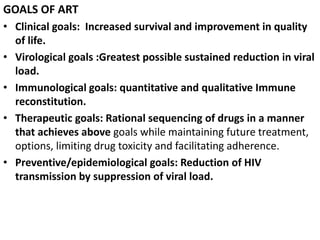
GOALS OF ART
• Clinical goals: Increased survival and improvement in quality
of life.
• Virological goals :Greatest possible sustained reduction in viral
load.
• Immunological goals: quantitative and qualitative Immune
reconstitution.
• Therapeutic goals: Rational sequencing of drugs in a manner
that achieves above goals while maintaining future treatment,
options, limiting drug toxicity and facilitating adherence.
• Preventive/epidemiological goals: Reduction of HIV
transmission by suppression of viral load.
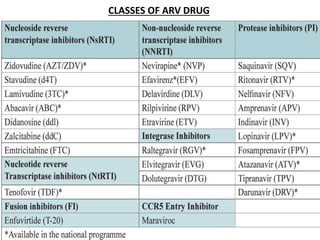
CLASSES OF ARV DRUG
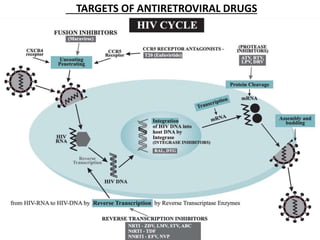
TARGETS OF ANTIRETROVIRAL DRUGS
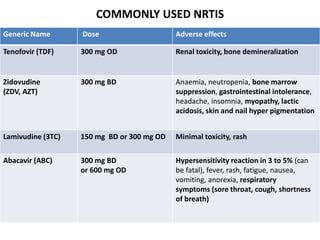
COMMONLY USED NRTIS
Generic Name Dose Adverse effects
Tenofovir (TDF) 300 mg OD Renal toxicity, bone demineralization
Zidovudine
(ZDV, AZT)
300 mg BD Anaemia, neutropenia, bone marrow
suppression, gastrointestinal intolerance,
headache, insomnia, myopathy, lactic
acidosis, skin and nail hyper pigmentation
Lamivudine (3TC) 150 mg BD or 300 mg OD Minimal toxicity, rash
Abacavir (ABC) 300 mg BD
or 600 mg OD
Hypersensitivity reaction in 3 to 5% (can
be fatal), fever, rash, fatigue, nausea,
vomiting, anorexia, respiratory
symptoms (sore throat, cough, shortness
of breath)
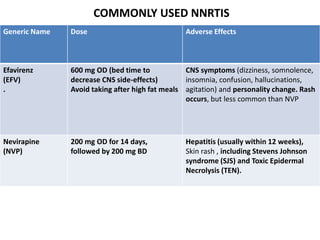
COMMONLY USED NNRTIS
Generic Name Dose Adverse Effects
Efavirenz
(EFV)
.
600 mg OD (bed time to
decrease CNS side-effects)
Avoid taking after high fat meals
CNS symptoms (dizziness, somnolence,
insomnia, confusion, hallucinations,
agitation) and personality change. Rash
occurs, but less common than NVP
Nevirapine
(NVP)
200 mg OD for 14 days,
followed by 200 mg BD
Hepatitis (usually within 12 weeks),
Skin rash , including Stevens Johnson
syndrome (SJS) and Toxic Epidermal
Necrolysis (TEN).
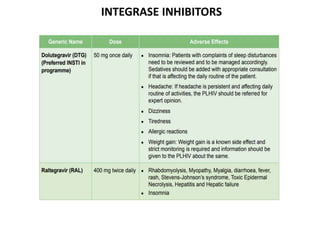
INTEGRASE INHIBITORS
PROTEASE INHIBITORS
Generic
Name
Dose Adverse Effects
Atazanavir/
ritonavir
(ATV/r)
300 mg Atazanavir + 100 mg
Ritonavir OD
Unconjugated hyperbilirubinaemia, lipid
abnormality, hyperglycaemia, fat
maldistribution, nephrolithiasis,
cholelithiasis, PR prolongation
Lopinavir /
ritonavir
(LPV/r)
Heat stable tablets 200 mg
Lopinavir/50mg Ritonavir Fixed
dose tablet 2 tablets BD
Diarrhoea, nausea, vomiting, abnormal
lipid profiles, glucose
intolerance
Darunavir
(DRV)
600 mg twice a day (when used
with Ritonavir 100 mg BD
Hepatotoxicity, skin rash (10%),
diarrhoea, nausea, headache,
hyperlipidemia, serum transaminase
elevation, hyperglycaemia
Ritonavir
(RTV)
100 mg BD gastrointestinal (diarrhoea, nausea,
vomiting, abdominal pain (upper and
lower), rarely neurological disturbances
(including paraesthesia)
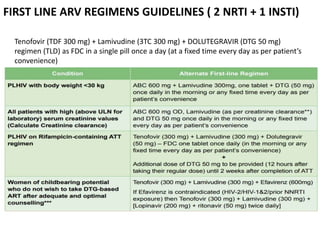
FIRST LINE ARV REGIMENS GUIDELINES ( 2 NRTI + 1 INSTI)
Tenofovir (TDF 300 mg) + Lamivudine (3TC 300 mg) + DOLUTEGRAVIR (DTG 50 mg)
regimen (TLD) as FDC in a single pill once a day (at a fixed time every day as per patient’s
convenience)
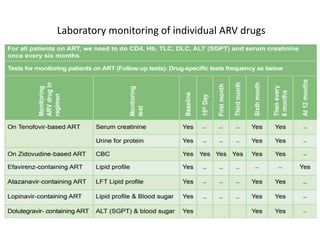
Laboratory monitoring of individual ARV drugs
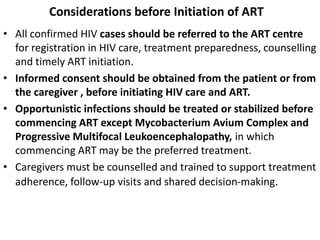
Considerations before Initiation of ART
• All confirmed HIV cases should be referred to the ART centre
for registration in HIV care, treatment preparedness, counselling
and timely ART initiation.
• Informed consent should be obtained from the patient or from
the caregiver , before initiating HIV care and ART.
• Opportunistic infections should be treated or stabilized before
commencing ART except Mycobacterium Avium Complex and
Progressive Multifocal Leukoencephalopathy, in which
commencing ART may be the preferred treatment.
• Caregivers must be counselled and trained to support treatment
adherence, follow-up visits and shared decision-making.
• INDICATION FOR STARTING OF ART
- Irrespective of CD4 cell count
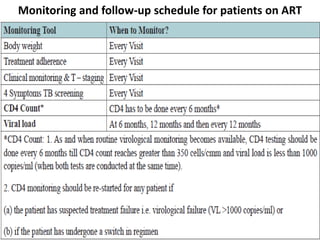
Monitoring and follow-up schedule for patients on ART
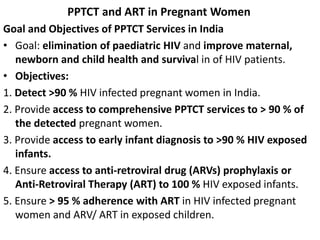
PPTCT and ART in Pregnant Women
Goal and Objectives of PPTCT Services in India
• Goal: elimination of paediatric HIV and improve maternal,
newborn and child health and survival in of HIV patients.
• Objectives:
1. Detect >90 % HIV infected pregnant women in India.
2. Provide access to comprehensive PPTCT services to > 90 % of
the detected pregnant women.
3. Provide access to early infant diagnosis to >90 % HIV exposed
infants.
4. Ensure access to anti-retroviral drug (ARVs) prophylaxis or
Anti-Retroviral Therapy (ART) to 100 % HIV exposed infants.
5. Ensure > 95 % adherence with ART in HIV infected pregnant
women and ARV/ ART in exposed children.
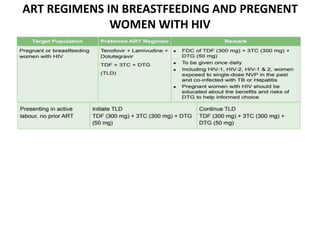
ART REGIMENS IN BREASTFEEDING AND PREGNENT
WOMEN WITH HIV
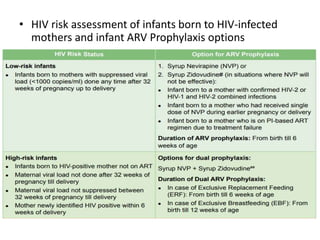
• HIV risk assessment of infants born to HIV-infected
mothers and infant ARV Prophylaxis options
INDICATIONS TO START ART IN CHILD
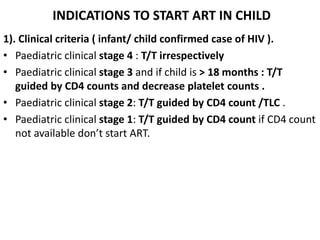
1). Clinical criteria ( infant/ child confirmed case of HIV ).
• Paediatric clinical stage 4 : T/T irrespectively
• Paediatric clinical stage 3 and if child is > 18 months : T/T
guided by CD4 counts and decrease platelet counts .
• Paediatric clinical stage 2: T/T guided by CD4 count /TLC .
• Paediatric clinical stage 1: T/T guided by CD4 count if CD4 count
not available don’t start ART.
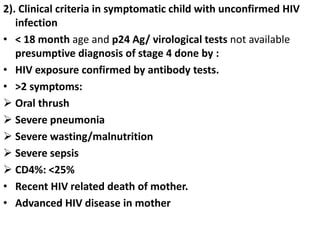
2). Clinical criteria in symptomatic child with unconfirmed HIV
infection
• < 18 month age and p24 Ag/ virological tests not available
presumptive diagnosis of stage 4 done by :
• HIV exposure confirmed by antibody tests.
• >2 symptoms:
 Oral thrush
 Severe pneumonia
 Severe wasting/malnutrition
 Severe sepsis
 CD4%: <25%
• Recent HIV related death of mother.
• Advanced HIV disease in mother
• First-line ART regimens for infants and children with
HIV-1 and HIV-2 infection
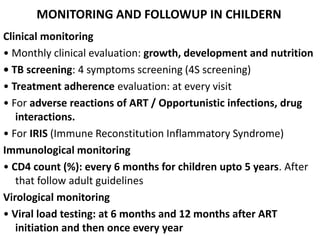
MONITORING AND FOLLOWUP IN CHILDERN
Clinical monitoring
• Monthly clinical evaluation: growth, development and nutrition
• TB screening: 4 symptoms screening (4S screening)
• Treatment adherence evaluation: at every visit
• For adverse reactions of ART / Opportunistic infections, drug
interactions.
• For IRIS (Immune Reconstitution Inflammatory Syndrome)
Immunological monitoring
• CD4 count (%): every 6 months for children upto 5 years. After
that follow adult guidelines
Virological monitoring
• Viral load testing: at 6 months and 12 months after ART
initiation and then once every year
ART IN TB PATIENTS ADULT
ART in relation to initiation of TB treatment
In HIV-TB co infected patients:
• Start ART regardless of the CD4 count
• Start ATT first, initiate ART as soon as TB treatment is tolerated
(between 2 weeks and 2 months).
• Modification of ART: In PLHIV who are already on ART at the
time of TB diagnosis, modification of ART needs to be done to
maintain optimal efficacy of ATT as well as ART.
• Efavirenz is the preferred drug, if Rifampicin used for TB
co-infection.
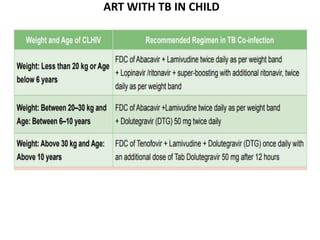
• In children aged < 3 years and in children weighing < 10 kg,
Super-boosted Lopinavir/ritonavir given instead of
efavirenz.
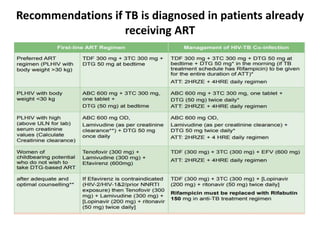
Recommendations if TB is diagnosed in patients already
receiving ART
ART WITH TB IN CHILD
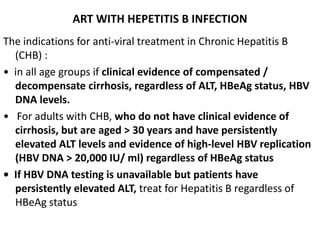
ART WITH HEPETITIS B INFECTION
The indications for anti-viral treatment in Chronic Hepatitis B
(CHB) :
• in all age groups if clinical evidence of compensated /
decompensate cirrhosis, regardless of ALT, HBeAg status, HBV
DNA levels.
• For adults with CHB, who do not have clinical evidence of
cirrhosis, but are aged > 30 years and have persistently
elevated ALT levels and evidence of high-level HBV replication
(HBV DNA > 20,000 IU/ ml) regardless of HBeAg status
• If HBV DNA testing is unavailable but patients have
persistently elevated ALT, treat for Hepatitis B regardless of
HBeAg status
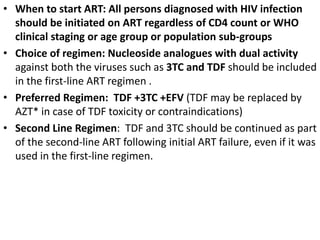
• When to start ART: All persons diagnosed with HIV infection
should be initiated on ART regardless of CD4 count or WHO
clinical staging or age group or population sub-groups
• Choice of regimen: Nucleoside analogues with dual activity
against both the viruses such as 3TC and TDF should be included
in the first-line ART regimen .
• Preferred Regimen: TDF +3TC +EFV (TDF may be replaced by
AZT* in case of TDF toxicity or contraindications)
• Second Line Regimen: TDF and 3TC should be continued as part
of the second-line ART following initial ART failure, even if it was
used in the first-line regimen.
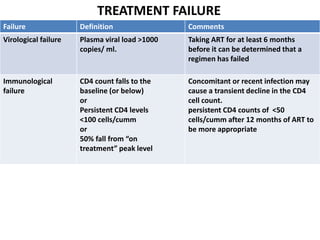
TREATMENT FAILURE
Failure Definition Comments
Virological failure Plasma viral load >1000
copies/ ml.
Taking ART for at least 6 months
before it can be determined that a
regimen has failed
Immunological
failure
CD4 count falls to the
baseline (or below)
or
Persistent CD4 levels
<100 cells/cumm
or
50% fall from “on
treatment” peak level
Concomitant or recent infection may
cause a transient decline in the CD4
cell count.
persistent CD4 counts of <50
cells/cumm after 12 months of ART to
be more appropriate
Failure Definition Comments
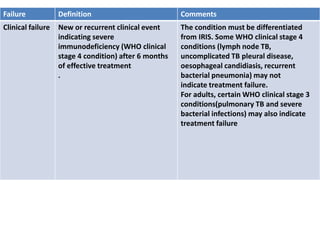
Clinical failure New or recurrent clinical event
indicating severe
immunodeficiency (WHO clinical
stage 4 condition) after 6 months
of effective treatment
.
The condition must be differentiated
from IRIS. Some WHO clinical stage 4
conditions (lymph node TB,
uncomplicated TB pleural disease,
oesophageal candidiasis, recurrent
bacterial pneumonia) may not
indicate treatment failure.
For adults, certain WHO clinical stage 3
conditions(pulmonary TB and severe
bacterial infections) may also indicate
treatment failure
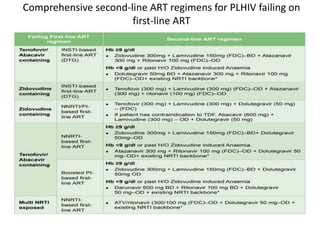
Comprehensive second-line ART regimens for PLHIV failing on
first-line ART
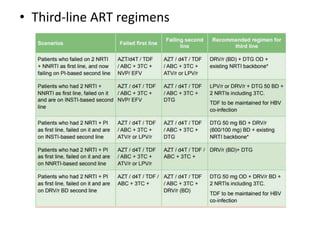
• Third-line ART regimens
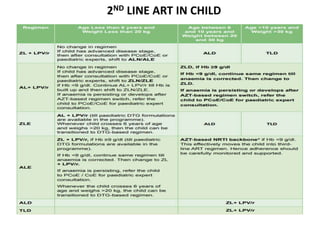
2ND LINE ART IN CHILD
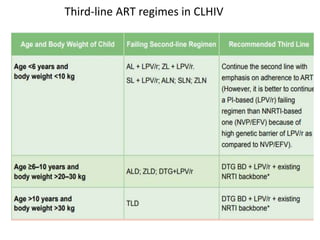
Third-line ART regimes in CLHIV
Immune reconstitution inflammatory
syndrome (IRIS)
• This is paradoxical worsening in clinical status
after ART initiation despite improved
immunity .
• It is an inflammatory response against
infectious agents which may or may not
diagnosed at time of starting ART .
• Occurs in pt’s with lower CD4 counts and rapid
decrease in viral load .
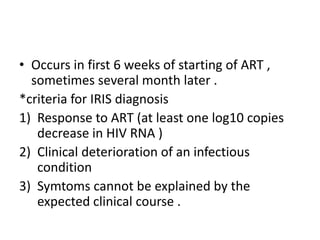
• Occurs in first 6 weeks of starting of ART ,
sometimes several month later .
*criteria for IRIS diagnosis
1) Response to ART (at least one log10 copies
decrease in HIV RNA )
2) Clinical deterioration of an infectious
condition
3) Symtoms cannot be explained by the
expected clinical course .
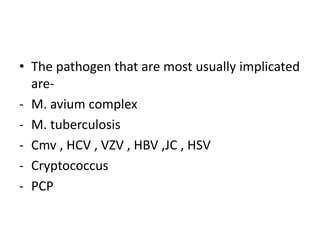
• The pathogen that are most usually implicated
are-
- M. avium complex
- M. tuberculosis
- Cmv , HCV , VZV , HBV ,JC , HSV
- Cryptococcus
- PCP
• LABORATORY FINDING –
- CD4 cell increase , viral load decrease
TREATMENT OF IRIS
1) First treat suspecting pathogen
2) Specfic agents – judicious use of NSAIDS ,
steroid
• THANK YOU

HIV TREATMENT PPT.pptx

  • 1.
    HAART IN TREATMENTOF HIV MODERATOR –Dr VIJAY PALIWAL SIR PRESENTED BY-Dr AATISH TAMTA
  • 2.
    HAART • HIGHLY ACTIVEANTIRETROVIRAL THERAPY • Introduce in 1990 to describe the effectiveness of combine drug therapies used to treat HIV. • Today the term HAART replaced by Combination antiretroviral therapy or simply ANTIRETROVIRAL THERAPY (ART).
  • 3.
    GOALS OF ART •Clinical goals: Increased survival and improvement in quality of life. • Virological goals :Greatest possible sustained reduction in viral load. • Immunological goals: quantitative and qualitative Immune reconstitution. • Therapeutic goals: Rational sequencing of drugs in a manner that achieves above goals while maintaining future treatment, options, limiting drug toxicity and facilitating adherence. • Preventive/epidemiological goals: Reduction of HIV transmission by suppression of viral load.
  • 4.
  • 5.
  • 6.
    COMMONLY USED NRTIS GenericName Dose Adverse effects Tenofovir (TDF) 300 mg OD Renal toxicity, bone demineralization Zidovudine (ZDV, AZT) 300 mg BD Anaemia, neutropenia, bone marrow suppression, gastrointestinal intolerance, headache, insomnia, myopathy, lactic acidosis, skin and nail hyper pigmentation Lamivudine (3TC) 150 mg BD or 300 mg OD Minimal toxicity, rash Abacavir (ABC) 300 mg BD or 600 mg OD Hypersensitivity reaction in 3 to 5% (can be fatal), fever, rash, fatigue, nausea, vomiting, anorexia, respiratory symptoms (sore throat, cough, shortness of breath)
  • 7.
    COMMONLY USED NNRTIS GenericName Dose Adverse Effects Efavirenz (EFV) . 600 mg OD (bed time to decrease CNS side-effects) Avoid taking after high fat meals CNS symptoms (dizziness, somnolence, insomnia, confusion, hallucinations, agitation) and personality change. Rash occurs, but less common than NVP Nevirapine (NVP) 200 mg OD for 14 days, followed by 200 mg BD Hepatitis (usually within 12 weeks), Skin rash , including Stevens Johnson syndrome (SJS) and Toxic Epidermal Necrolysis (TEN).
  • 8.
  • 9.
    PROTEASE INHIBITORS Generic Name Dose AdverseEffects Atazanavir/ ritonavir (ATV/r) 300 mg Atazanavir + 100 mg Ritonavir OD Unconjugated hyperbilirubinaemia, lipid abnormality, hyperglycaemia, fat maldistribution, nephrolithiasis, cholelithiasis, PR prolongation Lopinavir / ritonavir (LPV/r) Heat stable tablets 200 mg Lopinavir/50mg Ritonavir Fixed dose tablet 2 tablets BD Diarrhoea, nausea, vomiting, abnormal lipid profiles, glucose intolerance Darunavir (DRV) 600 mg twice a day (when used with Ritonavir 100 mg BD Hepatotoxicity, skin rash (10%), diarrhoea, nausea, headache, hyperlipidemia, serum transaminase elevation, hyperglycaemia Ritonavir (RTV) 100 mg BD gastrointestinal (diarrhoea, nausea, vomiting, abdominal pain (upper and lower), rarely neurological disturbances (including paraesthesia)
  • 10.
    FIRST LINE ARVREGIMENS GUIDELINES ( 2 NRTI + 1 INSTI) Tenofovir (TDF 300 mg) + Lamivudine (3TC 300 mg) + DOLUTEGRAVIR (DTG 50 mg) regimen (TLD) as FDC in a single pill once a day (at a fixed time every day as per patient’s convenience)
  • 11.
    Laboratory monitoring ofindividual ARV drugs
  • 12.
    Considerations before Initiationof ART • All confirmed HIV cases should be referred to the ART centre for registration in HIV care, treatment preparedness, counselling and timely ART initiation. • Informed consent should be obtained from the patient or from the caregiver , before initiating HIV care and ART. • Opportunistic infections should be treated or stabilized before commencing ART except Mycobacterium Avium Complex and Progressive Multifocal Leukoencephalopathy, in which commencing ART may be the preferred treatment. • Caregivers must be counselled and trained to support treatment adherence, follow-up visits and shared decision-making.
  • 13.
    • INDICATION FORSTARTING OF ART - Irrespective of CD4 cell count
  • 14.
    Monitoring and follow-upschedule for patients on ART
  • 15.
    PPTCT and ARTin Pregnant Women Goal and Objectives of PPTCT Services in India • Goal: elimination of paediatric HIV and improve maternal, newborn and child health and survival in of HIV patients. • Objectives: 1. Detect >90 % HIV infected pregnant women in India. 2. Provide access to comprehensive PPTCT services to > 90 % of the detected pregnant women. 3. Provide access to early infant diagnosis to >90 % HIV exposed infants. 4. Ensure access to anti-retroviral drug (ARVs) prophylaxis or Anti-Retroviral Therapy (ART) to 100 % HIV exposed infants. 5. Ensure > 95 % adherence with ART in HIV infected pregnant women and ARV/ ART in exposed children.
  • 16.
    ART REGIMENS INBREASTFEEDING AND PREGNENT WOMEN WITH HIV
  • 17.
    • HIV riskassessment of infants born to HIV-infected mothers and infant ARV Prophylaxis options
  • 18.
    INDICATIONS TO STARTART IN CHILD 1). Clinical criteria ( infant/ child confirmed case of HIV ). • Paediatric clinical stage 4 : T/T irrespectively • Paediatric clinical stage 3 and if child is > 18 months : T/T guided by CD4 counts and decrease platelet counts . • Paediatric clinical stage 2: T/T guided by CD4 count /TLC . • Paediatric clinical stage 1: T/T guided by CD4 count if CD4 count not available don’t start ART.
  • 19.
    2). Clinical criteriain symptomatic child with unconfirmed HIV infection • < 18 month age and p24 Ag/ virological tests not available presumptive diagnosis of stage 4 done by : • HIV exposure confirmed by antibody tests. • >2 symptoms:  Oral thrush  Severe pneumonia  Severe wasting/malnutrition  Severe sepsis  CD4%: <25% • Recent HIV related death of mother. • Advanced HIV disease in mother
  • 20.
    • First-line ARTregimens for infants and children with HIV-1 and HIV-2 infection
  • 21.
    MONITORING AND FOLLOWUPIN CHILDERN Clinical monitoring • Monthly clinical evaluation: growth, development and nutrition • TB screening: 4 symptoms screening (4S screening) • Treatment adherence evaluation: at every visit • For adverse reactions of ART / Opportunistic infections, drug interactions. • For IRIS (Immune Reconstitution Inflammatory Syndrome) Immunological monitoring • CD4 count (%): every 6 months for children upto 5 years. After that follow adult guidelines Virological monitoring • Viral load testing: at 6 months and 12 months after ART initiation and then once every year
  • 22.
    ART IN TBPATIENTS ADULT ART in relation to initiation of TB treatment In HIV-TB co infected patients: • Start ART regardless of the CD4 count • Start ATT first, initiate ART as soon as TB treatment is tolerated (between 2 weeks and 2 months). • Modification of ART: In PLHIV who are already on ART at the time of TB diagnosis, modification of ART needs to be done to maintain optimal efficacy of ATT as well as ART. • Efavirenz is the preferred drug, if Rifampicin used for TB co-infection. • In children aged < 3 years and in children weighing < 10 kg, Super-boosted Lopinavir/ritonavir given instead of efavirenz.
  • 23.
    Recommendations if TBis diagnosed in patients already receiving ART
  • 24.
    ART WITH TBIN CHILD
  • 25.
    ART WITH HEPETITISB INFECTION The indications for anti-viral treatment in Chronic Hepatitis B (CHB) : • in all age groups if clinical evidence of compensated / decompensate cirrhosis, regardless of ALT, HBeAg status, HBV DNA levels. • For adults with CHB, who do not have clinical evidence of cirrhosis, but are aged > 30 years and have persistently elevated ALT levels and evidence of high-level HBV replication (HBV DNA > 20,000 IU/ ml) regardless of HBeAg status • If HBV DNA testing is unavailable but patients have persistently elevated ALT, treat for Hepatitis B regardless of HBeAg status
  • 26.
    • When tostart ART: All persons diagnosed with HIV infection should be initiated on ART regardless of CD4 count or WHO clinical staging or age group or population sub-groups • Choice of regimen: Nucleoside analogues with dual activity against both the viruses such as 3TC and TDF should be included in the first-line ART regimen . • Preferred Regimen: TDF +3TC +EFV (TDF may be replaced by AZT* in case of TDF toxicity or contraindications) • Second Line Regimen: TDF and 3TC should be continued as part of the second-line ART following initial ART failure, even if it was used in the first-line regimen.
  • 27.
    TREATMENT FAILURE Failure DefinitionComments Virological failure Plasma viral load >1000 copies/ ml. Taking ART for at least 6 months before it can be determined that a regimen has failed Immunological failure CD4 count falls to the baseline (or below) or Persistent CD4 levels <100 cells/cumm or 50% fall from “on treatment” peak level Concomitant or recent infection may cause a transient decline in the CD4 cell count. persistent CD4 counts of <50 cells/cumm after 12 months of ART to be more appropriate
  • 28.
    Failure Definition Comments Clinicalfailure New or recurrent clinical event indicating severe immunodeficiency (WHO clinical stage 4 condition) after 6 months of effective treatment . The condition must be differentiated from IRIS. Some WHO clinical stage 4 conditions (lymph node TB, uncomplicated TB pleural disease, oesophageal candidiasis, recurrent bacterial pneumonia) may not indicate treatment failure. For adults, certain WHO clinical stage 3 conditions(pulmonary TB and severe bacterial infections) may also indicate treatment failure
  • 29.
    Comprehensive second-line ARTregimens for PLHIV failing on first-line ART
  • 30.
  • 31.
    2ND LINE ARTIN CHILD
  • 32.
  • 33.
    Immune reconstitution inflammatory syndrome(IRIS) • This is paradoxical worsening in clinical status after ART initiation despite improved immunity . • It is an inflammatory response against infectious agents which may or may not diagnosed at time of starting ART . • Occurs in pt’s with lower CD4 counts and rapid decrease in viral load .
  • 34.
    • Occurs infirst 6 weeks of starting of ART , sometimes several month later . *criteria for IRIS diagnosis 1) Response to ART (at least one log10 copies decrease in HIV RNA ) 2) Clinical deterioration of an infectious condition 3) Symtoms cannot be explained by the expected clinical course .
  • 35.
    • The pathogenthat are most usually implicated are- - M. avium complex - M. tuberculosis - Cmv , HCV , VZV , HBV ,JC , HSV - Cryptococcus - PCP
  • 36.
    • LABORATORY FINDING– - CD4 cell increase , viral load decrease TREATMENT OF IRIS 1) First treat suspecting pathogen 2) Specfic agents – judicious use of NSAIDS , steroid
  • 37.