









II, III.
GREEK AND HELLENISTIC
MATHEMATICS
FERDINAND AGDORO
MARDIE DIZON
NIÑA SORIANO
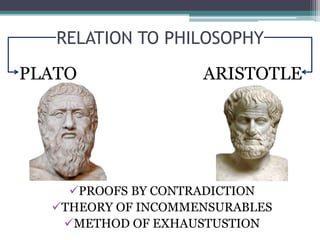
RELATION TO PHILOSOPHY
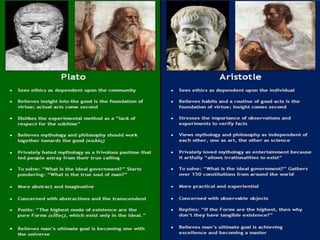
PLATO ARISTOTLE
PROOFS BY CONTRADICTION
THEORY OF INCOMMENSURABLES
METHOD OF EXHAUSTUSTION
LEARNING IS
FUN !
IT’S
BINGO TIME !
PL – PLATO
AR – ARISTOTLE
- TOPIC STAR
-FA’S STAR
-MD’S STAR
-NS’ STAR
1
CONGRATULATIONS!
GET READY !THE GAME BEGINS IN…
IT’S
BINGO TIME !
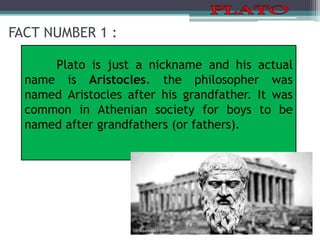
FACT NUMBER 1 :
Plato is just a nickname and his actual
name is Aristocles. the philosopher was
named Aristocles after his grandfather. It was
common in Athenian society for boys to be
named after grandfathers (or fathers).
FACT NUMBER 2 :
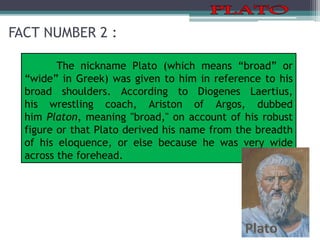
The nickname Plato (which means “broad” or
“wide” in Greek) was given to him in reference to his
broad shoulders. According to Diogenes Laertius,
his wrestling coach, Ariston of Argos, dubbed
him Platon, meaning "broad," on account of his robust
figure or that Plato derived his name from the breadth
of his eloquence, or else because he was very wide
across the forehead.
FACT NUMBER 3 :
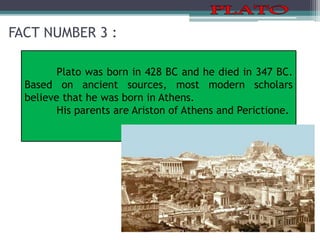
Plato was born in 428 BC and he died in 347 BC.
Based on ancient sources, most modern scholars
believe that he was born in Athens.
His parents are Ariston of Athens and Perictione.
FACT NUMBER 4 :
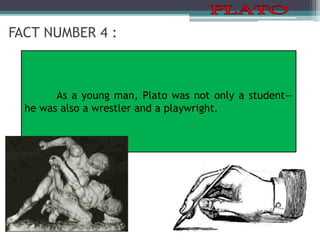
As a young man, Plato was not only a student—
he was also a wrestler and a playwright.
FACT NUMBER 5 :
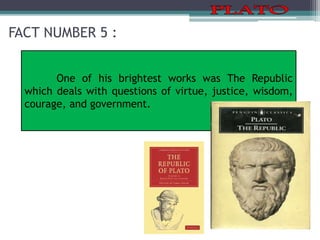
One of his brightest works was The Republic
which deals with questions of virtue, justice, wisdom,
courage, and government.
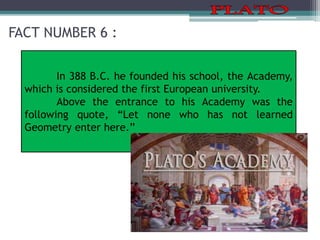
FACT NUMBER 6 :
In 388 B.C. he founded his school, the Academy,
which is considered the first European university.
Above the entrance to his Academy was the
following quote, “Let none who has not learned
Geometry enter here.”
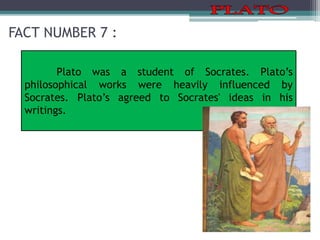
FACT NUMBER 7 :
Plato was a student of Socrates. Plato’s
philosophical works were heavily influenced by
Socrates. Plato’s agreed to Socrates' ideas in his
writings.
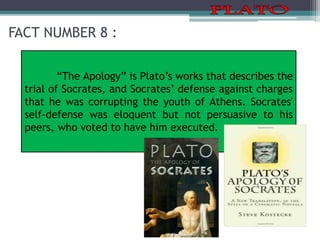
FACT NUMBER 8 :
“The Apology” is Plato’s works that describes the
trial of Socrates, and Socrates’ defense against charges
that he was corrupting the youth of Athens. Socrates'
self-defense was eloquent but not persuasive to his
peers, who voted to have him executed.
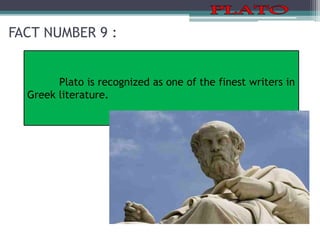
FACT NUMBER 9 :
Plato is recognized as one of the finest writers in
Greek literature.
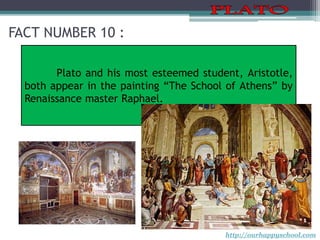
FACT NUMBER 10 :
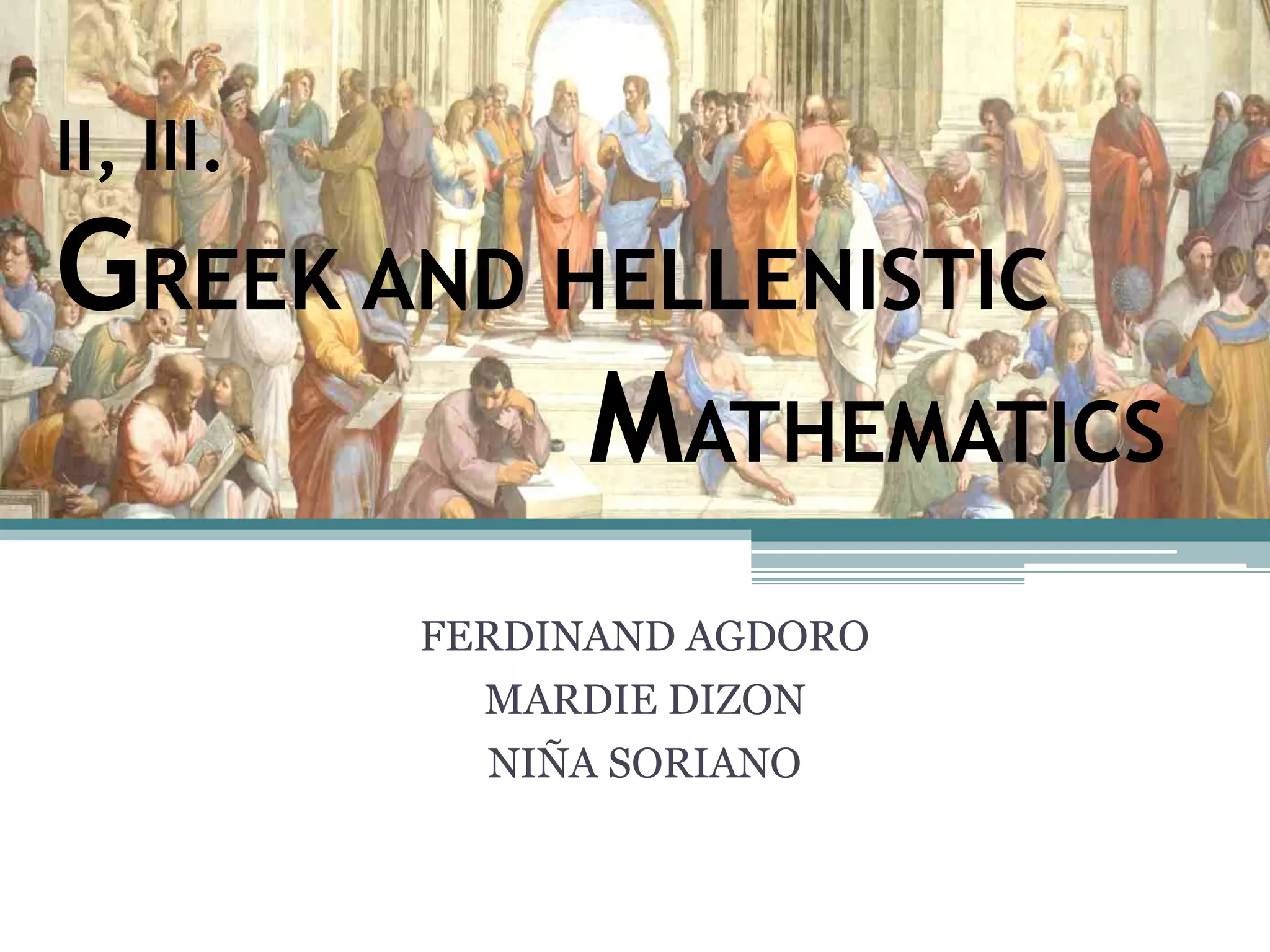
Plato and his most esteemed student, Aristotle,
both appear in the painting “The School of Athens” by
Renaissance master Raphael.
http://ourhappyschool.com
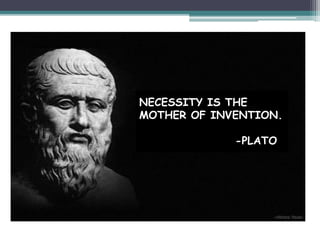
NECESSITY IS THE
MOTHER OF INVENTION.
-PLATO
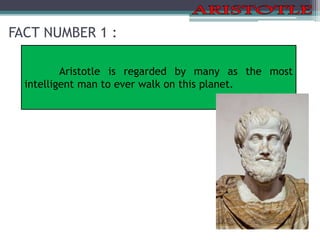
FACT NUMBER 1 :
Aristotle is regarded by many as the most
intelligent man to ever walk on this planet.
FACT NUMBER 2 :
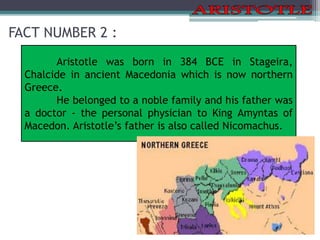
Aristotle was born in 384 BCE in Stageira,
Chalcide in ancient Macedonia which is now northern
Greece.
He belonged to a noble family and his father was
a doctor - the personal physician to King Amyntas of
Macedon. Aristotle’s father is also called Nicomachus.
FACT NUMBER 3 :
Aristotle married Pythias, adoptive daughter of
Hermias. She bore him a daughter, whom they also
named Pythias.
He had a son named Nicomachus who died in a
battle while still a lad. The Nicomachen Ethics, a
compilation of Aristotle’s lecture notes, was probably
dedicated and named after him.
When his wife Pythias died, Aristotle became
involved with Herpyllis, the mother of Nicomachus. She
was the former slave of Pythias.
FACT NUMBER 4 :
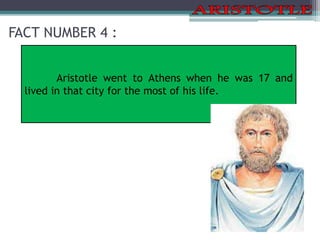
Aristotle went to Athens when he was 17 and
lived in that city for the most of his life.
FACT NUMBER 5 :
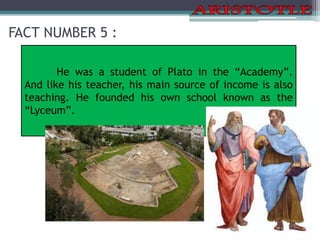
He was a student of Plato in the “Academy”.
And like his teacher, his main source of income is also
teaching. He founded his own school known as the
“Lyceum”.
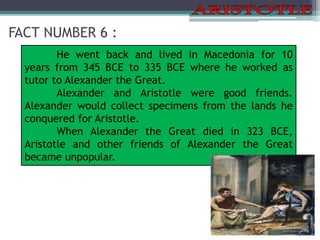
FACT NUMBER 6 :
He went back and lived in Macedonia for 10
years from 345 BCE to 335 BCE where he worked as
tutor to Alexander the Great.
Alexander and Aristotle were good friends.
Alexander would collect specimens from the lands he
conquered for Aristotle.
When Alexander the Great died in 323 BCE,
Aristotle and other friends of Alexander the Great
became unpopular.
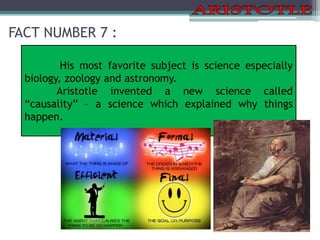
FACT NUMBER 7 :
His most favorite subject is science especially
biology, zoology and astronomy.
Aristotle invented a new science called
“causality” – a science which explained why things
happen.
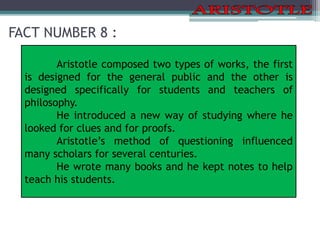
FACT NUMBER 8 :
Aristotle composed two types of works, the first
is designed for the general public and the other is
designed specifically for students and teachers of
philosophy.
He introduced a new way of studying where he
looked for clues and for proofs.
Aristotle’s method of questioning influenced
many scholars for several centuries.
He wrote many books and he kept notes to help
teach his students.
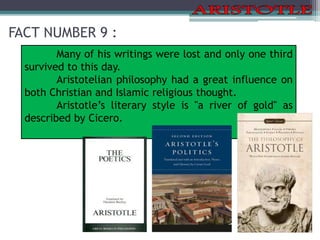
FACT NUMBER 9 :
Many of his writings were lost and only one third
survived to this day.
Aristotelian philosophy had a great influence on
both Christian and Islamic religious thought.
Aristotle’s literary style is "a river of gold" as
described by Cicero.
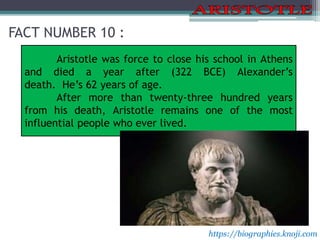
FACT NUMBER 10 :
Aristotle was force to close his school in Athens
and died a year after (322 BCE) Alexander’s
death. He’s 62 years of age.
After more than twenty-three hundred years
from his death, Aristotle remains one of the most
influential people who ever lived.
https://biographies.knoji.com
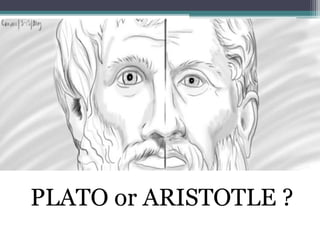
PLATO or ARISTOTLE ?
PROOFS BY CONTRADICTION
THEORY OF INCOMMENSURABLES
METHOD OF EXHAUSTION
QUESTIONS
THANK YOU!

Greek and hellenistic mathematics

  • 1.
    II, III. GREEK ANDHELLENISTIC MATHEMATICS FERDINAND AGDORO MARDIE DIZON NIÑA SORIANO
  • 2.
    RELATION TO PHILOSOPHY PLATOARISTOTLE PROOFS BY CONTRADICTION THEORY OF INCOMMENSURABLES METHOD OF EXHAUSTUSTION
  • 3.
  • 4.
  • 5.
    PL – PLATO AR– ARISTOTLE - TOPIC STAR -FA’S STAR -MD’S STAR -NS’ STAR
  • 6.
  • 7.
    GET READY !THEGAME BEGINS IN… IT’S BINGO TIME !
  • 9.
    FACT NUMBER 1: Plato is just a nickname and his actual name is Aristocles. the philosopher was named Aristocles after his grandfather. It was common in Athenian society for boys to be named after grandfathers (or fathers).
  • 10.
    FACT NUMBER 2: The nickname Plato (which means “broad” or “wide” in Greek) was given to him in reference to his broad shoulders. According to Diogenes Laertius, his wrestling coach, Ariston of Argos, dubbed him Platon, meaning "broad," on account of his robust figure or that Plato derived his name from the breadth of his eloquence, or else because he was very wide across the forehead.
  • 11.
    FACT NUMBER 3: Plato was born in 428 BC and he died in 347 BC. Based on ancient sources, most modern scholars believe that he was born in Athens. His parents are Ariston of Athens and Perictione.
  • 12.
    FACT NUMBER 4: As a young man, Plato was not only a student— he was also a wrestler and a playwright.
  • 13.
    FACT NUMBER 5: One of his brightest works was The Republic which deals with questions of virtue, justice, wisdom, courage, and government.
  • 14.
    FACT NUMBER 6: In 388 B.C. he founded his school, the Academy, which is considered the first European university. Above the entrance to his Academy was the following quote, “Let none who has not learned Geometry enter here.”
  • 15.
    FACT NUMBER 7: Plato was a student of Socrates. Plato’s philosophical works were heavily influenced by Socrates. Plato’s agreed to Socrates' ideas in his writings.
  • 16.
    FACT NUMBER 8: “The Apology” is Plato’s works that describes the trial of Socrates, and Socrates’ defense against charges that he was corrupting the youth of Athens. Socrates' self-defense was eloquent but not persuasive to his peers, who voted to have him executed.
  • 17.
    FACT NUMBER 9: Plato is recognized as one of the finest writers in Greek literature.
  • 18.
    FACT NUMBER 10: Plato and his most esteemed student, Aristotle, both appear in the painting “The School of Athens” by Renaissance master Raphael. http://ourhappyschool.com
  • 19.
    NECESSITY IS THE MOTHEROF INVENTION. -PLATO
  • 21.
    FACT NUMBER 1: Aristotle is regarded by many as the most intelligent man to ever walk on this planet.
  • 22.
    FACT NUMBER 2: Aristotle was born in 384 BCE in Stageira, Chalcide in ancient Macedonia which is now northern Greece. He belonged to a noble family and his father was a doctor - the personal physician to King Amyntas of Macedon. Aristotle’s father is also called Nicomachus.
  • 23.
    FACT NUMBER 3: Aristotle married Pythias, adoptive daughter of Hermias. She bore him a daughter, whom they also named Pythias. He had a son named Nicomachus who died in a battle while still a lad. The Nicomachen Ethics, a compilation of Aristotle’s lecture notes, was probably dedicated and named after him. When his wife Pythias died, Aristotle became involved with Herpyllis, the mother of Nicomachus. She was the former slave of Pythias.
  • 24.
    FACT NUMBER 4: Aristotle went to Athens when he was 17 and lived in that city for the most of his life.
  • 25.
    FACT NUMBER 5: He was a student of Plato in the “Academy”. And like his teacher, his main source of income is also teaching. He founded his own school known as the “Lyceum”.
  • 26.
    FACT NUMBER 6: He went back and lived in Macedonia for 10 years from 345 BCE to 335 BCE where he worked as tutor to Alexander the Great. Alexander and Aristotle were good friends. Alexander would collect specimens from the lands he conquered for Aristotle. When Alexander the Great died in 323 BCE, Aristotle and other friends of Alexander the Great became unpopular.
  • 27.
    FACT NUMBER 7: His most favorite subject is science especially biology, zoology and astronomy. Aristotle invented a new science called “causality” – a science which explained why things happen.
  • 28.
    FACT NUMBER 8: Aristotle composed two types of works, the first is designed for the general public and the other is designed specifically for students and teachers of philosophy. He introduced a new way of studying where he looked for clues and for proofs. Aristotle’s method of questioning influenced many scholars for several centuries. He wrote many books and he kept notes to help teach his students.
  • 29.
    FACT NUMBER 9: Many of his writings were lost and only one third survived to this day. Aristotelian philosophy had a great influence on both Christian and Islamic religious thought. Aristotle’s literary style is "a river of gold" as described by Cicero.
  • 30.
    FACT NUMBER 10: Aristotle was force to close his school in Athens and died a year after (322 BCE) Alexander’s death. He’s 62 years of age. After more than twenty-three hundred years from his death, Aristotle remains one of the most influential people who ever lived. https://biographies.knoji.com
  • 32.
  • 34.
  • 35.
  • 36.
  • 37.
  • 38.