The Integrated Approach
By: Emil Michael
What is the integrated
approach?
A teaching method that allows student to learn in
a way that is natural and learner-centered in a
learner-interest context. This type of approach
exists when a curriculum is created based on the
learners’ interests and is comfortable, fun and
flexible.
What is the Value of integration?
 Enhance learning
 Leaner-centred activities
 Real life contexts
 Encourage critical thinking
 Encourage problem-solving
Learning Approach for the
Effective Integration of ICT with
Curriculum








A re-assessment of the nature of the learning
process is required with greater emphasis being
placed on open-ended questions and information
skills. The following are expected:
Active learning – provide a platform for inquiry,
analysis and construction of new knowledge
Collaboration – encourages cooperation and
interaction among students, teachers and experts
Creativity- promotes the exploitation of existing
information to create real-world products
Integration between subjects – eliminates the
separation between disciplines
Expected Role of the Educator in
the Classroom

The role of the educator in the classroom is
expected to be that of manager / facilitator of
learning to allow for the learners to develop a
constructivist or resource-based learning strategy.
Towards Curriculum Integration
with ICT
 Conduct research to identify current resources





and best practices
Involve staff members in developing a plan
Conduct training sessions with staff to
demonstrate best practices
Pilot the implementation at a select grade level
while monitoring and assessment takes place
Adopt a school-wide implementation with
continual monitoring and evaluation to effect
improvement
Conclusion
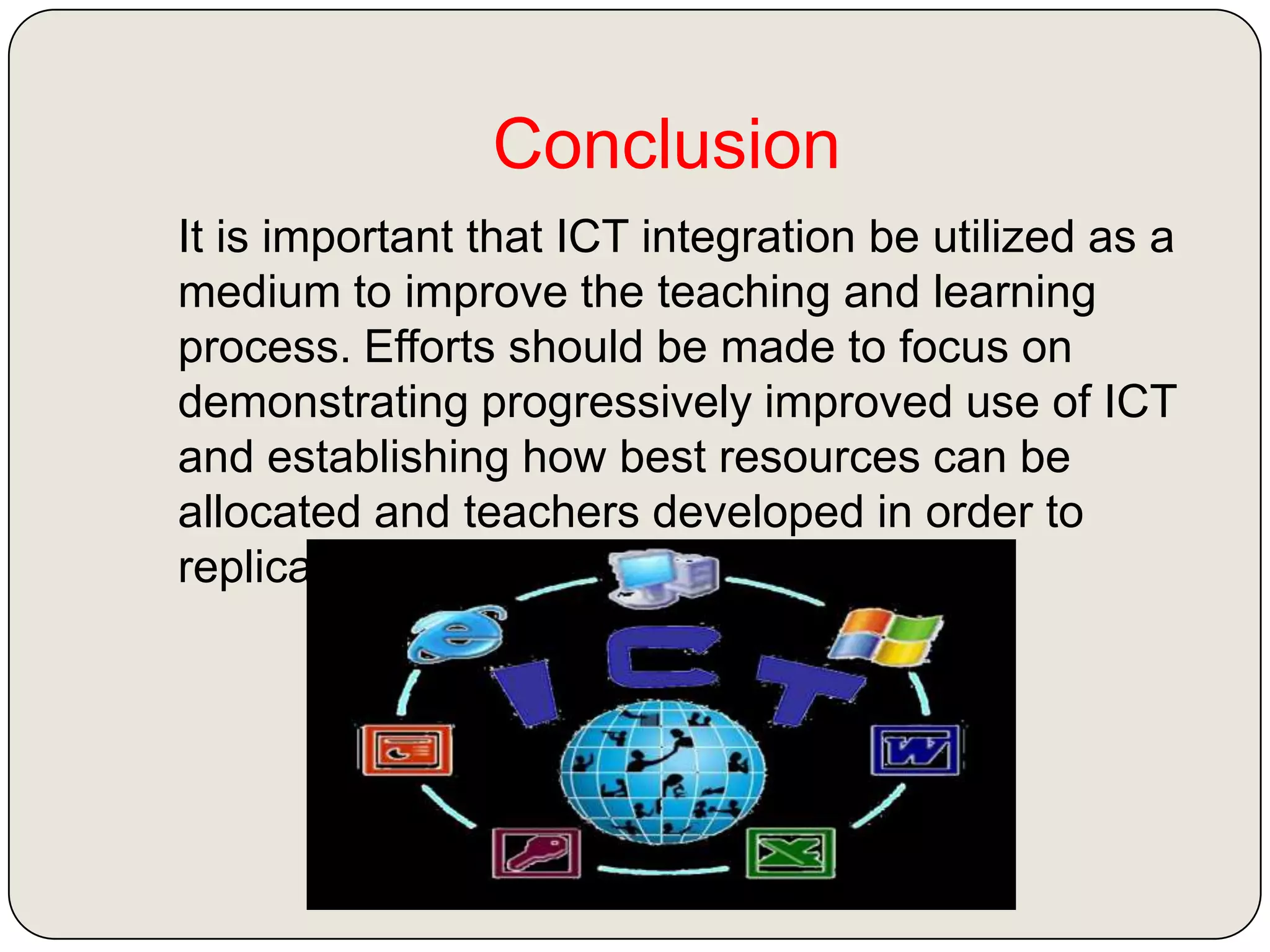
It is important that ICT integration be utilized as a
medium to improve the teaching and learning
process. Efforts should be made to focus on
demonstrating progressively improved use of ICT
and establishing how best resources can be
allocated and teachers developed in order to
replicate success

The integrated approach

  • 1.
  • 2.
    What is theintegrated approach? A teaching method that allows student to learn in a way that is natural and learner-centered in a learner-interest context. This type of approach exists when a curriculum is created based on the learners’ interests and is comfortable, fun and flexible.
  • 3.
    What is theValue of integration?  Enhance learning  Leaner-centred activities  Real life contexts  Encourage critical thinking  Encourage problem-solving
  • 4.
    Learning Approach forthe Effective Integration of ICT with Curriculum     A re-assessment of the nature of the learning process is required with greater emphasis being placed on open-ended questions and information skills. The following are expected: Active learning – provide a platform for inquiry, analysis and construction of new knowledge Collaboration – encourages cooperation and interaction among students, teachers and experts Creativity- promotes the exploitation of existing information to create real-world products Integration between subjects – eliminates the separation between disciplines
  • 5.
    Expected Role ofthe Educator in the Classroom The role of the educator in the classroom is expected to be that of manager / facilitator of learning to allow for the learners to develop a constructivist or resource-based learning strategy.
  • 6.
    Towards Curriculum Integration withICT  Conduct research to identify current resources     and best practices Involve staff members in developing a plan Conduct training sessions with staff to demonstrate best practices Pilot the implementation at a select grade level while monitoring and assessment takes place Adopt a school-wide implementation with continual monitoring and evaluation to effect improvement
  • 7.
    Conclusion It is importantthat ICT integration be utilized as a medium to improve the teaching and learning process. Efforts should be made to focus on demonstrating progressively improved use of ICT and establishing how best resources can be allocated and teachers developed in order to replicate success