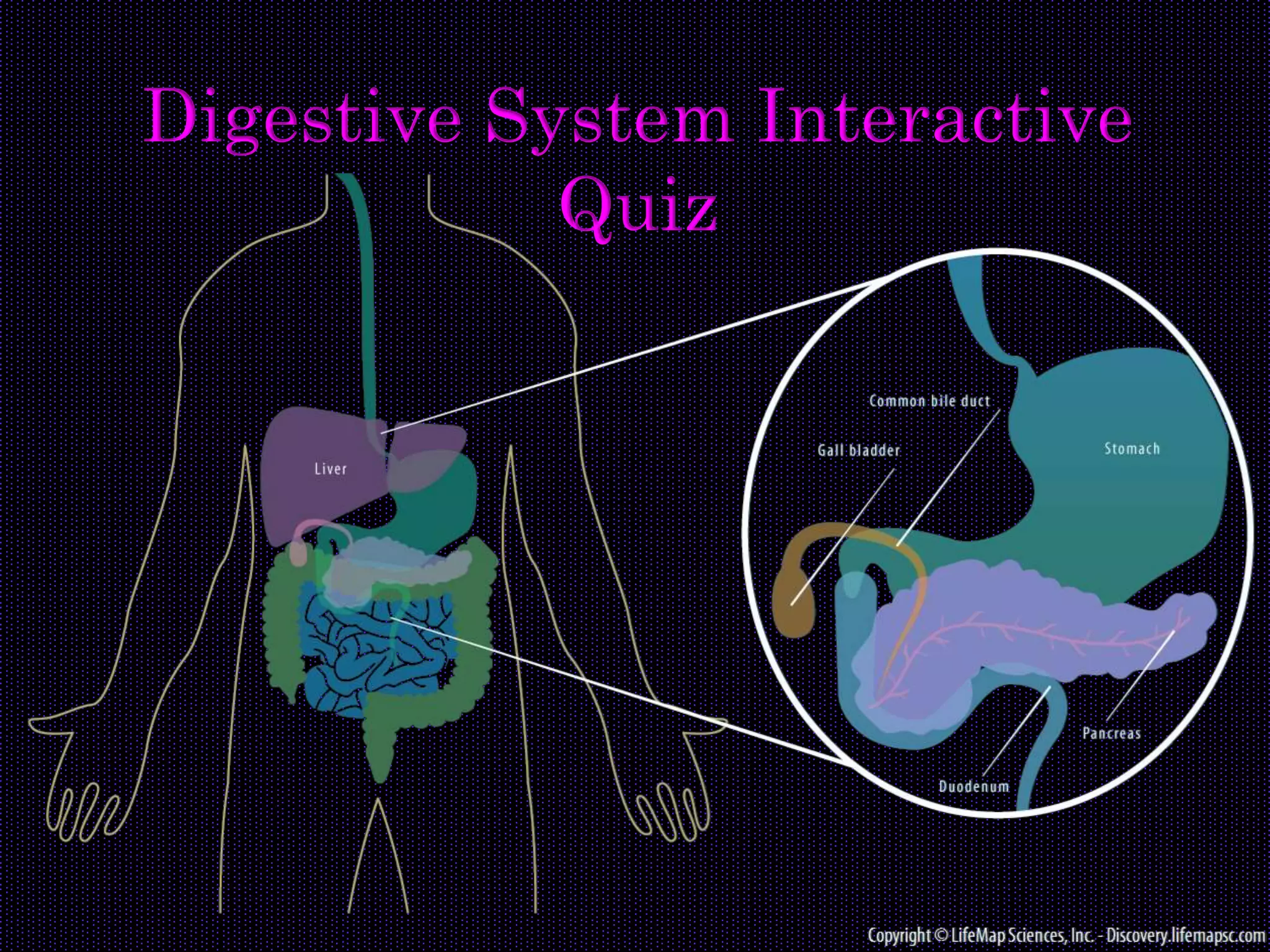
Digestive System Interactive
Quiz
EASY ROUND
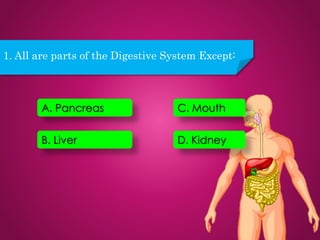
D. Kidney
C. Mouth
B. Liver
A. Pancreas
1. All are parts of the Digestive System Except:
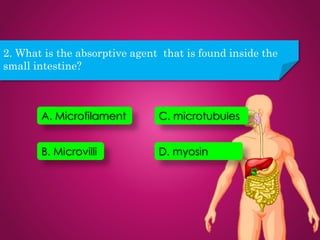
2. What is the absorptive agent that is found inside the
small intestine?
A. Microfilament
B. Microvilli
C. microtubules
D. myosin
3. All are essential activities in the Digestive System,
except:
A. Propulsion
B. Ingestion
C. depletion
D. defecation
4. Where does absorption end?
D. large intestine
A. anus
B. mouth
C. small intestine
5. Which organ system enables the breaking of food into
smaller fragments.
A. Circulatory System
B. Digestive System
C. Lymphatic System
D. Endocrine System
6. This is simply taking food into the digestive tract,
usually via the mouth.
D. ingestion
A. propulsion
B. peristalsis
C. mechanical breakdown
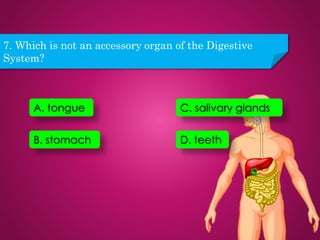
7. Which is not an accessory organ of the Digestive
System?
D. teeth
C. salivary glands
B. stomach
A. tongue
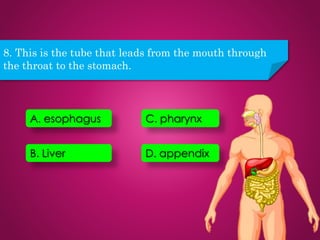
8. This is the tube that leads from the mouth through
the throat to the stomach.
D. appendix
C. pharynx
B. Liver
A. esophagus
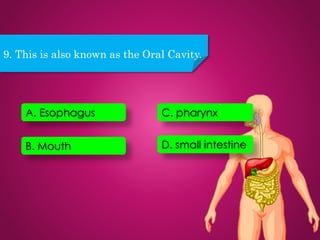
9. This is also known as the Oral Cavity.
D. small intestine
C. pharynx
B. Mouth
A. Esophagus
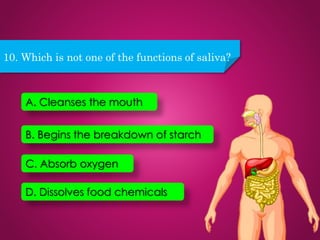
10. Which is not one of the functions of saliva?
D. Dissolves food chemicals
C. Absorb oxygen
B. Begins the breakdown of starch
A. Cleanses the mouth
AVERAGE ROUND 
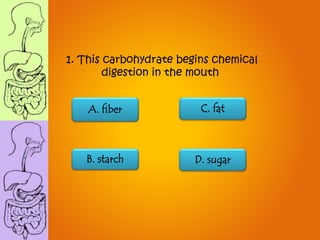
1. This carbohydrate begins chemical
digestion in the mouth
B. starch
C. fatA. fiber
D. sugar
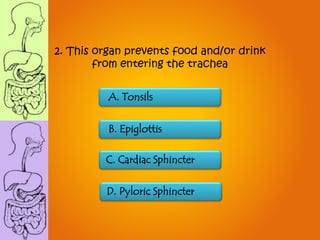
2. This organ prevents food and/or drink
from entering the trachea
C. Cardiac Sphincter
D. Pyloric Sphincter
B. Epiglottis
A. Tonsils
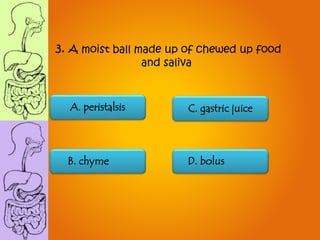
A. peristalsis C. gastric juice
D. bolusB. chyme
3. A moist ball made up of chewed up food
and saliva
A. fiber C. starch
B. sugar D. protein
4. One of the three basic foods types;
needed for building and repair of tissue
in the body. Found in beef, egg whites,
nuts, and pork.
B. chyme
A. bolus C. peristalsis
D. amylase
5. A pulpy mixture of food and gastric
juices. Produced in the stomach, from
which it passes into the small intestine.
A. Pyloric Sphincter
B. Esophageal Sphincter
D. Rectal Sphincter
C. Epiglottis Sphincter
6. The sphincter between the esophagus
and the stomach is the _____
A. benedicts
B. amylase
C. lugols
D. pepsin
7. An enzyme in the stomach that breaks
down protein.
A. heartburn
B. peristalsis D. chyme
C. an ulcer
8. A small hole in the lining of the
stomach, caused in spots where there is
no mucus and the gastric juice begins to
digest the stomach wall is called
B. fats
A. fiber
D. protein
C. vitamins
9. An indigestible carbohydrate such as
cellulose that stimulates peristalsis in the
intestine.
A. Lugols
B. gastric juice D. vitamins
C. Benedicts
10. A liquid that includes hydrochloric acid
and pepsin and that is responsible for the
chemical digestion of protein in the stomach.
DIFFICULT
ROUND
1.When we ingest large molecules such as
lipids, carbohydrates, and proteins, they
must undergo catabolic reactions whereby
enzymes split these molecules. This series
of reactions is called ________.
A) absorption
B) secretion
C) chemical
digestion
D) mechanical
digestion
A) muscularis externa, serosa, mucosa, and
submucosa
B) serosa, mucosa, submucosa, and
muscularis externa
C) submucosa, serosa, muscularis externa,
and mucosa
D) mucosa, submucosa, muscularis externa,
and serosa
2. From the esophagus to the anal canal, the
walls of every organ of the alimentary canal are
made up of the same four basic layers. Arrange
them in order from the lumen.
A) crown
B) enamel
C) pulp
D)
cementum
3. What part of the tooth bears the force of
chewing?
4.Which of the following is not true of
saliva?
A) cleanses the mouth
B) contains enzymes that begin the breakdown
of proteins
C) moistens food and aids in compacting of the
bolus
D) dissolves food chemicals so they can be
tasted
5.The salivary glands are composed of
which two types of secretory cells?
A) goblet cells and squamous epithelial
cells
B) parietal cells and glial cells
C) serous cells and mucous cells
D) cuboidal epithelium and ciliated
columnar cells
6. Chyme is created in the
________.
A) mouth
B) stomach
C) esophagus
D) small
intestine
7. Hydrochloric acid is secreted by which
of the secretory cells of the stomach?
A) chief cells
B) parietal
cells
C) serous cells
D) mucous neck
cells
8. Pepsinogen, a digestive enzyme, is
secreted by the ________.
A) chief cells of the stomach
B) parietal cells of the
duodenum
C) Brunner's glands
D) goblet cells of the small
intestine
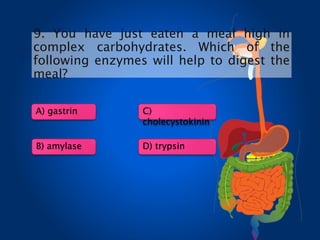
A) gastrin
D) trypsin
C)
cholecystokinin
B) amylase
9. You have just eaten a meal high in
complex carbohydrates. Which of the
following enzymes will help to digest the
meal?
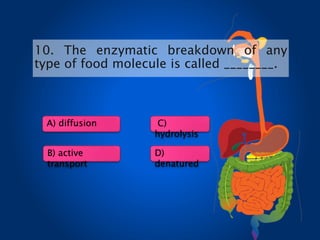
D)
denatured
C)
hydrolysis
B) active
transport
A) diffusion
10. The enzymatic breakdown of any
type of food molecule is called ________.
WELL DONE,
YOU’VE
FINISHED THE
GAME!
THANK YOU FOR
YOUR EFFORT!

Digestive System interactive game

  • 1.
  • 2.
  • 3.
    D. Kidney C. Mouth B.Liver A. Pancreas 1. All are parts of the Digestive System Except:
  • 4.
    2. What isthe absorptive agent that is found inside the small intestine? A. Microfilament B. Microvilli C. microtubules D. myosin
  • 5.
    3. All areessential activities in the Digestive System, except: A. Propulsion B. Ingestion C. depletion D. defecation
  • 6.
    4. Where doesabsorption end? D. large intestine A. anus B. mouth C. small intestine
  • 7.
    5. Which organsystem enables the breaking of food into smaller fragments. A. Circulatory System B. Digestive System C. Lymphatic System D. Endocrine System
  • 8.
    6. This issimply taking food into the digestive tract, usually via the mouth. D. ingestion A. propulsion B. peristalsis C. mechanical breakdown
  • 9.
    7. Which isnot an accessory organ of the Digestive System? D. teeth C. salivary glands B. stomach A. tongue
  • 10.
    8. This isthe tube that leads from the mouth through the throat to the stomach. D. appendix C. pharynx B. Liver A. esophagus
  • 11.
    9. This isalso known as the Oral Cavity. D. small intestine C. pharynx B. Mouth A. Esophagus
  • 12.
    10. Which isnot one of the functions of saliva? D. Dissolves food chemicals C. Absorb oxygen B. Begins the breakdown of starch A. Cleanses the mouth
  • 13.
  • 14.
    1. This carbohydratebegins chemical digestion in the mouth B. starch C. fatA. fiber D. sugar
  • 15.
    2. This organprevents food and/or drink from entering the trachea C. Cardiac Sphincter D. Pyloric Sphincter B. Epiglottis A. Tonsils
  • 16.
    A. peristalsis C.gastric juice D. bolusB. chyme 3. A moist ball made up of chewed up food and saliva
  • 17.
    A. fiber C.starch B. sugar D. protein 4. One of the three basic foods types; needed for building and repair of tissue in the body. Found in beef, egg whites, nuts, and pork.
  • 18.
    B. chyme A. bolusC. peristalsis D. amylase 5. A pulpy mixture of food and gastric juices. Produced in the stomach, from which it passes into the small intestine.
  • 19.
    A. Pyloric Sphincter B.Esophageal Sphincter D. Rectal Sphincter C. Epiglottis Sphincter 6. The sphincter between the esophagus and the stomach is the _____
  • 20.
    A. benedicts B. amylase C.lugols D. pepsin 7. An enzyme in the stomach that breaks down protein.
  • 21.
    A. heartburn B. peristalsisD. chyme C. an ulcer 8. A small hole in the lining of the stomach, caused in spots where there is no mucus and the gastric juice begins to digest the stomach wall is called
  • 22.
    B. fats A. fiber D.protein C. vitamins 9. An indigestible carbohydrate such as cellulose that stimulates peristalsis in the intestine.
  • 23.
    A. Lugols B. gastricjuice D. vitamins C. Benedicts 10. A liquid that includes hydrochloric acid and pepsin and that is responsible for the chemical digestion of protein in the stomach.
  • 24.
  • 25.
    1.When we ingestlarge molecules such as lipids, carbohydrates, and proteins, they must undergo catabolic reactions whereby enzymes split these molecules. This series of reactions is called ________. A) absorption B) secretion C) chemical digestion D) mechanical digestion
  • 26.
    A) muscularis externa,serosa, mucosa, and submucosa B) serosa, mucosa, submucosa, and muscularis externa C) submucosa, serosa, muscularis externa, and mucosa D) mucosa, submucosa, muscularis externa, and serosa 2. From the esophagus to the anal canal, the walls of every organ of the alimentary canal are made up of the same four basic layers. Arrange them in order from the lumen.
  • 27.
    A) crown B) enamel C)pulp D) cementum 3. What part of the tooth bears the force of chewing?
  • 28.
    4.Which of thefollowing is not true of saliva? A) cleanses the mouth B) contains enzymes that begin the breakdown of proteins C) moistens food and aids in compacting of the bolus D) dissolves food chemicals so they can be tasted
  • 29.
    5.The salivary glandsare composed of which two types of secretory cells? A) goblet cells and squamous epithelial cells B) parietal cells and glial cells C) serous cells and mucous cells D) cuboidal epithelium and ciliated columnar cells
  • 30.
    6. Chyme iscreated in the ________. A) mouth B) stomach C) esophagus D) small intestine
  • 31.
    7. Hydrochloric acidis secreted by which of the secretory cells of the stomach? A) chief cells B) parietal cells C) serous cells D) mucous neck cells
  • 32.
    8. Pepsinogen, adigestive enzyme, is secreted by the ________. A) chief cells of the stomach B) parietal cells of the duodenum C) Brunner's glands D) goblet cells of the small intestine
  • 33.
    A) gastrin D) trypsin C) cholecystokinin B)amylase 9. You have just eaten a meal high in complex carbohydrates. Which of the following enzymes will help to digest the meal?
  • 34.
    D) denatured C) hydrolysis B) active transport A) diffusion 10.The enzymatic breakdown of any type of food molecule is called ________.
  • 35.