 All living organisms respond to environmental stimuli.
 Animals have nervous system and endocrine system for
control and coordination.
 Plants also respond to stimuli by secreting chemicals.
 Plants exhibit some movements.
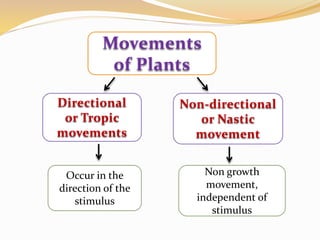
Movements
of Plants
Directional
or Tropic
movements
Non-directional
or Nastic
movement
Occur in the
direction of the
stimulus
Non growth
movement,
independent of
stimulus
 The movements do not
depend on the direction
from the stimulus acts.
 Example - when someone
touches the leaves of
mimosa, the leaves begin to
fold up and droop.
Leaves before touching Leaves after touching
 The drooping of Mimosa leaves
is independent of the direction
from which the leaves are
touched.
 Such movements usually
happen due to change of water
balance in the cells.
 When leaves of mimosa are
touched, the cells in the leaves
lose water and become flaccid
which results drooping of
leaves.
 Plants respond to stimuli
slowly by growing in a
particular direction.
 Example - Plants like the
pumpkin, cucumber etc.
plant climb up fences by
means of tendrils.
Types of Trophic movements
Phototropism (light)
Geotropism (gravity)
Hydrotropism (water )
Chemotropism (chemicals)
Thigmotropism (touch)
 Phototropism is the growth
of plants in response to light.
 Positive phototropism –
Shoots respond by bending
towards light.
 Negative phototropism -
Roots respond by bending
away from light.
Phototropism
Response of the plant to
the direction of light
Geotropism
 Geotropism is the
movement of a plant in
response to gravity (either
downwards or upwards).
 Positive geotropism – Roots
grow towards the ground
 Negative geotropism -
Shoots by growing away
from the ground.
Plant showing Geotropism
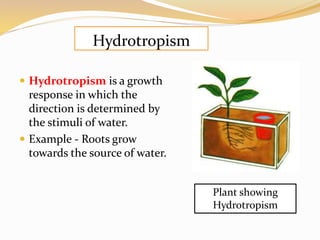
Hydrotropism
 Hydrotropism is a growth
response in which the
direction is determined by
the stimuli of water.
 Example - Roots grow
towards the source of water.
Plant showing
Hydrotropism
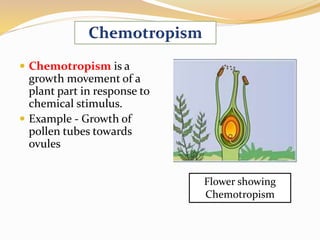
 Chemotropism is a
growth movement of a
plant part in response to
chemical stimulus.
 Example - Growth of
pollen tubes towards
ovules
Flower showing
Chemotropism
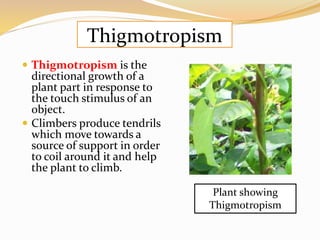
 Thigmotropism is the
directional growth of a
plant part in response to
the touch stimulus of an
object.
 Climbers produce tendrils
which move towards a
source of support in order
to coil around it and help
the plant to climb.
Thigmotropism
Plant showing
Thigmotropism
 Plants hormones, also called Phytohormones, are
chemicals produced within the plant in a low
concentrations and diffuse all around the cell.
 Phytohormones regulate plant growth,
development and response to the environment.
Types of Phytohormones
Auxins
Gibberellins
Cytokinins
Abscisic acid
Ethylene
 Auxins are synthesised by the growing apices of the stem
and root.
 It promotes cell elongation and growth of stem and root.
 It causes apical dominance.
 It induces rooting on stem cutting.
 Gibberellins are hormones that help in the growth of
the stem, seed germination, bolting, and flowering.
 It induces parthenocarpy.
 It’s application overcomes the genetic dwarfism.
 It breaks up the dormancy of seeds.
Cytokinins are hormones present in the areas of rapid
cell division, such as fruits and seeds.
 It promotes cell division and cell enlargement.
 It promotes the germination of seeds.
Abscisic acid is a hormone that inhibits the growth in
various parts of plants.
 It inhibits cell growth and cell division.
 It causes dormancy of buds and seeds.
 It induces wilting of leaves and closure of stomata.
Ethylene is a gaseous plant growth regulator.
 It plays role in ripening of fruits.

Coordination in plants

  • 2.
     All livingorganisms respond to environmental stimuli.  Animals have nervous system and endocrine system for control and coordination.  Plants also respond to stimuli by secreting chemicals.  Plants exhibit some movements.
  • 3.
    Movements of Plants Directional or Tropic movements Non-directional orNastic movement Occur in the direction of the stimulus Non growth movement, independent of stimulus
  • 4.
     The movementsdo not depend on the direction from the stimulus acts.  Example - when someone touches the leaves of mimosa, the leaves begin to fold up and droop.
  • 5.
    Leaves before touchingLeaves after touching
  • 6.
     The droopingof Mimosa leaves is independent of the direction from which the leaves are touched.  Such movements usually happen due to change of water balance in the cells.  When leaves of mimosa are touched, the cells in the leaves lose water and become flaccid which results drooping of leaves.
  • 7.
     Plants respondto stimuli slowly by growing in a particular direction.  Example - Plants like the pumpkin, cucumber etc. plant climb up fences by means of tendrils.
  • 8.
    Types of Trophicmovements Phototropism (light) Geotropism (gravity) Hydrotropism (water ) Chemotropism (chemicals) Thigmotropism (touch)
  • 9.
     Phototropism isthe growth of plants in response to light.  Positive phototropism – Shoots respond by bending towards light.  Negative phototropism - Roots respond by bending away from light. Phototropism Response of the plant to the direction of light
  • 10.
    Geotropism  Geotropism isthe movement of a plant in response to gravity (either downwards or upwards).  Positive geotropism – Roots grow towards the ground  Negative geotropism - Shoots by growing away from the ground. Plant showing Geotropism
  • 11.
    Hydrotropism  Hydrotropism isa growth response in which the direction is determined by the stimuli of water.  Example - Roots grow towards the source of water. Plant showing Hydrotropism
  • 12.
     Chemotropism isa growth movement of a plant part in response to chemical stimulus.  Example - Growth of pollen tubes towards ovules Flower showing Chemotropism
  • 13.
     Thigmotropism isthe directional growth of a plant part in response to the touch stimulus of an object.  Climbers produce tendrils which move towards a source of support in order to coil around it and help the plant to climb. Thigmotropism Plant showing Thigmotropism
  • 14.
     Plants hormones,also called Phytohormones, are chemicals produced within the plant in a low concentrations and diffuse all around the cell.  Phytohormones regulate plant growth, development and response to the environment.
  • 15.
  • 16.
     Auxins aresynthesised by the growing apices of the stem and root.  It promotes cell elongation and growth of stem and root.  It causes apical dominance.  It induces rooting on stem cutting.  Gibberellins are hormones that help in the growth of the stem, seed germination, bolting, and flowering.  It induces parthenocarpy.  It’s application overcomes the genetic dwarfism.  It breaks up the dormancy of seeds.
  • 17.
    Cytokinins are hormonespresent in the areas of rapid cell division, such as fruits and seeds.  It promotes cell division and cell enlargement.  It promotes the germination of seeds. Abscisic acid is a hormone that inhibits the growth in various parts of plants.  It inhibits cell growth and cell division.  It causes dormancy of buds and seeds.  It induces wilting of leaves and closure of stomata. Ethylene is a gaseous plant growth regulator.  It plays role in ripening of fruits.