Dr. Shilpa Soni
MGMCH
 medial horizontal gp of
Inferior vena
superficial
cava
inguinal LN
 Superficial Inguinal LN

- Penile skin

- Scrotal skin

 Deep inguinal LN
- Anterior male urethra & glans

penis

- Vulva
- Vagina, lower third

- Uterus, lower part
- isthmus of fallopian tube

 Sacral LN
- Vulva
- Cervix
 Iliac LN

 Pre & para aortic group of LN

- Posterior urethra

- Testes & epididymis

- Vulva

- Uterus, upper part

- Upper third & middle third vagina

- Ovaries

- Cervix

- Fallopian tubes

- Prostate

- Cervix
Urethritis
Inflammation of the urethra.

Discharge +/- dysuria or may be
asymptomatic.
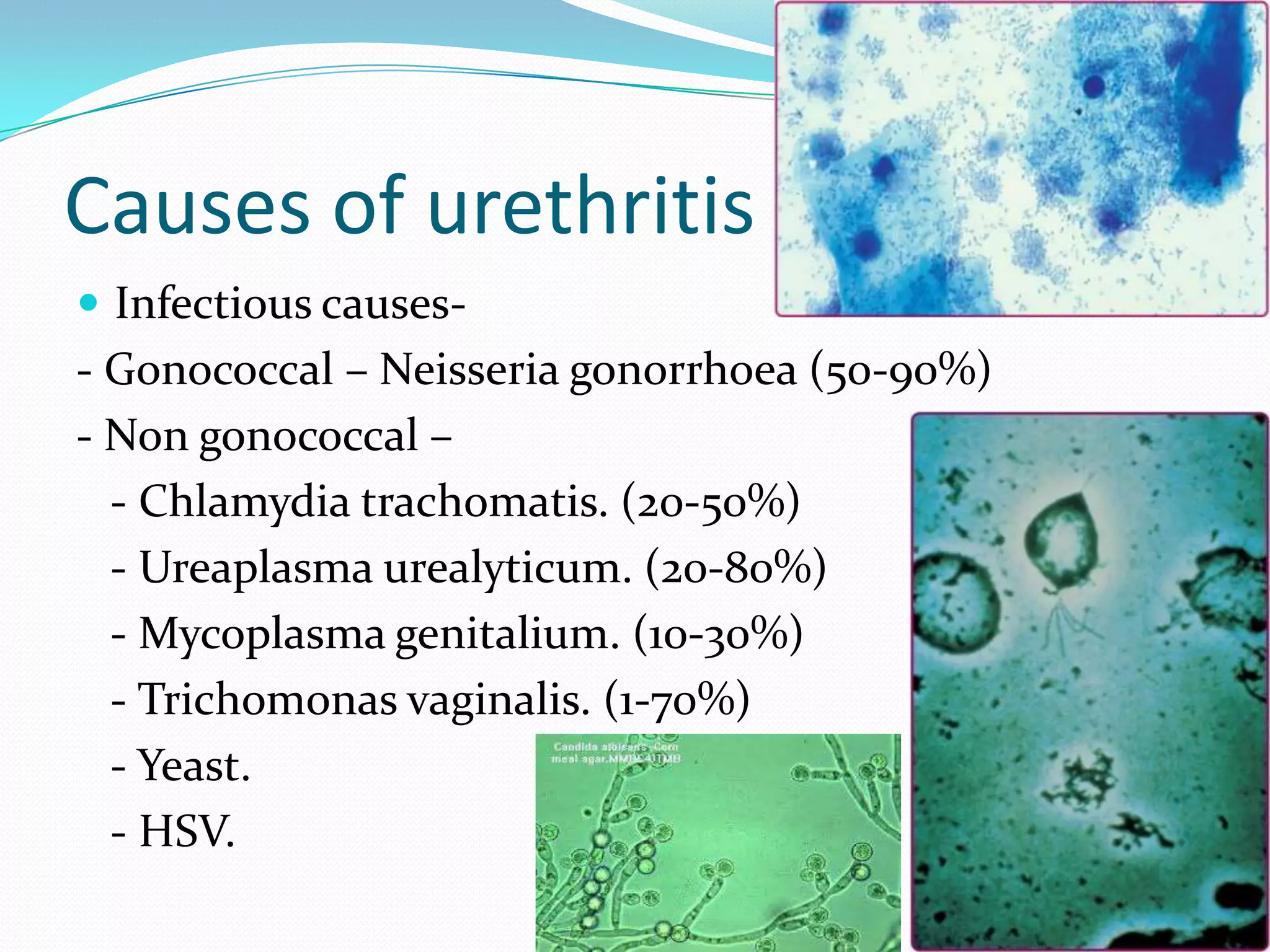
Causes of urethritis
 Infectious causes-

- Gonococcal – Neisseria gonorrhoea (50-90%)
- Non gonococcal –
- Chlamydia trachomatis. (20-50%)
- Ureaplasma urealyticum. (20-80%)
- Mycoplasma genitalium. (10-30%)
- Trichomonas vaginalis. (1-70%)
- Yeast.
- HSV.
 Non Infectious Causes

- Trauma
- Urethral stricture.
- Catheterization.
- Chemical irritants.
- Dehydration.
Gonococcal Urethritis
1.

N gonorrhoea – gram negative, non motile, non spore
forming diplococci.

2.

Oxidase positive

3.

Ferments glucose

4. PPNG – penicillinase produc-

- ing N. gonorrhoea: cefotaxime,

ceftriaxone, ciprofloxacin, tetrac-ycline can be used.
 N gonorrhoea – present predominantly intracellularly

in the polymorphonuclear leucocytes (PMN).
 Penetrates columnar epithelium.
 Structure –

- capsule – polyphosphate
- trilaminar membrane
– outer membrane – type 1 protein (por) - A
&B
- type 2 protein(Opa pro)
- RMP protein
- peptidoglycan – muramic acid & N-acetyl
glucosamine.
- cytoplasmic membrane – penicillin binding proteins.
- Pili - filaments
 Strains

- Pathogenic strains – N. gonorrhoea
- N. meningitidis
- Non pathogenic strains – N. catarrhalis
- N. pharyngis sicca
- N. lactamica
- N. subflava
Clinical features :
 Affects urethra in both sexes.
 Transmission – sexual contact

 Incubation period – 2-5 days
 Intense burning sensation.
 Fever & malaise.
 In men anterior urethritis is more common.

 Discharge – profuse, purulent & yellowish

green.
 15% males – mild or asymptomatic.


Complications –

- Posterior urethritis
- Epididymitis
- Acute or chronic prostatitis
- Untreated – periurethral abscess & watercan

perineum.
 In females – 90% infection
 50% of infected females are

asymptomatic.
 Primary site - endocervical canal
 Symptoms of urethritis includes - Discharge - scanty, mucopurulent cervical discharge.
- Vaginal pruritus
- Dysuria
 Proctitis through autoinoculation from cervical

discharge or as a result of direct contact from an
infected partner’s penile secretions.



Complications in femalesPID
Tubo ovarian abscess
Subsequent ectopic pregnancies
Chronic pelvic pain
Infertility
Fitz-Hugh-Curtis syndrome – inflammation of liver
capsule associated with genitourinary tract infection.
Present in upto ¼ of women with PID caused either by
N. gonorrhoea or C. trachomatis.
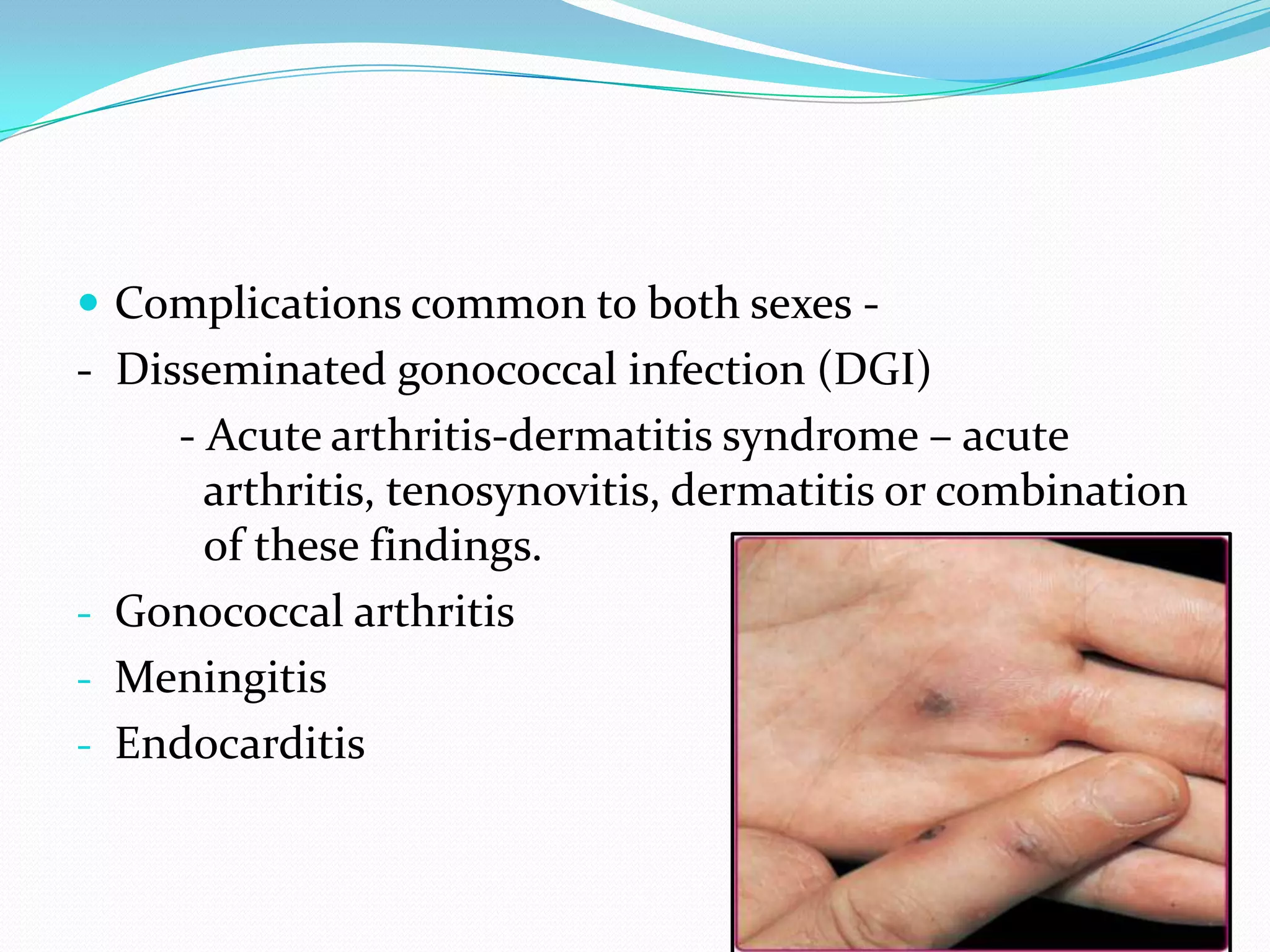
 Complications common to both sexes -

- Disseminated gonococcal infection (DGI)
- Acute arthritis-dermatitis syndrome – acute
arthritis, tenosynovitis, dermatitis or combination
of these findings.
- Gonococcal arthritis
- Meningitis
- Endocarditis
 Laboratory diagnosis –
- Microscopy – gram staining
- gram negative

diplococci
 Culture – thayer martin medium

- chacko nayer medium
- martin lewis media
- new york city media
 PCR
 DNA hybridisation
 ELISA
 The complement fixation

 Latex agglutination immunofluoroscence & anti

surface pili assays
 Radioimmunossay
 Immunoblotting

-

Treatment – uncomplicated gonorrhoea
Cefixime 400 mg stat or
Ceftriaxone 125 mg stat IM or
Ciprofloxacin 500 mg stat or
Ofloxacin 400 mg stat or
Levofloxacin 250 mg stat
+
If chlamydia infection is not ruled out
- Azithromycin 1 gm stat or
- Doxycycline 100 gm BD for 7 days.
 Treatment – DGI
- Ceftriaxone 1 gm IM or IV every 24 hrs or
- Cefotaxime 1 gm IV every 8 hrly or

- Ciprofloxacin 400 gm IV every 12 hrs or
- Ofloxacin 400 gm IV every 12 hrs or
- Levofloxacin 250 gm IV daily. or
- Spectinomycin 2 gm IV every 12 hrly.
Non
gonococcal
urethritis
CHLAMYDIA TRACHOMATIS
 C. trachomatis – gram negative obligate intracellular micro

organism that preferentially infect squamo-coloumnar
epithelium.
 Based on monoclonal antibody assay – 18 serological

variants.
- A, B, Ba & C – trachoma.
- D-K – genital tract infections.
- L1 – L3 – LGV
 Two functional & morphological forms- Elementary body – infectious but metabolically inert.
- Reticulate body – metabolically active but non

infectious.
 The intracellular bacteria rapidly modify their

membrane bound compartment into chlamydial
inclusion to prevent the phagosome lysosome fusion.
 Clinical features –
- Incubation period – 1 - 3 weeks.
- Low grade urethritis with scanty or moderate mucoid

or mucopurulent urethral discharge & variable dysuria.
- Subclinical urethritis are also common.
 In men- Sites of infection are – urethra.

- epididymis.
- systemic.
- Clinical syndrome – urethritis, post gonococcal

urethritis & Reiter’s disease.
 Urethritis –
- Dysuria with mild to moderate whitish or clear

urethral discharge.
- On examination – focal urethral tenderness

- meatal or penile lesions may mimic

herpetic urethritis.
 Epididymitis – recurrent infections
- Unilateral scrotal pain, Swelling & Tenderness.
- Fever
- Urethritis may often be assymptomatic & evident only

as urethral inflammation.
 Prostatitis –
- Ususaly asymptomatic or may
- Presents with discomfort on passing urine & vague

pain in perineum, groins, thighs, penis, suprapubic
region or back.
- Painful ejaculation.
 Proctitis – repetitive anal intercourse or by lymphatic

spread from posterior urethra.
- Rectal pain
- Discharge - mucopurrulent
- Bleeding
 Reiter’s syndrome – urethritis

- conjuctivitis
- arthritis
- characteristic mucocutaneous lesions as well
as psoriasis such as circinate balanitis &
keratoderma blenorrhagicum.
Reactive arthritis is RF seronegative, HLA-B27 linked arthritis

often precipitated by genitourinary or gastro intestinal infections
usually after 2-3 weks of infection.
 Organisms associated with Reiter’s syndrome are
- N. gonorrhoea
- C. trachomatis
- U. urealyticum

- Salmonella
- Shigella
- Campylobacter
 Treatment – antibiotics, NSAIDS, sulfasalazine, corticosteroids &

immunosupressants.
 In women –
- Cevicitis – mucopurulent cervical discharge

- cervical erythema & edema with an area of
ectopy
- spontaneous or easily induced cervical
bleeding
- Urethritis – dysuria
- frequency
- pyuria
- Bartholoinitis
- Endometritis – abnormal vaginal bleeding

- menorrhagia
- metrorrhagia
- PID – lower abdominal pain
- adenexal tenderness on pelvic examination
- MPC often present
- Perihepatitis (Fitz-Hugh-Curtis Syndrome)
 Lab diagnosis
Clinical syndrome Clinical criteria
- male

Presumptive
criteria

Diagnostic
criteria

NGU

Dysuria, urethral
discharge

Gram stian - > 5
PMNL/hpf
Pyuria on first void
urine

Positive culture

Acute epididymitis

Fever, epididymal
or testicular pain,
evidence of NGU
Epididymal
tenderness or mass.

- do -

Positive culture or
non culture test on
epididymal
aspirate.
Clinical
syndrome

Clinical criteria

Presumptive
criteria

Diagnostic
criteria

Mucopurulent
cervicitis

Mucopurulent
cervicitis discharge
Cervical ectopy &
edema,
spontaneous or
easily induced
cervical bleeding

Cervical gram
staining > 30
PMNL/hpf in non
menstruating
women

Positive culture or
non culture test.

Acute urethral
syndrome

Dysuria, frequency Pyuria
syndrome > 7 days No bacteria
of symptom

PID

Lower abdominal
pain, adenexal
tenderness on
pelvic examination
evidence of MPC
often present

Cervical
gramstaining
positive for
gonococcus,
endometritis on
endometrial
biopsy

- do Positive culture or
non culture test
(cervix first void
urine,
endometrium,
tubal)
 Antigen detection – DFA

- enzyme linked immunosorbant
assay

- monoclonal or polyclonal Ab
against chlamydial
lipopolysacharide (LPS) or MOMP
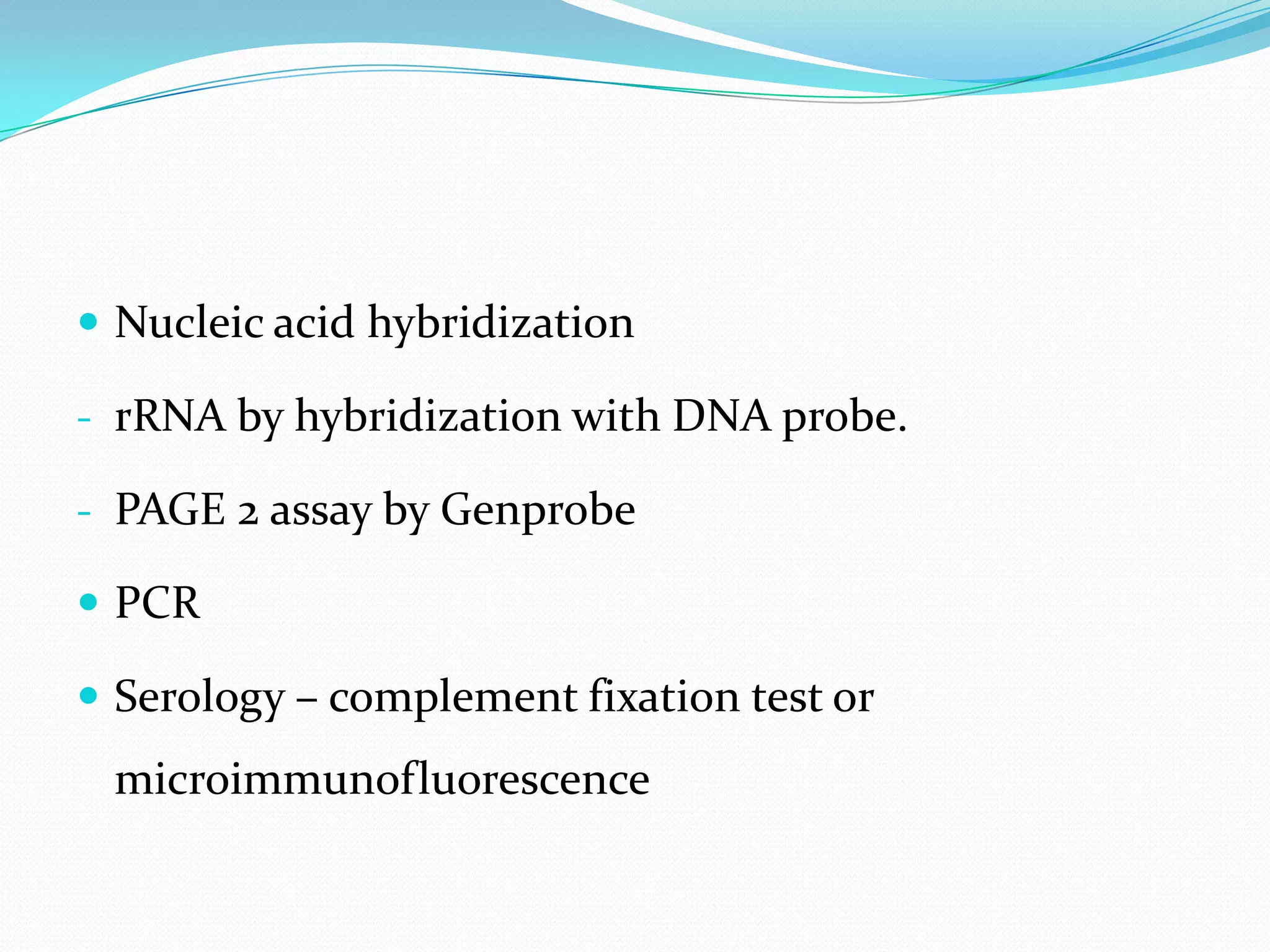
 Nucleic acid hybridization
- rRNA by hybridization with DNA probe.
- PAGE 2 assay by Genprobe
 PCR
 Serology – complement fixation test or

microimmunofluorescence
 Treatment

- Recommended
Doxycycline 100 mg BD for 47 days or
Azithromycin 1 gm stat
- Alternative
Amoxycillin 500 mg TDS for 7 days or
Erythromycin 500 mg QID for 7 days or Erythromycin
ethylsuccinate 800 mg QID for 7 days or
Ofloxacin 300 mg BD for 7 days or
Tetracycline 500 mg QID for 7 days
Chlamydial infection in pregnancy


In antenatal period -

1.

Spontaneous abortion

2. Neonatal conjunctivitis
3. Low birth baby
4. Prematurity & preterm delivery
 Postnatal infection
1.

Neonatal conjunctivitis

2. Ophthalmia neonatorum
3. Pneumonia
4. Chronic lung or eye disease
Neonatal conjuctivitis
 Commonlly starts within 21 days of birth.
 Accounts for 5-15% of conjunctivitis in new borns
 Clinical features – intense redness & swelling of

conjunctiva
- profuse purulent discharge
 Complication – corneal perforation

- scarring
- blindness
Treatment

Infection during
pregnancy

Neonatal
chlamydial
conjunctivitis

Infantile
pneumonia

Recommended
regimine

Erythromycin 500
mg QID for 7 days
or
Amoxycillin 500
mg TDS for 7 days
or
Azithromycin 1 gm
stat.

Syp erythromycin
50 mg /kg /day in
4 divided doses for
14 days

Syp erythromycin
50 mg/ kg/ day
orally in 4 divided
doses for 14 days

Alternative
regimine

Erythromycin base
500 mg QID for 7
days or 250 mg
QID for 14 days
or
Erythromycin
ethylsuccinate 800
mg QID for 7 days
or 400 mg QID for
14 days.

Trimethoprim
40mg with
sulfamethoxazole
200 mg orally BD
for 14 days.
Ureoplasma urealyticum
 Causes non specific urethritis.
 Transmitted by sexual contact.
 In males causes – urethritis, proctitis & Reiter’s syndrome

 In females causes – acute salphingitis, PID, cervicitis &

vaginitis.
- Also been associated with infertility, abortions, postpartum
fever & low birth baby.
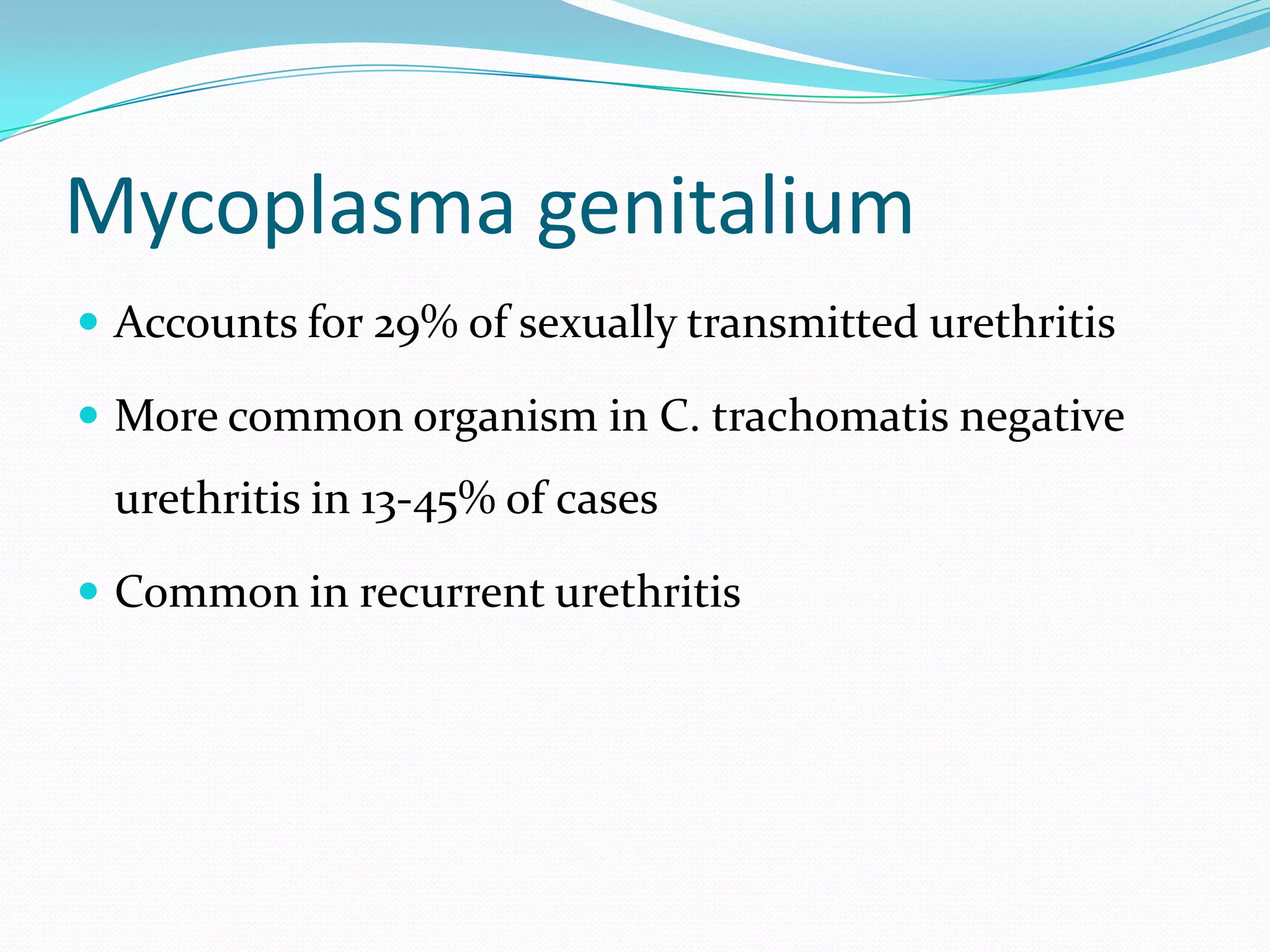
Mycoplasma genitalium
 Accounts for 29% of sexually transmitted urethritis
 More common organism in C. trachomatis negative

urethritis in 13-45% of cases
 Common in recurrent urethritis
Bacterial vaginosis
 G. vaginalis & M. hominis
 Vaginal discharge
 Ecaluation of sex partner is also necessary.
Traetment of NGU
 Tab Azithromycin 1 gm stat

or
Tab Doxycycline 100 gm BD for 10 daysA
Complications of urethritis
 Chronic recurrent UTIs
 Trigonitis in females
 Stricture urethra
Newer modality in Treatment of
recurrent urethritis
 Tab TRACFREE – 600 mg BD for 3 months

- CRANE BERRY fruit extract which prevents the

bacterial invasion in the urothelium.
Herpes genitalis





HSV 1 & HSV 2
Incubation period 5-14 days
Symptoms – painful lesions
Fever, headache, myalgias & malaise
Grouped vesicles
pustules
ulcers.
Diagnosis- tzanck’s smear, histopathology, viral
culture,serology & PCR.
 Treatment – acyclovir 400 mg TDS for 7-10 days/
valacyclovir 1 gm BD for 7-10 days/ famcyclovir 250 mg
BD for 7-10 days
 Recurrent episodes –

- Acyclovir 400 mg TDS for 5 days or 800 mg BD for 5
days or 800 mg TDS for 2 days.
- Famcyclovir 125 mg BD for 5 days or 1000 mg BD for 1
days.

- Valacyclovir 1 gm BD for 5 days or 500 mg BD for 3 day.
Syndromic approach
Urethral Discharge
History / Examine
Milk urethra

Discharge present

No

Yes
Treat for Gonorrhoea &
Chlamydia &
trichomoniasis

ECCV, Partner treatment, Follow up

other STI?

No

Yes
Use appropriate flow chart

ECCV
Treatment of Urethral Discharge
Treat patient for both Gonorrhoea
and Chlamydia infection.
The Regime:
Azithromycin 1G orally as a single
dose (to treat chlamydial infection)
PLUS
Cefexime 400 mg orally, single dose
under supervision (to treat
gonococcal infection)

Kit one Gray
Treatment of VD- Cervicitis
Treat patient for both Gonorrhoea
and Chlamydia infection.
The Regime:
Azithromycin 1G orally as a single
dose (to treat chlamydial infection)
PLUS
Cefexime 400 mg orally, single dose
under supervision (to treat
gonococcal infection)

Kit one Gray
Treatment for Vaginal Discharge
Vaginitis.
Recommended regimen
Scenidazole 2 G orally, single dose, under
supervision ( to treat trichomoniasis and bacterial
vaginosis).

Plus
Fluconazole 150 mg orally, single dose (to treat
candidiasis).
NOTE: Patients taking Metronidazole or Tinidazole should be
cautioned to avoid taking alcohol while on these drugs up to
24-48 hrs.

Kit one Gray

Kit two Green
Thank you

Urethritis

  • 1.
  • 4.
     medial horizontalgp of Inferior vena superficial cava inguinal LN
  • 5.
     Superficial InguinalLN - Penile skin - Scrotal skin  Deep inguinal LN - Anterior male urethra & glans penis - Vulva - Vagina, lower third - Uterus, lower part - isthmus of fallopian tube  Sacral LN - Vulva - Cervix
  • 6.
     Iliac LN Pre & para aortic group of LN - Posterior urethra - Testes & epididymis - Vulva - Uterus, upper part - Upper third & middle third vagina - Ovaries - Cervix - Fallopian tubes - Prostate - Cervix
  • 7.
    Urethritis Inflammation of theurethra. Discharge +/- dysuria or may be asymptomatic.
  • 8.
    Causes of urethritis Infectious causes- - Gonococcal – Neisseria gonorrhoea (50-90%) - Non gonococcal – - Chlamydia trachomatis. (20-50%) - Ureaplasma urealyticum. (20-80%) - Mycoplasma genitalium. (10-30%) - Trichomonas vaginalis. (1-70%) - Yeast. - HSV.
  • 9.
     Non InfectiousCauses - Trauma - Urethral stricture. - Catheterization. - Chemical irritants. - Dehydration.
  • 10.
    Gonococcal Urethritis 1. N gonorrhoea– gram negative, non motile, non spore forming diplococci. 2. Oxidase positive 3. Ferments glucose 4. PPNG – penicillinase produc- - ing N. gonorrhoea: cefotaxime, ceftriaxone, ciprofloxacin, tetrac-ycline can be used.
  • 11.
     N gonorrhoea– present predominantly intracellularly in the polymorphonuclear leucocytes (PMN).  Penetrates columnar epithelium.
  • 12.
     Structure – -capsule – polyphosphate - trilaminar membrane – outer membrane – type 1 protein (por) - A &B - type 2 protein(Opa pro) - RMP protein - peptidoglycan – muramic acid & N-acetyl glucosamine. - cytoplasmic membrane – penicillin binding proteins. - Pili - filaments
  • 13.
     Strains - Pathogenicstrains – N. gonorrhoea - N. meningitidis - Non pathogenic strains – N. catarrhalis - N. pharyngis sicca - N. lactamica - N. subflava
  • 14.
    Clinical features : Affects urethra in both sexes.  Transmission – sexual contact  Incubation period – 2-5 days  Intense burning sensation.  Fever & malaise.
  • 15.
     In menanterior urethritis is more common.  Discharge – profuse, purulent & yellowish green.  15% males – mild or asymptomatic.
  • 16.
     Complications – - Posteriorurethritis - Epididymitis - Acute or chronic prostatitis - Untreated – periurethral abscess & watercan perineum.
  • 17.
     In females– 90% infection  50% of infected females are asymptomatic.  Primary site - endocervical canal  Symptoms of urethritis includes - Discharge - scanty, mucopurulent cervical discharge. - Vaginal pruritus - Dysuria
  • 18.
     Proctitis throughautoinoculation from cervical discharge or as a result of direct contact from an infected partner’s penile secretions.
  • 19.
      Complications in femalesPID Tuboovarian abscess Subsequent ectopic pregnancies Chronic pelvic pain Infertility Fitz-Hugh-Curtis syndrome – inflammation of liver capsule associated with genitourinary tract infection. Present in upto ¼ of women with PID caused either by N. gonorrhoea or C. trachomatis.
  • 20.
     Complications commonto both sexes - - Disseminated gonococcal infection (DGI) - Acute arthritis-dermatitis syndrome – acute arthritis, tenosynovitis, dermatitis or combination of these findings. - Gonococcal arthritis - Meningitis - Endocarditis
  • 21.
     Laboratory diagnosis– - Microscopy – gram staining - gram negative diplococci
  • 22.
     Culture –thayer martin medium - chacko nayer medium - martin lewis media - new york city media
  • 23.
     PCR  DNAhybridisation  ELISA  The complement fixation  Latex agglutination immunofluoroscence & anti surface pili assays  Radioimmunossay  Immunoblotting
  • 24.
     - Treatment – uncomplicatedgonorrhoea Cefixime 400 mg stat or Ceftriaxone 125 mg stat IM or Ciprofloxacin 500 mg stat or Ofloxacin 400 mg stat or Levofloxacin 250 mg stat + If chlamydia infection is not ruled out - Azithromycin 1 gm stat or - Doxycycline 100 gm BD for 7 days.
  • 25.
     Treatment –DGI - Ceftriaxone 1 gm IM or IV every 24 hrs or - Cefotaxime 1 gm IV every 8 hrly or - Ciprofloxacin 400 gm IV every 12 hrs or - Ofloxacin 400 gm IV every 12 hrs or - Levofloxacin 250 gm IV daily. or - Spectinomycin 2 gm IV every 12 hrly.
  • 26.
  • 27.
    CHLAMYDIA TRACHOMATIS  C.trachomatis – gram negative obligate intracellular micro organism that preferentially infect squamo-coloumnar epithelium.  Based on monoclonal antibody assay – 18 serological variants. - A, B, Ba & C – trachoma. - D-K – genital tract infections. - L1 – L3 – LGV
  • 28.
     Two functional& morphological forms- Elementary body – infectious but metabolically inert. - Reticulate body – metabolically active but non infectious.  The intracellular bacteria rapidly modify their membrane bound compartment into chlamydial inclusion to prevent the phagosome lysosome fusion.
  • 29.
     Clinical features– - Incubation period – 1 - 3 weeks. - Low grade urethritis with scanty or moderate mucoid or mucopurulent urethral discharge & variable dysuria. - Subclinical urethritis are also common.
  • 30.
     In men-Sites of infection are – urethra. - epididymis. - systemic. - Clinical syndrome – urethritis, post gonococcal urethritis & Reiter’s disease.
  • 31.
     Urethritis – -Dysuria with mild to moderate whitish or clear urethral discharge. - On examination – focal urethral tenderness - meatal or penile lesions may mimic herpetic urethritis.
  • 32.
     Epididymitis –recurrent infections - Unilateral scrotal pain, Swelling & Tenderness. - Fever - Urethritis may often be assymptomatic & evident only as urethral inflammation.
  • 33.
     Prostatitis – -Ususaly asymptomatic or may - Presents with discomfort on passing urine & vague pain in perineum, groins, thighs, penis, suprapubic region or back. - Painful ejaculation.
  • 34.
     Proctitis –repetitive anal intercourse or by lymphatic spread from posterior urethra. - Rectal pain - Discharge - mucopurrulent - Bleeding
  • 35.
     Reiter’s syndrome– urethritis - conjuctivitis - arthritis - characteristic mucocutaneous lesions as well as psoriasis such as circinate balanitis & keratoderma blenorrhagicum. Reactive arthritis is RF seronegative, HLA-B27 linked arthritis often precipitated by genitourinary or gastro intestinal infections usually after 2-3 weks of infection.
  • 36.
     Organisms associatedwith Reiter’s syndrome are - N. gonorrhoea - C. trachomatis - U. urealyticum - Salmonella - Shigella - Campylobacter  Treatment – antibiotics, NSAIDS, sulfasalazine, corticosteroids & immunosupressants.
  • 37.
     In women– - Cevicitis – mucopurulent cervical discharge - cervical erythema & edema with an area of ectopy - spontaneous or easily induced cervical bleeding - Urethritis – dysuria - frequency - pyuria
  • 38.
    - Bartholoinitis - Endometritis– abnormal vaginal bleeding - menorrhagia - metrorrhagia - PID – lower abdominal pain - adenexal tenderness on pelvic examination - MPC often present - Perihepatitis (Fitz-Hugh-Curtis Syndrome)
  • 39.
     Lab diagnosis Clinicalsyndrome Clinical criteria - male Presumptive criteria Diagnostic criteria NGU Dysuria, urethral discharge Gram stian - > 5 PMNL/hpf Pyuria on first void urine Positive culture Acute epididymitis Fever, epididymal or testicular pain, evidence of NGU Epididymal tenderness or mass. - do - Positive culture or non culture test on epididymal aspirate.
  • 40.
    Clinical syndrome Clinical criteria Presumptive criteria Diagnostic criteria Mucopurulent cervicitis Mucopurulent cervicitis discharge Cervicalectopy & edema, spontaneous or easily induced cervical bleeding Cervical gram staining > 30 PMNL/hpf in non menstruating women Positive culture or non culture test. Acute urethral syndrome Dysuria, frequency Pyuria syndrome > 7 days No bacteria of symptom PID Lower abdominal pain, adenexal tenderness on pelvic examination evidence of MPC often present Cervical gramstaining positive for gonococcus, endometritis on endometrial biopsy - do Positive culture or non culture test (cervix first void urine, endometrium, tubal)
  • 41.
     Antigen detection– DFA - enzyme linked immunosorbant assay - monoclonal or polyclonal Ab against chlamydial lipopolysacharide (LPS) or MOMP
  • 42.
     Nucleic acidhybridization - rRNA by hybridization with DNA probe. - PAGE 2 assay by Genprobe  PCR  Serology – complement fixation test or microimmunofluorescence
  • 43.
     Treatment - Recommended Doxycycline100 mg BD for 47 days or Azithromycin 1 gm stat - Alternative Amoxycillin 500 mg TDS for 7 days or Erythromycin 500 mg QID for 7 days or Erythromycin ethylsuccinate 800 mg QID for 7 days or Ofloxacin 300 mg BD for 7 days or Tetracycline 500 mg QID for 7 days
  • 44.
    Chlamydial infection inpregnancy  In antenatal period - 1. Spontaneous abortion 2. Neonatal conjunctivitis 3. Low birth baby 4. Prematurity & preterm delivery
  • 45.
     Postnatal infection 1. Neonatalconjunctivitis 2. Ophthalmia neonatorum 3. Pneumonia 4. Chronic lung or eye disease
  • 46.
    Neonatal conjuctivitis  Commonllystarts within 21 days of birth.  Accounts for 5-15% of conjunctivitis in new borns  Clinical features – intense redness & swelling of conjunctiva - profuse purulent discharge  Complication – corneal perforation - scarring - blindness
  • 47.
    Treatment Infection during pregnancy Neonatal chlamydial conjunctivitis Infantile pneumonia Recommended regimine Erythromycin 500 mgQID for 7 days or Amoxycillin 500 mg TDS for 7 days or Azithromycin 1 gm stat. Syp erythromycin 50 mg /kg /day in 4 divided doses for 14 days Syp erythromycin 50 mg/ kg/ day orally in 4 divided doses for 14 days Alternative regimine Erythromycin base 500 mg QID for 7 days or 250 mg QID for 14 days or Erythromycin ethylsuccinate 800 mg QID for 7 days or 400 mg QID for 14 days. Trimethoprim 40mg with sulfamethoxazole 200 mg orally BD for 14 days.
  • 48.
    Ureoplasma urealyticum  Causesnon specific urethritis.  Transmitted by sexual contact.  In males causes – urethritis, proctitis & Reiter’s syndrome  In females causes – acute salphingitis, PID, cervicitis & vaginitis. - Also been associated with infertility, abortions, postpartum fever & low birth baby.
  • 49.
    Mycoplasma genitalium  Accountsfor 29% of sexually transmitted urethritis  More common organism in C. trachomatis negative urethritis in 13-45% of cases  Common in recurrent urethritis
  • 50.
    Bacterial vaginosis  G.vaginalis & M. hominis  Vaginal discharge  Ecaluation of sex partner is also necessary.
  • 51.
    Traetment of NGU Tab Azithromycin 1 gm stat or Tab Doxycycline 100 gm BD for 10 daysA
  • 52.
    Complications of urethritis Chronic recurrent UTIs  Trigonitis in females  Stricture urethra
  • 53.
    Newer modality inTreatment of recurrent urethritis  Tab TRACFREE – 600 mg BD for 3 months - CRANE BERRY fruit extract which prevents the bacterial invasion in the urothelium.
  • 54.
    Herpes genitalis     HSV 1& HSV 2 Incubation period 5-14 days Symptoms – painful lesions Fever, headache, myalgias & malaise Grouped vesicles pustules ulcers. Diagnosis- tzanck’s smear, histopathology, viral culture,serology & PCR.  Treatment – acyclovir 400 mg TDS for 7-10 days/ valacyclovir 1 gm BD for 7-10 days/ famcyclovir 250 mg BD for 7-10 days
  • 55.
     Recurrent episodes– - Acyclovir 400 mg TDS for 5 days or 800 mg BD for 5 days or 800 mg TDS for 2 days. - Famcyclovir 125 mg BD for 5 days or 1000 mg BD for 1 days. - Valacyclovir 1 gm BD for 5 days or 500 mg BD for 3 day.
  • 56.
  • 57.
    Urethral Discharge History /Examine Milk urethra Discharge present No Yes Treat for Gonorrhoea & Chlamydia & trichomoniasis ECCV, Partner treatment, Follow up other STI? No Yes Use appropriate flow chart ECCV
  • 58.
    Treatment of UrethralDischarge Treat patient for both Gonorrhoea and Chlamydia infection. The Regime: Azithromycin 1G orally as a single dose (to treat chlamydial infection) PLUS Cefexime 400 mg orally, single dose under supervision (to treat gonococcal infection) Kit one Gray
  • 59.
    Treatment of VD-Cervicitis Treat patient for both Gonorrhoea and Chlamydia infection. The Regime: Azithromycin 1G orally as a single dose (to treat chlamydial infection) PLUS Cefexime 400 mg orally, single dose under supervision (to treat gonococcal infection) Kit one Gray
  • 60.
    Treatment for VaginalDischarge Vaginitis. Recommended regimen Scenidazole 2 G orally, single dose, under supervision ( to treat trichomoniasis and bacterial vaginosis). Plus Fluconazole 150 mg orally, single dose (to treat candidiasis). NOTE: Patients taking Metronidazole or Tinidazole should be cautioned to avoid taking alcohol while on these drugs up to 24-48 hrs. Kit one Gray Kit two Green
  • 61.