Approach to Urethral Discharge
Presenter - Dr Mamta
Introduction
• Prevalence (India) – 15-20% of patients attending STD clinic
• Due to irritation or inflammation of urethra
• Most commonly due to STIs
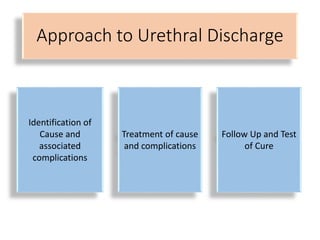
Approach to Urethral Discharge
Identification of
Cause and
associated
complications
Treatment of cause
and complications
Follow Up and Test
of Cure
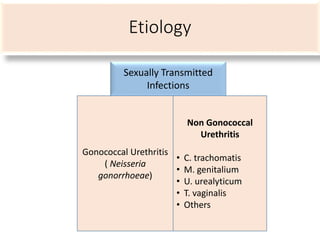
Etiology
Sexually Transmitted
Infections
Gonococcal Urethritis
( Neisseria
gonorrhoeae)
Non Gonococcal
Urethritis
• C. trachomatis
• M. genitalium
• U. urealyticum
• T. vaginalis
• Others
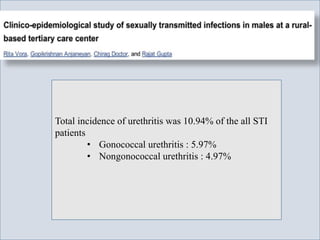
Total incidence of urethritis was 10.94% of the all STI
patients
• Gonococcal urethritis : 5.97%
• Nongonococcal urethritis : 4.97%
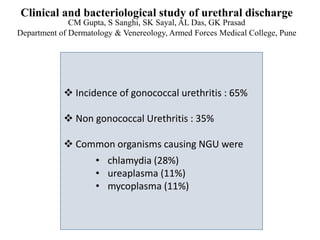
Clinical and bacteriological study of urethral discharge
CM Gupta, S Sanghi, SK Sayal, AL Das, GK Prasad
Department of Dermatology & Venereology, Armed Forces Medical College, Pune
 Incidence of gonococcal urethritis : 65%
 Non gonococcal Urethritis : 35%
 Common organisms causing NGU were
• chlamydia (28%)
• ureaplasma (11%)
• mycoplasma (11%)
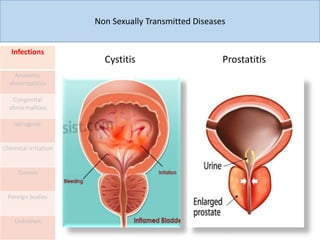
Non Sexually Transmitted Diseases
Infections
Anatomic
abnormalities
Congenital
abnormalities
Iatrogenic
Chemical irritation
Tumors
Foreign bodies
Unknown
Cystitis Prostatitis
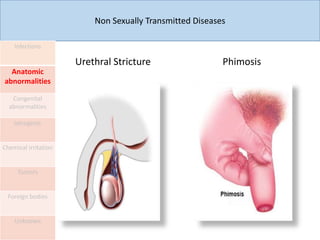
Non Sexually Transmitted Diseases
Infections
Anatomic
abnormalities
Congenital
abnormalities
Iatrogenic
Chemical irritation
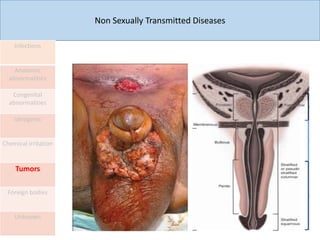
Tumors
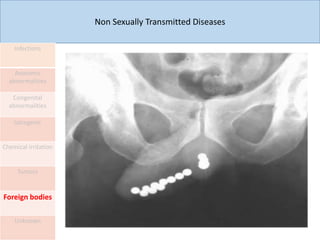
Foreign bodies
Unknown
Urethral Stricture Phimosis
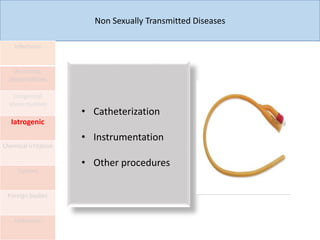
Non Sexually Transmitted Diseases
Infections
Anatomic
abnormalities
Congenital
abnormalities
Iatrogenic
Chemical irritation
Tumors
Foreign bodies
Unknown
• Catheterization
• Instrumentation
• Other procedures
Non Sexually Transmitted Diseases
Infections
Anatomic
abnormalities
Congenital
abnormalities
Iatrogenic
Chemical
irritation
Tumors
Foreign bodies
Unknown
• Applying liquids such as tea tree oil, antiseptic or
disinfectant or using medicated or highly perfumed
shower gels can cause inflammation
• Lubricants
Non Sexually Transmitted Diseases
Infections
Anatomic
abnormalities
Congenital
abnormalities
Iatrogenic
Chemical irritation
Tumors
Foreign bodies
Unknown
Non Sexually Transmitted Diseases
Infections
Anatomic
abnormalities
Congenital
abnormalities
Iatrogenic
Chemical irritation
Tumors
Foreign bodies
Unknown
Non Sexually Transmitted Diseases
Infections
Anatomic
abnormalities
Congenital
abnormalities
Iatrogenic
Chemical irritation
Tumors
Foreign bodies
Unknown
Non Specific Urethritis
Identification Of Cause
History
Examination
Laboratory
Investigations
History Examination Laboratory
Investigations
Sexual / Exposure
History
Sexual behaviour
Condom usage
Number of partners
Recent contacts
Orifices used
P.c.- Dr Somesh
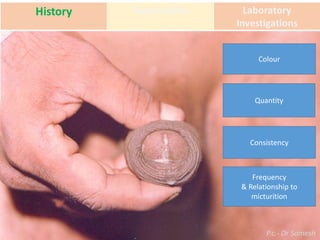
Colour
Quantity
Consistency
Frequency
& Relationship to
micturition
History Examination Laboratory
Investigations
Dysuria with itching and burning
around the meatus
• Urinary hesitancy,
• Urgency,
• Frequency
• Fever and lower
abdominal pain
Urethritis
due to STDs
Urinary Tract
Infection
History Examination Laboratory
Investigations
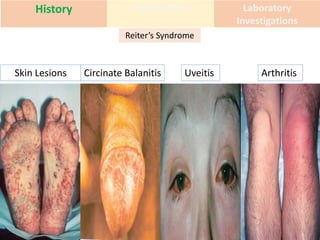
Reiter’s Syndrome
Skin Lesions Circinate Balanitis Uveitis Arthritis
History Examination Laboratory
Investigations
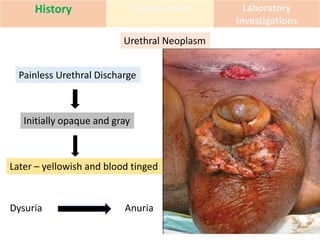
Urethral Neoplasm
Painless Urethral Discharge
Initially opaque and gray
Later – yellowish and blood tinged
Dysuria Anuria
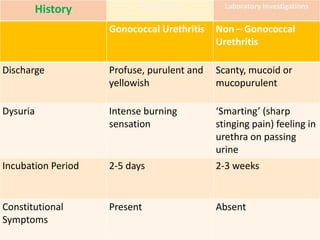
History Examination Laboratory Investigations
Gonococcal Urethritis Non – Gonococcal
Urethritis
Discharge Profuse, purulent and
yellowish
Scanty, mucoid or
mucopurulent
Dysuria Intense burning
sensation
‘Smarting’ (sharp
stinging pain) feeling in
urethra on passing
urine
Incubation Period 2-5 days 2-3 weeks
Constitutional
Symptoms
Present Absent
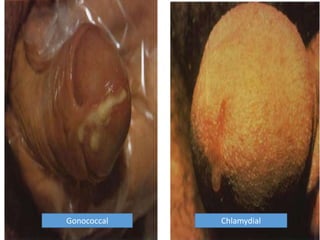
Gonococcal Chlamydial
History Examination Laboratory Investigations
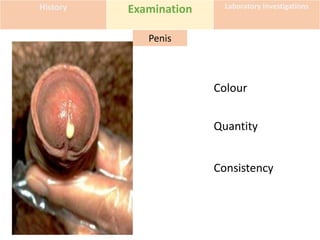
Penis
Colour
Quantity
Consistency
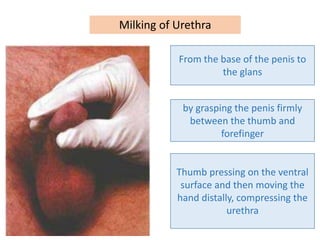
Milking of Urethra
From the base of the penis to
the glans
by grasping the penis firmly
between the thumb and
forefinger
Thumb pressing on the ventral
surface and then moving the
hand distally, compressing the
urethra
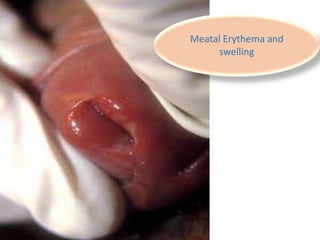
Meatal Erythema and
swelling
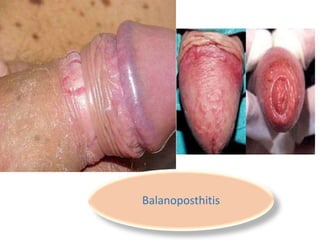
Balanoposthitis
History Examination Laboratory Investigations
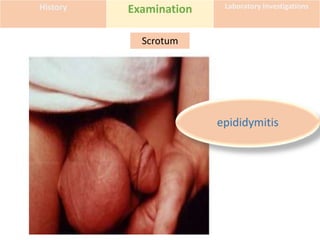
Scrotum
epididymitis
History Examination Laboratory Investigations
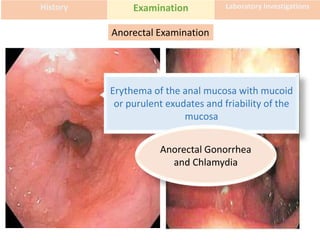
Anorectal Examination
Erythema of the anal mucosa with mucoid
or purulent exudates and friability of the
mucosa
Anorectal Gonorrhea
and Chlamydia
History Examination Laboratory Investigations
Per Abdomen
• Abdominal guarding and rebound tenderness –
peritonitis - severe PID
• Inguinal lymphadenopathy - HSV urethritis and GU
History Examination Laboratory Investigations
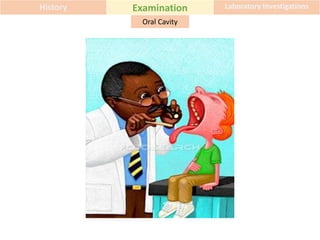
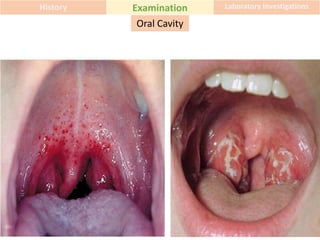
Oral Cavity
History Examination Laboratory Investigations
Oral Cavity
History Examination Laboratory
Investigations
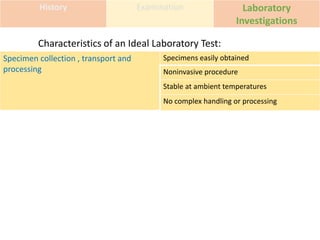
Specimen collection , transport and
processing
Specimens easily obtained
Noninvasive procedure
Stable at ambient temperatures
No complex handling or processing
Characteristics of an Ideal Laboratory Test:
History Examination Laboratory
Investigations
Specimen collection , transport and
processing
Specimens easily obtained
Noninvasive procedure
Stable at ambient temperatures
No complex handling or processing
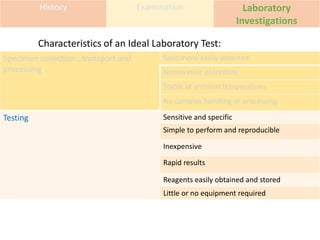
Testing Sensitive and specific
Simple to perform and reproducible
Inexpensive
Rapid results
Reagents easily obtained and stored
Little or no equipment required
Characteristics of an Ideal Laboratory Test:
History Examination Laboratory
Investigations
Specimen collection , transport and
processing
Specimens easily obtained
Noninvasive procedure
Stable at ambient temperatures
No complex handling or processing
Testing Sensitive and specific
Simple to perform and reproducible
Inexpensive
Rapid results
Reagents easily obtained and stored
Little or no equipment required
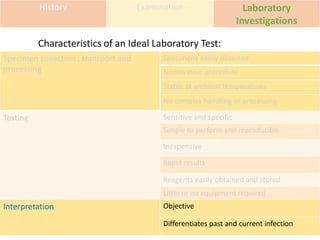
Interpretation Objective
Differentiates past and current infection
Characteristics of an Ideal Laboratory Test:
History Examination Laboratory Investigations
Sample collection
History Examination Laboratory Investigations
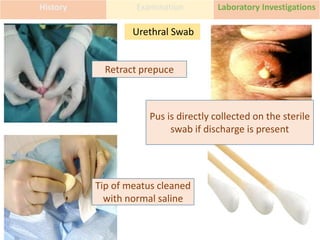
Urethral Swab
Retract prepuce
Tip of meatus cleaned
with normal saline
Pus is directly collected on the sterile
swab if discharge is present
History Examination Laboratory Investigations
If No Discharge
Milking of urethra
Still No Discharge
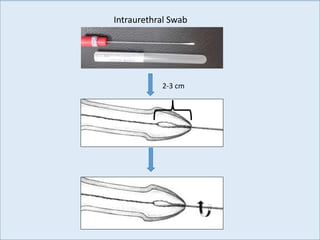
Intraurethral Swab
2-3 cm
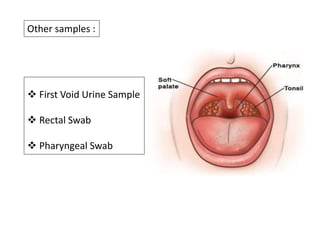
Other samples :
 First Void Urine Sample
 Rectal Swab
 Pharyngeal Swab
Investigations
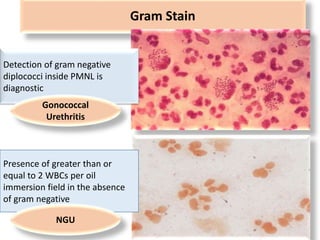
Gram Stain
Detection of gram negative
diplococci inside PMNL is
diagnostic
Presence of greater than or
equal to 2 WBCs per oil
immersion field in the absence
of gram negative
Gonococcal
Urethritis
NGU
In men with symptomatic urethritis, the sensitivity of
urethral smear is 90-95% and specificity is 95-100%
Urine sediment Gram stain :
 Microscopic examination of first- void urine sediment demonstrating more
than or equal to 10 WBC per high-power field is diagnostic of NGU
Urinary leukocyte esterase test
 Screening test for chlamydial and GC infections in asymptomatic men
Serologic test for syphilis (VDRL), blood test for human
immunodeficiency virus (HIV) and hepatitis B virus (HBV) infections
Further testing is not routinely done and should be carried out only
if there is a recurrent or persistent urethritis even after treatment
for GU and Chlamydia
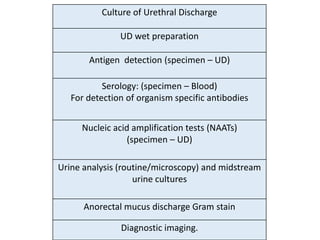
Culture of Urethral Discharge
UD wet preparation
Antigen detection (specimen – UD)
Serology: (specimen – Blood)
For detection of organism specific antibodies
Nucleic acid amplification tests (NAATs)
(specimen – UD)
Urine analysis (routine/microscopy) and midstream
urine cultures
Anorectal mucus discharge Gram stain
Diagnostic imaging.
Point Of Care Test
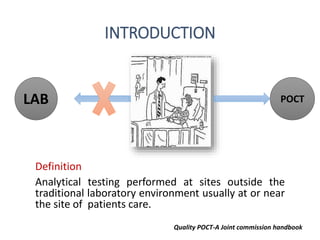
INTRODUCTION
Definition
Analytical testing performed at sites outside the
traditional laboratory environment usually at or near
the site of patients care.
Quality POCT-A Joint commission handbook
LAB POCT
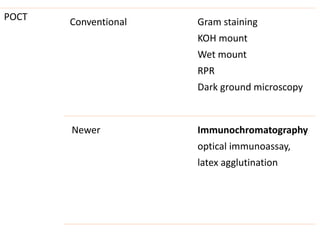
POCT Conventional Gram staining
KOH mount
Wet mount
RPR
Dark ground microscopy
Newer Immunochromatography
optical immunoassay,
latex agglutination
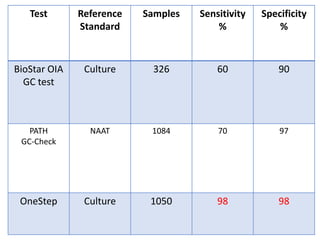
Test Reference
Standard
Samples Sensitivity
%
Specificity
%
BioStar OIA
GC test
Culture 326 60 90
PATH
GC-Check
NAAT 1084 70 97
OneStep Culture 1050 98 98
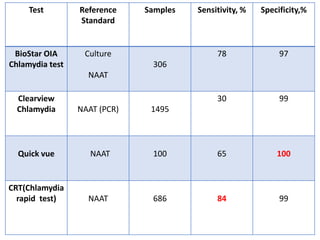
Test Reference
Standard
Samples Sensitivity, % Specificity,%
BioStar OIA
Chlamydia test
Culture
NAAT
306
78 97
Clearview
Chlamydia NAAT (PCR) 1495
30 99
Quick vue NAAT 100 65 100
CRT(Chlamydia
rapid test) NAAT 686 84 99
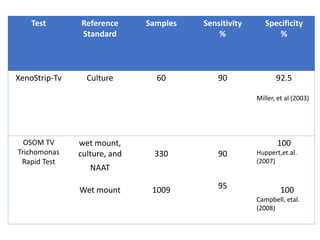
Test Reference
Standard
Samples Sensitivity
%
Specificity
%
XenoStrip-Tv Culture 60 90 92.5
Miller, et al (2003)
OSOM TV
Trichomonas
Rapid Test
wet mount,
culture, and
NAAT
Wet mount
330
1009
90
95
100
Huppert,et.al.
(2007)
100
Campbell, etal.
(2008)
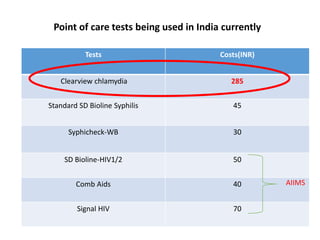
Tests Costs(INR)
Clearview chlamydia 285
Standard SD Bioline Syphilis 45
Syphicheck-WB 30
SD Bioline-HIV1/2 50
Comb Aids 40
Signal HIV 70
Point of care tests being used in India currently
AIIMS
The Clearview Chlamydia
 Based on Immunochromatography
 Antigen- lipopolysaccharide
 30 minutes to complete
 Kit storage- 2 to 8 degrees
 Cost-Rs285/test(used in India)
 Sensitivity(32%), Specificity(99%)
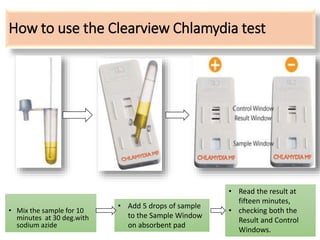
How to use the Clearview Chlamydia test
• Mix the sample for 10
minutes at 30 deg.with
sodium azide
• Add 5 drops of sample
to the Sample Window
on absorbent pad
• Read the result at
fifteen minutes,
• checking both the
Result and Control
Windows.
Barriers to POC tests
• Cost and technology
• Multiple-step procedures
• Difficulty in reading and interpreting the test results
• Patients and Clinicians may both prefer traditional
methods
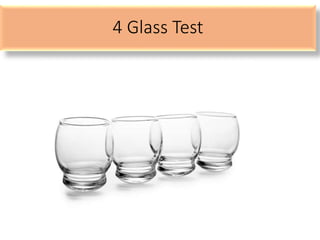
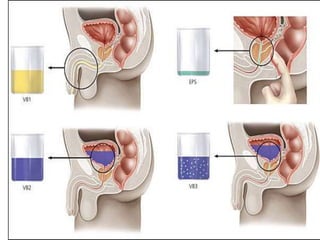
4 Glass Test
• Samples are cultured
• If one specimen grows far more bacteria than the
others, it is felt that the infection has been localized to
the urethra, bladder, or prostate, depending on which
specimen grows bacteria
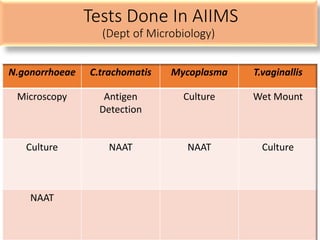
Tests Done In AIIMS
(Dept of Microbiology)
N.gonorrhoeae C.trachomatis Mycoplasma T.vaginallis
Microscopy Antigen
Detection
Culture Wet Mount
Culture NAAT NAAT Culture
NAAT
Treatment
Syndromic Management
• World Health Organization (WHO) has recommended a
syndromic approach to patient management, where
laboratory diagnosis is not feasible
• Patient is treated for all the possible causes of that
syndrome
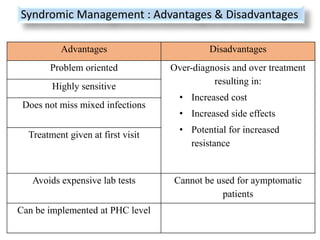
Syndromic Management : Advantages & Disadvantages
Advantages Disadvantages
Problem oriented Over-diagnosis and over treatment
resulting in:
• Increased cost
• Increased side effects
• Potential for increased
resistance
Highly sensitive
Does not miss mixed infections
Treatment given at first visit
Avoids expensive lab tests Cannot be used for aymptomatic
patients
Can be implemented at PHC level
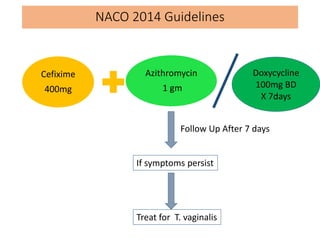
NACO 2014 Guidelines
Cefixime
400mg
Azithromycin
1 gm
Doxycycline
100mg BD
X 7days
Follow Up After 7 days
If symptoms persist
Treat for T. vaginalis
Partner Management
• All sexual partners of patients whose last sexual contact with the
patient was within 60 days before onset of symptoms or diagnosis
of infection in the patient
• Female partners treated on same lines after ruling out pregnancy
and history of allergies.
• Sexual abstinence
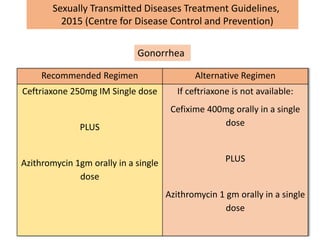
Sexually Transmitted Diseases Treatment Guidelines,
2015 (Centre for Disease Control and Prevention)
Recommended Regimen Alternative Regimen
Ceftriaxone 250mg IM Single dose
PLUS
Azithromycin 1gm orally in a single
dose
If ceftriaxone is not available:
Cefixime 400mg orally in a single
dose
PLUS
Azithromycin 1 gm orally in a single
dose
Gonorrhea
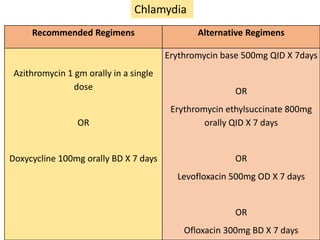
Recommended Regimens Alternative Regimens
Azithromycin 1 gm orally in a single
dose
OR
Doxycycline 100mg orally BD X 7 days
Erythromycin base 500mg QID X 7days
OR
Erythromycin ethylsuccinate 800mg
orally QID X 7 days
OR
Levofloxacin 500mg OD X 7 days
OR
Ofloxacin 300mg BD X 7 days
Chlamydia
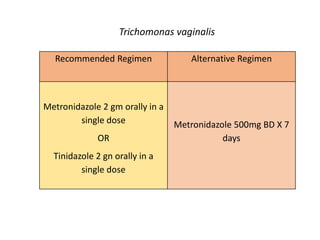
Recommended Regimen Alternative Regimen
Metronidazole 2 gm orally in a
single dose
OR
Tinidazole 2 gn orally in a
single dose
Metronidazole 500mg BD X 7
days
Trichomonas vaginalis
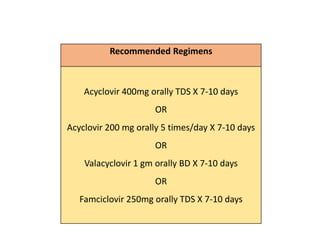
Recommended Regimens
Acyclovir 400mg orally TDS X 7-10 days
OR
Acyclovir 200 mg orally 5 times/day X 7-10 days
OR
Valacyclovir 1 gm orally BD X 7-10 days
OR
Famciclovir 250mg orally TDS X 7-10 days
Drug Resistance
How big is the problem??
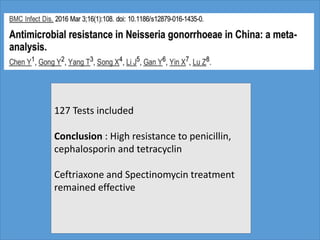
127 Tests included
Conclusion : High resistance to penicillin,
cephalosporin and tetracyclin
Ceftriaxone and Spectinomycin treatment
remained effective
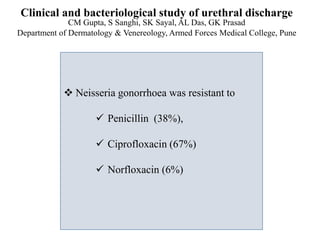
Clinical and bacteriological study of urethral discharge
CM Gupta, S Sanghi, SK Sayal, AL Das, GK Prasad
Department of Dermatology & Venereology, Armed Forces Medical College, Pune
 Neisseria gonorrhoea was resistant to
 Penicillin (38%),
 Ciprofloxacin (67%)
 Norfloxacin (6%)
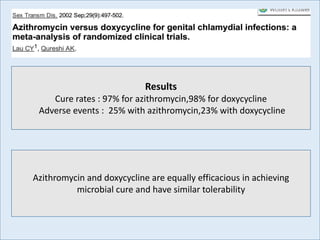
Results
Cure rates : 97% for azithromycin,98% for doxycycline
Adverse events : 25% with azithromycin,23% with doxycycline
Azithromycin and doxycycline are equally efficacious in achieving
microbial cure and have similar tolerability
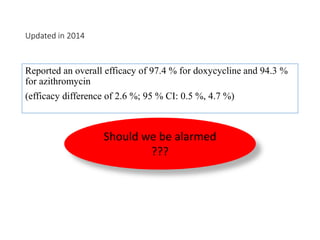
Updated in 2014
Reported an overall efficacy of 97.4 % for doxycycline and 94.3 %
for azithromycin
(efficacy difference of 2.6 %; 95 % CI: 0.5 %, 4.7 %)
Should we be alarmed
???
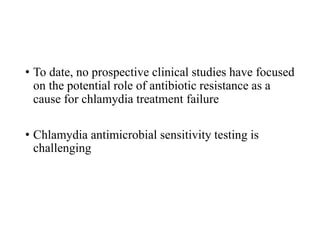
• To date, no prospective clinical studies have focused
on the potential role of antibiotic resistance as a
cause for chlamydia treatment failure
• Chlamydia antimicrobial sensitivity testing is
challenging
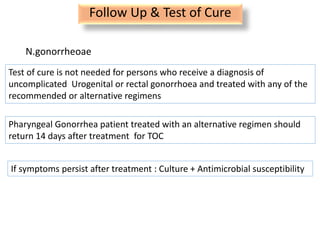
Follow Up & Test of Cure
N.gonorrheoae
Test of cure is not needed for persons who receive a diagnosis of
uncomplicated Urogenital or rectal gonorrhoea and treated with any of the
recommended or alternative regimens
Pharyngeal Gonorrhea patient treated with an alternative regimen should
return 14 days after treatment for TOC
If symptoms persist after treatment : Culture + Antimicrobial susceptibility
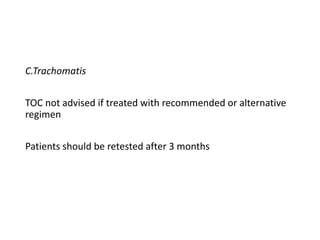
C.Trachomatis
TOC not advised if treated with recommended or alternative
regimen
Patients should be retested after 3 months
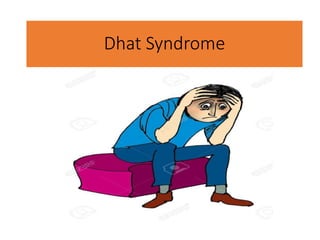
Dhat Syndrome
• Vague somatic symptoms of fatigue, weakness, anxiety, loss
of appetite and guilt
• Attributed to semen loss through nocturnal emissions, urine
and masturbation
• Though there is no evidence of loss of semen
Epidemiology
• More prevalent in the Indian subcontinent
• Historical evidences - similar kinds of syndromes
were prevalent in Europe, USA and Australia in the
19th century
• 3 categories :
1. Dhat alone : Patients attribute their symptoms to
semen loss; presenting symptoms hypochondriacal,
depressive or anxiety symptoms
2. Dhat with comorbid depression and anxiety : Dhat is
seen as an accompanying symptom
3. Dhat with sexual dysfunction
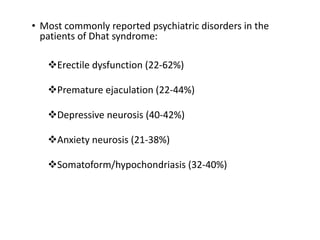
• Most commonly reported psychiatric disorders in the
patients of Dhat syndrome:
Erectile dysfunction (22-62%)
Premature ejaculation (22-44%)
Depressive neurosis (40-42%)
Anxiety neurosis (21-38%)
Somatoform/hypochondriasis (32-40%)
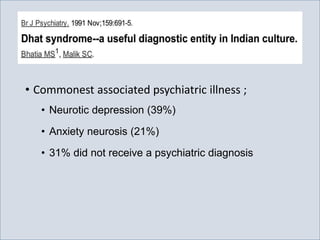
• Commonest associated psychiatric illness ;
• Neurotic depression (39%)
• Anxiety neurosis (21%)
• 31% did not receive a psychiatric diagnosis
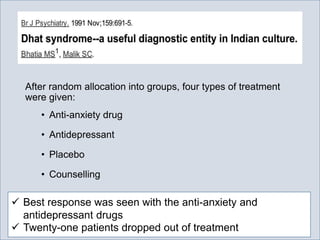
After random allocation into groups, four types of treatment
were given:
• Anti-anxiety drug
• Antidepressant
• Placebo
• Counselling
 Best response was seen with the anti-anxiety and
antidepressant drugs
 Twenty-one patients dropped out of treatment
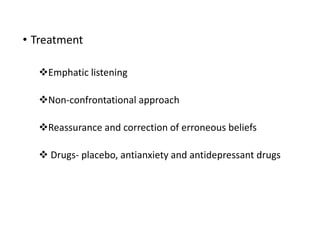
• Treatment
Emphatic listening
Non-confrontational approach
Reassurance and correction of erroneous beliefs
 Drugs- placebo, antianxiety and antidepressant drugs
Thank You

Approach to urethral discharge

  • 1.
    Approach to UrethralDischarge Presenter - Dr Mamta
  • 2.
    Introduction • Prevalence (India)– 15-20% of patients attending STD clinic • Due to irritation or inflammation of urethra • Most commonly due to STIs
  • 3.
    Approach to UrethralDischarge Identification of Cause and associated complications Treatment of cause and complications Follow Up and Test of Cure
  • 4.
    Etiology Sexually Transmitted Infections Gonococcal Urethritis (Neisseria gonorrhoeae) Non Gonococcal Urethritis • C. trachomatis • M. genitalium • U. urealyticum • T. vaginalis • Others
  • 5.
    Total incidence ofurethritis was 10.94% of the all STI patients • Gonococcal urethritis : 5.97% • Nongonococcal urethritis : 4.97%
  • 6.
    Clinical and bacteriologicalstudy of urethral discharge CM Gupta, S Sanghi, SK Sayal, AL Das, GK Prasad Department of Dermatology & Venereology, Armed Forces Medical College, Pune  Incidence of gonococcal urethritis : 65%  Non gonococcal Urethritis : 35%  Common organisms causing NGU were • chlamydia (28%) • ureaplasma (11%) • mycoplasma (11%)
  • 7.
    Non Sexually TransmittedDiseases Infections Anatomic abnormalities Congenital abnormalities Iatrogenic Chemical irritation Tumors Foreign bodies Unknown Cystitis Prostatitis
  • 8.
    Non Sexually TransmittedDiseases Infections Anatomic abnormalities Congenital abnormalities Iatrogenic Chemical irritation Tumors Foreign bodies Unknown Urethral Stricture Phimosis
  • 9.
    Non Sexually TransmittedDiseases Infections Anatomic abnormalities Congenital abnormalities Iatrogenic Chemical irritation Tumors Foreign bodies Unknown • Catheterization • Instrumentation • Other procedures
  • 10.
    Non Sexually TransmittedDiseases Infections Anatomic abnormalities Congenital abnormalities Iatrogenic Chemical irritation Tumors Foreign bodies Unknown • Applying liquids such as tea tree oil, antiseptic or disinfectant or using medicated or highly perfumed shower gels can cause inflammation • Lubricants
  • 11.
    Non Sexually TransmittedDiseases Infections Anatomic abnormalities Congenital abnormalities Iatrogenic Chemical irritation Tumors Foreign bodies Unknown
  • 12.
    Non Sexually TransmittedDiseases Infections Anatomic abnormalities Congenital abnormalities Iatrogenic Chemical irritation Tumors Foreign bodies Unknown
  • 13.
    Non Sexually TransmittedDiseases Infections Anatomic abnormalities Congenital abnormalities Iatrogenic Chemical irritation Tumors Foreign bodies Unknown Non Specific Urethritis
  • 14.
  • 15.
    History Examination Laboratory Investigations Sexual/ Exposure History Sexual behaviour Condom usage Number of partners Recent contacts Orifices used
  • 16.
  • 17.
    History Examination Laboratory Investigations Dysuriawith itching and burning around the meatus • Urinary hesitancy, • Urgency, • Frequency • Fever and lower abdominal pain Urethritis due to STDs Urinary Tract Infection
  • 18.
    History Examination Laboratory Investigations Reiter’sSyndrome Skin Lesions Circinate Balanitis Uveitis Arthritis
  • 19.
    History Examination Laboratory Investigations UrethralNeoplasm Painless Urethral Discharge Initially opaque and gray Later – yellowish and blood tinged Dysuria Anuria
  • 20.
    History Examination LaboratoryInvestigations Gonococcal Urethritis Non – Gonococcal Urethritis Discharge Profuse, purulent and yellowish Scanty, mucoid or mucopurulent Dysuria Intense burning sensation ‘Smarting’ (sharp stinging pain) feeling in urethra on passing urine Incubation Period 2-5 days 2-3 weeks Constitutional Symptoms Present Absent
  • 21.
  • 22.
    History Examination LaboratoryInvestigations Penis Colour Quantity Consistency
  • 23.
    Milking of Urethra Fromthe base of the penis to the glans by grasping the penis firmly between the thumb and forefinger Thumb pressing on the ventral surface and then moving the hand distally, compressing the urethra
  • 24.
  • 25.
  • 26.
    History Examination LaboratoryInvestigations Scrotum epididymitis
  • 27.
    History Examination LaboratoryInvestigations Anorectal Examination Erythema of the anal mucosa with mucoid or purulent exudates and friability of the mucosa Anorectal Gonorrhea and Chlamydia
  • 28.
    History Examination LaboratoryInvestigations Per Abdomen • Abdominal guarding and rebound tenderness – peritonitis - severe PID • Inguinal lymphadenopathy - HSV urethritis and GU
  • 29.
    History Examination LaboratoryInvestigations Oral Cavity
  • 30.
    History Examination LaboratoryInvestigations Oral Cavity
  • 31.
    History Examination Laboratory Investigations Specimencollection , transport and processing Specimens easily obtained Noninvasive procedure Stable at ambient temperatures No complex handling or processing Characteristics of an Ideal Laboratory Test:
  • 32.
    History Examination Laboratory Investigations Specimencollection , transport and processing Specimens easily obtained Noninvasive procedure Stable at ambient temperatures No complex handling or processing Testing Sensitive and specific Simple to perform and reproducible Inexpensive Rapid results Reagents easily obtained and stored Little or no equipment required Characteristics of an Ideal Laboratory Test:
  • 33.
    History Examination Laboratory Investigations Specimencollection , transport and processing Specimens easily obtained Noninvasive procedure Stable at ambient temperatures No complex handling or processing Testing Sensitive and specific Simple to perform and reproducible Inexpensive Rapid results Reagents easily obtained and stored Little or no equipment required Interpretation Objective Differentiates past and current infection Characteristics of an Ideal Laboratory Test:
  • 34.
    History Examination LaboratoryInvestigations Sample collection
  • 35.
    History Examination LaboratoryInvestigations Urethral Swab Retract prepuce Tip of meatus cleaned with normal saline Pus is directly collected on the sterile swab if discharge is present
  • 36.
    History Examination LaboratoryInvestigations If No Discharge Milking of urethra Still No Discharge
  • 37.
  • 38.
    Other samples : First Void Urine Sample  Rectal Swab  Pharyngeal Swab
  • 39.
  • 40.
    Gram Stain Detection ofgram negative diplococci inside PMNL is diagnostic Presence of greater than or equal to 2 WBCs per oil immersion field in the absence of gram negative Gonococcal Urethritis NGU
  • 41.
    In men withsymptomatic urethritis, the sensitivity of urethral smear is 90-95% and specificity is 95-100%
  • 42.
    Urine sediment Gramstain :  Microscopic examination of first- void urine sediment demonstrating more than or equal to 10 WBC per high-power field is diagnostic of NGU Urinary leukocyte esterase test  Screening test for chlamydial and GC infections in asymptomatic men Serologic test for syphilis (VDRL), blood test for human immunodeficiency virus (HIV) and hepatitis B virus (HBV) infections
  • 43.
    Further testing isnot routinely done and should be carried out only if there is a recurrent or persistent urethritis even after treatment for GU and Chlamydia
  • 44.
    Culture of UrethralDischarge UD wet preparation Antigen detection (specimen – UD) Serology: (specimen – Blood) For detection of organism specific antibodies Nucleic acid amplification tests (NAATs) (specimen – UD) Urine analysis (routine/microscopy) and midstream urine cultures Anorectal mucus discharge Gram stain Diagnostic imaging.
  • 45.
  • 46.
    INTRODUCTION Definition Analytical testing performedat sites outside the traditional laboratory environment usually at or near the site of patients care. Quality POCT-A Joint commission handbook LAB POCT
  • 47.
    POCT Conventional Gramstaining KOH mount Wet mount RPR Dark ground microscopy Newer Immunochromatography optical immunoassay, latex agglutination
  • 48.
    Test Reference Standard Samples Sensitivity % Specificity % BioStarOIA GC test Culture 326 60 90 PATH GC-Check NAAT 1084 70 97 OneStep Culture 1050 98 98
  • 49.
    Test Reference Standard Samples Sensitivity,% Specificity,% BioStar OIA Chlamydia test Culture NAAT 306 78 97 Clearview Chlamydia NAAT (PCR) 1495 30 99 Quick vue NAAT 100 65 100 CRT(Chlamydia rapid test) NAAT 686 84 99
  • 50.
    Test Reference Standard Samples Sensitivity % Specificity % XenoStrip-TvCulture 60 90 92.5 Miller, et al (2003) OSOM TV Trichomonas Rapid Test wet mount, culture, and NAAT Wet mount 330 1009 90 95 100 Huppert,et.al. (2007) 100 Campbell, etal. (2008)
  • 51.
    Tests Costs(INR) Clearview chlamydia285 Standard SD Bioline Syphilis 45 Syphicheck-WB 30 SD Bioline-HIV1/2 50 Comb Aids 40 Signal HIV 70 Point of care tests being used in India currently AIIMS
  • 52.
    The Clearview Chlamydia Based on Immunochromatography  Antigen- lipopolysaccharide  30 minutes to complete  Kit storage- 2 to 8 degrees  Cost-Rs285/test(used in India)  Sensitivity(32%), Specificity(99%)
  • 53.
    How to usethe Clearview Chlamydia test • Mix the sample for 10 minutes at 30 deg.with sodium azide • Add 5 drops of sample to the Sample Window on absorbent pad • Read the result at fifteen minutes, • checking both the Result and Control Windows.
  • 54.
    Barriers to POCtests • Cost and technology • Multiple-step procedures • Difficulty in reading and interpreting the test results • Patients and Clinicians may both prefer traditional methods
  • 55.
  • 57.
    • Samples arecultured • If one specimen grows far more bacteria than the others, it is felt that the infection has been localized to the urethra, bladder, or prostate, depending on which specimen grows bacteria
  • 58.
    Tests Done InAIIMS (Dept of Microbiology) N.gonorrhoeae C.trachomatis Mycoplasma T.vaginallis Microscopy Antigen Detection Culture Wet Mount Culture NAAT NAAT Culture NAAT
  • 59.
  • 60.
    Syndromic Management • WorldHealth Organization (WHO) has recommended a syndromic approach to patient management, where laboratory diagnosis is not feasible • Patient is treated for all the possible causes of that syndrome
  • 61.
    Syndromic Management :Advantages & Disadvantages Advantages Disadvantages Problem oriented Over-diagnosis and over treatment resulting in: • Increased cost • Increased side effects • Potential for increased resistance Highly sensitive Does not miss mixed infections Treatment given at first visit Avoids expensive lab tests Cannot be used for aymptomatic patients Can be implemented at PHC level
  • 62.
    NACO 2014 Guidelines Cefixime 400mg Azithromycin 1gm Doxycycline 100mg BD X 7days Follow Up After 7 days If symptoms persist Treat for T. vaginalis
  • 63.
    Partner Management • Allsexual partners of patients whose last sexual contact with the patient was within 60 days before onset of symptoms or diagnosis of infection in the patient • Female partners treated on same lines after ruling out pregnancy and history of allergies. • Sexual abstinence
  • 64.
    Sexually Transmitted DiseasesTreatment Guidelines, 2015 (Centre for Disease Control and Prevention) Recommended Regimen Alternative Regimen Ceftriaxone 250mg IM Single dose PLUS Azithromycin 1gm orally in a single dose If ceftriaxone is not available: Cefixime 400mg orally in a single dose PLUS Azithromycin 1 gm orally in a single dose Gonorrhea
  • 65.
    Recommended Regimens AlternativeRegimens Azithromycin 1 gm orally in a single dose OR Doxycycline 100mg orally BD X 7 days Erythromycin base 500mg QID X 7days OR Erythromycin ethylsuccinate 800mg orally QID X 7 days OR Levofloxacin 500mg OD X 7 days OR Ofloxacin 300mg BD X 7 days Chlamydia
  • 66.
    Recommended Regimen AlternativeRegimen Metronidazole 2 gm orally in a single dose OR Tinidazole 2 gn orally in a single dose Metronidazole 500mg BD X 7 days Trichomonas vaginalis
  • 67.
    Recommended Regimens Acyclovir 400mgorally TDS X 7-10 days OR Acyclovir 200 mg orally 5 times/day X 7-10 days OR Valacyclovir 1 gm orally BD X 7-10 days OR Famciclovir 250mg orally TDS X 7-10 days
  • 68.
    Drug Resistance How bigis the problem??
  • 69.
    127 Tests included Conclusion: High resistance to penicillin, cephalosporin and tetracyclin Ceftriaxone and Spectinomycin treatment remained effective
  • 70.
    Clinical and bacteriologicalstudy of urethral discharge CM Gupta, S Sanghi, SK Sayal, AL Das, GK Prasad Department of Dermatology & Venereology, Armed Forces Medical College, Pune  Neisseria gonorrhoea was resistant to  Penicillin (38%),  Ciprofloxacin (67%)  Norfloxacin (6%)
  • 71.
    Results Cure rates :97% for azithromycin,98% for doxycycline Adverse events : 25% with azithromycin,23% with doxycycline Azithromycin and doxycycline are equally efficacious in achieving microbial cure and have similar tolerability
  • 72.
    Updated in 2014 Reportedan overall efficacy of 97.4 % for doxycycline and 94.3 % for azithromycin (efficacy difference of 2.6 %; 95 % CI: 0.5 %, 4.7 %) Should we be alarmed ???
  • 73.
    • To date,no prospective clinical studies have focused on the potential role of antibiotic resistance as a cause for chlamydia treatment failure • Chlamydia antimicrobial sensitivity testing is challenging
  • 74.
    Follow Up &Test of Cure N.gonorrheoae Test of cure is not needed for persons who receive a diagnosis of uncomplicated Urogenital or rectal gonorrhoea and treated with any of the recommended or alternative regimens Pharyngeal Gonorrhea patient treated with an alternative regimen should return 14 days after treatment for TOC If symptoms persist after treatment : Culture + Antimicrobial susceptibility
  • 75.
    C.Trachomatis TOC not advisedif treated with recommended or alternative regimen Patients should be retested after 3 months
  • 76.
  • 77.
    • Vague somaticsymptoms of fatigue, weakness, anxiety, loss of appetite and guilt • Attributed to semen loss through nocturnal emissions, urine and masturbation • Though there is no evidence of loss of semen
  • 78.
    Epidemiology • More prevalentin the Indian subcontinent • Historical evidences - similar kinds of syndromes were prevalent in Europe, USA and Australia in the 19th century
  • 79.
    • 3 categories: 1. Dhat alone : Patients attribute their symptoms to semen loss; presenting symptoms hypochondriacal, depressive or anxiety symptoms 2. Dhat with comorbid depression and anxiety : Dhat is seen as an accompanying symptom 3. Dhat with sexual dysfunction
  • 80.
    • Most commonlyreported psychiatric disorders in the patients of Dhat syndrome: Erectile dysfunction (22-62%) Premature ejaculation (22-44%) Depressive neurosis (40-42%) Anxiety neurosis (21-38%) Somatoform/hypochondriasis (32-40%)
  • 81.
    • Commonest associatedpsychiatric illness ; • Neurotic depression (39%) • Anxiety neurosis (21%) • 31% did not receive a psychiatric diagnosis
  • 82.
    After random allocationinto groups, four types of treatment were given: • Anti-anxiety drug • Antidepressant • Placebo • Counselling  Best response was seen with the anti-anxiety and antidepressant drugs  Twenty-one patients dropped out of treatment
  • 83.
    • Treatment Emphatic listening Non-confrontationalapproach Reassurance and correction of erroneous beliefs  Drugs- placebo, antianxiety and antidepressant drugs
  • 84.

Editor's Notes

  • #5 CT accounts for 15-40% of cases,m.g 15-25% while the prevalence of t.v varies substantially from one region to another as well as within specific subpopulations
  • #6 Conducted in gujarat To determine the prevalence, clinical profile, and the pattern of STIs in males. A retrospective study of male cases attending STI clinic between January 2008 and December 2009 was carried out
  • #7 A clinico­bacteriological study of 52 patients with urethritis was carried out. All the patients were evaluated clinically and bacteriologically at the beginning and end of the treatment.
  • #13 X ray of pelvis showing multiple metallic objects in the anterior and posterior urethra. It is usually seen in children and adolescents
  • #14 No cause may be found in one third of patients
  • #15 Identification of cause requires a thorough history, meticulous examination along with relevant laboratory investigation
  • #24 If there is no spontaneous discharge but the patient complains of it then milking of urethra should be done
  • #26 Sharply marginated , light red erosions along with discrete pustules over coronal sulcus
  • #27 Look for any scrotal erythema, edema. On palpation there may be tenderness of spermatic cord
  • #30 No specific clinical signs are found to be consistently associated with these infections.
  • #31 There may be multiple erosions, generalised erythema, acute pharyngitis or tonsillitis with cervical lymphadenopathy
  • #36 Wear sterile gloves. Specimen should be collected at least 2 hours after the patient has urinated as voiding decreases the amount of exudate and reduces the chances of detecting the organism
  • #38 Intraurethral swab is a sterile thin calcium alginate swab with a flexible wire shaft
  • #39 First 10-15ml of early morning urine is collected in a sterile plastic container with a large opening.urine is centrifuged for 10mins.supf part is decanted and sediment is used as specimen.If recent anal intercourse has occurred, a proctoscope is inserted 1st,followed by a swab stic 3 cm into canal rotating it for 10 secs to collect sample from the crypts just inside the anal ring.if orogenital contact with an infected person is suspected,specimen is collected from tonsillar crypts and bed of pharynx
  • #41 In presence of only extracellular or atypical gram negative diplococci, the diagnosis of gonorrhoea should be confirmed by culture
  • #56 In 1968 two urologists, Meares and Stamey, published a paper about the four glass test for prostatitis for localisation of infection.
  • #57 Patients are asked to urinate their first 10 ccs of urine into a sterile cup. Then, they are asked to urinate 10 ccs of urine from their midstream into a sterile cup. Next, their prostate is massaged and expressed prostatic secretions are collected. Finally, another 10 ccs of urine is collected to finish the "four glass collection.
  • #64 should be evaluated and treated for UD syndrome. Sexual abstinence should be advised during the course of treatment.
  • #72 A clinico­bacteriological study of 52 patients with urethritis was carried out. All the patients were evaluated clinically and bacteriologically at the beginning and end of the treatment.
  • #73 But in view of growing literature citing increasing reports of repeat positive infections, this meta-analysis was updated in 2014
  • #74 suggesting a small, but statistically significant difference in favour of doxycycline. Beacause most of the included studies were not double blinded.double blinding is necessary to ensure r/o reinfection to be similar in both arms as it is likely that one week of doxycycline will deter people from resuming sexual activities while on treatment. most trials were based in high risk populations attending sexual health clinics. These populations are not representative of the majority of those who get chlamydia which is a largely asymptomatic infection.
  • #77 Moreover the use of chlamydial NAATs at <3 weeks gives false + due to continued presence of non viable organisms. If retesting is not feasible at 3 months,retest whenever patient returns in next 12 months
  • #80 Which changed in response to changes in social and economic factors
  • #81 mostly young, recently married, belonging to average or low socioeconomic status (perhaps a student, laborer or farmer by occupation), from rural area and from family with conservative attitudes towards sex
  • #83 n a prospective study of 144 consecutive male patients with psychosexual disorders, comprising 93 with Dhat syndrome with or without impotence or premature ejaculation, 21 with premature ejaculation, and 30 suffering only impotence
  • #84 n a prospective study of 144 consecutive male patients with psychosexual disorders, comprising 93 with Dhat syndrome with or without impotence or premature ejaculation, 21 with premature ejaculation, and 30 suffering only impotence