Hypertensive Emergency


Daniel J. McFarlane M.D.
Division of Hospital Medicine
January 2011
Outline

 Epidemiology

 Definitions

 Pathophysiology

 Diagnosis  and Recognition
 Treatment

 Special Circumstances
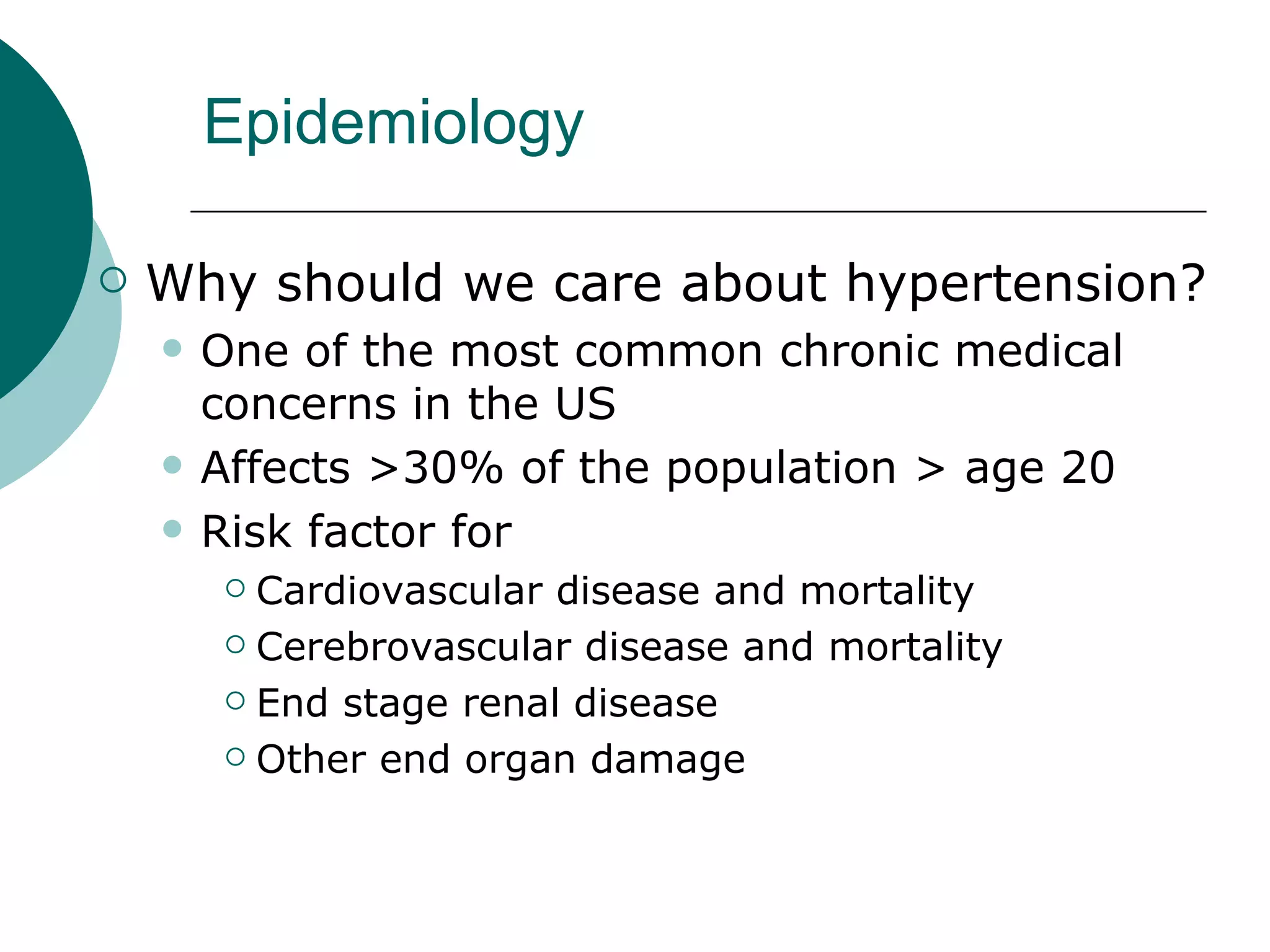
Epidemiology

   Why should we care about hypertension?
       One of the most common chronic medical
        concerns in the US
       Affects >30% of the population > age 20
       Risk factor for
          Cardiovascular disease and mortality
          Cerebrovascular disease and mortality

          End stage renal disease

          Other end organ damage
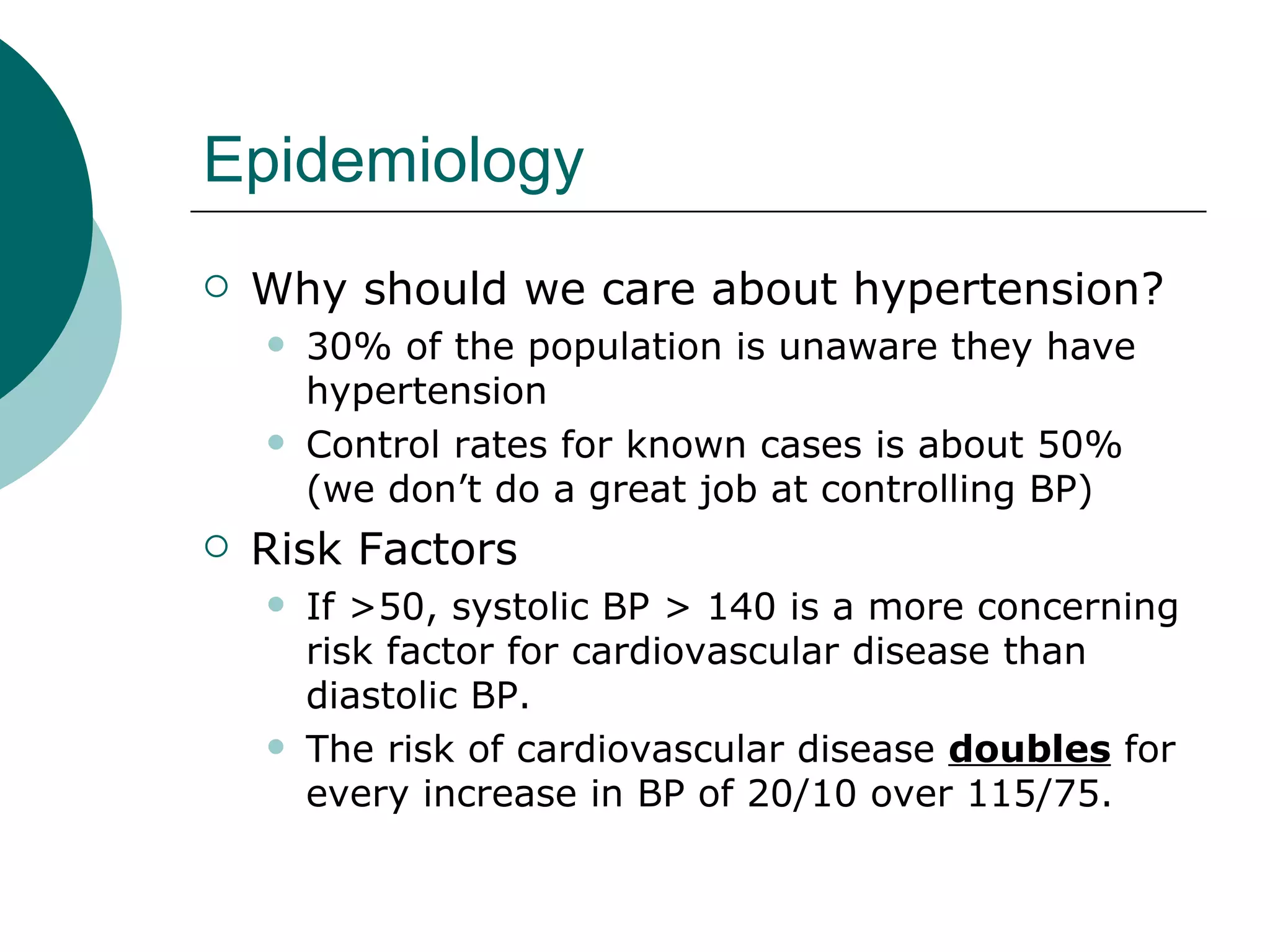
Epidemiology
   Why should we care about hypertension?
       30% of the population is unaware they have
        hypertension
       Control rates for known cases is about 50%
        (we don’t do a great job at controlling BP)
   Risk Factors
       If >50, systolic BP > 140 is a more concerning
        risk factor for cardiovascular disease than
        diastolic BP.
       The risk of cardiovascular disease doubles for
        every increase in BP of 20/10 over 115/75.
Epidemiology
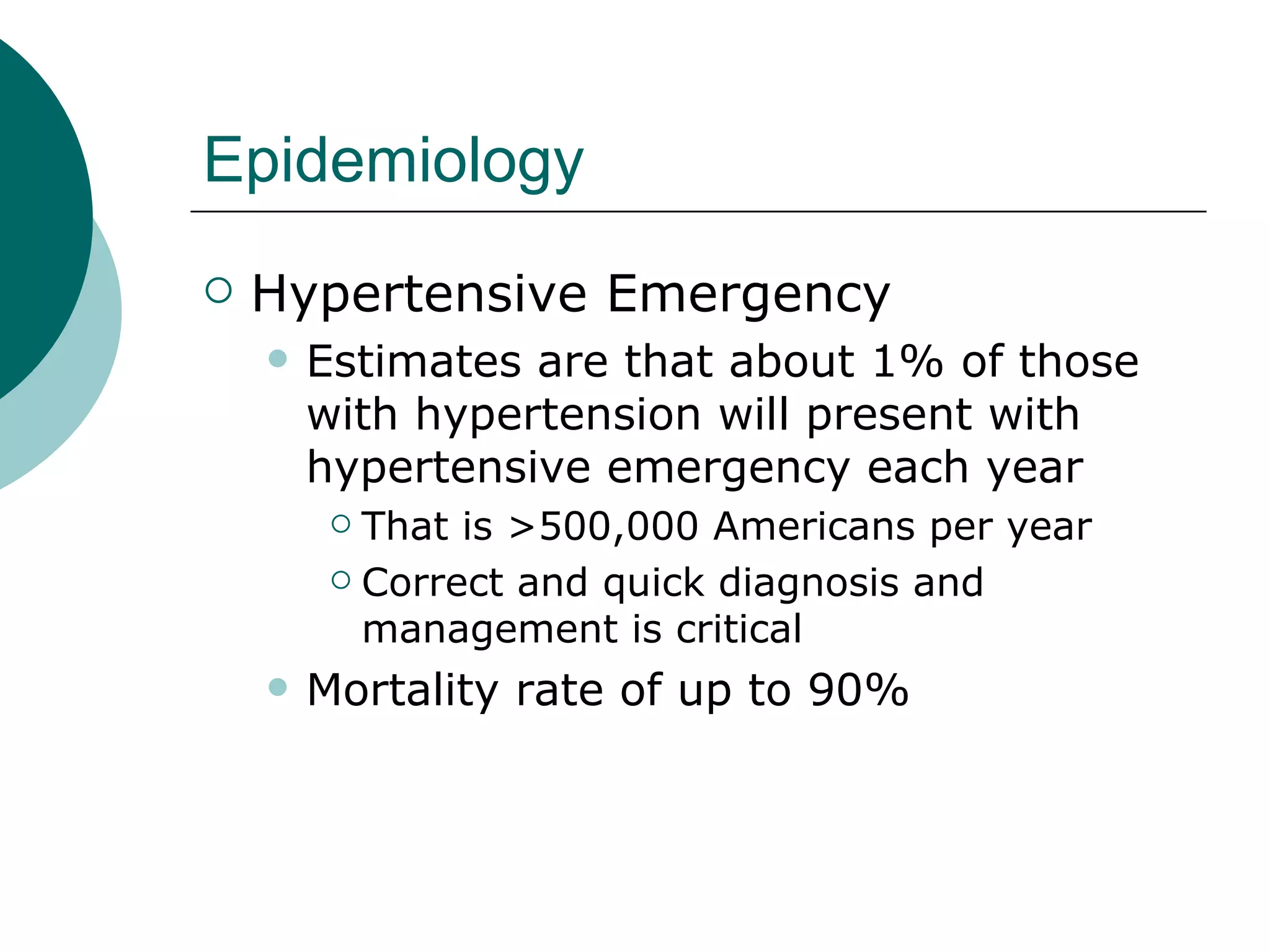
   Hypertensive Emergency
       Estimates are that about 1% of those
        with hypertension will present with
        hypertensive emergency each year
          That is >500,000 Americans per year
          Correct and quick diagnosis and

           management is critical
       Mortality rate of up to 90%
Definitions
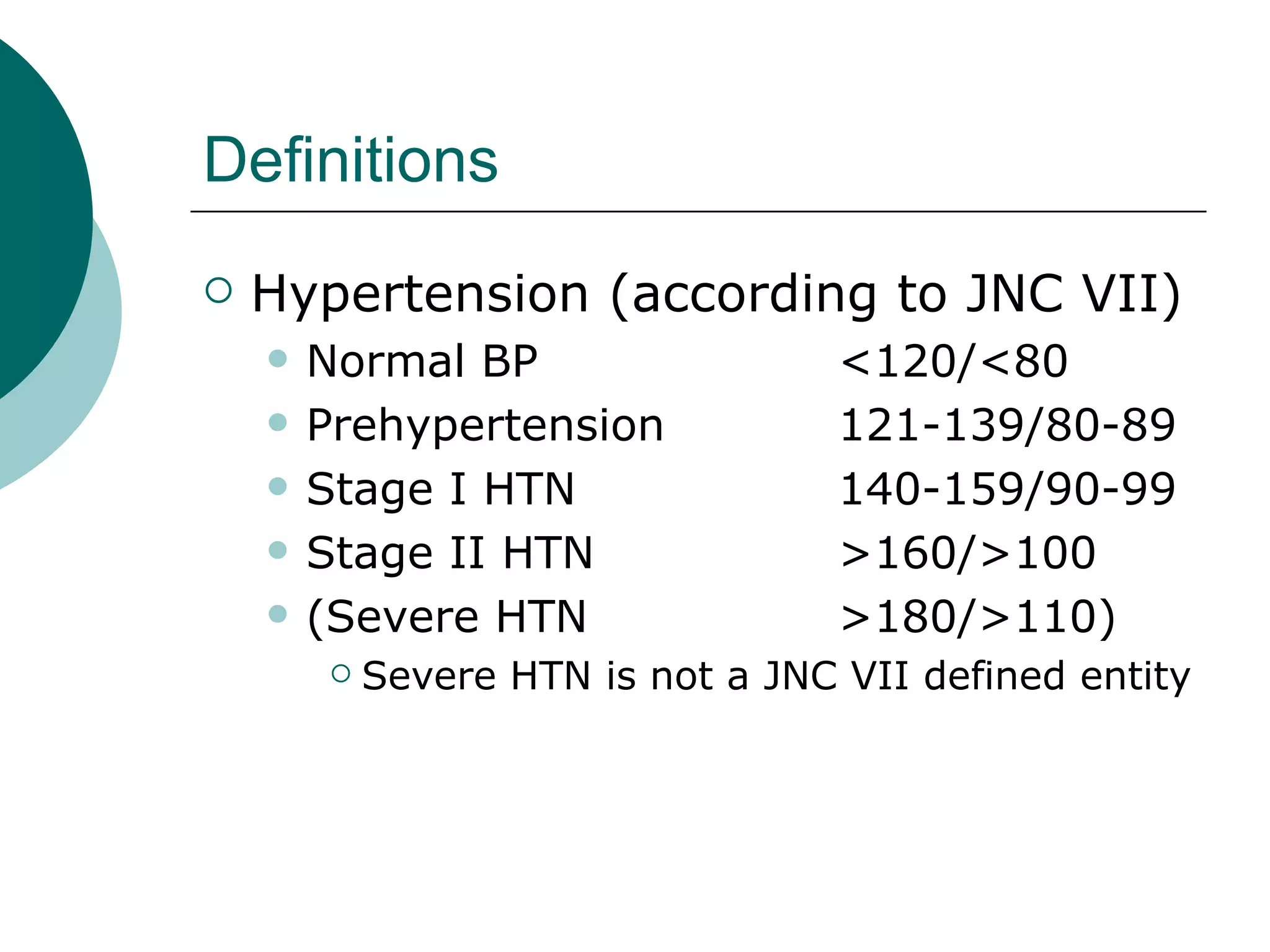
   Hypertension (according to JNC VII)
       Normal BP                   <120/<80
       Prehypertension             121-139/80-89
       Stage I HTN                 140-159/90-99
       Stage II HTN                >160/>100
       (Severe HTN                 >180/>110)
           Severe HTN is not a JNC VII defined entity
Definitions
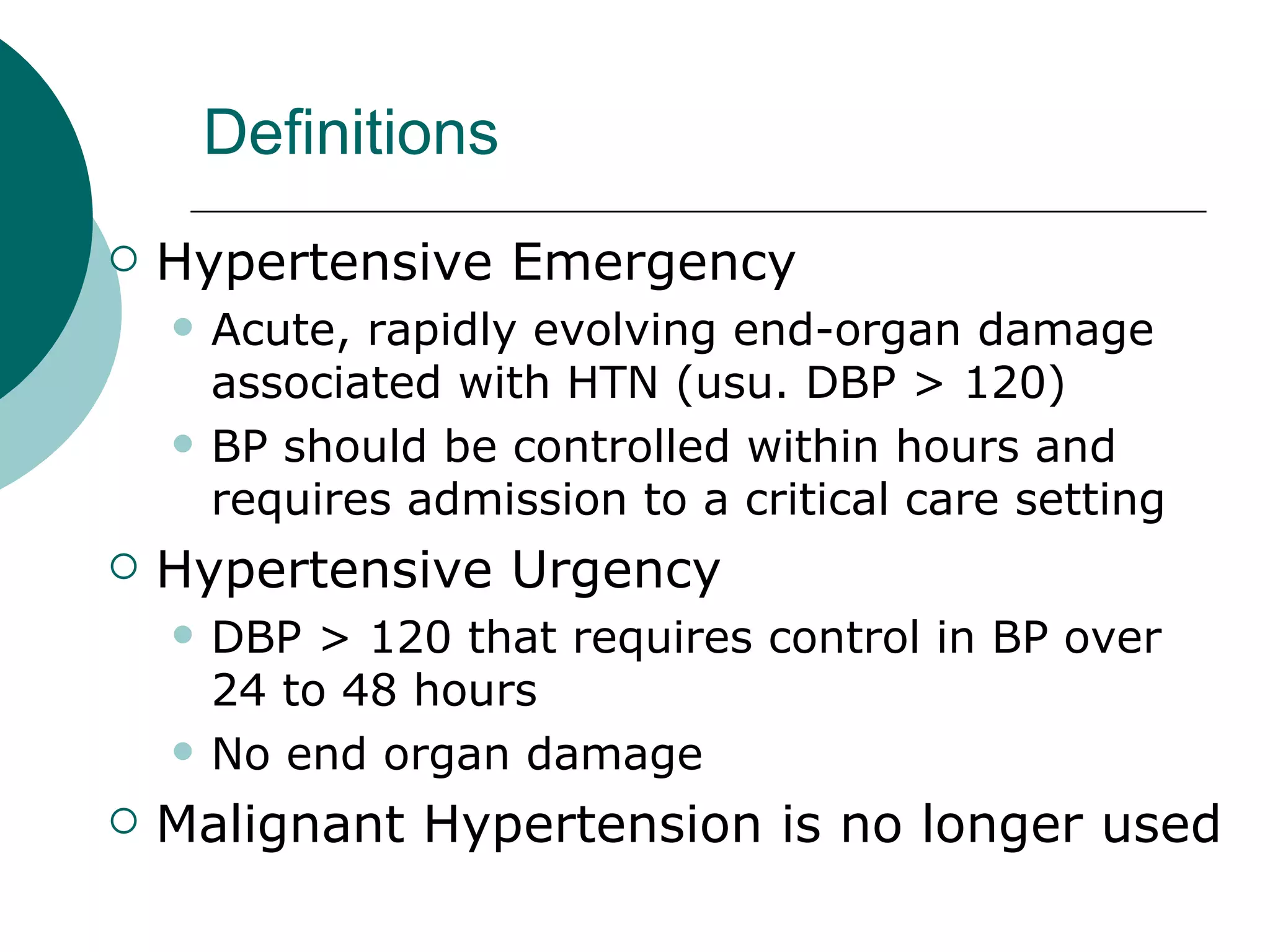
   Hypertensive Emergency
       Acute, rapidly evolving end-organ damage
        associated with HTN (usu. DBP > 120)
       BP should be controlled within hours and
        requires admission to a critical care setting
   Hypertensive Urgency
       DBP > 120 that requires control in BP over
        24 to 48 hours
       No end organ damage
   Malignant Hypertension is no longer used
Definitions
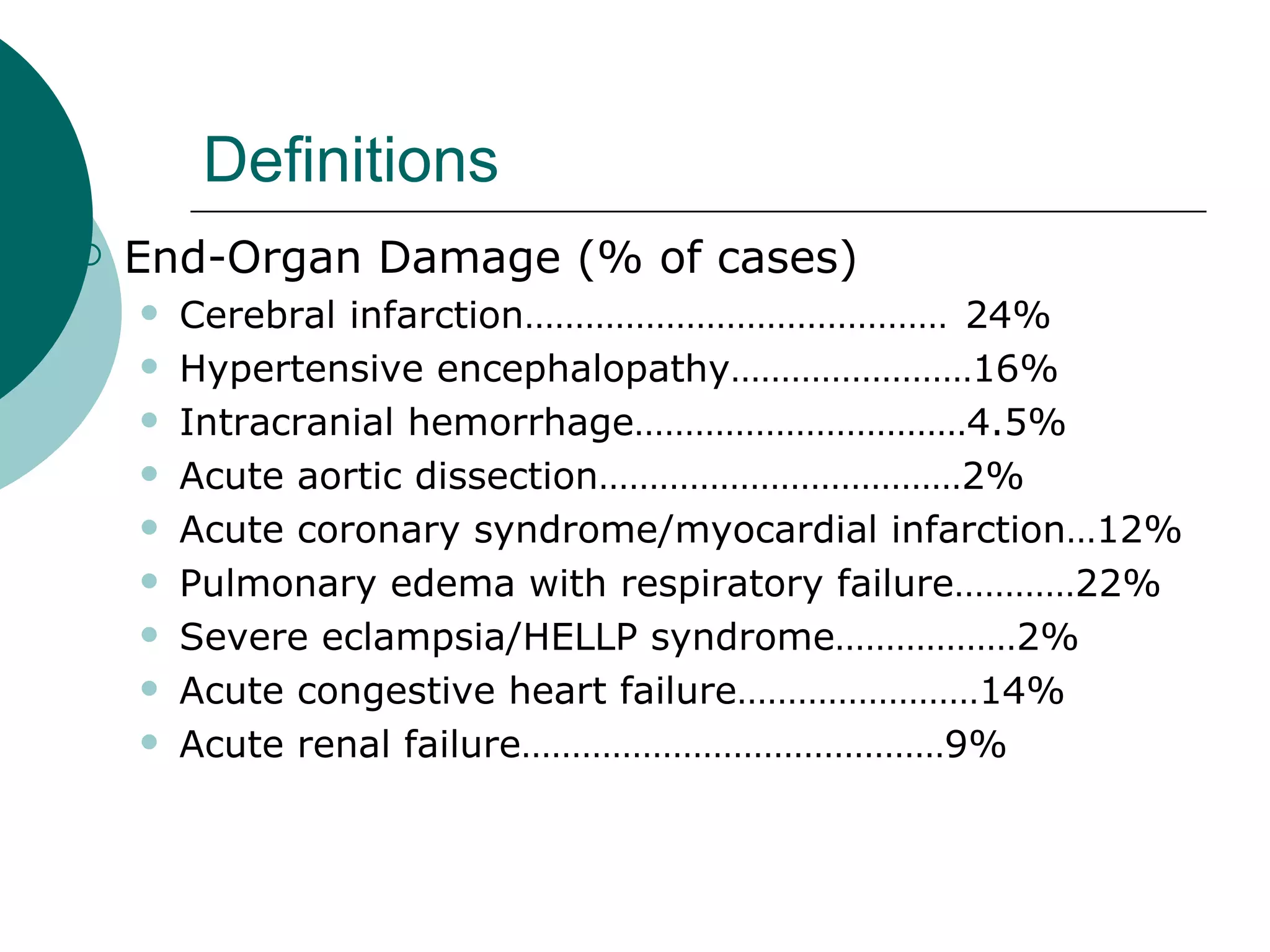
   End-Organ Damage (% of cases)
       Cerebral infarction…………………………………… 24%
       Hypertensive encephalopathy……………………16%
       Intracranial hemorrhage……………………………4.5%
       Acute aortic dissection………………………………2%
       Acute coronary syndrome/myocardial infarction…12%
       Pulmonary edema with respiratory failure…………22%
       Severe eclampsia/HELLP syndrome………………2%
       Acute congestive heart failure……………………14%
       Acute renal failure……………………………………9%
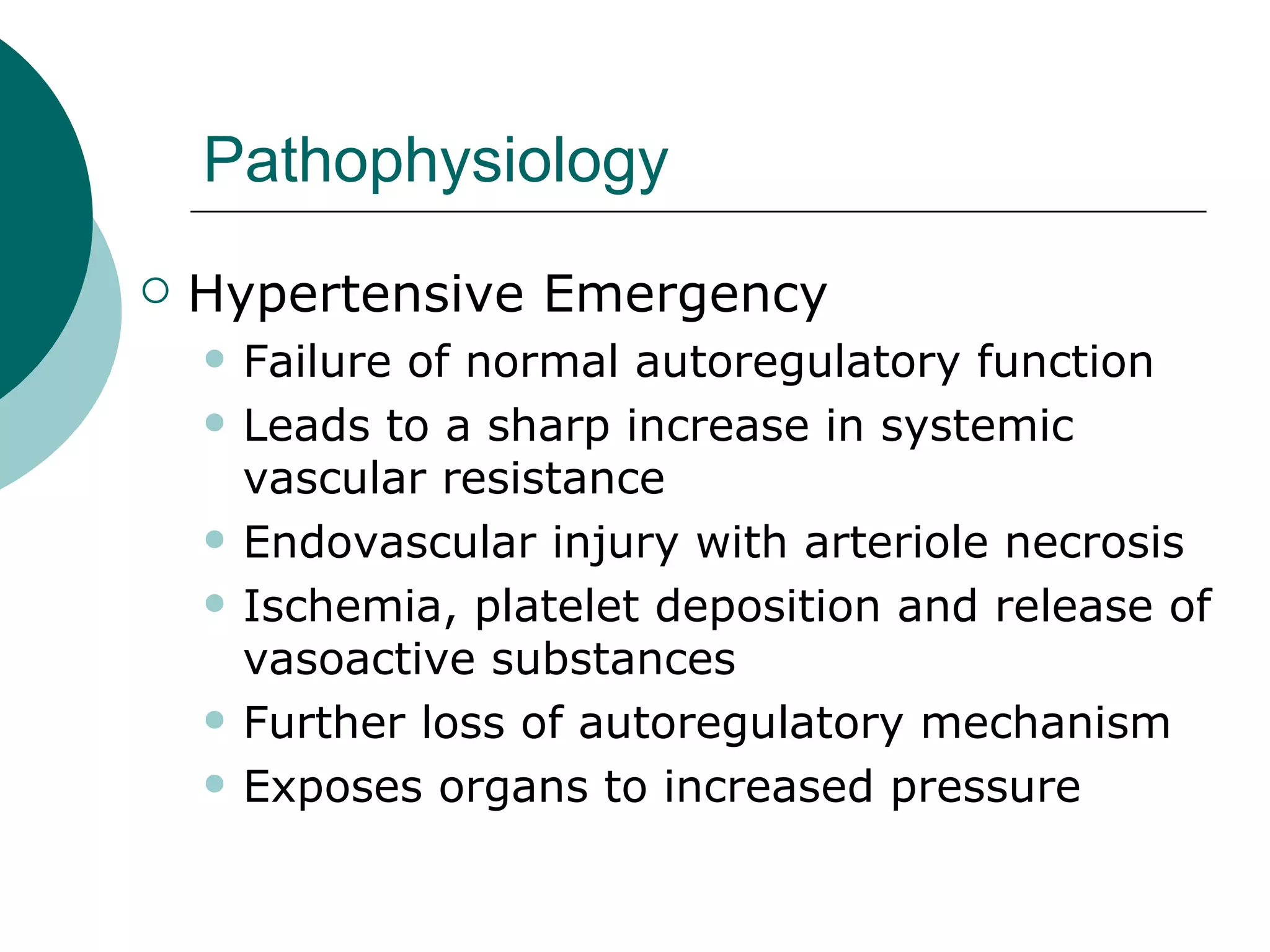
Pathophysiology
   Hypertensive Emergency
       Failure of normal autoregulatory function
       Leads to a sharp increase in systemic
        vascular resistance
       Endovascular injury with arteriole necrosis
       Ischemia, platelet deposition and release of
        vasoactive substances
       Further loss of autoregulatory mechanism
       Exposes organs to increased pressure
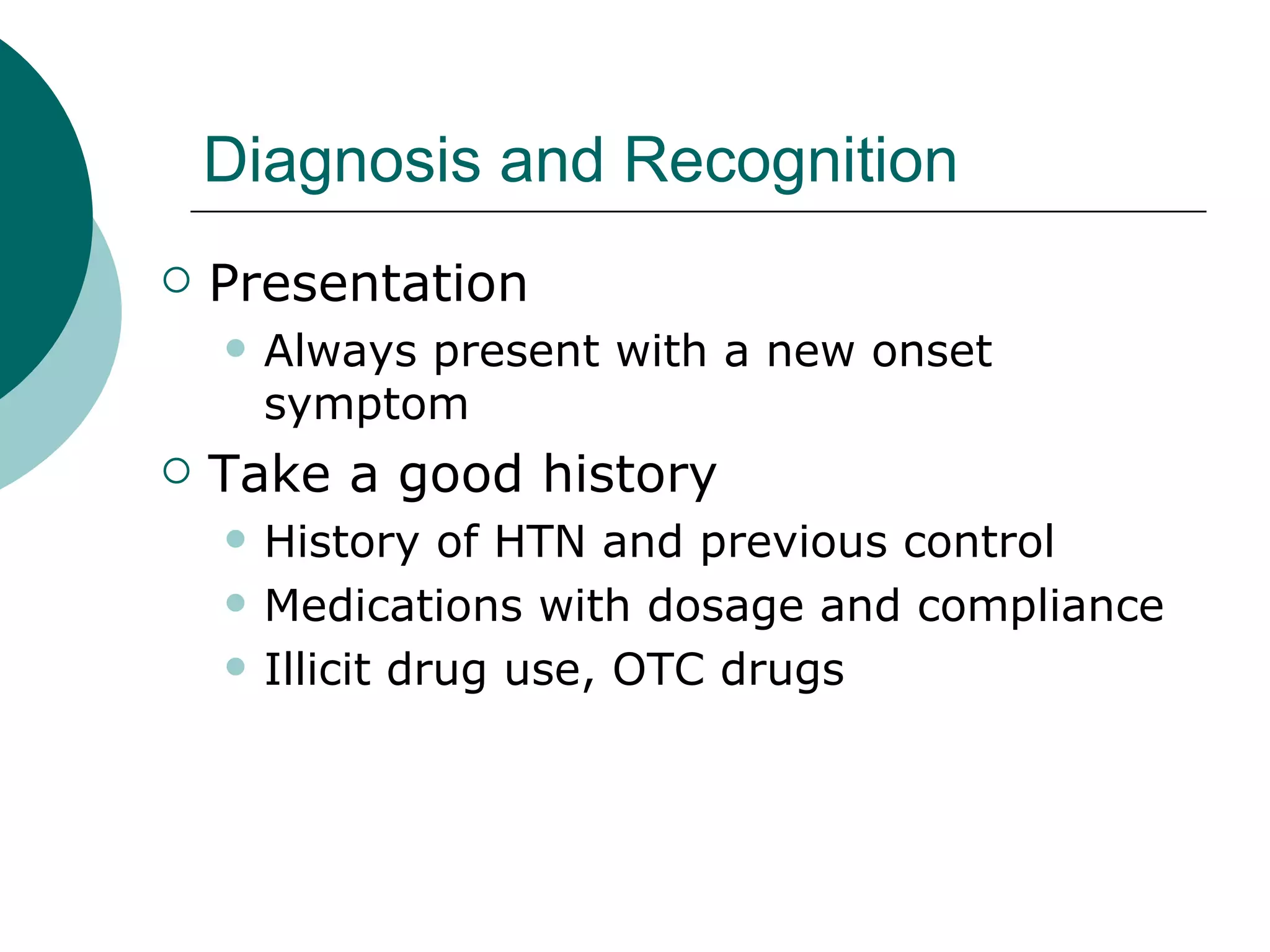
Diagnosis and Recognition
   Presentation
       Always present with a new onset
        symptom
   Take a good history
       History of HTN and previous control
       Medications with dosage and compliance
       Illicit drug use, OTC drugs
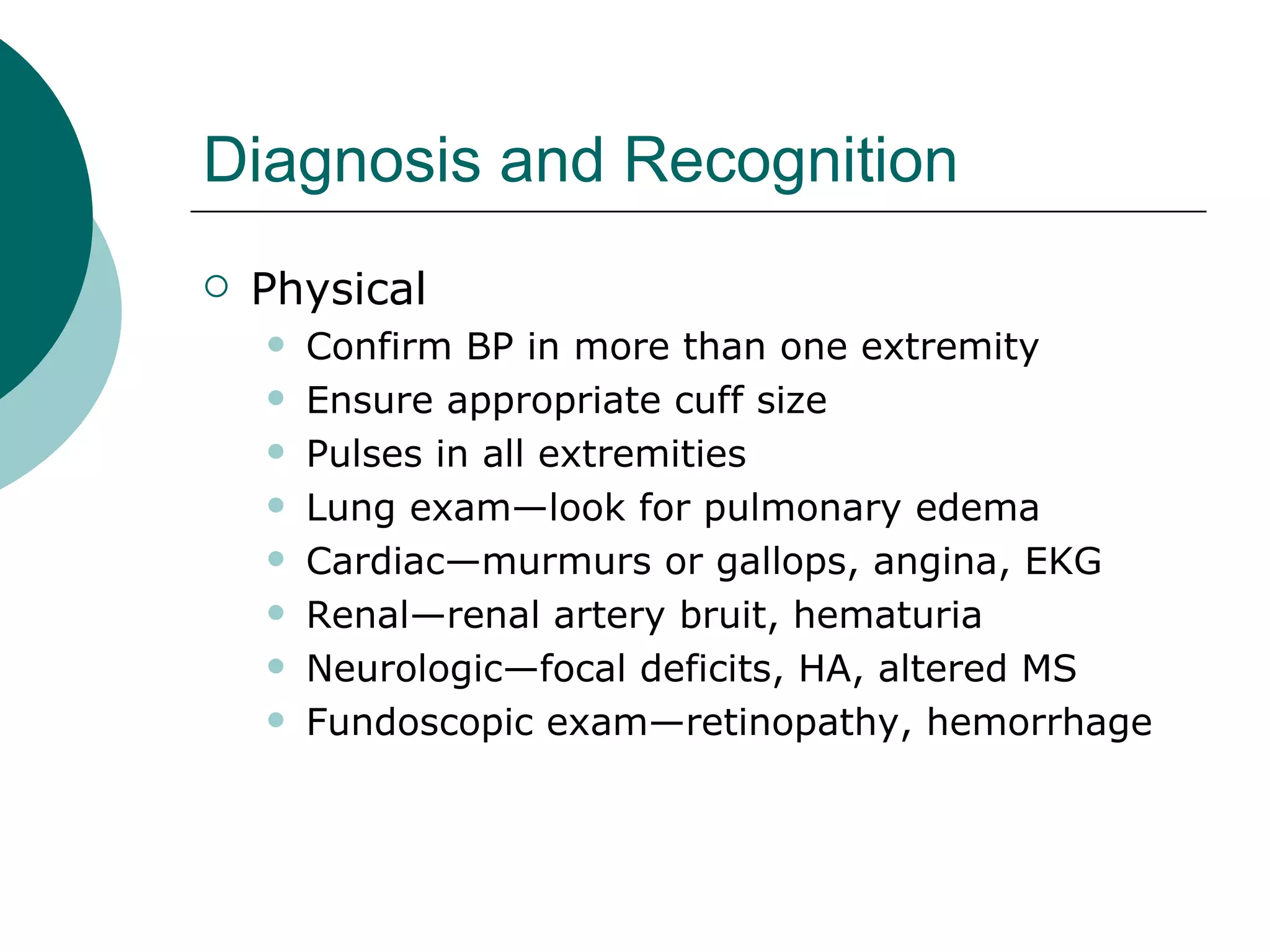
Diagnosis and Recognition
   Physical
       Confirm BP in more than one extremity
       Ensure appropriate cuff size
       Pulses in all extremities
       Lung exam—look for pulmonary edema
       Cardiac—murmurs or gallops, angina, EKG
       Renal—renal artery bruit, hematuria
       Neurologic—focal deficits, HA, altered MS
       Fundoscopic exam—retinopathy, hemorrhage
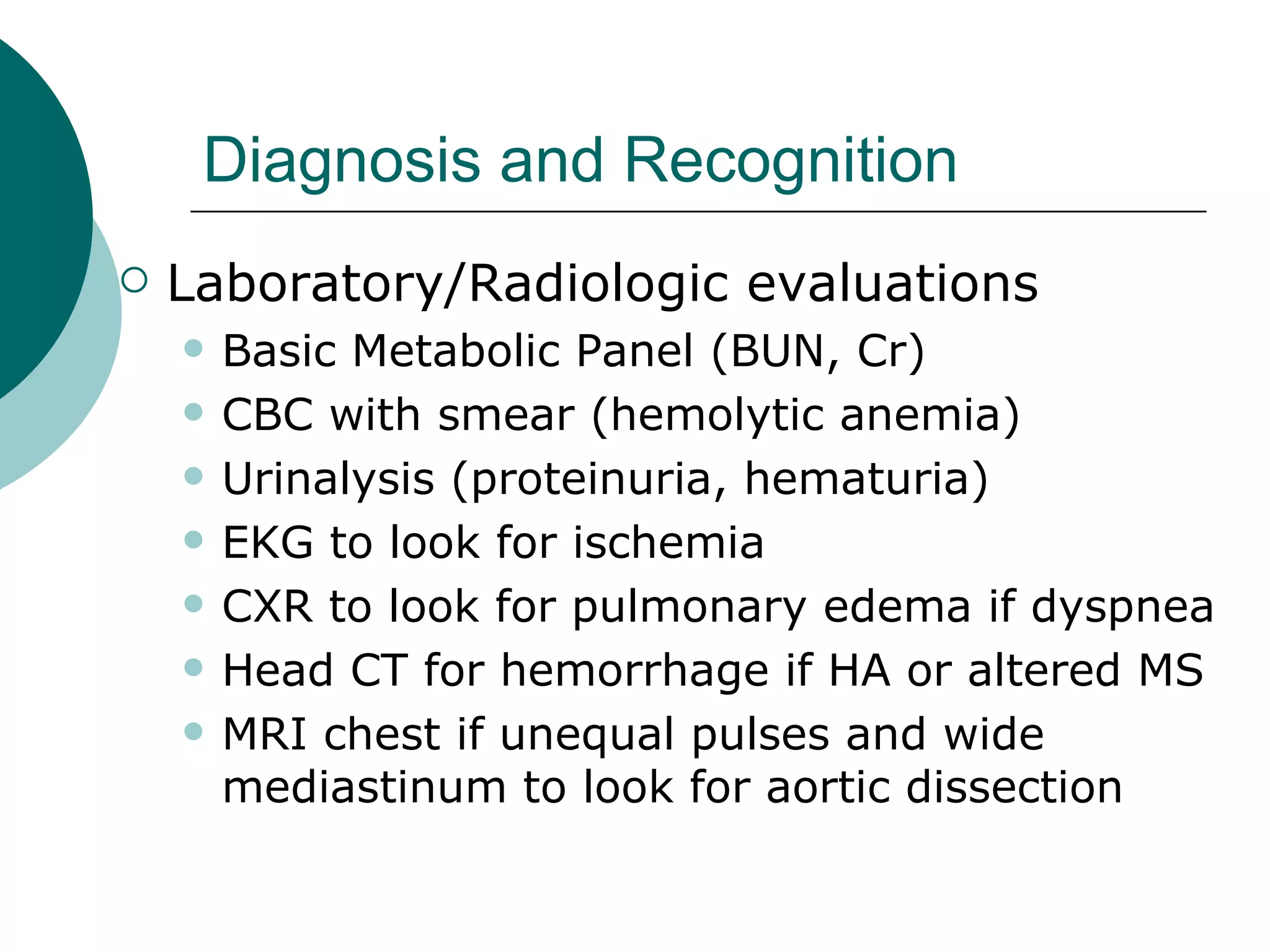
Diagnosis and Recognition
   Laboratory/Radiologic evaluations
       Basic Metabolic Panel (BUN, Cr)
       CBC with smear (hemolytic anemia)
       Urinalysis (proteinuria, hematuria)
       EKG to look for ischemia
       CXR to look for pulmonary edema if dyspnea
       Head CT for hemorrhage if HA or altered MS
       MRI chest if unequal pulses and wide
        mediastinum to look for aortic dissection
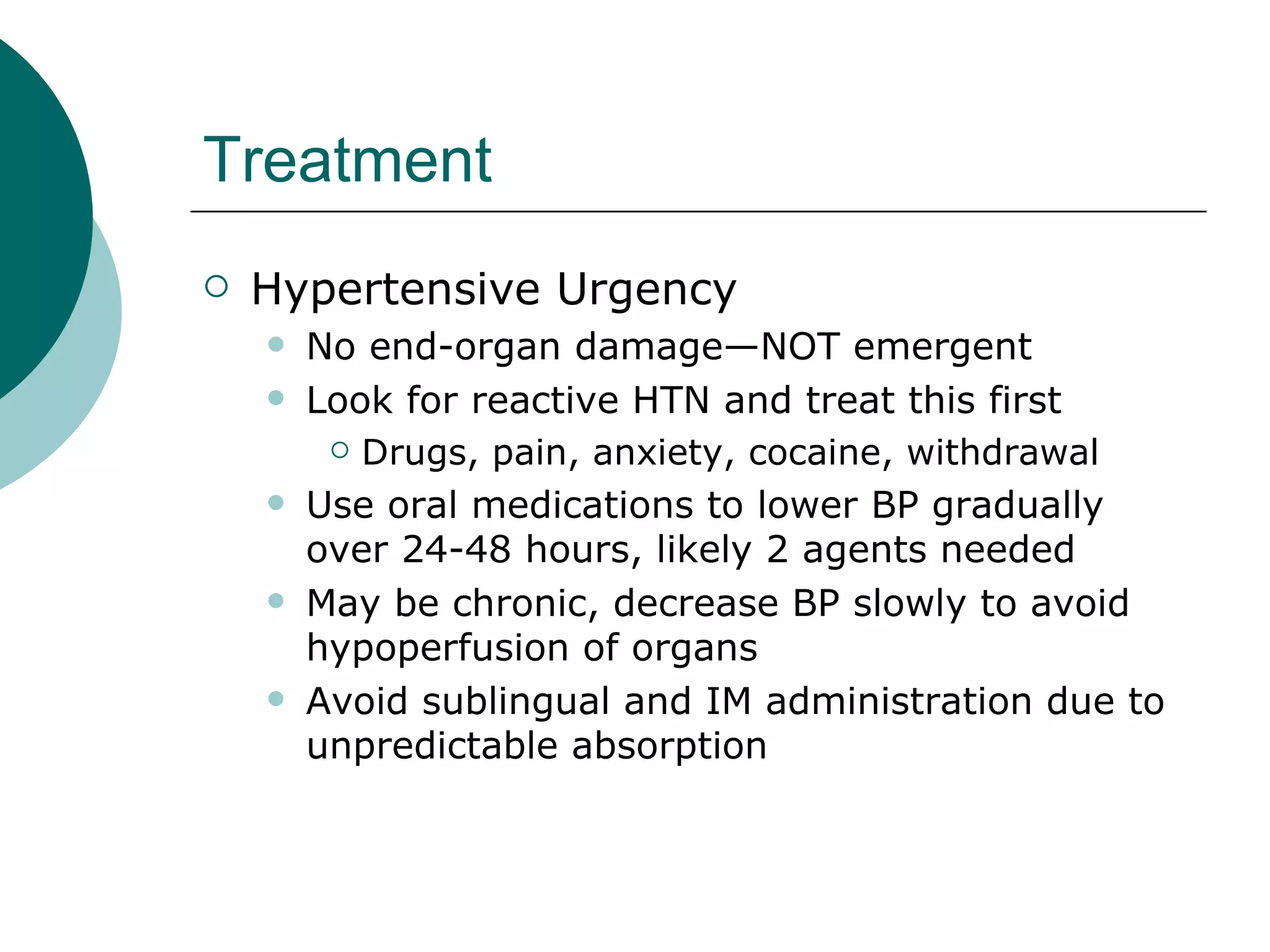
Treatment
   Hypertensive Urgency
       No end-organ damage—NOT emergent
       Look for reactive HTN and treat this first
          Drugs, pain, anxiety, cocaine, withdrawal

       Use oral medications to lower BP gradually
        over 24-48 hours, likely 2 agents needed
       May be chronic, decrease BP slowly to avoid
        hypoperfusion of organs
       Avoid sublingual and IM administration due to
        unpredictable absorption
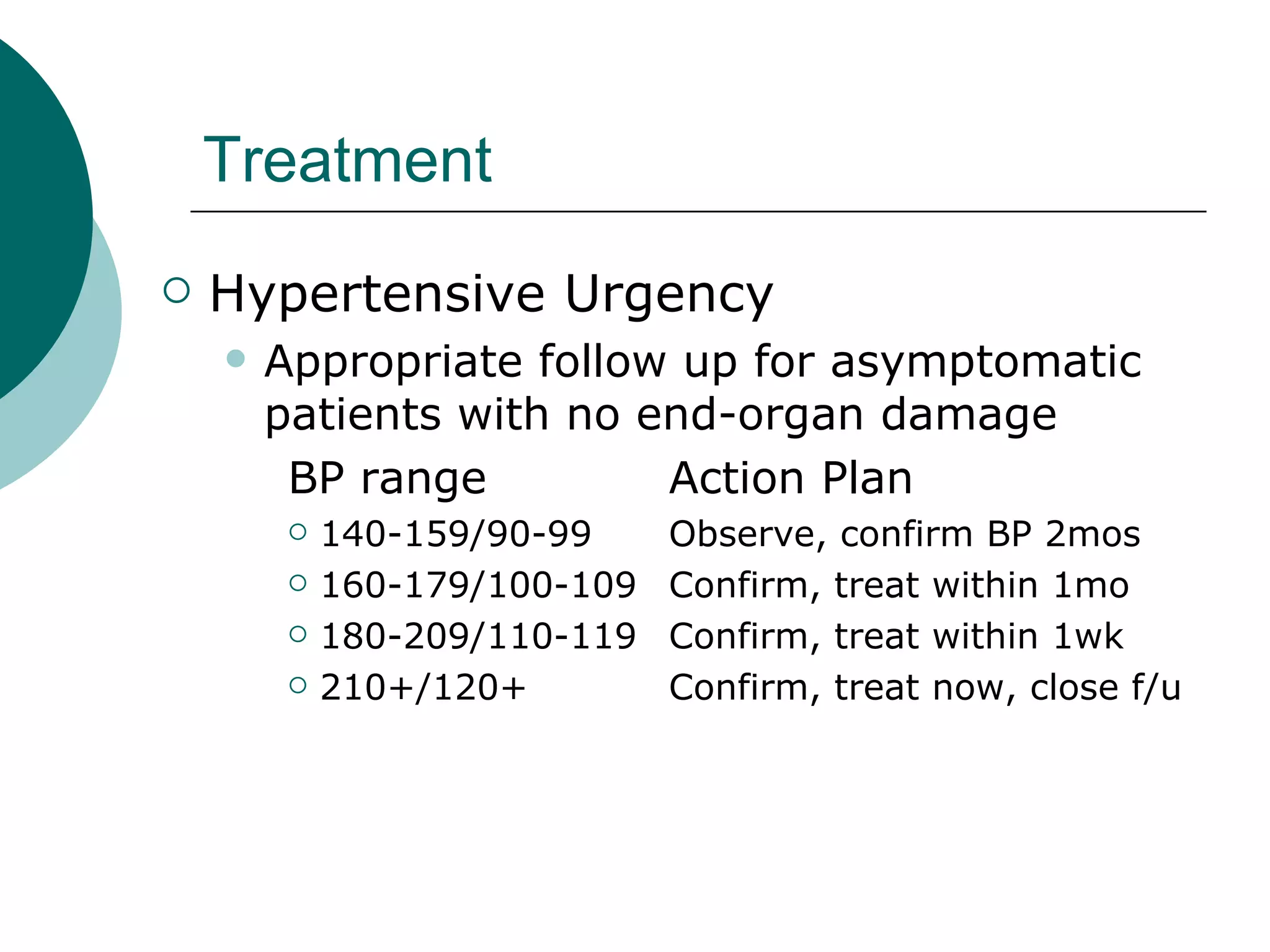
Treatment
   Hypertensive Urgency
       Appropriate follow up for asymptomatic
        patients with no end-organ damage
         BP range         Action Plan
            140-159/90-99     Observe, confirm BP 2mos
            160-179/100-109   Confirm, treat within 1mo
            180-209/110-119   Confirm, treat within 1wk
            210+/120+         Confirm, treat now, close f/u
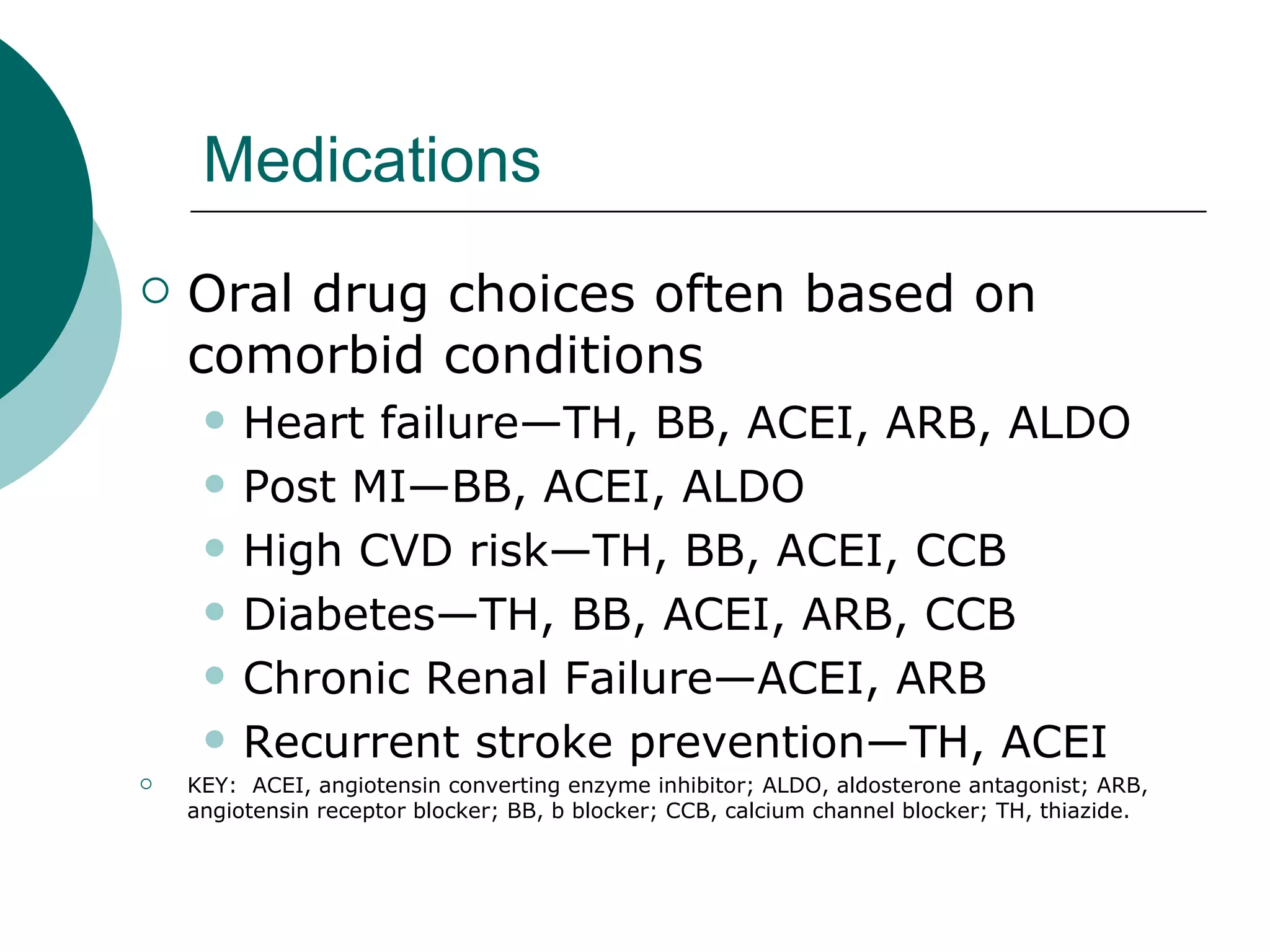
Medications
   Oral drug choices often based on
    comorbid conditions
        Heart failure—TH, BB, ACEI, ARB, ALDO
        Post MI—BB, ACEI, ALDO
        High CVD risk—TH, BB, ACEI, CCB
        Diabetes—TH, BB, ACEI, ARB, CCB
        Chronic Renal Failure—ACEI, ARB
        Recurrent stroke prevention—TH, ACEI
   KEY: ACEI, angiotensin converting enzyme inhibitor; ALDO, aldosterone antagonist; ARB,
    angiotensin receptor blocker; BB, b blocker; CCB, calcium channel blocker; TH, thiazide.
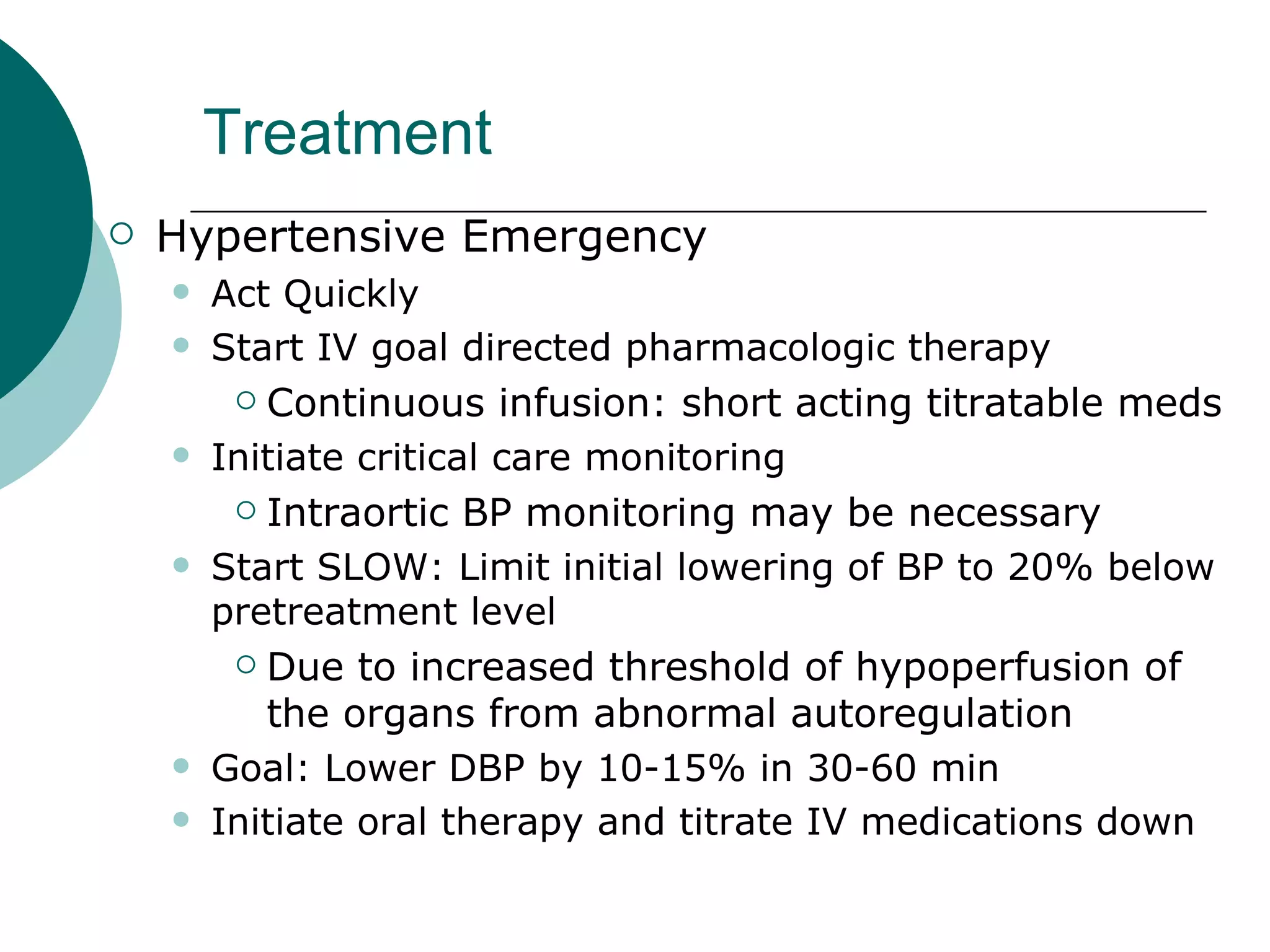
Treatment
   Hypertensive Emergency
       Act Quickly
       Start IV goal directed pharmacologic therapy
          Continuous infusion: short acting titratable meds
       Initiate critical care monitoring
          Intraortic BP monitoring may be necessary

       Start SLOW: Limit initial lowering of BP to 20% below
        pretreatment level
          Due to increased threshold of hypoperfusion of

           the organs from abnormal autoregulation
       Goal: Lower DBP by 10-15% in 30-60 min
       Initiate oral therapy and titrate IV medications down
Medications
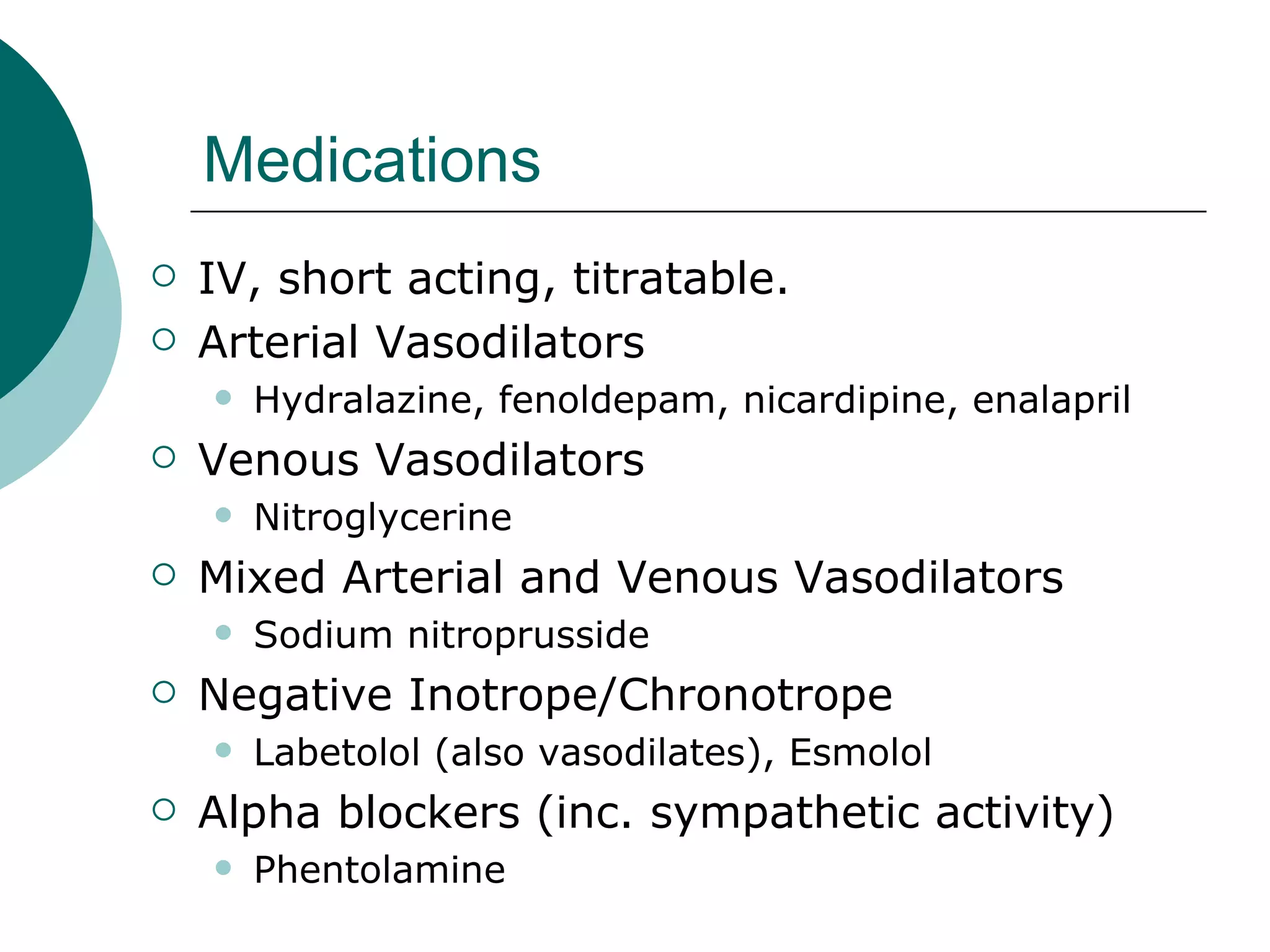
   IV, short acting, titratable.
   Arterial Vasodilators
       Hydralazine, fenoldepam, nicardipine, enalapril
   Venous Vasodilators
       Nitroglycerine
   Mixed Arterial and Venous Vasodilators
       Sodium nitroprusside
   Negative Inotrope/Chronotrope
       Labetolol (also vasodilates), Esmolol
   Alpha blockers (inc. sympathetic activity)
       Phentolamine
Medications
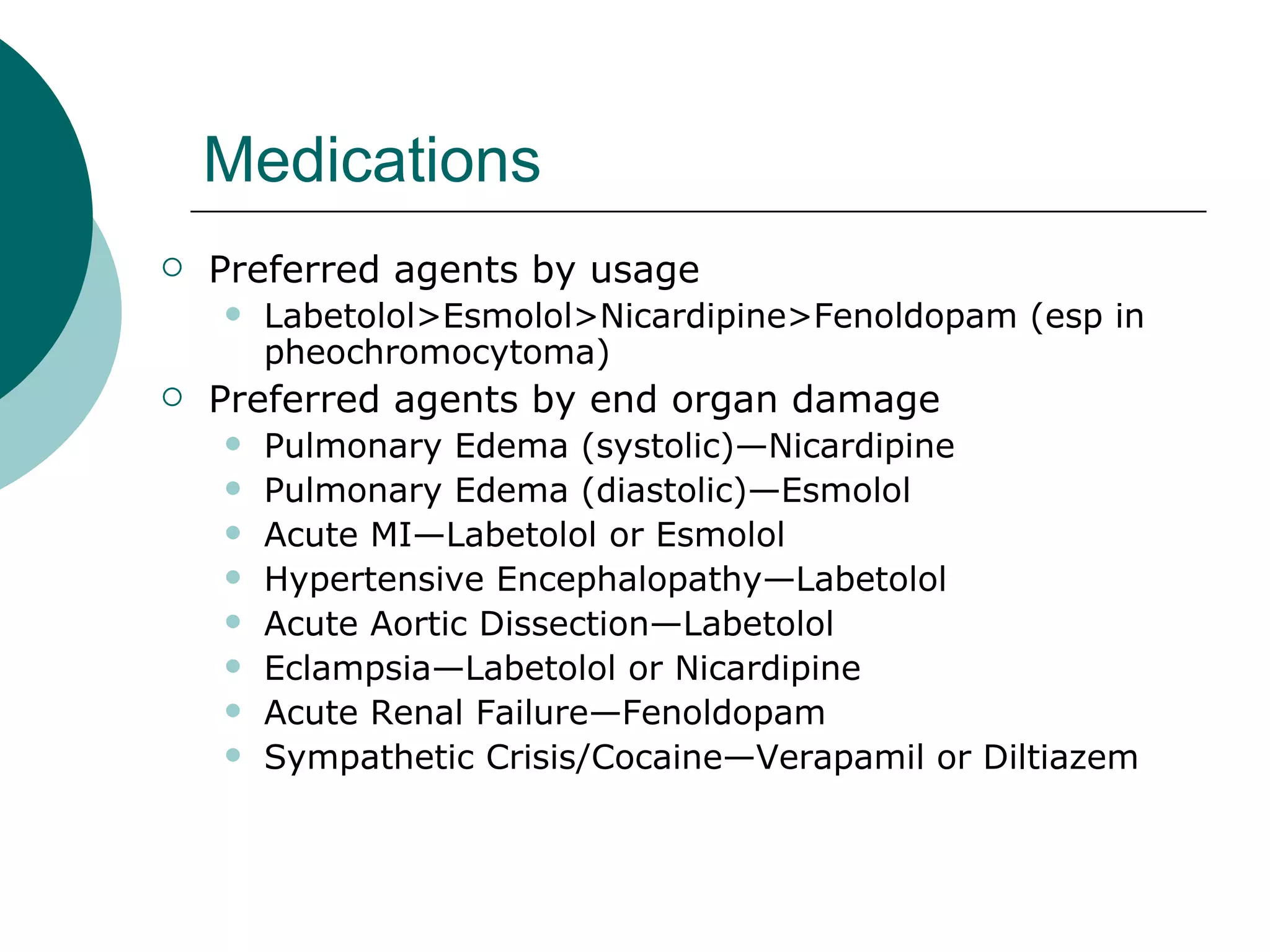
   Preferred agents by usage
       Labetolol>Esmolol>Nicardipine>Fenoldopam (esp in
        pheochromocytoma)
   Preferred agents by end organ damage
       Pulmonary Edema (systolic)—Nicardipine
       Pulmonary Edema (diastolic)—Esmolol
       Acute MI—Labetolol or Esmolol
       Hypertensive Encephalopathy—Labetolol
       Acute Aortic Dissection—Labetolol
       Eclampsia—Labetolol or Nicardipine
       Acute Renal Failure—Fenoldopam
       Sympathetic Crisis/Cocaine—Verapamil or Diltiazem
Special Circumstances
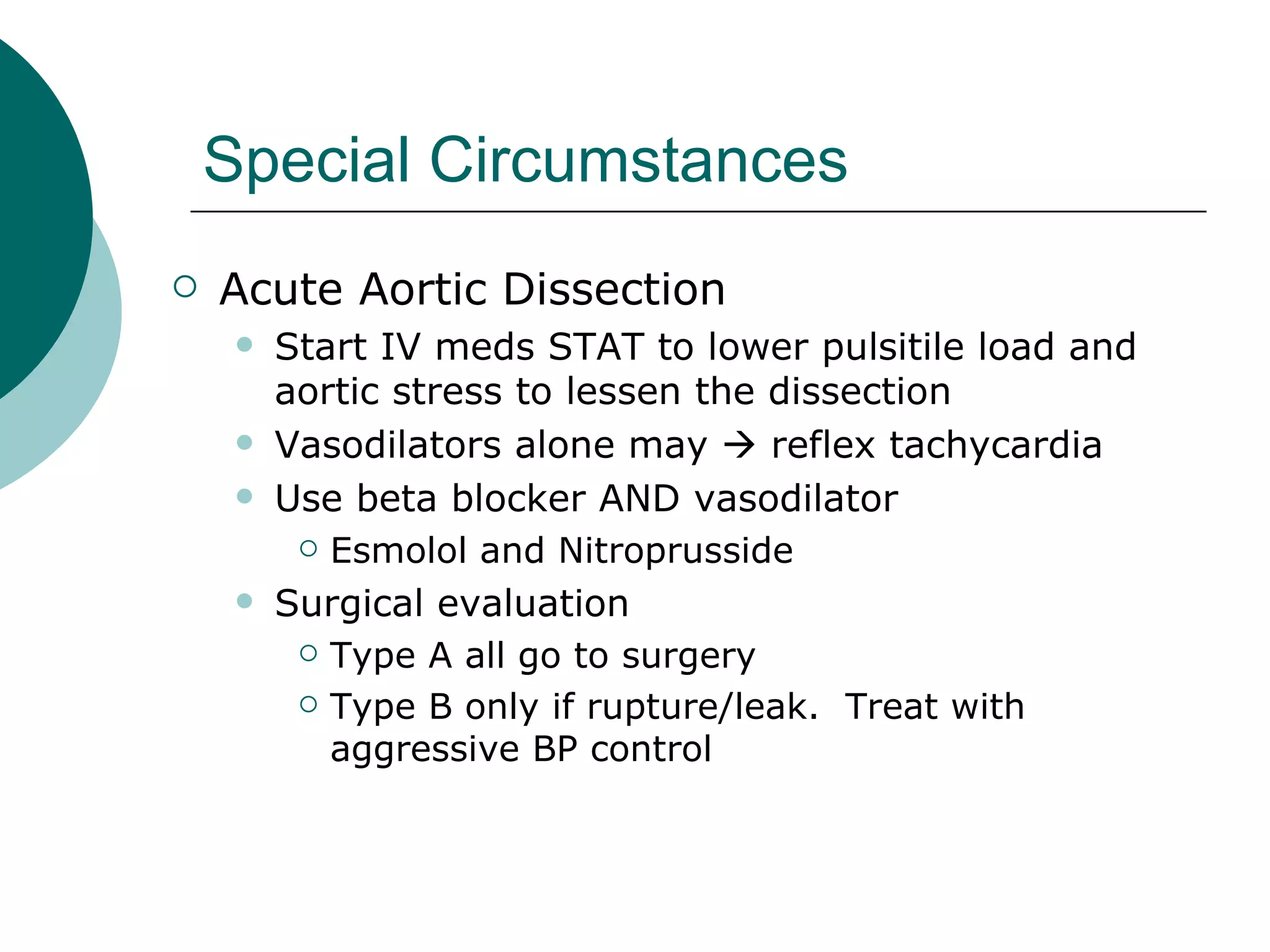
   Acute Aortic Dissection
        Start IV meds STAT to lower pulsitile load and
         aortic stress to lessen the dissection
        Vasodilators alone may  reflex tachycardia
        Use beta blocker AND vasodilator
           Esmolol and Nitroprusside

        Surgical evaluation
           Type A all go to surgery

           Type B only if rupture/leak. Treat with

            aggressive BP control
Special Circumstances
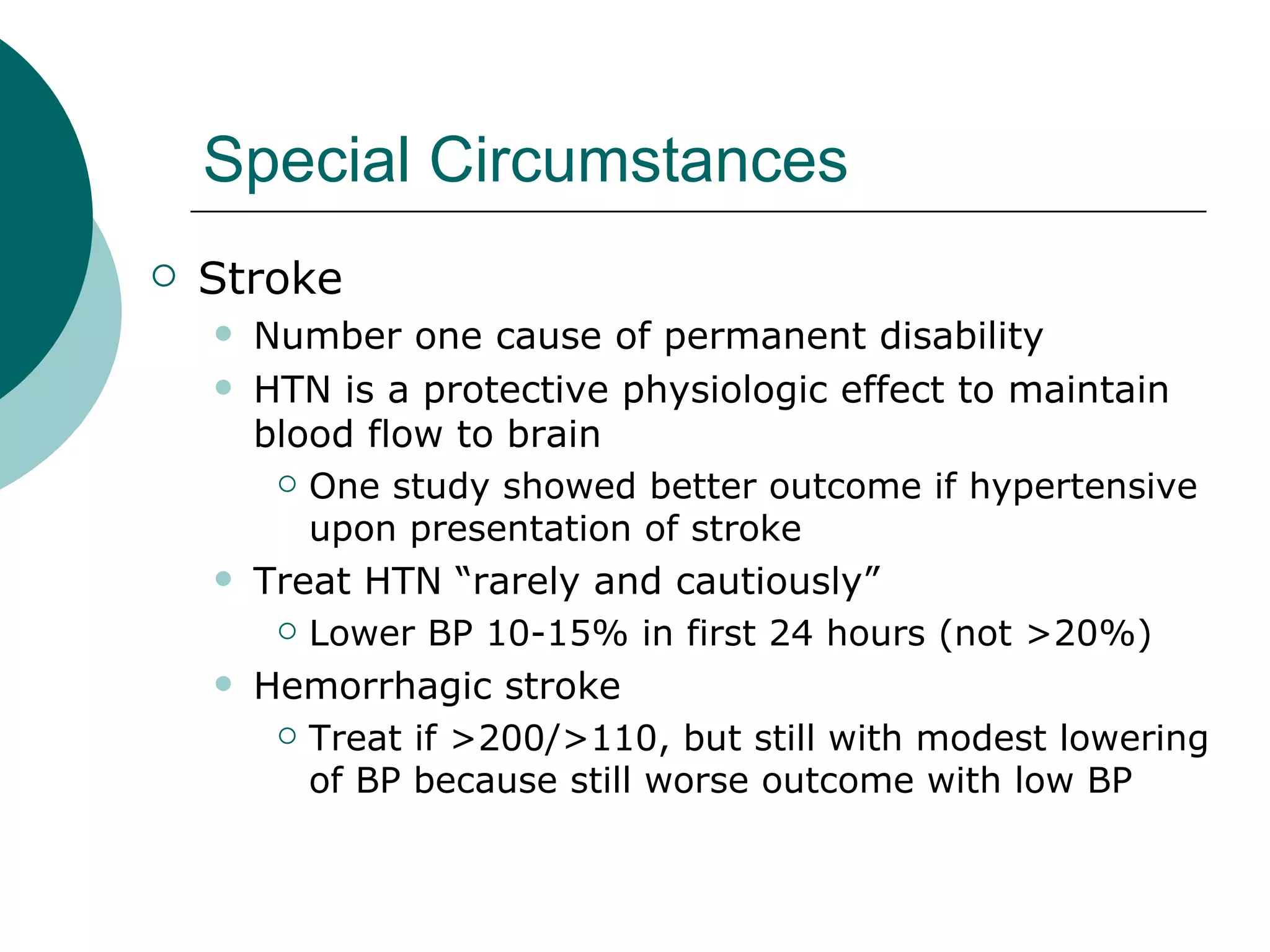
   Stroke
       Number one cause of permanent disability
       HTN is a protective physiologic effect to maintain
        blood flow to brain
          One study showed better outcome if hypertensive

           upon presentation of stroke
       Treat HTN “rarely and cautiously”
          Lower BP 10-15% in first 24 hours (not >20%)

       Hemorrhagic stroke
          Treat if >200/>110, but still with modest lowering

           of BP because still worse outcome with low BP
Special Circumstances
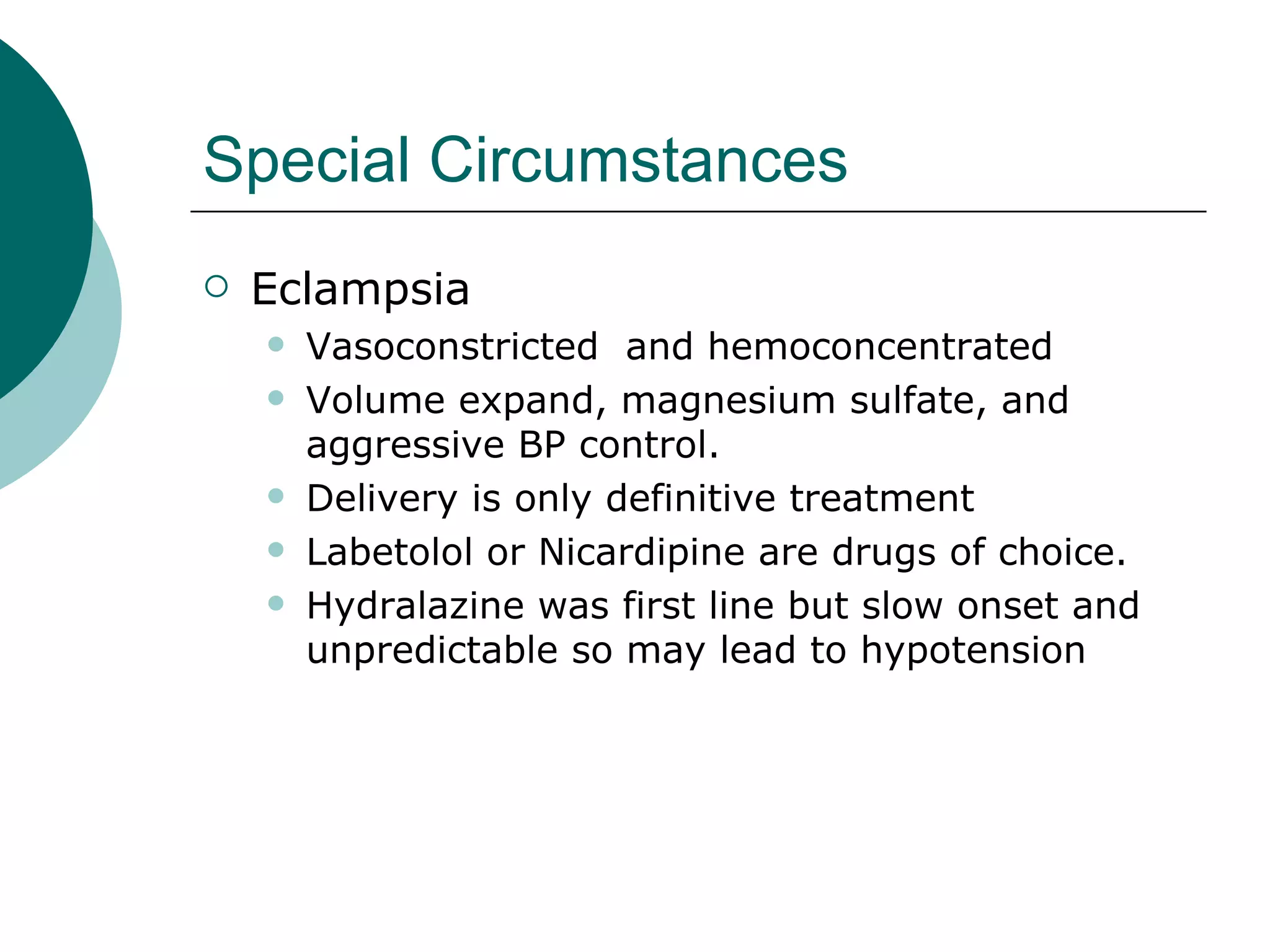
   Eclampsia
       Vasoconstricted and hemoconcentrated
       Volume expand, magnesium sulfate, and
        aggressive BP control.
       Delivery is only definitive treatment
       Labetolol or Nicardipine are drugs of choice.
       Hydralazine was first line but slow onset and
        unpredictable so may lead to hypotension
Special Circumstances
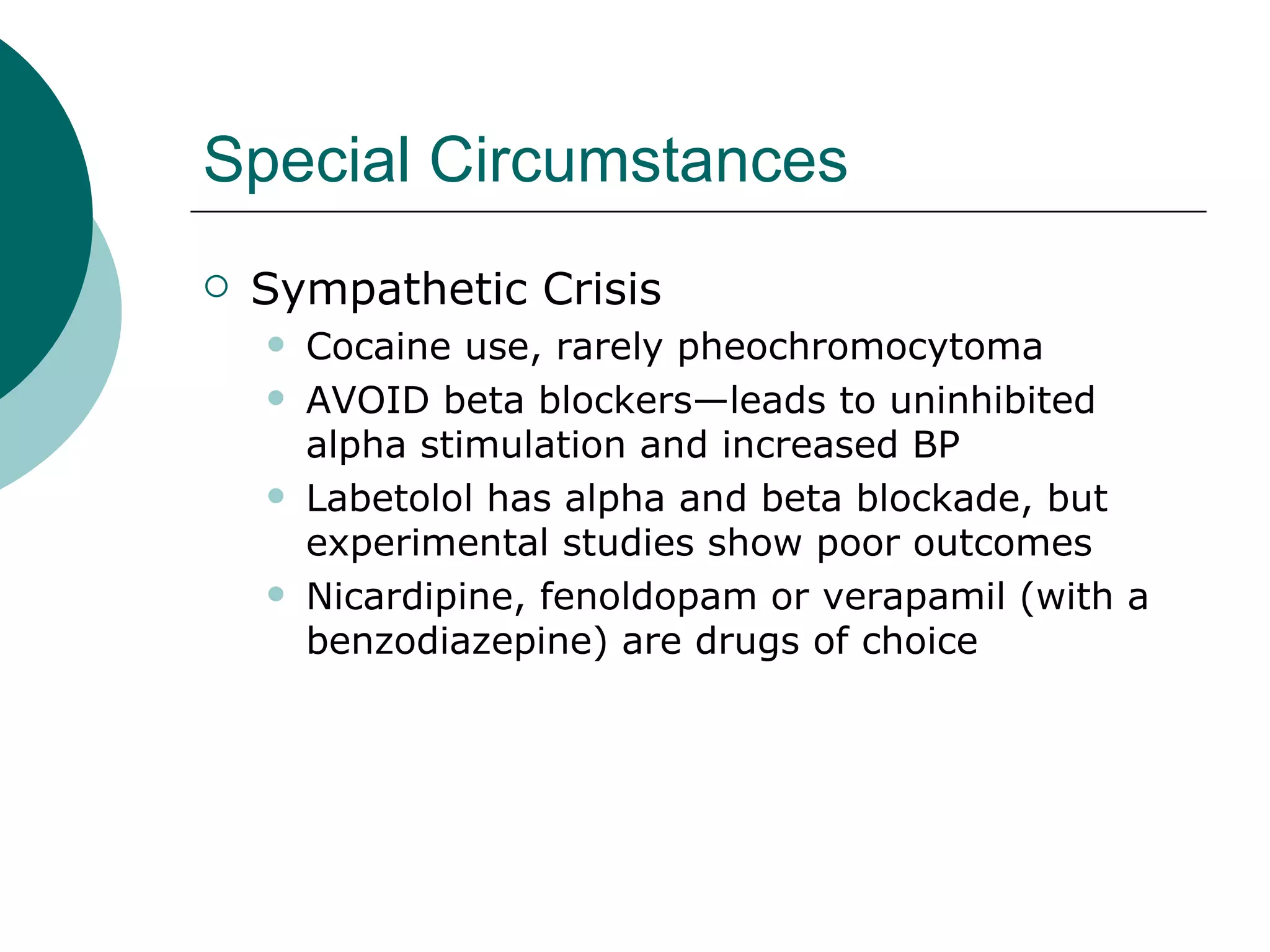
   Sympathetic Crisis
       Cocaine use, rarely pheochromocytoma
       AVOID beta blockers—leads to uninhibited
        alpha stimulation and increased BP
       Labetolol has alpha and beta blockade, but
        experimental studies show poor outcomes
       Nicardipine, fenoldopam or verapamil (with a
        benzodiazepine) are drugs of choice
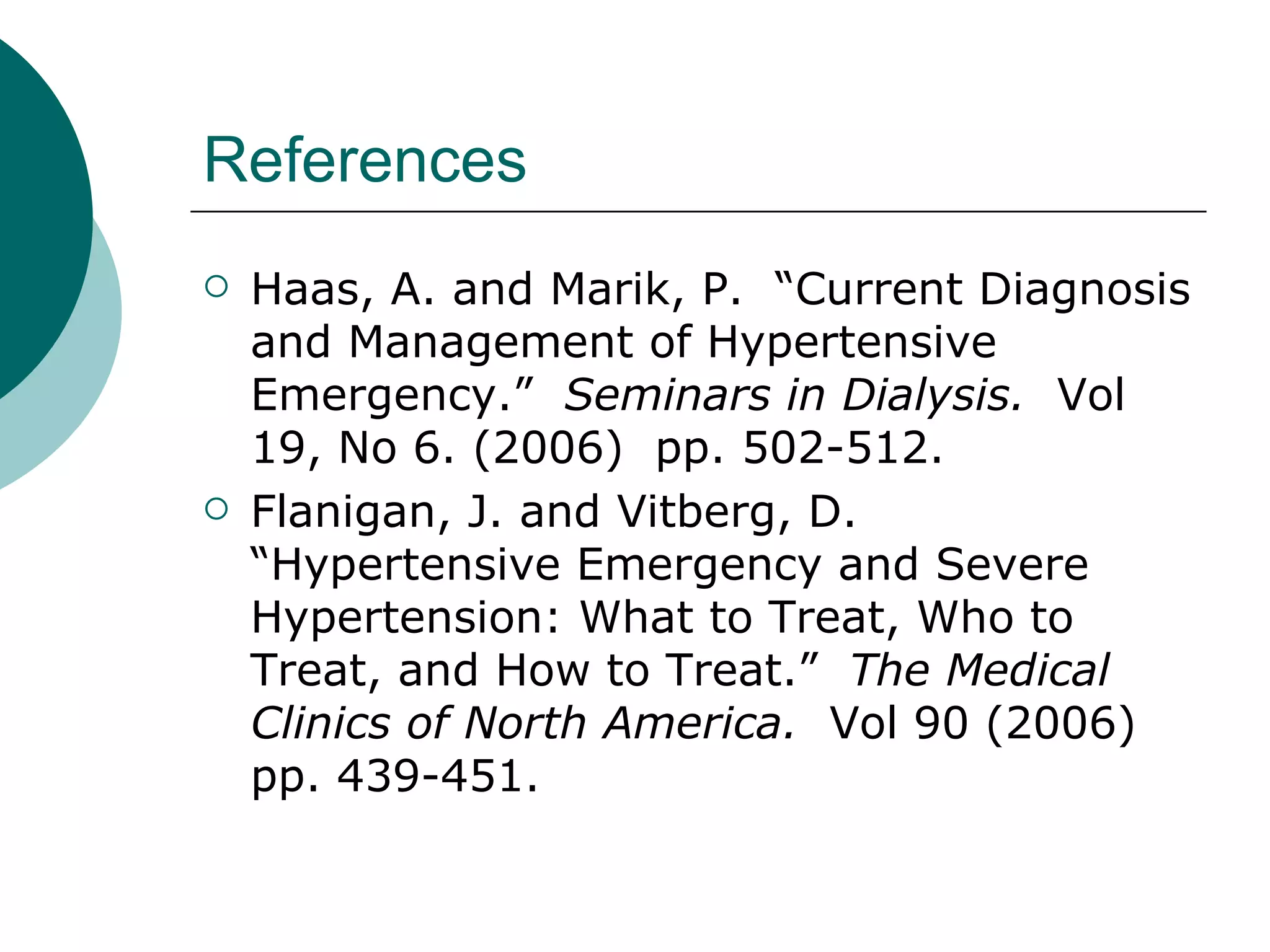
References
   Haas, A. and Marik, P. “Current Diagnosis
    and Management of Hypertensive
    Emergency.” Seminars in Dialysis. Vol
    19, No 6. (2006) pp. 502-512.
   Flanigan, J. and Vitberg, D.
    “Hypertensive Emergency and Severe
    Hypertension: What to Treat, Who to
    Treat, and How to Treat.” The Medical
    Clinics of North America. Vol 90 (2006)
    pp. 439-451.

Hypertensive emergency

  • 1.
    Hypertensive Emergency Daniel J.McFarlane M.D. Division of Hospital Medicine January 2011
  • 2.
    Outline  Epidemiology  Definitions Pathophysiology  Diagnosis and Recognition  Treatment  Special Circumstances
  • 3.
    Epidemiology  Why should we care about hypertension?  One of the most common chronic medical concerns in the US  Affects >30% of the population > age 20  Risk factor for  Cardiovascular disease and mortality  Cerebrovascular disease and mortality  End stage renal disease  Other end organ damage
  • 4.
    Epidemiology  Why should we care about hypertension?  30% of the population is unaware they have hypertension  Control rates for known cases is about 50% (we don’t do a great job at controlling BP)  Risk Factors  If >50, systolic BP > 140 is a more concerning risk factor for cardiovascular disease than diastolic BP.  The risk of cardiovascular disease doubles for every increase in BP of 20/10 over 115/75.
  • 5.
    Epidemiology  Hypertensive Emergency  Estimates are that about 1% of those with hypertension will present with hypertensive emergency each year  That is >500,000 Americans per year  Correct and quick diagnosis and management is critical  Mortality rate of up to 90%
  • 6.
    Definitions  Hypertension (according to JNC VII)  Normal BP <120/<80  Prehypertension 121-139/80-89  Stage I HTN 140-159/90-99  Stage II HTN >160/>100  (Severe HTN >180/>110)  Severe HTN is not a JNC VII defined entity
  • 7.
    Definitions  Hypertensive Emergency  Acute, rapidly evolving end-organ damage associated with HTN (usu. DBP > 120)  BP should be controlled within hours and requires admission to a critical care setting  Hypertensive Urgency  DBP > 120 that requires control in BP over 24 to 48 hours  No end organ damage  Malignant Hypertension is no longer used
  • 8.
    Definitions  End-Organ Damage (% of cases)  Cerebral infarction…………………………………… 24%  Hypertensive encephalopathy……………………16%  Intracranial hemorrhage……………………………4.5%  Acute aortic dissection………………………………2%  Acute coronary syndrome/myocardial infarction…12%  Pulmonary edema with respiratory failure…………22%  Severe eclampsia/HELLP syndrome………………2%  Acute congestive heart failure……………………14%  Acute renal failure……………………………………9%
  • 9.
    Pathophysiology  Hypertensive Emergency  Failure of normal autoregulatory function  Leads to a sharp increase in systemic vascular resistance  Endovascular injury with arteriole necrosis  Ischemia, platelet deposition and release of vasoactive substances  Further loss of autoregulatory mechanism  Exposes organs to increased pressure
  • 10.
    Diagnosis and Recognition  Presentation  Always present with a new onset symptom  Take a good history  History of HTN and previous control  Medications with dosage and compliance  Illicit drug use, OTC drugs
  • 11.
    Diagnosis and Recognition  Physical  Confirm BP in more than one extremity  Ensure appropriate cuff size  Pulses in all extremities  Lung exam—look for pulmonary edema  Cardiac—murmurs or gallops, angina, EKG  Renal—renal artery bruit, hematuria  Neurologic—focal deficits, HA, altered MS  Fundoscopic exam—retinopathy, hemorrhage
  • 12.
    Diagnosis and Recognition  Laboratory/Radiologic evaluations  Basic Metabolic Panel (BUN, Cr)  CBC with smear (hemolytic anemia)  Urinalysis (proteinuria, hematuria)  EKG to look for ischemia  CXR to look for pulmonary edema if dyspnea  Head CT for hemorrhage if HA or altered MS  MRI chest if unequal pulses and wide mediastinum to look for aortic dissection
  • 13.
    Treatment  Hypertensive Urgency  No end-organ damage—NOT emergent  Look for reactive HTN and treat this first  Drugs, pain, anxiety, cocaine, withdrawal  Use oral medications to lower BP gradually over 24-48 hours, likely 2 agents needed  May be chronic, decrease BP slowly to avoid hypoperfusion of organs  Avoid sublingual and IM administration due to unpredictable absorption
  • 14.
    Treatment  Hypertensive Urgency  Appropriate follow up for asymptomatic patients with no end-organ damage BP range Action Plan  140-159/90-99 Observe, confirm BP 2mos  160-179/100-109 Confirm, treat within 1mo  180-209/110-119 Confirm, treat within 1wk  210+/120+ Confirm, treat now, close f/u
  • 15.
    Medications  Oral drug choices often based on comorbid conditions  Heart failure—TH, BB, ACEI, ARB, ALDO  Post MI—BB, ACEI, ALDO  High CVD risk—TH, BB, ACEI, CCB  Diabetes—TH, BB, ACEI, ARB, CCB  Chronic Renal Failure—ACEI, ARB  Recurrent stroke prevention—TH, ACEI  KEY: ACEI, angiotensin converting enzyme inhibitor; ALDO, aldosterone antagonist; ARB, angiotensin receptor blocker; BB, b blocker; CCB, calcium channel blocker; TH, thiazide.
  • 16.
    Treatment  Hypertensive Emergency  Act Quickly  Start IV goal directed pharmacologic therapy  Continuous infusion: short acting titratable meds  Initiate critical care monitoring  Intraortic BP monitoring may be necessary  Start SLOW: Limit initial lowering of BP to 20% below pretreatment level  Due to increased threshold of hypoperfusion of the organs from abnormal autoregulation  Goal: Lower DBP by 10-15% in 30-60 min  Initiate oral therapy and titrate IV medications down
  • 17.
    Medications  IV, short acting, titratable.  Arterial Vasodilators  Hydralazine, fenoldepam, nicardipine, enalapril  Venous Vasodilators  Nitroglycerine  Mixed Arterial and Venous Vasodilators  Sodium nitroprusside  Negative Inotrope/Chronotrope  Labetolol (also vasodilates), Esmolol  Alpha blockers (inc. sympathetic activity)  Phentolamine
  • 18.
    Medications  Preferred agents by usage  Labetolol>Esmolol>Nicardipine>Fenoldopam (esp in pheochromocytoma)  Preferred agents by end organ damage  Pulmonary Edema (systolic)—Nicardipine  Pulmonary Edema (diastolic)—Esmolol  Acute MI—Labetolol or Esmolol  Hypertensive Encephalopathy—Labetolol  Acute Aortic Dissection—Labetolol  Eclampsia—Labetolol or Nicardipine  Acute Renal Failure—Fenoldopam  Sympathetic Crisis/Cocaine—Verapamil or Diltiazem
  • 19.
    Special Circumstances  Acute Aortic Dissection  Start IV meds STAT to lower pulsitile load and aortic stress to lessen the dissection  Vasodilators alone may  reflex tachycardia  Use beta blocker AND vasodilator  Esmolol and Nitroprusside  Surgical evaluation  Type A all go to surgery  Type B only if rupture/leak. Treat with aggressive BP control
  • 20.
    Special Circumstances  Stroke  Number one cause of permanent disability  HTN is a protective physiologic effect to maintain blood flow to brain  One study showed better outcome if hypertensive upon presentation of stroke  Treat HTN “rarely and cautiously”  Lower BP 10-15% in first 24 hours (not >20%)  Hemorrhagic stroke  Treat if >200/>110, but still with modest lowering of BP because still worse outcome with low BP
  • 21.
    Special Circumstances  Eclampsia  Vasoconstricted and hemoconcentrated  Volume expand, magnesium sulfate, and aggressive BP control.  Delivery is only definitive treatment  Labetolol or Nicardipine are drugs of choice.  Hydralazine was first line but slow onset and unpredictable so may lead to hypotension
  • 22.
    Special Circumstances  Sympathetic Crisis  Cocaine use, rarely pheochromocytoma  AVOID beta blockers—leads to uninhibited alpha stimulation and increased BP  Labetolol has alpha and beta blockade, but experimental studies show poor outcomes  Nicardipine, fenoldopam or verapamil (with a benzodiazepine) are drugs of choice
  • 23.
    References  Haas, A. and Marik, P. “Current Diagnosis and Management of Hypertensive Emergency.” Seminars in Dialysis. Vol 19, No 6. (2006) pp. 502-512.  Flanigan, J. and Vitberg, D. “Hypertensive Emergency and Severe Hypertension: What to Treat, Who to Treat, and How to Treat.” The Medical Clinics of North America. Vol 90 (2006) pp. 439-451.