Comparison: French and American Revolutions and their Legacies   AP World History West Hills High School
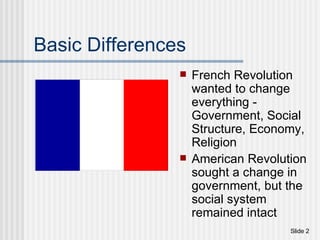
Basic Differences French Revolution wanted to change everything - Government, Social Structure, Economy, Religion American Revolution sought a change in government, but the social system remained intact
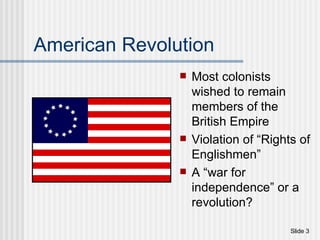
American Revolution Most colonists wished to remain members of the British Empire Violation of “Rights of Englishmen” A “war for independence” or a revolution?
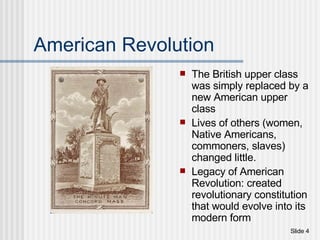
American Revolution The British upper class was simply replaced by a new American upper class  Lives of others (women, Native Americans, commoners, slaves) changed little. Legacy of American Revolution: created revolutionary constitution that would evolve into its modern form
French Revolution Causes Political - no representation, King Louis XVI weak, inefficient government Economic - Inequitable taxation, economic crisis Religious - Church power corrupt Social - Urban poor, feudalism, rising middle class Intellectual - Enlightenment ideas attacked power of King, Church
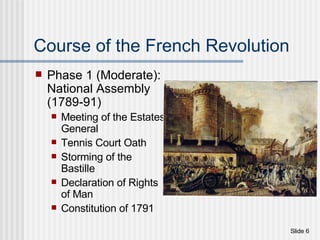
Course of the French Revolution Phase 1 (Moderate): National Assembly  (1789-91) Meeting of the Estates General Tennis Court Oath Storming of the Bastille Declaration of Rights of Man Constitution of 1791
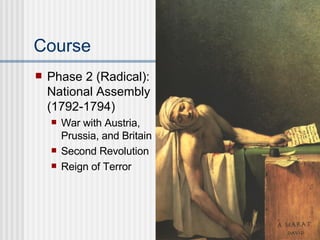
Course Phase 2 (Radical): National Assembly (1792-1794) War with Austria, Prussia, and Britain Second Revolution Reign of Terror
Course of the French Revolution Phase 3: The Directory (1795-99) Directory Established Military success Napoleon Takes Control Military genius, conquers much of Europe Makes peace within France Finally defeated at Waterloo
French Revolution Achievements Ends Feudalism Brings people into politics Begins to secularize Europe Emphasis on tradition lessens – change important to the future Growth of nationalism comes from French idea of “Liberty, Equality, and Fraternity” Enlightenment idea that everything works rationally takes hold
Problems with the French Revolution No stable government established Execution of the King; then Reign of Terror After Reign of Terror, people desperate for stability and support Napoleon
Post-Napoleonic Order Congress of Vienna, 1815 Restore balance of power Prevent further revolutions Restore legitimate rulers Austria, Prussia, Russia, and France crack down on nationalist and liberal movements
Latin America In Haiti a true revolution occurs Other then Haiti, Latin American independence a conservative reaction to liberalism - Creoles afraid of sharing power Emerging countries undemocratic Spain prevented by Britain to regain colonies
French Revolution Legacy Completely breaks fully established, traditional political and social systems Common people from the lower and middle classes want to be part of the political system Course of European history changes, sets the stage for democratic development and other revolutions (i.e. Russian Revolution)
French Revolution Legacy People want complete social and political change, a break from the oppressive absolute monarchs of the time Conservatism vs. Liberalism A new sense of nationalism is born – people are dedicated to the greatness of the nation in a way not really seen before
Question Which revolution do you consider more revolutionary?  Why?

French and American Revolutions

  • 1.
    Comparison: French andAmerican Revolutions and their Legacies AP World History West Hills High School
  • 2.
    Basic Differences FrenchRevolution wanted to change everything - Government, Social Structure, Economy, Religion American Revolution sought a change in government, but the social system remained intact
  • 3.
    American Revolution Mostcolonists wished to remain members of the British Empire Violation of “Rights of Englishmen” A “war for independence” or a revolution?
  • 4.
    American Revolution TheBritish upper class was simply replaced by a new American upper class Lives of others (women, Native Americans, commoners, slaves) changed little. Legacy of American Revolution: created revolutionary constitution that would evolve into its modern form
  • 5.
    French Revolution CausesPolitical - no representation, King Louis XVI weak, inefficient government Economic - Inequitable taxation, economic crisis Religious - Church power corrupt Social - Urban poor, feudalism, rising middle class Intellectual - Enlightenment ideas attacked power of King, Church
  • 6.
    Course of theFrench Revolution Phase 1 (Moderate): National Assembly (1789-91) Meeting of the Estates General Tennis Court Oath Storming of the Bastille Declaration of Rights of Man Constitution of 1791
  • 7.
    Course Phase 2(Radical): National Assembly (1792-1794) War with Austria, Prussia, and Britain Second Revolution Reign of Terror
  • 8.
    Course of theFrench Revolution Phase 3: The Directory (1795-99) Directory Established Military success Napoleon Takes Control Military genius, conquers much of Europe Makes peace within France Finally defeated at Waterloo
  • 9.
    French Revolution AchievementsEnds Feudalism Brings people into politics Begins to secularize Europe Emphasis on tradition lessens – change important to the future Growth of nationalism comes from French idea of “Liberty, Equality, and Fraternity” Enlightenment idea that everything works rationally takes hold
  • 10.
    Problems with theFrench Revolution No stable government established Execution of the King; then Reign of Terror After Reign of Terror, people desperate for stability and support Napoleon
  • 11.
    Post-Napoleonic Order Congressof Vienna, 1815 Restore balance of power Prevent further revolutions Restore legitimate rulers Austria, Prussia, Russia, and France crack down on nationalist and liberal movements
  • 12.
    Latin America InHaiti a true revolution occurs Other then Haiti, Latin American independence a conservative reaction to liberalism - Creoles afraid of sharing power Emerging countries undemocratic Spain prevented by Britain to regain colonies
  • 13.
    French Revolution LegacyCompletely breaks fully established, traditional political and social systems Common people from the lower and middle classes want to be part of the political system Course of European history changes, sets the stage for democratic development and other revolutions (i.e. Russian Revolution)
  • 14.
    French Revolution LegacyPeople want complete social and political change, a break from the oppressive absolute monarchs of the time Conservatism vs. Liberalism A new sense of nationalism is born – people are dedicated to the greatness of the nation in a way not really seen before
  • 15.
    Question Which revolutiondo you consider more revolutionary? Why?