THE TERTIARY
SECTOR: OTHERS
María Jesús Campos Fernández.
learningfromgeography.wikispaces.com
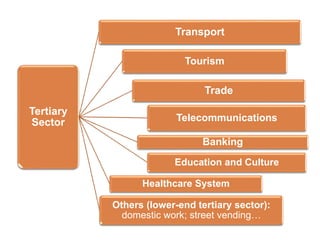
Tertiary
Sector
Transport
Tourism
Trade
Telecommunications
Banking
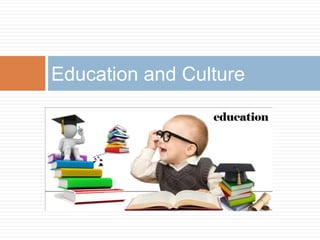
Education and Culture
Healthcare System
Others (lower-end tertiary sector):
domestic work; street vending…
Tertiary Sector
 Definition: tertiary sector; services
 Diversity:
 Tertiary sector vs quaternary sector
 Upper-end tertiary sector
 Lower-end tertiary sector
 Characteristics: heterogeneous; intangible and inmaterial; imposible to store; close to the
consumer; low level of mechanisation; expanding; unequal distribution
 Classification:
 Public services
 Distribution services
 Business services
 Consumer services
 Transport
 Tourism
 Trade
 Telecommunications
 Banking
 Education and culture
 Healthcare System
Information and Communication
Services
Information and Communication
Services
 Definition: information and communication services;
telecommunication
 Types of Communication: Person-to-person, social
communication or mass media, the Internet
 Spain
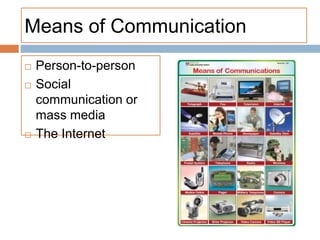
Means of Communication
 Person-to-person
 Social
communication or
mass media
 The Internet
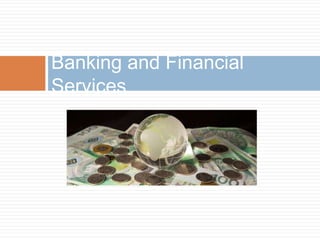
Banking and Financial
Services
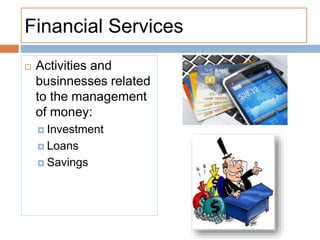
Financial Services
 Activities and
businnesses related
to the management
of money:
 Investment
 Loans
 Savings
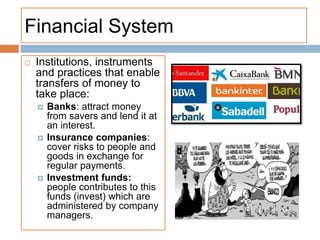
Financial System
 Institutions, instruments
and practices that enable
transfers of money to
take place:
 Banks: attract money
from savers and lend it at
an interest.
 Insurance companies:
cover risks to people and
goods in exchange for
regular payments.
 Investment funds:
people contributes to this
funds (invest) which are
administered by company
managers.
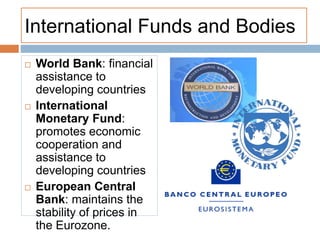
International Funds and Bodies
 World Bank: financial
assistance to
developing countries
 International
Monetary Fund:
promotes economic
cooperation and
assistance to
developing countries
 European Central
Bank: maintains the
stability of prices in
the Eurozone.
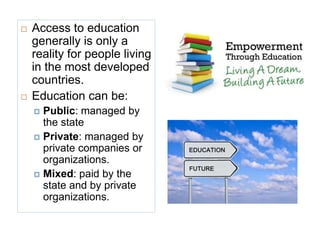
Education and Culture
 Access to education
generally is only a
reality for people living
in the most developed
countries.
 Education can be:
 Public: managed by
the state
 Private: managed by
private companies or
organizations.
 Mixed: paid by the
state and by private
organizations.
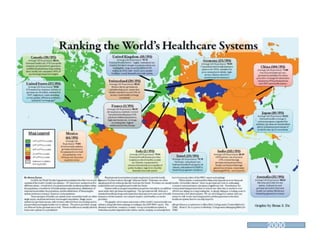
Healthcare System
Developed countries vs Less
developed countries
 The right to healthcare
generally is only a
reality for people living
in the most developed
countries.
 In most developed
countries the state
ensures that everyone
has access to healthcar
by making it a public
service funded by
taxes.
 In less developed
countries the state is
often unable to offer
basic healthcare
services.
 Infectious diseases
(AIDS, tuberculosis and
malaria) are much more
common. Even
diseases that can be
easily prevented are
common because of
the lack of potable
water, acces to
sanitation, little access
to medication and
vaccines.
2000
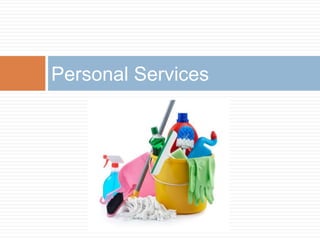
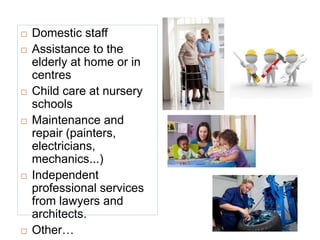
Personal Services
 Domestic staff
 Assistance to the
elderly at home or in
centres
 Child care at nursery
schools
 Maintenance and
repair (painters,
electricians,
mechanics...)
 Independent
professional services
from lawyers and
architects.
 Other…
Developed by María Jesús Campos
learningfromgeography.wikispaces.com
Chusteacher
Wikiteacher
Sources: rocio Bautista Slidehare ppt

Tertiary Sector: Other Activities

  • 1.
    THE TERTIARY SECTOR: OTHERS MaríaJesús Campos Fernández. learningfromgeography.wikispaces.com
  • 4.
    Tertiary Sector Transport Tourism Trade Telecommunications Banking Education and Culture HealthcareSystem Others (lower-end tertiary sector): domestic work; street vending…
  • 5.
    Tertiary Sector  Definition:tertiary sector; services  Diversity:  Tertiary sector vs quaternary sector  Upper-end tertiary sector  Lower-end tertiary sector  Characteristics: heterogeneous; intangible and inmaterial; imposible to store; close to the consumer; low level of mechanisation; expanding; unequal distribution  Classification:  Public services  Distribution services  Business services  Consumer services  Transport  Tourism  Trade  Telecommunications  Banking  Education and culture  Healthcare System
  • 6.
  • 7.
    Information and Communication Services Definition: information and communication services; telecommunication  Types of Communication: Person-to-person, social communication or mass media, the Internet  Spain
  • 8.
    Means of Communication Person-to-person  Social communication or mass media  The Internet
  • 9.
  • 10.
    Financial Services  Activitiesand businnesses related to the management of money:  Investment  Loans  Savings
  • 11.
    Financial System  Institutions,instruments and practices that enable transfers of money to take place:  Banks: attract money from savers and lend it at an interest.  Insurance companies: cover risks to people and goods in exchange for regular payments.  Investment funds: people contributes to this funds (invest) which are administered by company managers.
  • 12.
    International Funds andBodies  World Bank: financial assistance to developing countries  International Monetary Fund: promotes economic cooperation and assistance to developing countries  European Central Bank: maintains the stability of prices in the Eurozone.
  • 13.
  • 14.
     Access toeducation generally is only a reality for people living in the most developed countries.  Education can be:  Public: managed by the state  Private: managed by private companies or organizations.  Mixed: paid by the state and by private organizations.
  • 15.
  • 16.
    Developed countries vsLess developed countries  The right to healthcare generally is only a reality for people living in the most developed countries.  In most developed countries the state ensures that everyone has access to healthcar by making it a public service funded by taxes.  In less developed countries the state is often unable to offer basic healthcare services.  Infectious diseases (AIDS, tuberculosis and malaria) are much more common. Even diseases that can be easily prevented are common because of the lack of potable water, acces to sanitation, little access to medication and vaccines.
  • 17.
  • 18.
  • 19.
     Domestic staff Assistance to the elderly at home or in centres  Child care at nursery schools  Maintenance and repair (painters, electricians, mechanics...)  Independent professional services from lawyers and architects.  Other…
  • 20.
    Developed by MaríaJesús Campos learningfromgeography.wikispaces.com Chusteacher Wikiteacher Sources: rocio Bautista Slidehare ppt