Carlos Leal M.D. Director  Orthopedic Research Laboratory Director of Knee Surgery & Sports Medicine Fellowship Bosque University Orthopedic Department Bogotá DC, Colombia Current Management of  Postoperative Pain
 
 
Pain is an unpleasent sensorial and emotional experience associated to a real or potential tissue damage International Association for the study of Pain
The goals of effective and appropriate pain management are to… Improve quality of life for the patient Facilitate rapid recovery and return to full function Reduce  morbidity Allow early discharge from hospital
Effective postoperative pain management has a humanitarian role, But there are additional medical and economic benefits for rapid recovery  and discharge from hospital.
Effective pain management is now an integral part of modern surgical practice Postoperative pain management  - minimizes patient suffering - can reduce morbidity - facilitates rapid recovery and early discharge from hospital  - can reduce  hospital costs
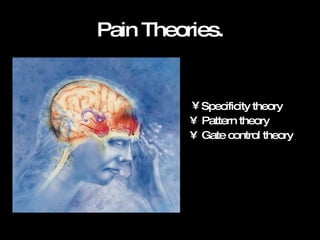
Pain Theories. Pattern theory Gate control theory Specificity theory
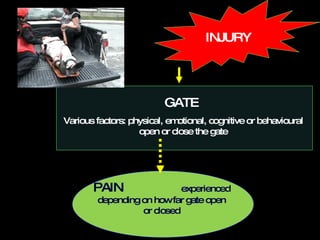
INJURY GATE  Various factors: physical, emotional, cognitive or behavioural open or close the gate PAIN   experienced depending on how far gate open or closed
Conditions that Open the Gate Physical conditions Extent of injury Nature of injury Emotional states Anxiety Worry Tension Depression Cognitive states Focusing on the pain
Physical Medication Counterstimulation (e.g. heat, massage) Emotional state Positive emotions (e.g., happiness, optimism) Relaxation Rest Mental state Intense concentration or distraction Involvement and interest in activities Conditions that Close the Gate
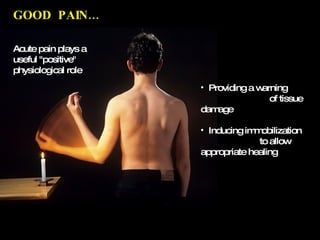
Providing a warning  of tissue damage Inducing immobilization  to allow appropriate healing GOOD  PAIN… Acute pain plays a useful "positive" physiological role
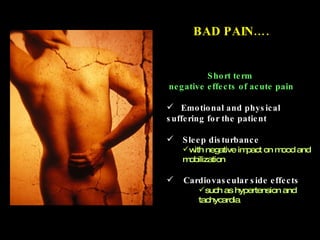
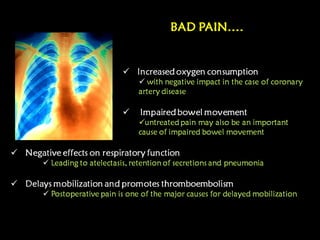
BAD PAIN…. Short term  negative effects of acute pain Emotional and physical suffering for the patient Sleep   disturbance with negative impact on mood and mobilization Cardiovascular  side   effects such as hypertension and tachycardia
 
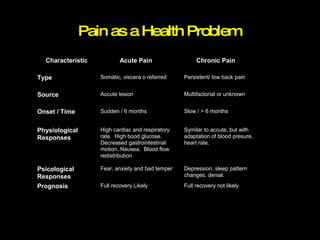
Pain as a Health Problem
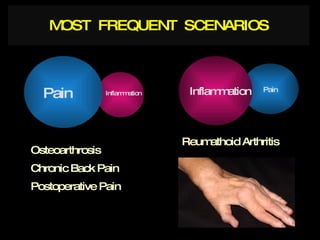
MOST  FREQUENT  SCENARIOS Reumathoid Arthritis Osteoarthrosis Chronic Back Pain Postoperative Pain Pain Inflammation Inflammation Pain
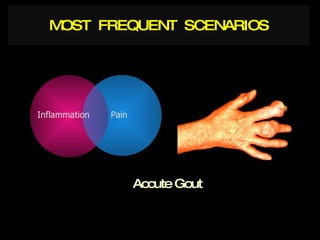
Accute Gout MOST  FREQUENT  SCENARIOS Pain Inflammation
Pain Treatment Goals Reduce discapacity Improve quality of life Use safe medications that reduce toxic effects Less Time
Our most frequent problems Chronic Musculoskeletal Pain
Our most frequent problems Postraumatic Pain Postoperative Pain
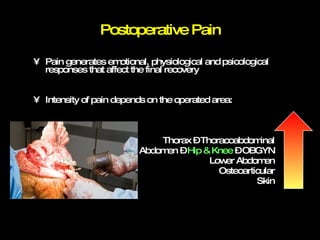
Postoperative Pain Pain generates emotional, physiological and psicological responses that affect the final recovery Intensity of pain depends on the operated area: Thorax – Thoracoabdominal Abdomen –  Hip & Knee  – OBGYN Lower Abdomen Osteoarticular Skin
Postoperative Pain Adverse Effects Respiratory Cardiovascular Gastrointestinal  Urinary Neuroendocrine  Metabolic Psicological
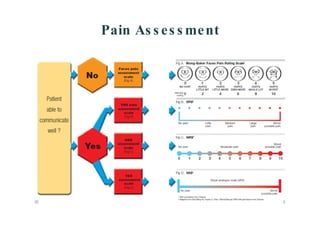
Pain Evaluation Measurement of self evaluation VAS – Visual Analogue Scale Numeric verbal score Graphic scales score Observational Measurements Pain Observational Scale Toddlers Pain Scale
Pain   Assessment
Pain Treatment Opioids Systemic Subaracnoid Epidural Non Opioid Analgesics NSAIDS Local Anesthetics Psicological Methods
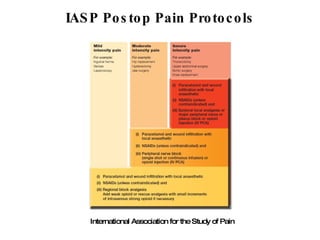
IASP Postop Pain Protocols International Association for the Study of Pain
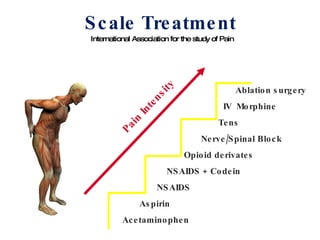
  Ablation surgery   IV  Morphine   Tens   Nerve/Spinal Block   Opioid derivates   NSAIDS + Codein   NSAIDS Aspirin Acetaminophen Pain Intensity  Scale Treatment International Association for the study of Pain
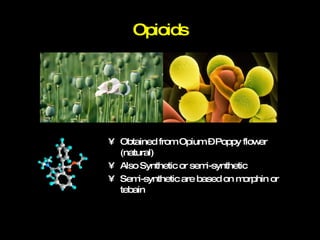
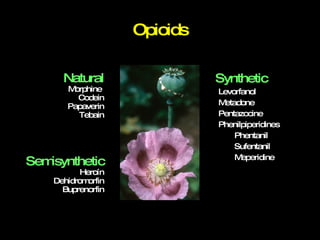
Opioids Obtained from Opium – Poppy flower (natural) Also Synthetic or semi-synthetic  Semi-synthetic are based on morphin or tebain
Opioids Synthetic Levorfanol Metadone Pentazocine Phenilpiperidines Phentanil Sufentanil Meperidine Semisynthetic Heroín Dehidromorfin Buprenorfin Natural Morphine  Codein Papaverin Tebain
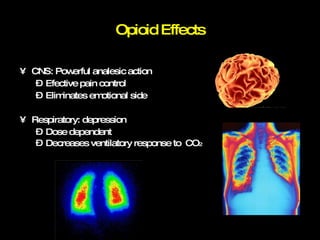
Opioid Effects CNS: Powerful analesic action Efective pain control Eliminates emotional side Respiratory: depression Dose dependent Decreases ventilatory response to  CO 2
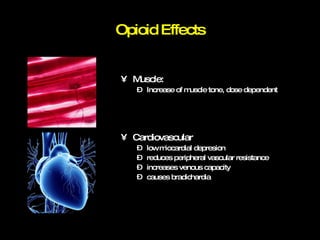
Muscle:  Increase of muscle tone, dose dependent Cardiovascular low miocardial depresion reduces peripheral vascular resistance increases venous capacity causes bradichardia Opioid Effects
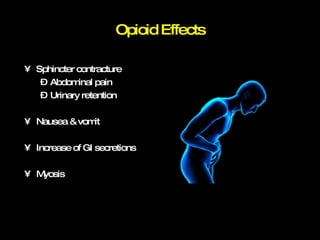
Sphincter contracture Abdominal pain Urinary retention Nausea &  vomit Increase of GI secretions Myosis Opioid Effects
Don’t Forget… Patients must have permanent medical suport Clearly  specify dose and schedule Keep record of adverse effects and complications Monitor frequency and depth of respiratory movements
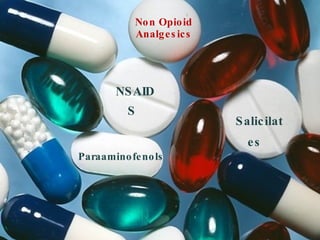
Non Opioid Analgesics NSAIDS Paraaminofenols  Salicilates
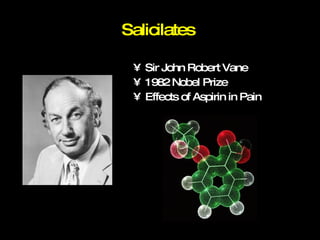
Salicilates  Sir John Robert Vane 1982 Nobel Prize Effects of Aspirin in Pain
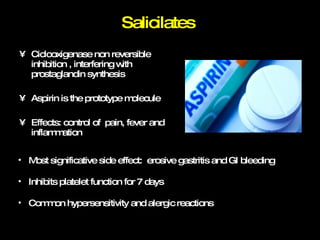
Salicilates  Ciclooxigenase non reversible inhibition , interfering with prostaglandin synthesis Aspirin is the prototype molecule Effects: control of  pain, fever and inflammation Most significative side effect:  erosive gastritis and GI bleeding Inhibits platelet function for 7 days Common hypersensitivity and alergic reactions
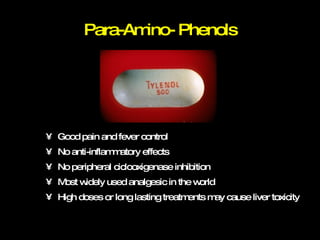
Para-Amino- Phenols Good pain and fever control No anti-inflammatory effects No peripheral ciclooxigenase inhibition Most widely used analgesic in the world High doses or long lasting treatments may cause liver toxicity
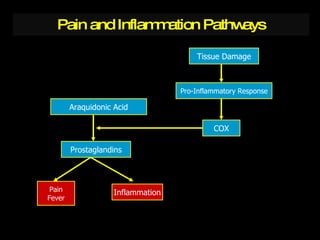
NSAIDS Non Steroidal Pharmacologic Agents that act on Pain and Inflammation Pathways
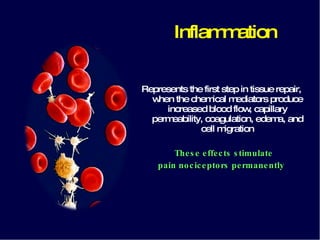
Inflammation Represents the first step in tissue repair, when the chemical mediators produce increased blood flow, capillary permeability, coagulation, edema, and cell migration These effects stimulate pain nociceptors permanently
Pain and Inflammation Pathways Tissue Damage Pro-Inflammatory Response COX Araquidonic Acid Prostaglandins Pain Fever Inflammation
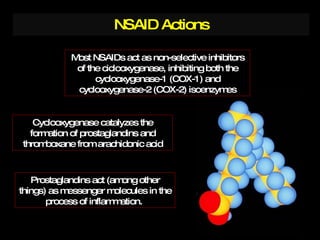
NSAID Actions Most NSAIDs act as non-selective inhibitors of the ciclooxygenase, inhibiting both the cyclooxygenase-1 (COX-1) and cyclooxygenase-2 (COX-2) isoenzymes Cyclooxygenase catalyzes the formation of prostaglandins and thromboxane from arachidonic acid Prostaglandins act (among other things) as messenger molecules in the process of inflammation.
NSAID Facts - Most NSAIDs are weak acids, with a pKa of 3-5 They are absorbed well from the stomach and intestinal mucosa. They are highly protein-bound in plasma (>95%)
NSAID Facts Most NSAIDs are metabolized in the liver by oxidation and conjugation to inactive  metabolites which are typically  excreted in the urine, although some  drugs are partially excreted in bile. Metabolism may be abnormal in certain disease states, and accumulation may occur even with normal dosage.
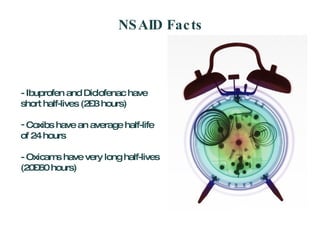
NSAID Facts - Ibuprofen and Diclofenac have short half-lives (2–3 hours) Coxibs have an average half-life of 24 hours - Oxicams have very long half-lives (20–60 hours)
NSAIDS by chemical family Propionic acids Ibuprofen Phenoprofen Ketoprofen Phlurbiprofen Naproxen Oxaprozin Pirazolones Phenilbutazone Heteroaril- Acetic Acids Tolmentin Ketorolac Phenilacetics Diclofenac Indolacetic Acids Indomethacin Sulindac Etodolac
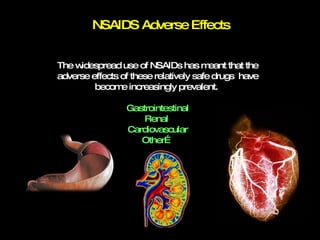
The widespread use of NSAIDs has meant that the adverse effects of these relatively safe drugs  have become increasingly prevalent.  Gastrointestinal Renal  Cardiovascular Other… NSAIDS Adverse Effects
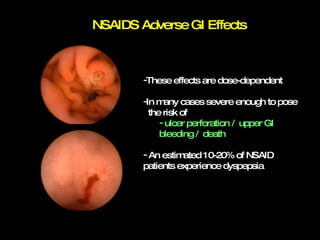
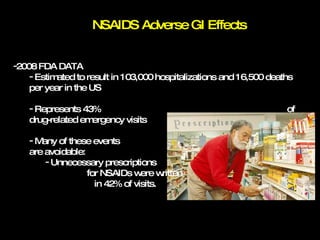
NSAIDS Adverse GI Effects These effects are dose-dependent In many cases severe enough to pose  the risk of  ulcer perforation /  upper GI bleeding /  death An estimated 10-20% of NSAID patients experience dyspepsia
NSAIDS Adverse GI Effects 2008 FDA DATA Estimated to result in 103,000 hospitalizations and 16,500 deaths per year in the US Represents 43%  of drug-related emergency visits Many of these events  are avoidable: Unnecessary prescriptions  for NSAIDs were written  in 42% of visits.
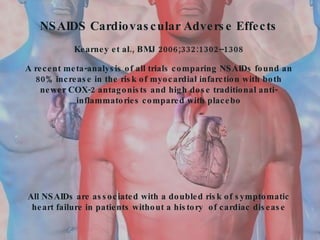
NSAIDS Cardiovascular Adverse Effects Kearney et al., BMJ 2006;332:1302–1308 A recent meta-analysis of all trials comparing NSAIDs found an 80% increase in the risk of myocardial infarction with both newer COX-2 antagonists and high dose traditional anti-inflammatories compared with placebo All NSAIDs are associated with a doubled risk of symptomatic heart failure in patients without a history  of cardiac disease
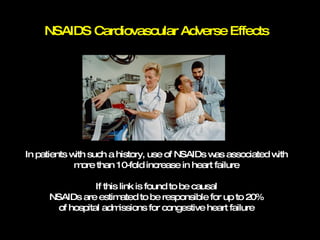
NSAIDS Cardiovascular Adverse Effects In patients with such a history, use of NSAIDs was associated with more than 10-fold increase in heart failure If this link is found to be causal NSAIDs are estimated to be responsible for up to 20% of hospital admissions for congestive heart failure
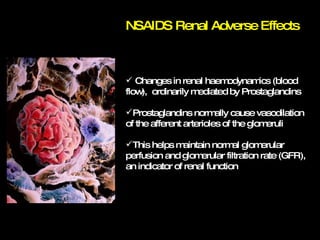
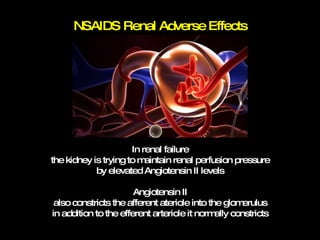
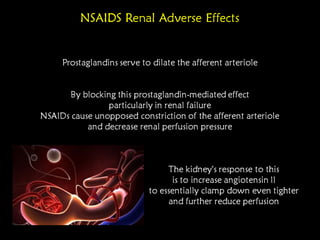
NSAIDS Renal Adverse Effects Changes in renal haemodynamics (blood flow),  ordinarily mediated by Prostaglandins Prostaglandins normally cause vasodilation of the afferent arterioles of the glomeruli This helps maintain normal glomerular perfusion and glomerular filtration rate (GFR), an indicator of renal function
NSAIDS Renal Adverse Effects In renal failure the kidney is trying to maintain renal perfusion pressure by elevated Angiotensin II levels Angiotensin II also constricts the afferent ateriole into the glomerulus in addition to the efferent arteriole it normally constricts
 
NSAIDS are good, but more research is needed to improve safety and increase efficacy
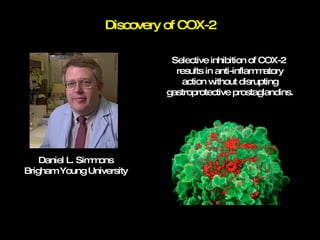
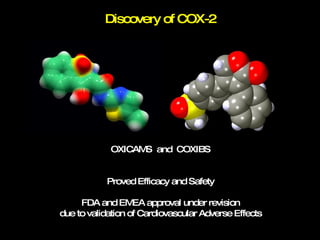
Discovery of COX-2 Selective inhibition of COX-2  results in anti-inflammatory action without disrupting gastroprotective prostaglandins. Daniel L. Simmons Brigham Young University
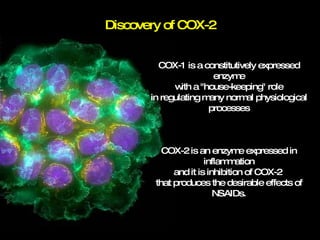
Discovery of COX-2 COX-1 is a constitutively expressed enzyme with a "house-keeping" role in regulating many normal physiological processes COX-2 is an enzyme expressed in inflammation and it is inhibition of COX-2  that produces the desirable effects of NSAIDs.
Discovery of COX-2 OXICAMS  and  COXIBS Proved Efficacy and Safety FDA and EMEA approval under revision due to validation of Cardiovascular Adverse Effects
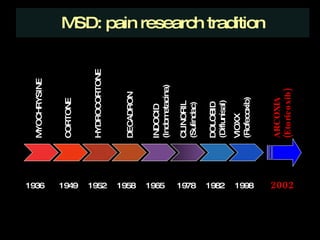
MSD: pain research tradition 1936  1949  1952  1958  1965  1978  1982  1998  2002 MYOCHRYSINE CORTONE HYDROCORTONE DECADRON INDOCID (Indometacina) DOLOBID (Diflunisal) CLINORIL (Sulindac) VIOXX (Rofecoxib) ARCOXIA (Etoricoxib)
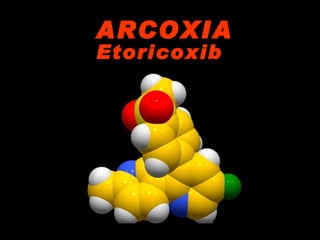
Etoricoxib ARCOXIA N N Cl S O 2 CH 3 CH 3
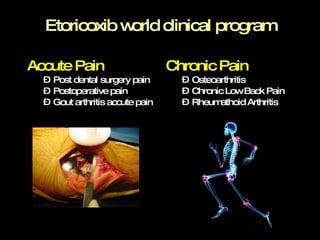
Etoricoxib world clinical program Accute Pain Post dental surgery pain Postoperative pain Gout arthritis accute pain Chronic Pain Osteoarthritis Chronic Low Back Pain Rheumathoid Arthritis
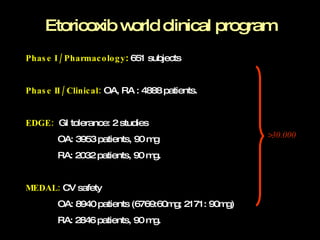
Etoricoxib world clinical program Phase I / Pharmacology :  651 subjects Phase II / Clinical:  OA, RA : 4888 patients. EDGE:  GI tolerance: 2 studies OA: 3953 patients, 90 mg RA: 2032 patients, 90 mg. MEDAL:  CV safety OA: 8940 patients (6769:60mg; 2171: 90mg) RA: 2846 patients, 90 mg. >30.000
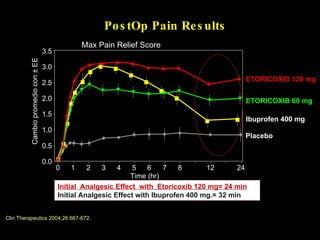
PostOp Pain Results Max Pain Relief Score 5 4 3 2 1 0 6 7 8 12 24 Time (hr) Cambio promedio con ± EE Initial  Analgesic Effect  with  Etoricoxib 120 mg= 24 min Initial Analgesic Effect with Ibuprofen 400 mg.= 32 min Clin Therapeutics 2004;26:667-672.  0.0 0.5 1.0 1.5 2.0 2.5 3.0 3.5 Placebo Ibuprofen 400 mg ETORICOXIB 60 mg ETORICOXIB 120 mg
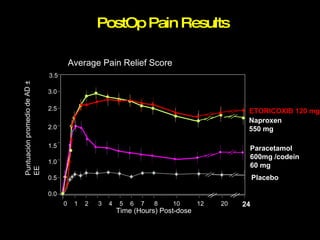
PostOp Pain Results Average Pain Relief Score   3.5 3.0 2.5 2.0 1.5 1.0 0.5 0.0 ETORICOXIB 120 mg Naproxen  550 mg Paracetamol 600mg /codeín 60 mg Placebo Time (Hours) Post-dose  Puntuación promedio de AD ± EE 0 1 2 3 4 5 6 7 8 10 12 20 24
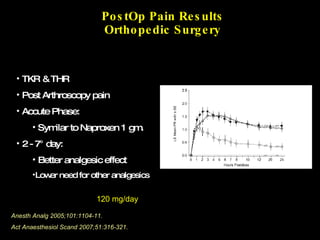
Anesth Analg 2005;101:1104-11. Act Anaesthesiol Scand 2007;51:316-321. TKR & THR Post Arthroscopy pain Accute Phase:  Symilar to Naproxen 1 gm. 2 - 7° day: Better analgesic effect Lower need for other analgesics 120 mg/day PostOp Pain Results Orthopedic Surgery
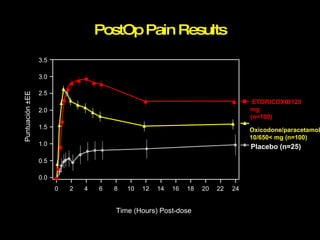
PostOp Pain Results Oxicodone/paracetamol 10/650< mg (n=100) Time (Hours) Post-dose  10 8 6 4 2 0 12 14 16 20 24 Puntuación ±EE 0.0 0.5 1.0 1.5 2.0 2.5 3.0 3.5 Placebo (n=25) ETORICOXIB120 mg (n=100) 18 22
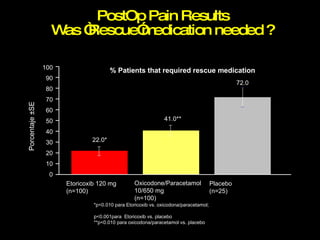
PostOp Pain Results Was “Rescue”medication needed ? % Patients that required rescue medication *p<0.010 para Etoricoxib vs. oxicodona/paracetamol;  p<0.001para  Etoricoxib vs. placebo  **p<0.010 para oxicodona/paracetamol vs. placebo Porcentaje ±SE 90 80 70 60 50 40 30 20 10 0 Oxicodone/Paracetamol 10/650 mg (n=100) Etoricoxib 120 mg  (n=100) Placebo (n=25) 41.0** 22.0* 72.0 100
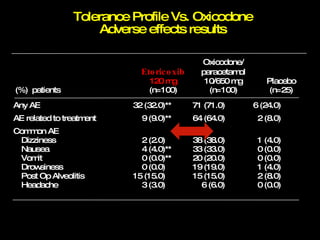
Tolerance Profile Vs. Oxicodone Adverse effects results Oxicodone/ Etoricoxib paracetamol 120 mg 10/650 mg Placebo (%)  patients (n=100) (n=100) (n=25) Any AE 32 (32.0)** 71 (71.0) 6 (24.0) AE related to treatment 9 (9.0)** 64 (64.0) 2 (8.0) Common AE Dizziness 2 (2.0) 38 (38.0) 1 (4.0) Nausea 4 (4.0)** 33 (33.0) 0 (0.0) Vomit 0 (0.0)** 20 (20.0) 0 (0.0) Drowsiness 0 (0.0) 19 (19.0) 1 (4.0) Post Op Alveolitis  15 (15.0) 15 (15.0) 2 (8.0) Headache   3 (3.0) 6 (6.0) 0 (0.0)
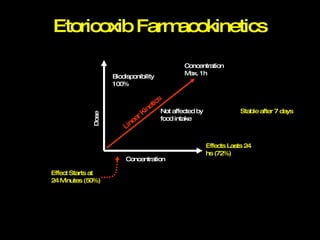
Etoricoxib Farmacokinetics Linear Kinetics Dose Dose Concentration Concentration Max. 1h Biodisponibility 100% Effects Lasts 24 hs (72%) Effect Starts at  24 Minutes (50%) Not affected by food intake Stable after 7 days
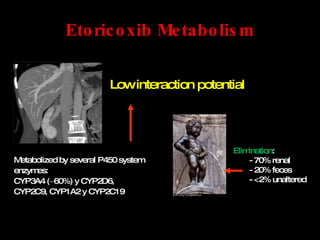
Etoricoxib Metabolism Metabolized by several P450 system enzymes:  CYP3A4 (  60%) y CYP2D6,  CYP2C9, CYP1A2 y CYP2C19 Elimination : - 70% renal  - 20% feces  - <2% unaltered Low interaction potential
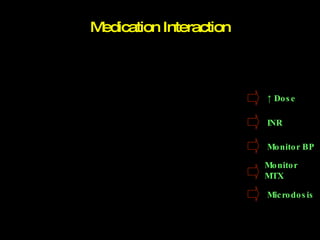
Medication Interaction INR ↑  Dose Microdosis Monitor MTX Monitor BP
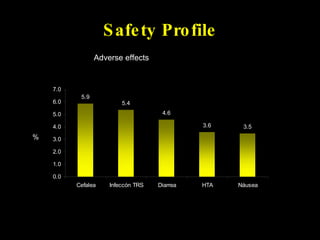
Safety Profile % Adverse effects
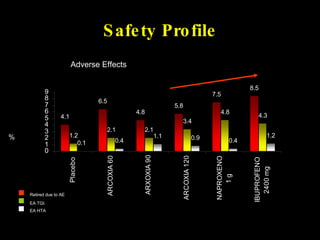
Safety Profile % Adverse Effects Retired due to AE EA TGI. EA HTA
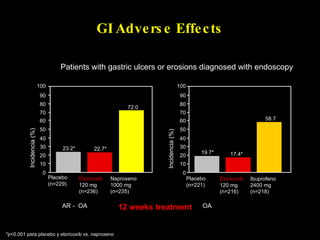
GI Adverse Effects *p<0.001 para placebo y etoricoxib vs. naproxeno Incidencia (%) 0 Etoricoxib  120 mg (n=236) 10 20 30 40 70 100 80 22.7* 72.0 50 60 90 Naproxeno  1000 mg (n=235) Etoricoxib 120 mg (n=216) 17.4* 58.7 Ibuprofeno  2400 mg (n=218) Incidencia (%) 0 10 20 30 40 70 100 80 50 60 90 AR -  OA OA Placebo (n=229) 23.2* Placebo (n=221) 19.7* Patients with gastric ulcers or erosions diagnosed with endoscopy 12 weeks treatment
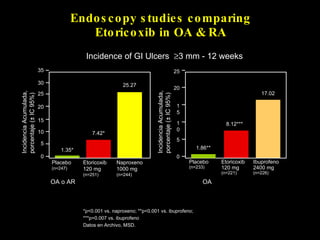
Endoscopy studies comparing Etoricoxib in OA & RA *p<0.001 vs. naproxeno; **p<0.001 vs. ibuprofeno; ***p=0.007 vs. ibuprofeno Datos en Archivo, MSD. Incidence of GI Ulcers   3 mm - 12 weeks 25 Incidencia Acumulada, porcentaje (± IC 95%) Incidencia Acumulada, porcentaje (± IC 95%) 0 OA o AR  5 10 15 20 25 35 30 Etoricoxib  120 mg (n=251) 7.42* 25.27 Naproxeno  1000 mg (n=244) Placebo (n=247) 1.35* OA 0 5 10 15 20 8.12*** Etoricoxib 120 mg (n=221) 17.02 Ibuprofeno  2400 mg (n=226) 1.86** Placebo (n=233)
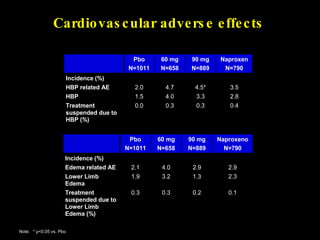
Cardiovascular adverse effects Note: * p<0.05 vs. Pbo
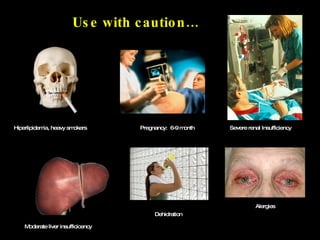
Use with caution… Pregnancy:  6-9 month Alergies Severe renal Insufficiency Moderate liver insufficicency Hiperlipidemia, heavy smokers Dehidration
Contraindications Specific Hypersensitivity or Allergy Gastric Ulcer, GI Bleeding or acido-peptic disease history Congestive Heart Insufficiency or ventricular disfunction Uncontrolled HBP Coronary syndromes – coronary surgeries Severe liver disfunction Pregnancy Children
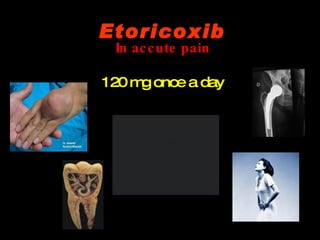
In accute pain 120 mg once a day  Etoricoxib
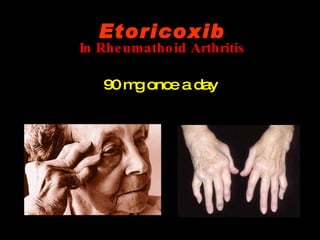
In Rheumathoid Arthritis 90 mg once a day Etoricoxib
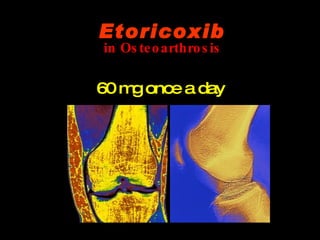
in Osteoarthrosis 60 mg once a day Etoricoxib
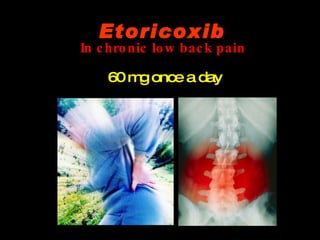
In chronic low back pain 60 mg once a day Etoricoxib
Conclusion Powerful, quick and long lasting analgesic Strong Anti - inflammatory  Safe medication Well supported by basic and clinical research Backed up by a well known researcher in the industry Better than any other product I can prescribe An excellent  solution for many of my problems… I use Etoricoxib  because…
I’ve used Etoricoxib on  myself….
“ In the new world there will be no pain…” Apc 7,17;21,4
Thanks !
Thanks !
Thanks !
More Info ? [email_address] chazleal@gmail.com

Postoperative Pain Management

  • 1.
    Carlos Leal M.D.Director Orthopedic Research Laboratory Director of Knee Surgery & Sports Medicine Fellowship Bosque University Orthopedic Department Bogotá DC, Colombia Current Management of Postoperative Pain
  • 2.
  • 3.
  • 4.
    Pain is anunpleasent sensorial and emotional experience associated to a real or potential tissue damage International Association for the study of Pain
  • 5.
    The goals ofeffective and appropriate pain management are to… Improve quality of life for the patient Facilitate rapid recovery and return to full function Reduce morbidity Allow early discharge from hospital
  • 6.
    Effective postoperative painmanagement has a humanitarian role, But there are additional medical and economic benefits for rapid recovery and discharge from hospital.
  • 7.
    Effective pain managementis now an integral part of modern surgical practice Postoperative pain management - minimizes patient suffering - can reduce morbidity - facilitates rapid recovery and early discharge from hospital - can reduce hospital costs
  • 8.
    Pain Theories. Patterntheory Gate control theory Specificity theory
  • 9.
    INJURY GATE Various factors: physical, emotional, cognitive or behavioural open or close the gate PAIN experienced depending on how far gate open or closed
  • 10.
    Conditions that Openthe Gate Physical conditions Extent of injury Nature of injury Emotional states Anxiety Worry Tension Depression Cognitive states Focusing on the pain
  • 11.
    Conditions that Openthe Gate Physical conditions Extent of injury Nature of injury Emotional states Anxiety Worry Tension Depression Cognitive states Focusing on the pain
  • 12.
    Physical Medication Counterstimulation(e.g. heat, massage) Emotional state Positive emotions (e.g., happiness, optimism) Relaxation Rest Mental state Intense concentration or distraction Involvement and interest in activities Conditions that Close the Gate
  • 13.
    Providing a warning of tissue damage Inducing immobilization to allow appropriate healing GOOD PAIN… Acute pain plays a useful &quot;positive&quot; physiological role
  • 14.
    BAD PAIN…. Shortterm negative effects of acute pain Emotional and physical suffering for the patient Sleep disturbance with negative impact on mood and mobilization Cardiovascular side effects such as hypertension and tachycardia
  • 15.
  • 16.
    Pain as aHealth Problem
  • 17.
    MOST FREQUENT SCENARIOS Reumathoid Arthritis Osteoarthrosis Chronic Back Pain Postoperative Pain Pain Inflammation Inflammation Pain
  • 18.
    Accute Gout MOST FREQUENT SCENARIOS Pain Inflammation
  • 19.
    Pain Treatment GoalsReduce discapacity Improve quality of life Use safe medications that reduce toxic effects Less Time
  • 20.
    Our most frequentproblems Chronic Musculoskeletal Pain
  • 21.
    Our most frequentproblems Postraumatic Pain Postoperative Pain
  • 22.
    Postoperative Pain Paingenerates emotional, physiological and psicological responses that affect the final recovery Intensity of pain depends on the operated area: Thorax – Thoracoabdominal Abdomen – Hip & Knee – OBGYN Lower Abdomen Osteoarticular Skin
  • 23.
    Postoperative Pain AdverseEffects Respiratory Cardiovascular Gastrointestinal Urinary Neuroendocrine Metabolic Psicological
  • 24.
    Pain Evaluation Measurementof self evaluation VAS – Visual Analogue Scale Numeric verbal score Graphic scales score Observational Measurements Pain Observational Scale Toddlers Pain Scale
  • 25.
    Pain Assessment
  • 26.
    Pain Treatment OpioidsSystemic Subaracnoid Epidural Non Opioid Analgesics NSAIDS Local Anesthetics Psicological Methods
  • 27.
    IASP Postop PainProtocols International Association for the Study of Pain
  • 28.
    Ablationsurgery IV Morphine Tens Nerve/Spinal Block Opioid derivates NSAIDS + Codein NSAIDS Aspirin Acetaminophen Pain Intensity Scale Treatment International Association for the study of Pain
  • 29.
    Opioids Obtained fromOpium – Poppy flower (natural) Also Synthetic or semi-synthetic Semi-synthetic are based on morphin or tebain
  • 30.
    Opioids Synthetic LevorfanolMetadone Pentazocine Phenilpiperidines Phentanil Sufentanil Meperidine Semisynthetic Heroín Dehidromorfin Buprenorfin Natural Morphine Codein Papaverin Tebain
  • 31.
    Opioid Effects CNS:Powerful analesic action Efective pain control Eliminates emotional side Respiratory: depression Dose dependent Decreases ventilatory response to CO 2
  • 32.
    Muscle: Increaseof muscle tone, dose dependent Cardiovascular low miocardial depresion reduces peripheral vascular resistance increases venous capacity causes bradichardia Opioid Effects
  • 33.
    Sphincter contracture Abdominalpain Urinary retention Nausea & vomit Increase of GI secretions Myosis Opioid Effects
  • 34.
    Don’t Forget… Patientsmust have permanent medical suport Clearly specify dose and schedule Keep record of adverse effects and complications Monitor frequency and depth of respiratory movements
  • 35.
    Non Opioid AnalgesicsNSAIDS Paraaminofenols Salicilates
  • 36.
    Salicilates SirJohn Robert Vane 1982 Nobel Prize Effects of Aspirin in Pain
  • 37.
    Salicilates Ciclooxigenasenon reversible inhibition , interfering with prostaglandin synthesis Aspirin is the prototype molecule Effects: control of pain, fever and inflammation Most significative side effect: erosive gastritis and GI bleeding Inhibits platelet function for 7 days Common hypersensitivity and alergic reactions
  • 38.
    Para-Amino- Phenols Goodpain and fever control No anti-inflammatory effects No peripheral ciclooxigenase inhibition Most widely used analgesic in the world High doses or long lasting treatments may cause liver toxicity
  • 39.
    NSAIDS Non SteroidalPharmacologic Agents that act on Pain and Inflammation Pathways
  • 40.
    Inflammation Represents thefirst step in tissue repair, when the chemical mediators produce increased blood flow, capillary permeability, coagulation, edema, and cell migration These effects stimulate pain nociceptors permanently
  • 41.
    Pain and InflammationPathways Tissue Damage Pro-Inflammatory Response COX Araquidonic Acid Prostaglandins Pain Fever Inflammation
  • 42.
    NSAID Actions MostNSAIDs act as non-selective inhibitors of the ciclooxygenase, inhibiting both the cyclooxygenase-1 (COX-1) and cyclooxygenase-2 (COX-2) isoenzymes Cyclooxygenase catalyzes the formation of prostaglandins and thromboxane from arachidonic acid Prostaglandins act (among other things) as messenger molecules in the process of inflammation.
  • 43.
    NSAID Facts -Most NSAIDs are weak acids, with a pKa of 3-5 They are absorbed well from the stomach and intestinal mucosa. They are highly protein-bound in plasma (>95%)
  • 44.
    NSAID Facts MostNSAIDs are metabolized in the liver by oxidation and conjugation to inactive metabolites which are typically excreted in the urine, although some drugs are partially excreted in bile. Metabolism may be abnormal in certain disease states, and accumulation may occur even with normal dosage.
  • 45.
    NSAID Facts -Ibuprofen and Diclofenac have short half-lives (2–3 hours) Coxibs have an average half-life of 24 hours - Oxicams have very long half-lives (20–60 hours)
  • 46.
    NSAIDS by chemicalfamily Propionic acids Ibuprofen Phenoprofen Ketoprofen Phlurbiprofen Naproxen Oxaprozin Pirazolones Phenilbutazone Heteroaril- Acetic Acids Tolmentin Ketorolac Phenilacetics Diclofenac Indolacetic Acids Indomethacin Sulindac Etodolac
  • 47.
    The widespread useof NSAIDs has meant that the adverse effects of these relatively safe drugs have become increasingly prevalent. Gastrointestinal Renal Cardiovascular Other… NSAIDS Adverse Effects
  • 48.
    NSAIDS Adverse GIEffects These effects are dose-dependent In many cases severe enough to pose the risk of ulcer perforation / upper GI bleeding / death An estimated 10-20% of NSAID patients experience dyspepsia
  • 49.
    NSAIDS Adverse GIEffects 2008 FDA DATA Estimated to result in 103,000 hospitalizations and 16,500 deaths per year in the US Represents 43% of drug-related emergency visits Many of these events are avoidable: Unnecessary prescriptions for NSAIDs were written in 42% of visits.
  • 50.
    NSAIDS Cardiovascular AdverseEffects Kearney et al., BMJ 2006;332:1302–1308 A recent meta-analysis of all trials comparing NSAIDs found an 80% increase in the risk of myocardial infarction with both newer COX-2 antagonists and high dose traditional anti-inflammatories compared with placebo All NSAIDs are associated with a doubled risk of symptomatic heart failure in patients without a history of cardiac disease
  • 51.
    NSAIDS Cardiovascular AdverseEffects In patients with such a history, use of NSAIDs was associated with more than 10-fold increase in heart failure If this link is found to be causal NSAIDs are estimated to be responsible for up to 20% of hospital admissions for congestive heart failure
  • 52.
    NSAIDS Renal AdverseEffects Changes in renal haemodynamics (blood flow), ordinarily mediated by Prostaglandins Prostaglandins normally cause vasodilation of the afferent arterioles of the glomeruli This helps maintain normal glomerular perfusion and glomerular filtration rate (GFR), an indicator of renal function
  • 53.
    NSAIDS Renal AdverseEffects In renal failure the kidney is trying to maintain renal perfusion pressure by elevated Angiotensin II levels Angiotensin II also constricts the afferent ateriole into the glomerulus in addition to the efferent arteriole it normally constricts
  • 54.
  • 55.
    NSAIDS are good,but more research is needed to improve safety and increase efficacy
  • 56.
    Discovery of COX-2Selective inhibition of COX-2 results in anti-inflammatory action without disrupting gastroprotective prostaglandins. Daniel L. Simmons Brigham Young University
  • 57.
    Discovery of COX-2COX-1 is a constitutively expressed enzyme with a &quot;house-keeping&quot; role in regulating many normal physiological processes COX-2 is an enzyme expressed in inflammation and it is inhibition of COX-2 that produces the desirable effects of NSAIDs.
  • 58.
    Discovery of COX-2OXICAMS and COXIBS Proved Efficacy and Safety FDA and EMEA approval under revision due to validation of Cardiovascular Adverse Effects
  • 59.
    MSD: pain researchtradition 1936 1949 1952 1958 1965 1978 1982 1998 2002 MYOCHRYSINE CORTONE HYDROCORTONE DECADRON INDOCID (Indometacina) DOLOBID (Diflunisal) CLINORIL (Sulindac) VIOXX (Rofecoxib) ARCOXIA (Etoricoxib)
  • 60.
    Etoricoxib ARCOXIA NN Cl S O 2 CH 3 CH 3
  • 61.
    Etoricoxib world clinicalprogram Accute Pain Post dental surgery pain Postoperative pain Gout arthritis accute pain Chronic Pain Osteoarthritis Chronic Low Back Pain Rheumathoid Arthritis
  • 62.
    Etoricoxib world clinicalprogram Phase I / Pharmacology : 651 subjects Phase II / Clinical: OA, RA : 4888 patients. EDGE: GI tolerance: 2 studies OA: 3953 patients, 90 mg RA: 2032 patients, 90 mg. MEDAL: CV safety OA: 8940 patients (6769:60mg; 2171: 90mg) RA: 2846 patients, 90 mg. >30.000
  • 63.
    PostOp Pain ResultsMax Pain Relief Score 5 4 3 2 1 0 6 7 8 12 24 Time (hr) Cambio promedio con ± EE Initial Analgesic Effect with Etoricoxib 120 mg= 24 min Initial Analgesic Effect with Ibuprofen 400 mg.= 32 min Clin Therapeutics 2004;26:667-672. 0.0 0.5 1.0 1.5 2.0 2.5 3.0 3.5 Placebo Ibuprofen 400 mg ETORICOXIB 60 mg ETORICOXIB 120 mg
  • 64.
    PostOp Pain ResultsAverage Pain Relief Score 3.5 3.0 2.5 2.0 1.5 1.0 0.5 0.0 ETORICOXIB 120 mg Naproxen 550 mg Paracetamol 600mg /codeín 60 mg Placebo Time (Hours) Post-dose Puntuación promedio de AD ± EE 0 1 2 3 4 5 6 7 8 10 12 20 24
  • 65.
    Anesth Analg 2005;101:1104-11.Act Anaesthesiol Scand 2007;51:316-321. TKR & THR Post Arthroscopy pain Accute Phase: Symilar to Naproxen 1 gm. 2 - 7° day: Better analgesic effect Lower need for other analgesics 120 mg/day PostOp Pain Results Orthopedic Surgery
  • 66.
    PostOp Pain ResultsOxicodone/paracetamol 10/650< mg (n=100) Time (Hours) Post-dose 10 8 6 4 2 0 12 14 16 20 24 Puntuación ±EE 0.0 0.5 1.0 1.5 2.0 2.5 3.0 3.5 Placebo (n=25) ETORICOXIB120 mg (n=100) 18 22
  • 67.
    PostOp Pain ResultsWas “Rescue”medication needed ? % Patients that required rescue medication *p<0.010 para Etoricoxib vs. oxicodona/paracetamol; p<0.001para Etoricoxib vs. placebo **p<0.010 para oxicodona/paracetamol vs. placebo Porcentaje ±SE 90 80 70 60 50 40 30 20 10 0 Oxicodone/Paracetamol 10/650 mg (n=100) Etoricoxib 120 mg (n=100) Placebo (n=25) 41.0** 22.0* 72.0 100
  • 68.
    Tolerance Profile Vs.Oxicodone Adverse effects results Oxicodone/ Etoricoxib paracetamol 120 mg 10/650 mg Placebo (%) patients (n=100) (n=100) (n=25) Any AE 32 (32.0)** 71 (71.0) 6 (24.0) AE related to treatment 9 (9.0)** 64 (64.0) 2 (8.0) Common AE Dizziness 2 (2.0) 38 (38.0) 1 (4.0) Nausea 4 (4.0)** 33 (33.0) 0 (0.0) Vomit 0 (0.0)** 20 (20.0) 0 (0.0) Drowsiness 0 (0.0) 19 (19.0) 1 (4.0) Post Op Alveolitis 15 (15.0) 15 (15.0) 2 (8.0) Headache 3 (3.0) 6 (6.0) 0 (0.0)
  • 69.
    Etoricoxib Farmacokinetics LinearKinetics Dose Dose Concentration Concentration Max. 1h Biodisponibility 100% Effects Lasts 24 hs (72%) Effect Starts at 24 Minutes (50%) Not affected by food intake Stable after 7 days
  • 70.
    Etoricoxib Metabolism Metabolizedby several P450 system enzymes: CYP3A4 (  60%) y CYP2D6, CYP2C9, CYP1A2 y CYP2C19 Elimination : - 70% renal - 20% feces - <2% unaltered Low interaction potential
  • 71.
    Medication Interaction INR↑ Dose Microdosis Monitor MTX Monitor BP
  • 72.
    Safety Profile %Adverse effects
  • 73.
    Safety Profile %Adverse Effects Retired due to AE EA TGI. EA HTA
  • 74.
    GI Adverse Effects*p<0.001 para placebo y etoricoxib vs. naproxeno Incidencia (%) 0 Etoricoxib 120 mg (n=236) 10 20 30 40 70 100 80 22.7* 72.0 50 60 90 Naproxeno 1000 mg (n=235) Etoricoxib 120 mg (n=216) 17.4* 58.7 Ibuprofeno 2400 mg (n=218) Incidencia (%) 0 10 20 30 40 70 100 80 50 60 90 AR - OA OA Placebo (n=229) 23.2* Placebo (n=221) 19.7* Patients with gastric ulcers or erosions diagnosed with endoscopy 12 weeks treatment
  • 75.
    Endoscopy studies comparingEtoricoxib in OA & RA *p<0.001 vs. naproxeno; **p<0.001 vs. ibuprofeno; ***p=0.007 vs. ibuprofeno Datos en Archivo, MSD. Incidence of GI Ulcers  3 mm - 12 weeks 25 Incidencia Acumulada, porcentaje (± IC 95%) Incidencia Acumulada, porcentaje (± IC 95%) 0 OA o AR 5 10 15 20 25 35 30 Etoricoxib 120 mg (n=251) 7.42* 25.27 Naproxeno 1000 mg (n=244) Placebo (n=247) 1.35* OA 0 5 10 15 20 8.12*** Etoricoxib 120 mg (n=221) 17.02 Ibuprofeno 2400 mg (n=226) 1.86** Placebo (n=233)
  • 76.
    Cardiovascular adverse effectsNote: * p<0.05 vs. Pbo
  • 77.
    Use with caution…Pregnancy: 6-9 month Alergies Severe renal Insufficiency Moderate liver insufficicency Hiperlipidemia, heavy smokers Dehidration
  • 78.
    Contraindications Specific Hypersensitivityor Allergy Gastric Ulcer, GI Bleeding or acido-peptic disease history Congestive Heart Insufficiency or ventricular disfunction Uncontrolled HBP Coronary syndromes – coronary surgeries Severe liver disfunction Pregnancy Children
  • 79.
    In accute pain120 mg once a day Etoricoxib
  • 80.
    In Rheumathoid Arthritis90 mg once a day Etoricoxib
  • 81.
    in Osteoarthrosis 60mg once a day Etoricoxib
  • 82.
    In chronic lowback pain 60 mg once a day Etoricoxib
  • 83.
    Conclusion Powerful, quickand long lasting analgesic Strong Anti - inflammatory Safe medication Well supported by basic and clinical research Backed up by a well known researcher in the industry Better than any other product I can prescribe An excellent solution for many of my problems… I use Etoricoxib because…
  • 84.
  • 85.
    “ In thenew world there will be no pain…” Apc 7,17;21,4
  • 86.
  • 87.
  • 88.
  • 89.
    More Info ?[email_address] chazleal@gmail.com

Editor's Notes

  • #2 <number>
  • #3 24/05/09<number>
  • #4 <number>
  • #8 <number>
  • #10 <number>
  • #11 <number>
  • #12 <number>
  • #16 <number>
  • #17 17
  • #18 <number>
  • #19 <number>
  • #20 INFLAMACION y DOLOR: principal causa de consulta m
  • #21 <number>
  • #22 <number>
  • #23 <number>
  • #24 <number>
  • #25 <number>
  • #26 <number>
  • #27 <number>
  • #28 <number>
  • #29 Celebrex (Celecoxib): Vida media de 11,2 horas. Dosis de 100 a 200 mg / dia o Bid. Comienzo de la accion en 1 hora. Teratogenico. Metabolismo P 450. Quimicamente es una sulfonamida. Dosis equivalentes Vioxx Vs Celebra: 12.5 mg Vs 200. Dosis equipotentes 25 mg Vs 200 mg/bid.el acetaminofen, que a pesar de tener propiedades analgesicas y antipireticas similares a la de la aspirina no tiene propiedades antiinflamatorias importantes por lo que actualmente no se le considera como un AINE.<number>
  • #30 <number>
  • #31 <number>
  • #32 <number>
  • #33 <number>
  • #34 <number>
  • #35 <number>
  • #36 <number>
  • #37 <number>
  • #38 <number>
  • #39 <number>
  • #40 <number>
  • #41 <number>
  • #42 Porque el dolor
  • #46 <number>
  • #47 La mayor
  • #59 <number>
  • #60 1936: MYOCHRYSINE (sales de oro) para el tratamiento de la Artritis Reumatoide.1949: MSD desarrolla el primer corticoesteroide (CORTONE). 1952: Desarrollo de HYDROCORTONE , un sucesor m
  • #61 <number>
  • #62 <number>
  • #63 63
  • #64 Modelos de analgesia aguda 120 mg una vez al d
  • #65 Protocol 039, estudio fase III, Dolor dental POP, Arcoxia 120 mg,Naproxeno 550 mg acetaminofen-code
  • #67 Protocolo 055, fase III, N=225 pacientes.COCNLUSIONES:Arcoxia 120 superior a placebo en todas la mediciones de analgesia, incluyendo el efecto analg
  • #68 Estudio 057: Estudio fase III, N= 320 pacientes.CONCLUSIONES:Arcoxia 120 efecto general superior a oxicodona/acetaminof
  • #69 <number>
  • #70 Absorci
  • #71 Metabolismo compartido entre varias sub-familias de CYP. No depende de una sola como otros medicamentos.Uni
  • #72 Warfarina: Aumenta 13% el tiempo de protrombina. Rifampicina: Disminuyo 65% C de Arcoxia. Metotrexate: ↑28% C (dosis > 120 mg de Arcoxia). IECAS: AINES disminuyen efecto antihipertensivo. Litio: AINES aumentan los niveles plasmáticos de Litio. Anticonceptivos orales: Arcoxia 120 mg aumentó los niveles de etinilestradiol de 37% al 60% posiblemente al inhibirir con una enzima sulfotransferasa comprometida en la sulfatación de los estrogenos (sangrados vaginales, turgencia mamaria), en preparados con más de 35 mcg de EE y 0.5 a 1 mg de norethindrona. Al pensarse en una terapia de remplazo hormonal, debe tenerse en cuenta este incremento de la concentración estrogénica.<number>
  • #73 Estos efectos secundarios son del programa general (no Medal):Otros efectos secundarios son sabor met
  • #74 Estos efectos secundarios son del programa general (no Medal):Otros efectos secundarios son sabor met
  • #75 El programa de seguridad de Arcoxia se dise
  • #76 Una ventaja fundamental de los Coxibs sobre los AINEs convencionales es el menor potencial de producir eventos adversos GI, incluyendo
  • #77 En teor
  • #78 El riesgo cardiovascular de los “coxibs” es dosis dependiente y relativo al tiempo, por tanto se deben de usar a dosis mínimas efectivas y por el menor tiempo posible en pacientes en riesgo cardiovascular…..En pacientes con insuficiencia hep
  • #79 <number>
  • #80 Cuatro tipos de modelo de analgesia aguda: Dolor dental, dismenorrea primaria y pop Qx ortop
  • #81 El programa incluy
  • #82 Total pacientes estudiados en esta indicaci
  • #83 Los estudios en patolog
  • #85 <number>