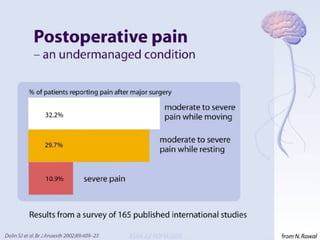
#3 In a review of data from the UK, one third of postoperative patients experienced moderate or severe pain after receiving treatment 2 29.7% of patients reported moderately severe pain 10.9% of patients reported severe pain The overall mean incidence of fair-to-poor and poor pain control was 19.4% and 3.5%, respectively Dolin SJ, Cashman JN, Bland JM. Effectiveness of acute postoperative pain management: I. Evidence from published data. Br J Anaesth. 2002;89:409-423.
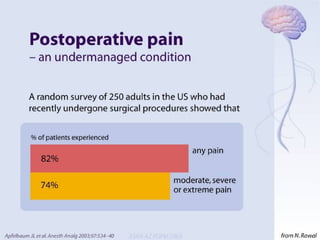
#5 A recent survey of postoperative patients in the US found that approximately 80% experienced acute pain after treatment 65% of patients reported that this pain was moderate, severe, or extreme in intensity 8% of patients indicated that they had postponed surgery because of the possibility of experiencing severe pain 52% of the patient population had inpatient surgeries, 38% had outpatient surgeries, and 10% had in-office procedures Apfelbaum JL, Chen C, Mehta SS, Gan TJ. Postoperative pain experience: results from a national survey suggest postoperative pain continues to be undermanaged. Anesth Analg. 2003;97:534-540.
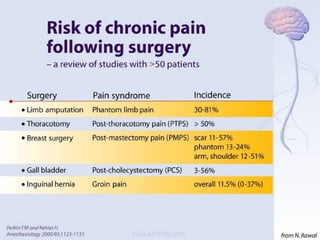
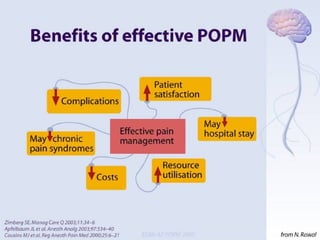
#6 Adequate pre-, per- and postoperative pain treatment will reduce the risk of postoperative pain syndromes.
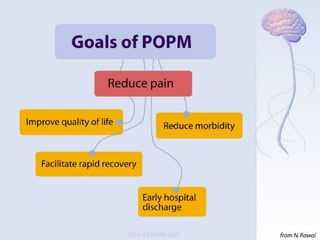
#12 Effective pain management optimizes the outcome
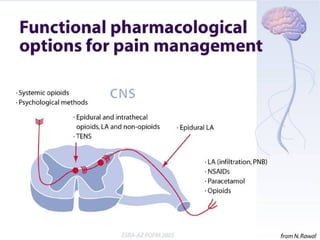
#13 This picture shows the functional-pharmacological options for pain control from the peripheral nerve endings to the CNS. A suitable combination of local anaesthetic blockade, NSAIDs and opioids may be most effective.
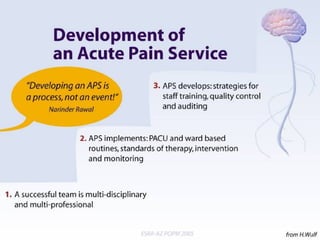
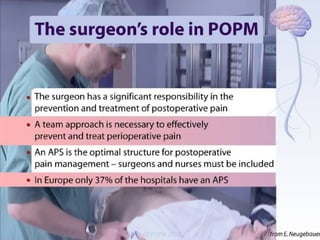
#17 An acute pain service is necessary for competent management of postoperative and other acute pains. Unfortunately it’s not available in all European hospitals.
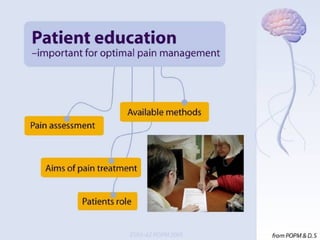
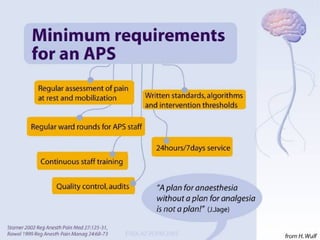
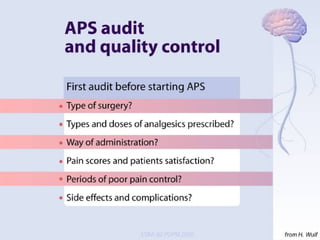
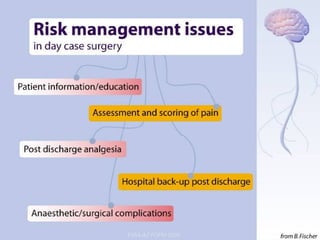
#19 Important considerations for adequate pain management in connection with surgery.
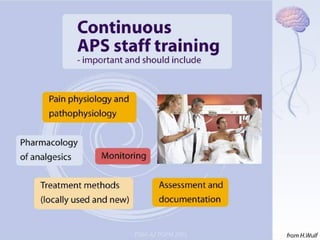
#20 Remember that the APS team needs continuous education to provide an updated and effective service!
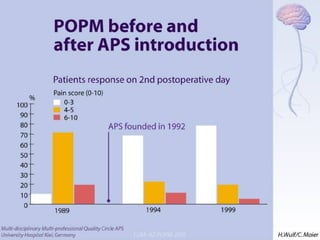
#21 This slide shows the positive effects of an APS on postoperative patients’ pain: Note the higher postop. pain scores before establishing the APS (in 1992), and the positive change in pain scores distribution with increasing experience from 1994 to 1999!
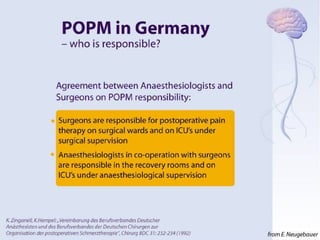
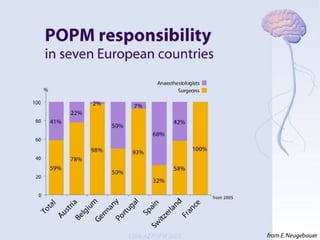
#23 The responibility for postoperative pain management varies considerably between countries. Surgeons are more or less completely responsible for this in France, Belgium and Portugal. A co-operation between anaesthetists and surgeons together with nurses would be optimal.
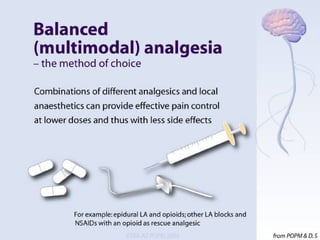
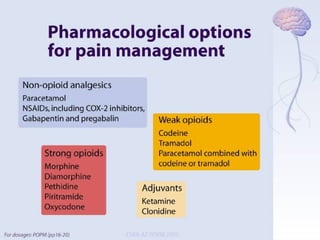
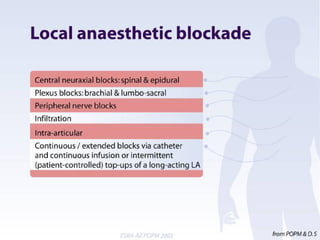
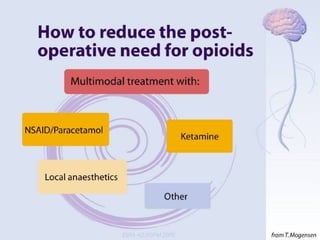
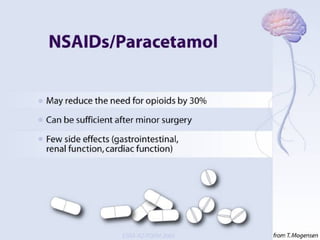
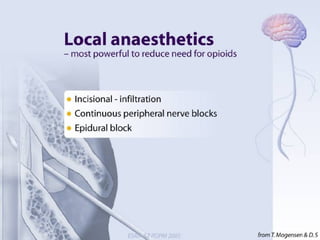
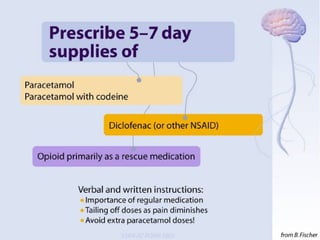
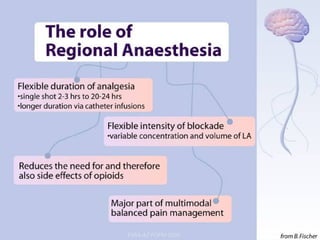
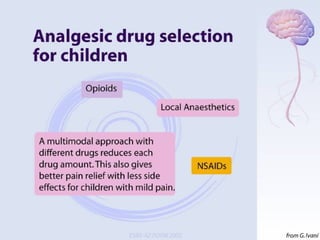
#27 Local anaesthetic blocks, NSAIDs and other non-opioid analgesics, alone, or best in combination, offer the possibility to reduce the need for opioids. Adequately handled, these alternatives mean a less troublesome postoperative period for the patient, i.e. with less opioid side effects such as nausea and vomiting, sedation, and obstipation. The role of opioids could thus be reduced to be effective rescue analgesics.
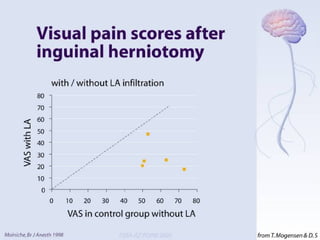
#30 Each square represents an individual study. In each study VAS was significantly lower in the LA group compared to controls”
#31 Some computers with limitied resources, such as older models or laptops, cannot play the clip direct from the presentation. If this is the case, the clip can be played directly from the CD. filename: thorasicfull.mpg
#33 Some computers with limitied resources, such as older models or laptops, cannot play the clip direct from the presentation. If this is the case, the clip can be played directly from the CD. filename: lumbartajm.mpg
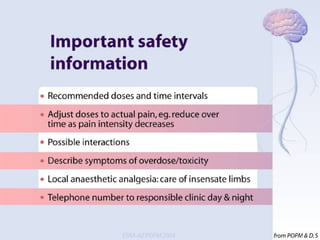
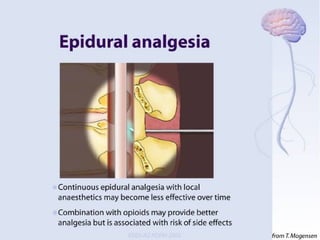
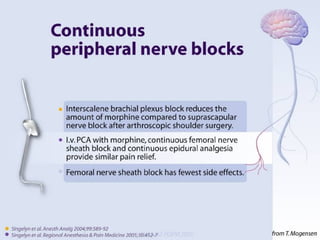
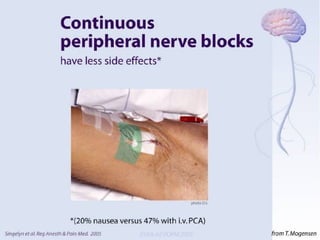
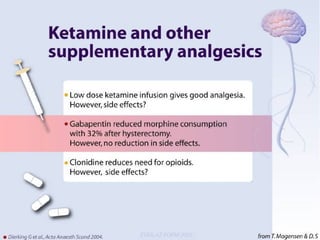
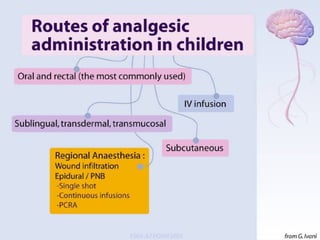
#34 Describe the type of administration of these drugs, and what side effects they may cause!