

Exploring dataDr Janelle YorkeUniversity of Salford & Professor Carol HaighManchester Metropolitan University
Background & AimsBased upon our joint reviewing experienceDiffering degrees of irritation regarding application of statistical tests.Seemed to be much confusion about test to be usedWas it just us?
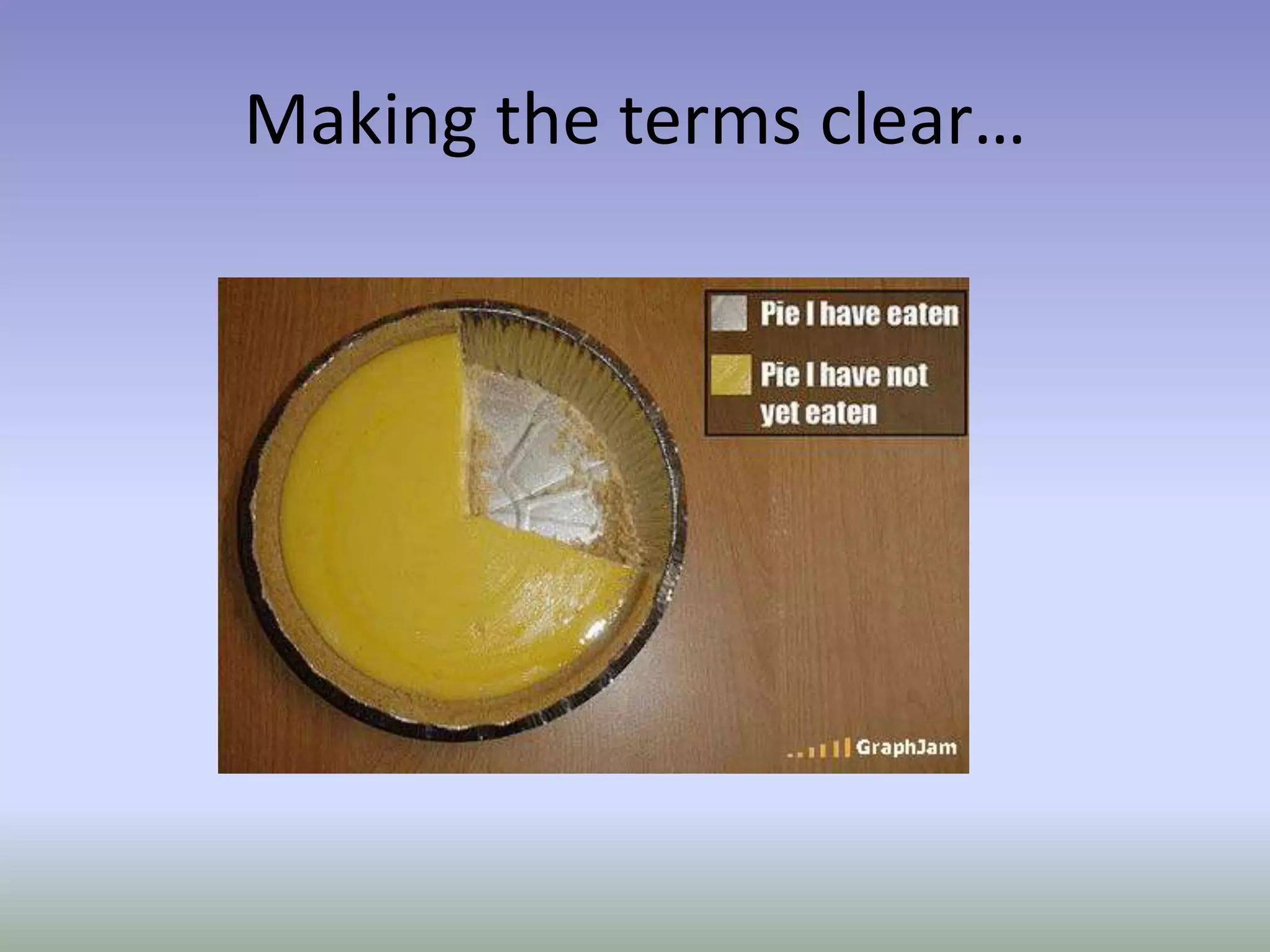
Making the terms clear…
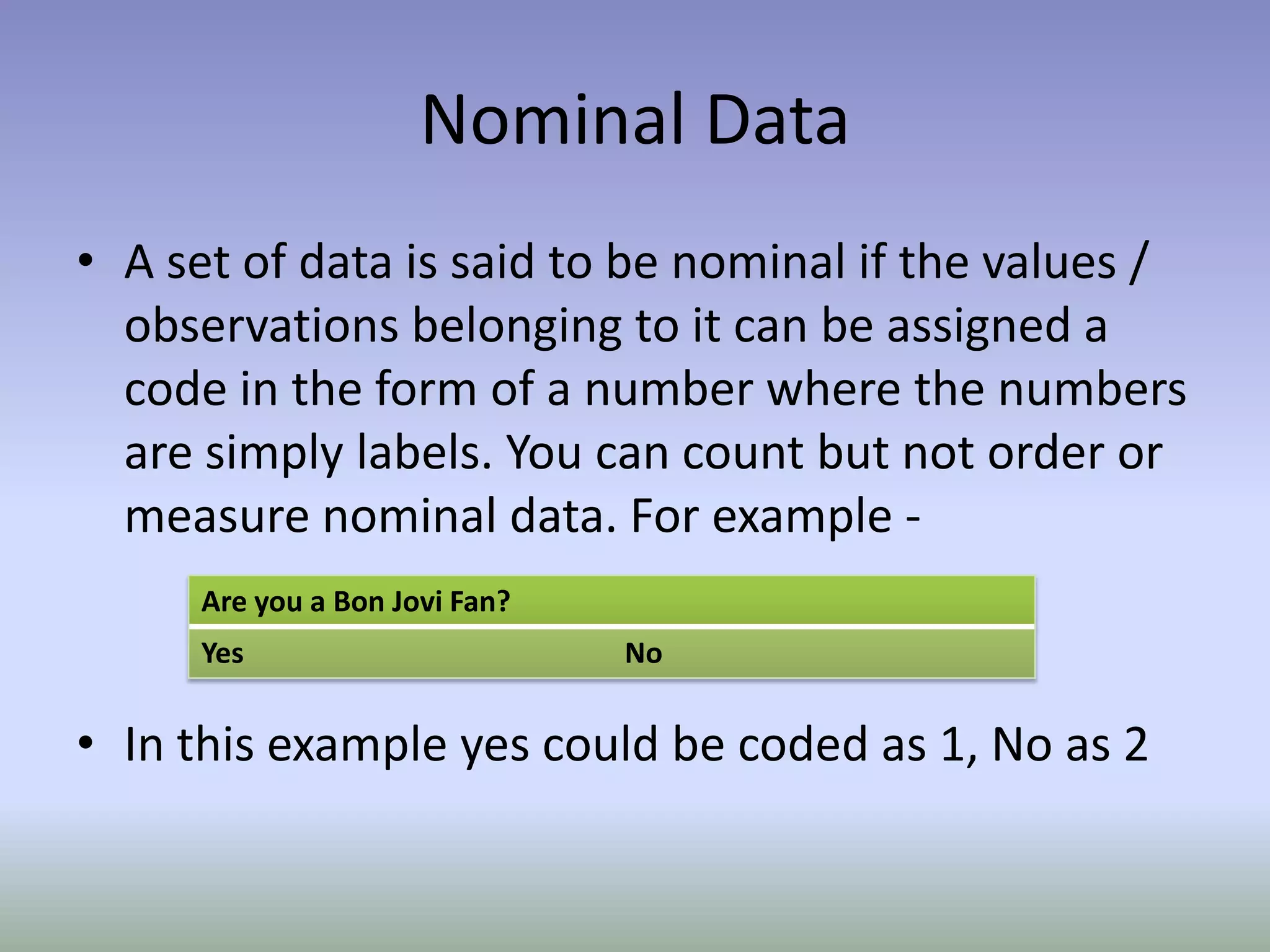
Nominal DataA set of data is said to be nominal if the values / observations belonging to it can be assigned a code in the form of a number where the numbers are simply labels. You can count but not order or measure nominal data. For example -In this example yes could be coded as 1, No as 2
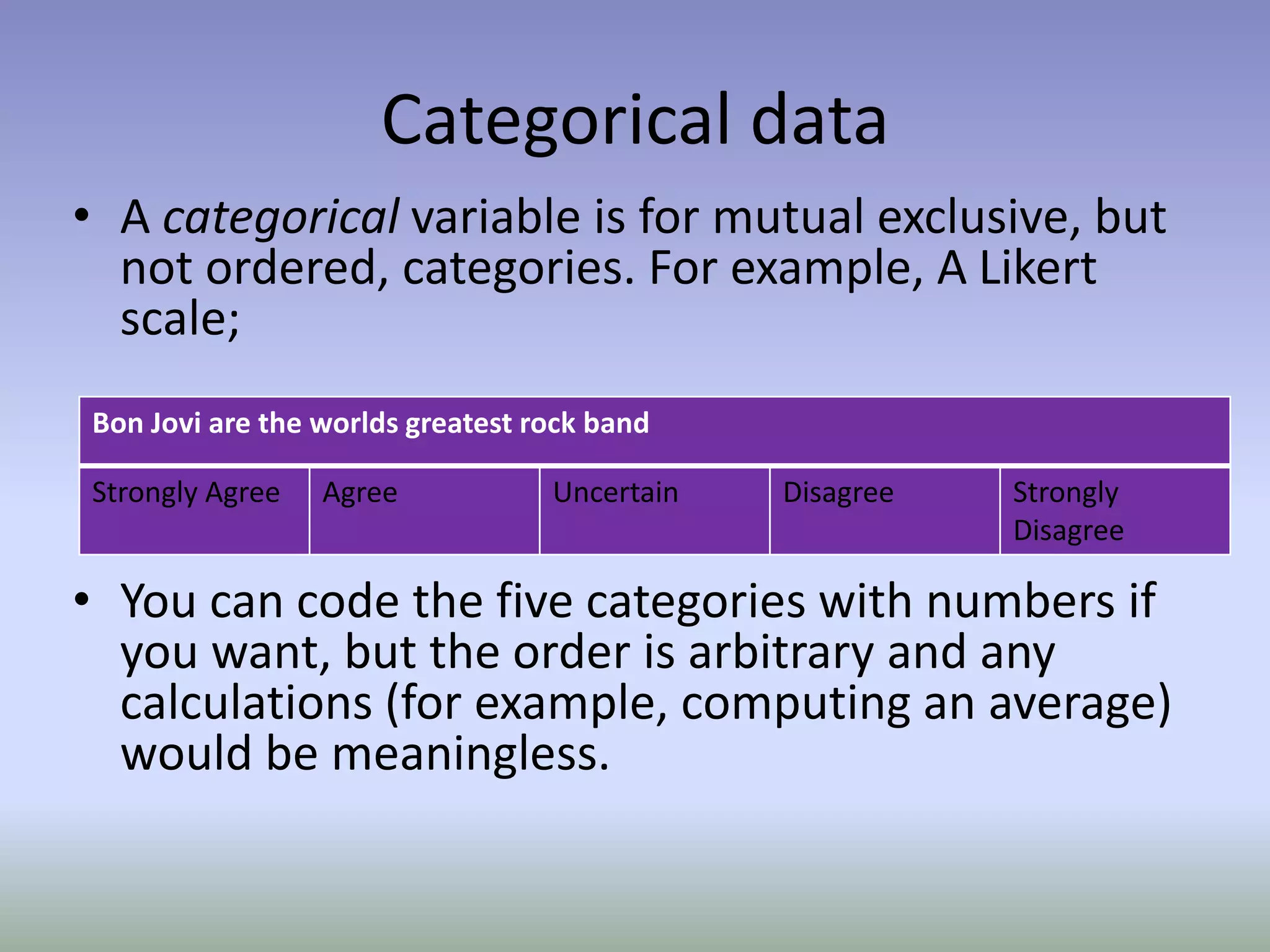
Categorical dataA categorical variable is for mutual exclusive, but not ordered, categories. For example, A Likert scale;You can code the five categories with numbers if you want, but the order is arbitrary and any calculations (for example, computing an average) would be meaningless.
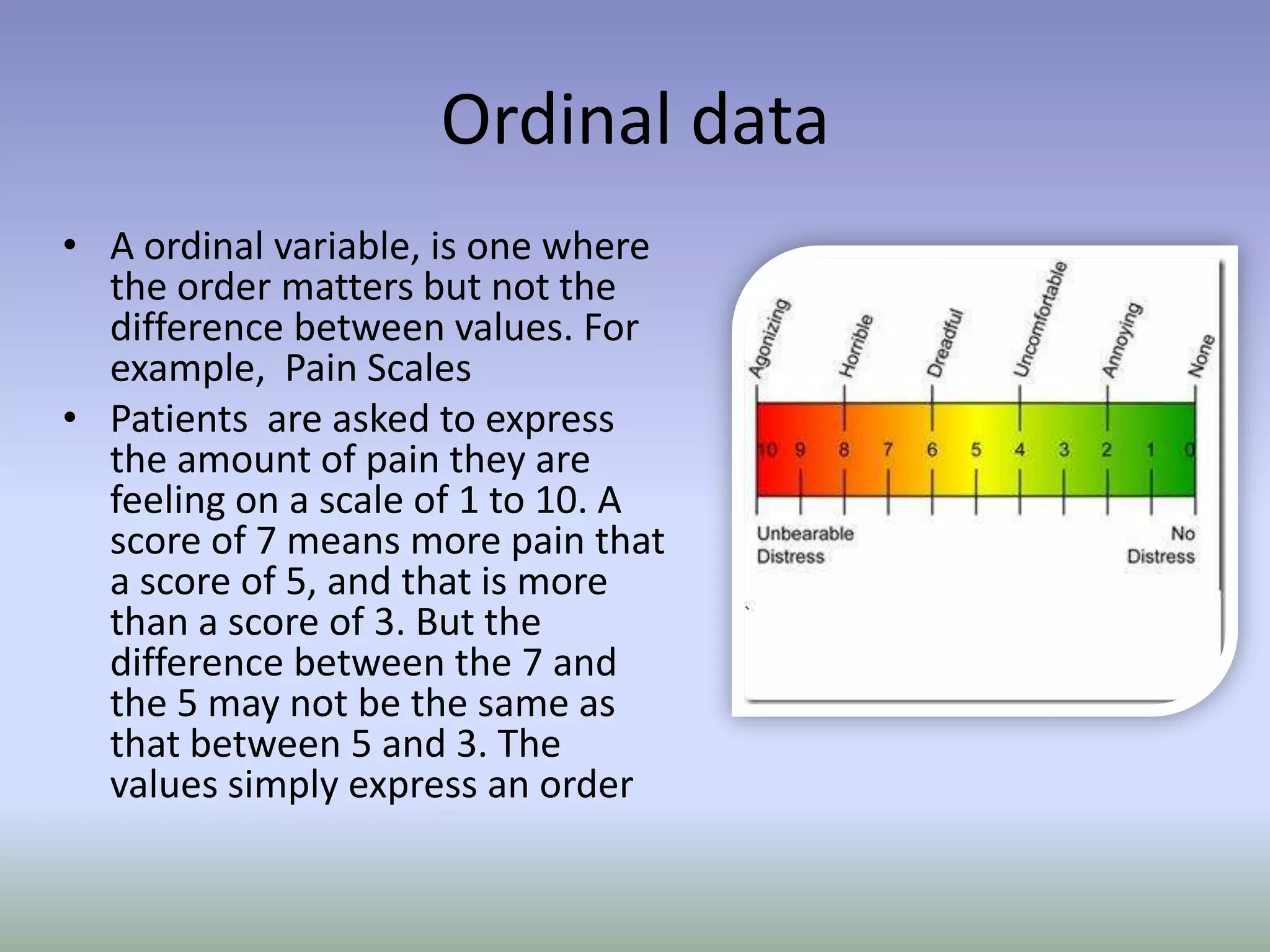
Ordinal dataA ordinal variable, is one where the order matters but not the difference between values. For example,  Pain ScalesPatients  are asked to express the amount of pain they are feeling on a scale of 1 to 10. A score of 7 means more pain that a score of 5, and that is more than a score of 3. But the difference between the 7 and the 5 may not be the same as that between 5 and 3. The values simply express an order
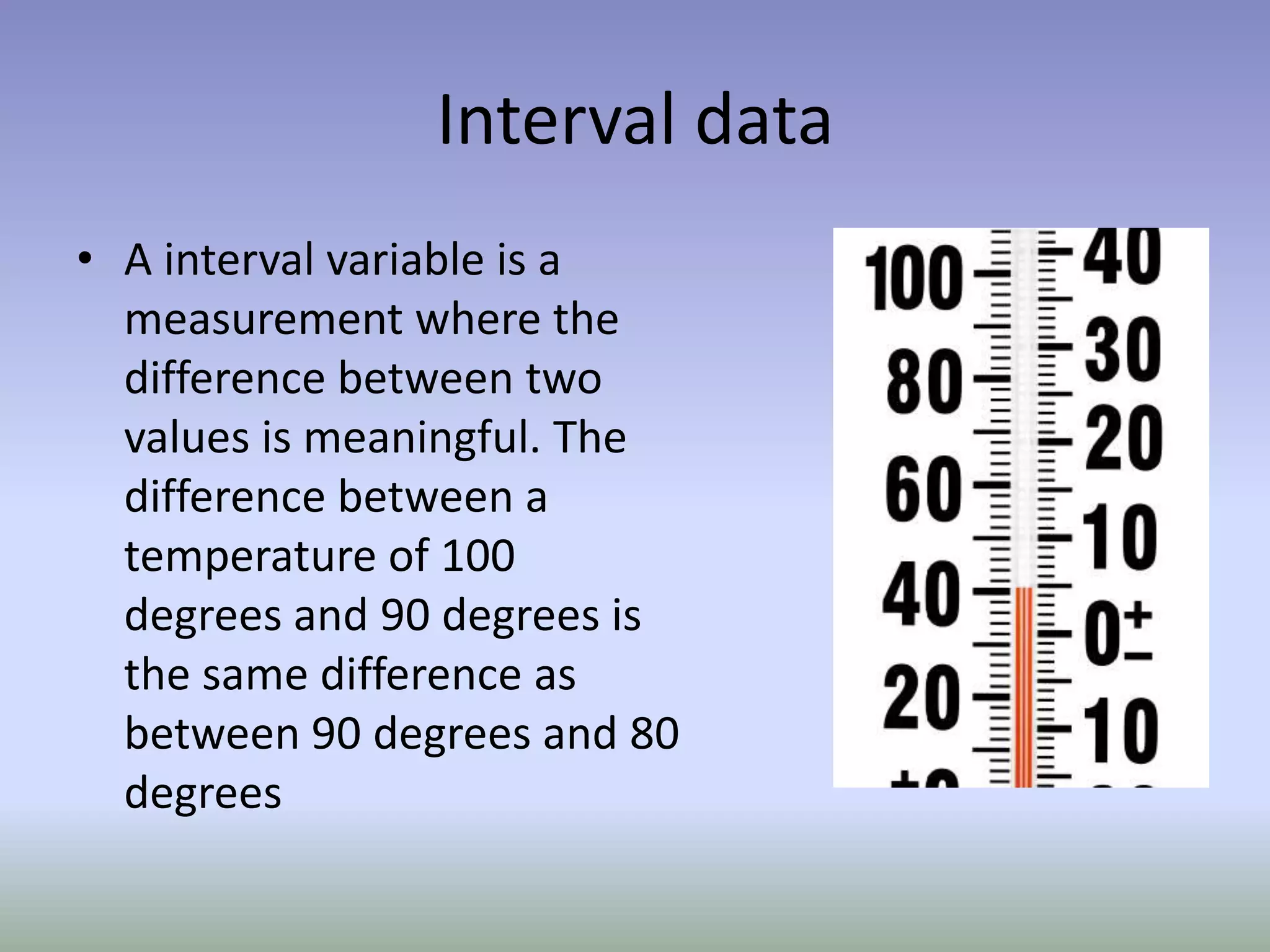
Interval dataA interval variable is a measurement where the difference between two values is meaningful. The difference between a temperature of 100 degrees and 90 degrees is the same difference as between 90 degrees and 80 degrees
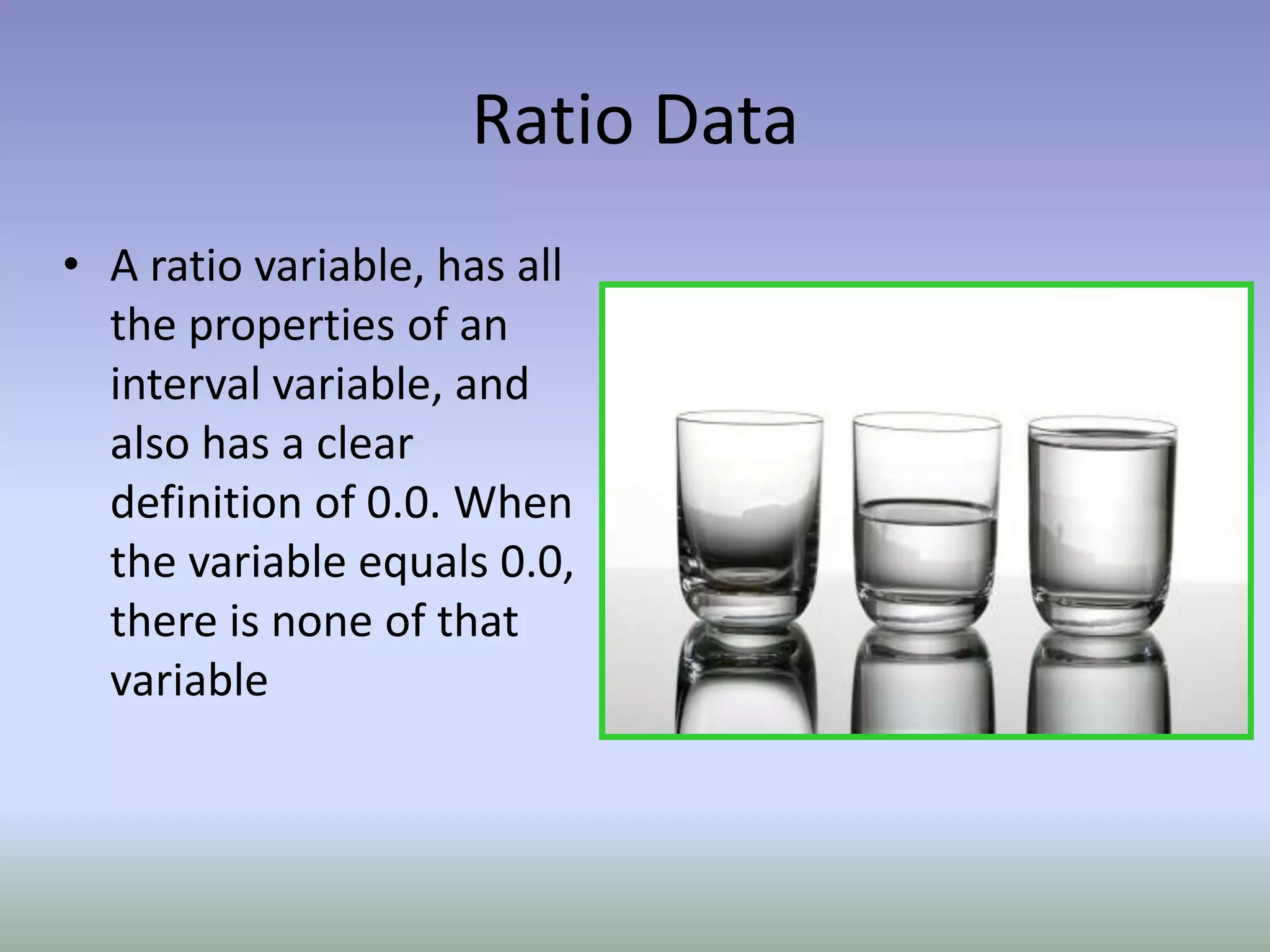
Ratio DataA ratio variable, has all the properties of an interval variable, and also has a clear definition of 0.0. When the variable equals 0.0, there is none of that variable
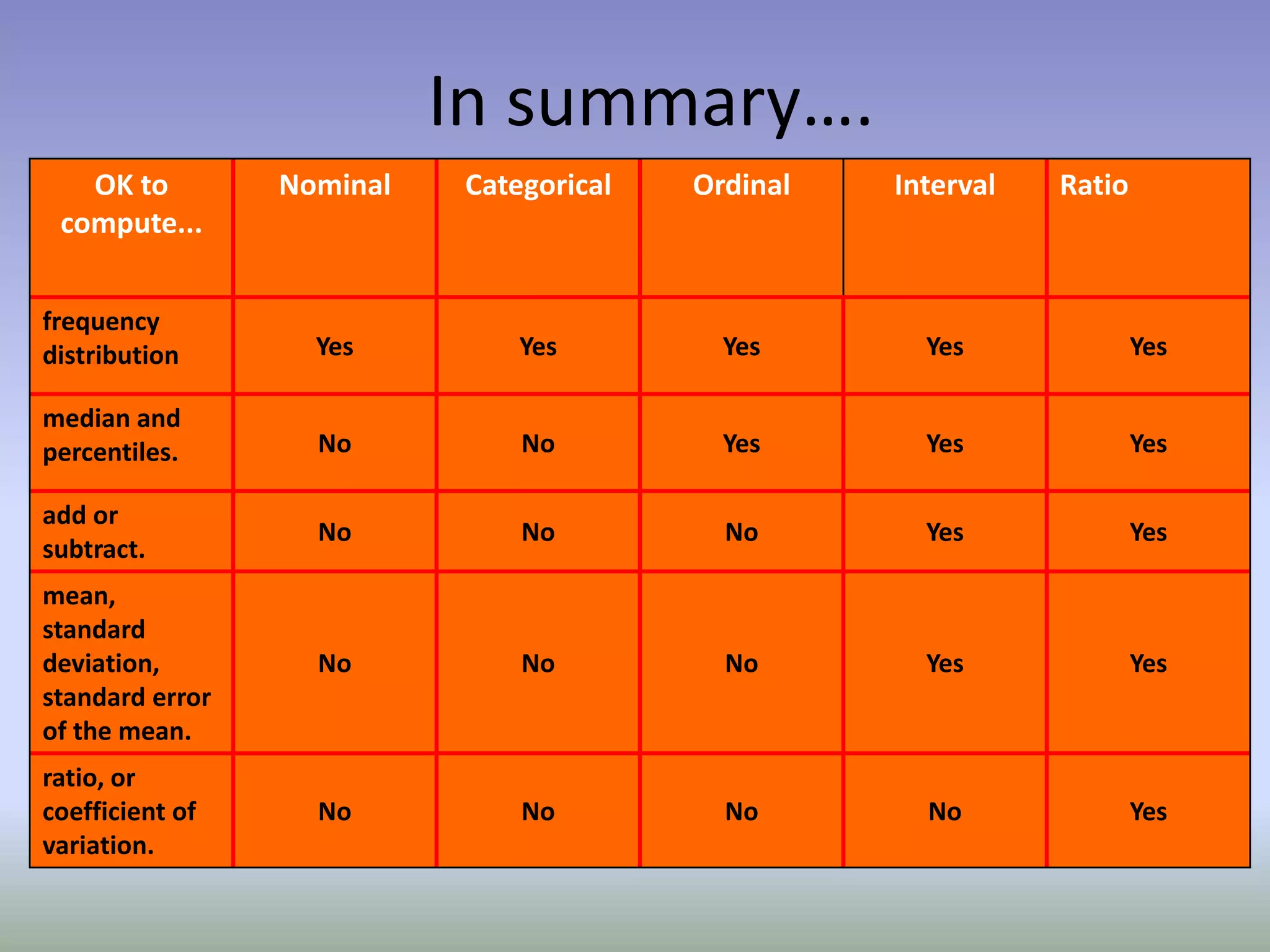
 In summary….
Know your tests
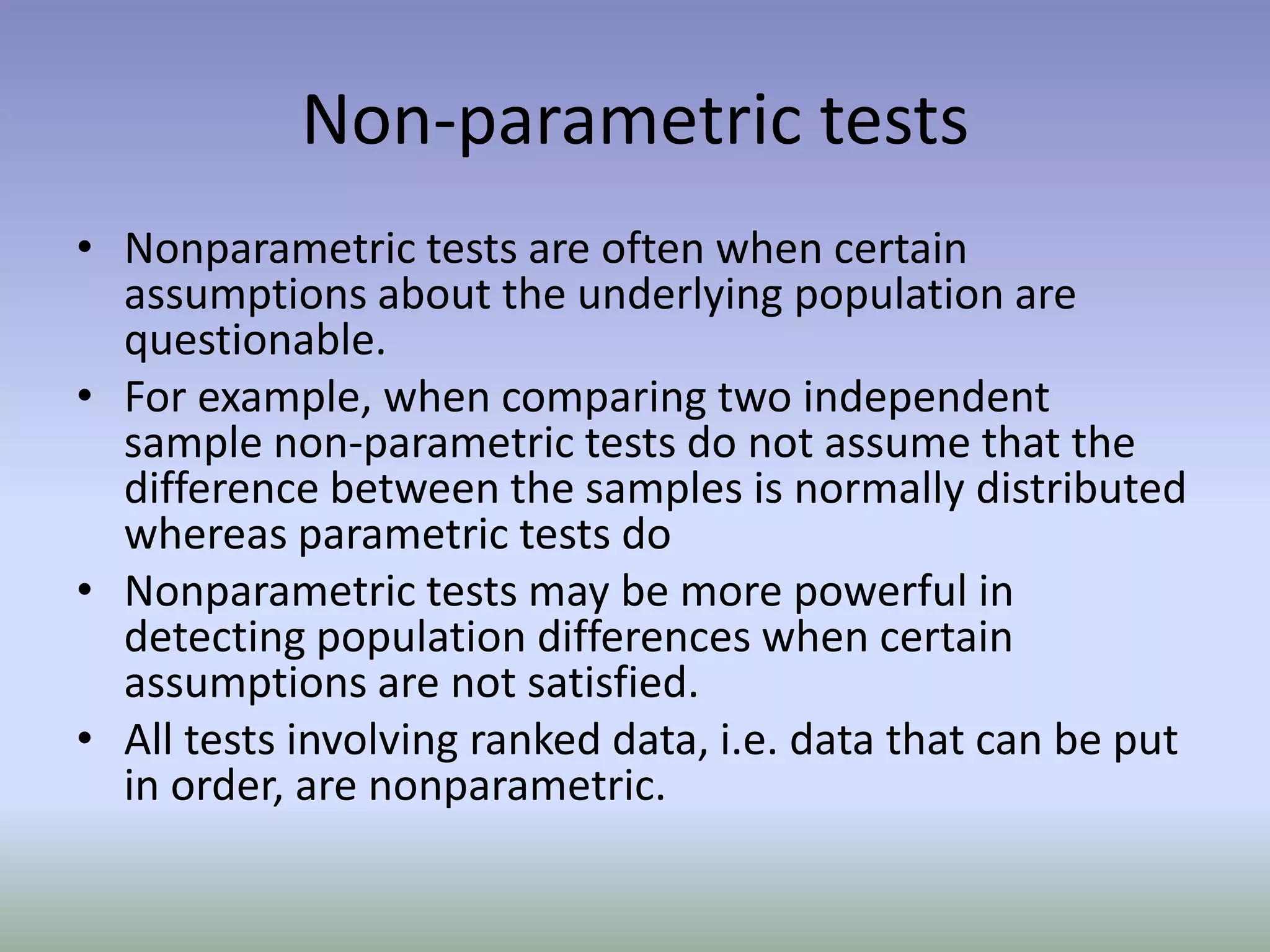
Non-parametric testsNonparametric tests are often when certain assumptions about the underlying population are questionable.For example, when comparing two independent sample non-parametric tests do not assume that the difference between the samples is normally distributed whereas parametric tests doNonparametric tests may be more powerful in detecting population differences when certain assumptions are not satisfied.All tests involving ranked data, i.e. data that can be put in order, are nonparametric.
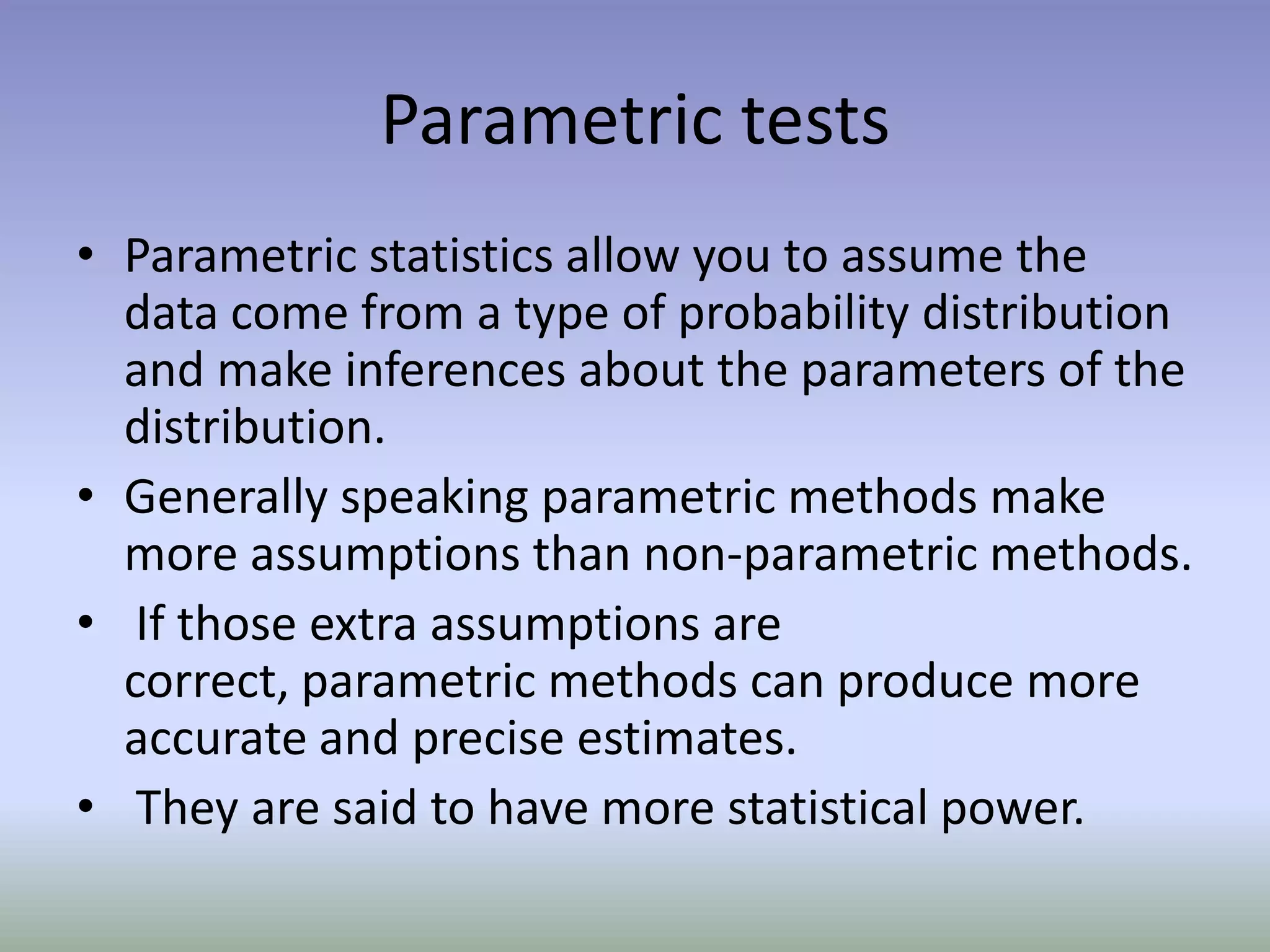
Parametric testsParametric statistics allow you to assume the data come from a type of probability distribution and make inferences about the parameters of the distribution.Generally speaking parametric methods make more assumptions than non-parametric methods. If those extra assumptions are correct, parametric methods can produce more accurate and precise estimates. They are said to have more statistical power.
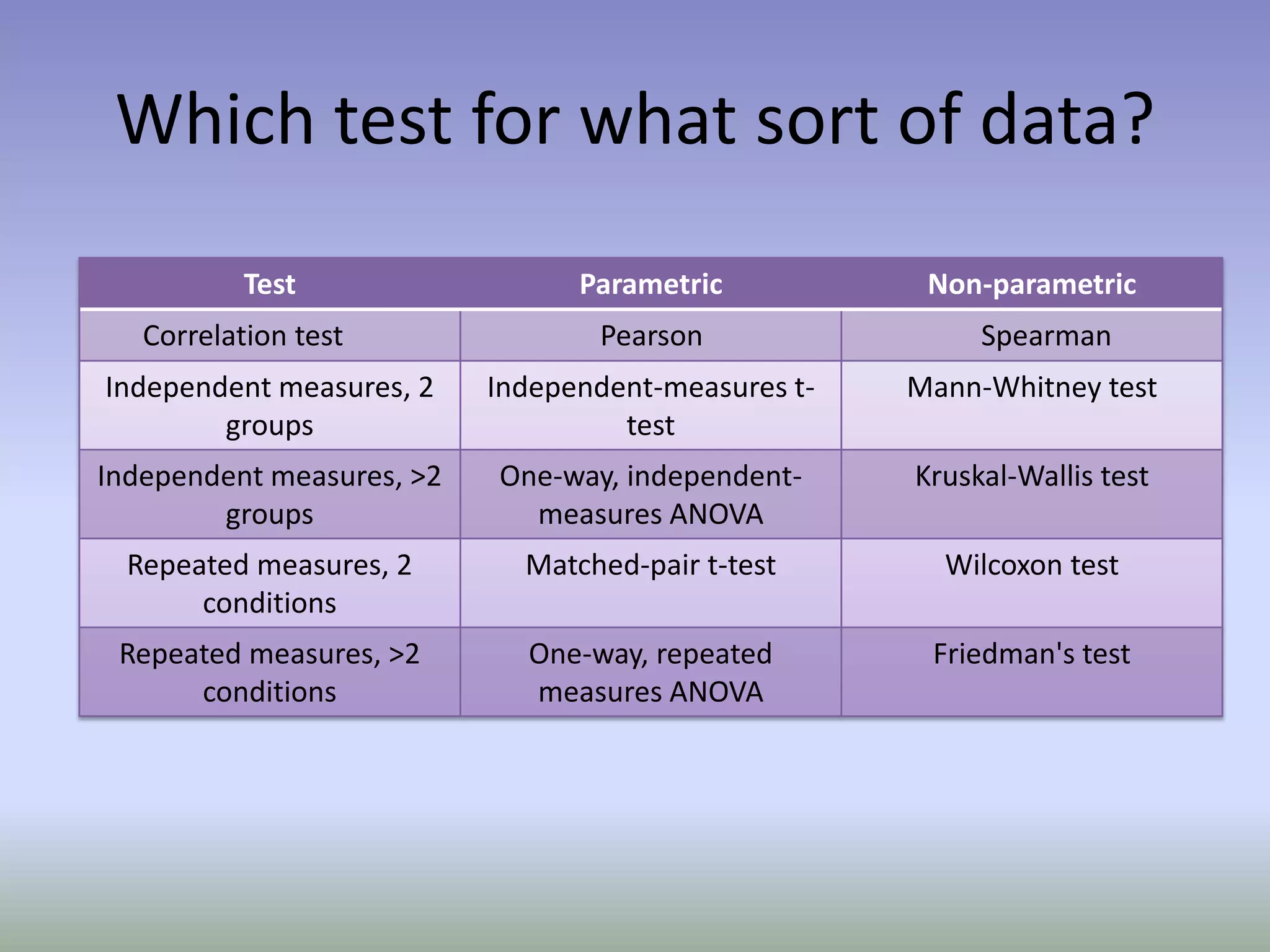
Which test for what sort of data?
Thank you for your attention

Interval data

  • 1.
     Exploring dataDr JanelleYorkeUniversity of Salford & Professor Carol HaighManchester Metropolitan University
  • 2.
    Background & AimsBasedupon our joint reviewing experienceDiffering degrees of irritation regarding application of statistical tests.Seemed to be much confusion about test to be usedWas it just us?
  • 3.
  • 4.
    Nominal DataA setof data is said to be nominal if the values / observations belonging to it can be assigned a code in the form of a number where the numbers are simply labels. You can count but not order or measure nominal data. For example -In this example yes could be coded as 1, No as 2
  • 5.
    Categorical dataA categoricalvariable is for mutual exclusive, but not ordered, categories. For example, A Likert scale;You can code the five categories with numbers if you want, but the order is arbitrary and any calculations (for example, computing an average) would be meaningless.
  • 6.
    Ordinal dataA ordinalvariable, is one where the order matters but not the difference between values. For example, Pain ScalesPatients are asked to express the amount of pain they are feeling on a scale of 1 to 10. A score of 7 means more pain that a score of 5, and that is more than a score of 3. But the difference between the 7 and the 5 may not be the same as that between 5 and 3. The values simply express an order
  • 7.
    Interval dataA intervalvariable is a measurement where the difference between two values is meaningful. The difference between a temperature of 100 degrees and 90 degrees is the same difference as between 90 degrees and 80 degrees
  • 8.
    Ratio DataA ratiovariable, has all the properties of an interval variable, and also has a clear definition of 0.0. When the variable equals 0.0, there is none of that variable
  • 9.
  • 10.
  • 11.
    Non-parametric testsNonparametric testsare often when certain assumptions about the underlying population are questionable.For example, when comparing two independent sample non-parametric tests do not assume that the difference between the samples is normally distributed whereas parametric tests doNonparametric tests may be more powerful in detecting population differences when certain assumptions are not satisfied.All tests involving ranked data, i.e. data that can be put in order, are nonparametric.
  • 12.
    Parametric testsParametric statisticsallow you to assume the data come from a type of probability distribution and make inferences about the parameters of the distribution.Generally speaking parametric methods make more assumptions than non-parametric methods. If those extra assumptions are correct, parametric methods can produce more accurate and precise estimates. They are said to have more statistical power.
  • 13.
    Which test forwhat sort of data?
  • 14.
    Thank you foryour attention