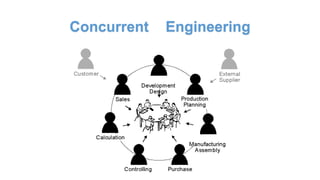
Concurrent Engineering
Presented by
Ashwin Joseph
Tinu Antan
Neha Samruth Bysani
• Meaning
• Traditional Engineering
• Why Concurrent Engineering
• Benefits
• Challenges
• DFM
• DFL
Agenda
Meaning
A method of designing and developing
products, in which the different stages run
simultaneously, rather than consecutively.
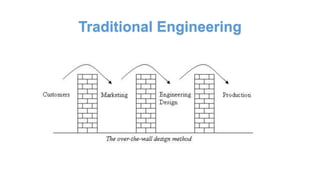
Traditional Engineering
Concurrent Engineering
Why Concurrent Engineering?
• Change in market pace
• Faster decisions
• Reduced repetition of tasks
• Faster response
• Reduced cost
• Efficient operations
Benefits of Concurrent Engineering
• Competitive advantage
• Faster time to market
• Enhanced Quality
• Enhanced Productivity
• Decrease design and development time
Challenges
• Support from top management
• Dedication
• Careful planning
• New product’s lifecycle should fit in the existing product
program lifecycles in a company
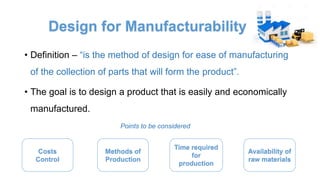
Design for Manufacturability
• Definition – “is the method of design for ease of manufacturing
of the collection of parts that will form the product”.
• The goal is to design a product that is easily and economically
manufactured.
Points to be considered
Costs
Control
Methods of
Production
Time required
for
production
Availability of
raw materials
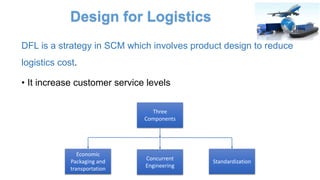
Design for Logistics
DFL is a strategy in SCM which involves product design to reduce
logistics cost.
• It increase customer service levels
Economic
Packaging and
transportation
Concurrent
Engineering
Standardization
Three
Components
Economic Transportation and Storage
• Design products for efficient packing and storing
• Design packaging so that products can be consolidated at cross
docking points
• Design products to efficient utilization of retail space
Concurrent/Parallel Processing
• Objective - minimize lead times
• Reducing the manufacturing process
Standardization
By using common parts for many different products
THANK YOU

Concurrent engineering

  • 1.
    Concurrent Engineering Presented by AshwinJoseph Tinu Antan Neha Samruth Bysani
  • 2.
    • Meaning • TraditionalEngineering • Why Concurrent Engineering • Benefits • Challenges • DFM • DFL Agenda
  • 3.
    Meaning A method ofdesigning and developing products, in which the different stages run simultaneously, rather than consecutively.
  • 4.
  • 5.
  • 6.
    Why Concurrent Engineering? •Change in market pace • Faster decisions • Reduced repetition of tasks • Faster response • Reduced cost • Efficient operations
  • 7.
    Benefits of ConcurrentEngineering • Competitive advantage • Faster time to market • Enhanced Quality • Enhanced Productivity • Decrease design and development time
  • 8.
    Challenges • Support fromtop management • Dedication • Careful planning • New product’s lifecycle should fit in the existing product program lifecycles in a company
  • 9.
    Design for Manufacturability •Definition – “is the method of design for ease of manufacturing of the collection of parts that will form the product”. • The goal is to design a product that is easily and economically manufactured. Points to be considered Costs Control Methods of Production Time required for production Availability of raw materials
  • 10.
    Design for Logistics DFLis a strategy in SCM which involves product design to reduce logistics cost. • It increase customer service levels Economic Packaging and transportation Concurrent Engineering Standardization Three Components
  • 11.
    Economic Transportation andStorage • Design products for efficient packing and storing • Design packaging so that products can be consolidated at cross docking points • Design products to efficient utilization of retail space
  • 12.
    Concurrent/Parallel Processing • Objective- minimize lead times • Reducing the manufacturing process Standardization By using common parts for many different products
  • 13.

Editor's Notes

  • #9 Has to be supported by top management All product development team members should be dedicated for the application of the strategy. Each phase should be carefully planned before application. New product’s lifecycle should fit in the existing product program lifecycles in a company
  • #12 Ikea World’s largest furniture retailer 131 stores in 21 countries Large stores, centralized manufacturing, compactly and efficiently packed products Rubbermaid Clear Classic food containers - designed to fit 14x14” Wal-Mart shelves