Facilitating Learning: A Metacognitive Process Module 6 – Learners with Exceptionalities 1
Assessment Task/s
Specific Cognitive or
Academic Difficulties
Physical Abilities and
Health Impairments Giftedness
Categories of Exceptional Learners
Learning Disabilities
Involve difficulties in specific
cognitive processes
Attention-Deficit
Hyperactivity Disorder
 Difficulty in focus
 Recurrent hyperactive
and impulsive behavior
Speech and
Communication Disorder
Difficulty in spoken language
Emotional/Conduct
Behaviors
Autism
Different levels of impaired
social interaction and
communication.
Mental Retardation
Sub-average intelligence
and deficits in adaptive
behavior
Emotional/Conduct
Disorders
Presence ofemotional states like
depression and aggression
Physical and health
Impairments
 Limited energy and
strength,
 Reduced mental alertness
 Little muscle control
Severe and Multiple
Disabilities
Presence of two or more
different types of
disabilities
Sensory Impairments
Visual Impairment
Malfunction of the eyes
Hearing Impairment
Malfunction of the ear or
auditory nerves
Significantly high level of
cognitive development
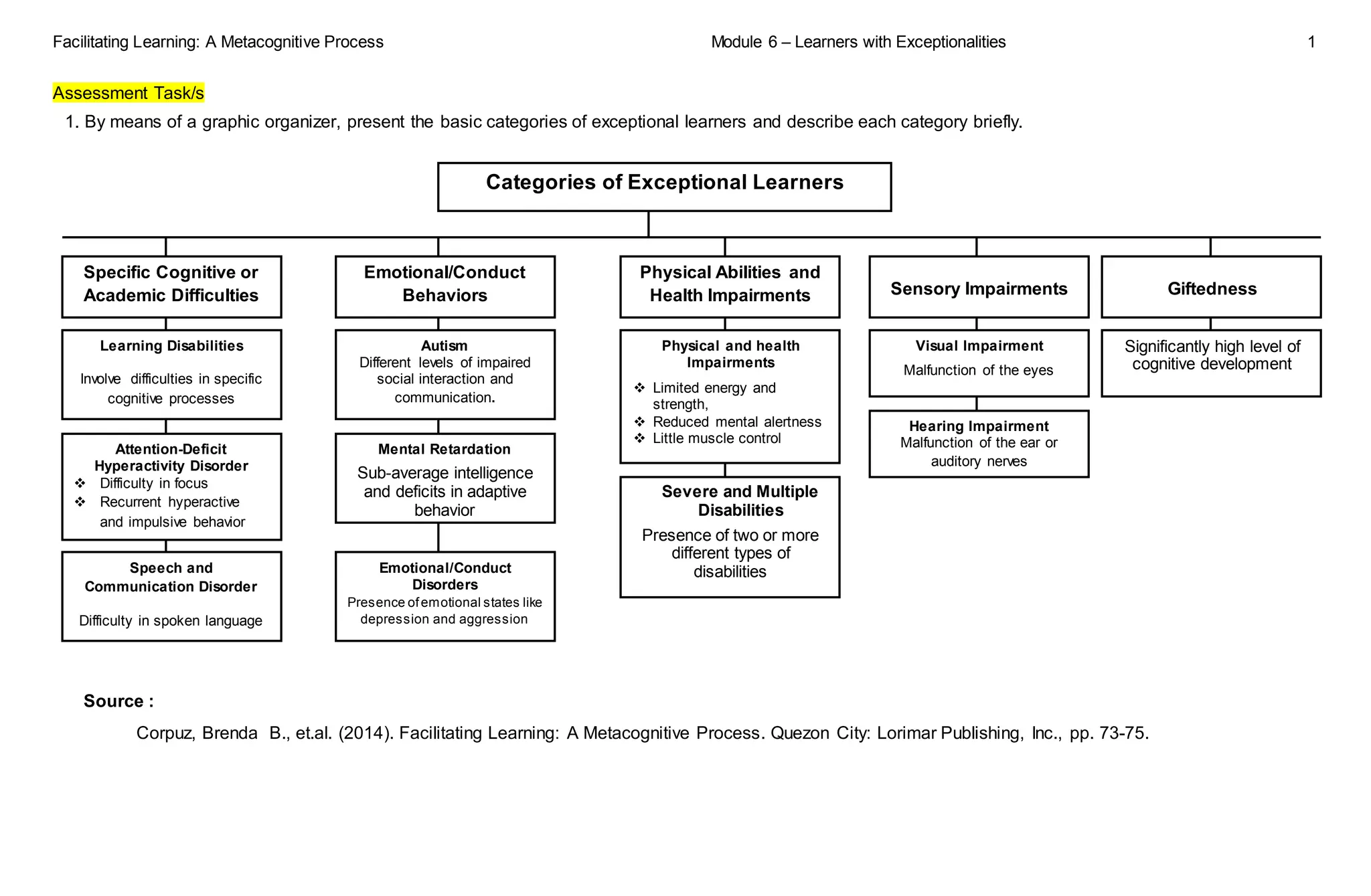
1. By means of a graphic organizer, present the basic categories of exceptional learners and describe each category briefly.
Source :
Corpuz, Brenda B., et.al. (2014). Facilitating Learning: A Metacognitive Process. Quezon City: Lorimar Publishing, Inc., pp. 73-75.

Categories

  • 1.
    Facilitating Learning: AMetacognitive Process Module 6 – Learners with Exceptionalities 1 Assessment Task/s Specific Cognitive or Academic Difficulties Physical Abilities and Health Impairments Giftedness Categories of Exceptional Learners Learning Disabilities Involve difficulties in specific cognitive processes Attention-Deficit Hyperactivity Disorder  Difficulty in focus  Recurrent hyperactive and impulsive behavior Speech and Communication Disorder Difficulty in spoken language Emotional/Conduct Behaviors Autism Different levels of impaired social interaction and communication. Mental Retardation Sub-average intelligence and deficits in adaptive behavior Emotional/Conduct Disorders Presence ofemotional states like depression and aggression Physical and health Impairments  Limited energy and strength,  Reduced mental alertness  Little muscle control Severe and Multiple Disabilities Presence of two or more different types of disabilities Sensory Impairments Visual Impairment Malfunction of the eyes Hearing Impairment Malfunction of the ear or auditory nerves Significantly high level of cognitive development 1. By means of a graphic organizer, present the basic categories of exceptional learners and describe each category briefly. Source : Corpuz, Brenda B., et.al. (2014). Facilitating Learning: A Metacognitive Process. Quezon City: Lorimar Publishing, Inc., pp. 73-75.