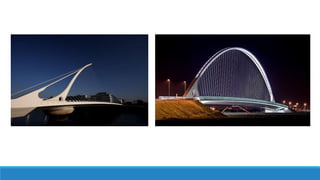
Building Systems
• Building is an assemblage of various Systems
• Basic Functional System
• Structural System
• HVAC System
• Plumbing and Drainage System
• Electrical, Electronic and Communication System
• Security System
• Other specialized systems
It’s a system means holding the components of a certain system and transfer the load
through the members of a structure to provide stability and durability.
Structural System
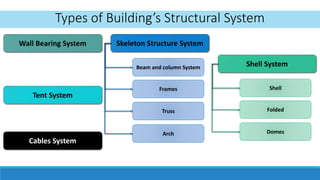
Types of Building’s Structural System
Wall Bearing System Skeleton Structure System
Beam and column System
Frames
Truss
Arch
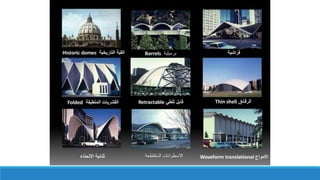
Shell System
Shell
Folded
Domes
Tent System
Cables System
Types of Building’s Structural System
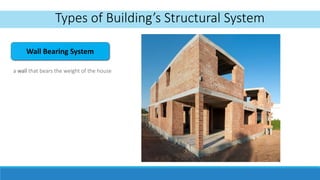
Wall Bearing System
a wall that bears the weight of the house
Types of Building’s Structural System
Skeleton Structure System
Beam and column System
Frames
Truss
Arch
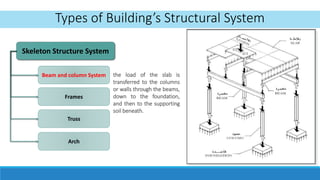
the load of the slab is
transferred to the columns
or walls through the beams,
down to the foundation,
and then to the supporting
soil beneath.
Types of Building’s Structural System
Skeleton Structure System
Beam and column System
Frame
Truss
Arch
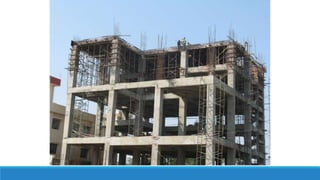
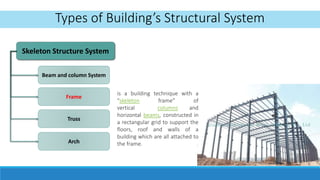
is a building technique with a
"skeleton frame" of
vertical columns and
horizontal beams, constructed in
a rectangular grid to support the
floors, roof and walls of a
building which are all attached to
the frame.
Types of Building’s Structural System
Skeleton Structure System
Beam and column System
Frame
Truss
Arch
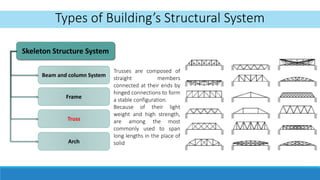
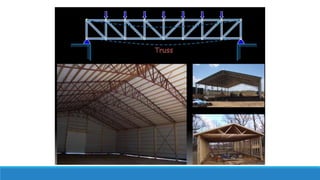
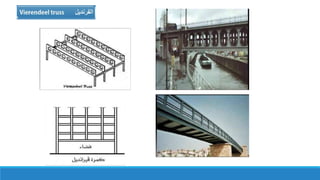
Trusses are composed of
straight members
connected at their ends by
hinged connections to form
a stable configuration.
Because of their light
weight and high strength,
are among the most
commonly used to span
long lengths in the place of
solid
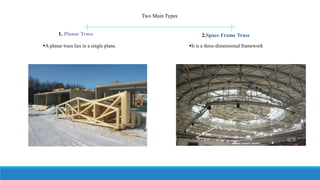
1. Planar Truss
Two Main Types
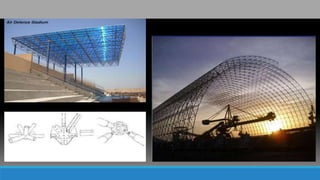
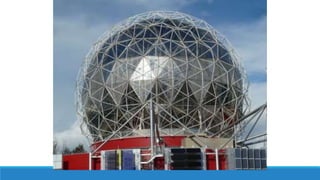
2.Space Frame Truss
A planar truss lies in a single plane. It is a three-dimensional framework
Types of Building’s Structural System
Skeleton Structure System
Beam and column System
Frame
Truss
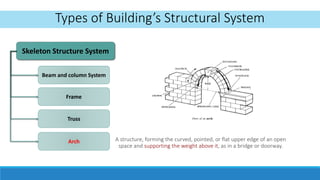
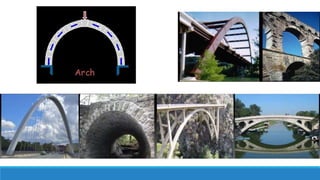
Arch A structure, forming the curved, pointed, or flat upper edge of an open
space and supporting the weight above it, as in a bridge or doorway.
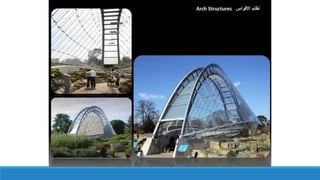
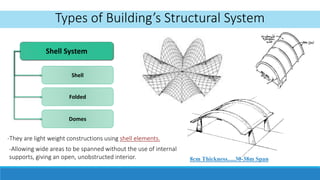
-They are light weight constructions using shell elements.
Shell System
Shell
Folded
Domes
Types of Building’s Structural System
-Allowing wide areas to be spanned without the use of internal
supports, giving an open, unobstructed interior. 8cm Thickness.....30-38m Span
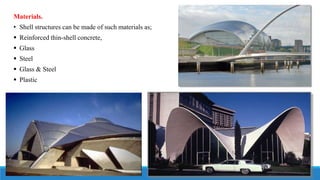
Materials.
• Shell structures can be made of such materials as;
 Reinforced thin-shell concrete,
 Glass
 Steel
 Glass & Steel
 Plastic
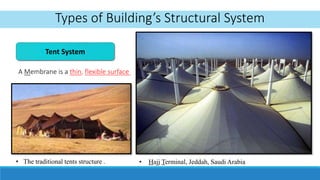
A Membrane is a thin, flexible surface
Tent System
Types of Building’s Structural System
• Hajj Terminal, Jeddah, Saudi Arabia• The traditional tents structure .
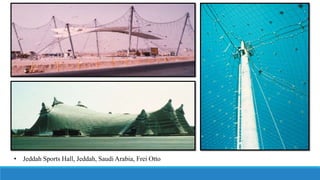
• Jeddah Sports Hall, Jeddah, Saudi Arabia, Frei Otto
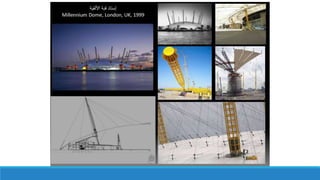
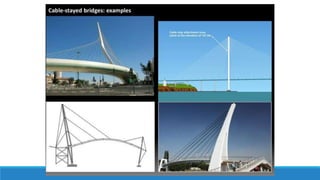
Cables System
Types of Building’s Structural System
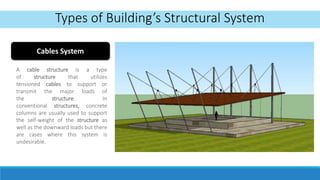
A cable structure is a type
of structure that utilizes
tensioned cables to support or
transmit the major loads of
the structure. In
conventional structures, concrete
columns are usually used to support
the self-weight of the structure as
well as the downward loads but there
are cases where this system is
undesirable.
Buildings Structure system

Buildings Structure system

  • 2.
    Building Systems • Buildingis an assemblage of various Systems • Basic Functional System • Structural System • HVAC System • Plumbing and Drainage System • Electrical, Electronic and Communication System • Security System • Other specialized systems
  • 3.
    It’s a systemmeans holding the components of a certain system and transfer the load through the members of a structure to provide stability and durability. Structural System
  • 4.
    Types of Building’sStructural System Wall Bearing System Skeleton Structure System Beam and column System Frames Truss Arch Shell System Shell Folded Domes Tent System Cables System
  • 5.
    Types of Building’sStructural System Wall Bearing System a wall that bears the weight of the house
  • 6.
    Types of Building’sStructural System Skeleton Structure System Beam and column System Frames Truss Arch the load of the slab is transferred to the columns or walls through the beams, down to the foundation, and then to the supporting soil beneath.
  • 8.
    Types of Building’sStructural System Skeleton Structure System Beam and column System Frame Truss Arch is a building technique with a "skeleton frame" of vertical columns and horizontal beams, constructed in a rectangular grid to support the floors, roof and walls of a building which are all attached to the frame.
  • 11.
    Types of Building’sStructural System Skeleton Structure System Beam and column System Frame Truss Arch Trusses are composed of straight members connected at their ends by hinged connections to form a stable configuration. Because of their light weight and high strength, are among the most commonly used to span long lengths in the place of solid
  • 12.
    1. Planar Truss TwoMain Types 2.Space Frame Truss A planar truss lies in a single plane. It is a three-dimensional framework
  • 17.
    Types of Building’sStructural System Skeleton Structure System Beam and column System Frame Truss Arch A structure, forming the curved, pointed, or flat upper edge of an open space and supporting the weight above it, as in a bridge or doorway.
  • 20.
    -They are lightweight constructions using shell elements. Shell System Shell Folded Domes Types of Building’s Structural System -Allowing wide areas to be spanned without the use of internal supports, giving an open, unobstructed interior. 8cm Thickness.....30-38m Span
  • 21.
    Materials. • Shell structurescan be made of such materials as;  Reinforced thin-shell concrete,  Glass  Steel  Glass & Steel  Plastic
  • 25.
    A Membrane isa thin, flexible surface Tent System Types of Building’s Structural System • Hajj Terminal, Jeddah, Saudi Arabia• The traditional tents structure .
  • 26.
    • Jeddah SportsHall, Jeddah, Saudi Arabia, Frei Otto
  • 30.
    Cables System Types ofBuilding’s Structural System A cable structure is a type of structure that utilizes tensioned cables to support or transmit the major loads of the structure. In conventional structures, concrete columns are usually used to support the self-weight of the structure as well as the downward loads but there are cases where this system is undesirable.