


LONG SPAN
STRUCTURE
S T R U C T U R E W I T H S PA N L A R G E R T H A N 2 0 M C A N B E
R E G A R D E D A S L O N G S PA N S T R U C T U R E
By Prashant Borge
TYPE OF STRUCTURE
Classification based on
• beams
• Trusses
• Arch
• Cable
• Tent
• Pnumatic
TYPE OF BEAMS
• Castellated beams.
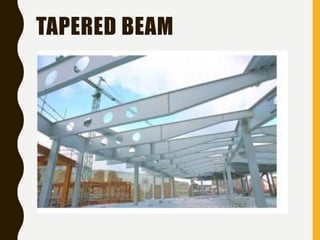
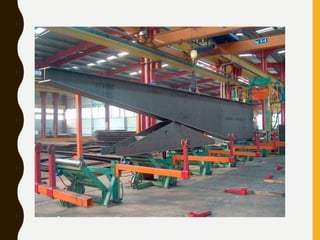
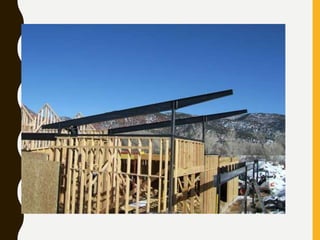
• Tapered beam.
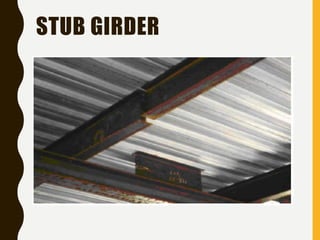
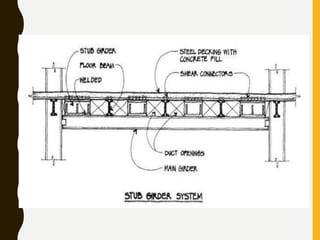
• Stub girders.
• Lattice beam.
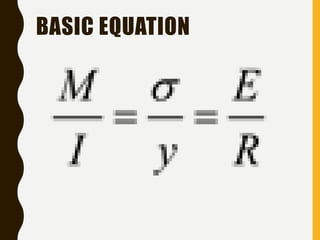
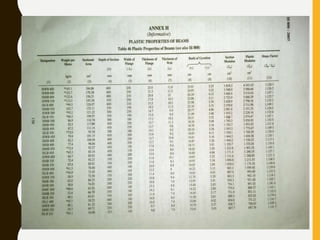
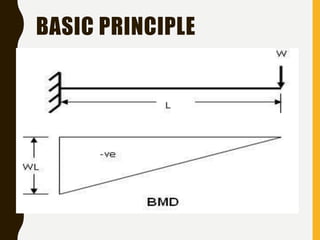
BASIC EQUATION
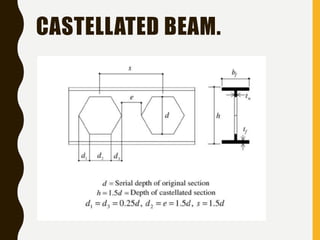
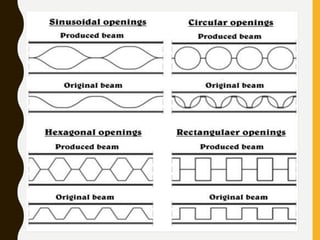
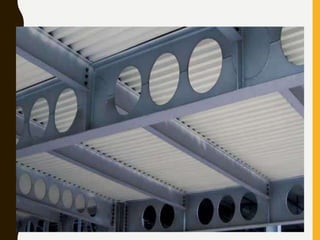
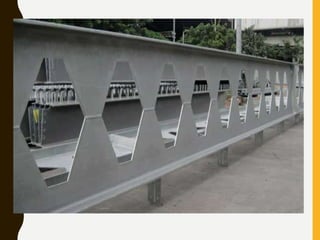
CASTELLATED BEAM.
ADVANTAGE
• They are light and strong.
• They are cheap.
• Easy to assemble at the construction site.
• The openings in the web simplify the work of the installer and
the electrician, since taking pipes across beams presents no
problems. After all, the web of the beam already has many wide
openings by nature.
• ceiling systems, can also be installed easily. And castellated
beams are ELEGANT.
Most architects rate the aesthetic value of a castellated beam
highly.
TAPERED BEAM
BASIC PRINCIPLE
STUB GIRDER
LATTICE BEAM
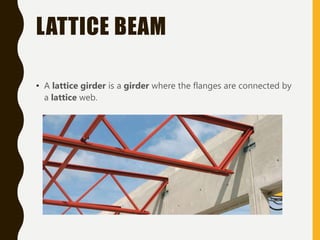
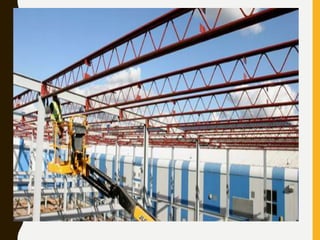
• A lattice girder is a girder where the flanges are connected by
a lattice web.
TRUSSES
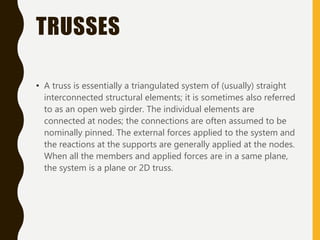
• A truss is essentially a triangulated system of (usually) straight
interconnected structural elements; it is sometimes also referred
to as an open web girder. The individual elements are
connected at nodes; the connections are often assumed to be
nominally pinned. The external forces applied to the system and
the reactions at the supports are generally applied at the nodes.
When all the members and applied forces are in a same plane,
the system is a plane or 2D truss.
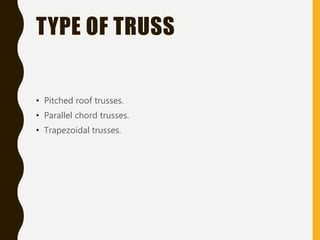
TYPE OF TRUSS
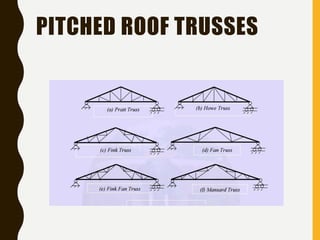
• Pitched roof trusses.
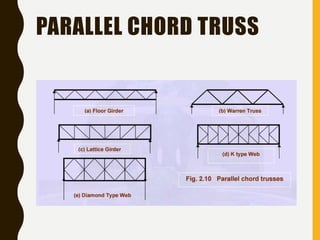
• Parallel chord trusses.
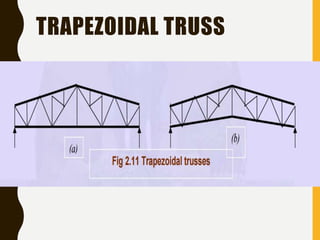
• Trapezoidal trusses.
PITCHED ROOF TRUSSES
PARALLEL CHORD TRUSS
TRAPEZOIDAL TRUSS
ADVANTAGES
• Long span
• Lightweight
• Reduced deflection (compared to plain members)
• Opportunity to support considerable loads.
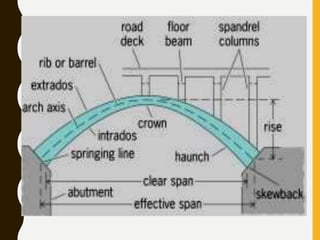
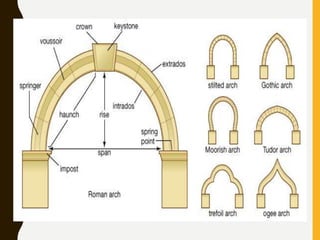
ARCH
• A usually curved structure forming the upper edge of an open
space and supporting the weight
above it, as in a bridge or doorway.
• A structure, such as a freestanding monument, shaped like an i
verted U.
• A curve with the ends down and the middle up: the arch of a
raised eyebrow.
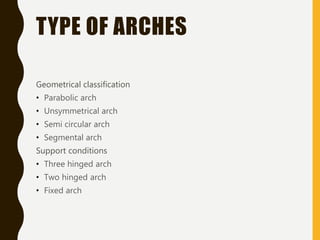
TYPE OF ARCHES
Geometrical classification
• Parabolic arch
• Unsymmetrical arch
• Semi circular arch
• Segmental arch
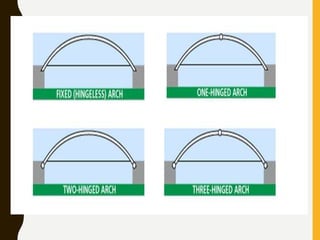
Support conditions
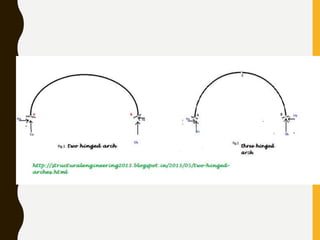
• Three hinged arch
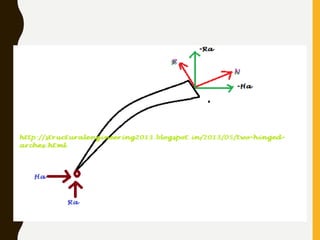
• Two hinged arch
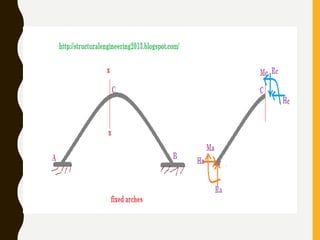
• Fixed arch
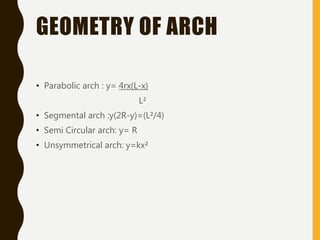
GEOMETRY OF ARCH
• Parabolic arch : y= 4rx(L-x)
L²
• Segmental arch :y(2R-y)=(L²/4)
• Semi Circular arch: y= R
• Unsymmetrical arch: y=kx²
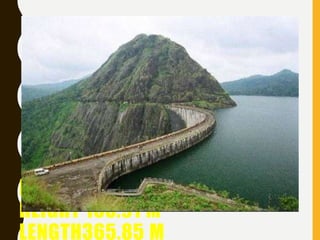
IDUKKI ARCH DAM,KERALA.
HEIGHT 168.91 M
LENGTH365.85 M
HOOVER DAM ,COLORADO[1935].
SPAN 379M,HT.221M
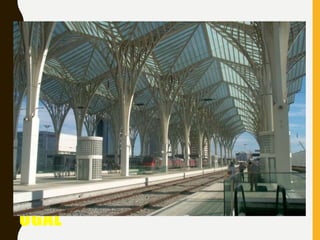
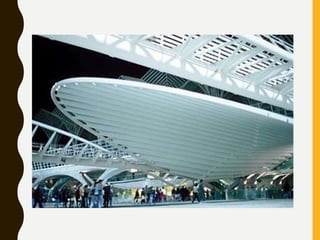
ORIENTE_STATION_LISBOA/PORT
UGAL
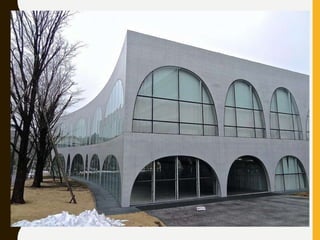
TAMA ART UNIVERSITY LIBRARY,
TOKYO, JAPAN
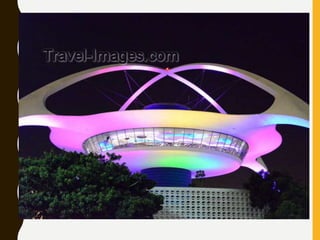
LOS ANGELES AIRPORT IN1961
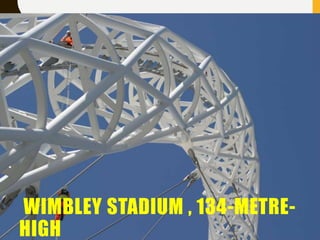
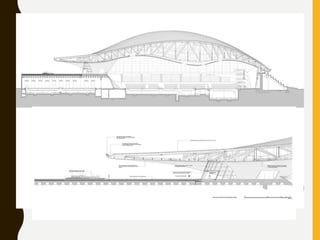
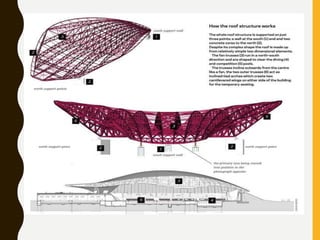
WIMBLEY STADIUM , 134-METRE-
HIGH
Long span structure
Long span structure
Long span structure

Long span structure

  • 1.
    LONG SPAN STRUCTURE S TR U C T U R E W I T H S PA N L A R G E R T H A N 2 0 M C A N B E R E G A R D E D A S L O N G S PA N S T R U C T U R E By Prashant Borge
  • 2.
    TYPE OF STRUCTURE Classificationbased on • beams • Trusses • Arch • Cable • Tent • Pnumatic
  • 3.
    TYPE OF BEAMS •Castellated beams. • Tapered beam. • Stub girders. • Lattice beam.
  • 4.
  • 5.
  • 11.
    ADVANTAGE • They arelight and strong. • They are cheap. • Easy to assemble at the construction site. • The openings in the web simplify the work of the installer and the electrician, since taking pipes across beams presents no problems. After all, the web of the beam already has many wide openings by nature. • ceiling systems, can also be installed easily. And castellated beams are ELEGANT. Most architects rate the aesthetic value of a castellated beam highly.
  • 12.
  • 13.
  • 16.
  • 18.
    LATTICE BEAM • Alattice girder is a girder where the flanges are connected by a lattice web.
  • 20.
    TRUSSES • A trussis essentially a triangulated system of (usually) straight interconnected structural elements; it is sometimes also referred to as an open web girder. The individual elements are connected at nodes; the connections are often assumed to be nominally pinned. The external forces applied to the system and the reactions at the supports are generally applied at the nodes. When all the members and applied forces are in a same plane, the system is a plane or 2D truss.
  • 21.
    TYPE OF TRUSS •Pitched roof trusses. • Parallel chord trusses. • Trapezoidal trusses.
  • 22.
  • 23.
  • 24.
  • 25.
    ADVANTAGES • Long span •Lightweight • Reduced deflection (compared to plain members) • Opportunity to support considerable loads.
  • 36.
    ARCH • A usuallycurved structure forming the upper edge of an open space and supporting the weight above it, as in a bridge or doorway. • A structure, such as a freestanding monument, shaped like an i verted U. • A curve with the ends down and the middle up: the arch of a raised eyebrow.
  • 39.
    TYPE OF ARCHES Geometricalclassification • Parabolic arch • Unsymmetrical arch • Semi circular arch • Segmental arch Support conditions • Three hinged arch • Two hinged arch • Fixed arch
  • 44.
    GEOMETRY OF ARCH •Parabolic arch : y= 4rx(L-x) L² • Segmental arch :y(2R-y)=(L²/4) • Semi Circular arch: y= R • Unsymmetrical arch: y=kx²
  • 45.
    IDUKKI ARCH DAM,KERALA. HEIGHT168.91 M LENGTH365.85 M
  • 46.
  • 49.
  • 50.
    TAMA ART UNIVERSITYLIBRARY, TOKYO, JAPAN
  • 51.
  • 52.
    WIMBLEY STADIUM ,134-METRE- HIGH