Md. Al amin
Sr. Lecturer of PISFT
MBA in Apparel merchandising
 Topics :
 What is communication ?
 What is business communication ?
 Communication Process, and
 Types of communication
 Channel of communication
 Communication channel on Technology
What is communication
 Communication:
 Communication is the activity of conveying information.
Communication has been derived from the Latin word
"communis", meaning to share.
 In words of Louis- “Communication is the sum of all things one
person does when he wants to create understanding in the
minds of another. It involves a systematic and continuous
process of telling, listening and understanding.
 Communication may be defined as giving, receiving or
exchanging information, opinions or ideas by writing,
speech or visual means, so that material communicated is
completely understood by everyone concerned.
81
Communication
Communication is the process of
conveying a message to others and
requires six elements: a source, a
message, a channel of communication,
a receiver, and the processes of
encoding and decoding.
What is business communication
 Business Communication:
 Business Communication is the expression,
channeling and interchanging of ideas in commerce
and industry.
 According to Prof. W H Meaning ‘The exchange of
ideas, news, and views in connection with business,
among the related parties is called business
communication.
 So we can say Business Communication is an exchange
of information, ideas, news, and views in connection
with business, among the related parties.
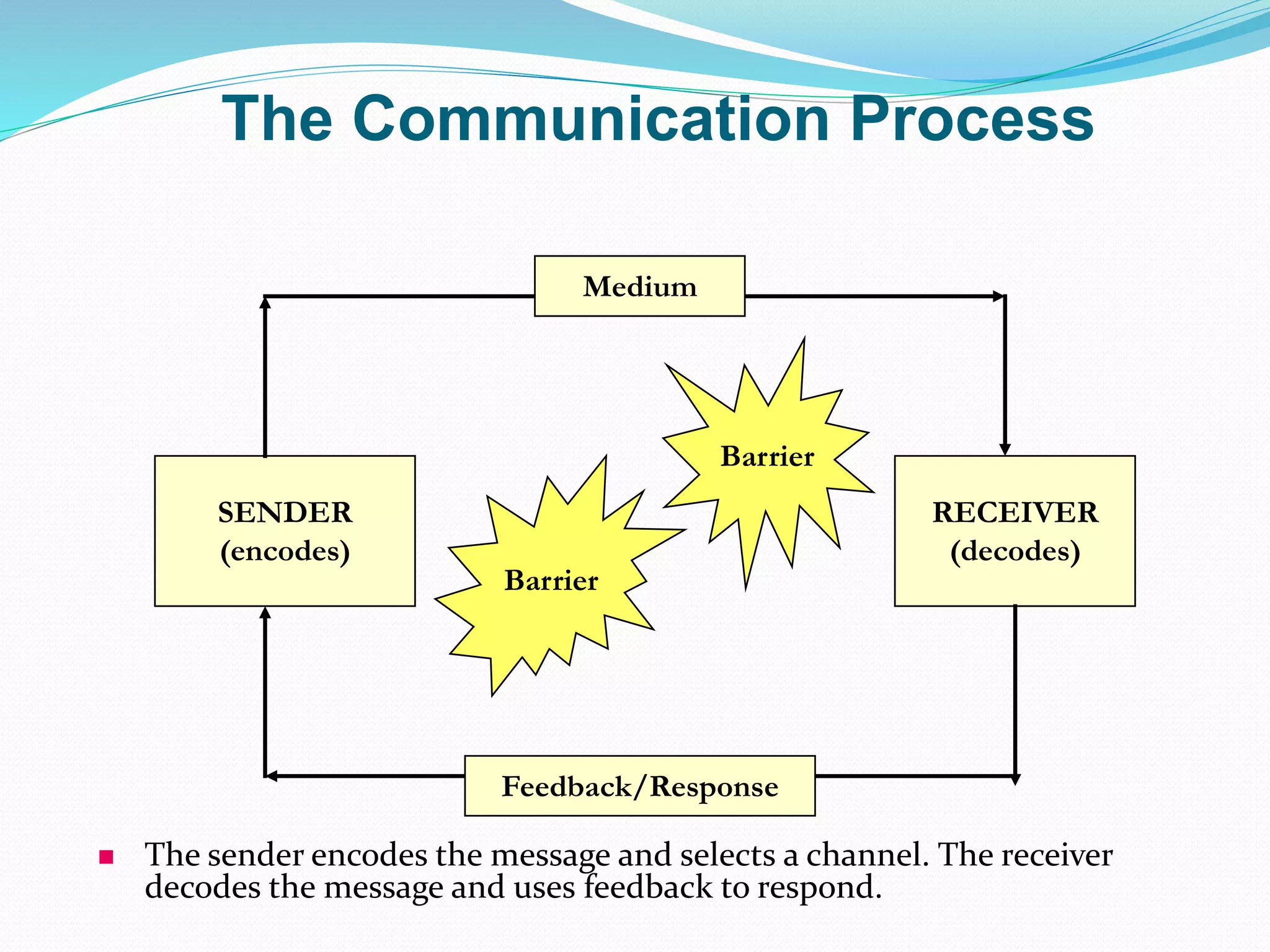
The Communication Process
SENDER
(encodes)
RECEIVER
(decodes)
Barrier
Barrier
Medium
Feedback/Response
 The sender encodes the message and selects a channel. The receiver
decodes the message and uses feedback to respond.
Communication
Processes
 Communication is the exchange of
thoughts, messages, or information, by
speech, signals, writing, or behaviour
between a sender and a receiver.
The Communication Processes
 Feedback - a verbal or nonverbal response by
a receiver to the sender’s message.
 Encoding - selecting words and their order
for a message by a sender.
 Decoding - the translation of a message by a
receiver.
 Noise - literally or figuratively, anything that
interferes with a message.
 Message channel - the conduit or medium
that will carry a message from the sender to
the receiver.
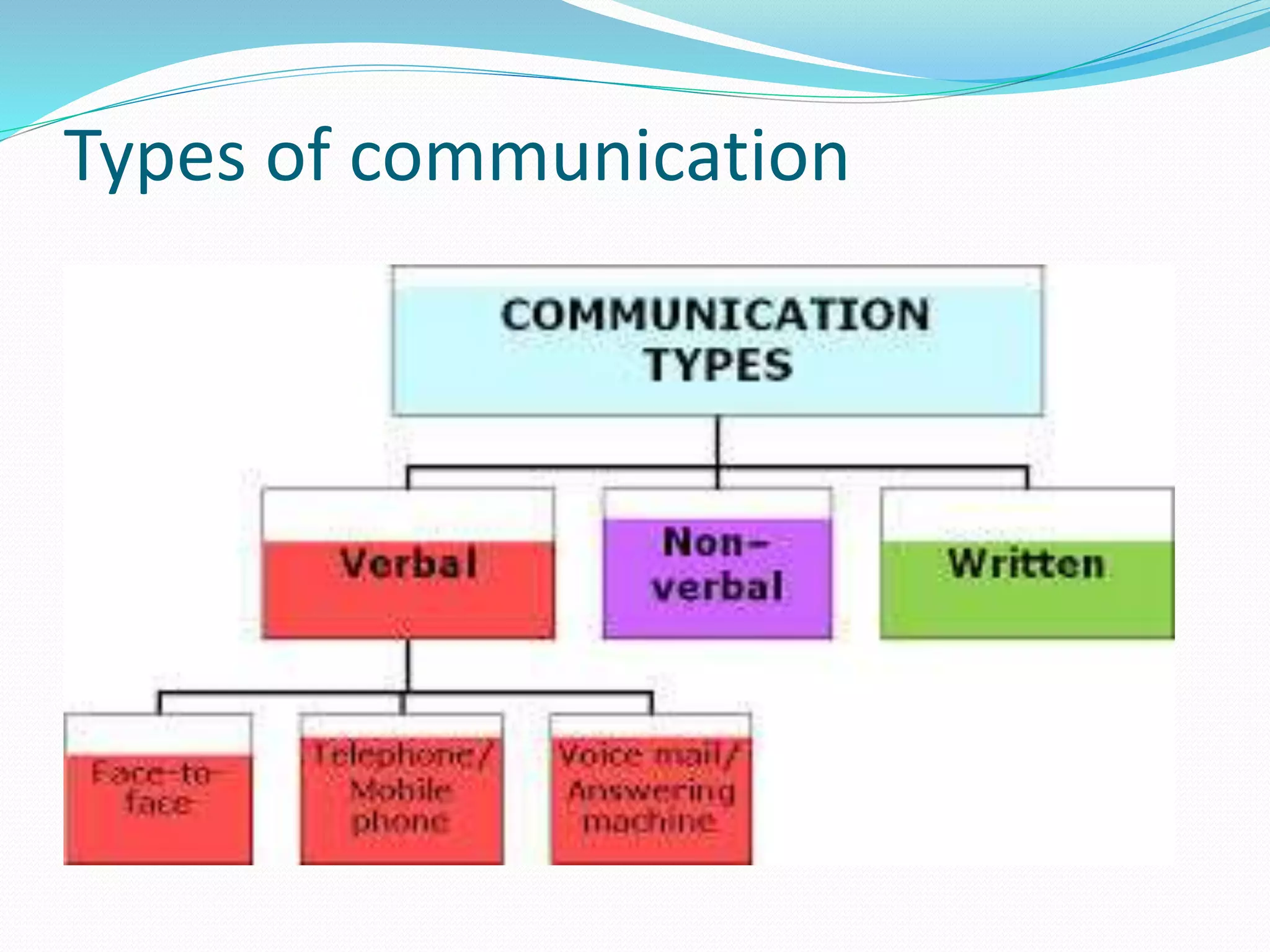
Types of communication
stage of Communication
 Formal and informal
 Upward, downward, and
horizontal
 Spoken and written
 Electronic
 Non Verbal
Types of Communication
 Formal - the official
communication that travels
through the structured (formal)
organization.
 Informal (grapevine) - rumours,
statements, or reports whose truth
any known authority cannot verify
and which may not regard the
functioning of the organization.
Types of Communication
 Upward communication - is the flow of
communication from managers to
managers.
 Downward communication - is the flow of
communication from managers to managers
or from upper management to middle
management or lower management.
 Horizontal communication - is the flow of
communication moving laterally or at the
same level in the organization.
Message Channel
 Face-to-face
 Face-to-group
 Telephone
 Written
 Third party
Communication
Through Technology
 E-mails
 Cell phones
 Video conferencing
 Blogging
 Internet (MySpace, Facebook, and
Google)
 Faxing
 Text messages

What is communication

  • 1.
    Md. Al amin Sr.Lecturer of PISFT MBA in Apparel merchandising  Topics :  What is communication ?  What is business communication ?  Communication Process, and  Types of communication  Channel of communication  Communication channel on Technology
  • 2.
    What is communication Communication:  Communication is the activity of conveying information. Communication has been derived from the Latin word "communis", meaning to share.  In words of Louis- “Communication is the sum of all things one person does when he wants to create understanding in the minds of another. It involves a systematic and continuous process of telling, listening and understanding.  Communication may be defined as giving, receiving or exchanging information, opinions or ideas by writing, speech or visual means, so that material communicated is completely understood by everyone concerned.
  • 3.
    81 Communication Communication is theprocess of conveying a message to others and requires six elements: a source, a message, a channel of communication, a receiver, and the processes of encoding and decoding.
  • 4.
    What is businesscommunication  Business Communication:  Business Communication is the expression, channeling and interchanging of ideas in commerce and industry.  According to Prof. W H Meaning ‘The exchange of ideas, news, and views in connection with business, among the related parties is called business communication.  So we can say Business Communication is an exchange of information, ideas, news, and views in connection with business, among the related parties.
  • 5.
    The Communication Process SENDER (encodes) RECEIVER (decodes) Barrier Barrier Medium Feedback/Response The sender encodes the message and selects a channel. The receiver decodes the message and uses feedback to respond.
  • 6.
    Communication Processes  Communication isthe exchange of thoughts, messages, or information, by speech, signals, writing, or behaviour between a sender and a receiver.
  • 7.
    The Communication Processes Feedback - a verbal or nonverbal response by a receiver to the sender’s message.  Encoding - selecting words and their order for a message by a sender.  Decoding - the translation of a message by a receiver.  Noise - literally or figuratively, anything that interferes with a message.  Message channel - the conduit or medium that will carry a message from the sender to the receiver.
  • 8.
  • 9.
    stage of Communication Formal and informal  Upward, downward, and horizontal  Spoken and written  Electronic  Non Verbal
  • 10.
    Types of Communication Formal - the official communication that travels through the structured (formal) organization.  Informal (grapevine) - rumours, statements, or reports whose truth any known authority cannot verify and which may not regard the functioning of the organization.
  • 11.
    Types of Communication Upward communication - is the flow of communication from managers to managers.  Downward communication - is the flow of communication from managers to managers or from upper management to middle management or lower management.  Horizontal communication - is the flow of communication moving laterally or at the same level in the organization.
  • 12.
    Message Channel  Face-to-face Face-to-group  Telephone  Written  Third party
  • 13.
    Communication Through Technology  E-mails Cell phones  Video conferencing  Blogging  Internet (MySpace, Facebook, and Google)  Faxing  Text messages