YEAR 12 HSC GEOGRAPHY
UNIT 1:Ecosystems at Risk
1: Biophysical interactions which lead to diverse ecosystems and their functioning 

Mr Shipp
MAIN SYLLABUS
• Ecology is the science that examines the interactions between living
(biotic) and non-living (abiotic) environment
• Ecosystems are dynamic and adaptive systems through solar energy is
captured and channelled through a variety of lifeforms
Ecosystems and their Functioning
• Vary naturally or through
human intervention
• Ecosystems have changed
due to global climate and
sea level (10,000 years
ago)
• Ecosystems can be
classified due to their
dominant feature, physical
features or vegetation
• Ecosystems can be
categorised by terrestrial or
aquatic
Variations in Ecosystems
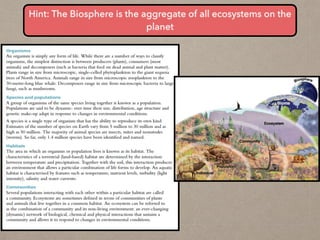
Hint: The Biosphere is the aggregate of all ecosystems on the
planet
INTERDEPENCE
LEVEL 2: DEFINITIONS
TERRESTRIAL
Hint: For the HSC paper, you will need to know two different types of ecosystems.
It is important to know different types away from your excursion
• Ecosystem productivity can involve:
• The amount of biomass produced in an area (per metres
squared)
• Energy flows of nutrients and matter through the ecosystem
Productivity of Ecosystems
• Producers, consumers and decomposers form a
chain that facilitates the energy from the sun
through plants to animals in the ecosystem
• Through the food chain nutrients are cycled through
the different tropic levels
Energy Flows
• The sun is the primary source
of energy which plants use
to photosynthesise
• Nutrient cycles pass from the
non-living (Atmo, Litho and
Hydro) to living (Bio)
environment
• Nutrients and energy is lost
which results in fewer tertiary
consumers than primary
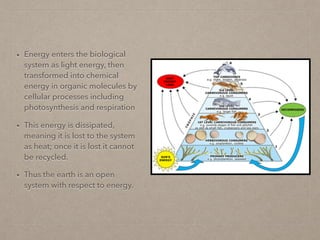
• Energy enters the biological
system as light energy, then
transformed into chemical
energy in organic molecules by
cellular processes including
photosynthesis and respiration
• This energy is dissipated,
meaning it is lost to the system
as heat; once it is lost it cannot
be recycled.
• Thus the earth is an open
system with respect to energy.
• Most of the available food or nutrients for any ecosystem are found in the
top layer of soil and leaf litter.
• The biomass (total dry weight of all organisms at each level) of food
available is in the lowest trophic levels.
• Nutrients can be passed through oxygen, carbon, water, phosphorus and
nitrogen cycles
Nutrient Cycling
• The consequence of the loss of energy between trophic
levels that contaminants collect in animal tissues
• This occurs when an organism absorbs a toxic substance
at a rate greater than that at which the substance is lost.
Bioaccumulation
AUTOTROPHIC
LEVEL 2: DEFINITIONS
HETEROTROPHIC
HSC EAR ESSAYS
2018
2019?
2017
2016
2015
DESCRIBING AFFECTS OF NUTRIENT CYCLING
LEVEL 4: PAST PAPER QUESTION

Biophysical Interactions and Functioning

  • 1.
    YEAR 12 HSCGEOGRAPHY UNIT 1:Ecosystems at Risk 1: Biophysical interactions which lead to diverse ecosystems and their functioning 
 Mr Shipp
  • 2.
  • 3.
    • Ecology isthe science that examines the interactions between living (biotic) and non-living (abiotic) environment • Ecosystems are dynamic and adaptive systems through solar energy is captured and channelled through a variety of lifeforms Ecosystems and their Functioning
  • 5.
    • Vary naturallyor through human intervention • Ecosystems have changed due to global climate and sea level (10,000 years ago) • Ecosystems can be classified due to their dominant feature, physical features or vegetation • Ecosystems can be categorised by terrestrial or aquatic Variations in Ecosystems
  • 7.
    Hint: The Biosphereis the aggregate of all ecosystems on the planet
  • 8.
  • 9.
    Hint: For theHSC paper, you will need to know two different types of ecosystems. It is important to know different types away from your excursion • Ecosystem productivity can involve: • The amount of biomass produced in an area (per metres squared) • Energy flows of nutrients and matter through the ecosystem Productivity of Ecosystems
  • 11.
    • Producers, consumersand decomposers form a chain that facilitates the energy from the sun through plants to animals in the ecosystem • Through the food chain nutrients are cycled through the different tropic levels Energy Flows
  • 14.
    • The sunis the primary source of energy which plants use to photosynthesise • Nutrient cycles pass from the non-living (Atmo, Litho and Hydro) to living (Bio) environment • Nutrients and energy is lost which results in fewer tertiary consumers than primary
  • 15.
    • Energy entersthe biological system as light energy, then transformed into chemical energy in organic molecules by cellular processes including photosynthesis and respiration • This energy is dissipated, meaning it is lost to the system as heat; once it is lost it cannot be recycled. • Thus the earth is an open system with respect to energy.
  • 17.
    • Most ofthe available food or nutrients for any ecosystem are found in the top layer of soil and leaf litter. • The biomass (total dry weight of all organisms at each level) of food available is in the lowest trophic levels. • Nutrients can be passed through oxygen, carbon, water, phosphorus and nitrogen cycles Nutrient Cycling
  • 18.
    • The consequenceof the loss of energy between trophic levels that contaminants collect in animal tissues • This occurs when an organism absorbs a toxic substance at a rate greater than that at which the substance is lost. Bioaccumulation
  • 20.
  • 22.
  • 23.
    DESCRIBING AFFECTS OFNUTRIENT CYCLING LEVEL 4: PAST PAPER QUESTION