Psycho-Pedagogical ApproachAlexander Nussbaumer(Graz University of Technology, Austria)PLE Conference 2010Barcelona, Spain2010-07-07
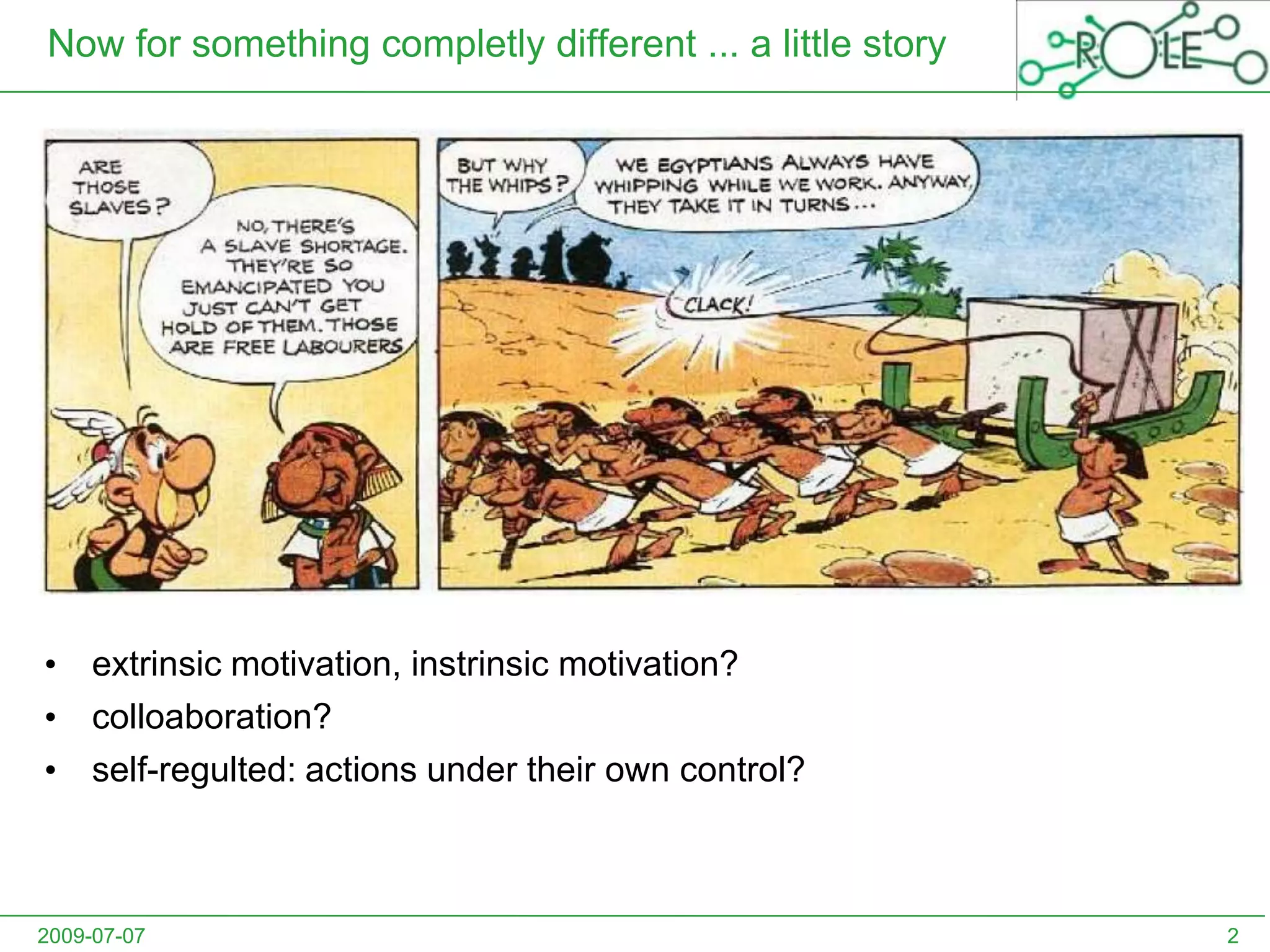
Now for something completly different ... a little storyextrinsic motivation, instrinsic motivation?colloaboration?self-regulted: actions under their own control?2009-07-072
Goals and Objectivescontext: learners build and use their own learning environmentlearning support (domain knowledge and skills)self-regulated learningfostering the development of self-regulatory skills (learn to learn) needed for controlling the own learning process and for building an individual learning environmentbuilding an integrated framework consisting of domain skills, tool skills, self-regulatory skills, content, tools, dependencies, and relationships between these elementsrecommendations and monitoringlearner model, user profileinfrastructure for other learning approaches and scenarioson conceptual and on technical levellife-long learningformal and informal learning, but focus on non-formal learning2009-07-073
OverviewKey aspects of psycho-pedagogical approachSRL, personalisation, meta-coginition (awareness), motivation, collaboration, guidance, informal (non-fomral) learning, ...SRL Process Model implicit / explicit, learning activity driven, Models (Ontologies)activity model, skill model, domain model, context model, ...Towards Implementation / Realisation (of SRL Process Model)recommendation strategies (reference to WP2)monitoring an self-monitoringuser profile (captured data, access of learner)SRL widgets (navigation widget, widgets for SRL key processes)Overview andresearch questions2009-07-074
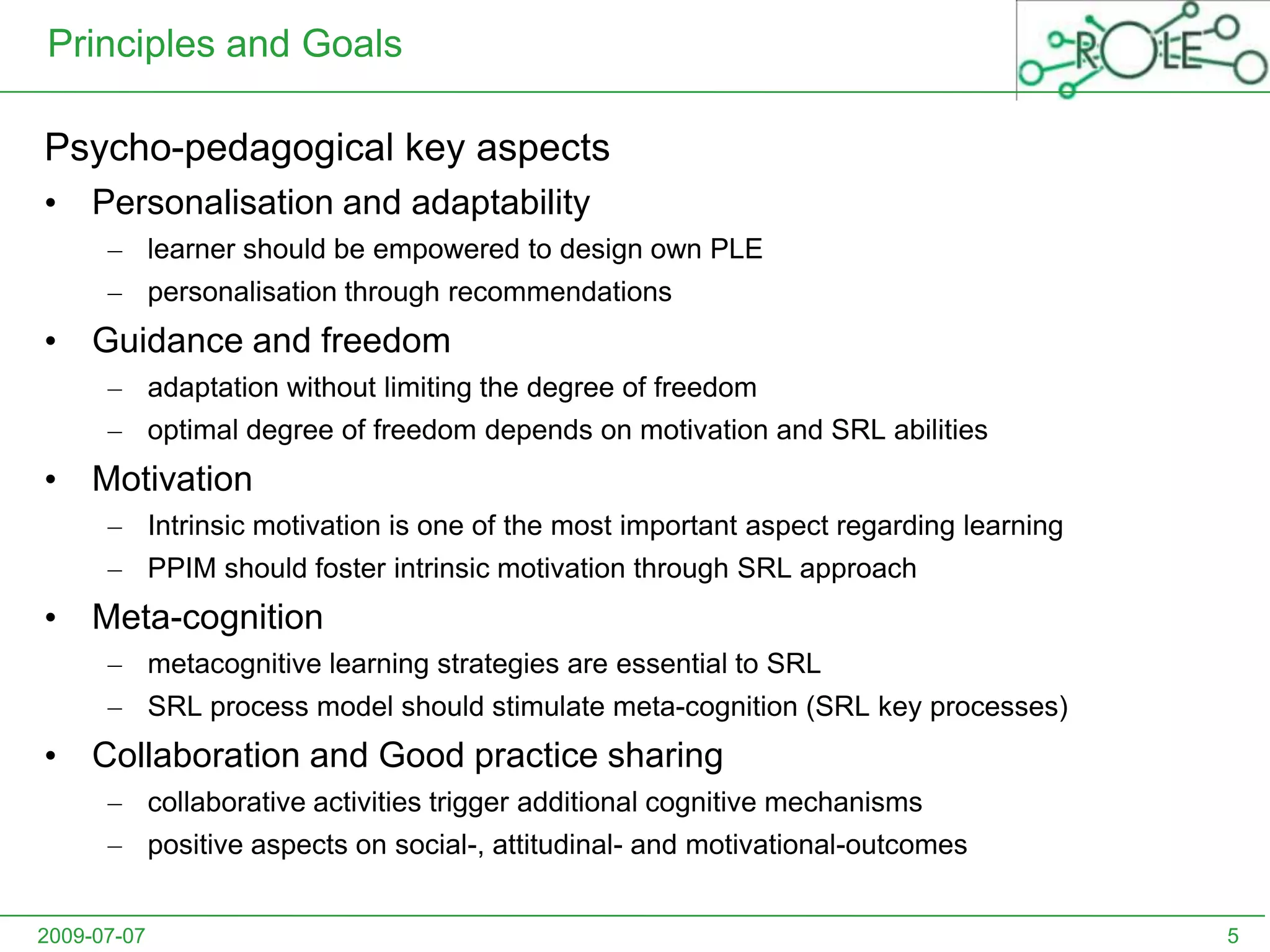
2009-07-075Principles and GoalsPsycho-pedagogical key aspectsPersonalisation and adaptabilitylearner should be empowered to design own PLEpersonalisation through recommendationsGuidance and freedomadaptation without limiting the degree of freedomoptimal degree of freedom depends on motivation and SRL abilitiesMotivationIntrinsic motivation is one of the most important aspect regarding learning PPIM should foster intrinsic motivation through SRL approachMeta-cognitionmetacognitive learning strategies are essential to SRLSRL process model should stimulate meta-cognition (SRL key processes)Collaboration and Good practice sharingcollaborative activities trigger additional cognitive mechanismspositive aspects on social-, attitudinal- and motivational-outcomes
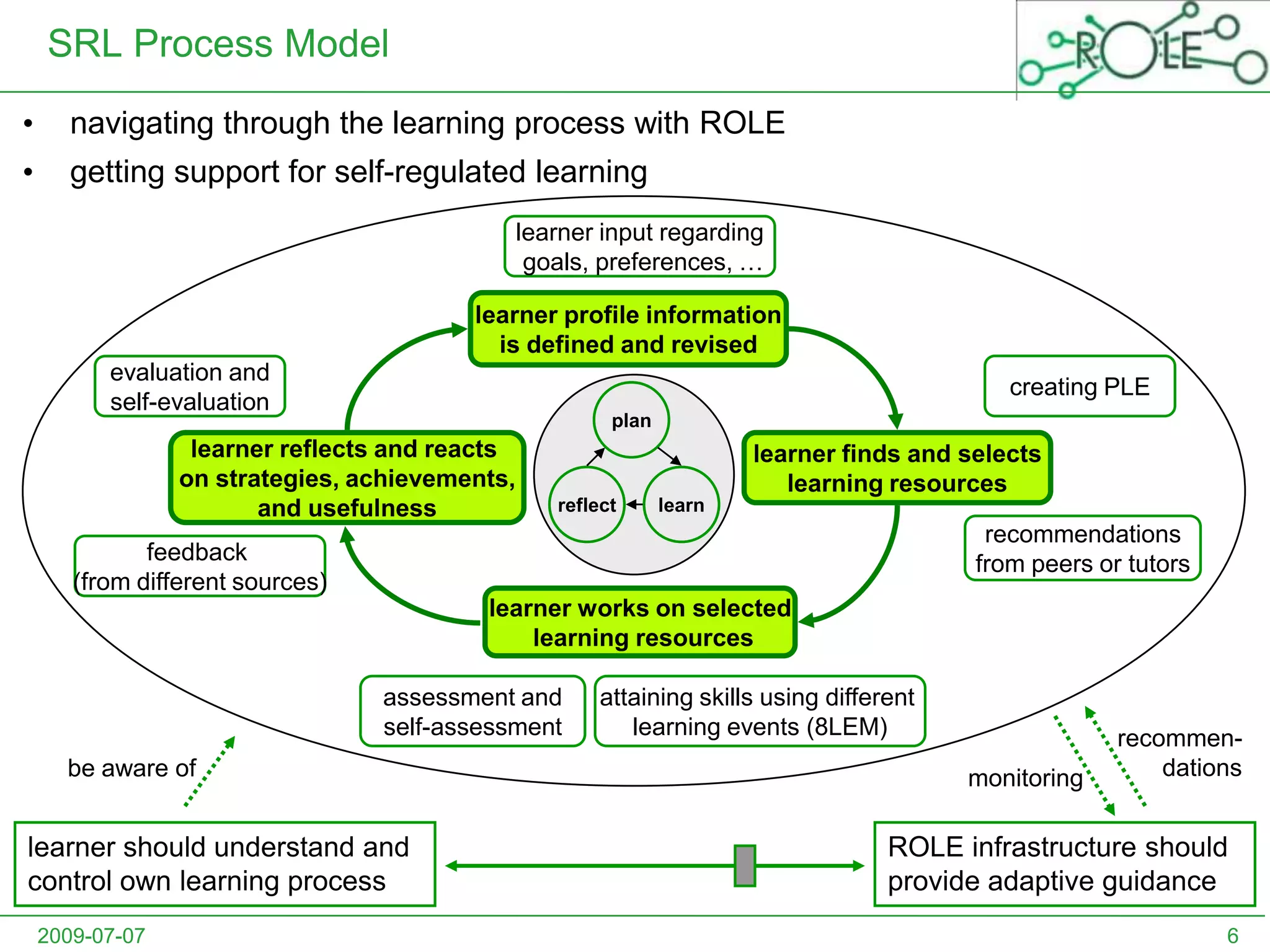
2009-07-076SRL Process Modelnavigating through the learning process with ROLEgetting support for self-regulated learninglearner input regarding goals, preferences, …learner profile informationis defined and revisedcreating PLEevaluation andself-evaluationplanlearner finds and selectslearning resourceslearner reflects and reacts on strategies, achievements,and usefulnesslearnreflectrecommendationsfrom peers or tutorsfeedback (from different sources)learner works on selected learning resourcesassessment andself-assessmentattaining skills using different learning events (8LEM)recommen-dationsbe aware ofmonitoringlearner should understand and control own learning processROLE infrastructure should provide adaptive guidance
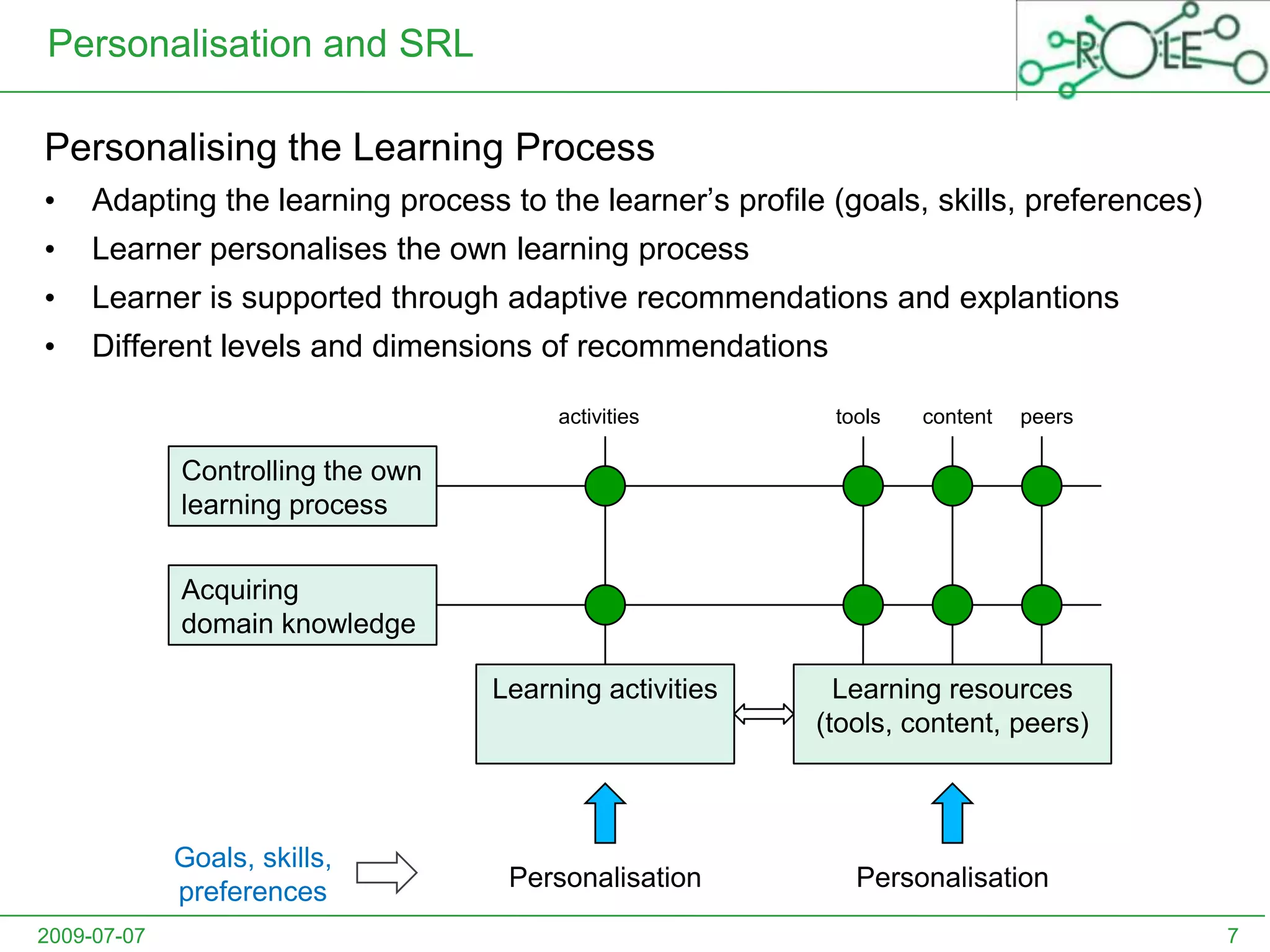
2009-07-077Personalisation and SRLPersonalising the Learning ProcessAdapting the learning process to the learner’s profile (goals, skills, preferences)Learner personalises the own learning processLearner is supported through adaptive recommendations and explantionsDifferent levels and dimensions of recommendationsactivitiestoolscontentpeersControlling the own learning processAcquiring domain knowledgeLearning activitiesLearning resources(tools, content, peers)Goals, skills, preferencesPersonalisationPersonalisation
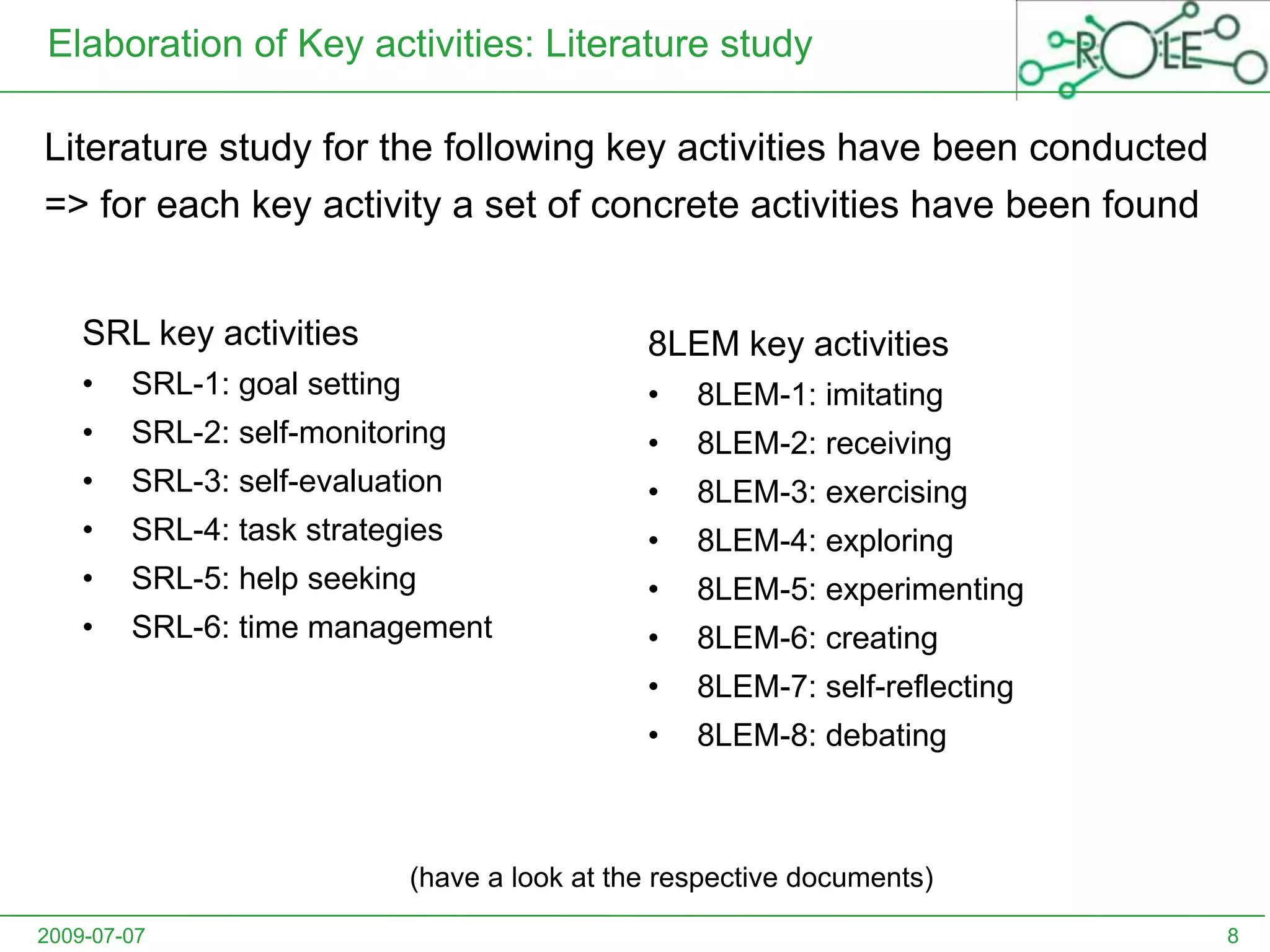
Elaboration of Key activities: Literature studyLiterature study for the following key activities have been conducted=> for each key activity a set of concrete activities have been found2009-07-078SRL key activitiesSRL-1: goal setting
SRL-2: self-monitoring
SRL-3: self-evaluation
SRL-4: task strategies
SRL-5: help seeking
SRL-6: time management8LEM key activities8LEM-1: imitating
8LEM-2: receiving
8LEM-3: exercising
8LEM-4: exploring
8LEM-5: experimenting
8LEM-6: creating
8LEM-7: self-reflecting

Psycho pedagogical approach

  • 1.
    Psycho-Pedagogical ApproachAlexander Nussbaumer(GrazUniversity of Technology, Austria)PLE Conference 2010Barcelona, Spain2010-07-07
  • 2.
    Now for somethingcompletly different ... a little storyextrinsic motivation, instrinsic motivation?colloaboration?self-regulted: actions under their own control?2009-07-072
  • 3.
    Goals and Objectivescontext:learners build and use their own learning environmentlearning support (domain knowledge and skills)self-regulated learningfostering the development of self-regulatory skills (learn to learn) needed for controlling the own learning process and for building an individual learning environmentbuilding an integrated framework consisting of domain skills, tool skills, self-regulatory skills, content, tools, dependencies, and relationships between these elementsrecommendations and monitoringlearner model, user profileinfrastructure for other learning approaches and scenarioson conceptual and on technical levellife-long learningformal and informal learning, but focus on non-formal learning2009-07-073
  • 4.
    OverviewKey aspects ofpsycho-pedagogical approachSRL, personalisation, meta-coginition (awareness), motivation, collaboration, guidance, informal (non-fomral) learning, ...SRL Process Model implicit / explicit, learning activity driven, Models (Ontologies)activity model, skill model, domain model, context model, ...Towards Implementation / Realisation (of SRL Process Model)recommendation strategies (reference to WP2)monitoring an self-monitoringuser profile (captured data, access of learner)SRL widgets (navigation widget, widgets for SRL key processes)Overview andresearch questions2009-07-074
  • 5.
    2009-07-075Principles and GoalsPsycho-pedagogicalkey aspectsPersonalisation and adaptabilitylearner should be empowered to design own PLEpersonalisation through recommendationsGuidance and freedomadaptation without limiting the degree of freedomoptimal degree of freedom depends on motivation and SRL abilitiesMotivationIntrinsic motivation is one of the most important aspect regarding learning PPIM should foster intrinsic motivation through SRL approachMeta-cognitionmetacognitive learning strategies are essential to SRLSRL process model should stimulate meta-cognition (SRL key processes)Collaboration and Good practice sharingcollaborative activities trigger additional cognitive mechanismspositive aspects on social-, attitudinal- and motivational-outcomes
  • 6.
    2009-07-076SRL Process Modelnavigatingthrough the learning process with ROLEgetting support for self-regulated learninglearner input regarding goals, preferences, …learner profile informationis defined and revisedcreating PLEevaluation andself-evaluationplanlearner finds and selectslearning resourceslearner reflects and reacts on strategies, achievements,and usefulnesslearnreflectrecommendationsfrom peers or tutorsfeedback (from different sources)learner works on selected learning resourcesassessment andself-assessmentattaining skills using different learning events (8LEM)recommen-dationsbe aware ofmonitoringlearner should understand and control own learning processROLE infrastructure should provide adaptive guidance
  • 7.
    2009-07-077Personalisation and SRLPersonalisingthe Learning ProcessAdapting the learning process to the learner’s profile (goals, skills, preferences)Learner personalises the own learning processLearner is supported through adaptive recommendations and explantionsDifferent levels and dimensions of recommendationsactivitiestoolscontentpeersControlling the own learning processAcquiring domain knowledgeLearning activitiesLearning resources(tools, content, peers)Goals, skills, preferencesPersonalisationPersonalisation
  • 8.
    Elaboration of Keyactivities: Literature studyLiterature study for the following key activities have been conducted=> for each key activity a set of concrete activities have been found2009-07-078SRL key activitiesSRL-1: goal setting
  • 9.
  • 10.
  • 11.
  • 12.
  • 13.
    SRL-6: time management8LEMkey activities8LEM-1: imitating
  • 14.
  • 15.
  • 16.
  • 17.
  • 18.
  • 19.
  • 20.
    8LEM-8: debating(have alook at the respective documents)
  • 21.
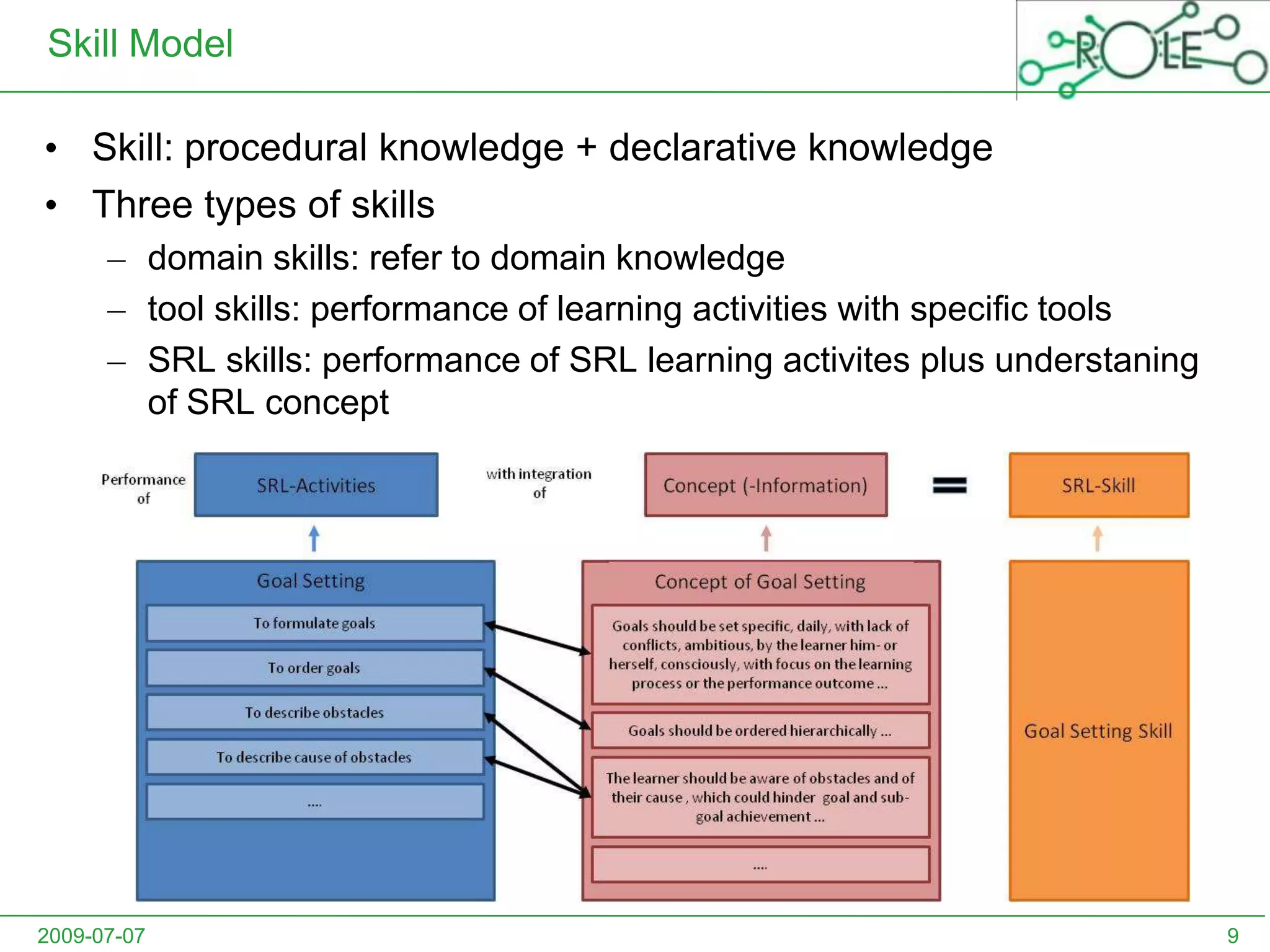
    Skill ModelSkill: proceduralknowledge + declarative knowledgeThree types of skillsdomain skills: refer to domain knowledgetool skills: performance of learning activities with specific toolsSRL skills: performance of SRL learning activites plus understaning of SRL concept2009-07-079
  • 22.
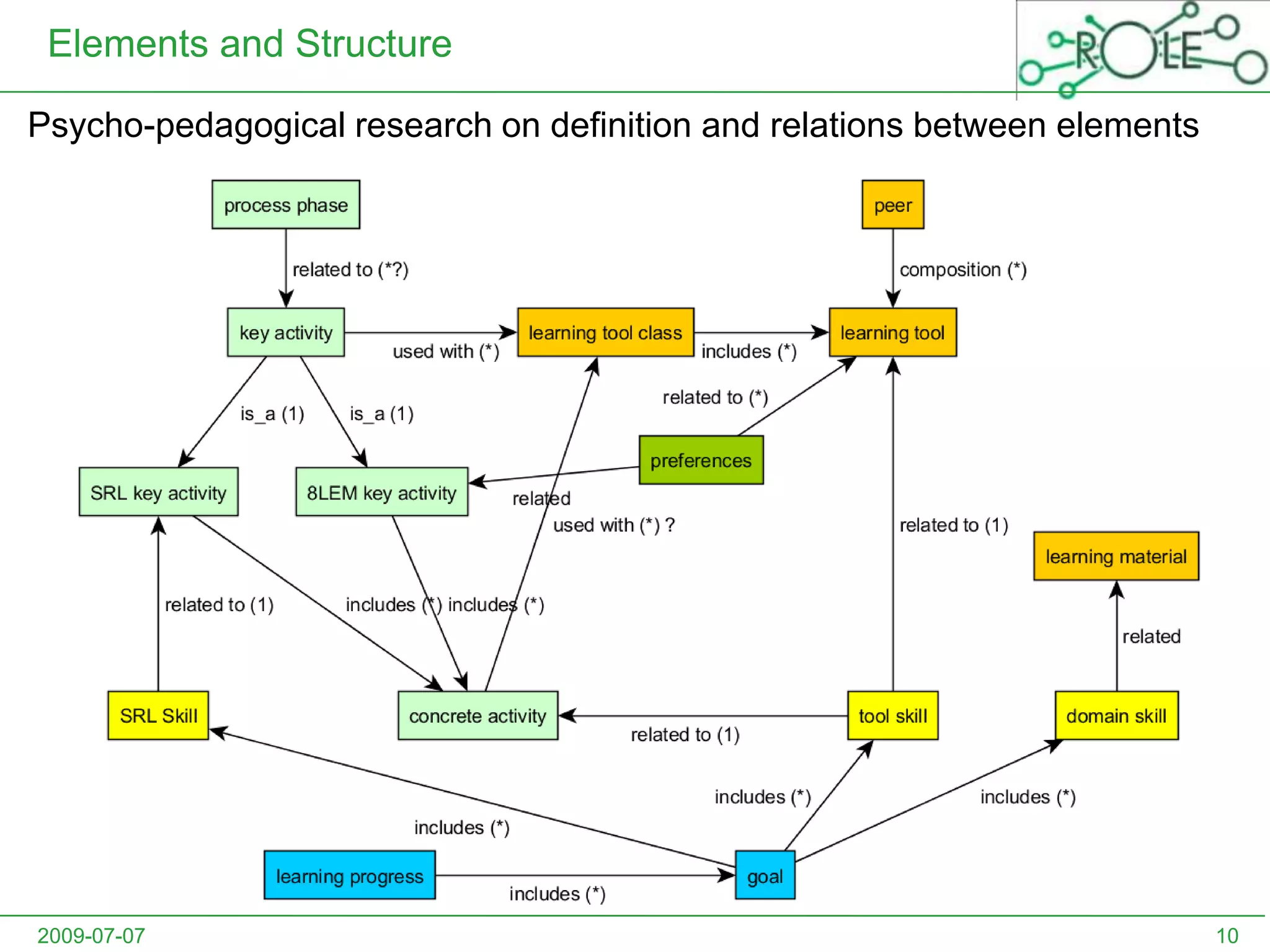
    2009-07-0710Elements and StructurePsycho-pedagogicalresearch on definition and relations between elements
  • 23.
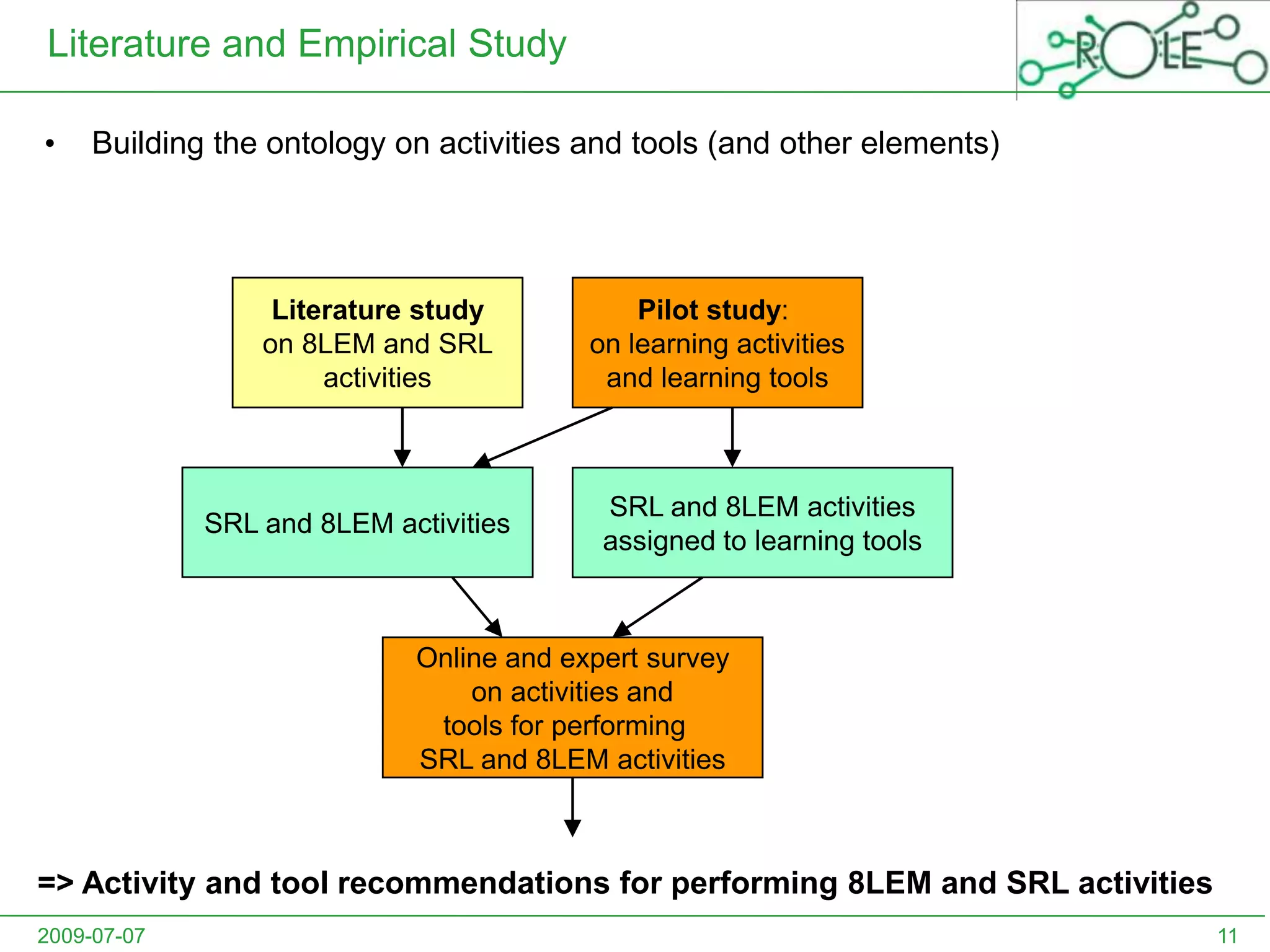
    Literature and EmpiricalStudy2009-07-0711Building the ontology on activities and tools (and other elements)Literature study on 8LEM and SRL activitiesPilot study: on learning activitiesand learning toolsSRL and 8LEM activitiesSRL and 8LEM activitiesassigned to learning toolsOnline and expert survey on activities and tools for performing SRL and 8LEM activities=> Activity and tool recommendations for performing 8LEM and SRL activities
  • 24.
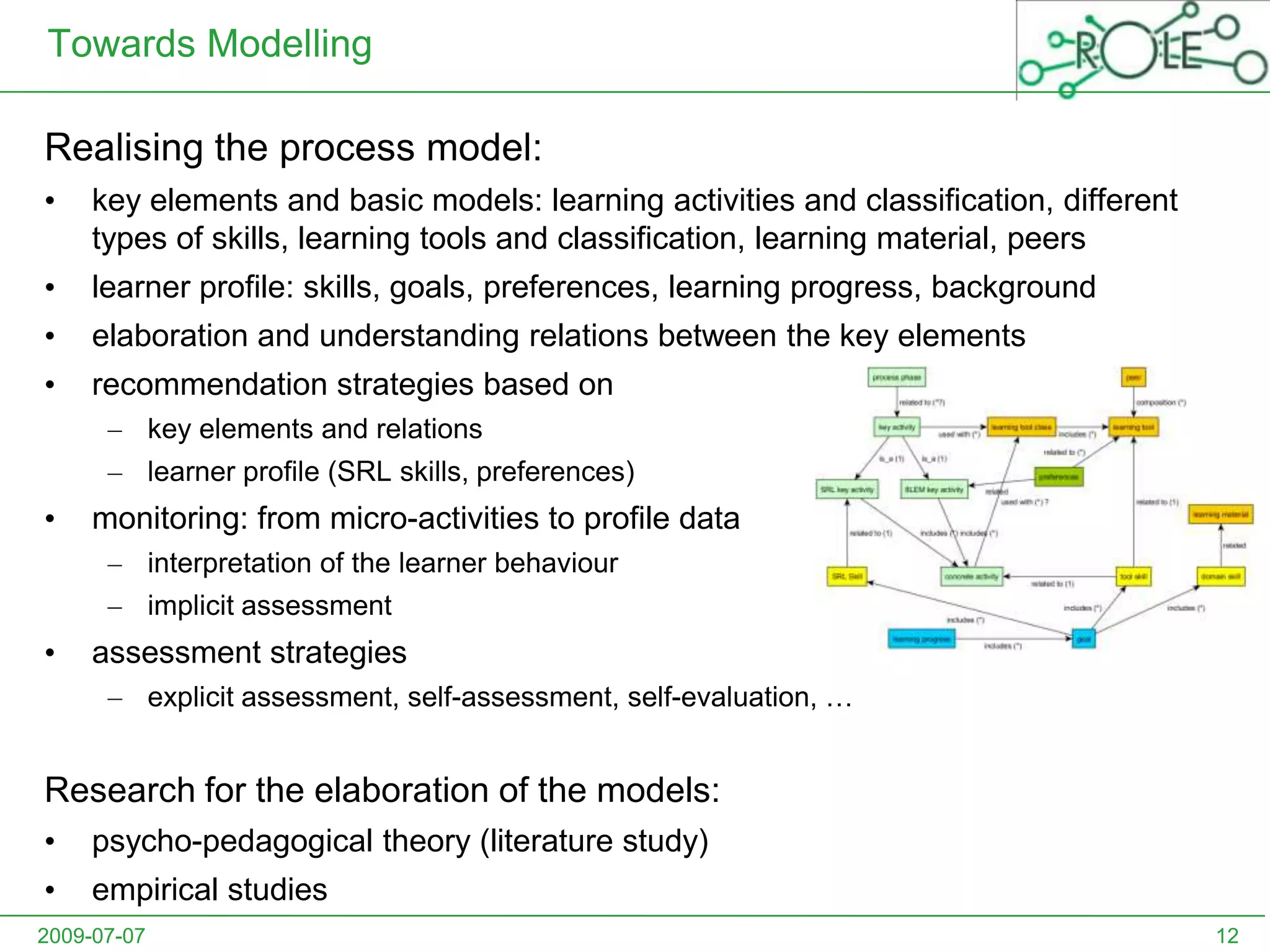
    2009-07-0712Towards ModellingRealising theprocess model:key elements and basic models: learning activities and classification, different types of skills, learning tools and classification, learning material, peerslearner profile: skills, goals, preferences, learning progress, backgroundelaboration and understanding relations between the key elements recommendation strategies based on key elements and relationslearner profile (SRL skills, preferences)monitoring: from micro-activities to profile datainterpretation of the learner behaviour implicit assessmentassessment strategies explicit assessment, self-assessment, self-evaluation, …Research for the elaboration of the models:psycho-pedagogical theory (literature study)empirical studies
  • 25.
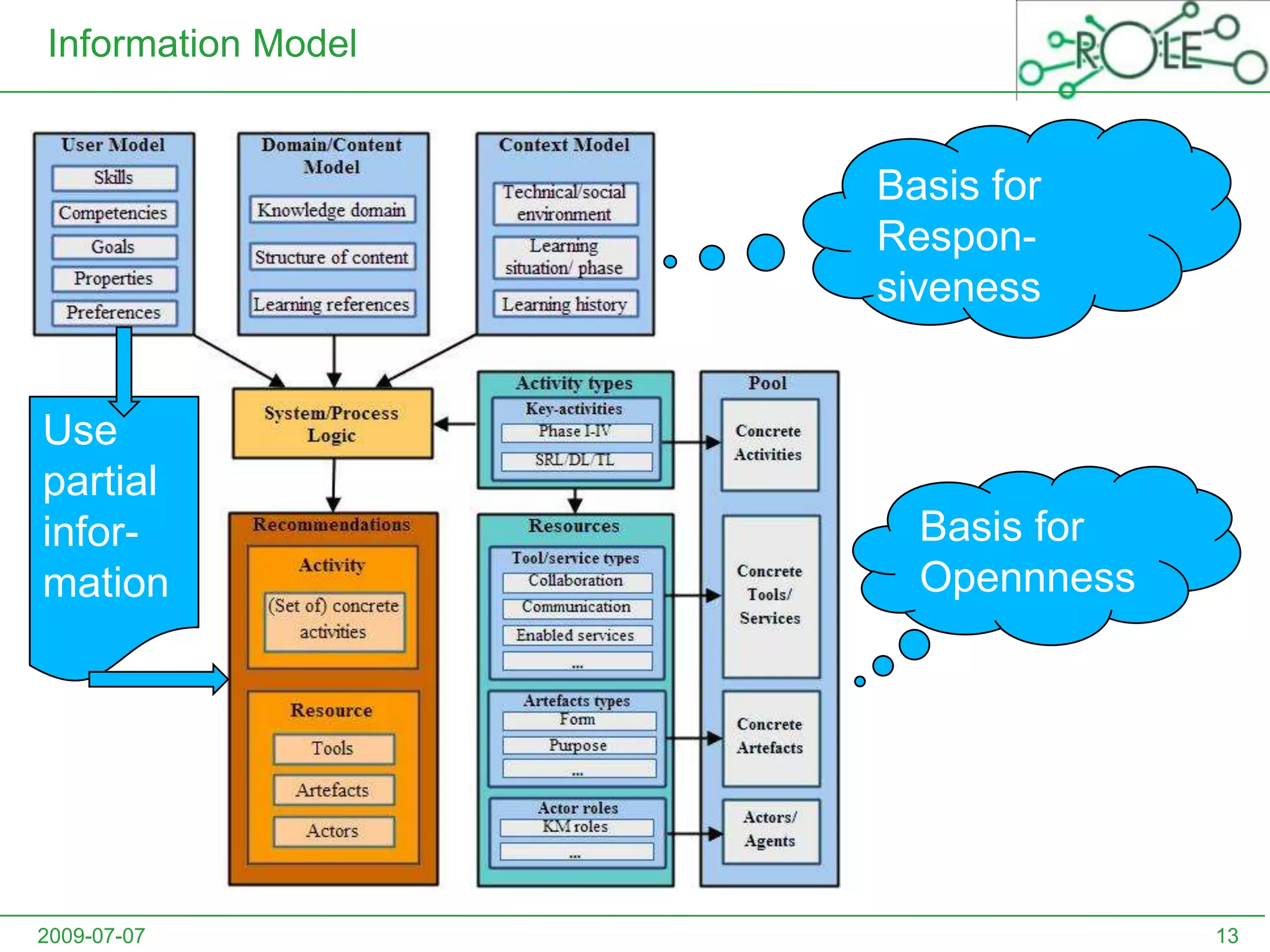
    Information Model2009-07-0713Basis forRespon-sivenessUsepartial infor-mationBasis forOpennness
  • 26.
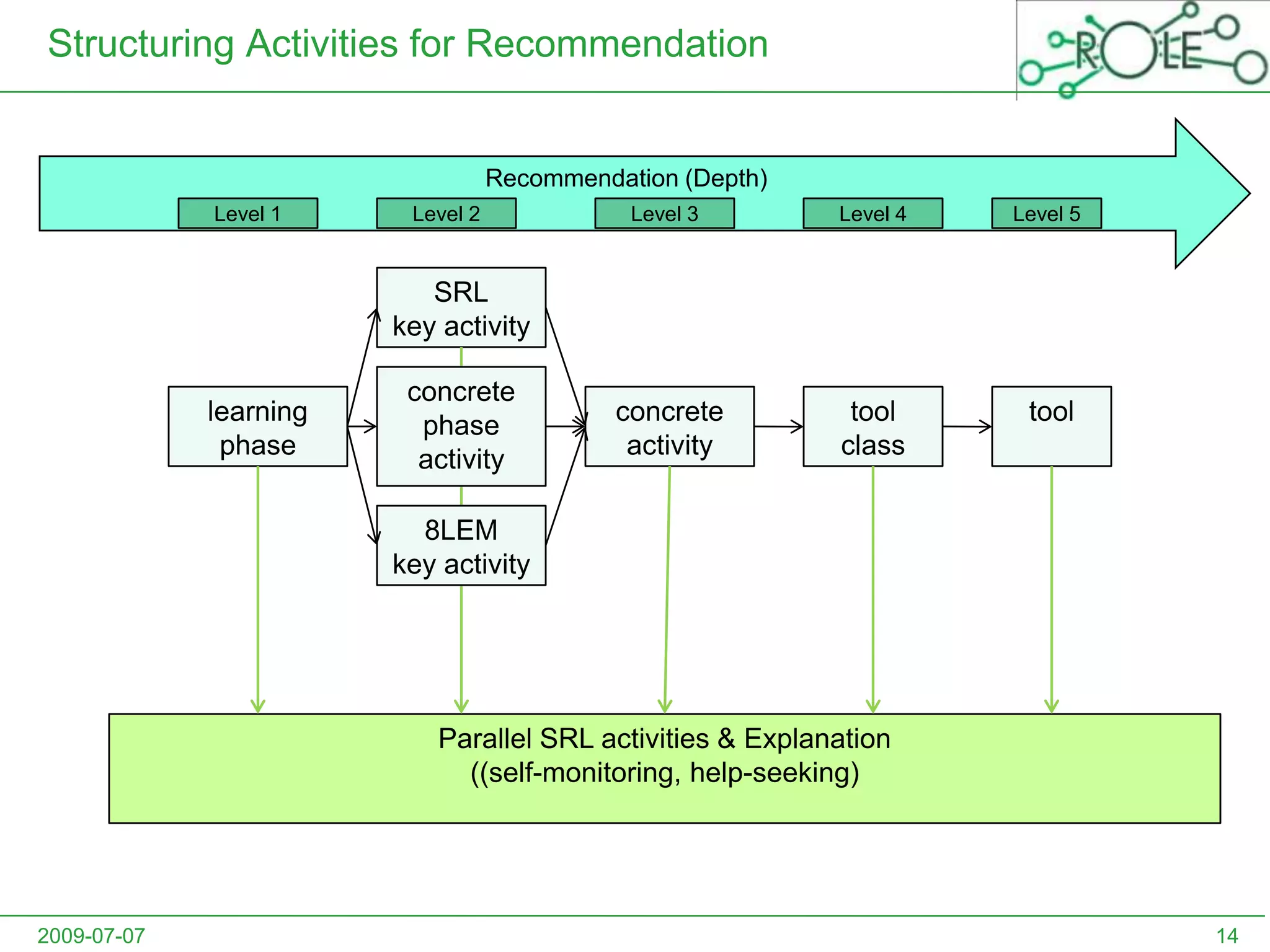
    Recommendation (Depth)Structuring Activitiesfor Recommendation 2009-07-0714Level 1Level 3Level 4Level 5Level 2SRLkey activityconcretephase activitylearning phaseconcreteactivitytoolclasstool8LEMkey activityParallel SRL activities & Explanation((self-monitoring, help-seeking)
  • 27.
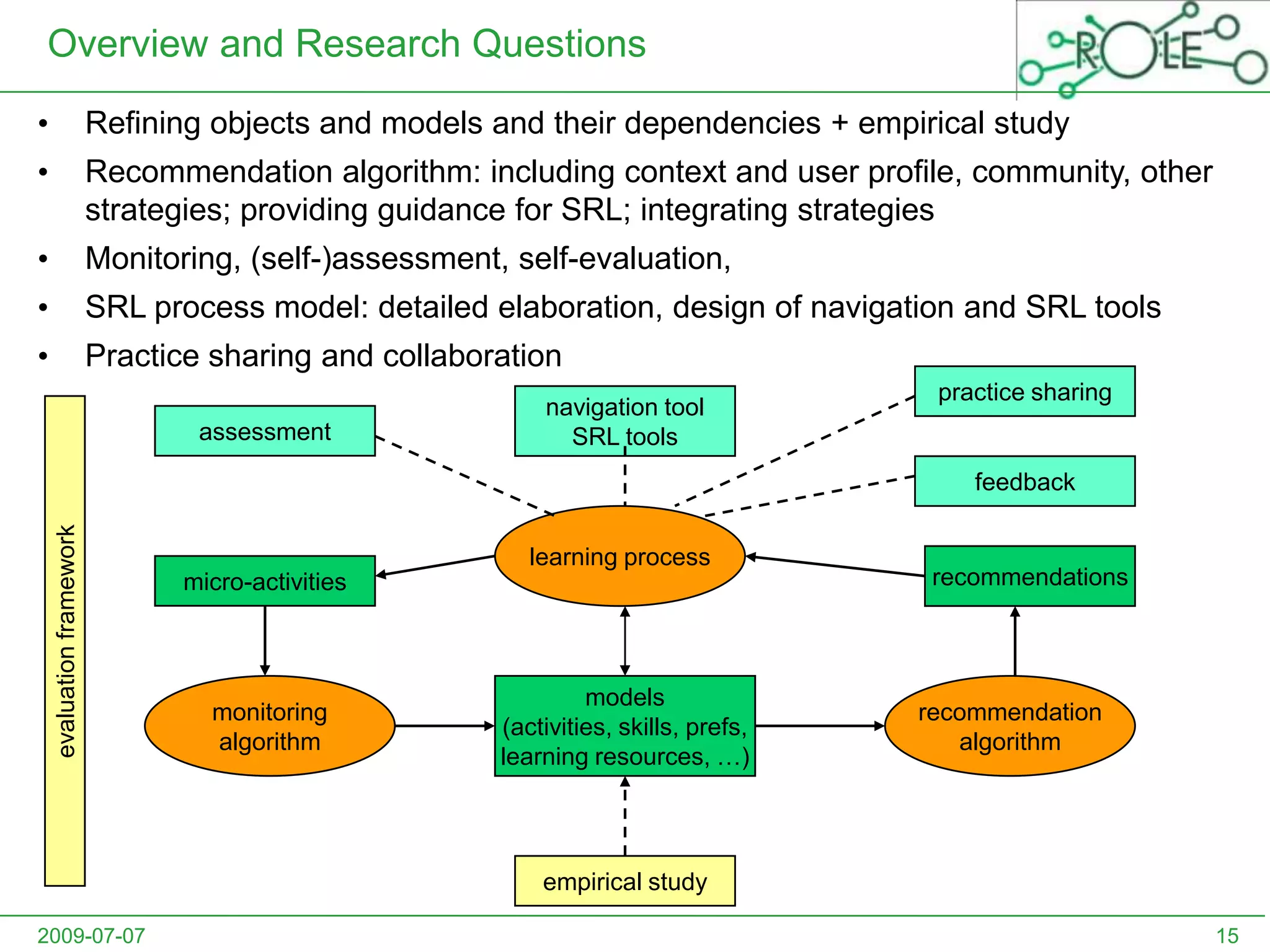
    Overview and ResearchQuestions2009-07-0715Refining objects and models and their dependencies + empirical study
  • 28.
    Recommendation algorithm: includingcontext and user profile, community, other strategies; providing guidance for SRL; integrating strategies
  • 29.
  • 30.
    SRL process model:detailed elaboration, design of navigation and SRL tools
  • 31.
    Practice sharing andcollaborationpractice sharingnavigation toolSRL toolsassessmentfeedbacklearning processrecommendationsmicro-activitiesevaluation frameworkmodels(activities, skills, prefs,learning resources, …)recommendationalgorithmmonitoringalgorithmempirical study
  • 32.
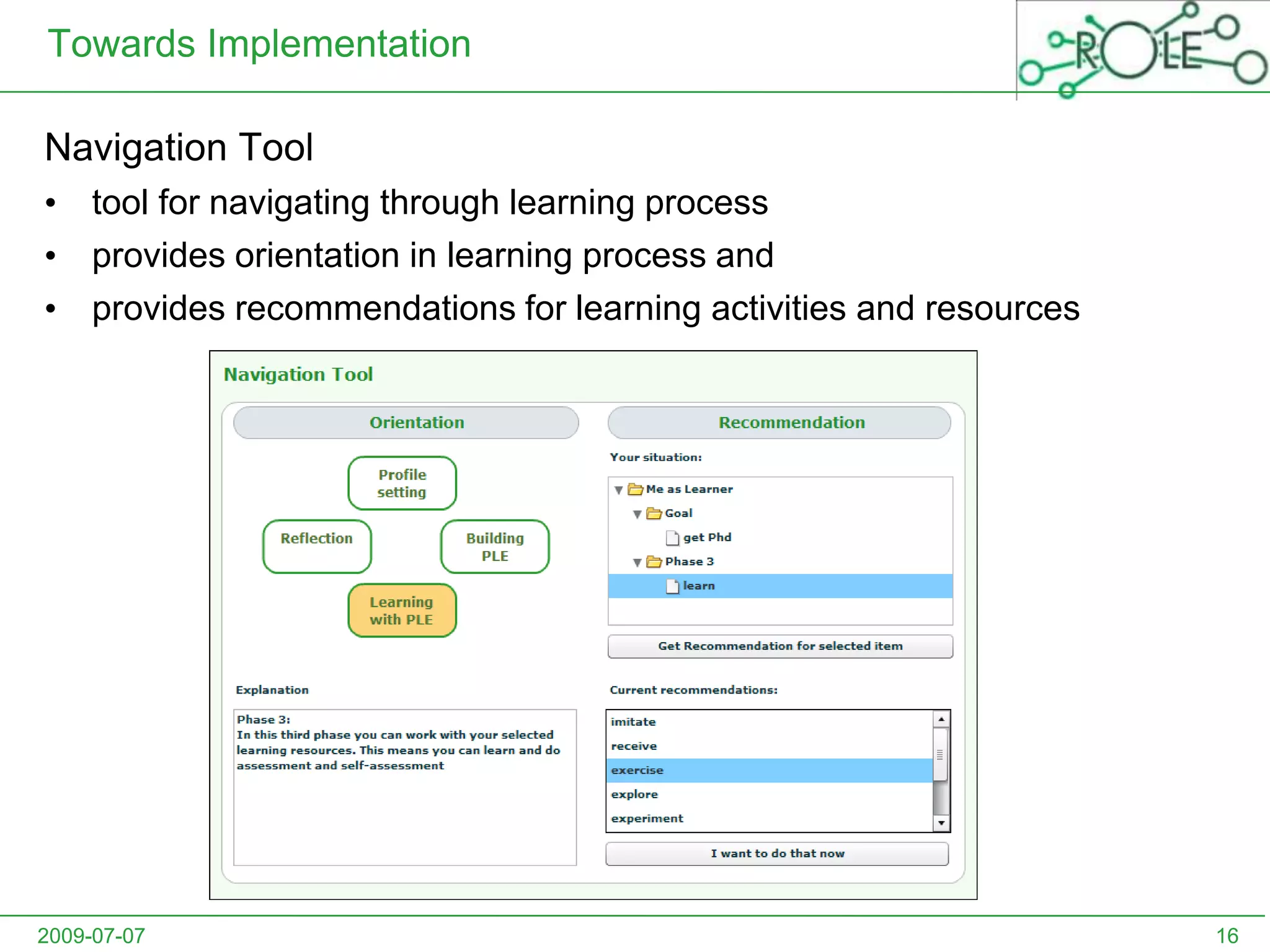
    2009-07-0716Towards ImplementationNavigation Tooltoolfor navigating through learning processprovides orientation in learning process and provides recommendations for learning activities and resources
  • 33.
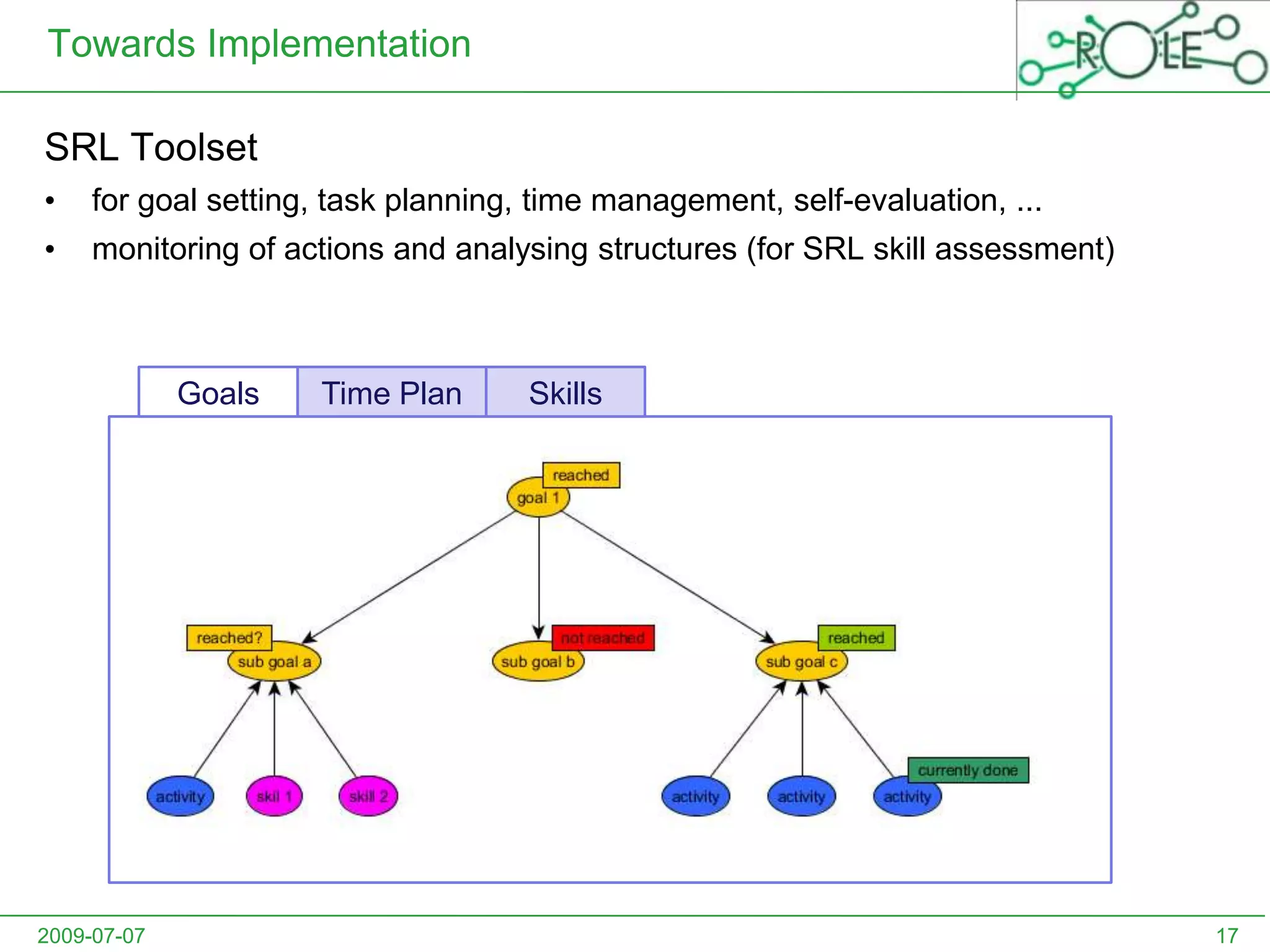
    Towards ImplementationSRL Toolsetforgoal setting, task planning, time management, self-evaluation, ...monitoring of actions and analysing structures (for SRL skill assessment)2009-07-0717GoalsTime PlanSkills
  • 34.
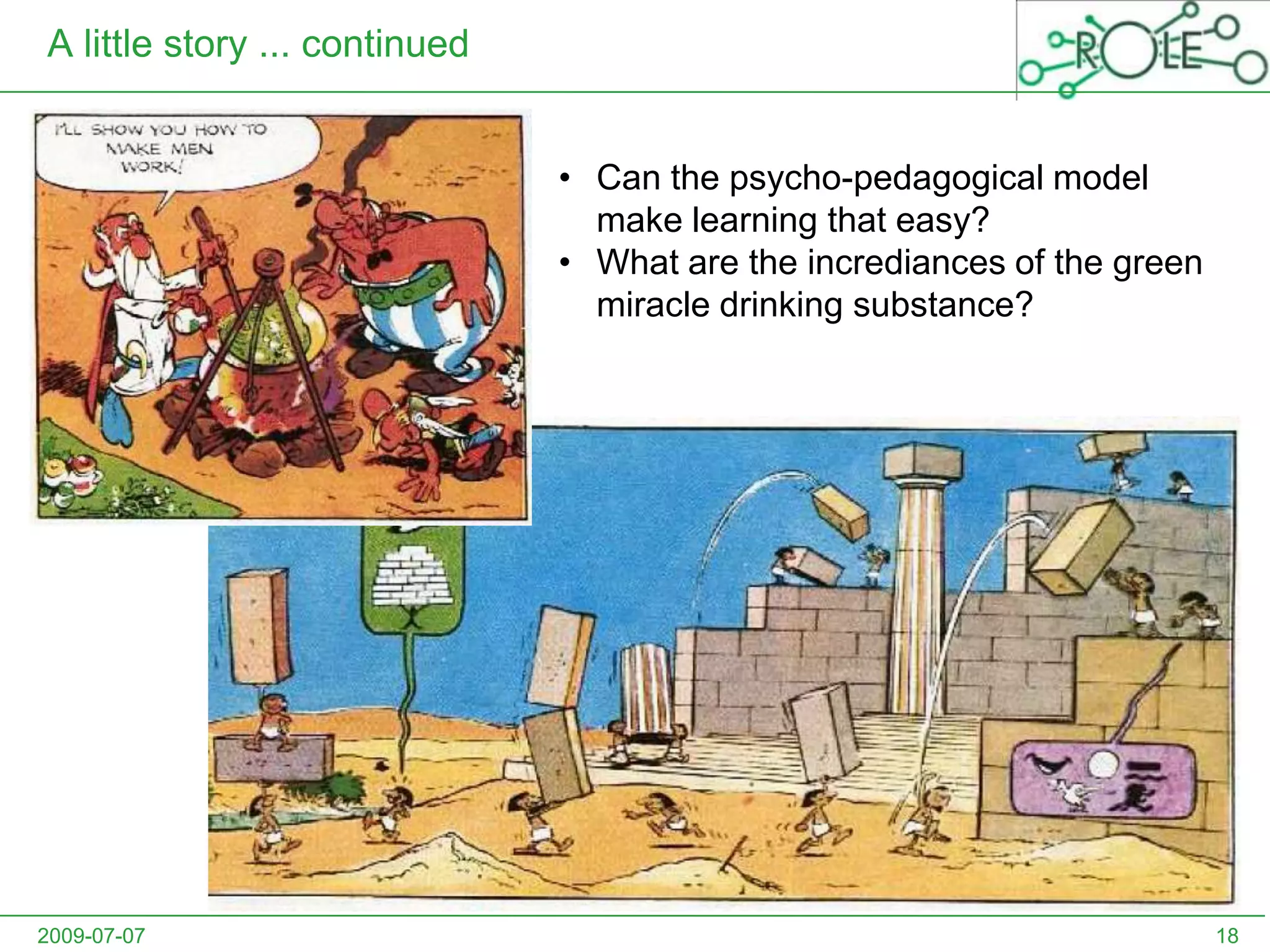
    A little story... continued2009-07-0718Can the psycho-pedagogical model make learning that easy?
  • 35.
    What are theincrediances of the green miracle drinking substance?Thank you for your attention!Contact information:Alexander Nussbaumeralexander.nussbaumer@tugraz.atKarin Fruhmann karin.fruhmann@tugraz.atDietrich Albert dietrich.albert@tugraz.athttp://kmi.tugraz.at/http://css.uni-graz.at/

Editor's Notes

  • #8 Some comments:- Recommendations can be made regarding learning activities, learning tools, peers (learning network), learning material (content)Recommendations are based on preferences, skills (different types of skills), context variables (learning situation) personalisation of „controlling the own learning process“ will be the focus of our research, recommendations regarding „acquiring domain knowledge“ is partly state-of-the-art (but not regarding learning tools) we have two differnt types ot tools (tools for obtaining domain knowledge and for controlling the own learning process (SRL Tools, e.g. Goal setting tool)Not only the content, but the whole learning processs is personalisedNot the system adapts the learnign process, but the learner – however this adaptation is based on recommendationsThe learner adapts the own learning process on differnent levels: deciding how much support (recommendation) is needed and on which level; deciding on SRL activities (e.g. Goal setting, self-reflection); deciding on tools to be used; deciding on content; deciding on peers;