

The Future is Yesterday:
Public Relations in the Networked Era

   Public Relations Society
   September 20, 2012
   Lee Rainie: Director, Pew Internet Project
   Email: Lrainie@pewinternet.org
   Twitter: @Lrainie


                                                PewInternet.org
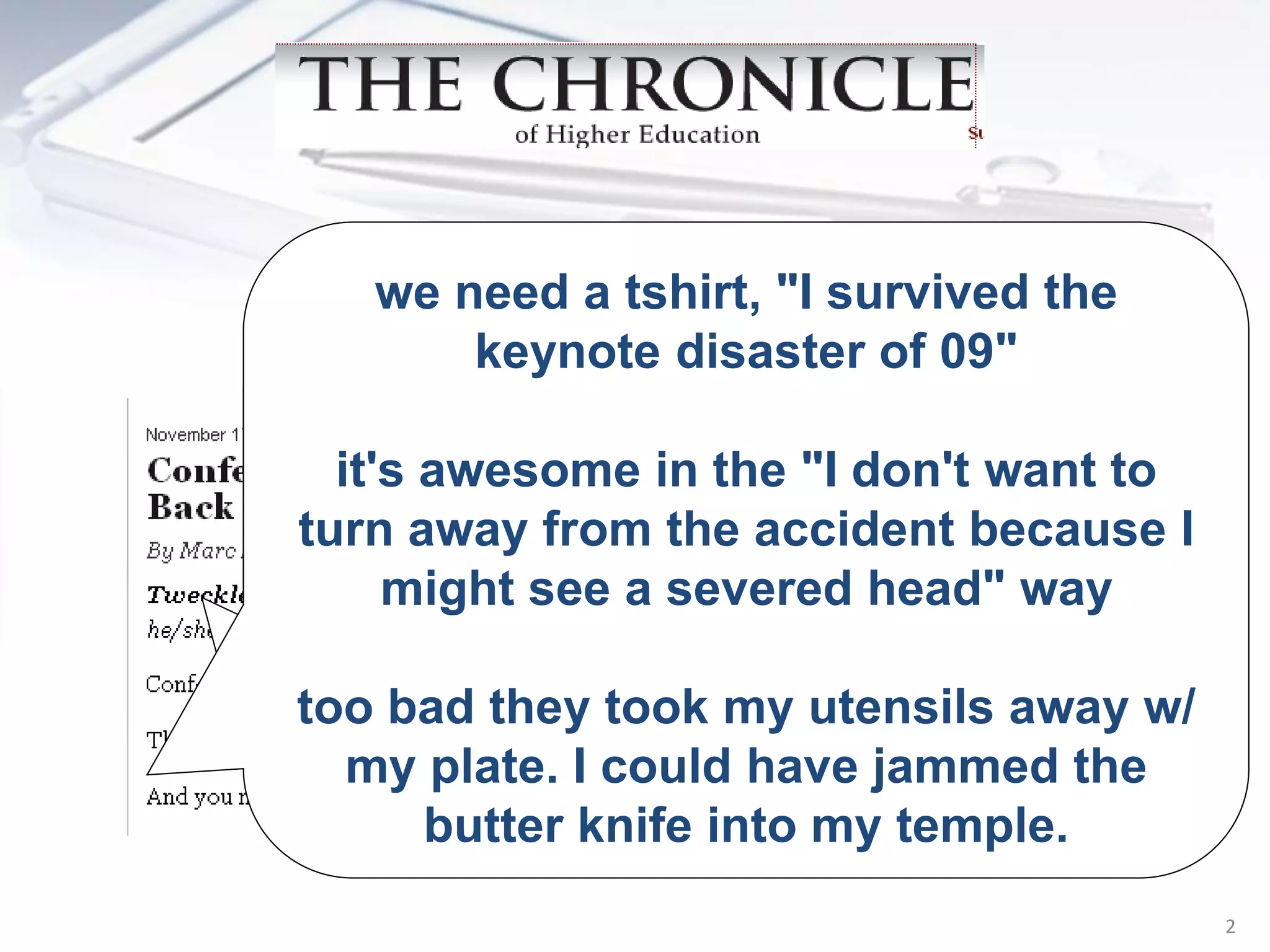
we need a tshirt, "I survived the
       keynote disaster of 09"
  “Tweckle (twek’ul) vt. To
abuse a speakerdon'tTwitter
  it's awesome in the "I to want to
turn away from the accident because I
 followers ain the audience
     might see severed head" way
while he/she is speaking.”
too bad they took my utensils away w/
  my plate. I could have jammed the
     butter knife into my temple.
                                        2
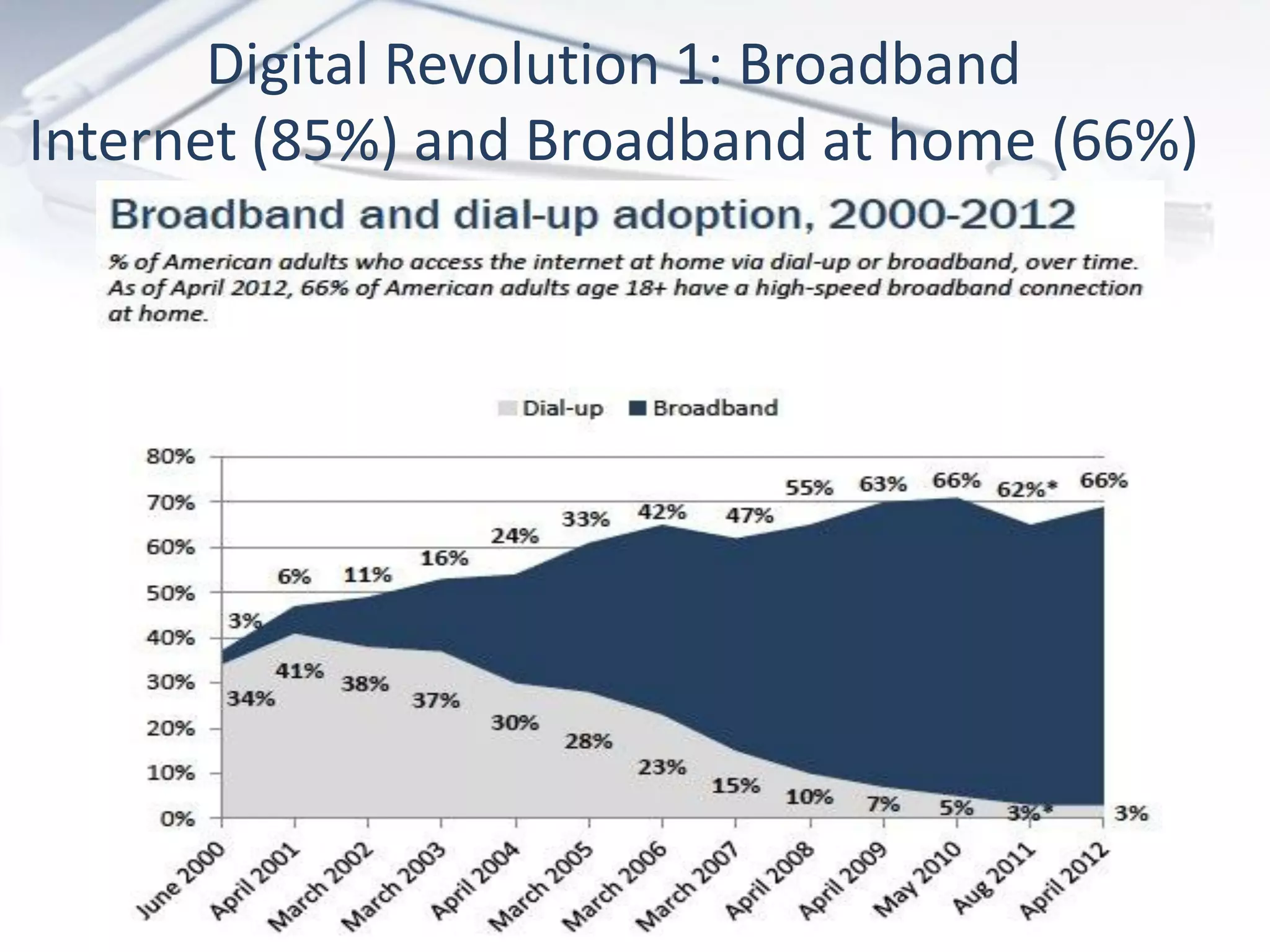
Digital Revolution 1: Broadband
Internet (85%) and Broadband at home (66%)
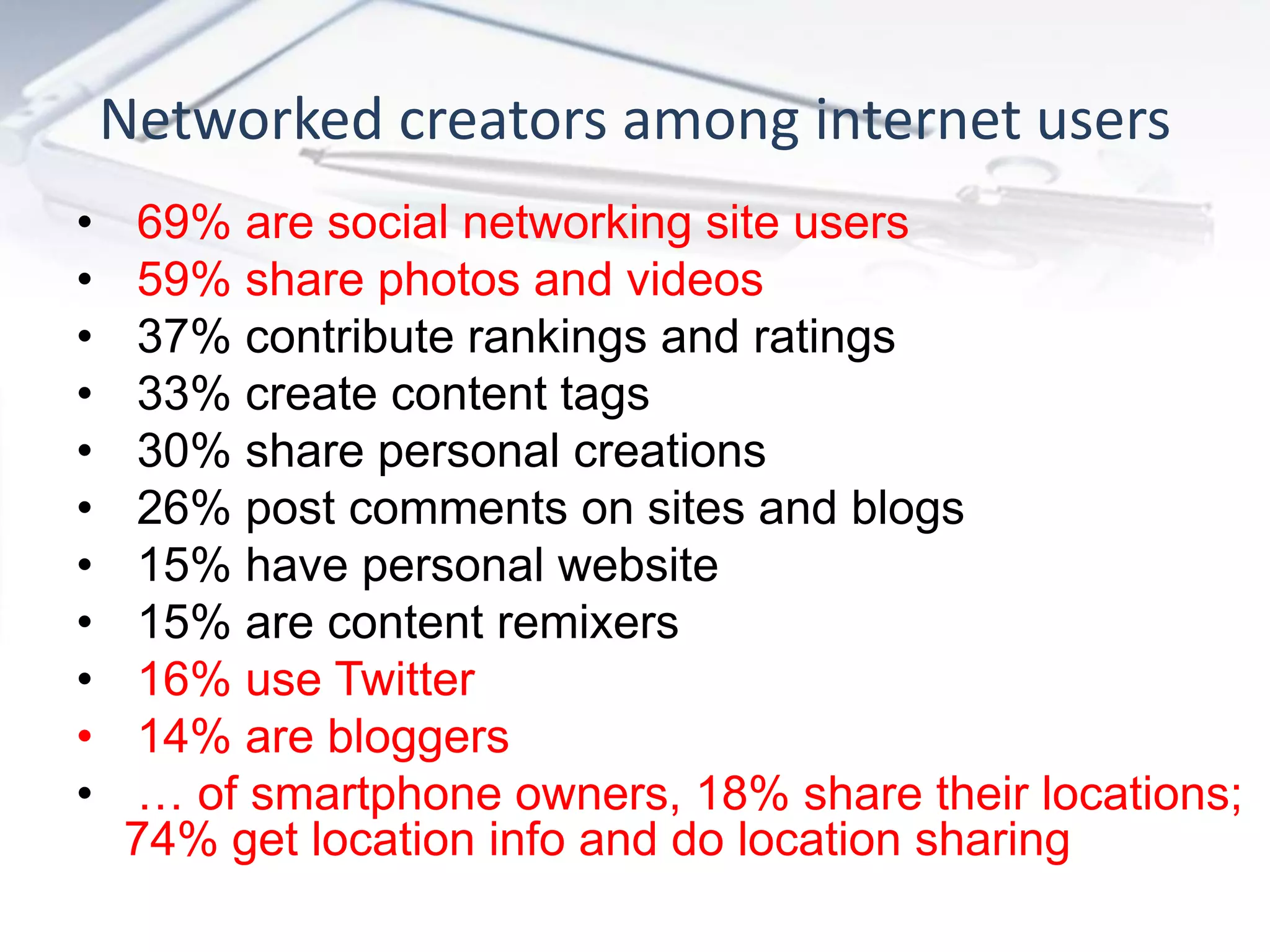
Networked creators among internet users
•   69% are social networking site users
•   59% share photos and videos
•   37% contribute rankings and ratings
•   33% create content tags
•   30% share personal creations
•   26% post comments on sites and blogs
•   15% have personal website
•   15% are content remixers
•   16% use Twitter
•   14% are bloggers
•   … of smartphone owners, 18% share their locations;
    74% get location info and do location sharing
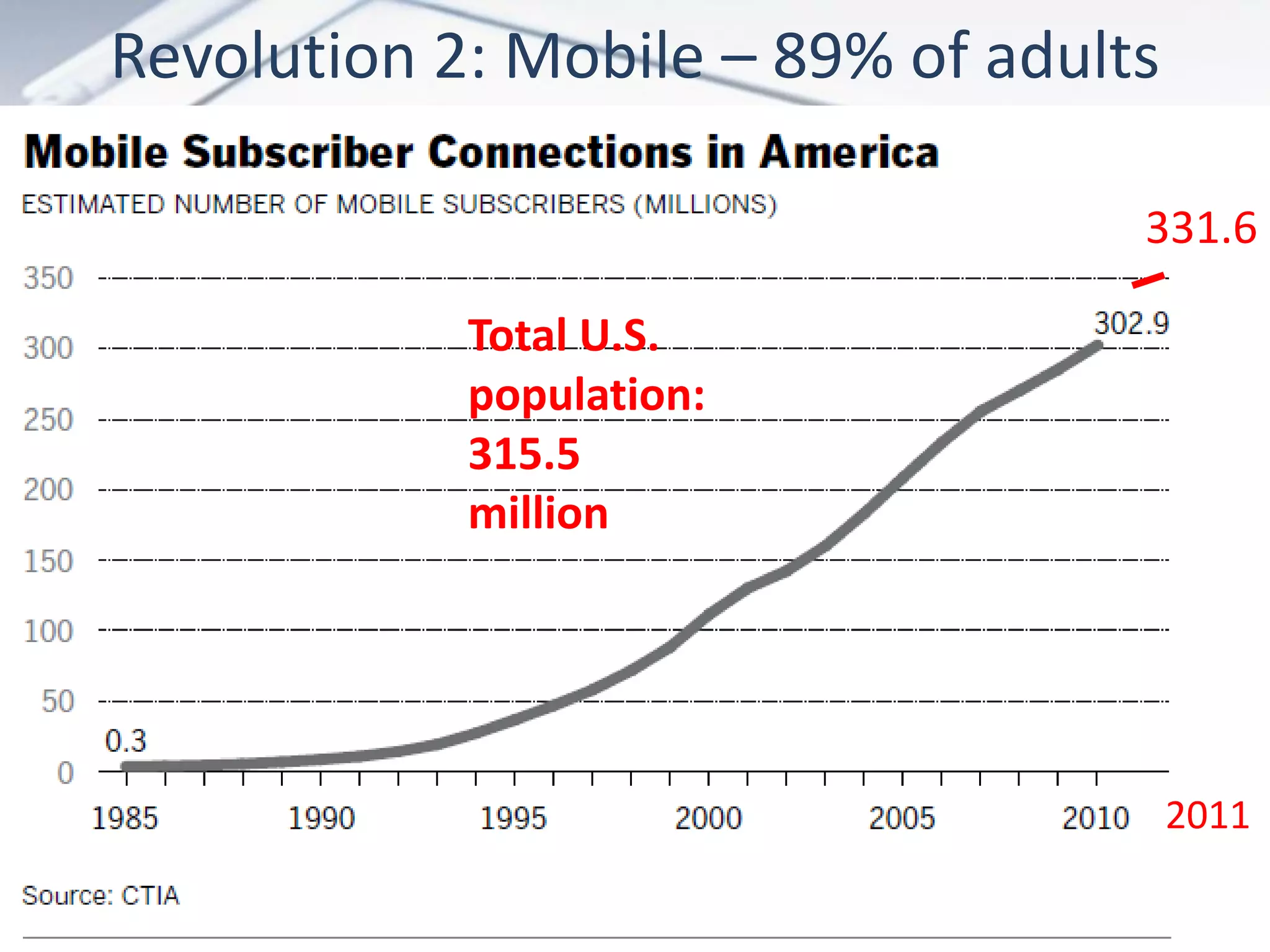
Revolution 2: Mobile – 89% of adults

                                   331.6

            Total U.S.
            population:
            315.5
            million


                                       2011
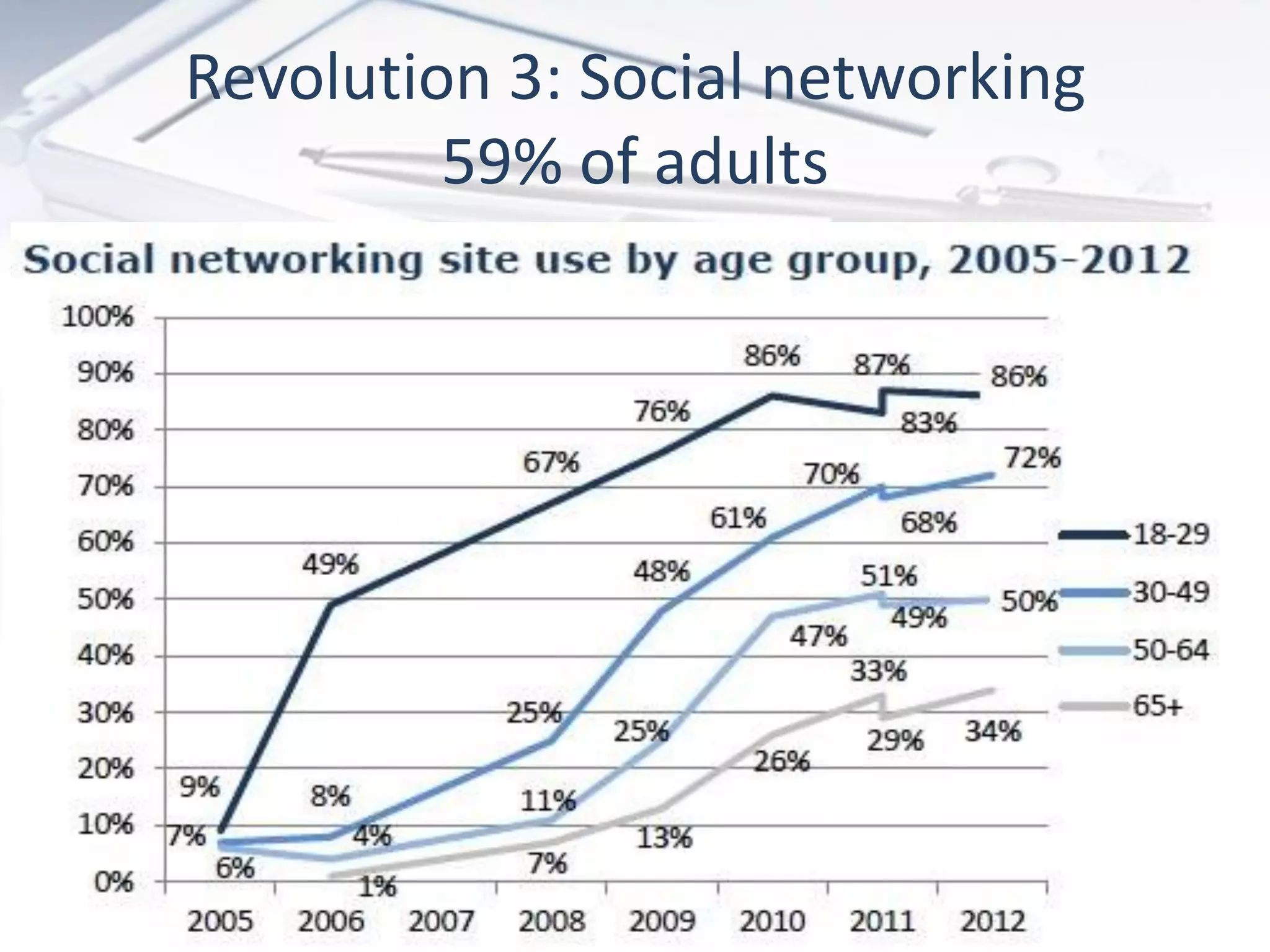
Revolution 3: Social networking
         59% of adults
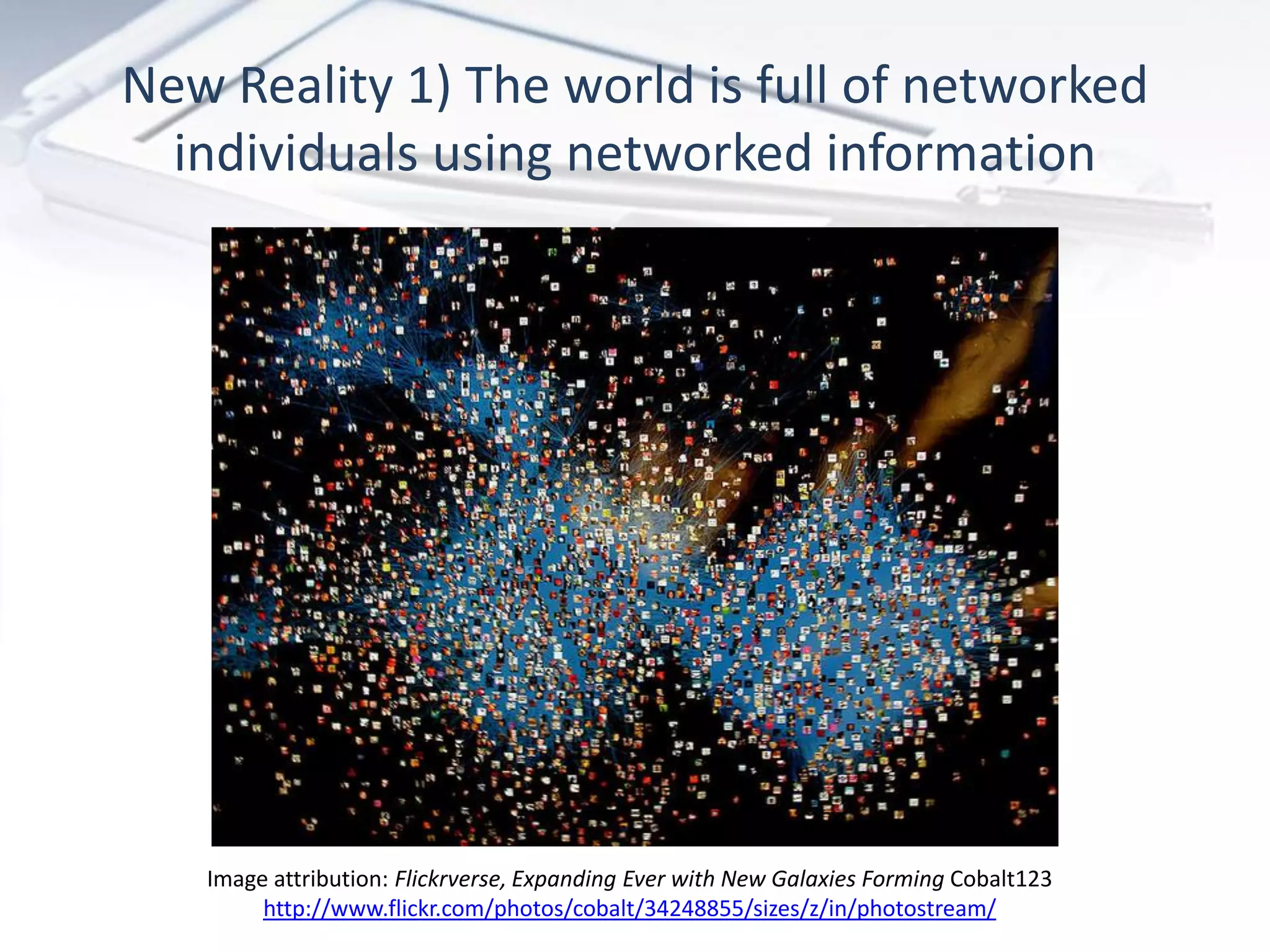
New Reality 1) The world is full of networked
  individuals using networked information


   Image attribution: Flickrverse, Expanding Ever with New Galaxies Forming Cobalt123
        http://www.flickr.com/photos/cobalt/34248855/sizes/z/in/photostream/
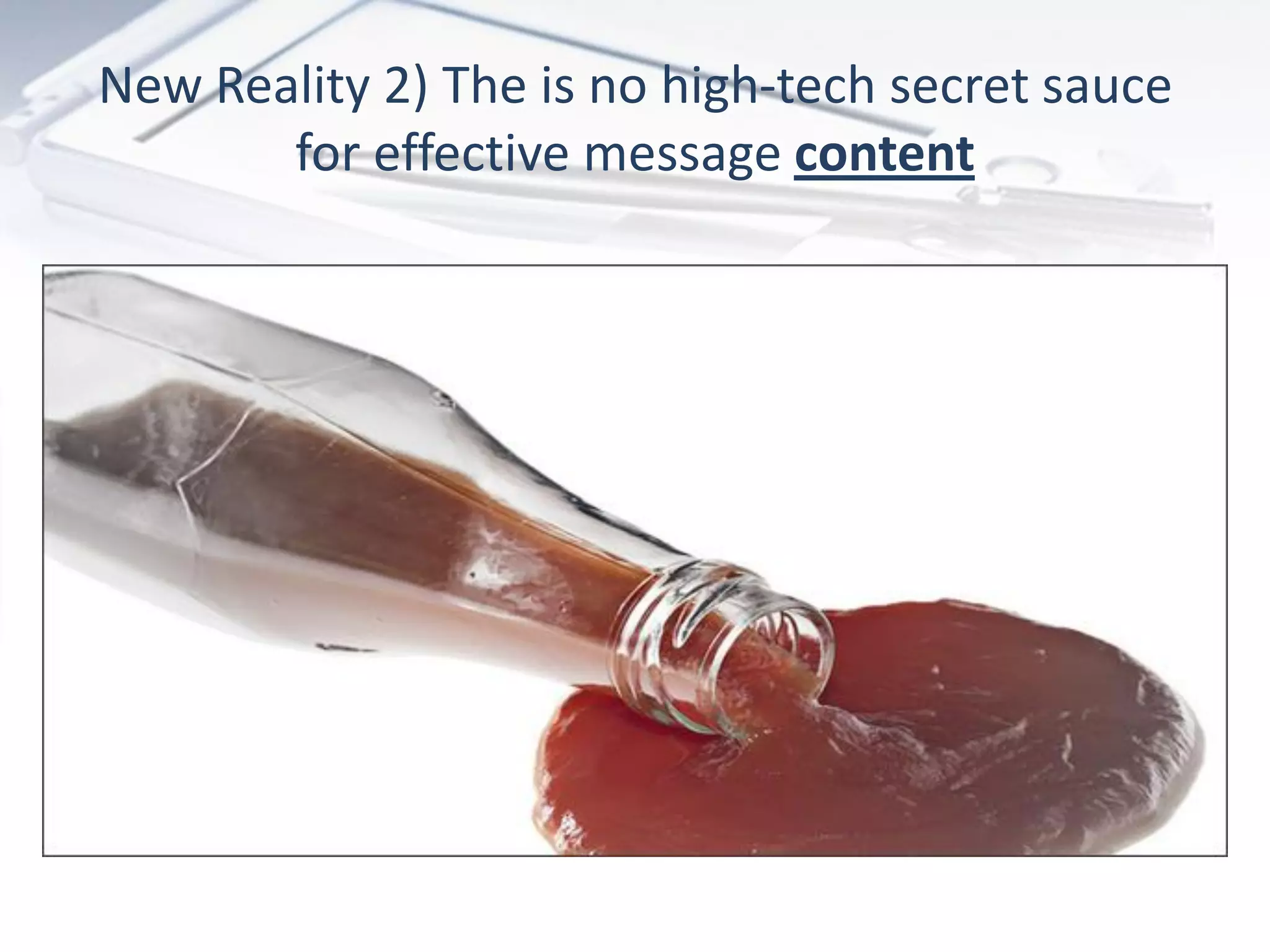
New Reality 2) The is no high-tech secret sauce
       for effective message content
New Reality 2) Corollaries
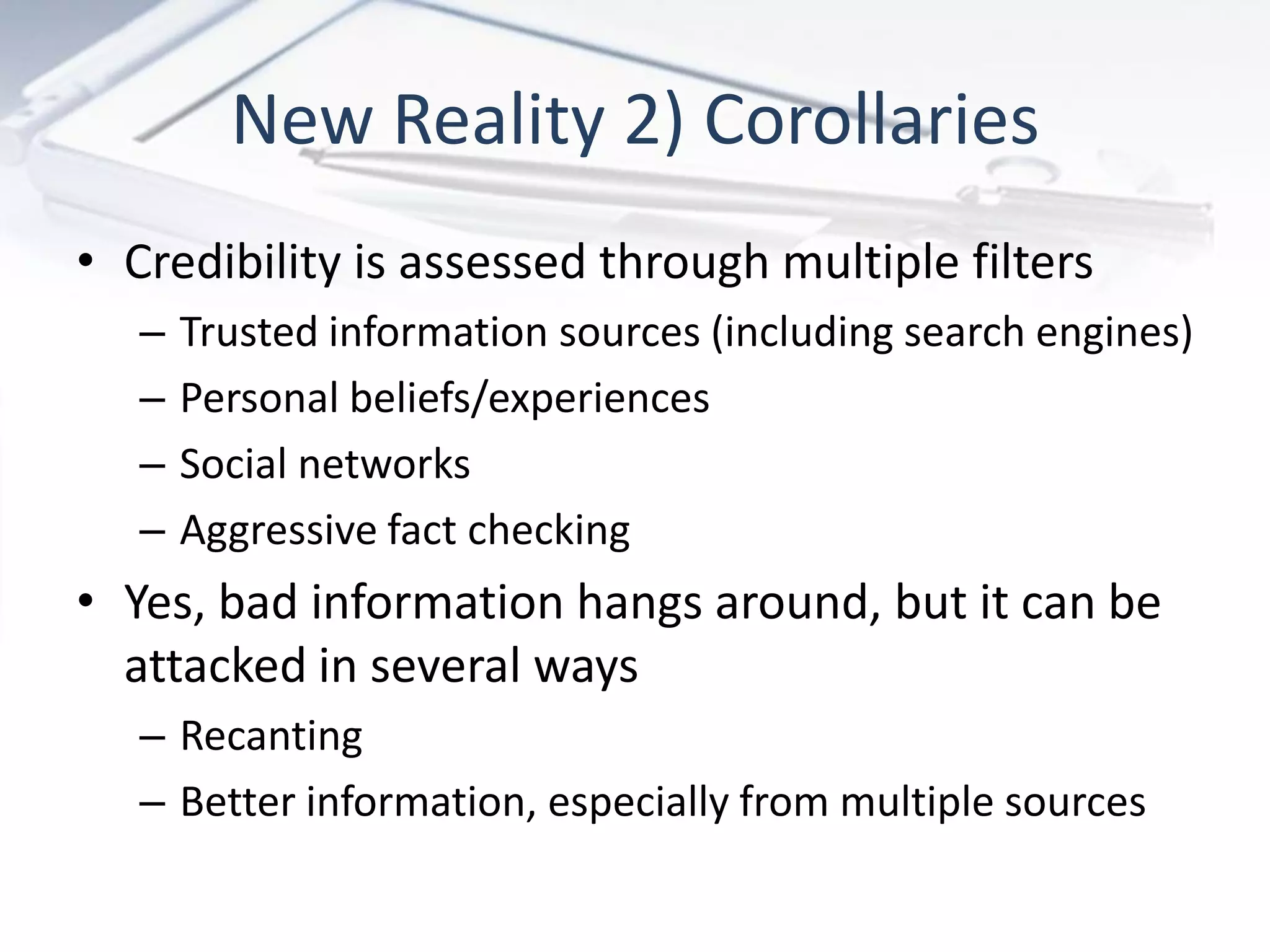
• Credibility is assessed through multiple filters
   –   Trusted information sources (including search engines)
   –   Personal beliefs/experiences
   –   Social networks
   –   Aggressive fact checking
• Yes, bad information hangs around, but it can be
  attacked in several ways
   – Recanting
   – Better information, especially from multiple sources
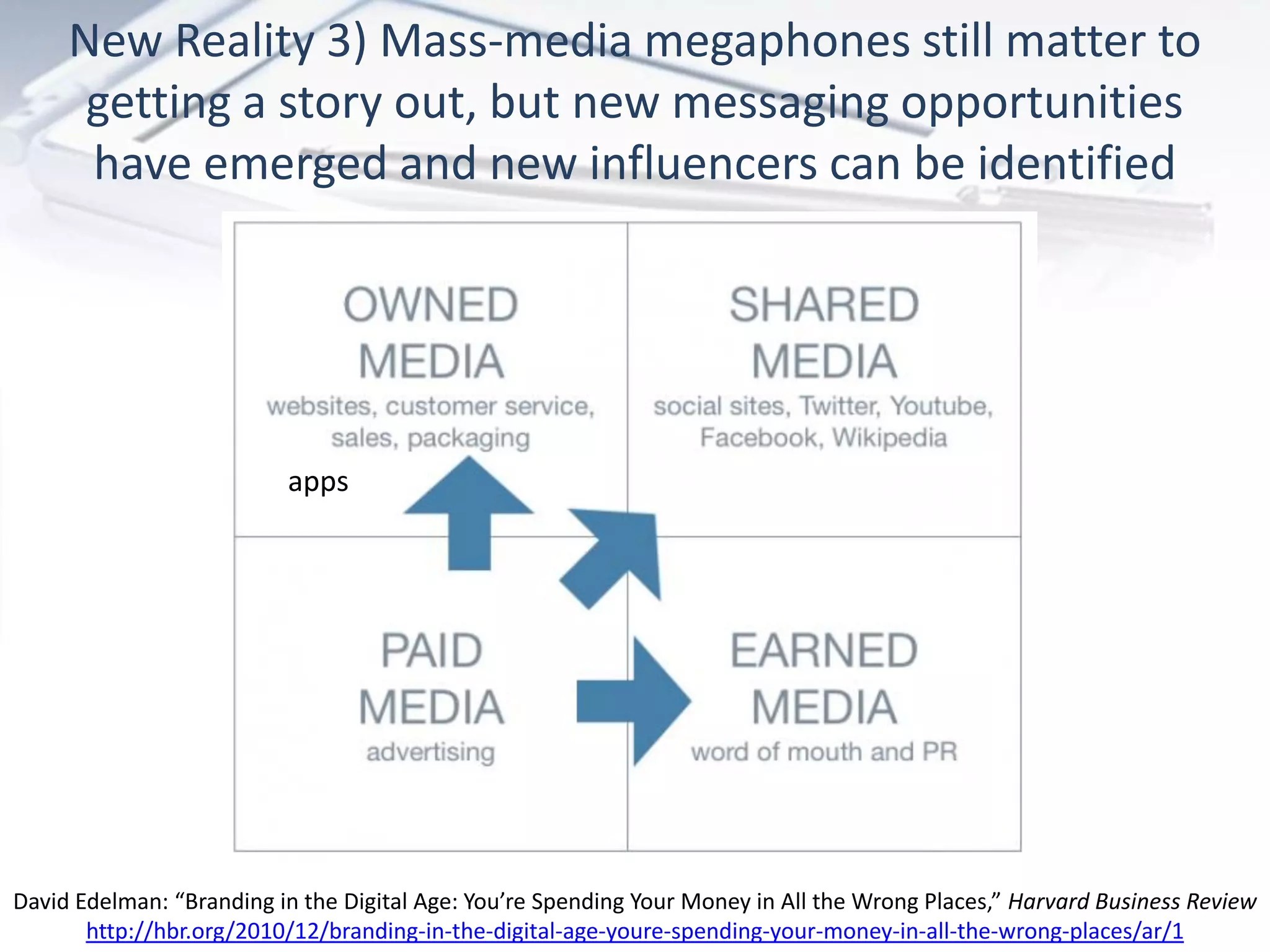
New Reality 3) Mass-media megaphones still matter to
      getting a story out, but new messaging opportunities
      have emerged and new influencers can be identified


                          apps


David Edelman: “Branding in the Digital Age: You’re Spending Your Money in All the Wrong Places,” Harvard Business Review
       http://hbr.org/2010/12/branding-in-the-digital-age-youre-spending-your-money-in-all-the-wrong-places/ar/1
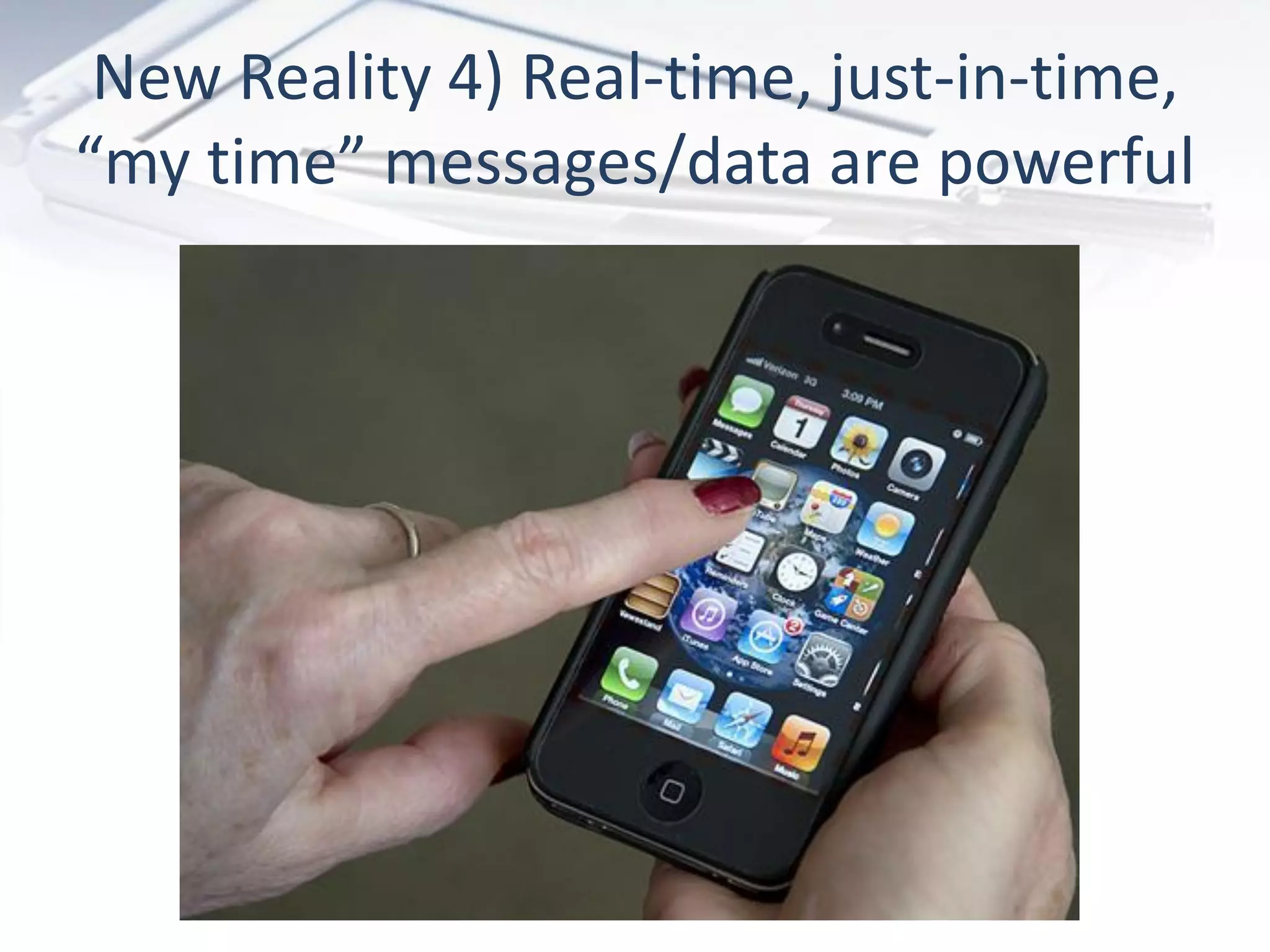
New Reality 4) Real-time, just-in-time,
“my time” messages/data are powerful
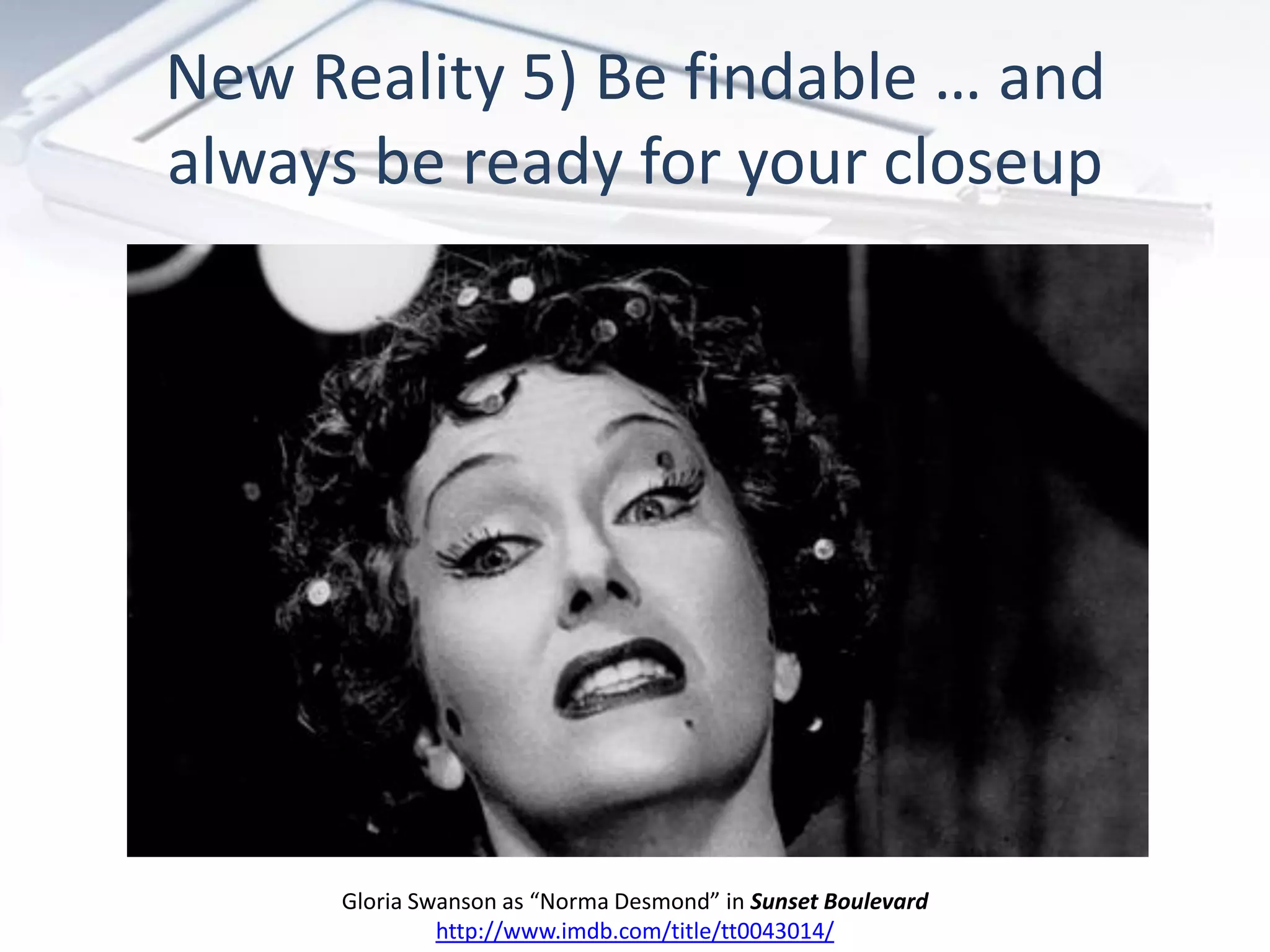
New Reality 5) Be findable … and
always be ready for your closeup


      Gloria Swanson as “Norma Desmond” in Sunset Boulevard
               http://www.imdb.com/title/tt0043014/
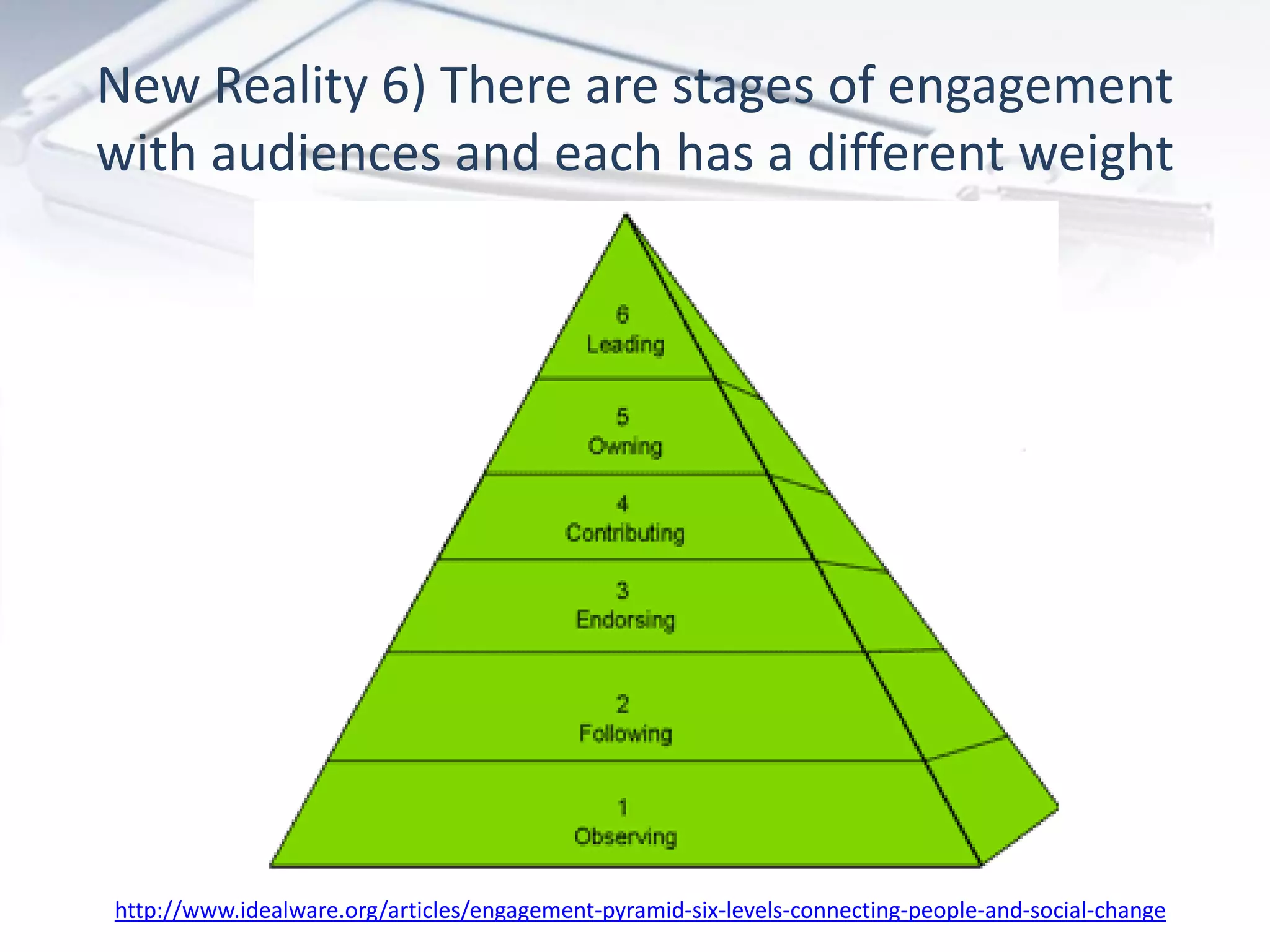
New Reality 6) There are stages of engagement
with audiences and each has a different weight


http://www.idealware.org/articles/engagement-pyramid-six-levels-connecting-people-and-social-change
New reality 6) Corollaries
• The social media space is a “fifth estate” with
  a different civic sensibility
• Facebook is different from Twitter
• Social media users are semi-elite, they do not
  represent everybody
• Lurkers matter as an audience that is watching
  and assessing
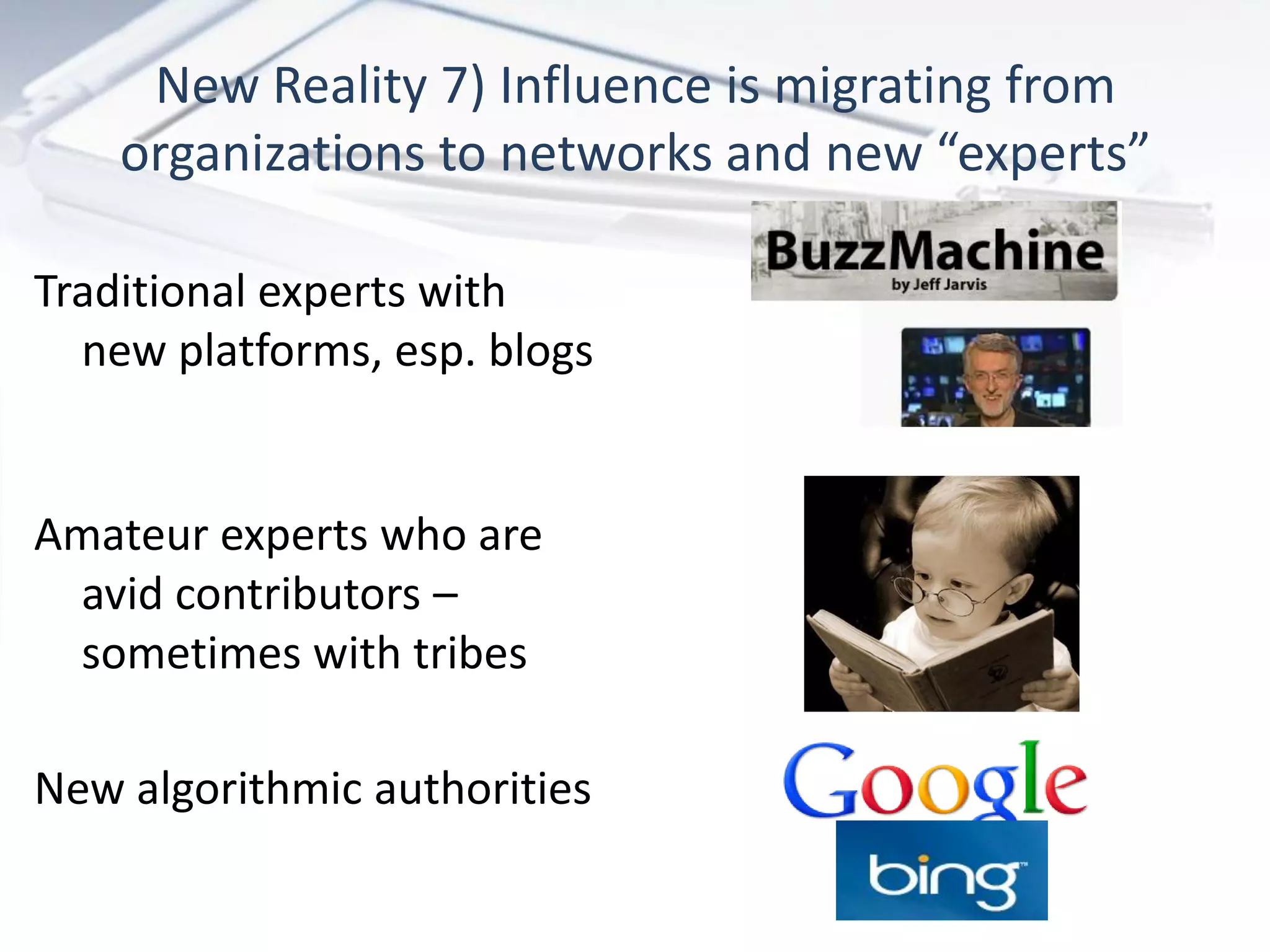
New Reality 7) Influence is migrating from
    organizations to networks and new “experts”

Traditional experts with
  new platforms, esp. blogs


Amateur experts who are
 avid contributors –
 sometimes with tribes

New algorithmic authorities
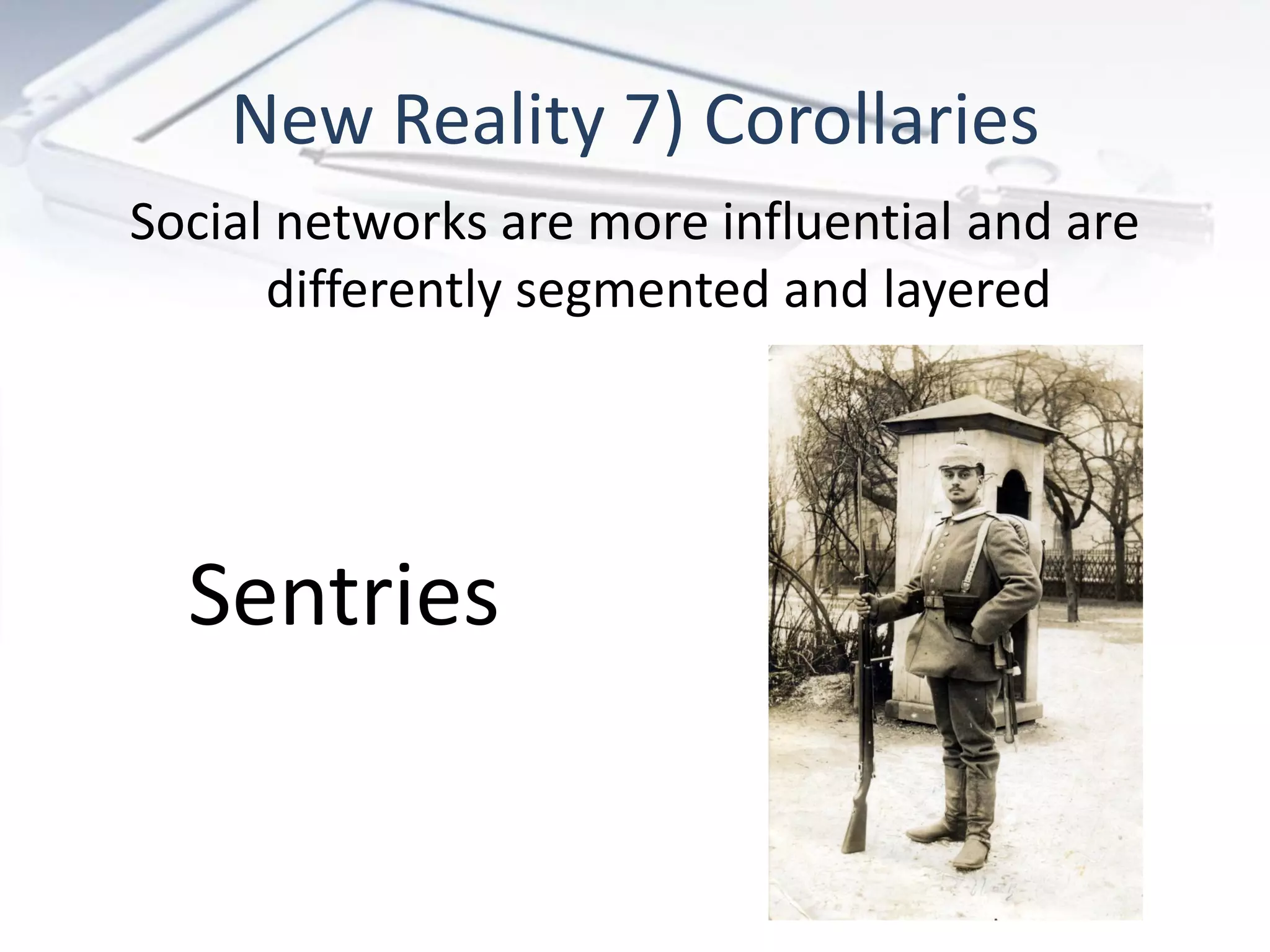
New Reality 7) Corollaries
Social networks are more influential and are
      differently segmented and layered


  Sentries
New Reality 7) Corollaries
Social networks are more influential and are
      differently segmented and layered


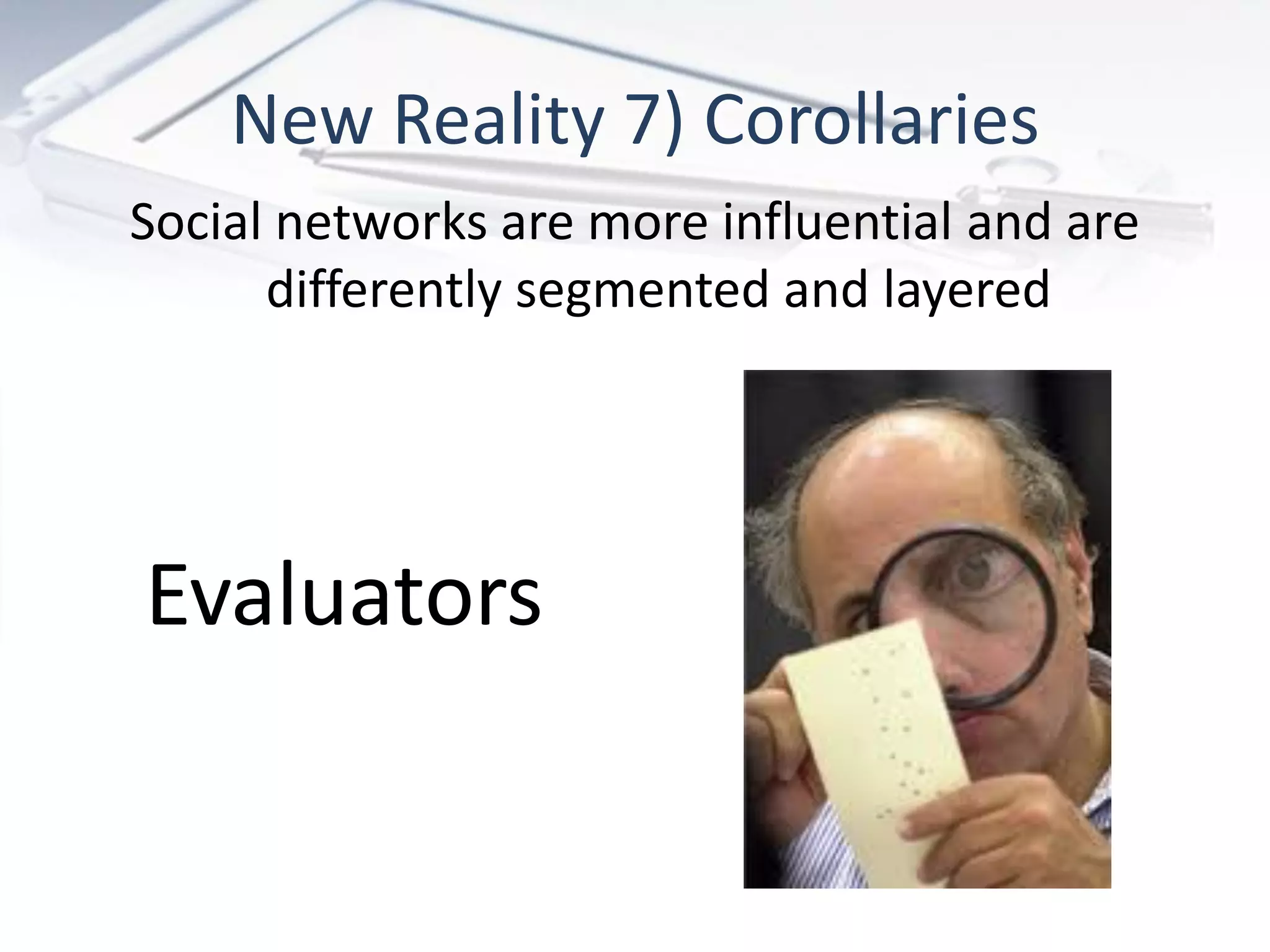
Evaluators
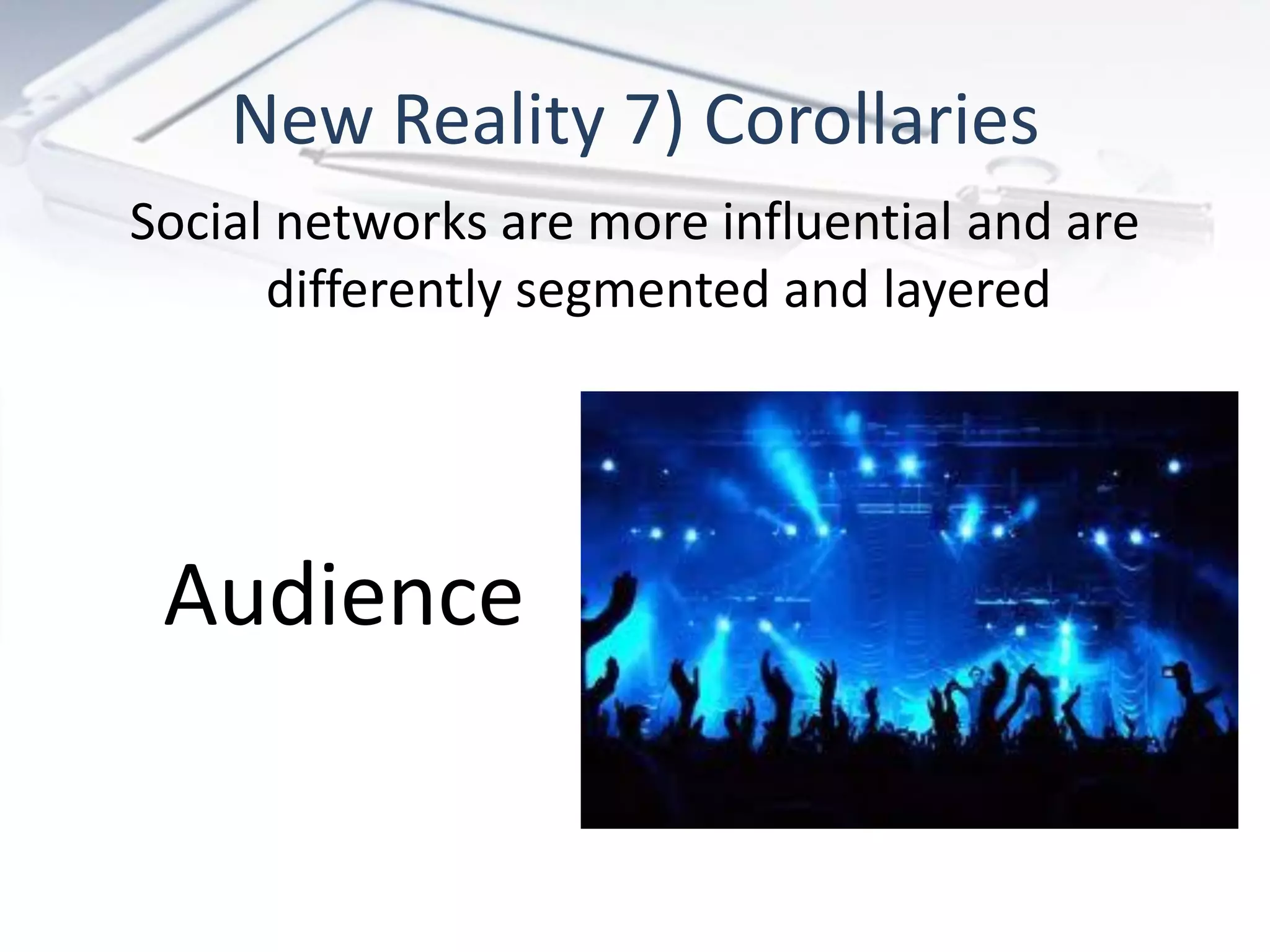
New Reality 7) Corollaries
Social networks are more influential and are
      differently segmented and layered


 Audience
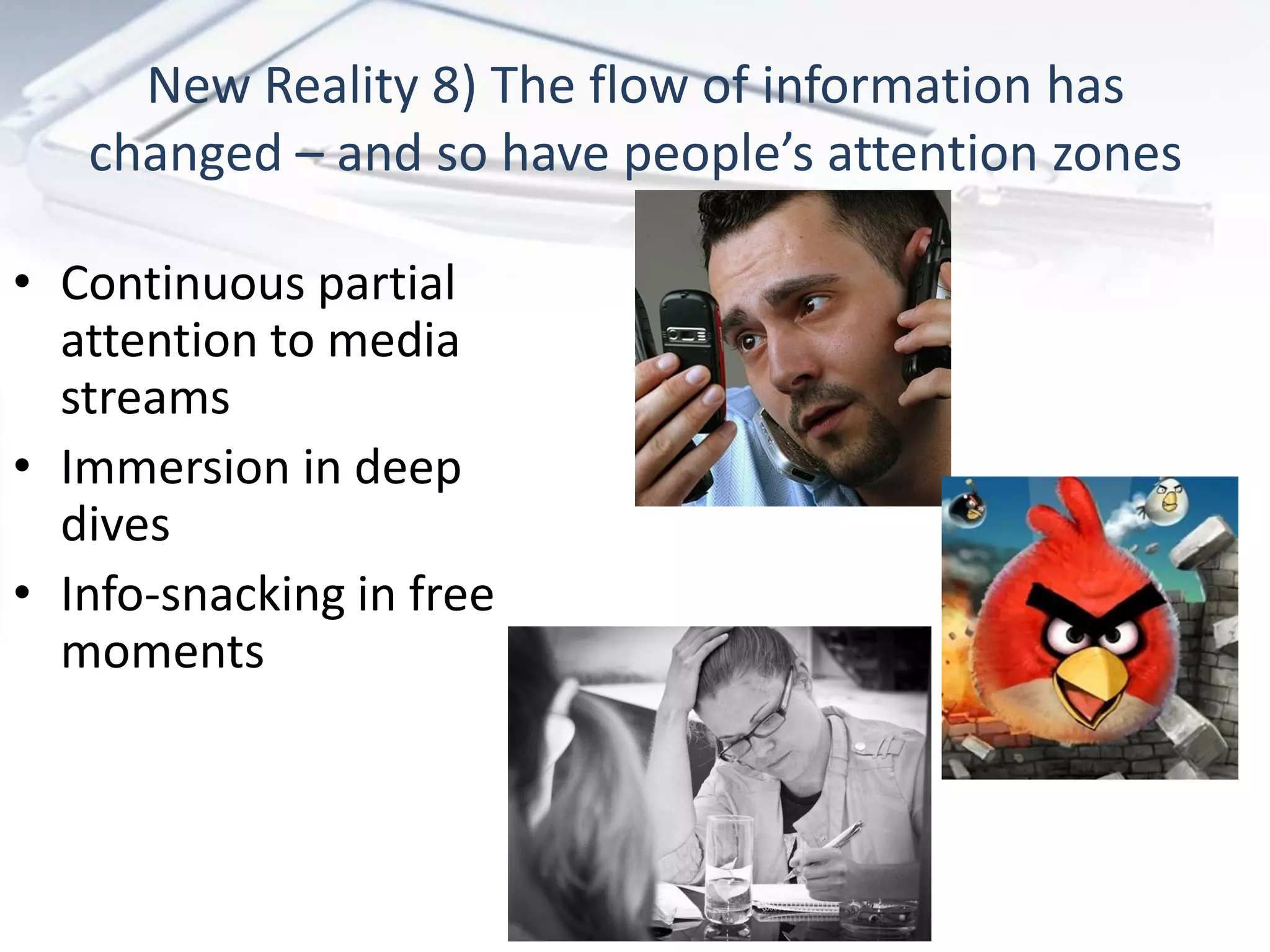
New Reality 8) The flow of information has
   changed – and so have people’s attention zones

• Continuous partial
  attention to media
  streams
• Immersion in deep
  dives
• Info-snacking in free
  moments
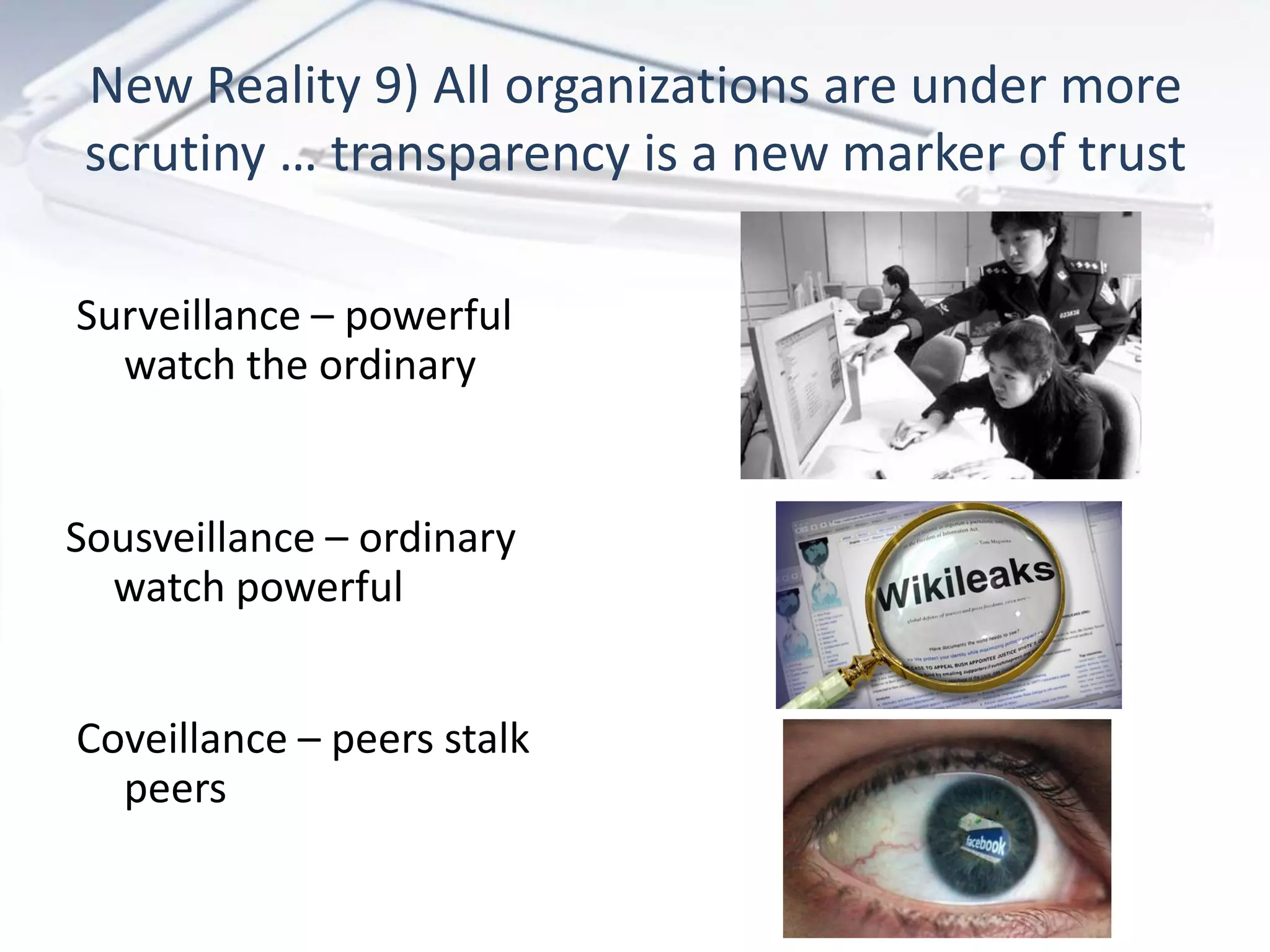
New Reality 9) All organizations are under more
 scrutiny … transparency is a new marker of trust

Surveillance – powerful
  watch the ordinary


Sousveillance – ordinary
  watch powerful


Coveillance – peers stalk
  peers
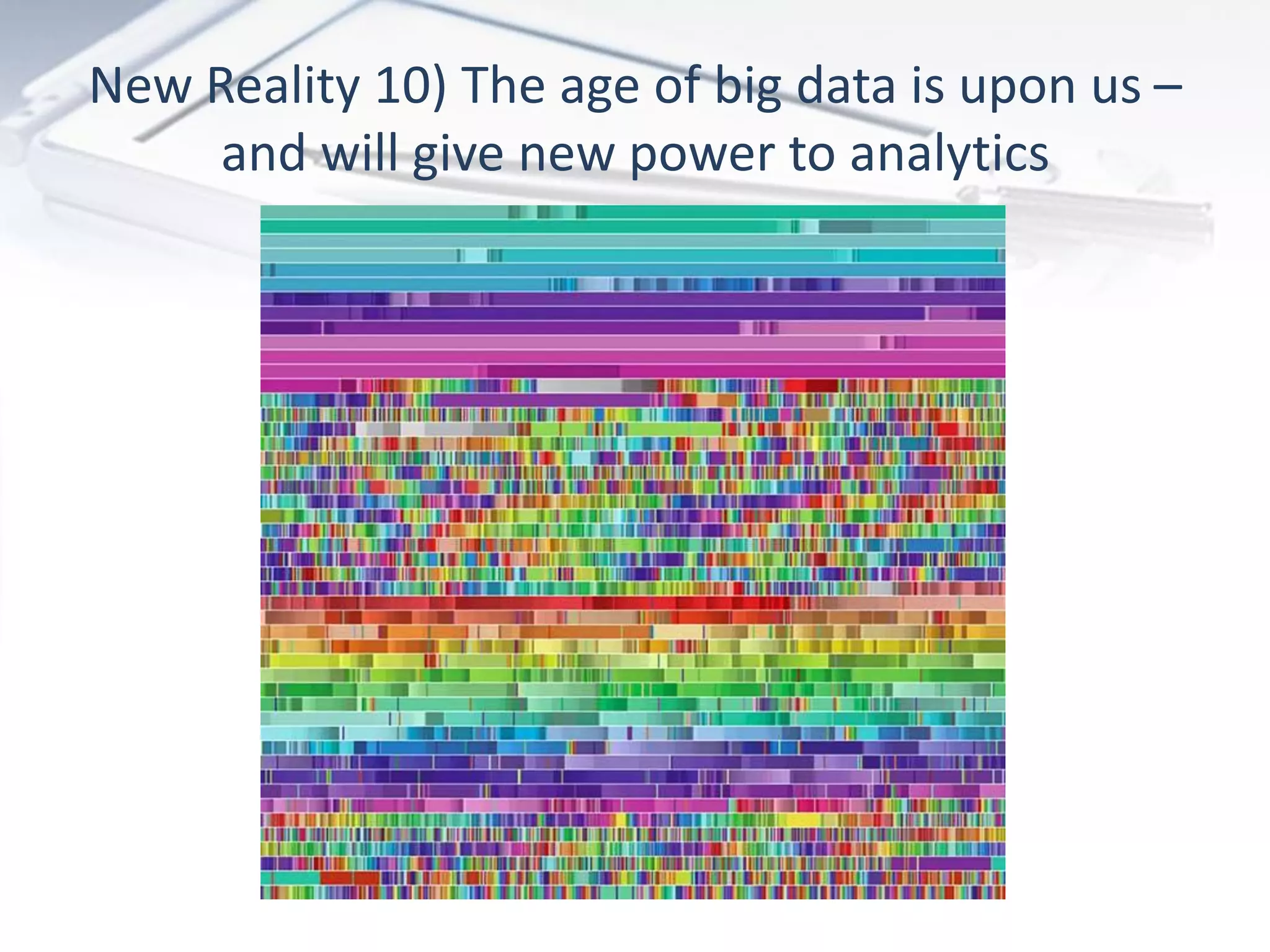
New Reality 10) The age of big data is upon us –
     and will give new power to analytics
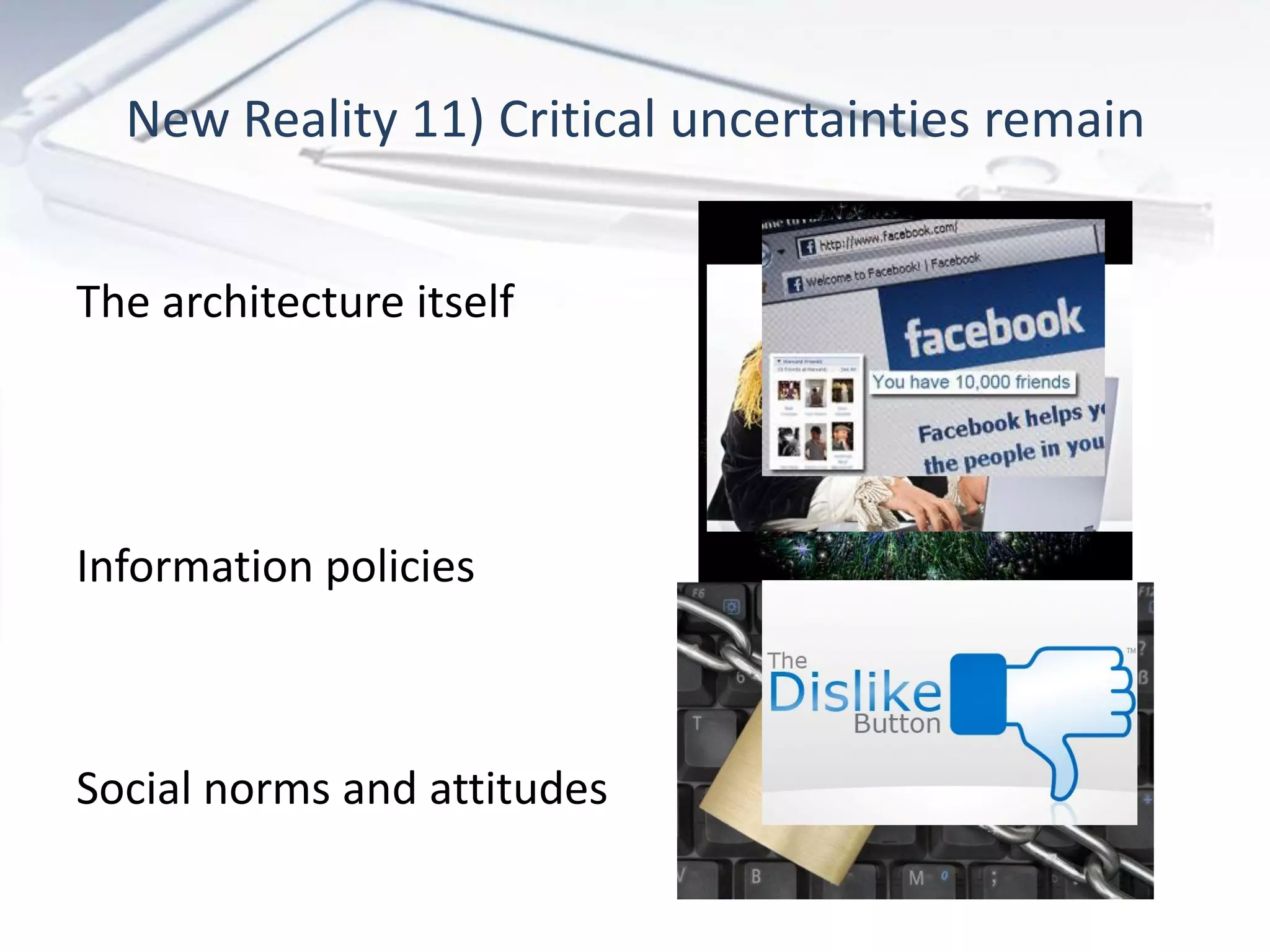
New Reality 11) Critical uncertainties remain


The architecture itself


Information policies


Social norms and attitudes
Eat food
Not too much
Mostly plants.
Eat pie.
Very good pie.
Not often.
Call Mom.
Let her talk.
Don’t argue.
Make promises.
Don’t break them.
Find loopholes.
Public Relations Rules - 1


             Be unforgettable.
             Engage the crowd.
             Adjust accordingly.
Public Relations Rules - 2


             Share ideas
             On many platforms.
             Listen hard.
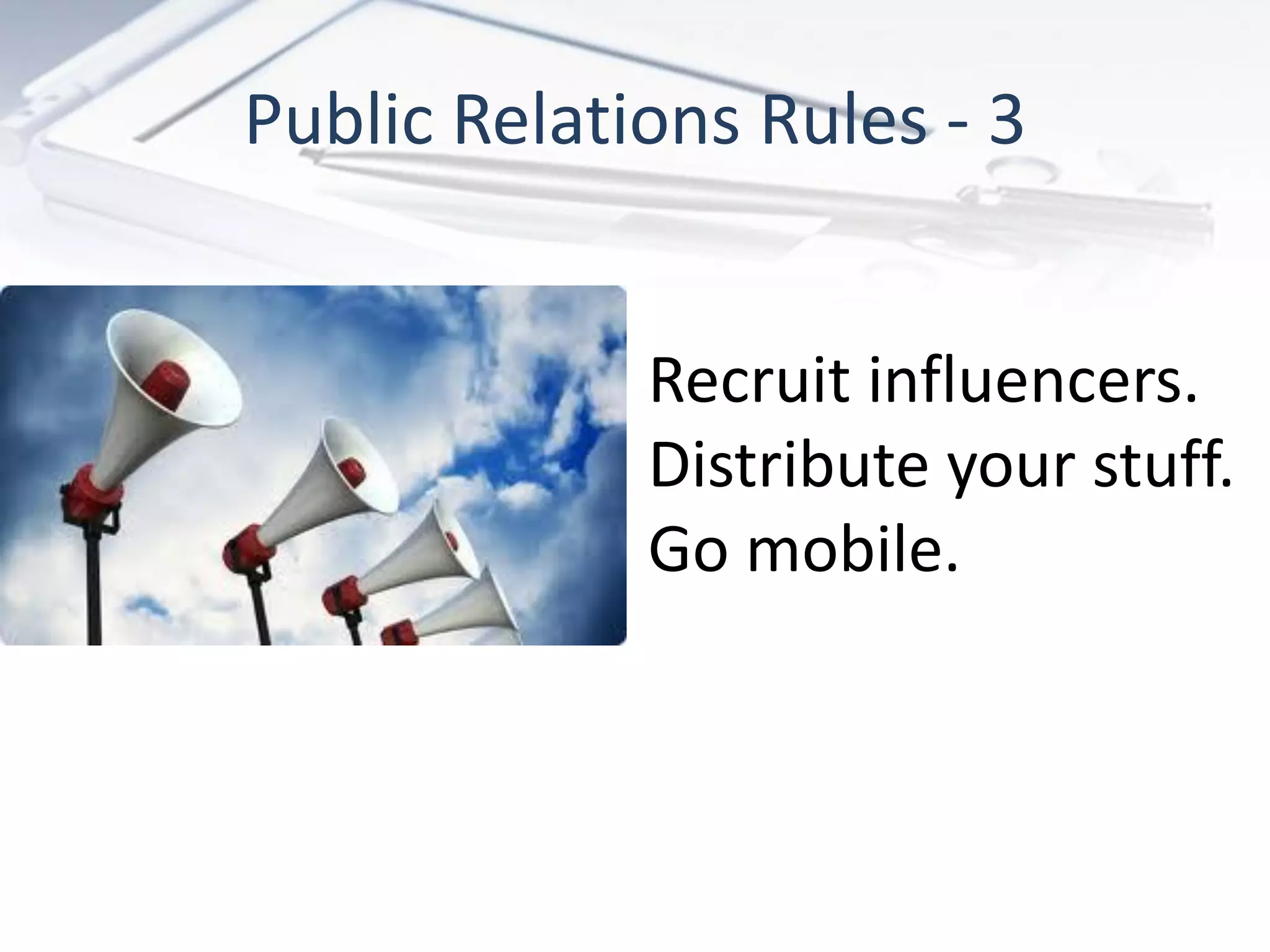
Public Relations Rules - 3


             Recruit influencers.
             Distribute your stuff.
             Go mobile.
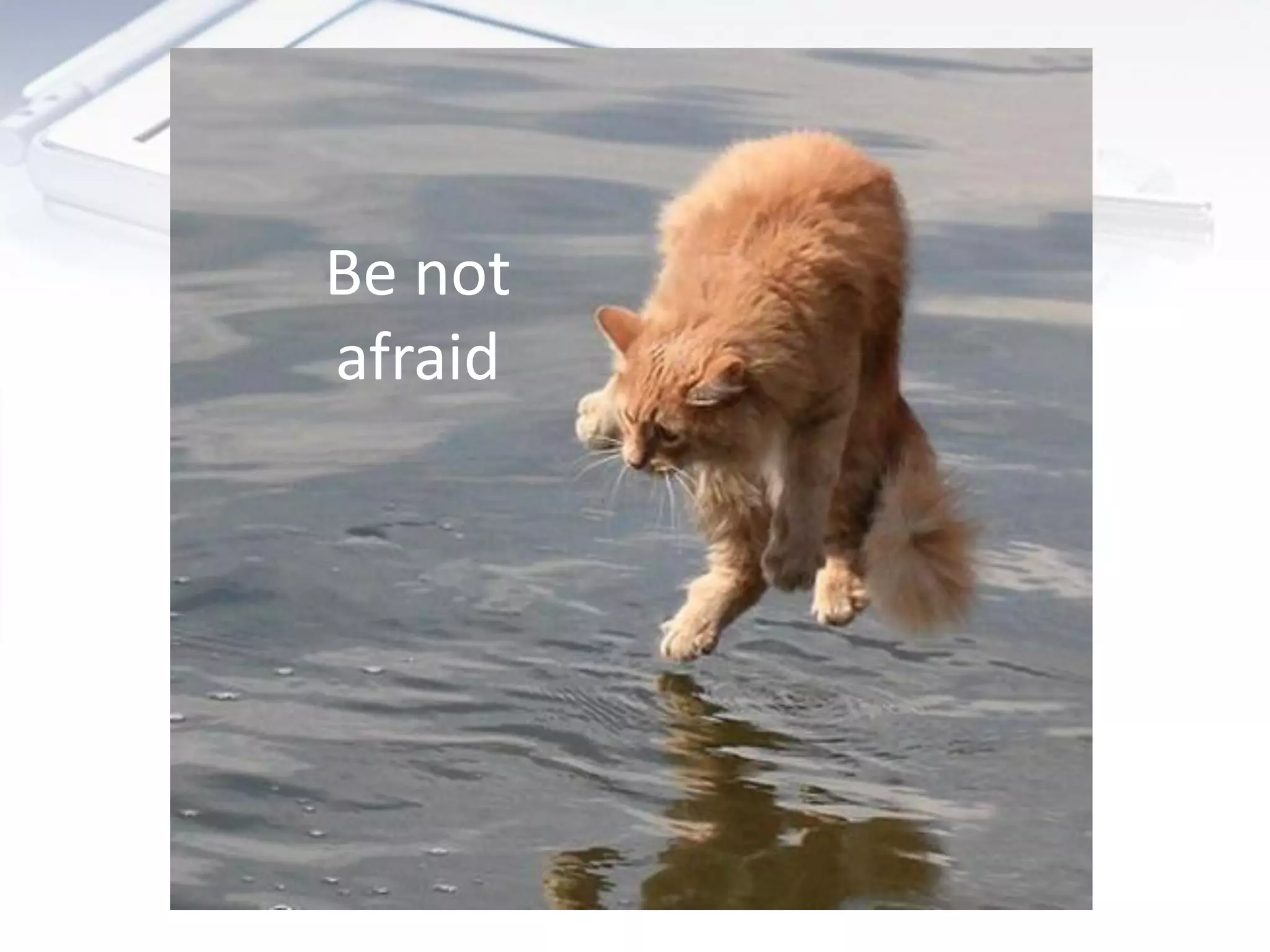
Be not
afraid
Thank you!

The Future is Yesterday: Public Relations in the Networked Era

  • 1.
    The Future isYesterday: Public Relations in the Networked Era Public Relations Society September 20, 2012 Lee Rainie: Director, Pew Internet Project Email: Lrainie@pewinternet.org Twitter: @Lrainie PewInternet.org
  • 2.
    we need atshirt, "I survived the keynote disaster of 09" “Tweckle (twek’ul) vt. To abuse a speakerdon'tTwitter it's awesome in the "I to want to turn away from the accident because I followers ain the audience might see severed head" way while he/she is speaking.” too bad they took my utensils away w/ my plate. I could have jammed the butter knife into my temple. 2
  • 3.
    Digital Revolution 1:Broadband Internet (85%) and Broadband at home (66%)
  • 4.
    Networked creators amonginternet users • 69% are social networking site users • 59% share photos and videos • 37% contribute rankings and ratings • 33% create content tags • 30% share personal creations • 26% post comments on sites and blogs • 15% have personal website • 15% are content remixers • 16% use Twitter • 14% are bloggers • … of smartphone owners, 18% share their locations; 74% get location info and do location sharing
  • 5.
    Revolution 2: Mobile– 89% of adults 331.6 Total U.S. population: 315.5 million 2011
  • 6.
    Revolution 3: Socialnetworking 59% of adults
  • 7.
    New Reality 1)The world is full of networked individuals using networked information Image attribution: Flickrverse, Expanding Ever with New Galaxies Forming Cobalt123 http://www.flickr.com/photos/cobalt/34248855/sizes/z/in/photostream/
  • 8.
    New Reality 2)The is no high-tech secret sauce for effective message content
  • 9.
    New Reality 2)Corollaries • Credibility is assessed through multiple filters – Trusted information sources (including search engines) – Personal beliefs/experiences – Social networks – Aggressive fact checking • Yes, bad information hangs around, but it can be attacked in several ways – Recanting – Better information, especially from multiple sources
  • 10.
    New Reality 3)Mass-media megaphones still matter to getting a story out, but new messaging opportunities have emerged and new influencers can be identified apps David Edelman: “Branding in the Digital Age: You’re Spending Your Money in All the Wrong Places,” Harvard Business Review http://hbr.org/2010/12/branding-in-the-digital-age-youre-spending-your-money-in-all-the-wrong-places/ar/1
  • 11.
    New Reality 4)Real-time, just-in-time, “my time” messages/data are powerful
  • 12.
    New Reality 5)Be findable … and always be ready for your closeup Gloria Swanson as “Norma Desmond” in Sunset Boulevard http://www.imdb.com/title/tt0043014/
  • 13.
    New Reality 6)There are stages of engagement with audiences and each has a different weight http://www.idealware.org/articles/engagement-pyramid-six-levels-connecting-people-and-social-change
  • 14.
    New reality 6)Corollaries • The social media space is a “fifth estate” with a different civic sensibility • Facebook is different from Twitter • Social media users are semi-elite, they do not represent everybody • Lurkers matter as an audience that is watching and assessing
  • 15.
    New Reality 7)Influence is migrating from organizations to networks and new “experts” Traditional experts with new platforms, esp. blogs Amateur experts who are avid contributors – sometimes with tribes New algorithmic authorities
  • 16.
    New Reality 7)Corollaries Social networks are more influential and are differently segmented and layered Sentries
  • 17.
    New Reality 7)Corollaries Social networks are more influential and are differently segmented and layered Evaluators
  • 18.
    New Reality 7)Corollaries Social networks are more influential and are differently segmented and layered Audience
  • 19.
    New Reality 8)The flow of information has changed – and so have people’s attention zones • Continuous partial attention to media streams • Immersion in deep dives • Info-snacking in free moments
  • 20.
    New Reality 9)All organizations are under more scrutiny … transparency is a new marker of trust Surveillance – powerful watch the ordinary Sousveillance – ordinary watch powerful Coveillance – peers stalk peers
  • 21.
    New Reality 10)The age of big data is upon us – and will give new power to analytics
  • 22.
    New Reality 11)Critical uncertainties remain The architecture itself Information policies Social norms and attitudes
  • 23.
    Eat food Not toomuch Mostly plants. Eat pie. Very good pie. Not often. Call Mom. Let her talk. Don’t argue. Make promises. Don’t break them. Find loopholes.
  • 24.
    Public Relations Rules- 1 Be unforgettable. Engage the crowd. Adjust accordingly.
  • 25.
    Public Relations Rules- 2 Share ideas On many platforms. Listen hard.
  • 26.
    Public Relations Rules- 3 Recruit influencers. Distribute your stuff. Go mobile.
  • 27.
  • 28.