Lesson Objectives
This lesson is looking at the different types of wave
  you can get and how they effect the coast
  differently.

By the end of the lesson you should be able to:
Name the two types of wave
Describe the differences between them
Explain how they change the coastline in different
  ways.
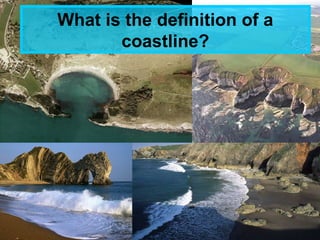
What is the definition of a
       coastline?
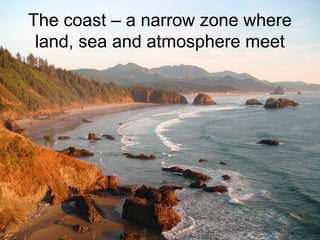
The coast – a narrow zone where
 land, sea and atmosphere meet
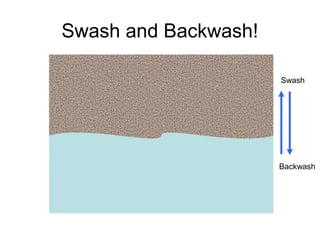
Swash and Backwash!

                      Swash


                      Backwash
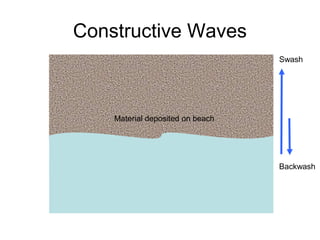
Constructive Waves
                                  Swash


    Material deposited on beach


                                  Backwash
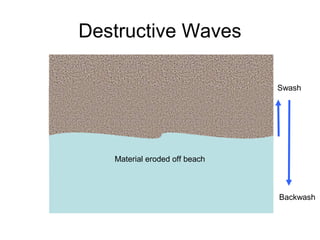
Destructive Waves

                               Swash


   Material eroded off beach


                               Backwash
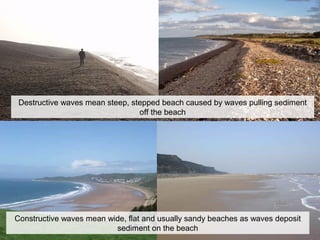
Destructive waves mean steep, stepped beach caused by waves pulling sediment
                                 off the beach


Constructive waves mean wide, flat and usually sandy beaches as waves deposit
                          sediment on the beach
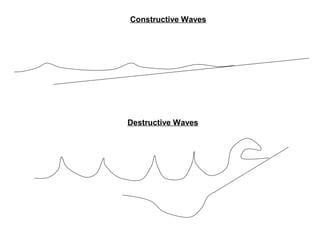
Constructive Waves


Destructive Waves
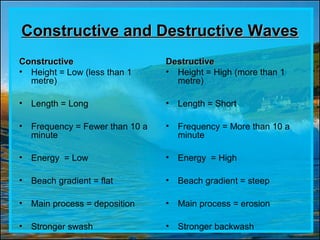
Constructive and Destructive Waves
Constructive                    Destructive
• Height = Low (less than 1     • Height = High (more than 1
  metre)                          metre)

• Length = Long                 •   Length = Short

• Frequency = Fewer than 10 a   •   Frequency = More than 10 a
  minute                            minute

• Energy = Low                  •   Energy = High

• Beach gradient = flat         •   Beach gradient = steep

• Main process = deposition     •   Main process = erosion

• Stronger swash                •   Stronger backwash
Key Words
Fetch – the distance a wave has travelled

Swash – the forward movement of a wave up the beach
  after the wave has broken

Backwash – water from a breaking wave which flows under
  gravity down the beach

Constructive Wave – deposits sediment, building up the
  beach

Destructive Wave – a wave that removes sediment from
  the beach, eroding it.

Constructive and destructive waves

  • 1.
    Lesson Objectives This lessonis looking at the different types of wave you can get and how they effect the coast differently. By the end of the lesson you should be able to: Name the two types of wave Describe the differences between them Explain how they change the coastline in different ways.
  • 2.
    What is thedefinition of a coastline?
  • 3.
    The coast –a narrow zone where land, sea and atmosphere meet
  • 4.
    Swash and Backwash! Swash Backwash
  • 5.
    Constructive Waves Swash Material deposited on beach Backwash
  • 6.
    Destructive Waves Swash Material eroded off beach Backwash
  • 7.
    Destructive waves meansteep, stepped beach caused by waves pulling sediment off the beach Constructive waves mean wide, flat and usually sandy beaches as waves deposit sediment on the beach
  • 8.
  • 9.
    Constructive and DestructiveWaves Constructive Destructive • Height = Low (less than 1 • Height = High (more than 1 metre) metre) • Length = Long • Length = Short • Frequency = Fewer than 10 a • Frequency = More than 10 a minute minute • Energy = Low • Energy = High • Beach gradient = flat • Beach gradient = steep • Main process = deposition • Main process = erosion • Stronger swash • Stronger backwash
  • 10.
    Key Words Fetch –the distance a wave has travelled Swash – the forward movement of a wave up the beach after the wave has broken Backwash – water from a breaking wave which flows under gravity down the beach Constructive Wave – deposits sediment, building up the beach Destructive Wave – a wave that removes sediment from the beach, eroding it.