ECF gratefully acknowledges
financial support from the European
Commission.
How European cities develop cycling.
Urban concepts and national programs.
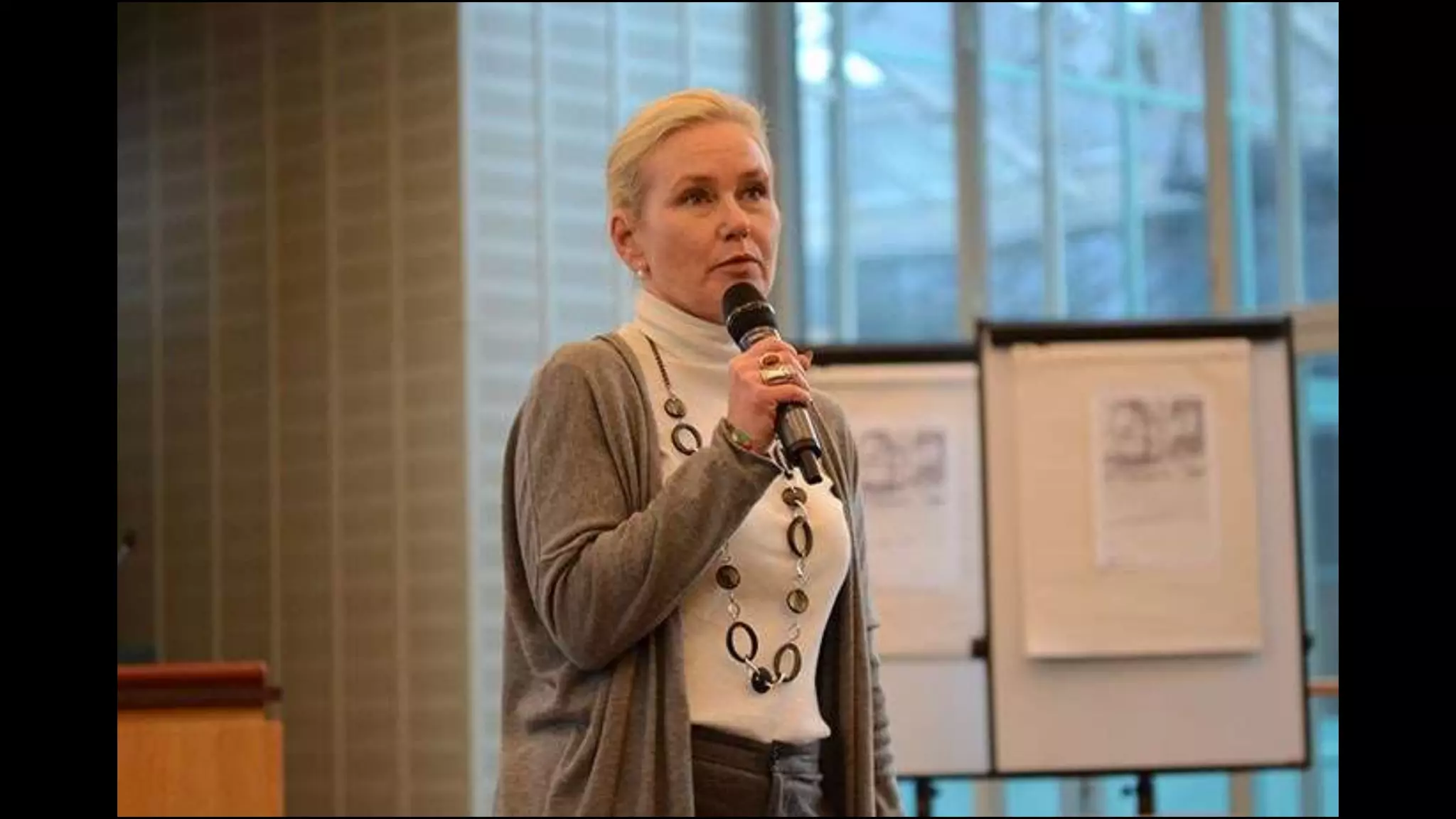
Lars Strömgren
ECF Vice-President
Bike conference of Belarusian cities
Minsk, 12 May 2017
In a city with many cyclists, why do they ride?
56%
Copenhageners’ reason for cycling to and from work (multiple answers)
City of Copenhagen
37%
29%
26%
12%
9%
5%
it’s faster
more convenient
healthy
inexpensive
well-being, good start to day
new job, relocation
environmental concerns
7
is for
successful cities
Paris, Left bank expressway, 2012
Paris, Left bank expressway, 2014
London: « Cycle Superhighway », V. 2.0
Dutch Cycling Embassy
HARDWARE
Intricate networks of fast routes
and neighborhood routes
BICYCLE PARKING
Bicycle and train: a good combination!
24
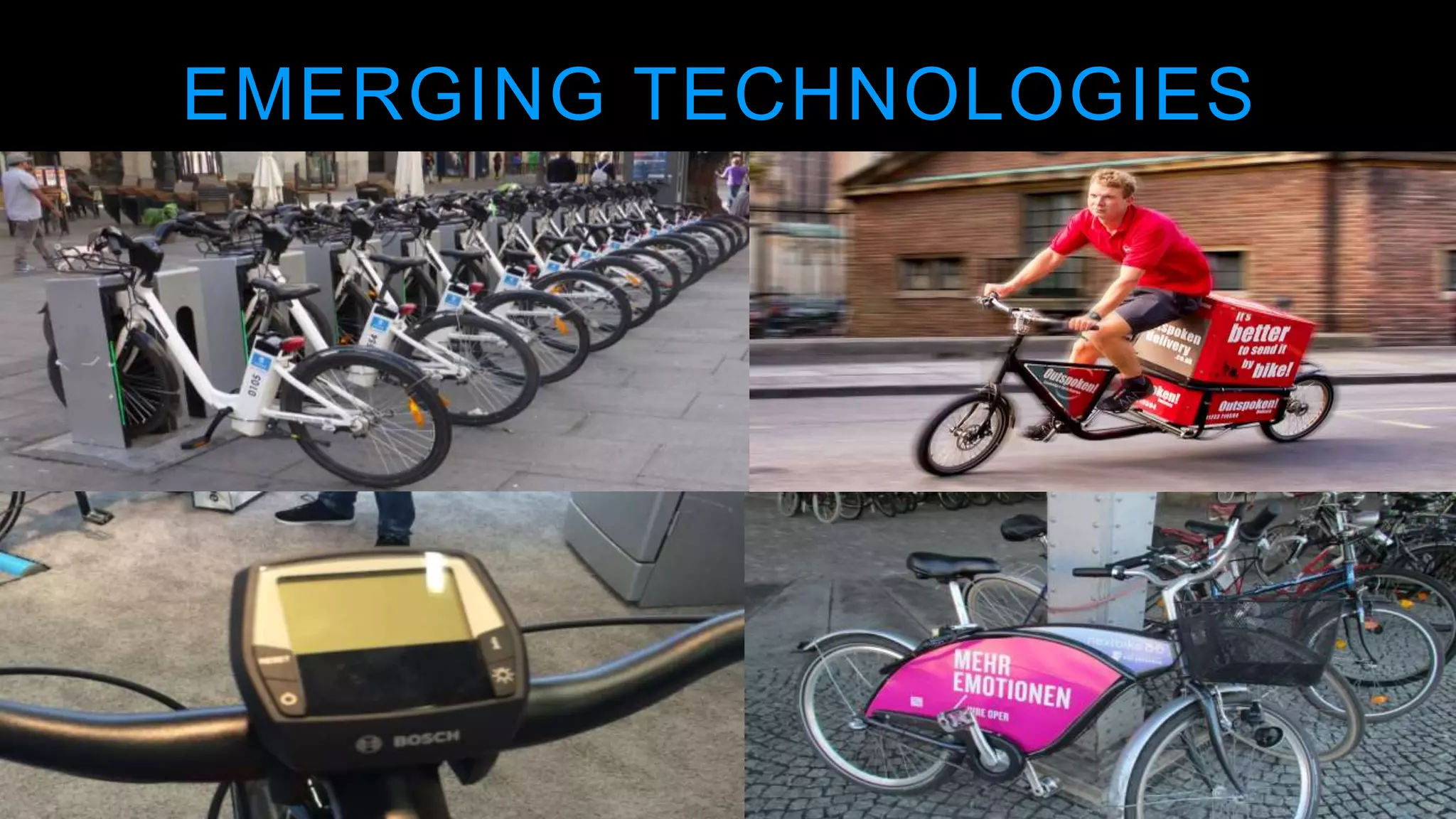
EMERGING TECHNOLOGIES
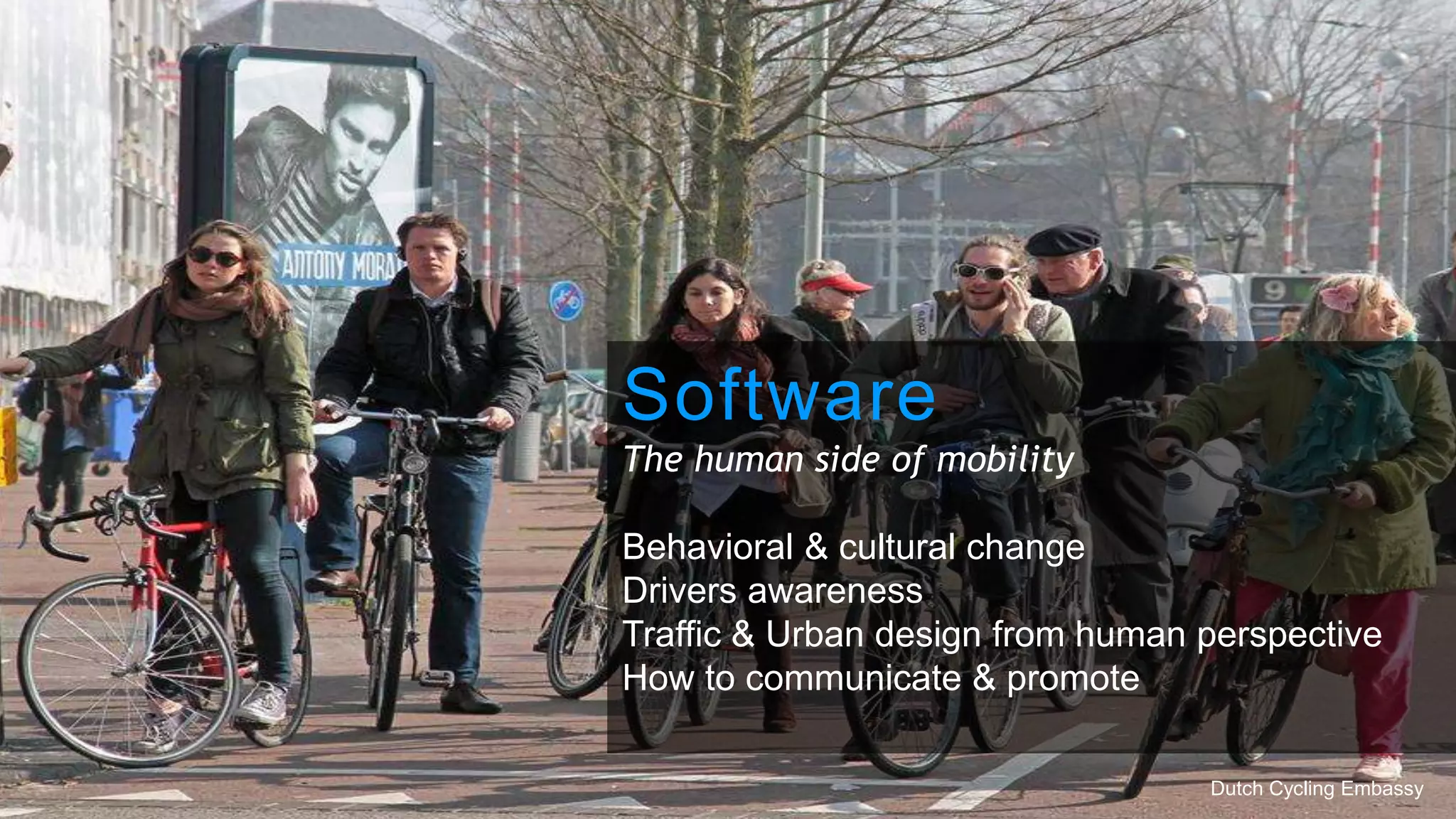
Software
The human side of mobility
Behavioral & cultural change
Drivers awareness
Traffic & Urban design from human perspective
How to communicate & promote
Dutch Cycling Embassy
Orgware
The cooperation process needed between all the actors involved
How to organise your planning apparatus
Integration of cycling in urban & mobility planning
Dynamic plans for long term planning
Create critical collaborative atmosphere between different stakeholders
Ways of financing
Finding the right arguments
Dutch Cycling Embassy
Getting from A to B: Today
A B
A B
A B
Getting from A to B: Future
A B
A B
A B
–Our city isn’t Copenhagen…
– In the 1970's neither was Copenhagen
What Can Be Said and What Can Be Done
Talk and decisions follow rules from what can be said, actions
follow rules for what can be done, and we cannot expect that
these rules will always be consistent. There are things that we
can say but not do, and there are other things we can do but
not say.
Brunsson, Nils (2007). The consequences of decision-making.
Oxford: Oxford University Press
Rules
Consequence
Imitation Experiment
4 Logics
Holmblad Brunsson, Karin & Brunsson, Nils (2014). Beslut. 1. uppl.
Stockholm: Liber
Political support
Transport Ministers call upon European Commission to develop ‘an
EU level strategic document on
cycling’
[Declaration of Luxembourg, October 2015, Informal Council Meeting during
Luxembourg EU Presidency];
Also support from European Parliament and Committee of the Region!
EU Cycling Strategy
Commissioner for Transport, Violeta Bulc, to
ECF in June 2016:
“I need to see the content and
stakeholder support!”
Policy objectives
1) Cycling should be an equal partner in the mobility system. Users pay for the full external
costs of motorised transport while the societal benefits of active mobility are fully taken into
account in transport planning and investment decisions. In addition, it will show the path
towards prioritising cycling over individual motorised transport.
2) Cycle use in the EU will increase by 50% in the decade from 2019/2020 – 2030. Its share
in the transport modal split will be at least 12 % which means 0.48 cycle trips per person per
day as an average.
3) The rates (per km cycled) for fatalities and seriously injured among cyclists will be halved
in the decade 2019/2020 – 2030.
4) The EU should double its investments in cycle projects to 3 billion Euro during the
Multiannual Financial Framework 2021 – 2027 (up from 1.5 billion Euro in 2013 - 2020) and
aim for another doubling to 6 billion Euro during the 2028 – 2034 period.
Content
3 main parts:
Chapter 1 and 2: EU and global policy goals, benefits of cycling
and added value of EU action in growing cycling
Chapter 3 – 9: Cycling Implementation Plan
Chapter 10 and 11: From Planning to Practice: Implementation,
Monitoring and Evaluation
1: The Policy context, benefits of cycling
and the added value of EU action
2: The current status of cycling in Europe
and potential for growth by 2030
3. Behavioural change
4. Infrastructure
5. Vehicle and technical standards
6. Multimodality and ITS
7. Funding and Fiscal
8. Industrial policy
9. EU as a global player
10. Governance
11. Monitoring and evaluation
What is going to happen
• June 16, 2017: Publication and public hand-over of EU Cycling
Strategy to EU Commissioner for Transport, Violeta Bulc, at
Velo-city 2017 conference in Arnhem-Nijmegen.
• June 28, 2017: Public Benelux event at Permanent
Representation of the Netherlands to the EU. Introduction of EU
Cycling Strategy to EU audience
Overall campaign objective
‘EU Cycling Strategy’ for the
Work Programme of the European
Commission 2018
ECF gratefully acknowledges
financial support from the European
Commission.

Urban cycling-development - Lars Stromgren (Minsk, 2017)

  • 1.
    ECF gratefully acknowledges financialsupport from the European Commission. How European cities develop cycling. Urban concepts and national programs. Lars Strömgren ECF Vice-President Bike conference of Belarusian cities Minsk, 12 May 2017
  • 6.
    In a citywith many cyclists, why do they ride? 56% Copenhageners’ reason for cycling to and from work (multiple answers) City of Copenhagen 37% 29% 26% 12% 9% 5% it’s faster more convenient healthy inexpensive well-being, good start to day new job, relocation environmental concerns
  • 7.
  • 8.
  • 9.
    Paris, Left bankexpressway, 2012
  • 10.
    Paris, Left bankexpressway, 2014
  • 11.
    London: « CycleSuperhighway », V. 2.0
  • 15.
  • 16.
    Intricate networks offast routes and neighborhood routes
  • 22.
  • 23.
    Bicycle and train:a good combination!
  • 24.
  • 25.
    Software The human sideof mobility Behavioral & cultural change Drivers awareness Traffic & Urban design from human perspective How to communicate & promote Dutch Cycling Embassy
  • 26.
    Orgware The cooperation processneeded between all the actors involved How to organise your planning apparatus Integration of cycling in urban & mobility planning Dynamic plans for long term planning Create critical collaborative atmosphere between different stakeholders Ways of financing Finding the right arguments Dutch Cycling Embassy
  • 27.
    Getting from Ato B: Today A B A B A B
  • 28.
    Getting from Ato B: Future A B A B A B
  • 32.
    –Our city isn’tCopenhagen… – In the 1970's neither was Copenhagen
  • 33.
    What Can BeSaid and What Can Be Done Talk and decisions follow rules from what can be said, actions follow rules for what can be done, and we cannot expect that these rules will always be consistent. There are things that we can say but not do, and there are other things we can do but not say. Brunsson, Nils (2007). The consequences of decision-making. Oxford: Oxford University Press
  • 34.
    Rules Consequence Imitation Experiment 4 Logics HolmbladBrunsson, Karin & Brunsson, Nils (2014). Beslut. 1. uppl. Stockholm: Liber
  • 38.
    Political support Transport Ministerscall upon European Commission to develop ‘an EU level strategic document on cycling’ [Declaration of Luxembourg, October 2015, Informal Council Meeting during Luxembourg EU Presidency]; Also support from European Parliament and Committee of the Region!
  • 40.
    EU Cycling Strategy Commissionerfor Transport, Violeta Bulc, to ECF in June 2016: “I need to see the content and stakeholder support!”
  • 41.
    Policy objectives 1) Cyclingshould be an equal partner in the mobility system. Users pay for the full external costs of motorised transport while the societal benefits of active mobility are fully taken into account in transport planning and investment decisions. In addition, it will show the path towards prioritising cycling over individual motorised transport. 2) Cycle use in the EU will increase by 50% in the decade from 2019/2020 – 2030. Its share in the transport modal split will be at least 12 % which means 0.48 cycle trips per person per day as an average. 3) The rates (per km cycled) for fatalities and seriously injured among cyclists will be halved in the decade 2019/2020 – 2030. 4) The EU should double its investments in cycle projects to 3 billion Euro during the Multiannual Financial Framework 2021 – 2027 (up from 1.5 billion Euro in 2013 - 2020) and aim for another doubling to 6 billion Euro during the 2028 – 2034 period.
  • 42.
    Content 3 main parts: Chapter1 and 2: EU and global policy goals, benefits of cycling and added value of EU action in growing cycling Chapter 3 – 9: Cycling Implementation Plan Chapter 10 and 11: From Planning to Practice: Implementation, Monitoring and Evaluation
  • 43.
    1: The Policycontext, benefits of cycling and the added value of EU action
  • 44.
    2: The currentstatus of cycling in Europe and potential for growth by 2030
  • 45.
  • 46.
  • 47.
    5. Vehicle andtechnical standards
  • 48.
  • 49.
  • 50.
  • 51.
    9. EU asa global player
  • 52.
  • 53.
  • 54.
    What is goingto happen • June 16, 2017: Publication and public hand-over of EU Cycling Strategy to EU Commissioner for Transport, Violeta Bulc, at Velo-city 2017 conference in Arnhem-Nijmegen. • June 28, 2017: Public Benelux event at Permanent Representation of the Netherlands to the EU. Introduction of EU Cycling Strategy to EU audience
  • 55.
    Overall campaign objective ‘EUCycling Strategy’ for the Work Programme of the European Commission 2018
  • 56.
    ECF gratefully acknowledges financialsupport from the European Commission.

Editor's Notes

  • #3 Problem and Challenges: Urbanization Environment Air Quality Congestion Health
  • #4 Problem and Challenges: Urbanization Environment Air Quality Congestion Health
  • #5 Problem and Challenges: Urbanization Environment Air Quality Congestion Health
  • #7  http://www.flickr.com/photos/carlosar2000/6908848012/sizes/l/in/photostream/ http://www.cycling-embassy.dk/2013/08/26/are-cyclists-good-customers/ The evidence is robust and convergent: Cyclists spend less per hour and per trip but they return more often – much more often. Because of this, over time, cyclists spend as much or more than motorists.
  • #8 Problem and Challenges: Urbanization Environment Air Quality Congestion Health
  • #13 Cycling on the agenda: More people cycle More cities invest in cycling Technology is working our way
  • #16 public/private cooperation on cycling, Rio de Janeiro
  • #17 public/private cooperation on cycling, Rio de Janeiro
  • #24 public/private cooperation on cycling, Rio de Janeiro
  • #25 Cycling on the agenda: More people cycle More cities invest in cycling Technology is working our way
  • #26 public/private cooperation on cycling, Rio de Janeiro
  • #27 public/private cooperation on cycling, Rio de Janeiro
  • #28 There is a temptation to install cycle tracks where it would be easy and cheap to do so. This temptation should be avoided. Cycle tracks should be built where they are necessary which is often where it is difficult and controversial. The cycling infrastructure should be direct, logical, comfortble and convenient otherwise existing cyclists may avoid them and potential new cyclists will notbike at all.
  • #29 There is a temptation to install cycle tracks where it would be easy and cheap to do so. This temptation should be avoided. Cycle tracks should be built where they are necessary which is often where it is difficult and controversial. The cycling infrastructure should be direct, logical, comfortble and convenient otherwise existing cyclists may avoid them and potential new cyclists will notbike at all.